
Table of Contents
Decoding a Lump in Your Neck: Common Causes, Warning Signs, Treatments, and What You Can Do
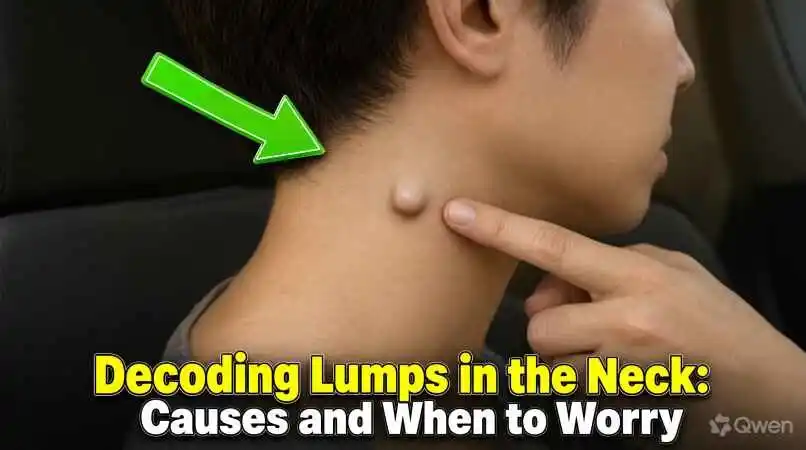
You’re washing your face or adjusting your collar when your fingers find a bump you don’t remember feeling before. Maybe it’s tender after a sore throat. Maybe it’s painless, and now you can’t stop checking it. A neck lump can be unsettling—but it has many possible causes, and feeling one doesn’t automatically mean something serious.
The sensible next step is neither to panic nor to ignore it. Pay attention to how it changes, look for other symptoms, and get medical advice when the situation calls for it. Here’s a practical guide to the common causes of neck lumps, signs that need prompt attention, what an evaluation may involve, and which home-care measures are safe.
What a neck lump might be
Your neck is home to lymph nodes, salivary glands, the thyroid, muscles, skin, blood vessels and other tissues. A lump can come from any of these structures, so its location is a clue—not a diagnosis.
Lymph nodes are among the most common sources. Think of them as small immune-system checkpoints: when your body responds to an infection or inflammation, nearby nodes may enlarge. A cold, sore throat, ear infection, dental problem or skin infection can all make nodes in the neck more noticeable. These lumps may feel tender, and they often appear alongside symptoms of the underlying illness. Children commonly have palpable lymph nodes, especially during or after routine infections. But age alone can’t tell you what a lump is; a persistent or unusual lump still deserves attention.

Other possibilities include:
- Salivary-gland swelling: Glands under the jaw or near the ears can swell with infection or blockage. A stone in a salivary duct can cause discomfort or swelling, sometimes more noticeable around mealtimes.
- Thyroid enlargement or nodules: The thyroid sits low at the front of the neck. Thyroid-related lumps may move when you swallow, but you can’t reliably identify their cause by touch.
- Skin cysts or other superficial lumps: These may sit just under the skin and can become sore or red if inflamed or infected.
- Muscle-related swelling: A muscle spasm or injury can sometimes feel like a lump or firm area.
- Congenital or developmental lumps: Some are present from birth but may not be noticed until later, or may become more apparent if they get infected.
- Less common serious causes: Some cancers can present as a neck mass, including cancers of the thyroid, lymphatic system, salivary glands, mouth or throat. Infection remains a common explanation, but a lasting or suspicious lump should be assessed rather than guessed at.
Location can help your clinician think through possibilities. A lump beneath the jaw may relate to a lymph node, salivary gland, mouth or teeth; a lump at the front of the lower neck may involve the thyroid; and one along the side of the neck may arise from a lymph node or another structure. These are broad clues only. A lump’s position, feel or movement cannot confirm what it is.
When to get medical help—and how soon
A new lump is worth monitoring, but some signs mean you should contact a healthcare professional promptly. Seek emergency care now if the swelling is making it hard to breathe or swallow, you develop noisy or difficult breathing, or the lump is growing rapidly alongside severe illness. Those symptoms can signal an urgent problem.
Arrange a timely appointment if the lump is:
- Growing, persistent, or returning after it seemed to go away.
- Firm, fixed in place, or otherwise unusual for you.
- Above the collarbone.
- Present without a clear infection—or still there after an infection has resolved.
- Accompanied by unexplained weight loss, persistent hoarseness, pain or difficulty swallowing, ongoing throat or ear pain, night sweats, or persistent fever.
These features do not prove cancer. They do mean it’s sensible to be examined. Adult neck-mass guidance emphasizes not delaying assessment of a persistent lump when there’s no clear infectious explanation. A clinician can weigh your age, health history, symptoms and examination findings together instead of relying on any single feature.
For children, many neck lumps are related to common infections, but contact their clinician if a lump is growing, remains enlarged, becomes increasingly tender, or is accompanied by trouble swallowing or breathing. Seek urgent care for breathing difficulty, a child who appears seriously unwell, or rapidly worsening swelling.
A practical rule: If you’re unsure whether a lump needs attention, contacting a healthcare professional is a better plan than repeatedly checking it or trying to diagnose it yourself.
What to observe—and what not to assume
Before an appointment, it can help to note what you’ve noticed. You don’t need to examine the lump repeatedly; frequent pressing can make the area tender and make changes harder to judge.
Write down:
- When you first noticed it. An approximate date is enough.
- Where it is. For example, under the jaw, on the side of the neck, or low at the front.
- Whether it has changed. Is it getting larger, smaller or staying about the same?
- What else is happening. Note recent colds, sore throat, ear pain, tooth problems, fever, skin irritation, voice changes, or swallowing symptoms.
- Relevant health details. List your medications, medical conditions, prior neck lumps, and any tobacco use or past cancer history.
If you’re monitoring a lump after a clinician’s advice, follow the plan they give you. Some patient follow-up guidance recommends tracking size no more than once a week and contacting the clinician if it grows, fails to resolve as expected, or comes back. The goal is a useful update—not daily detective work.
Try not to draw conclusions from whether a lump feels soft or hard, whether it hurts, or whether it moves. Those details may help a clinician, but they don’t reliably distinguish a harmless lump from a serious one. Likewise, a lump that doesn’t hurt is not automatically harmless, and tenderness alone doesn’t establish the cause.
How a clinician evaluates a neck lump
An appointment usually starts with a conversation and a physical examination. Your clinician may ask when you noticed the lump, whether it has changed, whether you’ve been ill, and whether you have other symptoms. They may examine your neck, mouth, throat, ears or scalp, depending on the lump’s location and your symptoms.
If the cause isn’t clear, or if the lump needs further assessment, the next steps might include:
- Blood tests, depending on the symptoms and suspected cause.
- Imaging, such as an ultrasound, CT scan or another scan selected for your situation.
- A needle sample or biopsy, where a sample is examined in a laboratory.
Not everyone needs every test. The choice depends on what the clinician finds and what they’re trying to answer. A biopsy is one way to look for signs of disease in a tissue sample; it can help guide a diagnosis and any treatment that may be needed.
You can make the visit more useful by asking:
- What are the most likely causes in my case?
- What changes should prompt me to contact you sooner?
- If we monitor this, when should it be reassessed?
- Do I need imaging or a sample, and what would those tests tell us?
- Who should I contact if the lump grows or new symptoms appear?
A clear follow-up plan matters. If you’re told to monitor the lump, make sure you know for how long, what changes to watch for, and what the next step will be if it doesn’t improve.
Treatment, home care, and “natural remedies”
There isn’t one treatment for every neck lump. Care depends on the cause. A clinician may recommend watching a lump over time, treating a confirmed infection, investigating a thyroid or salivary-gland problem, or referring you for additional testing. Some cysts or other masses may need a procedure or surgery; cancer-related treatment depends on the specific diagnosis. Antibiotics should be used only when a clinician decides they’re appropriate—not because every swollen node is bacterial.
While arranging care or following professional advice, low-risk comfort measures may help you feel better when the lump is associated with a minor illness:
- Rest and drink fluids if you’re unwell.
- Use a warm, not hot, compress for comfort if the area is tender.
- Choose over-the-counter pain relief only if it’s safe for you, and follow the label or a clinician’s advice.
- Address an obvious source of discomfort, such as a toothache, by booking dental care rather than trying to treat a suspected infection yourself.
These steps may ease discomfort, but they don’t identify or treat every cause of a lump. They are not substitutes for assessment when a lump is growing, persistent, unexplained, or accompanied by warning signs.
Be cautious with claims that herbs, supplements, essential oils, “detoxes” or special diets can shrink a neck lump. There’s no reliable home remedy that can tell whether a lump is harmless or safely replace an examination. Don’t squeeze, puncture, aggressively massage or repeatedly press the area; that can irritate it and won’t reveal its cause. And don’t use leftover antibiotics or start a supplement as a substitute for medical advice.
The safest natural approach is supportive care plus appropriate follow-up. If the lump isn’t improving as expected—or if you’re worried—contact a clinician instead of adding more home treatments.
FAQs
- What is the most common cause of a lump in the neck?
Swollen lymph nodes are a common cause, often in response to infections such as a cold, sore throat, ear infection or dental problem. But a lump can also come from other tissues, so its cause can’t be confirmed by touch alone. - Does every neck lump need a doctor’s appointment?
A new or unusual lump is worth discussing with a healthcare professional, especially if it is growing, persistent, unexplained or accompanied by other symptoms. Get urgent care for breathing or swallowing difficulty. - How long can a swollen lymph node last after a cold?
It may remain noticeable for a while after the illness improves. The important thing is that it follows the course your clinician expects. Contact them if it grows, returns, doesn’t resolve as advised or comes with new symptoms. - Is a painful neck lump more likely to be harmless?
Pain or tenderness can happen with inflammation or infection, but pain doesn’t prove the cause is harmless. Consider the lump’s duration, growth and any other symptoms, and seek care when it persists or concerns you. - Can a painless lump be serious?
Yes. Some lumps don’t hurt, and lack of pain can’t rule out a serious cause. A persistent or growing lump should be assessed. - Does a hard lump mean cancer?
No. How a lump feels is only one part of an assessment, and touch can’t diagnose cancer. A firm, fixed or persistent lump is a reason to arrange medical evaluation—not a reason to assume the worst. - Can stress cause a lump in my neck?
Stress can contribute to muscle tension or make you more aware of sensations in your body, but it isn’t a reliable explanation for a distinct lump. Don’t dismiss a new or persistent lump as stress without getting advice. - Can a sore throat cause swollen glands in the neck?
Yes. Lymph nodes may enlarge while responding to a throat infection. If the lump doesn’t improve as expected, grows, or is accompanied by concerning symptoms, contact a clinician. - Can a dental problem cause a neck lump?
Yes. Infections or inflammation in the teeth and mouth can be associated with nearby swollen lymph nodes. Arrange dental care for tooth pain or a suspected dental infection rather than relying on home treatment. - What does a lump under the jaw usually mean?
It may be a lymph node or relate to a salivary gland, tooth or mouth problem. The location can guide an examination, but it can’t identify the cause by itself. - What might a lump at the front of the neck mean?
The thyroid is located at the front of the lower neck, so thyroid enlargement or a nodule is one possibility. Other causes exist too; a clinician can decide whether testing is needed. - What if the lump moves when I swallow?
Movement can provide a clue about where the lump may be, but it isn’t a diagnosis. Mention it to your clinician, along with the lump’s location and how long you’ve noticed it. - Should I worry about a lump above my collarbone?
A lump above the collarbone deserves prompt medical assessment. Contact a healthcare professional rather than waiting for it to go away on its own. - When is a neck lump an emergency?
Get emergency care for trouble breathing, noisy breathing, difficulty swallowing, or rapidly worsening swelling with severe illness. These symptoms need urgent assessment. - Can a neck lump be a sign of cancer?
It can be, but many other causes are possible. A persistent or unexplained lump needs proper evaluation so its cause can be established rather than guessed. - Can young adults get a concerning neck lump?
Yes. Age alone doesn’t rule out a serious cause. A lump that persists or grows should be evaluated, even in a younger adult. - Do children commonly get neck lumps?
Yes. In children, palpable neck lymph nodes are common, often in connection with infections. A child’s clinician should assess a growing, persistent or otherwise concerning lump. - Should I squeeze or massage the lump?
No. Squeezing, puncturing or repeatedly pressing it can irritate the area and won’t tell you what caused it. Let a clinician examine it. - Can a warm compress help?
A warm—not hot—compress may offer comfort if the area is tender. It won’t diagnose or necessarily treat the cause, so follow up when the lump is persistent or concerning. - Can natural remedies make a neck lump go away?
No home remedy can reliably identify or safely treat every cause. Rest and fluids may help if you’re unwell, but they’re not a replacement for medical assessment when warning signs are present. - Should I take antibiotics for a swollen lymph node?
Only if a clinician recommends them for a suspected bacterial infection. Antibiotics don’t treat every cause of swollen nodes, so don’t use leftovers or someone else’s prescription. - What tests might a clinician order?
Depending on the examination, your clinician may recommend blood tests, imaging such as ultrasound or CT, or a needle sample or biopsy. Not everyone needs the same tests. - Does a neck lump always need a biopsy?
No. A biopsy is one possible test, used when a clinician thinks a tissue sample would help answer a diagnostic question. The choice depends on your symptoms and examination. Cleveland - What if the lump gets smaller and then comes back?
Tell your clinician. A lump that returns or changes still deserves attention, particularly if it is enlarging or appears without an obvious illness. - Can a thyroid nodule be felt from the outside?
Some thyroid nodules or enlargement may be noticeable, but you can’t determine what they are by feeling them. Your clinician can decide whether thyroid tests or imaging are appropriate. - Can a salivary-gland problem cause swelling under the jaw?
Yes. Salivary-gland infection or a blocked duct can cause swelling around the jaw or near the ear. A clinician can assess the likely cause and recommend the right care. - What details should I note before an appointment?
Record when you noticed the lump, where it is, how it has changed, and any symptoms such as fever, sore throat, tooth pain, voice changes or difficulty swallowing. - Is it okay to wait and watch a neck lump?
Monitoring may be appropriate when a clinician recommends it and gives you a clear timeframe and follow-up plan. Don’t wait without advice if the lump is growing, unexplained or accompanied by warning signs. - Who should I see about a neck lump?
A primary-care clinician is a sensible starting point. Depending on what they find, they may arrange tests or refer you to an appropriate specialist. - What should I do if I’m worried but the lump seems small?
Contact a healthcare professional and describe what you’ve noticed. A small lump can’t be diagnosed by size alone, and an appointment can give you a clearer next step.
A lump in your neck is a finding, not a diagnosis. Many are linked to everyday infections, but persistence, growth, unexplained swelling or breathing and swallowing problems deserve prompt attention. Don’t try to solve the mystery by repeatedly pressing the spot or testing home remedies. Make a note of what has changed, arrange care when appropriate, and follow through on the plan.
If you’ve found a new lump and aren’t sure what to do next, contact a healthcare professional and describe when it appeared and whether it is changing.
⚕️Medical Disclaimer:
The information provided on this website is for general educational and informational purposes only and is not intended as a substitute for professional medical advice, diagnosis, or treatment. Always seek the advice of your physician or other qualified health provider with any questions you may have regarding a medical condition. Never disregard professional medical advice or delay in seeking it because of something you have read on this website.
