
Table of Contents
The Hidden Muscle That Could Be Wrecking Your Back, Hips, and Posture — And How to Finally Wake It Up
Most people have never heard of it. Fewer still know how to use it. But your psoas muscle may be the single most important muscle in your body — and chances are, yours is either chronically tight, chronically weak, or both.
Introduction: The Muscle No One Talks About
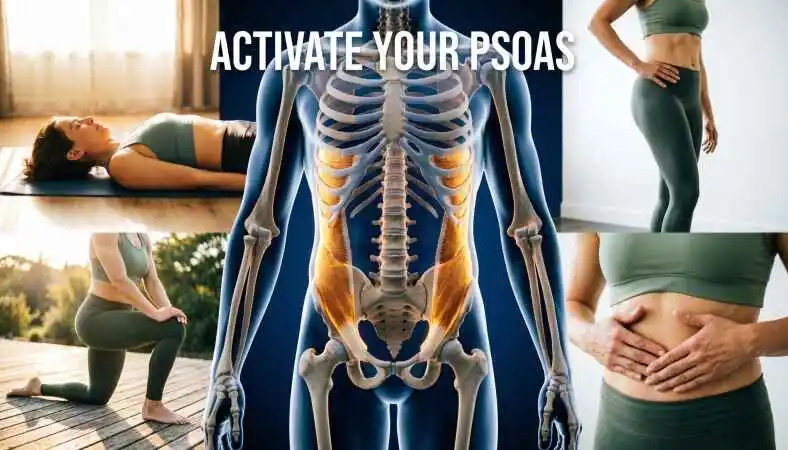
Deep inside your core, buried beneath layers of abdominal muscle, fat, and fascia, lives a long, thick, rope-like muscle called the psoas (pronounced SO-az). It runs from the lower vertebrae of your spine, travels through your pelvis, and attaches to the top of your thigh bone (femur). It is the only muscle in the human body that directly connects the spine to the legs.
That single anatomical fact makes it extraordinary.
When your psoas is healthy, strong, and well-activated, you move with ease. Your posture is upright. Your hips flex powerfully. Your lower back feels supported. Your gait is fluid and efficient. Athletes with a well-functioning psoas sprint faster, jump higher, and change direction with explosive precision.

When your psoas is dysfunctional — which, in the modern sedentary world, it almost always is — everything goes wrong. Chronic lower back pain. Hip impingement. Pelvic tilt. Sciatica-like symptoms. Poor posture. Even digestive discomfort and emotional tension. The psoas is intimately woven into your nervous system and has even been called the “muscle of the soul” by some bodyworkers, because it sits right alongside the diaphragm and can hold onto stress and trauma.
This guide will teach you everything you need to know: what the psoas is, why it matters, why it breaks down, and — most importantly — how to activate, strengthen, and restore it.
What Exactly Is the Psoas?
The psoas is technically part of a muscle group called the iliopsoas, which is formed by two muscles: the psoas major and the iliacus. These two muscles share a common tendon that attaches to the lesser trochanter of the femur. There is also a smaller, often vestigial muscle called the psoas minor, present in only about 40–60% of people.
Location and Anatomy
The psoas major originates along the transverse processes and vertebral bodies of T12 through L5 — the lowest thoracic vertebra and all five lumbar vertebrae. It passes under the inguinal ligament and through the pelvis before joining the iliacus (which originates from the inner surface of the ilium, or hip bone). Together they form the iliopsoas, which inserts onto the lesser trochanter of the femur.
Because of this long, diagonal path through the body’s core, the psoas acts on multiple joints simultaneously:
- Hip flexion: It is the primary hip flexor, lifting the thigh toward the torso.
- Lumbar spine stabilization: It helps support the natural curve (lordosis) of the lower back.
- External rotation: It assists in rotating the thigh outward.
- Lateral flexion: It can assist in bending the spine sideways.
The Psoas and the Nervous System
What makes the psoas especially unique is its deep connection to the autonomic nervous system. It originates right near the solar plexus and diaphragm, and it contains a high density of proprioceptive nerve endings. When you experience fear, stress, or trauma, your body curls inward — the fetal response — and the psoas is the muscle doing much of that curling. This is why prolonged stress, poor breathing habits, and unresolved tension can all manifest as a chronically contracted psoas.
Why the Modern Lifestyle Destroys the Psoas
The psoas evolved for movement — for walking, running, climbing, squatting. Our ancestors spent their days in varied, full-range physical motion. The psoas was constantly lengthened and shortened through its full range.
Now consider the modern lifestyle: sitting at a desk for 8–10 hours a day, with the hip joint fixed at approximately 90 degrees of flexion. In this position, the psoas is shortened and held in a contracted state for hours on end. Over time, the muscle adapts — it shortens, tightens, and loses its ability to generate force at longer lengths. The nervous system essentially “forgets” how to recruit it properly.
This leads to a dual dysfunction: the psoas becomes simultaneously tight (shortened, restricted) and weak (unable to generate adequate force through its full range). It can feel tight even though it is neurologically inhibited — a concept called pseudotenisity or neurological inhibition.
The consequences ripple outward:
- The pelvis tilts anteriorly (forward), increasing lumbar lordosis and compressing the lower back
- The glutes, which are antagonists to the psoas, become inhibited — a phenomenon called reciprocal inhibition
- The hip flexors and TFL (tensor fasciae latae) compensate, leading to IT band syndrome and hip pain
- Core stability deteriorates, increasing injury risk across the entire kinetic chain
Signs Your Psoas Is Not Activating Properly
How do you know if your psoas is the culprit behind your symptoms? Look for these signs:
- Persistent lower back tightness or pain, especially in the morning
- Anterior pelvic tilt (your stomach and backside push forward and backward, respectively)
- Difficulty standing upright for extended periods
- Weakness or instability when lifting your knee past hip height
- Clicking or snapping sensation in the front of the hip (snapping hip syndrome)
- One leg that feels shorter or heavier than the other
- Poor performance in sprinting, climbing stairs, or running
- Tightness across the front of the hip crease, especially after sitting
- Core exercises that feel disconnected — like your abs work but your hips collapse
How to Assess Your Psoas
Before diving into activation exercises, a simple assessment helps determine whether your psoas is restricted or weak.
Thomas Test (Tightness)
Lie on the edge of a table or firm bed. Pull both knees to your chest. Lower one leg while maintaining the other knee at your chest. If the lowered leg cannot reach the flat surface, or if the knee bends spontaneously, your psoas and hip flexors are likely tight.
Hip Flexion Strength Test
Standing upright, lift one knee toward your chest against resistance (use your own hand pressing down on the thigh). If you cannot maintain the height of your hip joint without leaning backward or rotating, your psoas is likely neurologically inhibited.
How to Activate the Psoas: A Step-by-Step Protocol
Psoas activation is not about stretching or strengthening in the traditional sense — at least not initially. The first step is neuromuscular re-education: teaching your brain to communicate with the muscle again.
Phase 1: Release and Relax
Before you can activate a tight, guarded muscle, you need to take it out of its protective tension.
- Constructive Rest Position: Lie on your back with your knees bent, feet flat on the floor, hip-width apart. Let your arms rest by your sides. Close your eyes and breathe deeply for 5–10 minutes. This passive position allows the psoas to gently lengthen without any muscular effort. It is a foundational technique from somatic practice and is considered one of the safest ways to begin releasing psoas tension.
- Supported Bridge with Hip Flexor Awareness: Place a yoga block or folded blanket under your sacrum (not your lower back). Let your hips rest in a gentle inversion. Breathe into your belly for 3–5 minutes. This decompresses the lumbar spine and allows the psoas to soften.
- Low Lunge with Active Posterior Tilt Step into a low lunge with one knee on the floor. Before you feel the stretch, tuck your pelvis under (posterior tilt) by squeezing your glute and pulling your navel toward your spine. Hold for 60–90 seconds. This actively lengthens the psoas while preventing the common compensation of arching the lower back.
Phase 2: Isolated Activation
Now that the muscle is no longer guarded, you can begin teaching it to fire.
- Supine Psoas March Lie on your back with knees bent. Engage your core lightly. Lift one foot just one inch off the ground and hold for 5 seconds. Lower slowly. The key is to feel the contraction happening deep in the groin and lower abdomen — not in the quad or TFL. Alternate legs for 10–15 repetitions per side.
Coaching cue: Imagine pulling your thigh toward your shoulder using a muscle behind your belly button.
- Standing Psoas Activation (Wall-Supported) Stand with your back against a wall. Lift one knee to hip height. Hold for 10 seconds. The goal is to maintain the position without gripping the hip flexors at the front of the thigh. Focus on a deep, pulling sensation from the lower lumbar region. Perform 3 sets of 8–10 holds per side.
- Half-Kneeling Hip Flexor Lift Begin in a half-kneeling position (one knee down, one foot forward). From this stable base, lift the back knee slightly off the ground while keeping the torso upright. This challenges the psoas to work as both a hip flexor and a spinal stabilizer simultaneously. Hold for 3–5 seconds, 8–10 repetitions.
Phase 3: Integrated Strengthening
Once you can isolate the psoas, it’s time to load it through functional movement patterns.
- Hanging Knee Raises Hang from a pull-up bar. Bring both knees slowly toward your chest, pausing at the top. Lower with control over 3–4 seconds. This is one of the most effective psoas-loading exercises because it requires the muscle to work through its full range of motion against gravity. Start with 3 sets of 8.
- Cable Hip Flexion: Attach an ankle strap to a low cable machine. Stand facing away from the machine. Flex at the hip, bringing your knee forward and upward to hip height. Pause and hold for 2 seconds. Lower with control. This provides consistent tension through the range of motion that bodyweight exercises cannot fully replicate.
- Psoas March with Load (Dead Bug Variation) Lie on your back, arms pointing toward the ceiling, knees at 90 degrees in the air. Extend one leg while lowering the opposite arm overhead — but before the movement, actively pull the extending knee away from you using your hip flexor before releasing it. This primes psoas engagement during the dynamic dead bug.
- Single-Leg Romanian Deadlift Though primarily a posterior chain exercise, the single-leg RDL demands that the psoas of the standing leg work eccentrically to control pelvic position. As strength and awareness build, this becomes one of the most valuable functional exercises for psoas integration.
Breathing and the Psoas
Because the psoas attaches near the diaphragm and crosses so many structures, breathing profoundly affects its tone. Chest breathing — which is habitual in most stressed adults — keeps the diaphragm elevated and the psoas in a constant low-grade contraction. Diaphragmatic (belly) breathing is not just a relaxation tool; it is a direct therapeutic input for the psoas.
Practice: Lie in constructive rest. Place one hand on your belly. Inhale through your nose for 4 counts, letting your belly rise. Exhale for 6 counts. Repeat for 5 minutes before any psoas activation work.
Common Mistakes to Avoid
- Stretching without releasing neurological tension first: Static hip flexor stretches can actually reinforce tightness if the psoas is guarding due to neural inhibition.
- Confusing TFL and quad activation with psoas activation: The psoas is a deep muscle. If you feel the front of your thigh burning during activation exercises, you are recruiting the wrong muscles.
- Skipping unilateral work: The psoas is often asymmetrically dysfunctional. Always train and assess each side independently.
- Ignoring breathing: Breath-holding during core work dramatically increases psoas inhibition.
- Progressing too fast: The neuromuscular pathway to the psoas needs time and repetition. Consistency over weeks matters more than intensity.
Sample Weekly Psoas Activation Routine
| Day | Focus | Duration |
| Monday | Release + Isolated Activation | 20 min |
| Wednesday | Integrated Strengthening | 30 min |
| Friday | Release + Full Protocol | 40 min |
| Daily | Constructive Rest + Breathing | 10 min |
Frequently Asked Questions
- What does “psoas” mean?
The word psoas comes from the Greek psoa, meaning “muscles of the loins.” It refers to the group of muscles running along the lumbar spine.
- Where exactly is the psoas located?
The psoas major runs from the transverse processes of your T12–L5 vertebrae, diagonally through your pelvis, under the inguinal ligament, and attaches to the lesser trochanter of your femur (upper thigh bone).
- Why is the psoas called the “muscle of the soul”?
This name, popularized by somatic practitioner Liz Koch, reflects the psoas’s deep connection to the autonomic nervous system and its role in the body’s stress response. It sits near the solar plexus and diaphragm, and can hold tension associated with chronic stress and trauma.
- Can the psoas cause lower back pain?
Yes. A tight or weak psoas is one of the most common — and most overlooked — contributors to chronic lower back pain. When shortened, it pulls the lumbar vertebrae forward, compressing the discs and facet joints.
- How do I know if my psoas is tight?
Signs include anterior pelvic tilt, stiffness in the front of the hip, lower back pain that worsens after sitting, and difficulty standing fully upright. The Thomas Test is a reliable clinical assessment.
- Is the psoas the same as the hip flexor?
The psoas is the primary hip flexor, but the term “hip flexor” encompasses several muscles, including the rectus femoris, iliacus, TFL, sartorius, and pectineus. The psoas is the deepest and most powerful of these.
- Can sitting all day damage my psoas?
Prolonged sitting keeps the psoas in a chronically shortened position. Over time, the muscle adapts by tightening and losing its ability to contract at longer lengths, leading to functional weakness.
- What is the difference between a tight and a weak psoas?
A tight psoas is shortened and restricted in movement. A weak psoas cannot generate adequate force. These often coexist — the psoas can feel tight but actually be neurologically inhibited and unable to contract strongly.
- How long does it take to fix psoas dysfunction?
This varies widely. With consistent daily practice — including release, activation, and strengthening work — many people notice meaningful improvements within 4–8 weeks. Severe, longstanding dysfunction may take 3–6 months.
- Can the psoas cause hip pain?
Absolutely. A dysfunctional psoas can contribute to anterior hip impingement, snapping hip syndrome (coxa saltans), hip labrum stress, and general hip flexor pain at the groin crease.
- Does the psoas affect posture?
Yes, profoundly. A tight psoas tilts the pelvis anteriorly, which increases lumbar lordosis, pushes the abdomen forward, and causes the chest to collapse. Restoring psoas function is central to postural correction.
- Can the psoas affect digestion?
Because the psoas runs directly alongside the digestive organs — particularly the small intestine and ascending/descending colon — chronic tension in the psoas may compress these structures and contribute to digestive discomfort.
- Is yoga good for the psoas?
Certain yoga poses — particularly low lunges, pigeon pose, and constructive rest — are excellent for releasing psoas tension. However, without proper neuromuscular activation work, stretching alone is insufficient.
- What exercises strengthen the psoas?
Hanging knee raises, cable hip flexion, supine psoas marches, standing knee holds, and loaded dead bug variations are among the most effective psoas-targeted strengthening exercises.
- Can running strengthen the psoas?
Running does use the psoas as a hip flexor during the swing phase of gait. However, if the psoas is already inhibited, running will likely compensate with other muscles. Targeted activation work should precede relying on running for psoas training.
- Is the psoas related to sciatica?
A tight psoas can compress the lumbar nerve roots indirectly by increasing anterior pelvic tilt and lumbar compression. While not a direct cause of sciatic nerve compression, it is often a contributing factor in sciatica presentations.
- Can emotional stress tighten the psoas?
Yes. Because the psoas is embedded in the body’s stress response system, chronic emotional stress, anxiety, and unresolved trauma can contribute to persistent psoas tension. Somatic practices, breathwork, and nervous system regulation can help.
- Is the psoas important for athletes?
Critically so. The psoas drives hip flexion during sprinting, generates power in kicking motions, stabilizes the pelvis during jumping, and contributes to rotational force in throwing and swinging. Elite athletes almost universally have well-developed, efficiently firing psoas muscles.
- Can a psoas problem cause knee pain?
Indirectly, yes. A dysfunctional psoas alters pelvic alignment, which changes load distribution through the hip and knee. Over time, this can contribute to patellofemoral pain, IT band syndrome, and other downstream knee issues.
- How do I stretch the psoas correctly?
The most effective psoas stretch is the low lunge with posterior pelvic tilt. Step into a lunge, lower your back knee, tuck your pelvis under by squeezing your glute, and hold for 60–90 seconds. Avoid arching your back, which bypasses the psoas stretch entirely.
- Can I massage the psoas?
Deep abdominal massage can access the psoas, but it requires skilled hands and should be done by a trained physical therapist, osteopath, or massage therapist. Incorrect pressure can irritate blood vessels, nerves, and organs in the abdominal cavity.
- Does the psoas affect breathing?
Yes. The psoas and diaphragm share fascial connections and proximate attachments. Tension in the psoas can restrict diaphragmatic movement, encouraging chest breathing, which in turn maintains psoas tension in a self-reinforcing cycle.
- What is snapping hip syndrome, and does it involve the psoas?
Snapping hip syndrome (coxa saltans interna) often involves the psoas tendon snapping over the iliopectineal eminence of the hip bone during flexion and extension movements. This is frequently associated with a tight, overworked psoas.
- Should I see a professional for psoas issues?
If you have significant pain, you should consult a physical therapist or sports medicine physician. Many professionals specialize in hip and lumbar dysfunction and can provide manual therapy, diagnostic imaging, and a supervised rehabilitation program.
- Is it possible to overwork the psoas?
Yes. Excessive sit-ups, leg raises, and hip flexor-dominant exercises without adequate antagonist (glute and hamstring) strength can overload the psoas, leading to tendinopathy, hip flexor strains, or even stress fractures at the lesser trochanter in severe cases.
- What is the constructive rest position?
It is a semi-supine position — lying on your back with knees bent and feet flat, hip-width apart — that allows the psoas to passively lengthen without any muscular effort. It is a foundational technique in somatic movement education.
- How does the psoas relate to the glutes?
The psoas (hip flexor) and glutes (hip extensors) are antagonists. When one is overactive, the other is typically inhibited through a neurological process called reciprocal inhibition. Restoring psoas function often requires simultaneous glute activation and vice versa.
- Can children have psoas dysfunction?
Yes, particularly children who are sedentary, carry heavy backpacks, or engage in sports with repetitive hip flexion (cycling, swimming, breaststroke). Early assessment and movement education can prevent lifelong dysfunction.
- Are there any red flags that suggest my psoas pain is something more serious?
Seek immediate medical attention if psoas pain is accompanied by fever, unexplained weight loss, severe night pain, or neurological symptoms (numbness, tingling, weakness). These could indicate a psoas abscess, tumor, or serious spinal pathology.
- Can I activate the psoas every day?
The release and breathing components can be practiced daily. Strengthening exercises should follow the same principles as any muscle training — allow adequate recovery between sessions. The constructive rest position and diaphragmatic breathing are safe and beneficial to do every single day.
The psoas is not just a muscle — it is a map of how you have lived in your body. Begin the conversation with it today.
⚕️Medical Disclaimer:
The information provided on this website is for general educational and informational purposes only and is not intended as a substitute for professional medical advice, diagnosis, or treatment. Always seek the advice of your physician or other qualified health provider with any questions you may have regarding a medical condition. Never disregard professional medical advice or delay in seeking it because of something you have read on this website.
