
Table of Contents
“East Meets West at 1,000 Feet: Why Hong Kong Will Ruin Every Other City for You Forever”
A complete traveler’s guide to the world’s most electrifying skyline, soulful street food, and sensory overload you’ll never want to stop.
Introduction
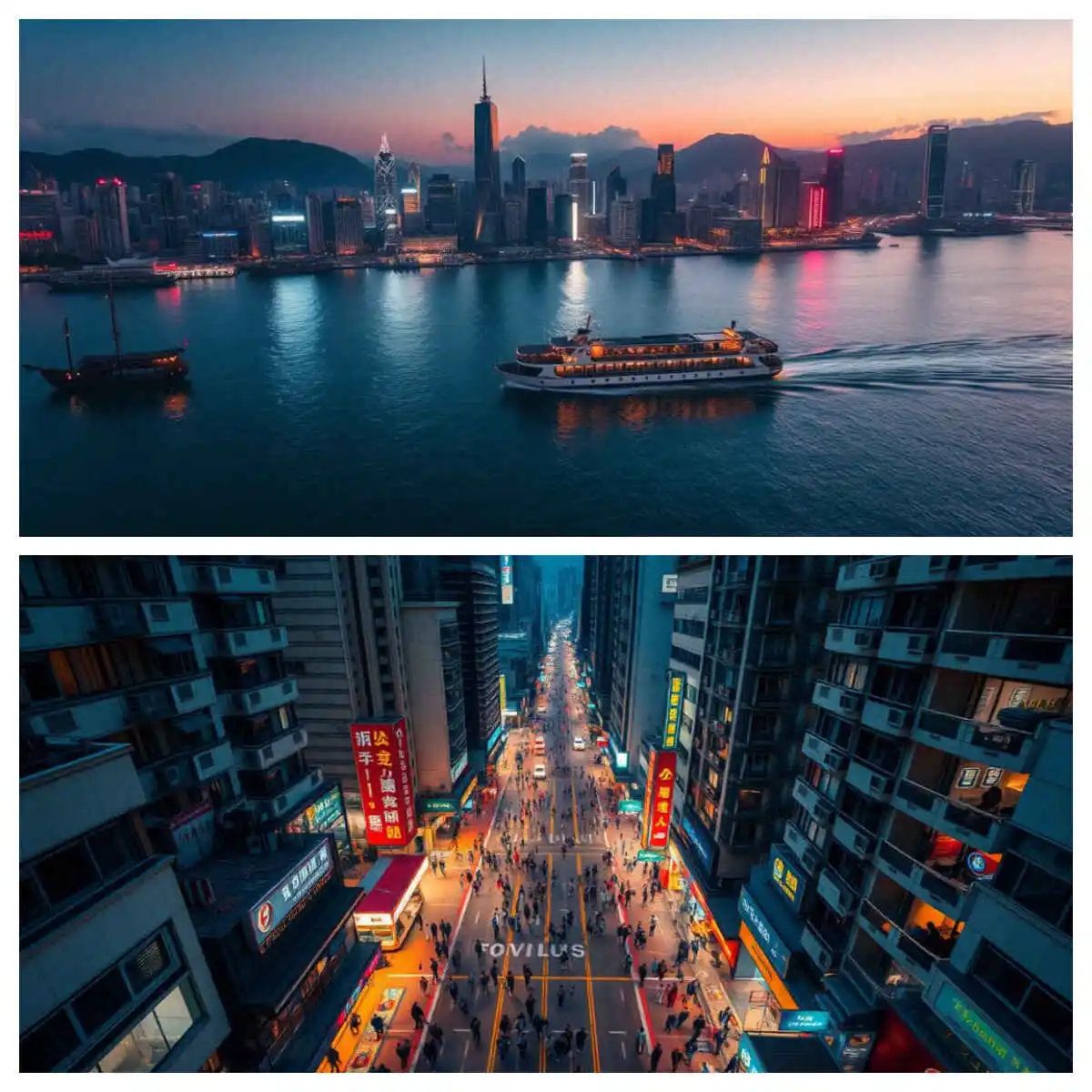
There is a moment — and every visitor to Hong Kong knows exactly which one it is — when the Star Ferry pulls away from the Tsim Sha Tsui pier and the full panorama of Victoria Harbor spreads before you like a fever dream someone forgot to turn off. Towers of glass and light climb so high they seem to be competing with the clouds. Neon bleeds into the water. The air smells of salt and roasted duck and diesel and possibility. In that moment, you stop being a tourist and become a convert.
Hong Kong does that to people.
This isn’t merely a city. It is a civilization compressed into 1,108 square kilometers — a place where Michelin-starred restaurants share walls with dai pai dong stalls that have been frying the same recipe since 1953, where double-decker trams rattle past concept stores selling $3,000 sneakers, where Buddhist monasteries perch on forested hillsides twenty minutes from the world’s most technologically advanced airport. Hong Kong is not a destination you visit and file away. It is a destination that visits you — long after you have come home, it sits behind your eyes, making everywhere else feel slightly incomplete.

This guide is your full companion to experiencing Hong Kong, not as a checklist, but as an education. Whether you are planning your first trip or your fifteenth, this is the only starting point you need.
Getting There: The World Comes to Hong Kong
Hong Kong International Airport (HKIA) on Lantau Island is consistently ranked among the world’s busiest and most efficient airports, with direct flights connecting it to virtually every major city on earth. The Airport Express train whisks you from arrivals to Hong Kong Station in Central in just 24 minutes — fast, air-conditioned, and remarkably cheap by global standards at around HK$115 (approximately USD 15). Many hotels allow you to check in your luggage at the in-town terminal, so you can wander the city unburdened from the moment you arrive.
Travelers from the UK, USA, Australia, Canada, and most EU nations enjoy visa-free entry for up to 90 days. Always verify the latest entry requirements with the Hong Kong Immigration Department before booking, as policies can change.
When to Go: Timing Your Visit Perfectly
Hong Kong has four distinct seasons, each with a different personality.
October to early December is arguably the finest window. Temperatures settle into a golden range of 18–25°C, humidity drops to civilized levels, and typhoon season has wound down. The sky turns a vivid, crystalline blue that makes every photograph look professionally edited.
January and February bring cool, occasionally misty weather — perfect for hiking without drenching yourself in perspiration. Chinese New Year typically falls in this window, transforming the city into an explosion of red lanterns, dragon dances, and the most spectacular fireworks display in Asia.
March to May offers mild temperatures but rising humidity. The city is lush and green, and crowds at popular sites are more manageable than in peak season.
June to September is hot, humid, and storm-prone. Typhoon season is real and should be taken seriously — but if you visit between typhoons, you get a city stripped of Fairweather tourists, lush green mountains, and hotel rates that are considerably more forgiving.
Where to Stay: Neighborhoods That Shape Your Experience
Central & Admiralty
The financial heartland of Hong Kong Island. Stay here for proximity to the Peak Tram, the world-class bars of SoHo and LKF (Lan Kwai Fong), the city’s finest restaurants, and the Mid-Levels escalator — the world’s longest outdoor covered escalator system. Hotels here lean luxurious: the Mandarin Oriental and Four Seasons set the standard for what five-star hospitality can mean.
Tsim Sha Tsui (TST), Kowloon
Cross the harbor, and you find a different energy entirely. TST is denser, louder, and gloriously unfiltered. This is where the famous Avenue of Stars runs along the waterfront, where Nathan Road pulses with neon into the small hours, where you can eat a perfect bowl of wonton noodles for HK$50 at 7 am after walking home from a rooftop bar. The Peninsula Hotel, opened in 1928, remains one of the world’s great stays — arrive by Rolls-Royce helicopter if the occasion demands it.
Wan Chai
Gritty, artsy, transitioning. Wan Chai is where old Hong Kong still breathes — wet markets, incense-thick temples, retro cha chaan tengs (Hong Kong-style diners) alongside contemporary galleries and a thriving live music scene. Ideal for travelers who want authenticity alongside convenience.
Mong Kok
Not for the faint-hearted, but unforgettable. One of the world’s most densely populated neighborhoods, Mong Kok is all sensory overload — the Ladies’ Market, the Flower Market, the Goldfish Market, the Bird Garden, and street food at every corner. Stay here to experience Hong Kong at its most viscerally alive.
What to See and Do: The Unmissable and the Hidden
Victoria Peak
No trip is complete without it. Take the century-old Peak Tram from Garden Road and ascend through lush jungle to a viewpoint that reduces language to inadequacy. Go at dusk, stay for the lights coming on across the harbor. The Sky Terrace 428 observation deck sits at 428 meters above sea level — the highest point on Hong Kong Island accessible to the public.
Temple Street Night Market
Every evening from around 4 pm, Temple Street in Jordan, Kowloon transforms into a labyrinth of stalls selling jade jeweler, electronics, clothing, and street food. Fortune tellers set up under fluorescent lights. Cantonese opera singers perform to small, devoted audiences. It is utterly, irreproducibly Hong Kong.
Lantau Island and the Tian Tan Buddha
The Big Buddha is one of Asia’s most iconic landmarks — a 34-metre bronze statue of Gautama Buddha seated serenely on a lotus throne atop Ngong Ping plateau. Take the Ngong Ping 360 cable car for a 25-minute glide over green mountains and the turquoise South China Sea. The adjacent Po Lin Monastery serves excellent vegetarian meals, and the village of Tai O on the western tip of the island is a living snapshot of traditional stilt-house fishing communities that deserve at least two hours of wandering.
Hong Kong Disneyland & Ocean Park
If you are travelling with children, both parks deliver. Disneyland on Lantau benefits from having one of the smaller footprints in the global network — easier to navigate, more intimate. Ocean Park, with its marine life exhibits, adrenaline rides, and cable-car rides over the South China Sea, appeals strongly to older children and adults who want something more eclectic.
Sham Shui Po
If you want to see a Hong Kong that most tourists never find, spend a morning in Sham Shui Po. This working-class Kowloon neighborhood is famous among architects, designers, and fabric-lovers for its extraordinary wholesale markets: buttons, thread, zippers, vintage electronics, surplus military gear. The food here — particularly the silken tofu desserts and clay-pot rice — is some of the best in the city at prices that will make you feel guilty.
Hiking the Dragon’s Back
The Dragon’s Back trail on Hong Kong Island’s southeastern coast consistently wins awards as one of Asia’s finest urban hikes. A moderate 8.5km circuit, it winds along a dragon-spine ridge offering views of Shek O beach, the South China Sea, and — on clear days — the distant outline of the Guangdong coastline. End at Shek O village for fresh seafood and a well-earned cold beer.
What to Eat: A Love Letter to Hong Kong’s Food Culture
Hong Kong’s food scene is not merely good. It is, objectively, one of the three or four greatest eating cities in the world. Here is what you must not leave without trying:
Dim sum — the morning ritual of Hong Kong. Pull up a chair at Lin Heung Tea House in Sheung Wan or Maxim’s Palace in City Hall and order shrimp dumplings (har gow), pork dumplings (siu mai), turnip cake (lo bak go), and the extraordinary crispy taro dumpling (wu gok) until you cannot move.
Roast meats — char siu (barbecued pork), crispy-skin roast goose, and soy-braised chicken hang in the windows of roast meat shops across the city. Joy Hing Roasted Meat in Wan Chai and Yung Kee in Central are the names on every local’s lips.
Wonton noodles — a bowl of thin egg noodles in a translucent shrimp-and-pork broth, topped with plump wontons. Mak’s Noodle in Central is the gold standard.
Hong Kong-style milk tea — brewed from a blend of black teas, strained through a cloth “stocking” and sweetened with evaporated milk. The ritual of making it is as important as the drink itself. Order it at any cha chaan teng.
Egg waffles (gai daan zai) — the street food for which Hong Kong has become globally famous. Crispy outside, custardy inside, served piping hot from a cast-iron mould. Best eaten walking.
Getting Around: The Best Public Transit on Earth
Genuinely. Hong Kong’s MTR (Mass Transit Railway) is clean, punctual to the minute, air-conditioned, and covers the entire urban area with a comprehensiveness that would make most European cities weep. Buy an Octopus card (HK$150 deposit, refundable) and use it on the MTR, buses, trams, ferries, and even at 7-Eleven for late-night snacks. The trams on Hong Kong Island — narrow double-deckers that have been running since 1904 — offer the world’s most atmospheric HK$3 journey. Take one from Kennedy Town to Shau Kei Wan with no agenda and let the city scroll past.
Shopping: From Temple Street to Harvey Nichols
Hong Kong is, famously, a shopping city. No sales tax and a historically competitive retail market make it an excellent value for electronics (Mong Kok’s Sham Shui Po computer centers), watches (the Causeway Bay mall clusters), cosmetics, and high fashion. The IFC Mall in Central and Pacific Place in Admiralty host the international luxury brands. For something more memorable, spend time at the antique and curio shops of Hollywood Road in Sheung Wan — the longest antique market in Asia, stretching nearly a kilometer uphill.
Practical Tips for a Seamless Trip
- Currency: Hong Kong Dollar (HKD). Cards are accepted widely, but carry cash for markets, street food, and older establishments.
- Language: Cantonese is the primary language. English is widely spoken, particularly in service industries, hotels, and transport.
- Safety: Hong Kong is exceptionally safe. Violent crime rates are among the lowest in Asia. Use standard urban common sense.
- Connectivity: SIM cards are available at the airport from HK$88 for a full data plan. Free Wi-Fi is available in most MTR stations, libraries, and many cafes.
- Tipping: Not culturally mandatory, but a 10% service charge is often included in restaurant bills. Small tips for hotel staff are appreciated.
- Apps to download: MTR Mobile (journey planner), Open Rice (restaurant guide), Klook (discount tickets to attractions), Google Maps (works well throughout the city).
A Note on Culture and Courtesy
Hong Kong has a distinct identity that sits at the confluence of Cantonese and colonial histories. Locals take quiet pride in their city’s efficiency, food culture, and work ethic. A few notes: queue at the MTR platform doors — cutting the line is considered extremely rude. Learn two Cantonese phrases — “m goi” (excuse me / thank you for a service) and “doh je” (thank you for a gift or compliment) — and locals will light up. Bargaining is expected in markets, not in malls. Dress modestly when visiting temples.
Final Word: Why Hong Kong Is Worth Every Penny
Hong Kong is not a cheap destination, but it is an extraordinarily high-value one. The density of world-class food, spectacular natural scenery, cultural history, architectural drama, and sheer human energy packed into this small city is unmatched anywhere on earth. It moves fast, sleeps little, and gives generously to those who arrive with curiosity rather than a checklist.
Go once. You will be planning the return flight before you reach the departure gate.
Frequently Asked Questions
- Do I need a visa to visit Hong Kong?
Citizens of over 170 countries, including the UK, USA, Canada, and Australia, enjoy visa-free entry for 90 days. Always verify current requirements at the official Hong Kong Immigration Department website before travel.
- What is the best time of year to visit Hong Kong?
October through early December offers the best combination of cool temperatures, low humidity, and clear skies. February is ideal for Chinese New Year festivities.
- How long should I spend in Hong Kong?
A minimum of five to seven days allows you to cover the main highlights comfortably. A dedicated food or hiking traveler could happily spend two weeks.
- Is Hong Kong expensive?
Accommodation and imported alcohol are expensive. Street food, public transport, and local restaurants offer extraordinary value. Budget travelers can eat well for HK$150–250 per day on food alone.
- Is Hong Kong safe for solo travelers?
Extremely. Hong Kong consistently ranks among the safest major cities in the world for solo travelers, including women travelling alone.
- What currency is used in Hong Kong?
The Hong Kong Dollar (HKD). Roughly HK$7.8 to USD 1. ATMs are widely available throughout the city.
- Can I use my credit card everywhere?
Major cards are accepted in hotels, malls, and most restaurants. Carry cash for markets, street food vendors, and smaller local eateries.
- What language do people speak in Hong Kong?
Cantonese is the primary spoken language. Mandarin is increasingly common. English is widely understood in business, hospitality, and transport.
- How do I get from the airport to the city Centre?
The Airport Express train takes 24 minutes to Hong Kong Station in Central. Taxis and buses are also available, but slower and more expensive.
- What is an Octopus Card, and do I need one?
An Octopus Card is a rechargeable smart card accepted on all public transport and in many shops. It is highly recommended — it simplifies your entire transit experience.
- Is Hong Kong part of China?
Hong Kong is a Special Administrative Region (SAR) of China. It maintains its own legal system, currency, passport, and entry requirements, separate from mainland China.
- Do I need a separate visa for mainland China if I am in Hong Kong?
Yes. A mainland China visa is required regardless of your visa status in Hong Kong. These must be arranged in advance.
- What is the MTR?
The Mass Transit Railway — Hong Kong’s subway system. It is clean, punctual, inexpensive, and covers the entire urban area comprehensively.
- Are taxis reliable in Hong Kong?
Yes. Red taxis cover urban Hong Kong, green taxis serve the New Territories, and blue taxis cover Lantau Island. All are metered and generally honest.
- What is the food like in Hong Kong?
Widely regarded as one of the world’s great food cities. Cantonese cuisine dominates, with exceptional options for Japanese, Southeast Asian, Western, and fusion food at every price point.
- What should I eat first in Hong Kong?
Start with a dim sum breakfast — it is the defining culinary experience of Hong Kong and one of the most joyful meals you will ever eat.
- Are vegetarian and vegan options available?
Yes, increasingly so. Buddhist vegetarian restaurants are found throughout the city, particularly near temples. Many modern restaurants offer strong plant-based menus.
- Is Hong Kong good for families with children?
Excellent. Between Disneyland, Ocean Park, ferry rides, the cable car to the Big Buddha, and the general adventure of urban exploration, children find Hong Kong endlessly stimulating.
- What are the must-see attractions?
Victoria Peak, Victoria Harbor, Temple Street Night Market, Tian Tan Buddha, Lantau’s Tai O fishing village, the Sham Shui Po markets, and the Dragon’s Back trail are among the top priorities.
- Can I drink tap water in Hong Kong?
Tap water in Hong Kong meets international safety standards and is technically safe to drink. Most residents and visitors prefer bottled or filtered water.
- What is a cha chaan teng?
A uniquely Hong Kong institution — a casual, fast-paced diner serving a fusion of Western and Chinese breakfast and lunch items. Famous for Hong Kong milk tea, egg sandwiches, and pineapple buns. Do not leave without visiting one.
- Is Hong Kong walkable?
The urban core is very walkable, with excellent signage in English. The hillier parts of Hong Kong Island require stamina, but the city’s elevated walkways, escalators, and footbridges make navigation remarkably easy.
- How do I get to Lantau Island?
By MTR to Tung Chung station, then the Ngong Ping 360 cable car to the Big Buddha area. Ferries run from Central Pier to Mui Wo on Lantau’s eastern coast.
- Are there good beaches in Hong Kong?
Yes. Repulse Bay and Stanley on Hong Kong Island are well-served and popular. Cheung Sha on Lantau is longer, quieter, and arguably more beautiful. Sai Kung in the New Territories has some of the finest clear-water beaches in the region.
- What is the nightlife like?
Exceptional. Lan Kwai Fong in Central is the historic party district. Wan Chai has a scrappier, more eclectic bar scene. The rooftop bars of TST offer some of the finest views in Asia with a drink in hand.
- Is it easy to do a day trip to Macau?
Very. The Hong Kong-Zhuhai-Macau Bridge is the world’s longest sea crossing bridge. High-speed ferries also run regularly from the Hong Kong-Macau Ferry Terminal in Sheung Wan and from the airport. The journey takes 60–75 minutes by ferry.
- What should I pack for Hong Kong?
Lightweight, breathable clothing for summer visits. A light layer for winter and for the aggressively air-conditioned interiors that Hong Kong operates year-round. Comfortable walking shoes are essential.
- Are there hiking opportunities in Hong Kong?
Exceptional hiking for a city of this scale. The MacLehose Trail (100km across the New Territories), the Dragon’s Back, High Island Reservoir East Dam, and the Hong Kong Trail all offer world-class urban hiking with minimal travel time from the city Centre.
- What souvenirs should I bring home from Hong Kong?
Dried seafood from Sheung Wan, pineapple buns from a good bakery, custom cheongsam (qipao) if you have time for tailoring, quality ceramics or jade from Hollywood Road antique shops, and box sets of your favorite Hong Kong films.
- Is Hong Kong still worth visiting today?
Unequivocally yes. The food, the skyline, the hiking, the cultural texture, the transport infrastructure, and the sheer concentrated energy of the city remain world-class. Hong Kong continues to evolve, and it rewards every visitor who arrives with openness and appetite.
Disclaimer: The content on this blog is for informational purposes only. The author’s opinions are personal and not endorsed. Efforts are made to provide accurate information, but completeness, accuracy, or reliability are not guaranteed. The author is not liable for any loss or damage resulting from the use of this blog. It is recommended to use the information on this blog at your own discretion.
