
Table of Contents
Skin Cancer: Natural Ways to Lower Your Risk
You notice a small spot on your arm while getting dressed. It wasn’t there before—or maybe it was, but now it looks darker, has started itching, or keeps bleeding when you dry off. Most skin spots are harmless. Still, changes like these deserve attention rather than guesswork.
Skin cancer is common, and many forms are highly treatable, especially when found early. Knowing what to watch for, what a diagnosis involves, and how to protect your skin can help you take sensible action without panicking.
This guide explains the main types of skin cancer, warning signs, diagnosis, treatment options, and evidence-based ways to reduce UV exposure. It also addresses “natural” prevention honestly: healthy habits can support prevention, but no supplement, diet, or home remedy has been shown to replace sun protection or medical care.
What Skin Cancer Is—and Who Can Develop It
Skin cancer occurs when skin cells grow abnormally and form a cancer. Many cases are associated with ultraviolet (UV) radiation from the sun or indoor tanning devices. UV exposure can damage the DNA in skin cells; over time, that damage may contribute to cancer.

Skin cancer can affect anyone, regardless of skin tone. People with fair skin may have a higher risk of some types, but darker skin does not make someone immune. Skin cancer may also be diagnosed later in people with darker skin if they or their clinicians don’t expect it.
The three main types
| Type | What to Know |
| Basal cell carcinoma (BCC) | The most common type. It often grows slowly and rarely spreads to distant parts of the body, but it can damage nearby tissue if left untreated. |
| Squamous cell carcinoma (SCC) | Often treatable, but it can grow deeper and sometimes spread, especially when high-risk features are present. |
| Melanoma | Less common than BCC and SCC, but more likely to spread. Finding it early is particularly important. |
Other, rarer skin cancers exist, too. A bump or mark that doesn’t match these descriptions can still need assessment, so avoid trying to identify a cancer type from appearance alone.
Risk factors to understand
Risk can be influenced by:
- A history of sunburn, particularly blistering sunburns
- Frequent or prolonged UV exposure
- Indoor tanning
- A personal or family history of skin cancer
- Many moles, or moles that look unusual
- Fair skin that burns easily, though skin cancer can occur in any skin tone
- A weakened immune system
- Older age
- Previous radiation treatment or certain occupational exposures
Risk factors are clues, not a diagnosis. Someone with several risk factors may never develop skin cancer; someone with none may still develop it.
A note on “natural prevention”
If by natural prevention you mean practical habits that reduce exposure without relying on medication, the strongest steps are straightforward: seek shade, wear protective clothing, avoid tanning beds, and use sunscreen on exposed skin. These methods prevent or reduce UV exposure; they don’t guarantee that cancer won’t occur.
There is no proven “natural cure” for skin cancer. Herbal oils, special diets, supplements, and home-applied substances cannot substitute for professional diagnosis and treatment. Delaying care while trying them may allow a cancer to grow.
Skin Cancer Symptoms: What to Look For
A spot doesn’t have to hurt to be concerning. Skin cancers may be painless, and some look like ordinary pimples, scars, or patches of dry skin. The most useful habit is to notice what is new or changing for you.
The ABCDE guide to melanoma
Use ABCDE as a memory aid—not as a diagnostic test:
- A — Asymmetry: One half doesn’t look like the other.
- B — Border: The edge is irregular, blurred, or uneven.
- C — Color: The spot has several shades or uneven coloring.
- D — Diameter: The spot is larger than about 6 mm (roughly the width of a pencil eraser). Melanoma can be smaller, too.
- E — Evolving: It changes in size, shape, color, texture, or symptoms.
A spot that changes is worth discussing with a clinician even if it doesn’t meet every ABCDE feature. Likewise, a stable-looking spot shouldn’t be dismissed solely because it seems symmetrical or small.
Symptoms that may occur with other skin cancers
Basal cell and squamous cell cancers can look different from melanoma. Watch for:
- A sore that doesn’t heal, or that heals and returns
- A spot that bleeds, oozes, or crusts repeatedly
- A shiny, pearly, pink, red, brown, or skin-colored bump
- A firm, raised growth
- A rough or scaly patch that persists
- A flat, scar-like area, especially if it is shiny or feels firm
- A spot that itches, hurts, or grows steadily
Skin cancer can develop on skin that gets little sun, too. Check areas such as the scalp, ears, palms, soles, between the toes, and under the nails. For people with darker skin, melanoma may appear on the palms, soles, or under nails, where it can be easier to overlook.
- A practical monthly skin check
- A self-check can help you notice changes, but it cannot rule out cancer. Try this simple approach:
- Choose a consistent time. Once a month is a useful routine for many people.
- Use good lighting and a full-length mirror. A hand mirror can help with the back of the body.
- Check systematically. Look at your face, ears, scalp, shoulders, chest, arms, hands, legs, feet, soles, and between your toes.
- Ask for help with hard-to-see areas. A partner, friend, or caregiver may help inspect your back or scalp.
- Note spots that are new or changing. If helpful, take private photos with a date for comparison.
- Contact a clinician about concerns. Don’t wait for the next routine check if something is growing, bleeding, or not healing.
- A phone photo can help you track a spot over time, but it cannot confirm or exclude skin cancer. Consumer apps are not a substitute for a clinical examination.
How Skin Cancer Is Diagnosed
The appearance of a spot can raise suspicion, but a clinician generally needs to examine it—and sometimes remove or sample tissue—to determine what it is.
What happens at an appointment?
A clinician may:
Ask when you first noticed the spot and whether it has changed.
- Ask about symptoms, sun exposure, tanning, and personal or family history.
- Examine the spot and possibly other areas of your skin.
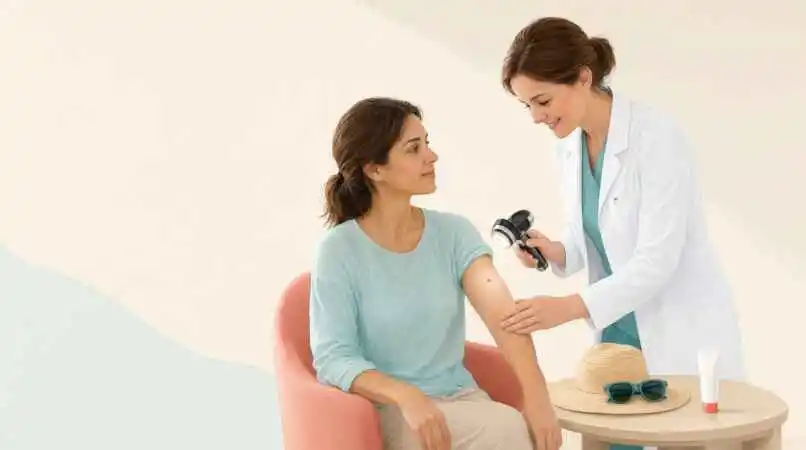
- Use a dermatoscope, a handheld device that magnifies the skin.
- Recommend a biopsy if the spot needs further evaluation.
It can help to bring a list of any changes you’ve noticed, photos taken over time, and questions you want answered.
What is a skin biopsy?
A biopsy means taking a small sample of skin—or removing the lesion, depending on the situation—for examination under a microscope. There are different biopsy techniques. A clinician chooses one based on the spot’s size, location, appearance, and suspected type.
A biopsy is the reliable way to confirm many skin cancers. A visual check, self-exam, or phone app alone cannot establish the diagnosis.
What if the biopsy shows cancer?
The pathology report usually identifies the cancer type and details that help guide treatment. Your care team may discuss factors such as:
- The cancer’s location and size
- How deeply it extends into the skin
- Whether the edges appear clear after removal
- Whether it has features that raise the risk of recurrence or spread
- Your overall health and treatment preferences
Not every skin cancer needs the same tests or treatment. In some cases, the biopsy removes the entire small cancer. In others, further surgery or other care is recommended.
Screening and a sensible middle ground
There isn’t one screening plan that is right for every person. Recommendations may depend on personal risk, medical history, and local guidance. If you have a history of skin cancer, many unusual moles, a weakened immune system, or a strong family history, ask your clinician whether regular professional skin examinations make sense for you.
Whether or not you have scheduled screening, don’t ignore a concerning spot between appointments. Make an appointment when you notice a persistent or changing lesion.
Skin Cancer Treatment: What Options May Be Offered?
Treatment depends on the type of skin cancer, its location, size, depth, risk features, and whether it has spread. A dermatologist, surgeon, or cancer specialist can explain the benefits and trade-offs of the options that apply to your case.
Surgery: often the main treatment
- Excision removes the cancer along with a margin of surrounding tissue. The sample is checked to determine whether the edges are clear.
- Mohs surgery removes the cancer in thin layers. Each layer is examined while the procedure is underway, continuing until no cancer cells are seen in the tissue margins. It is often considered for certain skin cancers, including lesions in areas where preserving healthy tissue is especially important. It isn’t necessary for every case.
- Curettage and electrodesiccation may be used for selected superficial or low-risk cancers. The clinician scrapes away tissue and treats the area to destroy remaining cells. Whether it is appropriate depends on the cancer and its location.
Other treatments
Depending on the diagnosis, treatment may also include:
- Radiation therapy, sometimes when surgery is not suitable or as part of a broader plan
- Prescription creams or gels, used for selected superficial lesions—not for every skin cancer
- Cryotherapy, which freezes certain precancerous or superficial lesions in carefully selected cases
- Immunotherapy or targeted medicines, for some advanced or difficult-to-treat cancers
- Additional surgery or treatment, if a cancer is aggressive, has returned, or has spread
- Some options, such as topical treatments or freezing, do not treat every type or depth of cancer. That’s why getting the correct diagnosis matters before trying to treat a spot.
Questions to ask your care team
Consider asking:
- What exact type of skin cancer do I have?
- Has the biopsy fully removed it, or do I need more treatment?
- Why do you recommend this option over another?
- What could the treatment area look or feel like while it heals?
- Will the procedure leave a scar?
- What follow-up visits do you recommend?
- Does this diagnosis change how often my skin should be checked?
A second opinion is reasonable if you’re uncertain or if the proposed treatment is extensive. Don’t replace or postpone recommended care with an unproven home remedy.
Natural Prevention That’s Evidence-Based
“Natural prevention” can mean protecting your skin with everyday behavior rather than expecting a food, oil, or supplement to block cancer. The most useful prevention plan reduces UV exposure while still fitting your life.
Step 1: Use shade strategically
UV exposure is generally strongest around the middle of the day. When practical, plan outdoor activities earlier or later, take breaks in the shade, and use a canopy or umbrella. Shade reduces exposure, but it may not block all UV rays—especially when light reflects off water, sand, snow, or pavement.
Step 2: Wear protective clothing
- Clothing provides a dependable physical barrier. Consider:
- Long sleeves and trousers when practical
- Tightly woven or purpose-designed UPF clothing
- A wide-brimmed hat that covers the ears and neck
- Sunglasses with UV protection
- A hat or shirt is helpful, but exposed areas still need protection. Cloud cover doesn’t reliably mean UV is absent.
Step 3: Apply sunscreen to exposed skin
Choose a broad-spectrum sunscreen with SPF 30 or higher. “Broad-spectrum” means it protects against both UVA and UVB rays.
For better coverage:
- Apply it to exposed skin before going outdoors, following the product label.
- Use enough to cover the skin evenly.
- Reapply about every two hours outdoors, and after swimming, sweating, or towel-drying, as the label directs.
- Check the expiration date and replace products that have expired or changed in texture.
Sunscreen is one part of a protection plan—not permission to stay in strong sun indefinitely. Combine it with shade and clothing.
Step 4: Avoid indoor tanning
Tanning beds and sunlamps expose skin to UV radiation. Avoid them, and be wary of “base tans”: a tan is a response to skin damage, not reliable protection from future sun exposure. If you want a tanned appearance, sunless tanning products can color the skin without UV tanning, but they don’t protect against sunlight.
Step 5: Don’t rely on food or supplements as a shield
A balanced diet supports general health. However, no specific food, tea, oil, vitamin, or supplement should be treated as proven protection against skin cancer or as a replacement for sunscreen, clothing, shade, or medical care.
Some supplements can interact with medicines or cause side effects. Ask a healthcare professional before starting one, especially if you have a medical condition, are pregnant, or take prescription medication.
Step 6: Make protection easy to repeat
Small routines tend to work better than ambitious plans you can’t keep. Keep sunscreen near your keys or outdoor gear, store a hat in the car, and check vulnerable areas after a long day outside. If you work outdoors, ask your employer about shade, protective clothing, and sun-safety practices.
FAQs
- What are the most common signs of skin cancer?
A changing spot, a sore that doesn’t heal, a growth that keeps bleeding or crusting, or a persistent rough patch can be concerning. Melanoma may show changes in shape, border, color, diameter, or evolution, but skin cancers don’t all look alike.
- Does skin cancer always hurt or itch?
No. Many skin cancers are painless. Itching, pain, or tenderness can happen, but the absence of discomfort does not rule out cancer.
- Is every changing mole melanoma?
No. Many changing spots are benign, and skin cancer can look unlike a typical mole. A clinician should assess a suspicious or evolving lesion rather than trying to classify it at home.
- Can melanoma be smaller than a pencil eraser?
Yes. The “D” in ABCDE is a reminder, not a minimum size requirement. A small spot that is evolving or otherwise unusual should still be checked.
- Can people with darker skin get skin cancer?
Yes. Skin cancer can affect people of every skin tone. It may appear in places less exposed to the sun, including palms, soles, and under nails, so new or changing marks in these areas deserve attention.
- Can skin cancer develop where the sun rarely reaches?
Yes. Although UV exposure is an important risk factor for many skin cancers, cancers can occur on less sun-exposed skin. Check your whole body, not only your face and arms.
- Is a sore that keeps returning worth checking?
Yes. A spot that repeatedly crusts, bleeds, or fails to heal should be assessed. Several conditions can cause this, but an examination is the way to find out what’s happening.
- Can a dermatologist diagnose skin cancer just by looking?
A clinician may identify a spot as suspicious by examining it, sometimes with magnification. Confirmation commonly requires a biopsy and examination of tissue under a microscope.
- Are skin cancer screening apps accurate enough to rely on?
No app should replace professional assessment of a concerning spot. A photo may help track changes, but it cannot reliably confirm or rule out cancer.
- Does every unusual mole need a biopsy?
No. A clinician may decide a spot is benign and doesn’t need a biopsy. The decision depends on its appearance, history, and your risk factors.
- What is the difference between a biopsy and surgery to remove the cancer?
A biopsy samples or removes tissue for diagnosis. Sometimes it removes the whole lesion; sometimes further treatment is needed after the results come back. Your clinician can explain which applies to your case.
- Is basal cell carcinoma dangerous?
Basal cell carcinoma rarely spreads to distant organs, but it can grow into nearby tissue and cause damage if untreated. It should be assessed and treated as advised.
- Is squamous cell carcinoma more serious than basal cell carcinoma?
SCC can sometimes spread, particularly when it has high-risk features. The level of risk depends on the individual cancer, so the diagnosis and treatment plan should come from a clinician.
- Why is melanoma considered serious?
Melanoma can spread to other parts of the body. Early diagnosis and appropriate treatment are important, which is why a suspicious changing spot shouldn’t be ignored.
- Can skin cancer be cured?
Many skin cancers are highly treatable, especially when found early. Outcomes depend on the type, stage, location, and other factors. Your care team can discuss your individual outlook.
- What is Mohs surgery?
Mohs surgery removes a skin cancer in thin layers and examines each layer during the procedure. It can help preserve healthy tissue in selected cases, but it is not needed for every skin cancer.
- Will skin cancer treatment leave a scar?
It may. The size and appearance of a scar depend on the cancer, its location and size, and the treatment. Ask the clinician what to expect and how the wound will be cared for.
- Can creams treat skin cancer?
Prescription creams are used for certain superficial or precancerous lesions, but they are not appropriate for every cancer. Don’t use an over-the-counter product or home remedy on a suspected cancer without medical advice.
- Can natural remedies cure skin cancer?
No natural remedy has been established as a safe replacement for medical skin cancer treatment. Delaying proven care can allow the cancer to grow or spread.
- Does sunscreen prevent every skin cancer?
No. Sunscreen lowers UV exposure when used correctly but cannot block all UV or eliminate risk. Combine it with shade, protective clothing, and avoiding tanning beds.
- What SPF should I use?
A commonly advised choice is broad-spectrum SPF 30 or higher. Follow the label and apply enough; reapply during outdoor activity as directed, especially after swimming, sweating, or towel-drying.
- Do I need sunscreen on cloudy days?
UV can reach your skin through cloud cover. Use sun protection when spending time outdoors, following local UV advice and the product directions.
- Can I get skin cancer through a window?
Some UV can pass through certain windows, though the amount varies with the glass and setting. For long periods near a sunny window or in a vehicle, consider protective clothing, shade, or a window film designed to reduce UV.
- Are tanning beds safer than the sun?
No. Indoor tanning exposes skin to UV radiation and should be avoided. A “base tan” is not a safe substitute for sun protection.
- Can a tan protect me from skin cancer?
A tan is a sign of UV exposure and skin response, not dependable protection. It does not make future exposure safe.
- Should I take vitamin supplements to prevent skin cancer?
Supplements are not a substitute for UV protection, and no supplement should be assumed to prevent skin cancer. Ask a clinician before taking supplements, especially if you use medication or have a health condition.
- How often should I check my skin?
There isn’t one schedule that fits everyone. Many people find a monthly self-check useful; people with a personal history or higher risk should ask their clinician about the right monitoring plan.
- Do I need a professional skin exam if I have no symptoms?
It depends on your risk and medical history. Ask a healthcare professional whether a routine examination is appropriate for you. Regardless, seek advice about spots that are new, changing, or not healing.
- When should I make an appointment about a spot?
Arrange an assessment if it is growing, changing, bleeding, repeatedly crusting, painful, itchy, or failing to heal. If you’re unsure, it’s reasonable to ask a clinician rather than wait.
- What should I do if a spot looks suspicious but I can’t get an appointment soon?
Contact your clinic and describe the change, bleeding, or non-healing sore; ask whether earlier assessment is available. If it rapidly worsens or you’re otherwise concerned, seek prompt medical advice. Don’t try to remove or treat it yourself.
Notice Changes, Protect Your Skin, Ask for Help
Skin cancer awareness isn’t about inspecting every freckle with alarm. It’s about learning what’s normal for your skin, noticing meaningful changes, and getting suspicious spots assessed instead of trying to diagnose them from a photo or treating them at home.
Protective clothing, shade, broad-spectrum sunscreen, and avoiding indoor tanning are practical ways to reduce harmful UV exposure. They are useful habits—not guarantees. And if a spot is changing, bleeding, or not healing, the clearest next step is a healthcare appointment.
Take a moment to check your skin, make sun protection part of your routine, and share this guide with someone who might benefit.
⚕️Medical Disclaimer:
The information provided on this website is for general educational and informational purposes only and is not intended as a substitute for professional medical advice, diagnosis, or treatment. Always seek the advice of your physician or other qualified health provider with any questions you may have regarding a medical condition. Never disregard professional medical advice or delay in seeking it because of something you have read on this website.
