
Table of Contents
The Silent Protein Keeping You Alive: What Albumin Reveals About Your Health
If you’ve ever had a routine blood panel, there’s a good chance a single number quietly slipped past you without a second thought: albumin. It doesn’t get the dramatic headlines that cholesterol or blood sugar do, yet this unassuming protein is one of the most important substances circulating in your bloodstream right now. It’s holding your blood vessels together, ferrying hormones and medications to where they need to go, and serving as one of the most reliable early warning signs doctors have for liver disease, kidney damage, malnutrition, and chronic inflammation.
Albumin is, in many ways, the body’s unsung workhorse — abundant, unglamorous, and absolutely essential. This article takes a deep dive into what albumin actually is, what it does inside your body every second of every day, why doctors order it so often, what it means when your levels are too high or too low, and what you can realistically do to support healthy levels. By the end, that easy-to-overlook line on your lab report will make a lot more sense.
Few single numbers on a blood panel tell as complete a story as albumin.
What Exactly Is Albumin?
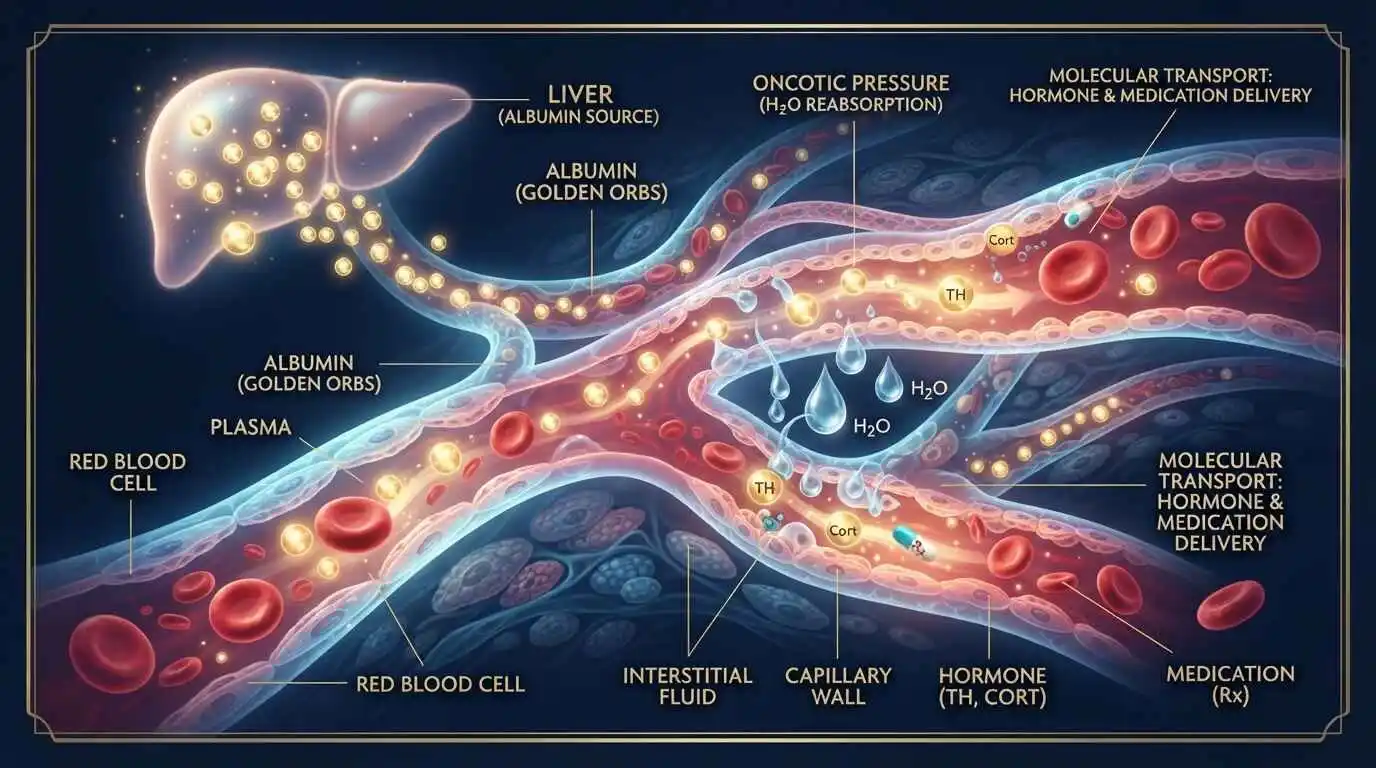
Albumin is a protein produced almost entirely by the liver, and it’s the single most abundant protein found in human blood plasma, typically making up more than half of all the protein circulating in your bloodstream. It’s a relatively small, water-soluble protein, which makes it uniquely suited to floating freely through blood vessels and tissues, interacting with an enormous range of molecules along the way.

The liver produces roughly 10 to 15 grams of albumin every single day in a healthy adult, constantly replenishing a pool that circulates through the bloodstream, leaks slowly into surrounding tissues, and eventually gets broken down and recycled. Because its production depends entirely on a functioning liver and an adequate supply of amino acids from protein in the diet, albumin levels act as a sensitive mirror reflecting both liver health and overall nutritional status.
The Many Jobs of Albumin
It’s easy to assume a protein this abundant must serve one dominant function, but albumin is remarkably multitasking. Understanding its roles helps explain why doctors treat it as such a valuable diagnostic clue.
Maintaining Oncotic Pressure
Perhaps albumin’s most critical job is maintaining what’s known as oncotic (or colloid osmotic) pressure — the force that keeps fluid inside your blood vessels rather than leaking out into surrounding tissues. Albumin molecules are large enough that they don’t easily pass through capillary walls, so they create an osmotic pull that draws water back into the bloodstream.
When albumin levels drop significantly, this pressure weakens, and fluid begins seeping out of blood vessels into tissue spaces. This is precisely why low albumin is so closely associated with edema — the swelling seen in the legs, ankles, abdomen, or lungs of patients with liver disease, kidney disease, or severe malnutrition. Without enough albumin, the body essentially loses its ability to keep fluid where it belongs.
Transporting Hormones, Drugs, and Nutrients
Albumin also functions as the body’s primary transport vehicle for a huge range of substances that aren’t very soluble in water on their own. It binds and carries fatty acids, bilirubin, certain hormones like thyroid hormone and cortisol, calcium, and a substantial percentage of medications people take every day, including many antibiotics, anti-inflammatory drugs, and blood thinners.
This transport role has real clinical significance. Because so many drugs bind to albumin in the bloodstream, a patient with low albumin levels may experience altered drug effects — since more of the medication remains “free” and biologically active rather than bound and inactive. This is one reason doctors adjust dosing carefully in patients with liver disease or malnutrition, where albumin levels are often reduced.
Buffering Blood pH and Antioxidant Defense
Albumin also contributes modestly to maintaining the blood’s acid-base balance, acting as a buffer that helps resist dramatic swings in pH. Additionally, it has notable antioxidant properties, binding free radicals and reactive molecules that would otherwise damage cells, making it part of the body’s broader defense against oxidative stress.
Why Doctors Order an Albumin Test
Albumin levels are typically measured as part of a comprehensive metabolic panel or a liver function panel, and they offer clinicians a remarkably efficient snapshot of several body systems at once.
Assessing Liver Function
Because the liver is the sole production site for albumin, chronic liver conditions like cirrhosis, hepatitis, and fatty liver disease often show up as gradually declining albumin levels over time. Unlike some liver enzymes that spike acutely and then settle, albumin reflects a more sustained picture of how well the liver is functioning as a synthesizing organ, since it takes roughly three weeks for albumin levels to reflect a meaningful change in liver output.
Evaluating Kidney Health
In healthy kidneys, albumin is far too large to pass through the filtering membranes of the nephrons, so very little of it should appear in urine. When kidney filtration is damaged — as in diabetic nephropathy or glomerulonephritis — albumin begins leaking into the urine, a condition called albuminuria. This makes urine albumin testing one of the earliest and most sensitive indicators of developing kidney disease, often appearing before more obvious symptoms.
Gauging Nutritional Status
Because albumin synthesis depends on adequate protein intake and amino acid availability, chronically low levels can signal malnutrition, particularly protein-calorie malnutrition. This is especially relevant in hospitalized patients, elderly individuals with reduced appetite, or those recovering from prolonged illness, where clinicians frequently track albumin as part of a broader nutritional assessment.
Detecting Inflammation and Illness Severity
Albumin is classified as a “negative acute phase reactant,” meaning its production drops during acute inflammation or illness as the liver redirects resources toward producing other proteins involved in the immune response. This makes albumin a useful — if nonspecific — marker of overall illness severity, and it’s frequently used in hospital settings to help predict outcomes in critically ill patients.
Understanding Low Albumin (Hypoalbuminemia)
Low albumin, medically termed hypoalbuminemia, is one of the most common abnormal findings in hospitalized and chronically ill patients. It can result from several distinct mechanisms, and understanding which one is at play matters for treatment.
Reduced production occurs when the liver simply can’t manufacture enough albumin, most commonly due to cirrhosis, severe hepatitis, or other advanced liver disease. Increased loss happens when albumin escapes the body faster than it can be replaced — through damaged kidneys in nephrotic syndrome, through burns or severe skin conditions, or through the gastrointestinal tract in certain inflammatory bowel conditions. Increased breakdown or redistribution occurs during severe inflammation, sepsis, or major surgery, when the body shifts albumin out of the bloodstream and into tissue spaces even without any change in total production. Dilution can also artificially lower measured albumin concentration when a patient receives large volumes of intravenous fluids.
Symptoms associated with low albumin often relate directly to its lost function: swelling in the legs, ankles, or abdomen; fatigue; muscle wasting; slow wound healing; and increased susceptibility to infection, since albumin also plays a supporting role in immune function.
Understanding High Albumin (Hyperalbuminemia)
High albumin levels are considerably less common and, in most cases, less clinically significant than low levels. The most frequent cause is simple dehydration — when the fluid portion of blood decreases, the concentration of albumin within that smaller volume appears artificially elevated, even though total albumin production is normal. Once a dehydrated patient rehydrates, levels typically normalize.
True overproduction of albumin is rare, since the body doesn’t generally benefit from excess levels the way it might with other proteins. For this reason, an elevated albumin reading usually prompts clinicians to look first at hydration status rather than assume a more serious underlying condition.
Albumin in Clinical Practice: Beyond the Basic Blood Test
Albumin’s clinical usefulness extends well beyond a single lab value on a routine panel. Hospitals frequently use serum albumin as a component of broader prognostic scoring systems that help predict surgical risk, recovery likelihood after major illness, and overall frailty in elderly patients. Surgeons often check preoperative albumin levels because low levels are associated with higher rates of post-surgical complications, slower wound healing, and longer hospital stays.
In critical care medicine, intravenous albumin solutions are sometimes administered directly to patients experiencing significant fluid shifts, severe burns, liver failure with fluid accumulation in the abdomen, or certain types of shock. This isn’t a routine intervention — it’s reserved for specific clinical scenarios where restoring oncotic pressure and fluid balance can meaningfully improve outcomes, and its use is guided carefully by current medical evidence rather than applied broadly.
The Albumin-to-Globulin Ratio
Many lab panels report not just total protein and albumin, but also an albumin-to-globulin (A/G) ratio, comparing albumin against the other major class of blood proteins, globulins, which include antibodies and various transport proteins. A normal A/G ratio typically sits slightly above 1, reflecting a healthy balance between the two protein categories.
A low A/G ratio — meaning relatively more globulin compared to albumin — can suggest chronic inflammation, certain autoimmune conditions, or blood cancers like multiple myeloma that cause overproduction of specific globulin proteins. A high A/G ratio is less common diagnostically but may occasionally be seen in certain immune deficiencies. Like albumin alone, this ratio is a clue that prompts further investigation rather than a standalone diagnosis.
Supporting Healthy Albumin Levels
Because albumin production is so closely tied to liver health and protein nutrition, supporting healthy levels generally comes down to supporting those two systems directly, always within the context of a person’s individual medical circumstances and physician guidance.
Adequate protein intake gives the liver the raw amino acid material it needs to synthesize albumin efficiently. Lean meats, fish, eggs, dairy, legumes, and soy products all provide the building blocks required. Liver-supportive habits — limiting excessive alcohol intake, maintaining a healthy body weight, and managing conditions like fatty liver disease — help preserve the organ’s synthetic capacity over time. Managing chronic inflammation, whether through appropriate treatment of underlying autoimmune or inflammatory conditions, can help prevent the inflammatory suppression of albumin production. Staying adequately hydrated supports accurate lab readings and overall circulatory health, while treating underlying kidney or liver disease directly, under medical supervision, remains the most effective way to address albumin abnormalities caused by those conditions.
It’s worth emphasizing that low albumin is a signal, not a disease in itself — addressing it effectively almost always means identifying and treating whatever underlying condition is driving the number down, rather than trying to raise the number in isolation.
Albumin Across the Lifespan
Albumin levels aren’t static across a person’s life. Newborns and infants naturally have somewhat lower albumin levels than adults, reflecting immature liver function that matures over the first months and years of life. Levels typically stabilize through childhood and adulthood, before gradually declining somewhat in older age — a change linked partly to reduced liver synthetic capacity, partly to lower dietary protein intake common in elderly populations, and partly to the higher prevalence of chronic inflammatory conditions in older age groups.
This age-related decline is part of why albumin is frequently included in geriatric health assessments, where it serves as one useful data point among several in evaluating overall frailty, nutritional status, and resilience to illness or surgery in older adults.
When to Talk to a Doctor About Your Albumin Levels
An isolated albumin result outside the normal range is rarely, by itself, a reason for alarm — labs naturally fluctuate, and hydration status alone can shift the number meaningfully. However, persistently low or trending-downward albumin levels, especially when paired with symptoms like unexplained swelling, fatigue, unintentional weight loss, or changes in urine appearance, warrant a conversation with a healthcare provider. Because albumin sits at the intersection of liver function, kidney function, and nutritional status, an abnormal result is often the first thread a physician pulls to identify a condition that might otherwise go unnoticed for months.
Conclusion: Small Line, Big Story
Albumin rarely gets the attention of flashier lab values, yet few single numbers on a blood panel tell as complete a story. It reflects how well your liver is manufacturing essential proteins, how effectively your kidneys are filtering, how well-nourished your body currently is, and how much inflammatory stress your system is under — all from one modest, unassuming molecule quietly circulating through your bloodstream.
The next time a lab report lands in your inbox, that small line labeled “albumin” deserves a second look. It won’t tell the whole story on its own, but it’s often one of the clearest, quietest signals your body has for saying that something deeper is worth paying attention to.
| Frequently Asked Questions |
| 1. What is albumin?
Albumin is the most abundant protein in human blood plasma, produced by the liver, that helps maintain fluid balance, transport substances through the bloodstream, and support overall bodily function. |
| 2. Where is albumin produced?
Albumin is produced almost exclusively by the liver. |
| 3. What is a normal albumin level?
Normal ranges vary slightly by laboratory, but serum albumin typically falls between roughly 3.5 and 5.0 grams per deciliter in healthy adults. |
| 4. What does low albumin mean?
Low albumin, or hypoalbuminemia, can indicate liver disease, kidney disease, malnutrition, chronic inflammation, or significant protein loss from the body. |
| 5. What does high albumin mean?
High albumin most commonly reflects dehydration rather than a serious underlying disease, since true overproduction of albumin is rare. |
| 6. Why does the liver produce albumin?
The liver produces albumin to maintain blood volume, transport nutrients and hormones, and support the body’s fluid balance and immune defenses. |
| 7. How is albumin tested?
Albumin is typically measured through a blood test as part of a comprehensive metabolic panel or liver function panel, and separately through urine testing to check for albuminuria. |
| 8. What is albuminuria?
Albuminuria refers to the presence of albumin in the urine, which normally shouldn’t happen in significant amounts and often signals kidney damage. |
| 9. What is oncotic pressure and why does albumin matter for it?
Oncotic pressure is the force that keeps fluid inside blood vessels; albumin’s large size allows it to generate this pressure, preventing fluid from leaking into surrounding tissues. |
| 10. Can low albumin cause swelling?
Yes. Low albumin reduces oncotic pressure, allowing fluid to leak out of blood vessels into tissues, commonly causing swelling in the legs, ankles, or abdomen. |
| 11. Is albumin linked to liver disease?
Yes. Because the liver produces albumin, chronic liver conditions like cirrhosis and hepatitis often cause gradually declining albumin levels. |
| 12. Is albumin linked to kidney disease?
Yes. Damaged kidneys can allow albumin to leak into the urine, making albuminuria an early marker of kidney dysfunction, particularly in diabetic kidney disease. |
| 13. Can diet affect albumin levels?
Adequate dietary protein intake supports the liver’s ability to synthesize albumin, so chronic poor nutrition can contribute to lower levels over time. |
| 14. What foods help support healthy albumin levels?
Protein-rich foods such as lean meat, fish, eggs, dairy, legumes, and soy can support the amino acid supply needed for albumin production, though underlying medical conditions should be addressed with a physician. |
| 15. Is low albumin the same as malnutrition?
Not necessarily. Low albumin can result from malnutrition, but also from inflammation, liver disease, kidney loss, or fluid shifts unrelated to nutritional intake. |
| 16. What is the albumin-to-globulin (A/G) ratio?
It’s a comparison between albumin and globulin protein levels in the blood, used to help identify patterns suggestive of chronic inflammation, liver disease, or certain immune conditions. |
| 17. Can dehydration affect albumin test results?
Yes. Dehydration concentrates the blood, which can make albumin levels appear artificially elevated even without any real change in production. |
| 18. Is albumin used as a treatment?
Intravenous albumin is used in specific clinical situations, such as certain cases of liver failure with fluid accumulation, severe burns, or specific types of shock, under medical supervision. |
| 19. Why do doctors check albumin before surgery?
Low preoperative albumin is associated with higher risk of surgical complications and slower recovery, making it a useful marker in surgical risk assessment. |
| 20. Does albumin play a role in drug metabolism?
Yes. Many medications bind to albumin in the bloodstream, and low albumin levels can alter how much of a drug remains active and available in the body. |
| 21. Can inflammation lower albumin levels?
Yes. Albumin is classified as a negative acute phase reactant, meaning its production decreases during acute inflammation or illness. |
| 22. Are albumin levels different in children versus adults?
Yes. Infants typically have somewhat lower albumin levels due to immature liver function, with levels stabilizing through childhood into adulthood. |
| 23. Do albumin levels decline with age?
Many older adults show a gradual decline in albumin levels, related to reduced liver synthetic capacity, lower protein intake, and higher rates of chronic inflammation. |
| 24. What symptoms are associated with low albumin?
Common symptoms include swelling, fatigue, muscle wasting, slow wound healing, and increased susceptibility to infection. |
| 25. Can liver cirrhosis be diagnosed from albumin levels alone?
No. Albumin is one useful indicator among several used alongside other liver function tests, imaging, and clinical evaluation to assess liver disease. |
| 26. What is nephrotic syndrome and how does it relate to albumin?
Nephrotic syndrome is a kidney disorder characterized by significant protein — including albumin — leaking into the urine, often resulting in low blood albumin and swelling. |
| 27. Does exercise affect albumin levels?
Regular physical activity supports overall metabolic and liver health, which can indirectly support normal protein synthesis, though it isn’t a direct treatment for abnormal albumin levels. |
| 28. Can albumin levels predict hospital outcomes?
Yes. Low albumin is commonly used in hospital settings as part of broader scoring systems to help estimate illness severity and recovery likelihood. |
| 29. Is a single abnormal albumin result cause for concern?
Not necessarily. A single result can be affected by hydration or temporary illness; persistent or trending abnormalities are more clinically significant and worth discussing with a doctor. |
| 30. When should someone see a doctor about albumin levels?
Persistently low or declining albumin, especially alongside symptoms like swelling, fatigue, or unexplained weight changes, warrants a medical evaluation to identify the underlying cause. |
⚕️Medical Disclaimer:
The information provided on this website is for general educational and informational purposes only and is not intended as a substitute for professional medical advice, diagnosis, or treatment. Always seek the advice of your physician or other qualified health provider with any questions you may have regarding a medical condition. Never disregard professional medical advice or delay in seeking it because of something you have read on this website.
