
Table of Contents
Beyond IQ: The Hidden Map of Human Intelligence You Never Knew You Had
For most of the twentieth century, intelligence meant one number. A test, a score, a single line on a report card that supposedly captured the entire scope of a person’s mental capability. If you were good with numbers and words, you were “smart.” If you weren’t, the system quietly told you that you weren’t. It took decades of research, false starts, and one landmark 1983 book by a Harvard psychologist to finally crack that narrow definition wide open.
Howard Gardner’s theory of multiple intelligences didn’t just add a few new categories to an old test — it rewrote the question entirely. Instead of asking “how smart are you,” it asked “how are you smart.” That shift matters more today than ever, in a world where a gifted surgeon, a virtuoso violinist, a wilderness tracker, an empathetic therapist, and a machine-learning engineer are all, in their own distinct ways, operating at genius level — just not on the same axis.
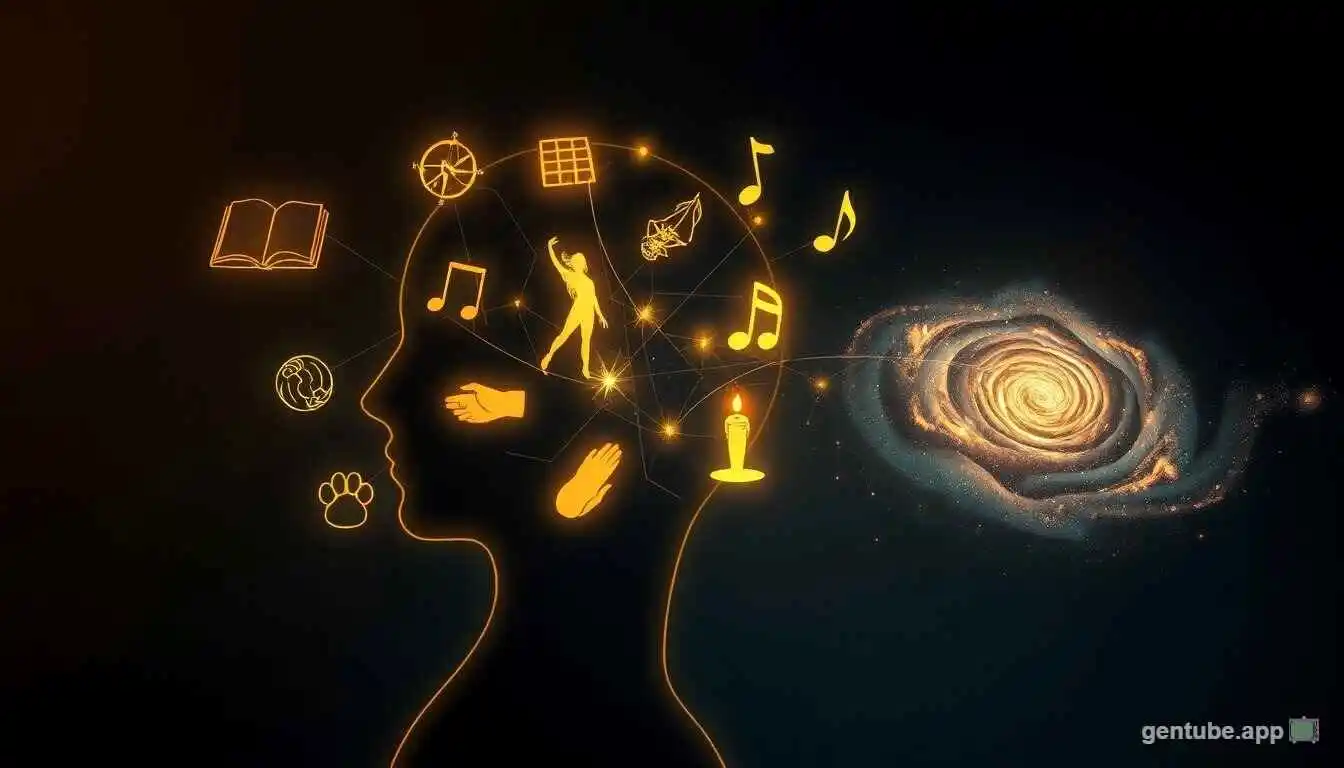
This piece is a deep tour through the many forms intelligence takes: the classical cognitive intelligences we’ve studied for a century, the emotional and social intelligences that quietly run our relationships and careers, the practical and cultural intelligences that let us thrive across contexts, and the newer, stranger intelligence now growing inside our machines. By the end, you won’t just understand intelligence differently — you’ll likely recognize forms of it in yourself that a standardized test never gave you credit for.
Intelligence was never one thing. It was always plural, varied, and far more interesting than a single number could ever capture.

A Short History of a Very Big Idea
The idea of a single, fixed intelligence — often reduced to an IQ score — dominated psychology and education for most of the 1900s. Early intelligence testing, developed by Alfred Binet in France, was originally meant to identify children who needed extra academic support, not to rank human worth on a single scale. Somewhere along the way, that narrow tool got stretched into a sweeping claim about human potential.
Gardner pushed back hard. Drawing on studies of brain damage, child development, prodigies, and cross-cultural cognition, he argued that the brain isn’t one general-purpose processor — it’s a collection of semi-independent systems, each with its own developmental trajectory, its own neural pathways, and its own way of solving problems. A stroke that destroys language ability doesn’t necessarily touch a person’s musical talent. A child who struggles with arithmetic might read social situations with uncanny precision. These weren’t exceptions to intelligence — they were proof that intelligence was never singular to begin with.
Linguistic Intelligence: The Power of Words
Linguistic intelligence is the sensitivity to the sounds, rhythms, meanings, and functions of language. People strong in this domain — novelists, poets, journalists, comedians, skilled lawyers — don’t just use words correctly; they use them persuasively, precisely, and often beautifully. This intelligence shows up early in children who love wordplay, invent stories, or pick up new languages with unusual ease.
Linguistic intelligence isn’t only about writing. Great orators, negotiators, and even stand-up comedians rely on a finely tuned instinct for timing, tone, and word choice. In the workplace, this intelligence often determines who can turn a complicated idea into a message that actually lands.
Logical-Mathematical Intelligence: The Architecture of Reasoning
This is the intelligence most closely tied to traditional IQ testing — the capacity to reason logically, recognize patterns, and work comfortably with abstract systems like numbers, code, and formal logic. Mathematicians, scientists, engineers, and detectives lean heavily on this form of intelligence, which favors structured, step-by-step problem-solving.
People strong here tend to ask “why” relentlessly, break large problems into smaller testable pieces, and feel genuine satisfaction in finding an elegant solution. It’s the intelligence behind scientific discovery and software architecture alike — but on its own, it doesn’t guarantee the ability to communicate that discovery to anyone else, which is exactly why Gardner insisted it needed company.
Spatial Intelligence: Thinking in Pictures
Spatial intelligence is the ability to perceive, manipulate, and reconstruct images and spaces mentally — even ones that don’t yet exist. Architects sketching a building that isn’t built, surgeons navigating the three-dimensional geography of the human body, chess players visualizing moves ten turns ahead, and sculptors seeing a finished form inside a raw block of stone are all drawing on this intelligence.
Highly spatial thinkers often struggle in classrooms built around lectures and text, yet thrive the moment a problem becomes visual — a diagram, a model, a map. Pilots, graphic designers, and video game developers all depend on a finely developed spatial sense that lets them hold complex three-dimensional relationships in their heads and manipulate them at will.
Musical Intelligence: Sound as a Second Language
Musical intelligence involves sensitivity to pitch, rhythm, timbre, and the emotional structure of sound. It’s often the earliest intelligence to emerge in prodigies, and it appears to operate on largely independent neural circuitry — which is why some people with severe cognitive impairments retain extraordinary musical ability.
This intelligence isn’t reserved for professional musicians. It shows up in people who instinctively feel the emotional arc of a film score, who can recall a melody after one listen, or who process language itself as a kind of music — noticing accent, cadence, and tone as much as literal meaning. Musical intelligence and linguistic intelligence often overlap, which is part of why lyricists and poets frequently possess both.
Bodily-Kinesthetic Intelligence: The Mind in Motion
Bodily-kinesthetic intelligence is the skillful use of one’s body — and often of physical tools — to solve problems, create things, or express ideas. Dancers, athletes, surgeons, mechanics, and craftspeople all rely on this intelligence, which treats the body not as a vehicle for the mind but as an instrument of thought in its own right.
This is the intelligence that lets a basketball player make split-second spatial calculations without conscious deliberation, or a carpenter “know” the right amount of pressure to apply through feel alone. It’s often dismissed in academic settings, yet elite physical performance requires a level of precision, timing, and adaptive problem-solving that rivals any classroom discipline.
Interpersonal Intelligence: Reading the Room
Interpersonal intelligence is the capacity to understand other people — their moods, motivations, intentions, and desires — and to work effectively with them. Teachers, therapists, salespeople, negotiators, and great leaders all depend on this ability to sense what’s happening beneath the surface of a conversation.
People high in interpersonal intelligence tend to be natural mediators. They notice tension before it’s voiced, adjust their communication style to fit their audience, and build trust quickly. In group settings, they’re often the ones quietly steering the dynamic — not through authority, but through acute social perception.
Intrapersonal Intelligence: Knowing Yourself
Where interpersonal intelligence looks outward, intrapersonal intelligence looks inward. It’s the capacity for accurate self-understanding — knowing your own emotions, motivations, strengths, limitations, and values well enough to guide your own behavior effectively.
This intelligence is quiet and often invisible from the outside, but it underlies resilience, self-discipline, and long-term decision-making. People with strong intrapersonal intelligence tend to set realistic goals, recover from setbacks without spiraling, and make choices aligned with their actual values rather than external pressure. Philosophers, writers of memoir, and many long-term meditators cultivate this intelligence deliberately.
Naturalistic Intelligence: Fluency in the Living World
Added by Gardner after his original seven, naturalistic intelligence is the ability to recognize, categorize, and understand patterns in the natural world — plants, animals, weather, ecosystems, and the subtle differences between species or conditions that most people never notice.
This is the intelligence of the field biologist who can identify a bird by a two-second snatch of song, the farmer who reads a coming storm in the color of the sky, and the indigenous tracker who can reconstruct an animal’s entire recent history from a handful of disturbed leaves. In an increasingly urbanized world, this intelligence is easy to overlook — but it remains foundational to agriculture, conservation, and medicine.
Existential Intelligence: Sitting With the Big Questions
Existential intelligence — sometimes called the “ninth intelligence” — is the capacity and inclination to ponder deep questions about human existence: why we’re here, what happens after death, what gives life meaning. Gardner treated this one more cautiously than the others, but its influence is unmistakable in philosophy, theology, and even leadership.
People with strong existential intelligence tend to think in long time horizons and large frames. They’re comfortable with ambiguity and often serve as the ones who help organizations, communities, or families articulate a larger sense of purpose beyond the immediate task at hand.
Emotional Intelligence: The Quiet Force Behind Every Relationship
While not part of Gardner’s original framework, emotional intelligence (EQ), popularized by psychologist Daniel Goleman, has become one of the most studied forms of human capability. It combines self-awareness, self-regulation, motivation, empathy, and social skill into a single practical toolkit for navigating human relationships.
Research consistently links high EQ to better leadership outcomes, stronger marriages, and greater career longevity — often outperforming raw cognitive ability in predicting real-world success. Unlike IQ, which is relatively stable across a lifetime, emotional intelligence can be deliberately developed through practice: naming emotions accurately, pausing before reacting, and actively working to understand another person’s perspective before responding to it.
Social Intelligence: Intelligence in the Group
Closely related to both interpersonal and emotional intelligence, social intelligence is specifically about navigating group dynamics — understanding hierarchies, unspoken norms, alliances, and the invisible rules that govern how a team, a family, or an entire culture actually operates versus how it claims to operate on paper.
This intelligence is what separates a technically brilliant employee who can’t get promoted from a less technically gifted colleague who always seems to know exactly what the room needs. It’s an intelligence built through observation, pattern recognition, and often plenty of social trial and error.
Creative Intelligence: The Art of Original Thought
Creative intelligence is the ability to generate ideas, solutions, or expressions that are both novel and useful — a combination that distinguishes genuine creativity from mere randomness. It draws on elements of several other intelligences at once: the pattern recognition of logical-mathematical thinking, the imagery of spatial thinking, and the emotional resonance of musical or linguistic thinking.
Highly creative individuals tend to tolerate ambiguity well, make unusual connections between unrelated ideas, and persist through many failed attempts before landing on something original. This is the intelligence behind scientific breakthroughs as much as artistic ones — Einstein’s thought experiments and a jazz musician’s improvisation both rely on the same underlying cognitive flexibility.
Practical and Adversity Intelligence: Street Smarts Under Pressure
Sometimes called “practical intelligence” or, more colloquially, “street smarts,” this is the ability to solve real, messy, ill-defined problems in real time — the kind that don’t come with a textbook chapter attached. It’s closely tied to what psychologist Paul Stoltz termed “adversity intelligence” (AQ): the capacity to respond constructively to hardship rather than being derailed by it.
People high in this intelligence tend to improvise well, stay calm under pressure, and find workable solutions with incomplete information. It’s the intelligence of the entrepreneur navigating a cash crisis, the paramedic making decisions in the first sixty seconds of an emergency, and the parent solving a logistical crisis with whatever happens to be on hand.
Cultural Intelligence: Thriving Across Difference
Cultural intelligence (CQ) is the capacity to function effectively across different cultural contexts — understanding not just facts about another culture, but adapting one’s own behavior appropriately within it. In an increasingly globalized economy, this intelligence has moved from a nice-to-have to a genuine competitive advantage.
CQ combines cognitive knowledge (understanding cultural norms), motivational drive (genuine interest in engaging across difference), and behavioral flexibility (actually adjusting one’s communication style, body language, and expectations). International business leaders, diplomats, and long-term expatriates typically develop this intelligence through sustained, humbling exposure rather than study alone.
Digital and Artificial Intelligence: A New Kind of Mind
No modern discussion of intelligence is complete without addressing the newest entrant: artificial intelligence. Machine intelligence differs fundamentally from every human intelligence discussed above — it doesn’t emerge from lived experience, embodiment, or emotion, but from statistical pattern recognition across enormous datasets.
What’s fascinating is how unevenly AI systems map onto human intelligence categories. Today’s most advanced models can outperform humans at certain logical-mathematical and linguistic tasks — writing coherently, solving structured problems, recognizing patterns across vast texts — while remaining far behind human toddlers at bodily-kinesthetic tasks like tying a shoelace, or at genuine interpersonal intelligence like sensing when a friend needs comfort rather than advice. This mismatch is a useful reminder that intelligence was never one thing to begin with — and that building genuinely well-rounded machine intelligence is, in some ways, an even harder problem than building a well-rounded human.
Why This Matters: Education, Careers, and Parenting
The practical implications of recognizing multiple intelligences are enormous. In education, a single standardized test can badly misjudge a child who is a gifted spatial or bodily-kinesthetic thinker but an average test-taker. Teaching methods that incorporate visual models, hands-on building, group discussion, and musical rhythm alongside traditional reading and lecture give more students a genuine chance to shine in the way their brain actually works best.
In careers, understanding your own intelligence profile can be the difference between a job that drains you and one that energizes you. A brilliant interpersonal thinker forced into a solitary, purely analytical role will likely underperform and feel miserable — not because they lack ability, but because the role is mismatched to their strengths. The same is true in reverse for a strongly intrapersonal or logical-mathematical thinker placed into a role demanding constant high-stakes social improvisation.
In parenting, this framework offers something even more valuable than academic strategy: permission. Permission to see a child who struggles with math but reads a room like a seasoned diplomat as genuinely gifted rather than simply “not smart.” Permission to nurture the intelligence that’s actually there, rather than the one a report card was built to measure.
Discovering and Strengthening Your Own Intelligences
Most people are a blend of several intelligences, with one or two dominant strengths rather than a single category. A useful starting point is simple reflection: What kinds of problems do you solve almost effortlessly? What activities make you lose track of time? What do other people consistently come to you for help with?
From there, deliberate practice matters more than talent alone. Linguistic intelligence grows through reading widely and writing regularly. Emotional and social intelligence sharpen through honest feedback and active listening. Spatial intelligence strengthens with sketching, building, and navigation practice. Even existential and intrapersonal intelligence — often assumed to be fixed traits — deepen meaningfully through reflective practices like journaling, therapy, or sustained solitude.
Conclusion: A Fuller Definition of Smart
The old idea of a single intelligence score was never wrong because it measured nothing real — logical-mathematical and linguistic reasoning genuinely matter. It was wrong because it mistook one slice of the mind for the whole of it. Human cognition is a symphony of distinct, interacting capacities: language, logic, space, sound, movement, self-understanding, social insight, ethical and existential reflection, and now, alongside us, an entirely new machine intelligence still finding its shape.
Recognizing this fuller map doesn’t just make psychology more accurate — it makes daily life more humane. It means the quiet kid who can’t sit still in math class might be the future engineer who thinks best with their hands. It means the introvert who reads people better than anyone in the room might be the best leader you never expected. Intelligence was never one thing. It was always this — plural, varied, and far more interesting than a single number could ever capture.
Frequently Asked Questions
| Frequently Asked Questions |
| 1. What is the theory of multiple intelligences?
It’s a framework developed by psychologist Howard Gardner proposing that human intelligence isn’t a single general ability but a set of distinct, semi-independent capacities, including linguistic, logical-mathematical, spatial, musical, bodily-kinesthetic, interpersonal, intrapersonal, naturalistic, and existential intelligence. |
| 2. Who created the theory of multiple intelligences?
Harvard developmental psychologist Howard Gardner introduced the theory in his 1983 book “Frames of Mind.” |
| 3. How many types of intelligence did Gardner originally identify?
Gardner originally proposed seven intelligences, later adding naturalistic intelligence as an eighth, and tentatively discussing existential intelligence as a possible ninth. |
| 4. Is IQ the same as intelligence?
No. IQ measures a narrower set of cognitive abilities, primarily logical-mathematical and linguistic reasoning, while intelligence in the broader sense includes many other capacities IQ tests don’t assess. |
| 5. What is emotional intelligence?
Emotional intelligence (EQ) is the ability to recognize, understand, and manage your own emotions while also recognizing and influencing the emotions of others. |
| 6. Is emotional intelligence part of Gardner’s theory?
Not directly. EQ was popularized separately by psychologist Daniel Goleman, though it overlaps closely with Gardner’s interpersonal and intrapersonal intelligences. |
| 7. Can intelligence change over time?
Yes. While some cognitive traits are relatively stable, many intelligences — especially emotional, social, and practical intelligence — can be deliberately developed through practice and experience. |
| 8. What is spatial intelligence used for?
Spatial intelligence supports tasks that require visualizing and manipulating objects or environments mentally, such as architecture, navigation, surgery, art, and engineering. |
| 9. What careers suit bodily-kinesthetic intelligence?
Dance, professional sports, surgery, physical therapy, skilled trades, and performance arts all rely heavily on bodily-kinesthetic intelligence. |
| 10. What is naturalistic intelligence?
It’s the ability to recognize, classify, and understand patterns in the natural world, useful in fields like biology, agriculture, ecology, and conservation. |
| 11. What is existential intelligence?
It refers to a heightened capacity and inclination to reflect on deep philosophical questions about existence, meaning, and purpose. |
| 12. Why is multiple intelligences theory important in education?
It encourages teaching methods that reach students with different cognitive strengths, rather than relying solely on lecture and text-based testing that favors linguistic and logical-mathematical learners. |
| 13. Is musical intelligence only for musicians?
No. It also shows up in people highly sensitive to rhythm, tone, and emotional nuance in speech, film, or everyday sound. |
| 14. What is cultural intelligence?
Cultural intelligence (CQ) is the ability to function effectively and adapt appropriately across different cultural contexts. |
| 15. How is artificial intelligence different from human intelligence?
AI systems process patterns statistically from data rather than through lived experience, emotion, or embodiment, and their strengths and weaknesses don’t map neatly onto human intelligence categories. |
| 16. Can someone be strong in more than one intelligence?
Yes. Most people show a blend of several intelligences, often with one or two standout strengths rather than a single dominant type. |
| 17. What is interpersonal intelligence?
The ability to understand and effectively interact with other people by reading their moods, motivations, and intentions. |
| 18. What is intrapersonal intelligence?
The capacity for accurate self-understanding, including awareness of one’s own emotions, values, and motivations. |
| 19. Does a high IQ guarantee success?
Not necessarily. Research shows emotional intelligence, social intelligence, and practical intelligence often play an equal or greater role in real-world career and relationship outcomes. |
| 20. What is practical intelligence or “street smarts”?
It’s the ability to solve real-world, ill-defined problems effectively using available resources and experience, rather than formal training alone. |
| 21. What is adversity intelligence (AQ)?
A concept developed by Paul Stoltz describing a person’s capacity to respond constructively and persist through hardship and setbacks. |
| 22. How can I identify my own dominant intelligence?
Reflect on which tasks feel effortless to you, what activities make you lose track of time, and what skills others consistently seek you out for. |
| 23. Can multiple intelligences be tested formally?
There are informal assessments and questionnaires based on Gardner’s framework, though the theory itself has limited empirical support compared to traditional psychometric testing. |
| 24. Is Gardner’s theory scientifically accepted?
It remains influential in education but is debated among psychometricians, some of whom argue the intelligences are better described as talents or cognitive styles rather than distinct intelligences. |
| 25. What is creative intelligence?
The ability to generate ideas or solutions that are both original and genuinely useful, drawing on multiple cognitive domains at once. |
| 26. How does emotional intelligence affect leadership?
Leaders with high EQ tend to build stronger trust, manage conflict more effectively, and inspire greater team commitment than those relying on technical skill alone. |
| 27. Can children show multiple intelligences early?
Yes. Traits like early musical sensitivity, strong physical coordination, or unusually perceptive social awareness often appear well before formal schooling. |
| 28. Is naturalistic intelligence relevant in modern, urban life?
Yes, particularly in fields like environmental science, medicine, agriculture, sustainability, and any work involving pattern recognition in biological or ecological systems. |
| 29. How does culture shape which intelligences are valued?
Different societies and eras have historically prized different intelligences — verbal eloquence in oral cultures, navigational and naturalistic skill in seafaring or hunting societies, and logical-mathematical skill in industrialized, test-driven education systems. |
| 30. What’s the main takeaway from multiple intelligences theory?
That “being smart” comes in many legitimate forms, and understanding your own intelligence profile can help you make better choices in education, career, and personal growth. |
Disclaimer: The content on this blog is for informational purposes only. The author’s opinions are personal and not endorsed. Efforts are made to provide accurate information, but completeness, accuracy, or reliability are not guaranteed. The author is not liable for any loss or damage resulting from the use of this blog. It is recommended to use the information on this blog at your own discretion.
