
Table of Contents
The Tesla Model 3: A Comprehensive Deep Dive into the Car That Changed the Automotive World
Introduction
Few vehicles in the history of the automobile can claim to have single-handedly disrupted an entire industry. The Ford Model T brought motoring to the masses; the VW Beetle defined post-war utility; the Toyota Prius made hybrid technology mainstream. In that same lineage sits the Tesla Model 3. Since its inception, it has not only become the world’s best-selling electric car but has also forced legacy automakers to accelerate their transition away from fossil fuels.
The Model 3 is more than just a car; it is a statement, a piece of technology on wheels, and a glimpse into a future where software defines the driving experience. It represents the culmination of Elon Musk’s “Master Plan”—to create a compelling, mass-market electric vehicle (EV) that combines performance, safety, and utility without compromise.
This comprehensive guide explores every facet of the Tesla Model 3. From its minimalist interior and groundbreaking technology to its performance variants and the recent “Highland” refresh, we will unpack what makes this sedan the benchmark against which all other electric vehicles are measured.
The Genesis: From Dream to Reality
To understand the Model 3, one must understand the context of its arrival. Before 2017, electric cars were largely viewed as golf carts for eco-warriors or expensive status symbols for the wealthy (like the Tesla Model S). The Model 3 was designed to bridge that gap.

Unveiled in March 2016, the anticipation was palpable. Hundreds of thousands of people lined up to place deposits on a car they hadn’t even seen. When production began in late 2017, Tesla faced what Elon Musk called “production hell.” The company struggled to ramp up manufacturing to meet the massive demand. However, by 2019, the Model 3 became the best-selling EV globally.
The significance of this success cannot be overstated. It proved that there was a genuine market for electric vehicles at a price point accessible to the middle class. It wasn’t just about saving the planet anymore; it was about owning a car that was faster, smarter, and more fun to drive than its gasoline counterparts.
Design Philosophy: Minimalism Redefined
One look at the Model 3, and the first thing that strikes you is its distinct lack of ornamentation. Tesla’s design language is one of extreme minimalism.
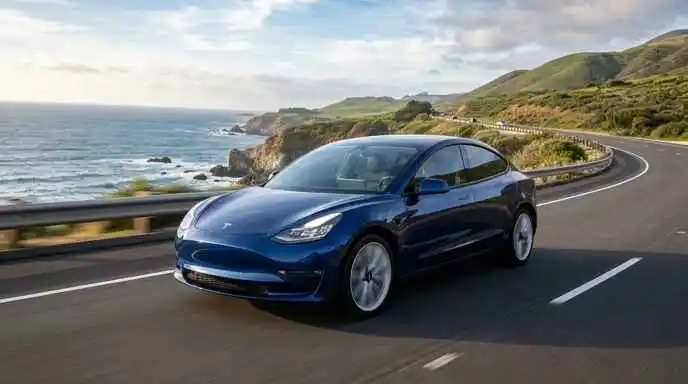
Exterior Aesthetics The Model 3 acts as a wind-cheater. With a drag coefficient of just 0.225 Cd (improved to 0.219 in the Highland refresh), it is one of the most aerodynamic production cars ever made. This efficiency isn’t just for show; it directly translates to range. The front fascia is notable for the absence of a grille—a signature of EVs that don’t need massive air intakes for cooling a combustion engine. The “Peanut” headlight design has evolved over the years, becoming sharper and more integrated.
The “Highland” Refresh. In late 2023, Tesla introduced the “Highland” update, the most significant visual revision since the car’s launch. The new Model 3 features sleeker, narrower headlights, a redesigned front bumper that removes the fog lights (replaced by cornering function in the main lights), and new wheel designs. The taillights were also updated to a distinct C-shape pattern, giving the rear a more modern appearance. The suspension was also overhauled, resulting in noticeably more compliant and quieter ride quality, addressing one of the few criticisms of the earlier models.
Color Options Over the years, Tesla has refined its paint options. The classic Solid White and Pearl White Multi-Coat have been staples, alongside Midnight Silver Metallic, Deep Blue Metallic, and the premium Pearl Red Multi-Coat. The Highland refresh saw the introduction of “Ultra Red” and “Stealth Grey,” offering deeper, more premium hues.
The Interior: A Cabin in the Clouds
Stepping inside a Model 3 is a jarring experience for those accustomed to traditional automotive interiors. There is no tachometer, no speedometer directly in front of the driver, and no buttons for the climate control. There isn’t even a start button.
The Central Screen: The entire interface is controlled via a 15-inch horizontally mounted touchscreen. This tablet controls everything: speed, navigation, music, side mirrors, steering wheel position, and wipers. While this sounds overwhelming, the interface is intuitive, resembling a giant smartphone. The processor is incredibly snappy, ensuring that the map loads instantly and menus slide with fluidity.
For the driver, the lack of a cluster is solved by glancing slightly to the right. Critics initially hated this, but owners quickly adapted. The rearview mirror now serves as a camera display in the Highland models, providing a wide-angle view of the rear traffic.
Minimalist Materials The dashboard is a horizontal plane of wood (or textile in newer models) and minimalism. There are no air vents visible. Instead, a thin slit runs across the width of the dash, and you adjust the direction of the airflow by dragging your finger on the screen—truly a marvel of engineering. The materials are tactile and premium, with soft-touch surfaces and vegan leather upholstery as standard.
Space and Storage Because there is no transmission tunnel, the interior feels incredibly spacious. The flat floor allows for a usable middle seat in the rear, unlike in many combustion sedans. The rear seats in the Highland refresh received a significant upgrade: an 8-inch secondary display for passengers to control climate and media, and a more comfortable seat design with higher foam density.
Storage is abundant. The Model 3 features a front trunk (“Frunk”)—a storage space under the front hood where the engine would usually be. It’s deep enough for a couple of carry-on suitcases. The rear trunk is spacious, with a large opening, and the rear seats fold flat for hauling larger items.
Ambient Lighting The Highland update introduced customizable ambient lighting that wraps around the entire cabin. Users can change the color on the screen, creating a personalized atmosphere that adds a layer of luxury previously missing from the utilitarian interior.
Performance and Driving Dynamics
The Model 3 is a sleeper sports car. The battery placement in the floor creates a low center of gravity, resulting in handling that punches above the car’s weight class.
Rear-Wheel Drive (RWD) A single motor on the rear axle powers the base model. It accelerates from 0 to 60 mph in roughly 5.8 seconds. For most drivers, this is more than enough. It feels punchy, responsive, and fun. It utilizes LFP (Lithium Iron Phosphate) batteries, known for their durability and safety, though they are slightly heavier and have a slightly shorter range than the Long Range batteries.
Long Range (AWD) The Long Range model adds a motor to the front axle, creating All-Wheel Drive. This is the sweet spot for many. It offers the highest range (over 360 miles in the Highland iteration) and accelerates to 60 mph in just 4.2 seconds. It is a mile-eater, perfect for road trips, offering quiet, effortless speed.
Performance (AWD) This is the beast. The Model 3 Performance is a track weapon disguised as a family sedan. With over 500 horsepower, it hits 60 mph in a blistering 3.1 seconds. It features larger brakes, lowered suspension, performance wheels with track tires, and a “Track Mode” that allows for drifting and power-sliding by adjusting the torque split between front and rear wheels. The acceleration is violent, pushing you back into the seat with a force that few supercars can match.
One-Pedal Driving Like most EVs, the Model 3 excels at regenerative braking. When you lift off the accelerator, the motor reverses its polarity to become a generator, slowing the car and returning energy to the battery. In most driving scenarios, you rarely need to touch the brake pedal. This takes a day or two to get used to, but soon becomes second nature, making driving in traffic far less tiring.
Range, Charging, and the Supercharger Network
Range anxiety is the fear that plagues potential EV buyers. The Model 3 effectively solves this.
Real-World Range While the RWD model offers around 272 miles of EPA range, the Long Range version pushes that to over 360 miles. In the real world, these numbers fluctuate based on speed and temperature. Driving at 75 mph on the highway will reduce range, as will driving in freezing temperatures (due to battery chemistry and cabin heating). However, the Model 3 is one of the most efficient EVs on the market, often exceeding its rated efficiency in moderate climates.
The Supercharger Advantage: Tesla’s greatest asset is its Supercharger network. While other EV manufacturers rely on third-party charging networks that can be unreliable or broken, Tesla has built a proprietary network of fast chargers that just work. Plugging in is seamless. You don’t need an app or a credit card; the car communicates with the charger, and billing happens automatically. A V3 Supercharger can add up to 175 miles of range in just 15 minutes. This seamless infrastructure makes the Model 3 the best EV for long-distance travel. You simply put the destination in the navigation, and the car calculates exactly where you need to stop and for how long to reach your goal.
Charging at Home. For daily use, owners typically charge at home using a standard outlet (slow) or a Level 2 charger (fast, overnight). Waking up every morning with a “full tank” is a lifestyle change that eliminates the weekly detour to the gas station.
Technology and Software: The Car as a Platform
If the battery is the heart of the Model 3, the software is the brain. Tesla is as much a software company as it is a car manufacturer.
Over-the-Air (OTA) Updates: The Model 3 improves while you sleep. Tesla regularly pushes software updates that can add new features, improve performance, or refine the user interface. A car bought three years ago is often better today than it was the day it was purchased. Updates have added features like “Camp Mode” (keeping climate control on while sleeping in the car), “Dog Mode” (keeping the cabin cool for pets with a screen message alerting passersby), and even games like “Beach Buggy Racing” playable on the screen.
The Tesla App: The smartphone app provides full control of the vehicle. You can preheat or cool the cabin, unlock the doors, honk the horn, flash the lights to find the car in a parking lot, and even summon the car to drive to you in a parking space.
Autopilot and Full Self-Driving (FSD). This is Tesla’s most controversial and talked-about feature.
- Autopilot: Included in every car. It provides Traffic-Aware Cruise Control and Autosteer on highways. It keeps the car centered and automatically adjusts speed. It is highly competent for highway driving.
- Full Self-Driving (Supervised): An expensive subscription option that attempts to navigate city streets, recognize traffic lights, and make turns. While impressive in its technology, it requires constant driver supervision. It is a glimpse into the future of autonomous driving, though it is still in a “beta” phase.
Hardware Newer Model 3s are equipped with “Hardware 4.0” (HW4), which includes higher-resolution cameras and a more powerful computer to process the autonomous driving algorithms. This sensor suite gives the car a 360-degree view of the world, making features like Blind Spot Monitoring and Lane Keep Assist incredibly robust.
Ownership Experience: Costs and Maintenance
One of the most compelling arguments for the Model 3 is the reduction in running costs.
Maintenance Because an electric motor has a fraction of the moving parts of an internal combustion engine, maintenance is almost non-existent.
- No oil changes.
- No spark plugs.
- No timing belts.
- No transmission fluid flushes. The service schedule basically consists of tire rotations, cabin air filter changes, and brake fluid checks (though brakes last much longer due to regenerative braking).
Electricity vs. Gas Charging an EV is significantly cheaper than filling a gas tank. Depending on local electricity rates, “fueling” a Model 3 costs roughly a quarter of the price of gasoline. Many owners with solar panels on their homes effectively drive for free.
Insurance for Teslas can be higher than average due to the high cost of repairs and specialized parts. However, Tesla has introduced its own insurance product in select states, which uses driving behavior (monitored by the car) to calculate premiums, offering lower rates for safe drivers.
The Competition: How the Model 3 Stacks Up
The market has caught up, and the Model 3 now faces stiff competition.
- Hyundai Ioniq 6: A futuristic sedan with 800-volt architecture that charges incredibly fast. It challenges the Model 3 on efficiency and design but lacks Tesla’s charging network integration (though that is changing with the adoption of NACS).
- BMW i4: A sportier, premium alternative that retains the traditional dashboard layout. It drives beautifully but has a smaller trunk and lower efficiency.
- Polestar 2: A Scandinavian alternative with a hatchback design and a focus on driving dynamics.
Despite this, the Model 3 remains the leader because of its seamless integration of hardware, software, and charging infrastructure. No other manufacturer has yet managed to offer the complete package that Tesla provides.
Conclusion: The Benchmark Remains
The Tesla Model 3 is not a perfect car. It lacks Apple CarPlay and Android Auto, a feature many drivers miss. The reliance on the touchscreen for simple tasks like adjusting mirrors or the glovebox can be frustrating. And for some, the minimalist interior feels too sterile.
However, the Model 3 represents a paradigm shift. It is a car that is constantly improving, a performance vehicle that runs on electricity, and a family hauler that looks like a spaceship. The “Highland” refresh has ironed out the rough edges, adding luxury, quietness, and style to an already winning formula.
For anyone considering the switch to electric, the Model 3 remains the default recommendation. It is the yardstick by which all other electric vehicles are measured. It proved that the future of the automobile is electric, and that future is exciting. Whether you are a tech enthusiast, a performance junkie, or a commuter looking to save on gas, the Model 3 delivers an experience that is, quite simply, unmatched in its class.
FAQs
- What is the Tesla Model 3, and when was it released?
The Tesla Model 3 is a mid-size electric sedan introduced in 2017, Tesla’s most affordable vehicle, making electric cars accessible to the masses. It officially launched in 2018 after a highly publicized production ramp-up, becoming a game-changer in the automotive industry by demonstrating the mass-market viability of EVs.
- What are the key features that set the Model 3 apart from competitors?
The Model 3 boasts a minimalist interior, a high-performance electric drivetrain, over-the-air software updates, and advanced driver-assistance features like Full Self-Driving (FSD) capabilities. Its 17-inch touchscreen replaces traditional physical controls, and its “frunk” (front trunk) optimizes storage space.
- What is the range of the Tesla Model 3?
The Model 3 offers a range of 272–358 miles per charge, depending on the variant (Standard Range Plus, Long Range, or Performance). This places it among the longest-range electric vehicles in its class, reducing “range anxiety” for everyday drivers.
- How fast can the Model 3 accelerate?
The Performance variant accelerates from 0–60 mph in 3.1 seconds, rivaling sports cars. Even the base model achieves a 5.3-second 0–60 time, showcasing Tesla’s ability to blend speed with practicality.
- What are the battery options and charging capabilities?
The Model 3 uses lithium-ion batteries, with Long Range variants offering up to 358 miles. It supports Tesla Superchargers (up to 155 kWh in 15 minutes) and home charging with a Wall Connector for convenience.
- How does the Model 3 impact the environment?
By eliminating tailpipe emissions and using renewable, energy-efficient manufacturing, the Model 3 reduces its carbon footprint. Tesla’s Gigafactories further reduced emissions from battery production, making the Model 3 a leader in sustainable transportation.
- What is the price range of the Model 3 in 2023?
The base Model 3 starts at around $40,240 (U.S.), with Long Range and Performance variants priced higher. Additional features like FSD and premium upgrades increase the total cost, but it remains competitively priced for luxury EVs.
- How does the Model 3 influence traditional automakers?
Its success forced global automakers to accelerate EV development, leading to partnerships with Tesla and in-house EV programs. The Model 3’s dominance in EV sales (2019–2022) redefined industry priorities, proving EVs could compete with internal combustion engines.
- What safety features does the Model 3 offer?
It received a 5-star NHTSA rating with crumple zones, a rigid aluminum frame, and active safety tech like Autopilot and collision avoidance. Its low center of gravity (due to the battery placement) reduces rollover risk.
- Can the Model 3 be upgraded without visiting a service center?
Yes. Over-the-air updates add new features (e.g., faster acceleration, improved autopilot) and even unlock performance enhancements. Users can also upgrade interiors or drive modes via their touchscreen or the myTesla app.
- How is the Model 3’s interior designed?
The interior is minimalist, with a 17-inch central touchscreen controlling climate, navigation, and settings. There are no traditional buttons, relying instead on the screen or a rotary touchpad. Premium interiors (e.g., wood trim, piano black accents) are optional.
- What is the role of the Model 3 in Tesla’s business growth?
The Model 3 became Tesla’s best-selling car, driving profitability and stock growth. It helped scale production to 20,000 units per week by 2019, validating Tesla’s mission to transition to sustainable energy and attract investors.
- Does the Model 3 support solar energy integration?
Yes. Tesla’s Solar Roof and Solar Panels can charge the Model 3 via the Powerwall battery system, creating a fully renewable energy ecosystem for homes and vehicles.
- How does the Model 3 handle in different weather conditions?
Its all-wheel-drive variants (Long Range and Performance) offer superior traction, while regenerative braking improves control. The Model 3’s low ground clearance is a minor drawback in heavy snow, but Tesla’s software adapts to weather for safety.
- What are the ownership and maintenance costs?
The Model 3 has lower operating costs than gas cars, with savings on fuel and minimal maintenance (no oil changes). However, battery degradation (0.5–3% per year) and potential brake wear in mountainous areas increase long-term costs.
- How does the Model 3 compare to the Model Y?
The Model Y is a compact SUV with similar tech but more cargo space. While the Model 3 focuses on sedan practicality, the Model Y appeals to families needing versatility, but both share the same platform and battery tech.
- What are the criticisms of the Model 3?
Some users cite small legroom, limited rear visibility, and software glitches. Build quality (e.g., misaligned panels) and high cost for premium features are also common complaints, though Tesla has largely addressed these.
- Can the Model 3 be used for long road trips?
Yes. With Tesla’s global Supercharger network, owners can travel long distances efficiently. However, planning around charging times and battery health (frequent fast-charging may slightly degrade the battery) is essential.
- How does the Model 3 perform in cold weather?
Cold reduces battery efficiency (up to 20% range loss), but preconditioning the battery using the app before driving mitigates this. Tesla’s climate control system also warms the cabin efficiently to preserve range.
- What future updates can Model 3 owners expect?
Tesla promises annual hardware and software updates, including improvements to FSD, battery longevity, and performance. The upcoming “Plaid” platform may also bring a higher-speed variant of the Model 3.
- Is the Model 3 available in left-hand drive for global markets?
Yes. While primarily a right-hand-drive market in the U.S., Tesla sells left-hand-drive models in markets like Europe and Japan, enabling global adoption and support for diverse driving regulations.
- How does the Model 3 contribute to reducing fossil fuel dependence?
By offering a viable alternative to gas-powered cars, the Model 3 has spurred government incentives for EVs and increased consumer trust in electric vehicles. Its success has also driven investment in renewable energy infrastructure globally.
- What role did the Model 3 play in Tesla’s stock price surge?
Massive Model 3 demand and production milestones helped stabilize Tesla’s finances and boost investor confidence. The car’s affordability and appeal to a broader audience reassured analysts, leading to significant stock price growth from 2019 onward.
- Are there different versions of the Model 3?
Yes. Options include Standard Range Plus, Long Range, and Performance trims, with variants featuring all-wheel drive, FSD, and premium exteriors. Software features vary by plan, allowing customization.
Disclaimer: The content on this blog is for informational purposes only. The author’s opinions are personal and not endorsed.
Efforts are made to provide accurate information, but completeness, accuracy, or reliability are not guaranteed. The author is not liable for any loss or damage resulting from the use of this blog. It is recommended to use the information on this blog at your own discretion.
