
Table of Contents
How to Treat Burns at Home: First Aid Steps for Every Burn Type
Introduction
Every year, millions of people worldwide experience burns — from accidentally brushing a hot pan on the stove to encountering far more serious hazards like chemical spills, electrical faults, or open flames. Burns are among the most common household injuries, yet they are also among the most frequently mismanaged. The instinctive reactions most of us have — reaching for butter, ice, or toothpaste — can turn a manageable wound into a dangerous, infection-prone disaster.
Knowing how to respond to a burn in the critical minutes immediately after it happens can mean the difference between a minor inconvenience and a life-altering scar. In severe cases, correct first aid can genuinely be the difference between life and death.
This guide walks you through everything you need to know: how to classify a burn by degree, how to treat minor burns at home, when to call emergency services for major burns, what to absolutely never do, and how to care for healing burn wounds. Whether you’re a parent, a caregiver, a chef, or simply someone who wants to be prepared, this knowledge is essential for every household.
Understanding Burns: The Degrees Explained
Before you can treat a burn correctly, you need to understand what you’re dealing with. Burns are categorized into three degrees based on how deep the damage extends into the skin’s layers.

First-Degree Burns (Superficial Burns)
First-degree burns affect only the outermost layer of skin, called the epidermis. They are the mildest form of burn and are characterized by redness, minor swelling, pain, and dry skin without blisters. Sunburn is the most classic example. These burns typically heal within three to five days without scarring, provided they are treated promptly and correctly.
Second-Degree Burns (Partial-Thickness Burns)
Second-degree burns penetrate deeper, damaging both the epidermis and part of the dermis beneath it. They are identified by blistering, deep redness, wet or shiny skin, intense pain, and significant swelling. These burns are more serious because the risk of infection increases substantially once blisters rupture. Superficial second-degree burns can heal within two to three weeks, while deep second-degree burns may take longer and could leave scarring.
Third-Degree Burns (Full-Thickness Burns)
Third-degree burns destroy all layers of the skin and may reach underlying fat, muscle, or even bone. Counterintuitively, these burns may be less painful than second-degree burns because the nerve endings in the affected area have been destroyed. The skin typically appears white, brown, or black, and may look leathery, waxy, or charred. Third-degree burns always require emergency medical attention and skin grafting.
Some medical systems also reference fourth-degree burns, which extend beyond the skin entirely into muscle and bone. These are catastrophic injuries that are almost always life-threatening.
First Aid for Minor Burns
Minor burns — typically first-degree burns or small second-degree burns (smaller than 3 inches / 7.5 cm in diameter) on non-critical areas of the body — can often be safely treated at home. Here’s the correct step-by-step approach.
Step 1: Cool the Burn Immediately
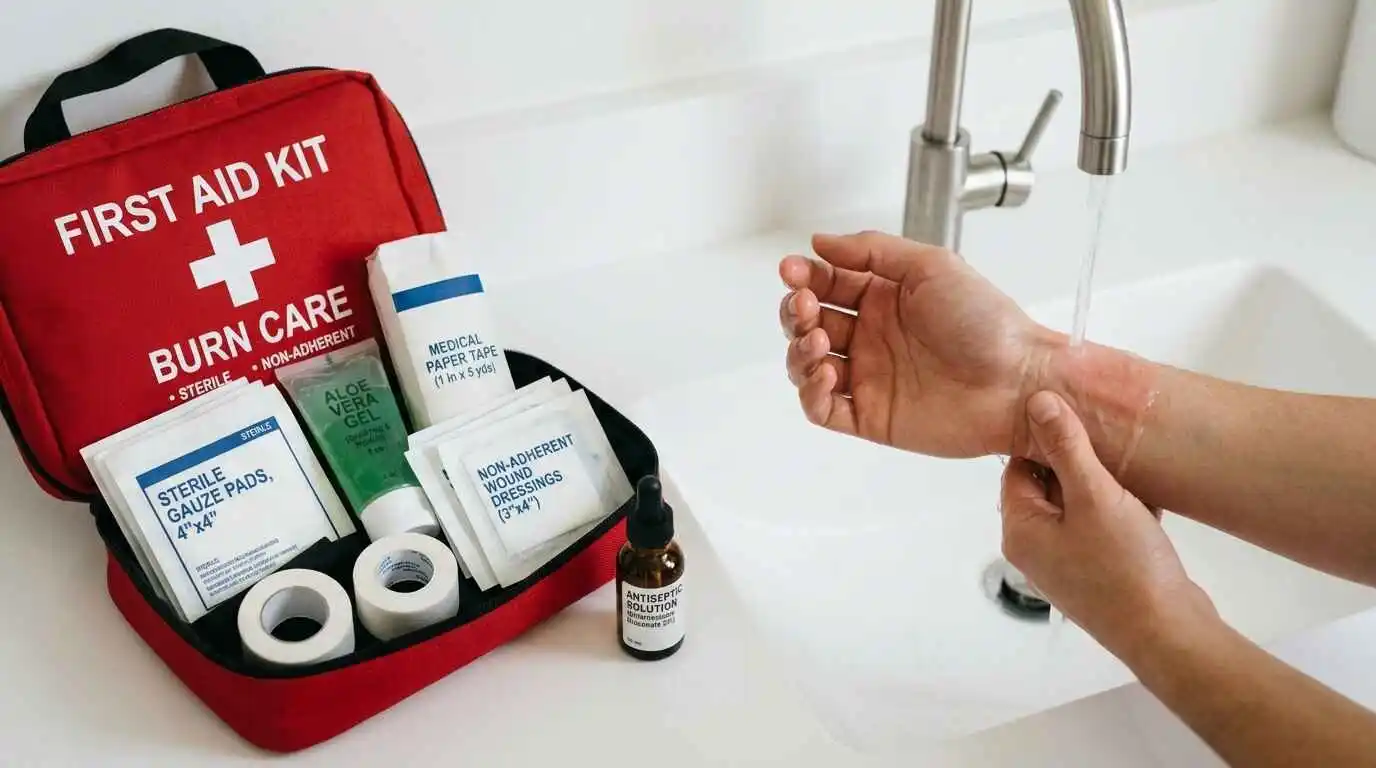
The single most important first step is to cool the burned area as quickly as possible. Run cool (not cold) water over the burn for a minimum of 10 to 20 minutes. This halts the burning process at the cellular level, reduces pain, and limits the depth of tissue damage. Cool tap water is ideal — the temperature should be comfortable but not icy.
Do not use ice or ice water. While it seems logical, extremely cold temperatures can cause frostbite and actually worsen tissue damage by reducing blood flow to an already-injured area. Similarly, do not use snow, very cold drinks, or cold gel packs directly on the wound.
Step 2: Remove Constrictive Items
Gently remove any jewelry, watches, belts, or tight clothing from around the burn area before swelling begins. Once the tissue starts to swell, these items can act like tourniquets and cut off circulation, causing secondary damage.
Step 3: Do Not Break Blisters
If blisters form, resist the urge to pop them. Blisters act as natural, sterile dressings that protect the underlying damaged skin from bacteria. Breaking them opens the wound to infection. If a blister breaks on its own, clean the area gently with mild soap and water, apply an antibiotic ointment, and cover it with a sterile non-stick bandage.
Step 4: Apply a Soothing, Non-Greasy Moisturizer
Once cooled, you can apply a gentle, fragrance-free moisturizer, aloe vera gel, or a burn-specific cream to the area. Aloe vera has anti-inflammatory properties and can help soothe the skin. Do not apply butter, oil, toothpaste, egg whites, or any other home remedy — these trap heat in the wound, introduce bacteria, and can make things significantly worse.
Step 5: Cover the Burn
Cover the burn loosely with a sterile non-adhesive bandage or clean, lint-free cloth. Avoid fluffy cotton that can stick to the wound. The goal is to protect the area from air and bacteria while the skin heals, not to apply pressure.
Step 6: Manage Pain
Over-the-counter pain relievers such as ibuprofen or acetaminophen (paracetamol) can help manage the pain and reduce inflammation. Follow dosage guidelines carefully. If the pain is severe and unmanageable with OTC medication, seek medical advice.
Step 7: Monitor for Infection
Over the following days, watch for signs of infection: increasing redness, swelling, pus or discharge, fever, and worsening pain. If any of these appear, seek medical attention promptly. Change dressings daily and keep the wound clean.
First Aid for Major Burns: An Emergency Response
Major burns — including all third-degree burns, second-degree burns larger than 3 inches, or burns on the hands, feet, face, groin, buttocks, or over a major joint — are medical emergencies. The following steps should be followed immediately while waiting for emergency services.
Step 1: Call Emergency Services Immediately
Do not delay. Call your local emergency number (911 in the US, 999 in the UK, 112 in most of Europe, 108 in India) the moment you recognize a major burn. Time is critical.
Step 2: Ensure Your Own Safety First
Before helping anyone else, make sure the cause of the burn has been neutralized. If someone has been burned in a fire, ensure the fire is out, or they have been moved away from it. For electrical burns, do not touch the person until the power source has been turned off. For chemical burns, wear protective gloves if available. Your safety comes first — becoming a second victim helps no one.
Step 3: Do Not Remove Burned Clothing
Unlike minor burns, you should not attempt to remove clothing that is stuck to the skin in a major burn. Doing so can tear away the burned skin and cause additional trauma. You can carefully cut around clothing that is not stuck, but leave anything adhered to the wound for medical professionals.
Step 4: Cool the Burn if Possible — But Carefully
For major burns, you can still apply cool running water to the area, but only if doing so does not delay emergency care or cause the person to become dangerously cold (hypothermic). Never submerge a severely burned person in cold water, as the shock can cause cardiovascular collapse.
Step 5: Cover the Burn Loosely
Cover the burned area loosely with a clean, non-fluffy material — sterile dressings, cling film (plastic wrap), or a clean sheet. Cling film is particularly recommended by paramedics because it doesn’t stick to the wound, is transparent (allowing assessment without removal), and acts as a barrier to infection. Do not wrap it tightly around a limb.
Step 6: Elevate Burned Limbs
If a hand, arm, foot, or leg is burned, elevate it above heart level if possible. This helps reduce swelling and minimizes fluid loss to the tissues.
Step 7: Monitor for Shock
Major burns can cause life-threatening shock due to fluid loss, pain, and emotional trauma. Signs of shock include pale, cold, or clammy skin; rapid, shallow breathing; weakness or dizziness; and loss of consciousness. Lay the person down (unless the face or airway is burned), elevate their legs if there are no other injuries, and keep them warm with a blanket — avoiding the burned areas.
Step 8: Do Not Give Fluids by Mouth
Unless the person is fully conscious, not vomiting, and help is more than an hour away, do not give food or drink. They may need surgery, and anything in the stomach can complicate anesthesia. Emergency personnel will manage fluid replacement through an IV.
Step 9: Stay With the Person
Talk calmly and reassuringly to the burn victim. Do not leave them alone. Monitor their breathing and responsiveness until emergency services arrive.
Special Cases: Chemical and Electrical Burns
Chemical Burns
Chemical burns from acids or alkalis require slightly different management. Brush off any dry chemical from the skin before applying water. Then flush the area with large quantities of cool running water for at least 20 minutes. Remove contaminated clothing while flushing, wearing gloves if possible. Do not attempt to neutralize the chemical with another substance (such as baking soda for an acid) — the heat generated by the neutralization reaction can worsen the burn. Seek emergency care after flushing.
Electrical Burns
Electrical burns are deceptive because the entry and exit wounds on the skin may appear minor, but the electrical current can cause massive internal damage along its path through the body. The heart is particularly vulnerable. Always treat electrical burns as emergencies. Do not touch the person until you are certain the power source is off. Even after the visible burn appears superficial, the patient must be assessed by medical professionals for internal injuries and cardiac arrhythmias.
What Never to Do for Burns
This list may save someone’s life. The following are common myths and dangerous practices that should always be avoided:
- Never apply butter, oil, or cooking fat. These traps heat and seal bacteria into the wound.
- Never use ice or ice-cold water. Ice causes vasoconstriction and can cause frostbite, deepening the injury.
- Never break blisters. They are sterile protective barriers. Popping them invites infection.
- Never apply toothpaste. A pervasive folk remedy with no medical basis — it causes infection.
- Never wrap burns tightly. This can restrict circulation and worsen swelling.
- Never use fluffy cotton wool directly on the wound. The fibers stick and can cause further trauma on removal.
- Never ignore burns on the face, hands, feet, or genitals. These require professional care regardless of apparent severity.
- Never underestimate electrical burns. The external appearance rarely reflects internal damage.
Long-Term Wound Care and Recovery
Once a minor burn begins healing — usually after the first day or two — ongoing care is essential to prevent infection and minimize scarring.
Keep the wound moist. Dry wounds heal more slowly and are more likely to scar. Use a prescribed antibiotic ointment or a gentle, fragrance-free moisturizer and cover with a non-stick dressing. Change dressings daily or as instructed.
Protect healing skin from sun exposure for at least a year after the burn heals. Newly regenerated skin is hypersensitive to UV radiation and can develop permanent discoloration. Use SPF 50+ sunscreen on healed areas exposed to sunlight.
Itching is a normal part of the healing process, as nerve endings regenerate. Moisturizing and taking antihistamines can help. Do not scratch — it risks reopening the wound and introducing infection.
For significant burns, physical therapy, scar massage, and pressure garments may be recommended to manage scarring and maintain a full range of motion.
When to See a Doctor
Seek medical attention if:
- The burn is on the face, hands, feet, groin, buttocks, or over a major joint
- The burn is larger than 3 inches in diameter
- There are signs of infection (pus, increasing redness, fever)
- The person is very young (under 5) or elderly
- The burn was caused by chemicals or electricity
- Pain is severe and uncontrolled
- There is difficulty breathing (indicating the airway may be involved)
Frequently Asked Questions
- What is the first thing I should do if I get burned?
Run cool (not cold) water over the burn for at least 10 to 20 minutes immediately after the injury occurs.
- Should I use ice on a burn?
No. Ice can cause frostbite and worsen tissue damage by constricting blood vessels. Always use cool running water.
- What is the difference between a first, second, and third-degree burn?
First-degree burns affect only the outer skin layer. Second-degree burns reach the dermis and cause blisters. Third-degree burns destroy all skin layers and may damage underlying tissue.
- Can I treat a second-degree burn at home?
Small second-degree burns (smaller than 3 inches on non-critical areas) can be treated at home. Larger ones or those on the face, hands, feet, or genitals need professional care.
- Is it safe to pop a burn blister?
Never pop a blister intentionally. Blisters are sterile, natural protective coverings. Popping them greatly increases the risk of infection.
- Why shouldn’t I put butter on a burn?
Butter (and other fats or oils) traps heat in the wound, prevents cooling, and introduces bacteria, all of which worsen the injury.
- How long should I run water over a burn?
A minimum of 10 minutes, ideally 20 minutes, especially for more severe burns.
- What does a third-degree burn look like?
It may appear white, brown, grey, or black, with a leathery or waxy texture. The skin may not be painful due to nerve destruction.
- When should I call emergency services for a burn?
Call immediately for all third-degree burns, burns larger than 3 inches, chemical or electrical burns, burns on the face, hands, feet, or genitals, and any burn affecting an infant or elderly person.
- What should I cover a burn with?
Use a sterile non-stick bandage, cling film (plastic wrap), or a clean non-fluffy cloth. Avoid fluffy cotton wool that can stick to the wound.
- Can aloe vera help treat burns?
Yes, pure aloe vera gel can soothe first-degree burns and provide anti-inflammatory relief. Use it after cooling the burn thoroughly.
- Should I remove clothing from a burned area?
For minor burns, gently remove non-stuck clothing and any jewelry before swelling begins. For major burns, do not pull off clothing that is adhered to the skin.
- What are the signs of a burn infection?
Increasing redness, swelling, pus or discharge, fever, and worsening pain are all warning signs of infection. Seek medical attention promptly.
- How do I treat a chemical burn?
Brush off any dry chemical first, then flush with large amounts of cool water for at least 20 minutes. Do not try to neutralize the chemical. Seek emergency care.
- Are electrical burns more serious than they appear?
Almost always yes. The internal damage from electrical current traveling through the body can be far more extensive than the external wound suggests.
- What pain relief can I take for a burn?
Over-the-counter ibuprofen or acetaminophen (paracetamol) is appropriate for minor burns. Follow dosage guidelines carefully.
- How long does it take a first-degree burn to heal?
Typically, three to five days with proper care and no sun exposure.
- How long does it take a second-degree burn to heal?
Superficial second-degree burns usually heal within two to three weeks. Deeper ones may take longer and may require medical intervention.
- Will my burn leave a scar?
First-degree burns rarely scar. Second-degree burns may scar depending on depth and care. Third-degree burns almost always result in permanent scarring requiring grafting.
- Should I elevate a burned limb?
Yes. Elevating the burned limb above heart level helps reduce swelling and fluid accumulation.
- Can sunburn be treated the same way as other burns?
Mild sunburn is a first-degree burn and can be treated with cool water, aloe vera, and moisturizer. Severe sunburn with blistering should be evaluated medically.
- Is it normal for a burn to itch while healing?
Yes. Itching is a sign of nerve regeneration and healing. Use moisturizer and antihistamines to manage it, but do not scratch.
- What is cling film used for in burn first aid?
Cling film (plastic wrap) makes an excellent temporary dressing — it doesn’t stick to the wound, is transparent for easy monitoring, and forms a barrier against bacteria.
- Can I shower with a burn wound?
You can gently let clean water run over the area, but avoid submerging the wound in a bath and never use hot water or harsh soap directly on the burn.
- How do I prevent scarring after a burn?
Keep the wound moist, protect it from sun exposure (SPF 50+), don’t scratch, and follow any physiotherapy or scar management advice from your medical provider.
- Is white or grey skin on a burn normal?
White or grey skin on a burn typically indicates a severe third-degree burn where full skin thickness has been destroyed. This requires emergency care.
- What should I do if smoke inhalation is suspected?
Move the person to fresh air immediately and call emergency services. Burns to the airways are life-threatening and require urgent hospital treatment.
- Can children’s burns be treated differently?
Any burn in a child under five, covering more than 5% of their body surface, or on a sensitive area requires immediate medical evaluation. Children’s skin is thinner, and burns are proportionally more serious.
- What is the “rule of nines” used for?
Medical professionals use the Rule of Nines to estimate the percentage of body surface area affected by burns — a key factor in determining treatment protocols and fluid replacement needs.
- How soon after a burn should I see a doctor?
For minor burns, if there is no improvement after two weeks or if any signs of infection develop, see a doctor. For anything beyond a minor first-degree burn on non-critical skin, seek medical advice within 24 hours or immediately if the burn is severe.
