
Table of Contents
You’ve Been Eating Wrong Your Whole Life: The Essential Dos and Don’ts at the Table Nobody Ever Taught You
Introduction: The Meal You Never Really Thought About
You do it three times a day. Sometimes more. You have been doing it since the moment you arrived on this planet. And yet, for all the time we spend eating, very few of us have ever paused to ask: Am I doing this well?
Not well in the sense of choosing the “right” foods — the internet has no shortage of contradictory opinions on that subject. Well, in the deeper sense: the habits, behaviors, rituals, and courtesies that surround the act of eating. The way you sit, breathe, chew, drink, speak, use your phone, pace your meal, engage with the people across the table, and treat the food in front of you.
These things matter enormously — for your digestion, your health, your relationships, and the quality of life you experience at every single meal. And most of us were never properly taught any of them.
This post is the guide you deserved at childhood dinner tables and never got. It covers the essential dos and don’ts while having food — rooted in science, etiquette, cultural wisdom, and plain common sense. Some of these will confirm what you already suspect. Others may genuinely surprise you.

All of them are worth your attention.
1: Before the First Bite — Setting Yourself Up for a Good Meal
How a meal begins shapes how the entire experience unfolds — for your body as much as for your company. The habits you form before eating are as important as anything you do during the meal itself.
DO: Wash Your Hands — Every Single Time
It sounds elementary. It is also one of the most consistently skipped steps in daily eating. Your hands are in contact with surfaces, screens, door handles, and money throughout the day. Eating with unwashed hands introduces bacteria directly into your digestive system. The 20-second soap-and-water rule is not overcaution — it is basic hygiene with significant health implications, particularly in shared dining environments.
DO: Set the Table — Even When Eating Alone
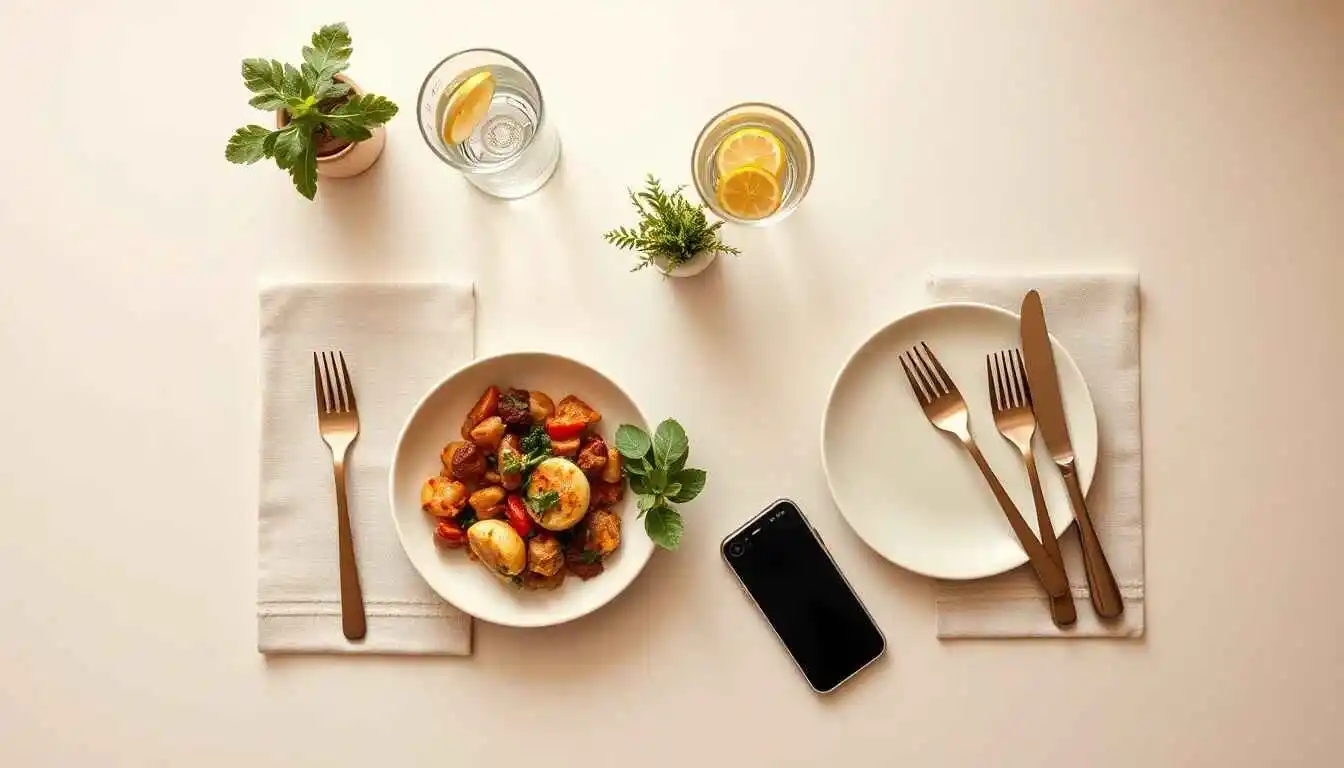
There is a reason civilization across history developed rituals around the preparation of the eating space. Setting a table — even simply, even just for yourself — signals to your brain that a meal is a deliberate event, not a grab-and-go transaction. Research into mindful eating consistently shows that people who eat at a properly set table consume food more slowly, eat less, experience greater satisfaction, and engage more thoughtfully with what they are eating. The ten seconds it takes to put out a plate and a glass is an investment in your entire meal experience.
DO: Sit Down to Eat
Standing at the kitchen counter, eating over the sink, or walking while snacking are habits that sever the connection between eating and awareness. When you stand, you tend to eat faster, pay less attention to what you are consuming, and miss the satiety signals your body sends. Sitting down — with intention — is the physical commitment to being present at your meal.
DON’T: Begin Eating When You Are Ravenously Hungry
Arriving at a meal in a state of extreme hunger is a recipe for overeating. When blood sugar drops sharply, the body’s response is to eat fast and eat a lot — and the brain’s “I am full” signal arrives a lag of about 20 minutes behind actual satiety. People who are desperately hungry consistently consume significantly more than they need before the fullness signal arrives. A small, nutritious snack an hour or two before meals — a handful of nuts, a piece of fruit — keeps hunger at a manageable level and allows you to eat deliberately rather than desperately.
DON’T: Eat on the Run or While Multitasking
Eating while driving, while typing, while watching a crisis unfold on your phone screen, or while standing at the stove is one of the most nutritionally and digestively counterproductive habits in modern life. When your attention is divided, digestion is compromised. The vagal nerve — the critical pathway between gut and brain — requires a degree of calm presence to function optimally. Distracted eating also dramatically increases the likelihood of overeating, since you are not registering the experience of the food at all.
2: At the Table — How to Conduct Yourself During the Meal
DO: Chew Your Food Thoroughly
This is ancient wisdom that modern digestive science fully confirms. Digestion begins in the mouth. Chewing breaks food into smaller particles, mixes it with saliva (which contains digestive enzymes), and signals the stomach and intestines to prepare for incoming material. When you swallow large, poorly chewed pieces of food, you force your stomach to work dramatically harder, increasing the likelihood of bloating, gas, indigestion, and nutrient malabsorption.
The traditional recommendation is to chew each mouthful 20 to 30 times before swallowing. That number will feel extraordinary to most modern eaters. Start with conscious, deliberate chewing — noticing the texture, flavor, and changing consistency of your food. Your digestive system will thank you in ways you will feel within days.
DO: Eat Slowly and Put Down Your Utensils Between Bites
Pace is everything. The single most reliable way to avoid overeating — without counting calories or following a restrictive plan — is to eat slowly enough for your body’s satiety signals to reach your brain before you have already consumed far more than you need. Put your fork or spoon down between bites. Take a breath. Drink some water. Let the experience of one mouthful finish before beginning the next.
Eating slowly also transforms the pleasure of food. Flavor is a complex, evolving experience that fast eaters simply do not access. The meal you have been rushing through for years tastes entirely different when you give it the time it deserves.
DO: Sit With Good Posture
The way your body is positioned during a meal directly affects digestion. Slouching compresses the abdominal region, puts unnecessary pressure on the stomach and intestines, and can contribute to acid reflux and general digestive discomfort. Sitting upright — feet flat on the floor, back supported, not hunched — creates the optimal physical conditions for the digestive process to work as it should. It also signals engagement and respect at a shared table.
DO: Drink Water with and Around Your Meal
Hydration and eating are closely connected. Drinking water before, during, and after a meal supports digestion, helps the stomach process food efficiently, and contributes to a sense of fullness that prevents overeating. The longstanding myth that drinking water during a meal dilutes digestive juices and impairs digestion has been debunked repeatedly. Water with a meal is not only fine — it is actively beneficial. Aim for a glass before you eat and sip throughout.
DO: Engage Genuinely with Your Food
Look at what you are eating. Smell it. Notice the colors, the textures, the way it was prepared. This is not affectation — it is the beginning of the digestive process. The cephalic phase of digestion, triggered by seeing and smelling food, accounts for roughly 30% of the digestive response that prepares your stomach for a meal. Treating your food with attention and appreciation is not just good manners — it is good biology.
DON’T: Use Your Phone at the Table
This is perhaps the most countercultural thing this post will say — and also among the most important. The smartphone at the dinner table is one of the most effective destroyers of both mindful eating and meaningful human connection that modern life has produced.
When you are looking at a screen during a meal, you are not tasting your food, you are not registering fullness, and you are not present with the people around you. Study after study confirms that screen-present dining leads to greater food intake, lower enjoyment, and poorer digestion. It also communicates, clearly and unmistakably, to anyone eating with you that they are less interesting than whatever is on your phone.
Put it face down. Better still, leave it in another room. The meal is an hour of your day — the notifications will wait.
DON’T: Talk With Your Mouth Full
Beyond being one of the most universal table manners rules across virtually every culture on earth, talking while chewing creates a genuine safety risk — choking is most common during conversation at meals — and forces the people you are with to watch the interior of your mouth while they eat. Finish what you are chewing, then speak. It is not difficult. It is simply a habit that requires forming.
DON’T: Make Negative Comments About the Food
This applies whether you are a guest at someone’s table, a customer at a restaurant, or eating with family. Critical commentary about the food — its flavor, its preparation, its appearance, or its perceived healthfulness — poisons the experience for everyone at the table, including yourself. If something is genuinely not to your taste, you are not obliged to eat it. You are obliged not to make it a conversation point that makes others uncomfortable.
The same principle applies to making negative comments about what others have chosen to eat. Food is deeply personal. Policing someone else’s plate — even with good intentions — is rarely welcome and rarely helpful.
DON’T: Overload Your Plate on the First Pass
Whether at a buffet, a family meal, or a restaurant, the temptation to heap your plate at the outset is best resisted. Start with smaller portions, eat them slowly and with attention, and then assess whether you are genuinely still hungry before taking more. This one practice — taking less first — is one of the most effective and painless ways to reduce overall food intake without the experience of deprivation.
3: Social and Shared Dining — The Dos and Don’ts of Eating with Others
Food has always been a social event. Shared meals are one of humanity’s oldest and most powerful bonding rituals. The way you behave at a shared table says a great deal about you — and shapes the experience for everyone present.
DO: Wait Until Everyone Is Served Before Eating
This is a foundational rule of shared dining that transcends cultural specifics. Beginning to eat while others at the table are still waiting for their food is perceived as inconsiderate across virtually every dining culture. It says, implicitly, that your hunger matters more than the shared experience. It costs nothing to wait. The gesture of collective beginning — a simple “shall we?” — is one of the smallest and most meaningful courtesies available at a shared table.
DO: Pass Dishes to Others First
When serving shared dishes at the table, pass to others before serving yourself. Offer before taking. This is not self-denial — it is the acknowledgement that you are eating with other people, not simply in the same room as them.
DO: Use Serving Utensils, Not Your Personal Cutlery
When taking from shared dishes, always use the provided serving spoon or tongs, not the fork or spoon you have been eating with. This is basic hygiene as much as etiquette — your saliva on a personal utensil has no business being introduced to a dish that others will also eat from.
DO: Keep Conversation Appropriate and Inclusive
Mealtimes are among the best environments for genuine human connection — relaxed, unhurried, and conducive to honesty. Use that time well. Ask questions. Listen. Share. Avoid conversation topics that are aggressively divisive, deeply uncomfortable, or that exclude people at the table. A meal is not the ideal setting for confrontations, controversial political arguments, or delivering difficult news. Let the shared table be a shared pleasure.
DON’T: Reach Across Others to Get Something
If you need something that is out of reach — the salt, a serving dish, the bread basket — ask for it to be passed to you. Reaching across another person’s meal and personal space is intrusive and, at close-set tables, genuinely hazardous. The words “could you pass the…” take less than two seconds and preserve both the meal and the dignity of your neighbor.
DON’T: Make Slurping, Belching, or Loud Chewing Sounds
Some cultures have different norms around certain sounds at the table — slurping noodles or soup is, in some culinary traditions, a sign of appreciation. If you are dining in a context where such sounds are normalized and expected, follow the local custom. In most shared dining contexts across the world, however, minimizing disruptive sounds at the table is a sign of awareness and consideration. Chew with your mouth closed. Manage burps as quietly as possible, and if one escapes, a quiet “excuse me” is the appropriate response.
DON’T: Criticize Others’ Food Choices or Portions
Whether someone has ordered the largest item on the menu, chosen the vegetarian option, avoided a dish for dietary or religious reasons, or is eating far less than you think they should — their plate is not your business. Commenting on others’ food choices, regardless of how it is framed, is almost always received as judgment. People’s relationships with food are complex, often deeply personal, and sometimes medically significant. Extend the grace you would want extended to you.
4: After the Meal — What Happens When You Push Back Your Plate
The meal does not end the moment you put down your cutlery. What you do in the period immediately following a meal has real implications for your digestion, your energy, and your long-term health.
DO: Sit Quietly for at Least 10 Minutes After Eating
Resist the urge to leap up immediately after the last bite. Your body has just begun a complex digestive process that requires blood flow and calm. The traditional practice in many cultures of resting briefly after a meal — a short pause before returning to activity — has genuine physiological wisdom behind it. Even ten minutes of quiet sitting allows the initial phase of digestion to proceed without competition from physical exertion.
DO: Take a Gentle Walk After a Meal
A short, easy walk of 10 to 15 minutes after eating has been shown in multiple studies to support blood sugar regulation, aid gastric motility, and reduce post-meal sluggishness. “Easy” is the operative word — this is a gentle stroll, not exercise. The goal is to promote circulation and gentle movement of the digestive tract, not to burn off what you ate.
DO: Clear the Table Thoughtfully
If you are eating at home, clearing and cleaning the table after a meal closes the ritual of eating in the same way that setting it opened it. It is a small but meaningful act of respect for the space, for the meal, and for the people who shared it. In a restaurant or at someone else’s home, offering to help — or at minimum, not creating additional work for others by leaving your space in disarray — is simple courtesy.
DON’T: Lie Down Immediately After Eating
Lying flat after a meal significantly increases the risk of acid reflux and heartburn, as gravity no longer assists in keeping stomach contents where they belong. If you are tired after eating — a common and physiologically normal response — sit in a comfortable chair rather than going horizontal. Wait at least two to three hours after a substantial meal before lying down or going to sleep.
DON’T: Eat Again Within Two Hours of a Large Meal (Unless Genuinely Hungry)
The habit of snacking from boredom, habit, or proximity to food immediately after a substantial meal overloads the digestive system and disrupts the natural hunger-satiety cycle that helps regulate how much you eat over time. If you feel the urge to eat again within an hour or two of a full meal, pause and ask whether you are genuinely hungry or acting out of habit, emotion, or simply because food is available.
DON’T: Skip the Gratitude
This is not a religious prescription — it is a human one. Pausing for even a moment to acknowledge the meal you just ate — the people who grew it, prepared it, and shared it; the fact of having enough — is a habit that transforms the relationship most people have with food. Gratitude is the antidote to eating on autopilot. It is also, in the most practical sense, good for your mental health and your relationship with nourishment.
The Bigger Picture: Why These Habits Matter More Than You Think
The dos and don’ts in this guide are not arbitrary rules invented by etiquette police. They are the accumulated wisdom of cultures, digestive science, behavioral psychology, and generations of humans who understood something that modern busy life has largely erased: that the meal is one of life’s most important daily rituals, and how you perform that ritual has consequences.
Eating well is not primarily about superfoods or macronutrient ratios. It is about presence, pace, respect — for your body, for your food, and for the people with whom you share it. The person who eats slowly, with attention, at a set table, without their phone, in good company, performs one of the most health-affirming acts available to them — three times a day, without buying a single supplement.
These habits are available to everyone. They cost nothing. They require only the decision to take the meal seriously.
The food in front of you deserves that. So do you.
Quick Reference: The Complete Dos and Don’ts at a Glance
DOS:
- Wash your hands before every meal
- Set the table, even when eating alone
- Sit down and be present for your meal
- Chew thoroughly, 20–30 times per bite
- Eat slowly and put utensils down between bites
- Sit with good posture throughout the meal
- Drink water before and during eating
- Wait for everyone to be served before starting
- Pass dishes to others before serving yourself
- Take a gentle walk after eating
- Express genuine gratitude for the meal
DON’TS:
- Eat while ravenously hungry or on the run
- Use your phone at the table
- Talk with your mouth full
- Make negative comments about food or others’ choices
- Reach across others for dishes
- Overload your plate on the first serving
- Lie down immediately after a meal
- Eat again out of habit rather than genuine hunger
- Make disruptive sounds without consideration
- Criticize what others have on their plates
- Rush through the meal as though it were an inconvenience
Conclusion: The Table Is a Place Worth Being
Every culture on earth, across all of recorded human history, has treated the meal as something more than mere fuel intake. The rituals, the manners, the courtesies, the rhythms of shared eating — all of these are signals of the same understanding: that eating together, and eating well, is one of the primary ways humans experience care, connection, and the pleasure of being alive.
You will eat approximately 1,000 meals this year. That is 1,000 opportunities to nourish your body properly, to connect genuinely with the people you love, and to experience one of life’s most available and reliable pleasures with the attention it deserves.
The habits in this guide will not transform your meals overnight. But begin with one — just one — and notice what changes. Chew more slowly. Put your phone away. Wait for everyone before you start. Set the table.
The table is a place worth being. Show up to it well.
Did one of these habits surprise you? Share this post with a friend who needs to hear it — and leave a comment below with the dos and don’ts that made the biggest difference at your table.
Disclaimer: The content on this blog is for informational purposes only. The author’s opinions are personal and not endorsed. Efforts are made to provide accurate information, but completeness, accuracy, or reliability are not guaranteed. The author is not liable for any loss or damage resulting from the use of this blog. It is recommended to use the information on this blog at your own discretion.
