
Table of Contents
Reality Hacking: Rewriting the Code of Your Perceived World
A deep dive into the art and science of bending perception, reprogramming consciousness, and designing the life your mind believes is real
Introduction
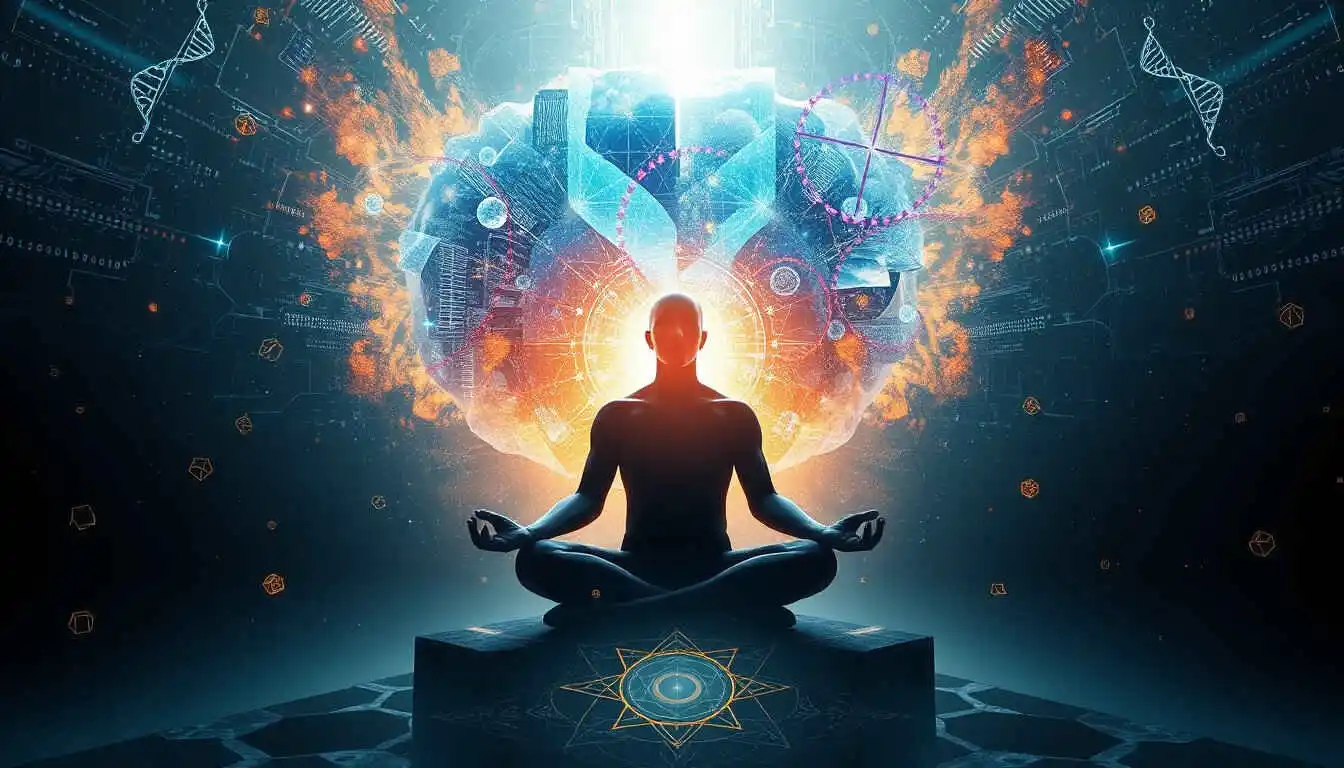
What if the reality you experience every single day is not a fixed, immovable truth — but a program? Not in the science-fiction sense of a digital simulation necessarily, but in a far more grounded and demonstrable sense: a program running on the biological hardware of your nervous system, shaped by millions of years of evolution, years of cultural conditioning, thousands of hours of personal experience, and a cascade of beliefs, assumptions, and cognitive filters you never consciously chose.
What if that program could be rewritten?
This is the central proposition of reality hacking — one of the most fascinating, misunderstood, and genuinely transformative ideas at the intersection of neuroscience, philosophy, psychology, technology, and counterculture. Reality hacking is not about escaping reality. It is not about denial or delusion. At its most rigorous and responsible, it is about understanding the mechanisms through which consciousness constructs experience — and then deliberately, skillfully, intervening in those mechanisms to build a richer, more intentional, more expansive life.

From the ancient practices of meditation masters who could alter their perception of pain and time, to modern neurofeedback laboratories where researchers watch the brain reshape itself in real time, to the ARG (Alternate Reality Game) designers who blur the line between fiction and lived experience, to the biohackers wiring their bodies with sensors and implants — reality hacking is happening across dozens of fields simultaneously. This blog post brings it all together: the what, the why, the how, and the ethics of hacking the most complex system ever known.
Welcome to the deepest rabbit hole you will ever willingly enter.
What Is Reality Hacking? A Working Definition
The term “hacking” originated in MIT’s tech culture of the 1950s and 1960s, where it meant something closer to clever, elegant problem-solving than to cybercrime. A hack was an ingenious workaround — finding an unexpected solution to a system’s limitations by understanding the system deeply and exploiting its rules creatively. In this original spirit, reality hacking means applying the same clever, exploratory, system-level thinking to the system of perceived reality itself.
Reality hacking operates across several distinct but overlapping domains:
Cognitive and Perceptual Hacking: Using techniques rooted in psychology and neuroscience to alter how the brain processes, filters, and interprets sensory information. This includes practices like cognitive reframing, sensory deprivation, controlled breathwork, lucid dreaming, and meditation — tools that literally change neural activity and, with sustained practice, alter neural architecture itself.
Philosophical and Ontological Hacking: Engaging with deep questions about the nature of reality — drawing on traditions from Zen Buddhism to Stoic philosophy to postmodern theory — to loosen the grip of unexamined assumptions about what is real, what is true, and what is possible. This is the intellectual architecture of reality hacking: building the conceptual framework that allows the rest to function.
Technological Hacking: Using emerging and established technologies — virtual reality, augmented reality, biofeedback devices, transcranial direct current stimulation (tDCS), neurofeedback, smart drugs and nootropics, implantable technologies, and AI-powered environments — to directly interface with and modify human perception, cognition, and experience.
Social and Narrative Hacking: Recognizing that much of what we experience as “reality” is socially constructed — maintained by shared stories, norms, symbols, and institutions — and deliberately intervening in that construction. Alternate Reality Games, performance art, culture jamming, and radical social experiments fall into this category.
Biological Hacking (Biohacking): Modifying the body and brain’s baseline functioning through nutrition, sleep optimization, exercise protocols, hormesis (deliberate micro-stress), fasting, cold exposure, and pharmacological means to alter how the biological substrate of consciousness operates.
All of these approaches share a common philosophical root: the recognition that what we experience as reality is a construction, and that constructions can be reconstructed.
The Neuroscience Underneath: How the Brain Builds Reality
To understand reality hacking, you must first understand a stunning fact about the brain that most people are never taught: your brain does not perceive the world directly. It constructs a model of the world, based on incomplete sensory data, experience, and probabilistic prediction — and then presents that model to consciousness as if it were direct perception.
This is the core insight of the Predictive Processing or Predictive Coding framework, one of the most influential theories in contemporary neuroscience, associated with researchers including Karl Friston, Andy Clark, and Anil Seth. In this framework, the brain is fundamentally a prediction machine. Rather than passively receiving sensory input and processing it into experience, the brain continuously generates top-down predictions about what it expects to perceive, and sensory signals are used primarily to correct prediction errors — deviations between expectation and reality.
What this means, in practice, is profound: much of what you experience at any given moment is not “out there” — it is generated by your own brain, based on prior experience and learned models of the world. Sensory data serves as a corrective signal rather than a primary source. Your experience of the color red, the taste of coffee, the feeling of anxiety before a presentation — all of these are constructions. Extraordinarily reliable and useful constructions, honed by evolution and personal experience, but constructions nonetheless.
Anil Seth, a leading neuroscientist at the University of Sussex, has described conscious experience as “a controlled hallucination” — a phrase that captures the predictive processing view with striking precision. We are all, at every moment, hallucinating. The difference between normal waking experience and clinical hallucination is not whether we are constructing our experience — we always are — but whether our constructions align well enough with shared external reality to be functional and socially validated.
This is where reality hacking finds its scientific footing. If experience is constructed by the brain, and if the brain’s construction process follows knowable mechanisms, then those mechanisms can be understood, influenced, and redirected. The brain is not a passive recorder of a fixed reality — it is an active, plastic, modifiable generator of experienced reality. And that changes everything.
Neuroplasticity: The Brain That Rewrites Itself
The discovery of neuroplasticity — the brain’s lifelong ability to reorganize its structure, connections, and even its cortical maps in response to experience, learning, and deliberate practice — is the biological foundation upon which reality hacking rests.
For most of the twentieth century, the prevailing view in neuroscience was that the adult brain was essentially fixed: neurons established during development, and the brain’s architecture was largely immutable after a critical developmental window in childhood. This view began to collapse in the 1980s and was comprehensively overturned by the 1990s and 2000s, through landmark work by researchers including Michael Merzenich, Richard Davidson, and Sara Lazar.
Merzenich demonstrated that the brain’s cortical maps — regions dedicated to processing specific sensory or motor information — are dynamically reorganized based on use. If you learn to play the violin, the cortical area representing your left-hand fingers expands measurably. If you lose a finger, the cortical area representing that finger is rapidly colonized by adjacent regions. The brain is continuously remodeling itself in response to experience.
Davidson’s work at the University of Wisconsin-Madison showed that sustained meditation practice produces measurable, lasting changes in brain structure and function — thickening the prefrontal cortex (associated with attention and emotional regulation), increasing the density of gray matter in the insula (associated with body awareness and empathy), and altering the default mode network (associated with self-referential thought and the “wandering mind”). Notably, experienced meditators showed gamma wave synchrony — a pattern of neural oscillation associated with heightened awareness — at levels never previously recorded in non-meditating subjects.
Lazar’s neuroimaging research at Harvard confirmed that long-term meditators have measurably thicker cortical regions associated with attention, interoception, and sensory processing than non-meditators of the same age — and that this cortical thickness was correlated with years of practice, suggesting a genuine structural benefit rather than a pre-existing difference.
The implications for reality hacking are enormous: the brain you have today is not the brain you are stuck with. Deliberate practice — whether through meditation, cognitive training, therapy, biofeedback, or skill acquisition — can literally reshape the organ that generates your experience. Changing your mind, in the deepest possible sense of the phrase, is not a metaphor. It is biology.
Tools of the Reality Hacker
Meditation and Mindfulness
Perhaps the oldest and most thoroughly validated reality-hacking technology in human history. Meditation in its many forms — from Vipassana insight meditation to Tibetan visualization practices to Zen koans — is fundamentally a technology for redirecting and reshaping attention, the master tool of experience construction. By training attention, meditators gain greater control over the perceptual and cognitive processes that generate experience, allowing them to observe thought without identification, to expand the range of perceptible sensory experience, and to access states of consciousness radically different from ordinary waking awareness.
Lucid Dreaming
Lucid dreaming — the state of being aware that one is dreaming while remaining within the dream — is a reality-hacking laboratory with no physical limitations. In lucid dreams, the reality hacker can experiment with perception, identity, narrative, and physics in a fully immersive virtual environment generated entirely by their own mind. Research by Stephen LaBerge at Stanford University demonstrated that lucid dreamers could signal their conscious awareness to external researchers using pre-agreed eye movement codes — proving that lucid dreaming is a genuine, scientifically verifiable phenomenon rather than a retrospective attribution.
Breathwork
Deliberate manipulation of the breath — through practices like Holotropic Breathwork, the Wim Hof Method, or pranayama — directly alters blood pH, CO2 levels, and the autonomic nervous system’s balance between sympathetic (fight-or-flight) and parasympathetic (rest-and-digest) activation. These physiological shifts produce altered states of consciousness ranging from mild euphoria and heightened sensory clarity to profound visionary experiences without the use of any psychoactive substance.
Biofeedback and Neurofeedback
Biofeedback technologies translate biological signals — heart rate variability, skin conductance, muscle tension, brainwave frequency — into real-time auditory or visual feedback, allowing users to consciously regulate physiological processes that normally operate below the threshold of awareness. Neurofeedback specifically targets brainwave activity, training users to produce desired patterns of neural oscillation — increasing alpha waves for calm focus, theta waves for creative insight, or gamma waves for heightened awareness. The technology essentially makes the invisible visible, closing the feedback loop between mind and brain.
Virtual and Augmented Reality
VR and AR technologies allow the reality hacker to step into carefully constructed alternative perceptual environments. Beyond entertainment, VR has demonstrated remarkable clinical applications: treating PTSD through graduated exposure therapy, alleviating phantom limb pain by fooling the brain’s body map, treating phobias, training surgeons, and rehabilitating stroke patients by re-engaging dormant neural pathways. In each case, the technology leverages the brain’s inability to fully distinguish sufficiently compelling virtual experience from physical reality — a distinction that turns out to be far less robust than intuition suggests.
Psychedelics and Entheogens
Classic psychedelics — psilocybin, LSD, DMT, mescaline — produce the most dramatic and rapid alterations of perceived reality currently known to science. Mechanistically, they primarily act on serotonin 5-HT2A receptors and produce a dramatic reduction in the precision of top-down predictions (in predictive processing terms), causing the brain’s generative model to become more malleable and less rigidly constrained. The result is an explosion of bottom-up sensory experience, novel cognitive connections, dissolution of habitual self-referential thought patterns, and — in therapeutic contexts — rapid interruption of entrenched psychological patterns.
The ongoing renaissance in psychedelic research, with landmark clinical trials at Johns Hopkins, NYU, and Imperial College London demonstrating remarkable efficacy for treatment-resistant depression, addiction, end-of-life anxiety, and PTSD, is one of the most significant developments in mental health in decades. Responsible use in appropriate contexts — with proper preparation, setting, and integration — is increasingly recognized by mainstream science as a legitimate reality-hacking tool.
Cognitive Reframing and NLP
At the less exotic end of the spectrum, cognitive reframing — the practice of deliberately reconsidering the meaning and interpretation of events, beliefs, and experiences — is a validated psychological tool with profound effects. Cognitive Behavioral Therapy (CBT), Acceptance and Commitment Therapy (ACT), and Neuro-Linguistic Programming (NLP) all employ variations of reframing to alter the emotional valence and behavioral consequences of mental content. The act of asking “What else could this mean?” or “What is useful about this experience?” is a simple but genuine act of reality hacking — a deliberate intervention in the brain’s meaning-making process.
Alternate Reality Games: Hacking Social Reality
While much of reality hacking focuses on the individual’s inner world, Alternate Reality Games (ARGs) represent a fascinating form of collective reality hacking — deliberately blurring the boundaries between fiction and lived social reality.
ARGs are interactive narrative experiences that unfold across multiple media platforms — websites, phone calls, physical locations, emails, social media — using the real world as a game board. Crucially, ARGs operate on the “this is not a game” (TINAG) principle: participants are not explicitly told they are playing a game. The fiction bleeds into reality. Phone numbers in a game narrative connect to real operators playing characters. Physical packages arrive at players’ real addresses. Online puzzles require real-world knowledge and collaboration.
The first widely recognized large-scale ARG, The Beast, was created by Microsoft in 2001 to promote the Steven Spielberg film A.I. Artificial Intelligence. It involved over 7,000 puzzle elements, attracted millions of players worldwide, and spawned a spontaneous online community called the Cloud Makers who collaborated to solve the game’s mysteries. The players did not merely consume a story — they co-created and inhabited it, experiencing genuine emotions, relationships, and intellectual breakthroughs within a fictional frame.
ARGs illuminate something profound about the constructed nature of social reality: the rules and meanings we collectively agree to treat as real become, functionally, real. An ARG that is sufficiently immersive and socially shared creates a temporary layer of experience that is genuinely indistinguishable from “reality” in its emotional and behavioral consequences. It is social reality hacking at scale.
The Ethics of Reality Hacking
With power comes responsibility, and reality hacking is no exception. Several ethical considerations must frame any serious engagement with this field.
Consent: Reality hacking applied to oneself is a matter of personal autonomy. Reality hacking applied to others — through ARGs, persuasion, hypnosis, or social manipulation — requires informed consent. The tools of reality hacking are also the tools of manipulation, advertising, propaganda, and cult indoctrination. Understanding this dual-use nature is essential.
Psychological Safety: Powerful reality-hacking practices — particularly psychedelic use, intensive meditation retreats, and deep breathwork — can produce destabilizing experiences. Adequate preparation, professional guidance, integration support, and careful screening for psychological vulnerabilities are not optional extras — they are ethical requirements.
Epistemic Integrity: Reality hacking should not become epistemic nihilism — the position that, because reality is constructed, any construction is as valid as any other. Physical facts, scientific evidence, and shared social realities retain their importance. The goal is not to escape reality but to engage with it more flexibly and skillfully.
Equitable Access: Many powerful reality-hacking technologies — VR systems, clinical neurofeedback, psychedelic-assisted therapy — are currently expensive and inaccessible to most people. A genuinely transformative field must grapple with questions of equitable access and social justice.
Reality Hacking and the Future of Human Experience
We are living at an extraordinary moment. The convergence of advanced neuroscience, sophisticated technology, rehabilitated ancient practices, and a growing cultural appetite for deeper engagement with consciousness is creating an unprecedented toolkit for human self-transformation.
Brain-computer interfaces developed by companies like Neuralink are beginning to create direct bidirectional communication between the nervous system and digital systems. AI-powered personalized neurofeedback systems can adapt in real-time to an individual’s unique brain patterns. Precision psychedelic medicine is moving toward FDA approval. Extended reality environments are becoming indistinguishable from physical experience. Quantum biology is beginning to explore whether quantum phenomena play a role in consciousness itself.
The reality hackers of today — whether they are meditating in a monastery, participating in a clinical psilocybin trial, designing an ARG, or training attention with a consumer neurofeedback headset — are the early explorers of a vast new territory: the deliberate, compassionate, rigorous engineering of human experience.
The invitation is open to everyone. The entry point is simply a single question, asked with genuine curiosity: What if reality is not fixed? What if it is mine to explore, to question, to understand more deeply, and — with wisdom, care, and courage — to consciously redesign?
What happens when you ask that question and mean it?
That is where reality hacking begins.
FAQs
- What is reality hacking?
Reality hacking is the practice of deliberately understanding and modifying the perceptual, cognitive, social, and biological processes through which humans construct their experience of reality.
- Is reality hacking the same as delusion or denial?
No. Responsible reality hacking is rooted in understanding how perception actually works — not in ignoring or denying facts. The goal is greater flexibility and intentionality, not escapism.
- Is reality hacking based on science?
Yes. It draws on neuroscience (predictive processing, neuroplasticity), cognitive psychology, philosophy of mind, and empirical research on meditation, biofeedback, and psychedelics.
- Do I need special equipment to start reality hacking?
No. Meditation, breathwork, lucid dreaming, and cognitive reframing require no equipment and are accessible to anyone.
- What is predictive processing, and why does it matter for reality hacking?
Predictive processing is a neuroscientific theory proposing that the brain generates experience through prediction rather than passive perception. It shows that experience is constructed and therefore modifiable.
- Can meditation really change brain structure?
Yes. Multiple peer-reviewed neuroimaging studies show that sustained meditation practice produces measurable structural changes in the brain, including increased cortical thickness and gray matter density.
- What is neuroplasticity?
Neuroplasticity is the brain’s lifelong ability to reorganize its structure, connections, and functions in response to experience and deliberate practice.
- Is lucid dreaming a real phenomenon?
Yes. Research by Stephen LaBerge at Stanford University verified lucid dreaming scientifically. Lucid dreamers can signal waking researchers using pre-agreed eye movements during the dream state.
- What are Alternate Reality Games (ARGs)?
ARGs are interactive narrative experiences that unfold across real-world media and locations, deliberately blurring the line between fiction and lived reality.
- What is the “controlled hallucination” theory of perception?
Coined by neuroscientist Anil Seth, it describes conscious experience as the brain’s best-guess construction of reality rather than a direct recording of external facts.
- Can breathwork produce altered states of consciousness?
Yes. Deliberate breathing techniques alter blood chemistry, autonomic nervous system balance, and brain oxygenation in ways that produce reliably altered perceptual states.
- What is neurofeedback?
Neurofeedback is a form of biofeedback that uses real-time displays of brainwave activity to train users to consciously regulate their neural oscillation patterns.
- Are psychedelics a legitimate reality-hacking tool?
In supervised therapeutic and research contexts, clinical evidence increasingly supports their efficacy for altering entrenched psychological patterns. Recreational use without proper context carries significant risks.
- What is cognitive reframing?
The deliberate practice of reconsidering the meaning and interpretation of events to alter their emotional and behavioral impact. It is a core technique in CBT and other evidence-based therapies.
- Can VR technology genuinely alter perception?
Yes. The brain’s perceptual systems are sufficiently fooled by high-quality VR that it produces real physiological and psychological responses, with documented clinical applications.
- Is reality hacking dangerous?
Powerful practices like intensive meditation, breathwork, and psychedelics can produce challenging experiences. Proper preparation, context, and integration support are essential safety measures.
- What is the difference between reality hacking and spiritual practice?
Many spiritual practices are effective reality-hacking technologies, though framed in different cultural languages. Reality hacking uses a more explicitly mechanistic, experimental framework alongside or instead of spiritual framing.
- How does sleep affect our perception of reality?
Sleep — particularly REM sleep — consolidates memory, processes emotional experience, and helps calibrate the brain’s predictive models. Sleep deprivation produces perceptual distortions resembling psychosis.
- Can I hack my reality without any extreme practices?
Absolutely. Changing your environment, social circle, physical habits, information diet, and daily routines are all effective, low-intensity forms of reality hacking.
- What is the role of language in reality construction?
Language shapes perception profoundly — the Sapir-Whorf hypothesis suggests that the language we speak influences how we perceive the world. Changing your internal and external language is a genuine reality-hacking tool.
- What is sensory deprivation, and how does it relate to reality hacking?
Sensory deprivation (via flotation tanks) removes most external sensory input, causing the brain to rely almost entirely on its own internally generated activity — revealing the brain’s constructive role in experience.
- How do social beliefs affect individual reality?
Shared social beliefs create frameworks of meaning that individuals experience as objective reality. Recognizing their constructed nature is a form of social-reality hacking.
- Can children practice reality hacking?
Many reality-hacking practices — imaginative play, mindfulness, journaling, creative arts — are entirely appropriate and beneficial for children. Intense practices should be reserved for adults.
- What is the connection between reality hacking and flow states?
Flow states — described by Mihaly Csikszentmihalyi — are optimal experience states characterized by effortless focus, time distortion, and heightened performance. Cultivating them is a form of reality hacking.
- Is there a scientific consensus on consciousness and reality?
No. The nature of consciousness remains one of the most contested questions in science and philosophy. Reality hacking operates in this productive uncertainty rather than waiting for it to be resolved.
- What is the placebo effect, and why do reality hackers care about it?
The placebo effect demonstrates that belief and expectation alone can produce measurable physiological changes — a powerful demonstration that subjective reality construction influences objective biology.
- How does physical exercise relate to reality hacking?
Exercise profoundly alters brain chemistry, neuroplasticity, mood, and cognitive function — making it one of the most evidence-based and accessible reality-hacking practices available.
- Can reality hacking improve mental health?
Many reality-hacking practices — meditation, CBT, neurofeedback, therapeutic psychedelic use, exercise, sleep optimization — have robust evidence bases for improving mental health outcomes.
- What books or resources should a beginner start with?
Works by Anil Seth (Being You), Michael Pollan (How to Change Your Mind), Andy Clark (Surfing Uncertainty), William James (The Varieties of Religious Experience), and Robert Anton Wilson (Prometheus Rising) are excellent entry points.
- Is there a community of reality hackers?
Yes — spanning neuroscience labs, meditation communities, biohacker meetups, ARG design collectives, consciousness research institutes, and online communities dedicated to exploring the edges of human experience.
Disclaimer: This blog post is intended for educational and informational purposes only. Powerful reality-hacking practices, including certain meditation techniques, breathwork, and any use of psychoactive substances, carry real risks. Always consult qualified professionals before engaging with intensive psychological, medical, or pharmacological interventions. Nothing in this post constitutes medical or psychological advice.
