
Table of Contents
What Happens to Your Body When You Put Your Shoes Away for Twenty Minutes a Day
Barefoot walking has real, evidence-backed benefits for your feet and gait, and some more contested claims layered on top. Here is what the research actually supports, plus a realistic daily schedule to start safely.
A Very Old Habit Getting a Very Modern Second Look
Humans walked barefoot or in minimal footwear for the overwhelming majority of our species’ history, and the cushioned, structured shoe is, in evolutionary terms, an extremely recent invention. That historical fact has fueled a growing wellness movement encouraging people to reintroduce regular barefoot walking into daily life, with claimed benefits ranging from stronger feet and better posture to improved mood and, in some more contested corners of the movement, direct physiological effects from physical contact with the earth itself.
Some of these claims rest on genuinely solid biomechanical research. Others rest on considerably thinner scientific ground. Understanding which is which, and how to actually build a safe, sustainable barefoot walking habit into a daily schedule, matters more than treating the practice as either a miracle intervention or dismissing it outright.
What Modern Shoes Actually Change About How We Walk
Cushioned, structured footwear fundamentally changes how the foot interacts with the ground and how the body distributes impact forces while walking. A supportive, cushioned sole reduces direct sensory feedback from the ground, restricts the natural flexion and spreading of toes and the foot’s arch, and often encourages a heel-first walking pattern that differs meaningfully from the more midfoot or forefoot-oriented gait typically observed in habitually barefoot populations studied by researchers.

Over years of consistent use, this altered movement pattern is associated with weaker intrinsic foot muscles, the small stabilizing muscles within the foot itself rather than the larger muscles of the leg, since a supportive shoe effectively does some of the stabilizing work those muscles would otherwise need to perform independently, a pattern researchers sometimes compare to how a supportive back brace, worn constantly and unnecessarily, can weaken core muscles over time through simple disuse.
The Foot Strength Research That Actually Holds Up
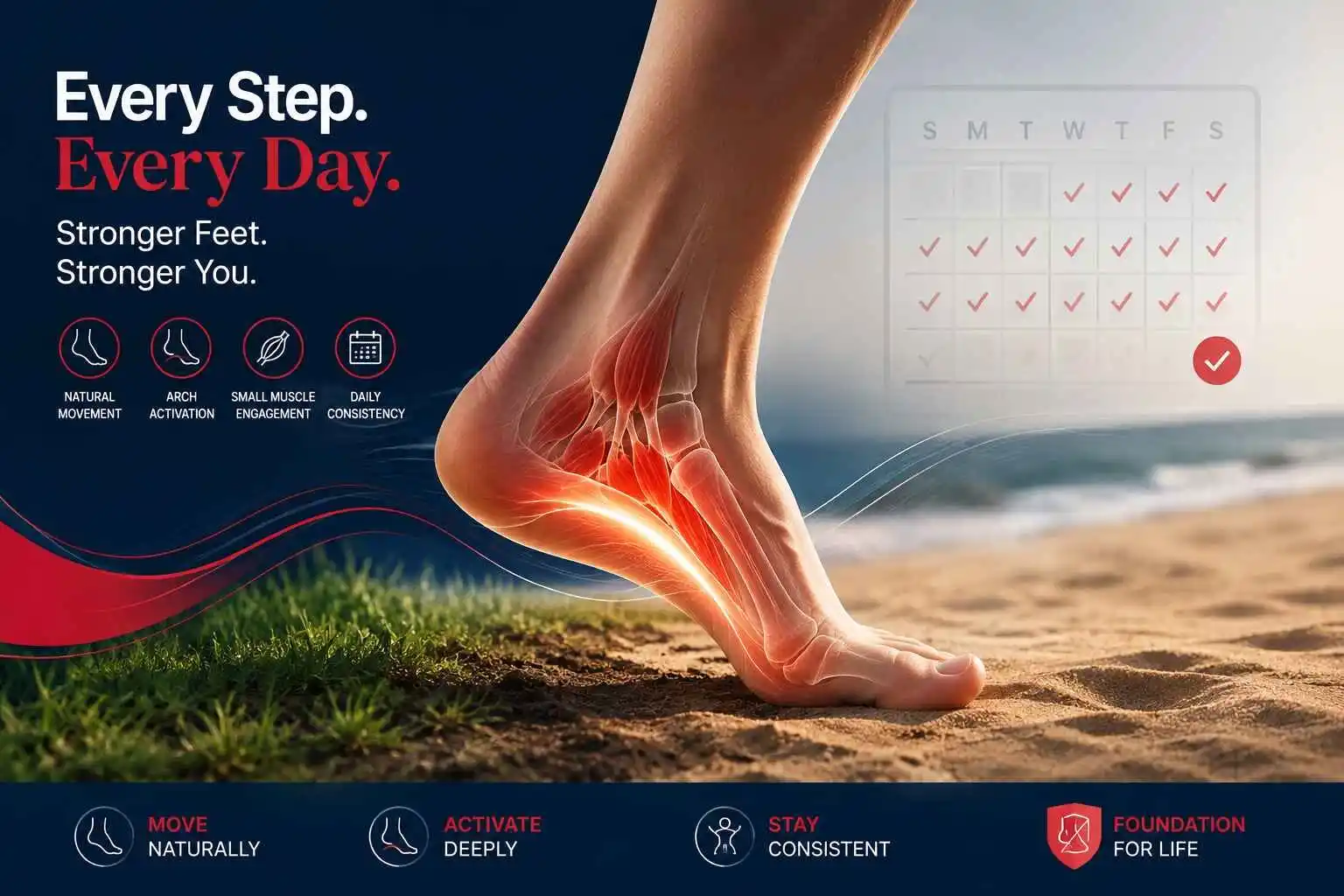
The most robust, consistently replicated evidence supporting barefoot walking concerns foot muscle strength and structure. Multiple controlled studies have found that habitual barefoot walking or minimal footwear use is associated with stronger intrinsic foot muscles, a more naturally functioning arch, and in some research, a reduced prevalence of common foot deformities like bunions and hammertoes compared to populations that wear conventional, structured footwear throughout life.
This research extends to controlled intervention studies as well, not just observational comparisons between populations, with several studies specifically measuring foot strength before and after a structured period of increased barefoot or minimal-shoe walking, generally finding measurable improvements in foot muscle strength and arch function within a matter of weeks to a few months of consistent practice, giving the foot-strengthening claim a genuinely solid evidence base rather than resting purely on theory or anecdote.
How Barefoot Walking Changes Gait and Impact Forces
Barefoot walking and running tend to naturally shift people toward a midfoot or forefoot strike pattern rather than the pronounced heel strike common in cushioned shoes, a change that redistributes impact forces through the leg differently. Some researchers have proposed that this altered impact pattern may reduce certain types of repetitive stress injury risk associated with hard heel striking, though this specific claim remains more actively debated within sports medicine research than the foot-strength findings, with study results varying depending on individual biomechanics, surface type, and transition method.
What is more consistently supported is that barefoot walking improves proprioception, the body’s sense of position and movement, specifically at the foot and ankle, since direct ground contact provides considerably richer sensory feedback than a cushioned, structured sole. Improved proprioception has documented associations with better balance and reduced fall risk in some populations, particularly older adults, making this one of the more practically significant, well-supported benefits of regular barefoot practice.
A cushioned shoe does not just protect the foot; it quietly takes over a job the foot’s own muscles are otherwise built to do.
The Grounding and Earthing Claims Worth a Closer Look
A more specific and more contested claim within the barefoot walking movement involves “grounding” or “earthing,” the idea that direct skin contact with the earth’s surface allows the body to absorb free electrons from the ground, producing specific physiological benefits including reduced inflammation, improved sleep, and better mood, distinct from the purely biomechanical benefits of barefoot walking discussed elsewhere in this piece.
The scientific evidence for these specific electrical-transfer claims remains considerably weaker and more contested than the evidence for foot strength and proprioception benefits. Most existing grounding studies are small, have significant methodological limitations, and several were conducted by researchers directly affiliated with grounding product manufacturers, all factors that responsible science journalism and independent researchers have specifically flagged as reasons for caution before treating the electron-transfer mechanism as an established, proven effect rather than an interesting but unproven hypothesis still awaiting more rigorous, independent confirmation.
What Might Actually Explain the Reported Mood Benefits
Many people who practice regular barefoot walking outdoors do report genuine improvements in mood, stress levels, and a general sense of wellbeing, and researchers generally agree these reported benefits are likely real, even while remaining skeptical of the specific electron-transfer explanation offered by grounding proponents. More conventional, well-established factors offer a simpler explanation: time spent outdoors in natural settings is independently associated with reduced stress and improved mood in a large, well-established body of research, walking itself is a well-documented mood booster through its effects on circulation and endorphin release, and the slower, more attentive pace barefoot walking naturally encourages, given the need to watch one’s footing, may function similarly to mindfulness practice.
This does not mean the reported benefits are imaginary or invalid; it means the more parsimonious, evidence-supported explanation likely involves several well-established mechanisms working together, outdoor time, physical movement, and mindful attention, rather than requiring an unproven direct electrical mechanism to account for genuinely reported improvements in how people feel after a barefoot walk.
Health Benefits of Going Barefoot Daily for 20 Minutes
- Strengthens the muscles, tendons, and ligaments in the feet.
- Improves arch strength and stability.
- Enhances balance and coordination by stimulating sensory nerves.
- Increases proprioception (body awareness and movement control).
- Encourages a more natural walking pattern (gait).
- May reduce the risk of ankle sprains by improving foot stability.
- Helps improve posture through better alignment from the feet upward.
- Can strengthen lower leg muscles, including the calves.
- Promotes better flexibility and mobility of the toes and feet.
- May reduce foot stiffness caused by prolonged shoe use.
- Improves circulation through regular foot movement.
- Stimulates nerve endings in the soles of the feet.
- May help relieve mild plantar fasciitis symptoms when introduced gradually and appropriately.
- Supports healthier foot mechanics during everyday activities.
- Encourages better weight distribution across the foot.
- May reduce dependence on overly supportive footwear over time.
- Provides gentle sensory stimulation from natural surfaces like grass or sand.
- Can promote relaxation and reduce stress by connecting with natural environments.
- Encourages outdoor activity and mindful movement.
- May contribute to overall lower-body strength as part of a regular exercise routine.
Who Should Be Cautious or Avoid Barefoot Walking
Barefoot walking is not appropriate or safe for everyone. People with diabetes, particularly those with any degree of peripheral neuropathy or reduced sensation in the feet, face a meaningfully elevated risk of unnoticed cuts, punctures, or injuries that can become serious infections given impaired healing and sensation, and are generally advised by podiatrists to avoid barefoot walking on outdoor or unpredictable surfaces entirely.
People with existing plantar fasciitis, certain structural foot conditions, or those beginning from a lifetime of exclusively cushioned footwear use should approach barefoot walking gradually and cautiously, since a sudden, significant increase in barefoot activity places unfamiliar stress on tissues that have not been conditioned for it, a pattern that has been linked in some case reports to new or worsened foot pain when people transition too quickly rather than following a gradual, structured progression.
A Realistic Daily and Weekly Schedule for Getting Started
For healthy adults without contraindications, a gradual, structured approach produces better long-term results than an abrupt switch to extensive barefoot walking. A reasonable starting schedule begins with five to ten minutes of barefoot walking daily on a safe, familiar indoor surface during the first one to two weeks, allowing foot muscles and skin to begin adapting without excessive strain, before gradually increasing to fifteen to twenty minutes daily by weeks three and four, ideally split between indoor surfaces and safe, debris-free outdoor surfaces like grass.
From roughly the second month onward, many people comfortably extend to twenty to thirty minutes of daily barefoot walking, potentially incorporating a wider variety of safe natural surfaces, grass, sand, and smooth dirt paths, each of which provides a somewhat different sensory and muscular stimulus. Throughout this progression, any sharp pain, as opposed to mild, expected muscle fatigue in the feet and calves during the adaptation period, is a signal to scale back rather than push through, since barefoot walking’s benefits depend on gradual tissue adaptation rather than rapid, forced progress.
Choosing Safe Surfaces
Surface choice meaningfully affects both safety and the specific benefits gained from a barefoot walking session. Grass and sand are generally considered excellent, forgiving starting surfaces, offering rich sensory feedback and natural cushioning while posing relatively low injury risk when the immediate area has been visually checked for hazards beforehand. Smooth, clean indoor flooring provides a controlled, predictable environment ideal for the earliest adaptation stages before progressing to outdoor surfaces.
Pavement, gravel, and unfamiliar or unchecked outdoor terrain carry meaningfully higher injury risk from sharp debris, extreme surface temperature, or uneven footing, and are generally recommended only after a solid foundation of foot strength and sole toughness has been built through safer surfaces first, rather than as an appropriate starting point for someone entirely new to regular barefoot walking.
Common Mistakes People Make When Starting Out
The most common mistake is progressing too quickly, driven by enthusiasm after reading about the practice’s benefits, which frequently results in new foot, calf, or Achilles tendon soreness significant enough to discourage many people from continuing the practice at all. A second common mistake involves inadequate surface inspection, walking barefoot in areas without first checking for glass, sharp debris, or extreme surface temperature, particularly relevant on hot pavement or unfamiliar terrain during warmer months.
A third, less obvious mistake involves treating barefoot walking as an all-or-nothing daily commitment rather than a flexible practice that can reasonably be adjusted around weather, terrain availability, and how the feet are feeling on a given day, an inflexible approach that tends to produce burnout or injury far more often than a moderate, sustainable, adaptable routine built gradually over weeks and months.
Combining Barefoot Time With Minimalist Footwear
For situations where fully barefoot walking is impractical or unsafe, minimalist or “barefoot-style” shoes, footwear with minimal cushioning, a wide toe box, and a thin, flexible sole, offer a middle-ground option that preserves much of barefoot walking’s biomechanical benefit while providing basic protection from surface hazards. Research on minimalist footwear generally supports similar foot-strengthening benefits to true barefoot walking, provided the transition to minimalist shoes is also approached gradually rather than switched to abruptly after years of conventional, heavily cushioned footwear.
Many practitioners of regular barefoot walking use minimalist shoes specifically for outdoor errands, work environments requiring footwear, or unfamiliar terrain, reserving genuinely barefoot practice for safer, controlled environments like a backyard, a beach, or indoor space, a practical combination that extends many of barefoot walking’s benefits into daily life without requiring full barefoot exposure in every single context.
Tracking Progress Without Overcomplicating It
Unlike many fitness interventions built around specific numeric targets, barefoot walking progress is generally better tracked through simple, subjective markers than precise measurement. Noticing reduced soreness after a walk that previously left the feet fatigued, an easier time balancing on one foot while putting on pants or shoes, or simply feeling more comfortable and stable walking on uneven ground are all reasonable, meaningful signs of genuine progress worth paying attention to over the weeks and months of building the habit.
For anyone who prefers more concrete tracking, a simple weekly log noting total barefoot minutes, the surfaces walked on, and any soreness or discomfort experienced can help identify patterns, for example, whether soreness consistently follows a particular surface type or a specific increase in duration, information that makes it considerably easier to fine-tune an individual progression schedule rather than following a generic timeline that may not match a particular person’s starting point or adaptation speed.
The Balanced Bottom Line
The strongest, most consistently supported case for regular barefoot walking rests on genuine, well-documented biomechanical benefits: stronger intrinsic foot muscles, improved proprioception and balance, and a more naturally functioning gait, benefits that a growing body of controlled research continues to support. The more specific electron-transfer grounding claims layered on top of this practice by parts of the wellness industry remain considerably less scientifically settled, and the genuinely reported mood and stress benefits many practitioners describe are more plausibly explained by well-established factors like outdoor time, movement, and mindful attention than by an unproven electrical mechanism.
Approached gradually, on safe surfaces, and with appropriate caution for anyone with diabetes, neuropathy, or existing foot conditions, working a modest daily barefoot walking habit into an existing routine represents a low-cost, reasonably well-supported addition to a broader health and movement practice, whatever one ultimately concludes about the more contested claims sometimes bundled alongside it.
Frequently Asked Questions
| Question | Answer |
| What are the main benefits of barefoot walking? | Stronger foot muscles, improved proprioception, and a more natural gait are the best-supported benefits. |
| Does barefoot walking strengthen the feet? | Yes, multiple studies show improved intrinsic foot muscle strength with regular barefoot practice. |
| What is proprioception? | It is the body’s sense of position and movement, which barefoot walking measurably improves at the foot and ankle. |
| Is grounding or earthing scientifically proven? | The evidence remains weak and contested, with many studies having significant methodological limitations. |
| Why do people report better mood after barefoot walking? | Outdoor time, physical movement, and mindful attention likely explain much of the reported benefit. |
| Who should avoid barefoot walking? | People with diabetes, neuropathy, or reduced foot sensation should generally avoid unsupervised barefoot walking. |
| How should I start a barefoot walking routine? | Begin with five to ten minutes daily on a safe indoor surface and gradually increase over several weeks. |
| What surfaces are safest for beginners? | Grass, sand, and clean indoor flooring are generally considered safe starting surfaces. |
| Can barefoot walking cause injury? | Yes, especially if progression is too fast or surfaces are not properly checked for hazards. |
| What is a common mistake beginners make? | Increasing barefoot walking duration too quickly, leading to soreness or injury. |
| Does barefoot walking change how you walk? | Yes, it often shifts gait toward a midfoot or forefoot strike rather than a heavy heel strike. |
| Are minimalist shoes a good alternative? | Yes, they offer similar biomechanical benefits while providing basic surface protection. |
| How long does it take to see foot strength improvements? | Some studies show measurable improvements within a few weeks to a few months of consistent practice. |
| Can barefoot walking help with balance? | Yes, improved proprioception from barefoot walking is linked to better balance in some populations. |
| Is barefoot walking safe on pavement? | It carries higher injury risk and is generally recommended only after building a foundation on safer surfaces. |
| Does barefoot walking reduce injury risk from heel striking? | This claim is debated and depends on individual biomechanics and transition method. |
| Can barefoot walking help with bunions? | Some research links habitual barefoot populations to lower rates of bunions and similar deformities. |
| Is it necessary to walk barefoot every single day? | No, a flexible, adaptable routine tends to be more sustainable than a rigid daily requirement. |
| What is the ideal daily duration for barefoot walking? | Twenty to thirty minutes daily is a common target after a gradual multi-week buildup. |
| Can barefoot walking worsen plantar fasciitis? | It can if introduced too quickly without gradual adaptation, so caution is advised for existing cases. |
| Why is skin contact important in grounding claims specifically? | Grounding theory proposes direct skin contact allows electron transfer from the earth, though this remains unproven. |
| Are grounding studies considered reliable? | Many are small and some have ties to grounding product manufacturers, raising credibility concerns. |
| What is the safest time of day to walk barefoot outdoors? | Cooler parts of the day help avoid surface temperature hazards like hot pavement. |
| Does barefoot walking help older adults specifically? | Improved proprioception may support better balance and reduced fall risk in older adults. |
| Can barefoot walking be combined with regular exercise? | Yes, many people incorporate barefoot walking alongside their existing fitness routine. |
| What should I check before walking barefoot outside? | Check the ground for glass, sharp debris, and extreme surface temperature beforehand. |
| Is barefoot running the same as barefoot walking? | They share similar principles but barefoot running carries additional considerations and injury risk factors. |
| Can barefoot walking improve posture? | Improved foot function and proprioception may contribute to better overall movement patterns and posture. |
| Do children benefit from barefoot time as well? | Many pediatric specialists support barefoot time for healthy foot development in children. |
| What is the overall verdict on barefoot walking? | It offers well-supported biomechanical benefits, while more specific grounding claims remain scientifically unsettled. |
Disclaimer: The content on this blog is for informational purposes only. The author’s opinions are personal and not endorsed. Efforts are made to provide accurate information, but completeness, accuracy, or reliability are not guaranteed. The author is not liable for any loss or damage resulting from the use of this blog. It is recommended to use the information on this blog at your own discretion.
