
Table of Contents
Testicular Cancer: The Symptoms Men Ignore, the Treatments That Work, and What You Can Actually Do to Lower Risk
A 27-year-old notices a small, firm lump while showering. It doesn’t hurt. He tells himself it’s probably nothing—an old injury, a cyst, maybe stress. Weeks pass. The lump is still there. Eventually, he mentions it to a doctor, gets an ultrasound, and learns he has testicular cancer.
That story is common for one uncomfortable reason: testicular cancer often starts quietly. It may not cause pain. It may not disrupt daily life. And because many men feel awkward discussing their genitals, they wait far longer than they should.
Here’s the reassuring part: testicular cancer is one of the most treatable cancers, especially when found early. Treatment has improved dramatically, and even many men diagnosed at later stages do well. But early detection still matters. Knowing your body, recognizing changes, and acting quickly can make a real difference.
This guide covers testicular cancer symptoms, how diagnosis works, current treatments, prevention realities, natural remedies and lifestyle changes, and the questions men most often feel too embarrassed to ask.

What Is Testicular Cancer?
Testicular cancer begins when cells in one or both testicles grow abnormally and out of control. The testicles—also called testes—are part of the male reproductive system. They produce sperm and testosterone, and they sit inside the scrotum.
Most testicular cancers start in germ cells, the cells that make sperm. The two broad groups are:
- Seminomas, which tend to grow more slowly and often respond well to radiation and chemotherapy.
- Non-seminomas, which can grow more quickly and may require a different combination of surgery, chemotherapy, and sometimes lymph-node surgery.
Testicular cancer is uncommon compared with many other cancers, but it is one of the most common cancers in younger men. It is most often diagnosed in men between ages 20 and 39, though it can occur at any age.
The important message is simple: a lump does not automatically mean cancer, but any new lump, swelling, or lasting change deserves a medical check.
Testicular Cancer Symptoms: What to Watch For
The most common early sign is a painless lump or swelling in a testicle. It may feel hard, firm, or different from the surrounding tissue. Some men describe a feeling of heaviness, pressure, or fullness in the scrotum.
Common warning signs
Pay attention if you notice:
- A lump or nodule on either testicle
- Swelling or enlargement of one testicle
- A change in texture, size, shape, or firmness
- A dull ache in the lower abdomen, groin, or scrotum
- A sudden collection of fluid in the scrotum
- Pain, tenderness, or discomfort in a testicle
- A feeling of heaviness in the scrotum
- Breast tenderness, swelling, or growth, which can happen when certain tumors affect hormone levels
Symptoms that may suggest spread
Testicular cancer can spread to lymph nodes in the abdomen, lungs, or other areas. When that happens, symptoms may include:
- Persistent low back pain
- Belly or flank pain
- Chest pain
- A cough or shortness of breath
- Unexplained weight loss
- Headaches or confusion in rare, advanced cases
These symptoms can have many other causes. Back pain does not mean cancer, and a cough does not mean cancer. But when a symptom is new, persistent, or paired with a testicular change, it should be checked.
What testicular cancer is often mistaken for
Several non-cancerous conditions can mimic testicular cancer:
| Condition | What it may feel like | Why evaluation still matters |
| Epididymitis | Painful swelling, often with urinary symptoms or fever | Usually infection/inflammation, but needs diagnosis |
| Orchitis | Testicular pain and swelling, sometimes after viral illness | Can resemble cancer symptoms |
| Hydrocele | Fluid-filled swelling in the scrotum | Usually benign, but should be confirmed |
| Varicocele | Enlarged veins, often described like a “bag of worms” | Common, but a doctor should assess it |
| Testicular torsion | Sudden, severe pain and swelling | A medical emergency requiring immediate care |
A painless lump is especially important to take seriously because testicular cancer is often not painful.
How to Check Yourself Without Panic
There is no universal recommendation that every man must perform monthly self-exams. The American Cancer Society notes that regular self-exams have not been proven to reduce deaths from testicular cancer, so it does not make a blanket recommendation for all men. However, it strongly encourages men to know the warning signs and see a doctor promptly if they find a lump. For men with higher risk, such as an undescended testicle, previous testicular cancer, or a family history, monthly self-checks are worth discussing with a clinician.
Think of a self-exam less like a diagnostic test and more like learning your normal.
A simple self-check routine
- Do it after a warm shower or bath. Warmth relaxes the scrotal skin, making it easier to feel changes.
- Stand in front of a mirror. Look for swelling, skin changes, or obvious differences between the two sides.
- Examine one testicle at a time. Hold it between your thumbs and fingers and gently roll it.
- Feel for lumps, hardness, or changes. Note anything new, growing, or persistent.
- Know what is normal. It is normal for one testicle to be slightly larger or hang lower. The epididymis—a soft, coiled tube behind each testicle—can also feel like a lump if you are unfamiliar with your anatomy.
- Do not diagnose yourself. If something feels different for more than a few days, book an appointment.
A useful rule: a lump attached to the testicle itself, especially if it is firm and painless, should be evaluated promptly.
What Happens at the Doctor’s Office
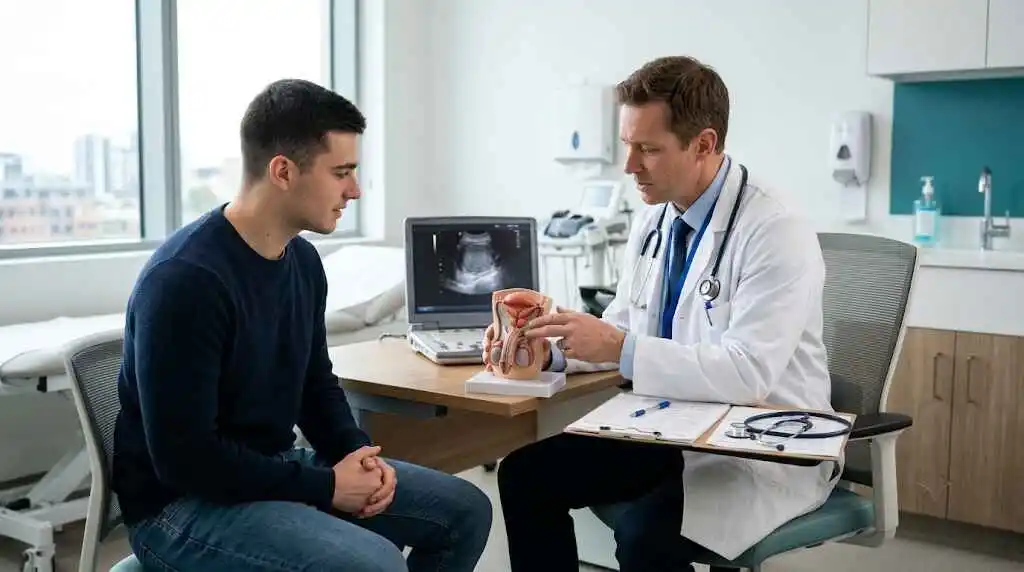
If you report a testicular lump, your clinician will usually begin with a physical exam and medical history. The next step is often a scrotal ultrasound, a painless imaging test that helps distinguish solid masses from fluid-filled structures.
If cancer is suspected, doctors may order blood tests for tumor markers, including:
- AFP (alpha-fetoprotein)
- beta-hCG (human chorionic gonadotropin)
- LDH (lactate dehydrogenase)
These markers help with diagnosis, staging, treatment planning, and follow-up.
One important point: doctors generally avoid taking a biopsy directly through the scrotum when testicular cancer is suspected. Instead, if cancer is likely, the usual approach is surgical removal of the affected testicle through an incision in the groin. This procedure, called a radical inguinal orchiectomy, both diagnoses and treats the tumor.
Testicular Cancer Treatments: What to Expect
Treatment depends on the type of cancer, tumor-marker levels, whether it has spread, and your goals around fertility. The good news is that testicular cancer treatment is highly effective, and many men are cured even when the disease has spread beyond the testicle.
Surgery
The first treatment for most testicular cancers is a radical inguinal orchiectomy—removal of the affected testicle and spermatic cord through a groin incision. This is the standard diagnostic and initial treatment for a malignant testicular mass.
It sounds intimidating, but many men return to normal activity, sexual function, and fertility with one remaining testicle. If both testicles require treatment or removal, testosterone replacement and fertility planning become more important discussions.
In some cases, especially when cancer has spread to abdominal lymph nodes, doctors may perform a retroperitoneal lymph node dissection (RPLND). This surgery removes lymph nodes at the back of the abdomen.
Surveillance
Surveillance means close monitoring rather than immediate additional treatment after surgery. It involves regular physical exams, blood tests, and imaging such as CT scans. If there is no sign of recurrence, no further treatment is needed. If cancer returns, treatment begins.
Surveillance is often preferred for certain early-stage cancers because it avoids unnecessary radiation or chemotherapy. It requires commitment to follow-up appointments, but for many men it is the best balance of effectiveness and avoiding overtreatment.
Radiation therapy
Radiation therapy uses high-energy beams to destroy cancer cells or stop them from growing. It is used more often for certain seminomas, particularly when there is concern about cancer spread to nearby lymph nodes.
Radiation is targeted and carefully planned, but it can still cause short-term fatigue, skin irritation, nausea, or bowel changes. Long-term effects depend on the dose and area treated.
Chemotherapy
Chemotherapy uses medicines that travel through the bloodstream to kill or slow cancer cells throughout the body. It is commonly used when cancer has spread, when tumor markers are elevated, or when the risk of recurrence is high.
Common regimens may include drugs such as cisplatin, etoposide, and bleomycin, though the exact combination depends on the case. Side effects can include nausea, fatigue, hair loss, lowered blood counts, neuropathy, hearing changes, and fertility effects.
Treatment by situation
| Situation | Common approach |
| Cancer confined to the testicle | Orchiectomy, then surveillance or additional therapy based on risk |
| Seminoma with higher recurrence risk | Radiation, carboplatin chemotherapy, or surveillance depending on the case |
| Non-seminoma with higher risk | Surveillance, chemotherapy, or lymph-node surgery depending on risk |
| Cancer spread to lymph nodes or lungs | Chemotherapy, often followed by surgery if masses remain |
| Cancer returns after treatment | Chemotherapy, surgery, or other specialized approaches |
The exact plan should come from a urologic oncologist and cancer team. Testicular cancer treatment is highly individualized, and “watch and wait” can be an active, evidence-based strategy—not ignoring the problem.
Fertility, Testosterone, and Life After Treatment
One of the most practical concerns men have is: Will I still be able to have children?
Some treatments can affect fertility. Chemotherapy and radiation may damage sperm production, and surgery can also have effects depending on what is removed. If you may want biological children in the future, ask about sperm banking before treatment. This is a straightforward step that can preserve options.
Other issues to discuss with your care team include:
- Testosterone levels after treatment
- Sexual function and libido
- Ejaculation changes after lymph-node surgery
- Follow-up schedules
- Mental health and body image
- Heart and kidney health after certain chemotherapy regimens
Life after testicular cancer is often very good, but follow-up matters. Men who have had cancer in one testicle have a higher risk of developing it in the other, so ongoing awareness and regular check-ins are important.
Can You Prevent Testicular Cancer?
Here is the honest answer: most testicular cancers cannot currently be prevented. Many known risk factors—such as genetics, age, race, and having had an undescended testicle—are not things a person can change. The American Cancer Society states that because many men with testicular cancer have no known modifiable risk factors, it is not possible to prevent most cases.
That does not mean you are powerless. You can reduce risk from other cancers, protect long-term health, and improve the odds of catching testicular cancer early.
Known risk factors
Risk is higher in men who have:
- An undescended testicle, called cryptorchidism
- A personal history of testicular cancer
- A family history of testicular cancer
- Carcinoma in situ or germ cell neoplasia in situ in the testicle
- HIV infection, particularly with AIDS
- Klinefelter syndrome
- White, American Indian, or Alaska Native background, though cancer can affect anyone
An undescended testicle is one of the strongest known risk factors; research cited by the National Cancer Institute estimates that it raises risk roughly 3 to 17 times above average.
What lifestyle changes genuinely help
No diet, supplement, tea, detox, or “hormone-balancing” protocol has been proven to prevent testicular cancer. But healthy habits reduce the burden of many cancers and chronic diseases, and they support recovery if treatment is needed.
Helpful habits include:
- Avoid tobacco in all forms. Smoking increases risk for several cancers and worsens overall health.
- Stay physically active. Aim for regular movement you can sustain—walking, strength training, cycling, swimming, or sports.
- Eat mostly whole foods. Build meals around vegetables, fruits, legumes, whole grains, nuts, seeds, and quality protein.
- Limit ultra-processed foods. Reduce frequent intake of packaged snacks, sugary drinks, refined grains, processed meats, and excess red meat.
- Maintain a healthy weight. Weight is not a proven testicular-cancer prevention tool, but it lowers risk for several other cancers and improves surgical and treatment outcomes.
- Limit alcohol. If you drink, keep it modest; the American Cancer Society notes that not drinking is best, and men who drink should keep intake low.
- Protect fertility where possible. Avoid unnecessary heat exposure to the groin, anabolic steroid use, and unregulated supplements.
- Manage stress and sleep. These do not cure cancer, but they support immune function, mood, recovery, and adherence to medical care.
Natural remedies: what is reasonable and what is risky
“Natural” does not automatically mean safe—especially during cancer treatment.
Some supportive practices may help with comfort, stress, and recovery:
- Gentle exercise, such as walking or yoga, if approved by your care team
- A balanced, protein- and fiber-rich diet
- Adequate hydration
- Sleep hygiene
- Stress-reduction practices such as breathing exercises, meditation, counseling, or journaling
- Acupuncture or massage for symptom support, only with your oncology team’s approval
- Psychological support, peer support groups, or cancer counseling
But avoid treating cancer with unproven remedies. Herbal products can interact with chemotherapy, affect liver enzymes, alter bleeding risk, or interfere with hormone therapy. Do not start high-dose vitamins, “testosterone boosters,” detox kits, cannabis products, or herbal supplements without telling your oncologist.
The safest approach is: use natural approaches alongside medical treatment, not instead of it.
When to See a Doctor Immediately
Make an appointment promptly—within days, not months—if you notice:
- A new lump in a testicle
- A testicle that has become larger, harder, or changed shape
- Persistent heaviness or ache in the scrotum or groin
- Fluid swelling in the scrotum
- Any testicular change that lasts more than a couple of weeks
Seek emergency care immediately for:
- Sudden, severe testicular pain
- Swelling with nausea or vomiting
- A testicle that is extremely tender, high-riding, or twisted in position
- Chest pain, severe shortness of breath, or fainting
Sudden severe testicular pain can be testicular torsion, a condition where the spermatic cord twists and blood supply is cut off. It requires urgent treatment.
How to Perform a Testicular Self-Exam
A testicular self-exam takes only a few minutes and helps you notice changes early. The best time is during or right after a warm shower, when the scrotal skin is relaxed.
- Stand in front of a mirror and look for swelling, skin changes, or differences between the two testicles.
- Hold one testicle at a time using both hands.
- Gently roll it between your thumb and fingers. Feel for lumps, hard areas, or changes in size or texture.
- Find the epididymis, the soft, tube-like structure behind each testicle. This is normal and should not be mistaken for a lump.
- Repeat on the other side.
It is normal for one testicle to be slightly larger or hang lower than the other. What matters is a new lump, swelling, heaviness, pain, or a noticeable change that lasts more than a few days.
If you notice anything unusual, do not panic—but do book an appointment with a doctor or urologist promptly. Most lumps are not cancer, yet early evaluation makes treatment simpler and more effective. Knowing your normal is one of the simplest ways to protect your health.
FAQs
- What is the most common sign of testicular cancer?
A painless lump or swelling in one testicle is the most common early sign. - Does testicular cancer always hurt?
No. It is often painless, although some men have dull ache, heaviness, or tenderness. - Can testicular cancer occur at any age?
Yes, but it is most commonly diagnosed in men between ages 20 and 39. - Is a lump always cancer?
No. Many lumps are cysts, fluid collections, enlarged veins, or inflammation. But every new lump should be evaluated. - How quickly should I see a doctor after finding a lump?
Promptly—ideally within a few days. Do not wait weeks to “see if it goes away.” - Can testicular cancer spread?
Yes. It can spread to abdominal lymph nodes, lungs, and occasionally other organs. - What is the first test usually done?
A scrotal ultrasound is commonly the first imaging test. - Are blood tests used to diagnose testicular cancer?
Yes. AFP, beta-hCG, and LDH are tumor markers often measured when testicular cancer is suspected. - What is an orchiectomy?
It is surgical removal of a testicle. A radical inguinal orchiectomy removes the affected testicle and spermatic cord through a groin incision. - Can you still have children after losing one testicle?
Often yes, especially if the remaining testicle works normally. But treatment can affect fertility, so sperm banking before treatment is worth discussing. - Should I bank sperm before treatment?
If you may want biological children later, ask about sperm banking before chemotherapy, radiation, or surgery. - Can you have normal sex after testicular cancer treatment?
Many men do. Sexual function can be affected by treatment, anxiety, hormone changes, or surgery, but support and treatment options exist. - Does losing one testicle affect testosterone?
Usually not dramatically if the other testicle is healthy. Some men still develop low testosterone and need monitoring or replacement therapy. - What is surveillance?
It is close monitoring after surgery using exams, blood tests, and imaging, with treatment only if there are signs of recurrence. - Is surveillance safe?
For selected early-stage cases, yes. It is a standard, evidence-based approach, but it requires reliable follow-up. - When is chemotherapy used?
It is often used when cancer has spread, tumor markers are high, or recurrence risk is significant. - When is radiation used?
Radiation is used more often for certain seminomas, especially to treat or reduce recurrence risk in nearby lymph nodes. - What is RPLND?
Retroperitoneal lymph node dissection is surgery to remove lymph nodes at the back of the abdomen. - Can testicular cancer come back?
Yes, which is why follow-up testing matters. Recurrence can often still be treated effectively. - Can you get testicular cancer in both testicles?
It can happen, though it is uncommon. A history of cancer in one testicle raises the risk in the other. - Does an undescended testicle increase risk?
Yes. Cryptorchidism is one of the strongest known risk factors. - Can testicular cancer be prevented?
Most cases cannot be prevented because many risk factors are not modifiable. - Do testicular self-exams prevent death from testicular cancer?
There is not enough evidence to prove that routine self-exams reduce deaths, but knowing your body and reporting changes promptly is still valuable. - How do I do a testicular self-exam?
After a warm shower, gently roll each testicle between your fingers and thumb. Look for lumps, swelling, hardness, or changes in size or texture. - Can tight underwear cause testicular cancer?
There is no strong evidence that underwear causes testicular cancer. - Can cycling cause testicular cancer?
Cycling has not been shown to cause testicular cancer. It may cause temporary numbness or discomfort, but that is different from cancer. - Do supplements prevent testicular cancer?
No supplement has been proven to prevent it. Some supplements can interfere with treatment, so ask your oncologist before using them. - Can diet help during treatment?
A balanced diet can support strength, recovery, and side-effect management, but it does not replace cancer treatment. - Is testicular cancer curable?
Often, yes. Testicular cancer is highly treatable, and many men are cured, including some with advanced disease. - What should I do if I feel embarrassed to see a doctor?
Remember that clinicians examine these issues routinely. A five-minute conversation is far better than months of uncertainty.
Testicular cancer is not a topic men should quietly avoid. It is treatable, often curable, and much easier to manage when detected early. The most powerful thing you can do is not fear every sensation—it is to know your normal, notice meaningful changes, and speak up quickly.
If you have noticed a lump, swelling, heaviness, or any persistent testicular change, make an appointment with a doctor or urologist this week. Early action is not overreacting. It is taking charge of your health.
⚕️Medical Disclaimer:
The information provided on this website is for general educational and informational purposes only and is not intended as a substitute for professional medical advice, diagnosis, or treatment. Always seek the advice of your physician or other qualified health provider with any questions you may have regarding a medical condition. Never disregard professional medical advice or delay in seeking it because of something you have read on this website.
