
Table of Contents
How to Personalize Summer Workwear Without Breaking Dress Codes
Summer brings with it warmer temperatures, longer days, and the challenge of maintaining a professional appearance while staying cool and comfortable. The key to successful summer workwear lies in finding the perfect balance between professionalism, comfort, and personal style. This comprehensive guide will explore numerous ways to express your unique fashion sense while maintaining workplace appropriateness during the warmer months.
Understanding Summer Fabric Fundamentals
Before diving into specific styling techniques, it’s essential to understand the fabrics that work best for summer workwear. The right materials can make the difference between feeling comfortable and refreshed versus hot and restricted throughout your workday.
Natural fibers like cotton, linen, and silk are excellent choices for summer workwear. These materials are breathable, moisture-wicking, and allow air to circulate close to your skin. Cotton is versatile and easy to care for, linen offers a sophisticated, slightly rumpled look that’s perfect for summer, and silk provides a luxurious feel while remaining surprisingly breathable.
Lightweight wool is another excellent option that many people overlook for summer. Modern wool blends are designed to be temperature-regulating, keeping you cool when it’s warm and providing insulation if you move into an air-conditioned environment. Bamboo fabric is also gaining popularity for its soft texture, moisture-wicking properties, and eco-friendly credentials.

When selecting summer workwear, pay attention to fabric weight. Look for terms like “tropical weight,” “lightweight,” or “summer weight” on labels. These fabrics are specifically designed to be lighter and more breathable than their standard counterparts.
Building a Versatile Summer Work Wardrobe
Creating a summer work wardrobe that allows for personal expression begins with versatile foundation pieces. These items serve as the building blocks upon which you can layer your personal style.
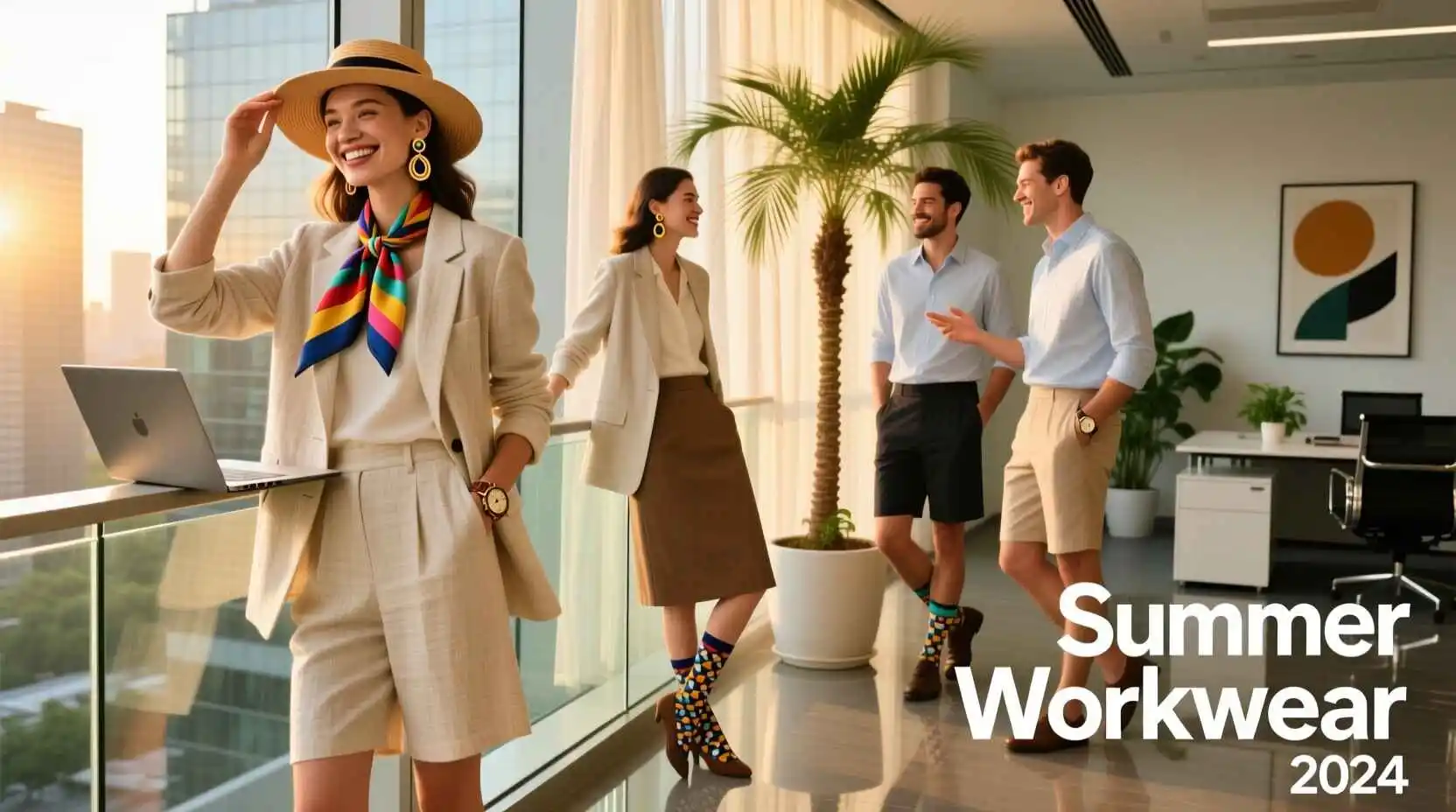
For bottoms, consider investing in well-fitting trousers in lightweight fabrics. Neutral colors like navy, khaki, gray, and black provide maximum versatility. A pair of quality chinos can be dressed up or down depending on the occasion. For those in more casual workplaces, tailored shorts that hit just above the knee can be appropriate when paired with a smart top and blazer.
Skirts and dresses offer excellent options for summer workwear. A midi-length pencil skirt in a breathable fabric can be both professional and comfortable. Shirt dresses, wrap dresses, and fit-and-flare styles in appropriate lengths can provide effortless style while maintaining professionalism.
When it comes to tops, variety is key. Start with basic camisoles and tank tops in neutral colors to layer under jackets and cardigans. Button-up shirts in poplin or seersucker fabric offer a crisp look while remaining breathable. Blouses with interesting details like ruffles, ties, or subtle patterns can add personality to your work outfits.
Outer layers are essential for navigating temperature variations in office environments. A lightweight blazer in a neutral color can instantly elevate any outfit. Cardigans in cotton or linen blends provide coverage without adding bulk. For more casual workplaces, a denim jacket or lightweight leather jacket can add edge to professional basics.
Color Psychology and Summer Workwear
Color plays a significant role in how we present ourselves professionally and can be a powerful tool for expressing personal style. Understanding color psychology can help you make intentional choices about your summer workwear.
Lighter colors reflect sunlight and tend to feel cooler in warm weather. White, cream, beige, and pastel shades are excellent choices for summer workwear. These colors also convey professionalism and attention to detail.
Navy is a year-round professional staple that works beautifully in summer. It’s versatile enough to pair with almost any color and conveys authority and reliability. For a softer alternative to black, consider charcoal gray or deep chocolate brown.
Don’t be afraid to incorporate color into your summer work wardrobe. Jewel tones like emerald green, sapphire blue, and ruby red can add vibrancy while maintaining professionalism. These colors work well as accent pieces or as entire garments.
Patterns are another way to express personal style through color. Subtle stripes, small-scale florals, and classic prints like polka dots can add interest to your workwear without overwhelming your professional appearance. When incorporating patterns, consider pairing them with solid neutrals to maintain balance.
Accessorizing Your Summer Workwear
Accessories are perhaps the most powerful tool for infusing personal style into professional attire. They allow you to transform basic workwear into outfits that reflect your unique fashion sense.
Jewelry can significantly impact your overall look. For summer, consider lightweight pieces that won’t feel heavy in the heat. Delicate necklaces, small earrings, and simple bracelets can add sophistication without drawing too much attention. Statement jewelry can be appropriate in more creative workplaces or for special occasions.
Scarves are versatile accessories that can add color, pattern, and interest to summer workwear. Silk or lightweight cotton scarves can be worn around the neck, tied to handbags, or even used as headbands. They’re an excellent way to incorporate patterns and colors that might be too bold for entire garments.
Belts are both functional and stylish. A quality leather belt in a classic color like brown or black is a wardrobe essential. For more personality, consider belts with interesting buckles or in unexpected colors. A well-chosen belt can define your waist and add polish to your outfit.
Handbags complete your professional look while offering practicality. For summer, consider lighter-colored bags that won’t show wear as easily. Structured styles tend to look more professional than slouchy designs. Quality materials like leather or canvas convey professionalism and durability.
Footwear Considerations for Summer Workwear
Choosing appropriate footwear for summer workwear requires balancing comfort, professionalism, and personal style. The right shoes can elevate your outfit while keeping you comfortable throughout the workday.
Classic pumps with a moderate heel (2-3 inches) are timeless options that work in most professional environments. For summer, look for styles with cutouts or in lighter materials to keep your feet cooler. Neutral colors like nude, black, and white offer maximum versatility.
Loafers and oxfords provide excellent alternatives to heels, offering both comfort and professionalism. These styles work well with trousers, skirts, and dresses. For a more modern look, consider styles in unexpected colors or materials.
In more casual workplaces, sophisticated sandals can be appropriate. Look for styles with substantial straps, covered toes, and low heels. Avoid flip-flops and overly casual styles that might undermine your professional appearance.
When selecting summer work footwear, prioritize comfort. You’ll likely be walking more during the warmer months, and uncomfortable shoes can make even the most stylish outfit feel miserable. Consider bringing a pair of more comfortable shoes to change into if you need to walk significant distances.
Incorporating Trends Into Summer Workwear
Staying current with fashion trends can help keep your workwear feeling fresh and modern. However, it’s important to incorporate trends thoughtfully to maintain professionalism while expressing personal style.
One approach to trends is to adopt them in small doses. For example, if wide-leg trousers are trending, you might try a pair in a neutral color with a more traditional top. This allows you to participate in the trend without committing fully.
Accessories are another excellent way to incorporate trends. A trendy handbag, jewelry style, or scarf can update your look without requiring a complete wardrobe overhaul. These smaller items are also more budget-friendly to replace as trends change.
Color trends are perhaps the easiest to incorporate into existing workwear. If a particular color is trending, you might add a blouse or accessory in that shade to your existing wardrobe. This approach allows you to stay current without investing heavily in pieces that might feel dated quickly.
When considering trends, always evaluate them through the lens of your workplace culture. What’s appropriate in a creative agency might not work in a more conservative law firm. The key is finding trends that align with both your personal style and your professional environment.
Dressing for Different Summer Work Occasions
Summer often brings a variety of work-related events, each with its own dress code expectations. Understanding how to adapt your workwear for different occasions while maintaining personal style is essential.
For client meetings and presentations, err on the side of more conservative attire. A well-tailored suit in a lightweight fabric, paired with a simple blouse or shirt, conveys professionalism. Add personality through accessories like a statement watch or interesting jewelry.
Office summer parties and casual Fridays allow for more personal expression. This might be the appropriate time to wear that colorful dress or stylish separates you’ve been saving. Even in more casual settings, maintain professionalism by avoiding overly revealing or casual items.
Outdoor work events require special consideration. Choose fabrics that breathe well and provide sun protection. A wide-brimmed hat can be both stylish and practical. Consider bringing a lightweight jacket or cardigan for air-conditioned spaces.
Business casual summer events call for a balance between professional and relaxed attire. A nice pair of trousers or a skirt paired with a quality top and blazer strikes the right tone. Add personal touches through color choices and accessories.
Maintaining Professionalism While Expressing Personal Style
Finding the balance between professional appropriateness and personal expression is perhaps the most challenging aspect of summer workwear styling. Here are some guidelines to help navigate this balance.
Fit is paramount regardless of season. Well-fitting clothes look more professional and feel more comfortable. Summer fabrics can be more revealing than their winter counterparts, so ensure that garments aren’t too tight or too loose. Consider having key pieces tailored to ensure the perfect fit.
Coverage is another important consideration. In summer, it’s tempting to wear more revealing clothing to stay cool, but this can undermine professionalism. Look for lightweight fabrics that provide coverage without adding bulk. Layering can help achieve appropriate coverage while allowing for temperature regulation.
Pay attention to the details of your garments. Wrinkled clothing, loose threads, and missing buttons can make even the most expensive outfit look unprofessional. Summer fabrics like linen are prone to wrinkling, so embrace a slightly rumpled look that appears intentional rather than sloppy.
Grooming completes your professional appearance. In summer, this might mean more frequent haircuts, touch-ups on hair color, or adjusting makeup for warmer weather. Well-maintained nails, clean shoes, and neat hair all contribute to a polished professional image.
Sustainable Summer Workwear Choices
As awareness of environmental issues grows, many professionals are seeking sustainable options for their workwear. Making conscious choices about your summer work wardrobe can align with both your personal values and professional image.
Investing in quality pieces that will last multiple seasons is a sustainable approach to workwear. While the initial cost may be higher, the cost per wear decreases significantly over time. Look for well-constructed garments with quality fabrics that will withstand regular wear.
Natural fibers like cotton, linen, and silk are more sustainable than synthetic alternatives. These materials are biodegradable and often require less energy to produce. Organic versions of these fabrics are even better choices, as they’re grown without harmful pesticides.
Consider shopping secondhand for workwear. Thrift stores, consignment shops, and online platforms offer quality professional clothing at a fraction of the original price. This approach extends the life of existing garments and reduces the demand for new production.
Capsule wardrobes are an excellent sustainable approach to workwear. By carefully selecting versatile pieces that mix and match well, you can create numerous outfits with fewer items. This reduces consumption while ensuring you always have appropriate professional attire.
Cultural Considerations in Summer Workwear
Workplaces are increasingly diverse, and understanding cultural considerations in dress can help you create a work wardrobe that’s both respectful and expressive of your personal style.
Many cultures have specific guidelines regarding modesty in dress. Summer workwear that aligns with these guidelines might include longer hemlines, higher necklines, and longer sleeves. Lightweight fabrics make these modest choices more comfortable in warm weather.
Religious considerations may influence workwear choices. For example, some religions require head coverings, which can be incorporated into professional looks through stylish hijabs, headscarves, or other coverings that coordinate with your outfit.
Cultural celebrations and holidays may present opportunities to incorporate traditional elements into your workwear. This might include wearing specific colors, patterns, or garments that have cultural significance while maintaining professional appropriateness.
When working with international colleagues or clients, it’s worth researching cultural norms regarding dress. What’s considered appropriate in one culture might be too casual or too formal in another. Being mindful of these differences demonstrates respect and cultural competence.
Adapting Summer Workwear for Different Body Types
Summer workwear should celebrate your unique body shape while maintaining professionalism. Understanding how to dress for your body type can help you feel confident and comfortable in your work attire.
For those with pear-shaped bodies, balance your proportions by drawing attention to your upper body. This might involve wearing brighter colors or interesting details on top, with darker, simpler bottoms. A-line skirts and wide-leg trousers can be flattering choices.
Apple-shaped bodies often look best in outfits that create definition at the waist. Empire waist dresses and tops, wrap dresses, and peplum styles can create this definition. V-necklines are generally flattering and elongate the torso.
Hourglass figures can emphasize their natural waist with fitted styles. Wrap dresses, pencil skirts, and tailored blouses that nip in at the waist highlight this body type advantage. Avoid overly boxy styles that hide your natural shape.
For those with rectangular body shapes, creating curves can be achieved through strategic dressing. Peplum tops, ruffled blouses, and belted waists can add volume and create the illusion of curves. Layering can also add dimension to your silhouette.
Creating a Capsule Summer Work Wardrobe
A capsule wardrobe consists of a limited number of versatile pieces that can be mixed and matched to create numerous outfits. This approach is particularly effective for summer workwear, as it maximizes options while minimizing bulk.
Start by identifying your core neutral pieces. These might include trousers, skirts, and dresses in colors like navy, black, gray, and khaki. These pieces should be versatile enough to pair with multiple tops and accessories.
Add in a few colorful tops and blouses that coordinate with your neutral bottoms. These pieces should reflect your personal style while remaining workplace appropriate. Aim for 3-5 tops that can be worn with multiple bottoms.
Include 1-2 lightweight jackets or cardigans for layering. These pieces are essential for navigating temperature variations in office environments and can instantly elevate a simple outfit.
Complete your capsule with accessories that add personality to your outfits. A few statement necklaces, scarves, and belts can transform basic pieces into unique ensembles. Quality shoes in neutral colors complete the capsule wardrobe.
Transitioning Your Workwear From Day to Evening
Summer often brings opportunities for after-work social events. Learning to transition your workwear from day to evening allows you to participate in these activities without returning home to change.
The key to day-to-evening transitions is strategic planning. Wear a foundation that works for both settings, such as a simple dress or trousers and a top combination. Then, pack a few key items to transform your look for the evening.
Changing your shoes is one of the easiest ways to transition from day to evening. Swap comfortable work flats or low heels for more stylish options with a bit more height or embellishment.
Adding or changing accessories can dramatically alter your look. Remove conservative daytime jewelry and replace it with bolder statement pieces. Add a clutch or a smaller evening bag instead of your work tote.
A quick change of makeup and hairstyle can also help transition your look. Adding a bold lip color, touching up your eye makeup, or letting your hair down from a daytime updo can signal the shift from work to social time.
