
Table of Contents
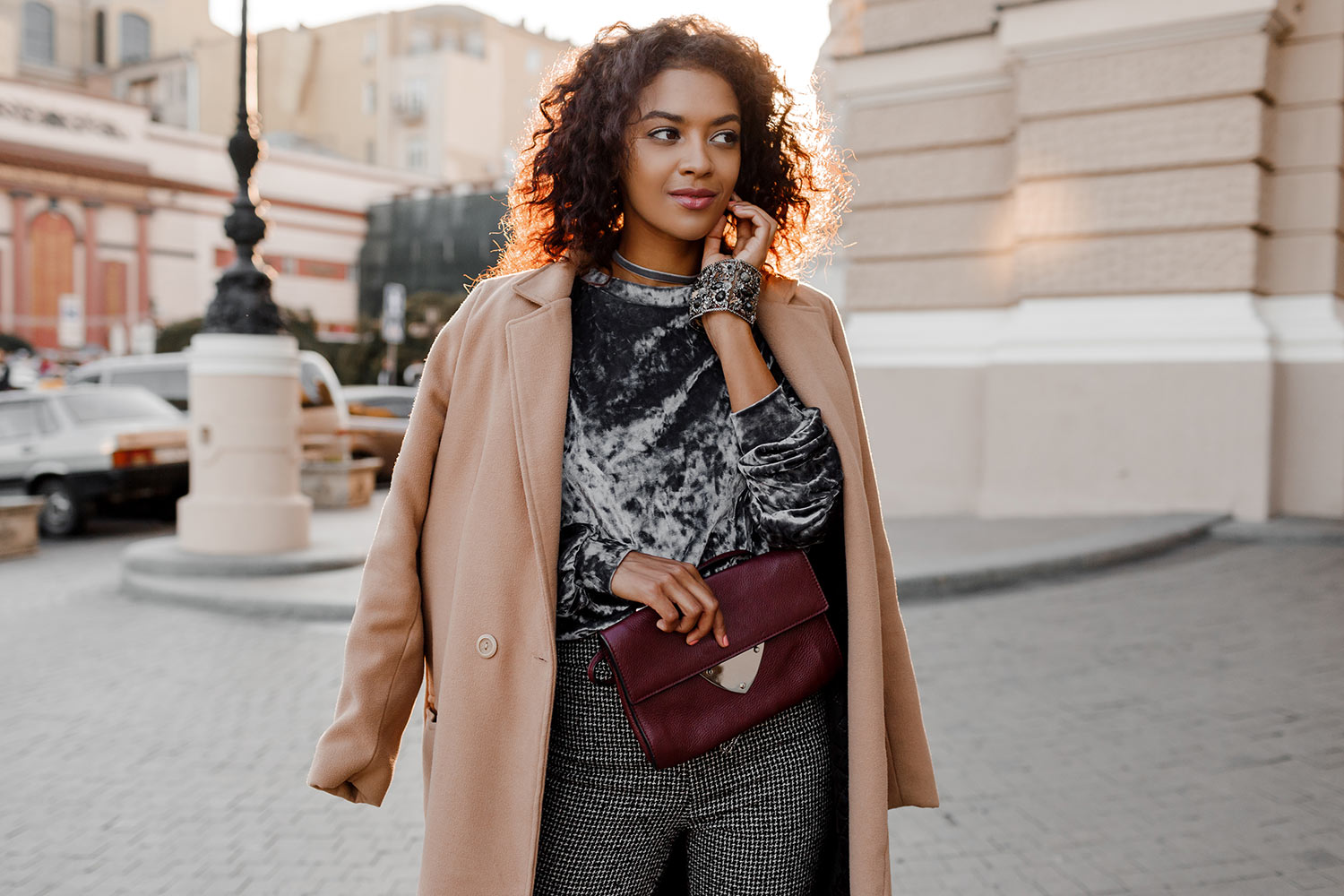
Vintage in vogue: The newest trends in fashion are nothing new at all
Introduction: The Eternal Return of Style
If you opened a high-fashion magazine today, say Vogue, Harper’s Bazaar, or Elle, you might be forgiven for thinking you had stepped into a time machine. On one page, a model is sporting a “new” baguette bag that looks suspiciously like something your mother carried in 1999. On another, a billboard features flowing Victorian sleeves that would have been at home in a drawing room of the 1890s. Flip a few more pages, and you’ll see wide-leg trousers that scream Studio 54.
The realization hits you with a sudden clarity: There is no such thing as a new trend.
Fashion, despite its relentless pursuit of the “now,” is inherently retrograde. It is a spiral rather than a circle—revisiting the past but with a modern twist. The current landscape of style is a vibrant collage of history, a curated museum where the exhibits are for sale. In this deep dive, we will explore why vintage is vogue, dissect the specific eras dominating the runways today, and understand why the newest trends in fashion are, quite literally, nothing new at all.
The Nostalgia Economy: Why We Look Back
To understand why vintage is trending, we must first understand the psychology of the wearer. Why, in an age of technological marvels and futuristic innovation, do we insist on dressing like our ancestors?

The answer lies in the “Nostalgia Economy.” We live in a volatile, rapidly changing world. Political instability, climate anxiety, and the digital saturation of social media have created a collective yearning for simpler times. Fashion provides a tangible way to anchor ourselves in a perceived “better” past.
For Generation Z, the largest driver of current fashion trends, nostalgia is intergenerational. They are raiding the closets of Millennials, Generation X, and Boomers. They are romanticizing eras they never lived through—the “free love” of the 70s, the grunge rawness of the 90s, and the flashy excess of the Y2K era.
This nostalgia isn’t just about aesthetics; it’s about identity. Wearing vintage is a statement of individuality. In a world of fast fashion where everyone is buying the same Zara crop top, wearing a genuine 1970s leather jacket or a reworked 90s dress signals that you have taken the time to curate your look. It is a rebellion against the homogenization of the modern wardrobe.
The Y2K Resurrection: Low Rise and Logomania
The most pervasive trend of the last few years is undoubtedly the return of Y2K (Year 2000) fashion. In the late 90s and early 2000s, fashion was defined by the rise of “It Girls” like Paris Hilton, Britney Spears, and Jennifer Lopez. It was the era of Mean Girls and Clueless.
For a decade, this style was mocked. We buried the low-rise jeans, laughed at the butterfly clips, and vowed never to wear chunky highlights again. But fashion has a sense of humor, and the cycle has turned.
Suddenly, low-rise jeans are back, controversial as ever. They are being paired with baby tees and crop tops, exposing midriffs in a way that seemed impossible just five years ago. The velour tracksuit—once the uniform of the suburban mall—has been elevated by high-end brands like Juicy Couture and Valentino.
Even the “logomania” of the early 2000s has returned. In the 2010s, “normcore” and minimalism ruled; logos were tacky. Today, brands like Gucci, Fendi, and Versace are once again plastering their names across chests and belts in a bold display of capitalism that feels refreshingly honest compared to the stealth wealth trends that followed.
However, there is a difference in how we wear it. The Y2K revival of the 2020s is often mixed with irony. It is frequently paired with modern streetwear elements, like chunky “dad sneakers” or platform boots, grounding the look in a contemporary sensibility. It is a tribute, but a self-aware one.
The 70s Bohemian Rhapsody: Freedom in Flow
While Y2K dominates the youth culture, the 1970s have taken over the luxury sector and the “Old Money” aesthetic. The 70s were a time of massive cultural shift—a movement towards bohemian freedom, disco decadence, and a relaxed silhouette that rejected the rigid structure of the previous decades.
This season, we are seeing a flood of midi skirts, paisley prints, and suede everything. The “hot pant” has returned, often styled with blazers for a high-low mix. But the biggest 70s revival item is undoubtedly the bootcut or flare jean.
After nearly a decade of the skinny jeans’ tyranny, the leg has been liberated. The skinny jean, which made everyone look a bit like a stick insect, has been replaced by trousers that flare out from the knee. This silhouette lengthens the leg and creates a swagger that skinny jeans simply cannot match.
Designers like Chloé, Isabel Marant, and Saint Laurent have built entire recent collections around the 70s muse—think Jane Birkin on a beach in the French Riviera, or Bianca Jagger at Studio 54. It is a look of effortless, sun-kissed chic. It involves silk scarves tied around the head, fringed bags, and oversized sunglasses.
This trend speaks to a desire for comfort and ease. The 70s silhouette is loose and flowing. It allows for movement. It is the antithesis of the body-con dresses of the 2010s, suggesting a woman who is more interested in dancing through life than squeezing into a mold.
The Victorian Influence: Romance and Restraint
Perhaps the most surprising trend is the return of the Victorian and Edwardian eras. In a direct rejection of the casualization of the world (where sweatpants are now acceptable work-from-home attire), many designers are turning to the hyper-feminine, heavily corseted styles of the 19th century.
We are seeing the “corset top” everywhere. Once an undergarment designed to restrict and shape, it is now worn as a shirt, often with jeans or loose trousers. This trend, popularized heavily by cultural icons like Billie Eilish and the Netflix series Bridgerton, speaks to a desire for ritual and drama in dress.
But it goes beyond the corset. We are seeing high collars, puffy sleeves (gigot sleeves), lace inserts, and heavy brocades. It is a “Cottagecore” aesthetic that romanticizes the pastoral life of the 1800s.
This is not just about looking pretty; it is about craftsmanship. The Victorian era was defined by an obsession with detail. Embroidery, beading, and lacework were painstakingly done by hand. In our digital age, where everything is instant, there is a profound appreciation for the “slow fashion” of the past. Wearing a Victorian-style blouse feels like wearing a piece of art. It adds a layer of dignity and grace to everyday life.
The 80s Power Play: Shoulders and Structure
If the 70s are about relaxation, the 80s are about power. The “Power Suit” is back. The 1980s were the era of corporate excess, embodied by the broad-shouldered silhouettes of Dynasty and Working Girl. Women were entering the workforce in record numbers, and they dressed to occupy space.
Today, with women continuing to break glass ceilings in politics and business, the power suit has returned as armor. Designers like Balenciaga and Alexander McQueen have sent models down the runway in jackets with exaggerated, structured shoulders. The waist is cinched, but the shoulders are massive.
This trend also intersects with the rise of “Blazers” as casual wear. It is no longer uncommon to see a giant, boxy 80s blazer worn over a sports bra and bicycle shorts. It is a juxtaposition of the formal and the informal.
The 80s revival also brings with it a love for metallics, sequins, and bold primaries. Neon isn’t just for ravers; it’s for the daytime. The optimism and aggression of the 80s palette feels appropriate for a post-pandemic world that is ready to party again.
The Quiet Luxury Deception: The 90s Minimalist
There is a counter-movement happening alongside the loud prints and low rises. It is the trend of “Quiet Luxury” or “Stealth Wealth.” This is heavily influenced by 90s minimalism—think Calvin Klein, Helmut Lang, and the early days of Prada.
This trend focuses on neutrals: beige, cream, gray, black, and white. It prioritizes fabric quality—cashmere, silk, and heavy cottons—over logos or embellishments. It is the style of the Succession TV show; it looks expensive, but you can’t quite tell why.
This is a “revival” of 90s corporate minimalism, but stripped of the awkwardness. It is about buying “investment pieces”—a trench coat that lasts ten years, a leather bag that ages gracefully. In a world of fast fashion that falls apart after two washes, this return to 90s quality is a form of protest. It is a return to the idea that fashion should be durable and timeless.
However, the irony of “Quiet Luxury” is that it has become a trend in itself. The “old money” aesthetic is now being performed by people who are far from wealthy, buying dupes and fast fashion versions of these expensive neutral staples. It proves that even anti-fashion becomes fashion eventually.
The Remix Culture: Technology Meets History
The crucial difference between the “vintage” of the past and the “vintage” of today is technology. When we wear trends today, we are wearing them differently.
Fabrics have evolved. The polyester of the 70s was scratchy and unbreathable. Today, we have technical blends that offer the look of vintage silk with the durability and stretch of synthetics. We have sustainable vegan leathers that mimic the 70s suede look without the ethical baggage or the weather sensitivity.
Furthermore, the internet has changed how vintage is consumed. In the past, finding vintage clothing required hunting through dusty thrift stores. It was a physical labor of love. Today, apps like Depop, Poshmark, and The RealReal have democratized vintage.
You can find a genuine 1990s Ralph Lauren polo from your phone while sitting on the couch. This accessibility has fueled the cycle. Trends move faster now because the supply chain of second-hand clothing has been digitized. A vintage shirt seen on a celebrity on Instagram can sell out on Depop within hours. The “vintage hunt” has become a global, digital marketplace.
Sustainability: The Ultimate Argument for Vintage
We cannot discuss the return of vintage without addressing the elephant in the room: sustainability. The fashion industry is one of the world’s largest polluters. The environmental cost of producing new trends—growing cotton, dyeing fabrics, shipping goods around the world—is staggering.
Buying vintage is the most effective form of sustainable fashion. It is recycling in its purest form. By extending the life cycle of a garment, you are reducing the demand for new production.
For the modern consumer, this is a major motivator. Wearing vintage is no longer just about looking cool; it’s about voting for a greener planet with your wallet. The “newest trend” is actually the rejection of the “new.” It is a conscious choice to opt for the pre-loved.
This shift has forced high-fashion brands to change their tactics. Luxury houses are now buying back their own vintage pieces to resell in their own “vintage” corners. They are realizing that their history is their most valuable asset. They are actively mining their own archives to reissue classic bags (like the Dior Saddle bag or the Fendi Baguette) because they know the demand for “authentic” history is higher than the demand for new designs.
