
Table of Contents
Benefits of Tobacco? Here’s What Science Really Says
Tobacco. The word conjures images ranging from historical ceremonies and leisurely puffs to stark warnings and devastating illnesses. It’s a plant with a complex and often contradictory history, intertwined deeply with global trade, cultural practices, and, tragically, widespread disease. As professional writers exploring topics of public significance, we feel it’s crucial to pull back the curtain on Nicotiana tabacum – to understand its journey from a plant with traditional uses to a product responsible for millions of deaths annually.
Our aim in this article is to present an informational look at tobacco: what it is, its historical and traditional uses (and the claims made about them), the alleged or historical “benefits” often cited in the past (and why modern science debunks them), and, most importantly, the well-documented and severe health hazards associated with its consumption. We approach this subject with the understanding that while tobacco has a long history, its dangers in the modern era are irrefutably clear.
What is Tobacco?
At its core, tobacco refers primarily to the leaves of the Nicotiana tabacum plant, a species native to the Americas and belonging to the nightshade family (Solanaceae). The key active ingredient that makes tobacco both psychoactive and highly addictive is nicotine. However, tobacco leaves contain thousands of other chemicals, many of which are introduced or activated during the processing and combustion (burning) of the plant.
Historical and Traditional Uses
Before its global spread, tobacco was utilized by indigenous peoples across the Americas for thousands of years. These uses were often deeply rooted in cultural, spiritual, and medicinal practices.

- Ceremonial Use: Tobacco was frequently smoked, chewed, or snuffed during rituals, ceremonies, and social gatherings. It was often seen as a way to communicate with spirits or to seal agreements.
- Medicinal Claims (Traditional): Indigenous cultures used tobacco topically for pain relief (e.g., poultices for swellings) and internally for perceived ailments like earaches, toothaches, and even as a purgative or emetic. These uses were based on traditional knowledge and observation, not modern scientific validation.
- Social and Recreational: Smoking or chewing was part of daily life in some cultures, used for relaxation or simply as a habit.
With the arrival of Europeans in the Americas, tobacco was quickly adopted and transported across the globe. Initially, it was often seen as an exotic luxury item, and surprisingly, even marketed as a panacea for various ailments in Europe through the 16th and 17th centuries. This early misperception laid the groundwork for its widespread acceptance before its dangers were understood.
Alleged or Historical “Benefits”: Separating Myth from Reality
In the past, and even occasionally in contemporary discussions (often fueled by the addictive nature of nicotine), certain “benefits” have been attributed to tobacco or nicotine. It is absolutely crucial to understand that modern science overwhelmingly demonstrates that the severe health risks of tobacco consumption far outweigh any minor, temporary, or historically claimed benefits. Many historical claims were based on misunderstanding or were simply incorrect.
Here’s a look at some often-cited points and the scientific reality:
| Alleged/Historical “Benefit” | Modern Scientific Reality |
| Stress Relief/Relaxation: | Nicotine dependence creates withdrawal stress; smoking temporarily alleviates this stress, creating a cycle of addiction. |
| Increased Focus/Alertness: | Nicotine is a stimulant, causing a temporary boost. However, this effect is short-lived and followed by withdrawal. |
| Appetite Suppression: | Nicotine can slightly reduce appetite. However, the health risks dramatically outweigh any minor weight management effect. |
| Historical Medicinal Uses (e.g., headaches): | Based on traditional or early European beliefs, not proven efficacy. Tobacco is now known to cause many health problems. |
| Nicotine’s Potential in Neurological Research: | Highly preliminary and controversial research on pure nicotine (not tobacco) for conditions like Parkinson’s exists, but this is separate from smoking/tobacco use and carries its own risks. It does not justify tobacco use. |
As we can see, the perceived benefits are either temporary effects linked to addiction relief or historical myths debunked by modern medical research.
“Tobacco is a dirty weed. It does the smoker no good, it cannot do any non-smoker any good… I would beseech smokers to give it up.” – Sir Winston Churchill (a former heavy smoker)
The Overwhelming Health Hazards
This is the section where the stark reality of tobacco use comes into sharp focus. Decades of rigorous scientific research have unequivocally linked tobacco consumption to a vast array of devastating health problems. It is the leading cause of preventable death globally. The hazards stem from the thousands of chemicals in tobacco, including at least 70 known carcinogens (cancer-causing agents), nicotine (the highly addictive component), carbon monoxide, tar, and irritants.
Here are some of the major health hazards:
- Respiratory Diseases:
- Lung Cancer (overwhelmingly caused by smoking)
- Chronic Obstructive Pulmonary Disease (COPD), including Emphysema and Chronic Bronchitis
- Increased risk and severity of respiratory infections (pneumonia, flu)
- Worsening of asthma
- Cardiovascular Diseases:
- Heart Attack
- Stroke
- Coronary Artery Disease
- Aortic Aneurysm
- Peripheral Artery Disease (PAD)
- Hypertension (High Blood Pressure)
- Cancers (beyond lung):
- Mouth, Throat (Larynx and Pharynx)
- Esophagus
- Bladder
- Kidney
- Pancreas
- Cervix
- Leukemia (Acute Myeloid Leukemia)
- Stomach
- Colon and Rectum
- Liver
- Other Serious Health Issues:
- Nicotine Addiction: A powerful physical and psychological dependence.
- Reproductive Issues: Reduced fertility in both men and women, increased risk of pregnancy complications (low birth weight, premature birth, birth defects, stillbirth).
- Type 2 Diabetes
- Weakened Immune System
- Dental Problems (Gum disease, tooth loss)
- Vision Problems (Cataracts, macular degeneration)
- Reduced Bone Density (Increased risk of osteoporosis)
- Impaired Wound Healing
- Premature Aging of the Skin
Types of Tobacco Products and Their Risks:
It is important to note that the health hazards apply to various forms of tobacco consumption. While the risks and specific chemical exposures might vary slightly, none are safe alternatives to not using tobacco.
Major Types of Tobacco Products:
- Cigarettes
- Cigars
- Pipe Tobacco
- Chewing Tobacco (Smokeless Tobacco)
- Snuff (Smokeless Tobacco)
- Hookah/Waterpipe
- Bidis (Small, hand-rolled cigarettes)
- Kretek (Clove Cigarettes)
Even smokeless tobacco, while avoiding the dangers of smoke inhalation, still contains nicotine, carcinogens, and heavy metals, leading to risks like oral cancer, gum disease, and cardiovascular problems. Hookah smoke, often perceived as safer due to water filtration, is still highly toxic and contains many of the same hazardous substances as cigarette smoke.
The Impact of Passive Smoking (Secondhand Smoke)
The dangers of tobacco are not limited to the user. Secondhand smoke, the combination of smoke from the burning end of a cigarette and the smoke exhaled by the smoker, is a known carcinogen and causes significant health problems in non-smokers.
Health risks for those exposed to secondhand smoke include:
- Increased risk of lung cancer and heart disease in adults.
- Respiratory infections (bronchitis, pneumonia), ear infections, more severe asthma, and Sudden Infant Death Syndrome (SIDS) in children.
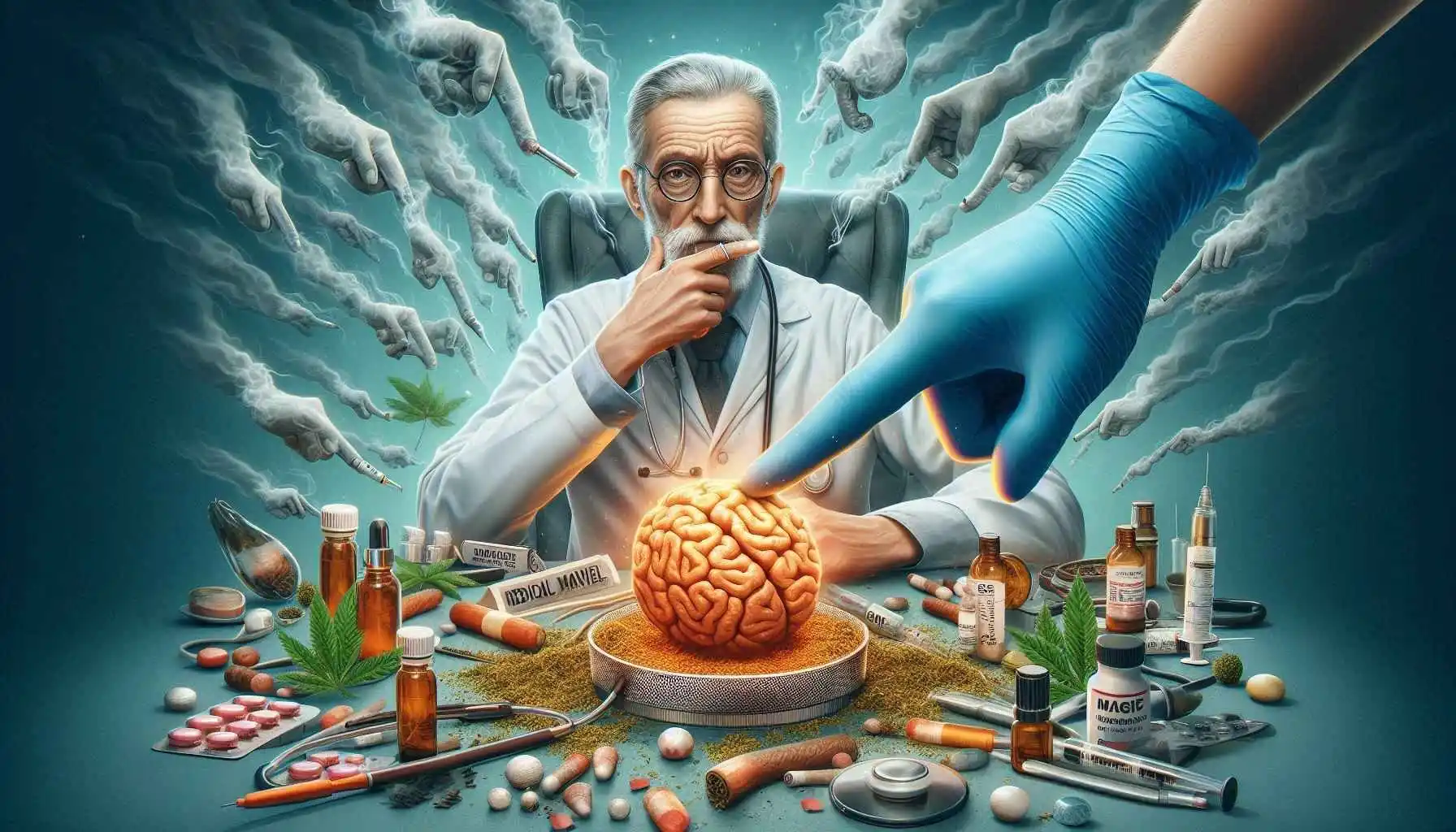
Medical Marvel or Misuse? A Real Comparison
Tobacco is universally condemned as the architect of a global public health crisis, yet viewing it strictly as a villain ignores a complex scientific reality. The debate between “Medical Marvel” and “Misuse” hinges on a critical distinction: the difference between the tobacco plant’s organic chemistry and the destructive delivery method of smoking.
On one hand, the “Medical Marvel” argument holds scientific validity when specific compounds are isolated. Nicotine itself is not a carcinogen; it is a potent stimulant with documented neuroprotective qualities. Research has shown that nicotine can enhance cognitive focus and is surprisingly prevalent in studies targeting Parkinson’s and Alzheimer’s diseases, where it appears to protect neurons from degeneration. Furthermore, the tobacco plant is proving to be an unsung hero in the field of “biopharming.” Scientists have successfully genetically engineered tobacco plants to produce pharmaceuticals, including experimental vaccines for Ebola and the Norovirus. The plant’s rapid growth and biomass make it an efficient, low-cost factory for harvesting therapeutic proteins.
Conversely, the “Misuse” narrative is the dominant and undeniable reality. The primary method of consumption—smoking—nullifies any potential benefit. Combustion transforms the leaf into a toxic delivery system, releasing over 7,000 chemicals, including 70 known carcinogens like benzene and formaldehyde. The addictive properties of nicotine ensure that users are trapped in a cycle of exposure to these deadly toxins, leading to heart disease, emphysema, and lung cancer. Here, tobacco is not a medicine but a mechanism of chronic disease and death.
Ultimately, the comparison reveals a stark contrast: tobacco as a plant has biological potential, but tobacco as a product has been catastrophically misused. While the raw botanical entity may hold keys to future medical breakthroughs, its current status as a public health enemy is well-earned. The real potential of tobacco lies not in the cigarette, but in the laboratory.
Conclusion
Our exploration of tobacco reveals a substance with a long history, ranging from traditional indigenous practices grounded in cultural and spiritual beliefs to its global proliferation driven by economic interests. While some historical claims attributed medicinal or beneficial properties to tobacco, modern science has unequivocally proven that these claims are unfounded or insignificant compared to the severe and pervasive health hazards associated with its use.
The reality is stark: tobacco consumption, in any form, is a leading cause of preventable disease and death worldwide. The chemicals in tobacco, particularly during combustion, inflict damage across multiple organ systems, leading to a litany of chronic diseases and cancers.
As we move forward, the focus for public health remains clear: prevention of uptake, especially among young people, and support for those who wish to quit. Understanding the history helps us appreciate its journey, but understanding the science is paramount to recognizing the profound dangers tobacco poses. The overwhelming evidence compels us to conclude that the only way to avoid the devastating health consequences of tobacco is to not start, or to quit if one currently uses it.
Medicinal Uses of Nicotine and Tobacco Derivatives
