
Table of Contents
The Ultimate Guide to Bug Bites: Identification, Symptoms, Diagnosis, and Treatment
Introduction: The Invisible Landscape of Bites and Stings
As the seasons turn and we find ourselves drawn outdoors—into the woods, the garden, or simply the backyard patio—we enter a shared space. We are not alone. The insect world is vast, diverse, and incredibly active. While most insects are harmless and even beneficial to the ecosystem, a significant number of them view humans as either a threat to be neutralized or a source of sustenance to be tapped.
The result of these encounters is often a bump, a welt, a sting, or a rash. For the most part, these are minor annoyances that fade with time. However, the line between a minor irritation and a medical emergency can be thinner than we realize. In an era where vector-borne diseases like Lyme disease and West Nile virus are on the rise, and where invasive species like the “murder hornet” or the fire ant are expanding their territories, understanding the anatomy of a bug bite has never been more critical.
This comprehensive guide is designed to be your field manual. We will explore the microscopic world of entomology and dermatology, dissecting the differences between the bite of a mosquito and the sting of a wasp, the rash of a tick and the welt of a horsefly. We will delve into the biological mechanisms that cause the itch, the swelling, and the pain, and provide a detailed roadmap for identification, diagnosis, and treatment. Whether you are a hiker, a parent, a gardener, or simply someone trying to enjoy a summer evening, knowing what bit you is the first step to healing.
1: The Body’s Reaction – Why Do We Itch?
Before we dive into specific culprits, it is essential to understand the battlefield: your skin. When an insect bites or stings, it is not just a physical wound. It is a chemical exchange.

When a mosquito pierces your skin, for instance, it injects saliva. This saliva contains anticoagulants and proteins that prevent your blood from clotting, allowing the insect to feed freely. Your immune system recognizes these foreign proteins as invaders. In response, it releases a chemical called histamine. Histamine rushes white blood cells to the area to fight the infection, causing the blood vessels to dilate. This process results in the classic symptoms of inflammation: redness, heat, swelling, and that maddening itch.
Stinging insects, like bees and wasps, operate differently. They inject venom, a complex cocktail of toxins designed to cause immediate pain and tissue damage to ward off predators. The reaction here is often immediate, sharp pain followed by localized swelling.
Understanding this mechanism helps us understand why treatments work—anti-histamines block histamine, ice reduces blood flow and numbs nerve endings, and corticosteroids suppress the immune response. Every bite tells a story of biological warfare, and recognizing the specific “weapon” used is key to identifying your attacker.
2: The Blood-Feeders – Mosquitoes, Flies, and Fleas
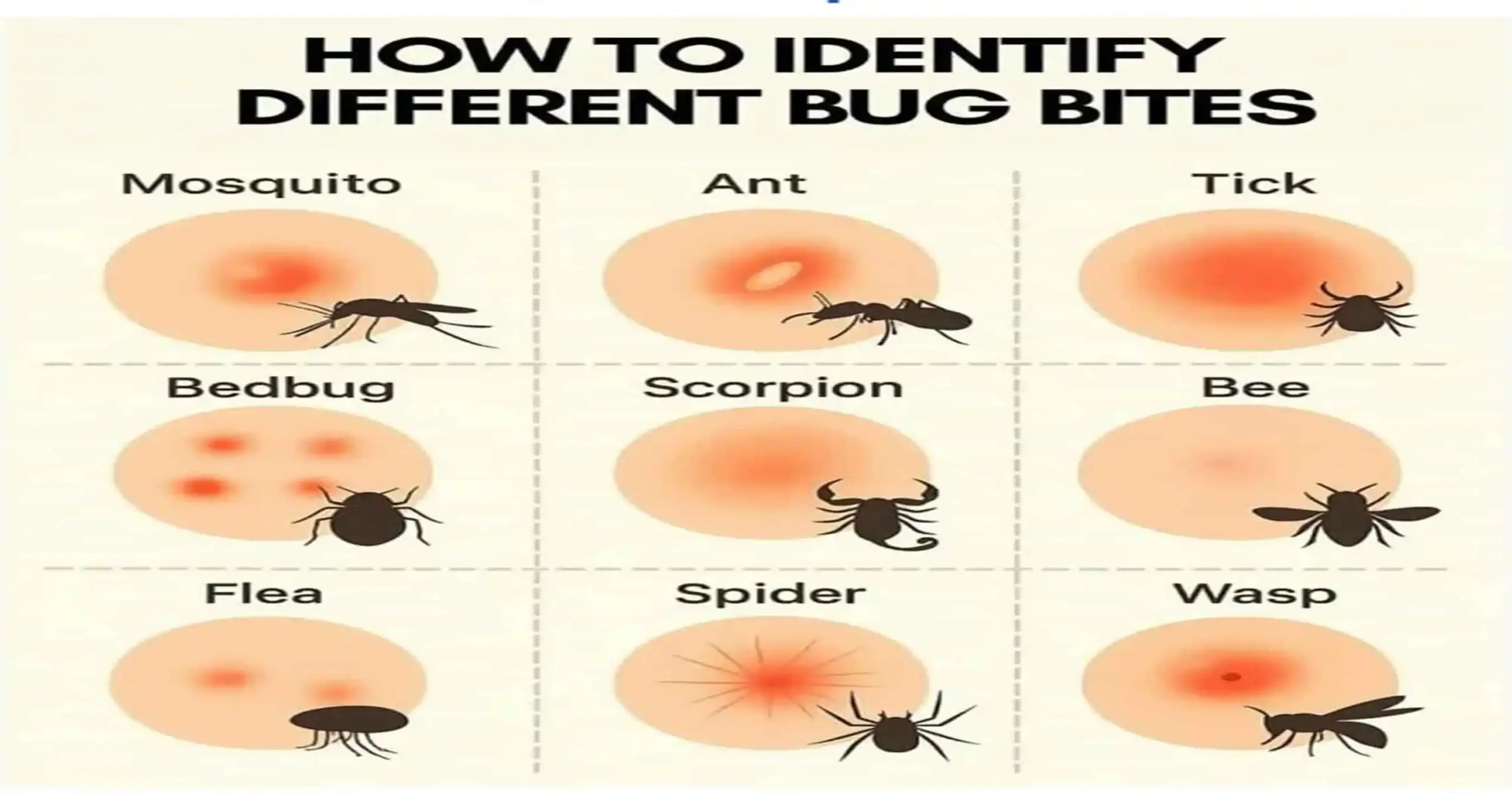
Mosquitoes: The Silent Whine Identification: Mosquito bites are arguably the most common. They typically appear as small, round, puffy white or red bumps that appear almost immediately after the bite. Over the course of a day or two, they often harden into a red-brown crust or a hard, itchy bump. They can appear anywhere on the body but favor exposed skin—arms, legs, neck, and ankles. Symptoms: Immediate itching is the hallmark. In some individuals, particularly children or those with sensitive immune systems, “Skeeter Syndrome” can occur, resulting in large areas of swelling, redness, and fever. The Danger: While the itch is annoying, the real threat is disease. Mosquitoes are vectors for West Nile Virus, Zika Virus, Malaria, Dengue Fever, and Eastern Equine Encephalitis. Diagnosis: Diagnosis is usually clinical and based on the appearance of the bite and the presence of mosquitoes in the environment. If systemic symptoms like high fever, joint pain, or severe headache follow a bite, blood tests for pathogens are necessary. Treatment: Wash the area with soap and water. Apply an ice pack to reduce swelling. Over-the-counter (OTC) anti-itch creams containing hydrocortisone or calamine lotion are effective. Oral antihistamines like Benadryl (diphenhydramine) can help with severe itching.
Horseflies and Deerflies: The Painful Bite Identification: Unlike mosquitoes, horseflies and deerflies don’t just puncture; they cut. They have scissor-like mouthparts that slice the skin to pool blood. The bite is initially painful—often described as a sharp sting. The resulting welt is larger and more painful than a mosquito bite, often looking like a hickey or a bruise. The wound can bleed. Symptoms: Intense pain, itching, and significant swelling. The wound takes longer to heal and is more prone to infection due to the nature of the cut. Treatment: Clean the wound thoroughly to prevent infection. Apply a cold compress. Use an antibiotic ointment if the skin is broken. Avoid scratching, as horsefly bites are notorious for becoming infected.
Fleas: The Ankle Assault Identification: Fleas usually come from pets. Their bites are distinctive because they tend to be clustered in groups of three or four, often in a straight line or a triangle. They are small red bumps with a halo of redness around the center. They almost exclusively target the lower legs, ankles, and feet. Symptoms: Intense itching. The risk of developing a rash or hives is high. Scratching can lead to secondary bacterial infections. Treatment: The primary treatment is environmental—treating pets and vacuuming the home. For the bites, wash with antiseptic soap and use anti-itch creams.
3: The Parasites – Ticks and Lice
Ticks: The Silent Hitchhikers Identification: Tick bites are often painless and go unnoticed until the tick is found attached. If the tick has fallen off, a small red bump usually remains. The critical identifier is the “Bullseye Rash” (Erythema Migrans)—a red ring expanding outward with a clear center. This is the hallmark of Lyme disease. Symptoms: If infected, symptoms include flu-like malaise, fever, headache, muscle aches, and joint pain. Diagnosis: If a tick is found, it should be removed and identified. If the Bullseye rash appears, a clinical diagnosis of Lyme disease is made. Blood tests (ELISA and Western Blot) can confirm antibodies, though they may take weeks to turn positive. Treatment: Prompt removal is key. Use fine-tipped tweezers to grasp the tick as close to the skin as possible and pull upward with steady, even pressure. Do not twist. If Lyme disease is suspected, a course of antibiotics (doxycycline) is administered immediately.
Lice: The Scalp Scourge Identification: Lice are tiny insects that live on the scalp and body. Their bites appear as tiny red spots on the neck, shoulders, and scalp. The primary sign is the presence of nits (eggs)—tiny white or yellow specks attached firmly to hair shafts. Symptoms: Intense itching on the scalp is caused by an allergic reaction to louse saliva. A crawling sensation is common. Treatment: Medicated shampoos or lotions containing permethrin or pyrethrin are the standard treatment. Nit combing is essential to remove eggs. Bedding and clothing must be washed in hot water.
Scabies: The Burrowers Identification: Scabies is caused by microscopic mites that burrow into the upper layer of skin. The rash looks like small red bumps or blisters, often with visible burrow tracks—tiny raised, crooked lines on the skin. Symptoms: Severe, relentless itching that worsens at night. It is highly contagious and spreads through skin-to-skin contact. Treatment: Prescription scabicidal creams (like permethrin 5%) are applied to the entire body from the neck down and left on overnight.
4: The Stingers – Bees, Wasps, Hornets, and Fire Ants
Honey Bees: The Barbed Sting Identification: A honey bee sting feels like a sharp burning sensation. The bee often leaves behind its stinger and venom sac embedded in the skin. The site swells into a red welt with a white center where the sting occurred. Symptoms: Immediate pain, redness, and swelling. In allergic individuals, anaphylaxis can occur rapidly. Treatment: The priority is removing the stinger. Scrape it out with a credit card or fingernail—do not squeeze the sac, as this injects more venom. Apply ice. For normal reactions, pain relievers and antihistamines suffice.
Wasps and Hornets: The Multiple Attacker Identification: Unlike bees, wasps and hornets can sting multiple times. Their stings are often more painful than bee stings, described as burning or hot. The site becomes a raised red welt with a tiny white mark where the stinger penetrated. Symptoms: Sharp pain, swelling, and itching. Large local reactions (swelling extending over 10 cm) are common. Treatment: Ice is the best immediate treatment to reduce swelling. Wash the area with soap and water to prevent infection. Oral antihistamines can reduce the local reaction.
Fire Ants: The Burning Mound Identification: Fire ants swarm and sting in unison. They bite to hold on, then sting repeatedly. The sting feels like fire or burning. The bites develop into itchy, pus-filled blisters (pustules) within 24 hours—a distinctive feature of fire ant stings. Symptoms: Intense burning sensation, itching, and the formation of sterile pustules. Treatment: Wash the area to prevent infection. Do not pop the blisters. Use corticosteroid cream for itching. Ice can help with the pain.
5: The Arachnids – Spiders and Scorpions
Brown Recluse Spider: The Tissue Destroyer Identification: The bite is often painless initially, or felt as a mild sting. Within hours, it becomes red and tender. It often develops a blister in the center. Over days, the venom (sphingomyelinase D) destroys tissue, causing the center to turn purple or black (eschar), surrounded by a pale ring and a red outer ring—sometimes called a “bullseye” or “target” lesion, though distinct from Lyme disease. Symptoms: Mild itching or pain that escalates to severe pain. Fever, chills, and nausea can accompany the bite. Diagnosis: Often difficult as the spider is rarely caught. Diagnosis is based on the pattern of tissue necrosis (dying skin). Treatment: Keep the area clean and elevated. Do not apply ice directly. Surgery may be required to remove dead tissue (debridement). Antivenom is generally not available for this species in the US.
Black Widow Spider: The Neurotoxin Identification: The bite itself is often a sharp pinprick, followed by minimal local swelling. You might see two tiny fang marks. Symptoms: The venom (latrotoxin) attacks the nervous system. Symptoms include severe muscle cramps and spasms starting near the bite and spreading to the abdomen (causing a “board-like” stomach), sweating, nausea, headache, and high blood pressure. Diagnosis: Clinical symptoms and, if available, identification of the spider (shiny black with a red hourglass). Treatment: Seek emergency care. Antivenom is available and highly effective. Muscle relaxants and pain medication are used to manage symptoms.
Scorpions: The Desert Sting Identification: Scorpion stings are instantly painful. The Bark Scorpion (found in Arizona/New Mexico) is the most dangerous in North America. Symptoms: Immediate, intense pain at the site. For the Bark Scorpion, symptoms escalate to numbness, tingling, roving eye movements, difficulty swallowing, and respiratory distress. Treatment: Clean the wound. Apply ice. For Bark Scorpion stings, especially in children, antivenom (Anascorp) is crucial and life-saving.
6: The Nighttime Pests – Bed Bugs
Bed Bugs: The Blood Spot Identification: Bed bug bites are painless initially. They appear as small, flat, or raised bumps on the skin. They often form a zigzag pattern or a line. The most common sites are arms, shoulders, and neck—areas exposed while sleeping. Symptoms: Intense itching that doesn’t start until hours or days later. Red, itchy welts. A distinct, sweet, musty odor in the room is a sign of infestation. Small blood spots on sheets are a telltale sign. Diagnosis: Finding the bugs or their casings in the seams of mattresses is the only definitive diagnosis. The bites themselves can resemble mosquito or flea bites. Treatment: Treat the itch with corticosteroids and antihistamines. The main treatment is professional pest extermination (heat treatment or chemicals).
7: Diagnosis – The Medical Detective Work
When a patient presents with a mysterious bite or rash, doctors follow a diagnostic algorithm.
- History Taking: The doctor will ask about recent travel, outdoor activities, exposure to animals, and the timing of the symptoms. Did it happen while hiking? Sleeping? After cleaning the garage?
- Physical Examination: The pattern of the bites is crucial. Clusters suggest fleas or bed bugs. Lines suggest bed bugs. Isolated single bites suggest spiders or mosquitoes. The presence of a stinger suggests a bee. The presence of a bullseye rash points to ticks.
- Skin Biopsy: In rare or chronic cases, a small sample of skin may be taken to rule out other skin conditions like cellulitis, vasculitis, or allergic dermatitis.
- Blood Tests:
- CBC (Complete Blood Count): To check for elevated white blood cells indicating infection.
- Serology: To detect antibodies against specific pathogens like Lyme disease, West Nile virus, or Rocky Mountain Spotted Fever.
- Venom Testing: If an allergy is suspected.
Differential Diagnosis: Doctors must rule out conditions that mimic bug bites.
- Cellulitis: A bacterial skin infection that spreads rapidly and causes redness and heat.
- Herpes Zoster (Shingles): A painful, blistering rash that follows a nerve path.
- Hives (Urticaria): An allergic reaction to food or medication that looks like large red welts.
- Methicillin-resistant Staphylococcus aureus (MRSA): A staph infection that often starts as a “spider bite” and turns into a painful, pus-filled abscess.
8: Treatment – First Aid to Medical Intervention
Immediate First Aid (The Universal Protocol) For 90% of bug bites, the protocol is the same:
- Move to safety: Get away from the nest or swarm.
- Clean the area: Wash with soap and warm water. This removes dirt, saliva, and venom residue, reducing infection risk.
- Cold Compress: Apply an ice pack (wrapped in cloth) for 10-20 minutes. This constricts blood vessels, reducing swelling and numbing the nerve endings to reduce itching.
- Elevation: If bitten on an arm or leg, keep it raised to minimize swelling.
Pharmacological Treatments
- Antihistamines: Oral options like Cetirizine (Zyrtec), Loratadine (Claritin), or Diphenhydramine (Benadryl) block histamine, reducing the itch and welt. Topical antihistamine creams exist but can sometimes irritate the skin.
- Corticosteroids: Hydrocortisone cream (0.5% to 1%) reduces inflammation. For severe reactions, doctors may prescribe oral prednisone.
- Pain Relievers: Ibuprofen (Advil) or Acetaminophen (Tylenol) help with pain management.
- Epinephrine (EpiPen): For individuals with known severe allergies, an auto-injector is life-saving. It must be administered immediately at the onset of anaphylaxis symptoms.
Treating Infection If a bite becomes infected (increasing redness, warmth, pus, red streaks spreading from the bite), medical attention is needed. Antibiotics (topical like mupirocin or oral like cephalexin) will be prescribed.
9: Emergency Signs – Anaphylaxis
Anaphylaxis is a severe, potentially life-threatening allergic reaction that can occur within seconds or minutes of exposure to an allergen (like bee venom). Recognizing these signs is a matter of life and death.
Symptoms of Anaphylaxis:
- Swelling of the throat and tongue.
- Difficulty breathing, wheezing, or shortness of breath.
- A drop in blood pressure leading to dizziness or fainting.
- Rapid, weak pulse.
- Skin reactions (hives, itching, flushed or pale skin).
- Nausea, vomiting, or diarrhea.
Action Plan:
- Call 911 immediately.
- Administer epinephrine if available.
- Lie the person flat with legs elevated (unless this makes breathing difficult).
- Perform CPR if the person stops breathing.
10: Natural Remedies and Home Care
While medical treatment is necessary for severe cases, many mild bites can be soothed at home.
- Baking Soda Paste: A mixture of baking soda and water applied to the bite can neutralize the pH balance of the skin and reduce itching.
- Oatmeal Bath: Colloidal oatmeal is FDA-approved for soothing itchy skin.
- Honey: Raw honey has antibacterial and anti-inflammatory properties. A dab on a bite can soothe and protect.
- Aloe Vera: The gel from the aloe plant is cooling and anti-inflammatory, perfect for fire ant stings or mosquito bites.
- Tea Tree Oil: A natural antiseptic that helps prevent infection and reduce inflammation. Use diluted to avoid skin irritation.
- Witch Hazel: An astringent that can reduce inflammation and itching.
11: Prevention – The Best Medicine
Avoiding bites is always superior to treating them.
- Insect Repellent: Use EPA-registered repellents containing DEET (20-30% concentration is effective), Picaridin, or Oil of Lemon Eucalyptus.
- Clothing: Wear long sleeves, pants, and socks when in wooded or grassy areas. Light-colored clothing makes ticks easier to spot. Permethrin-treated clothing is highly effective against ticks and mosquitoes.
- Timing: Mosquitoes are most active at dawn and dusk. Plan activities accordingly.
- Environment: Remove standing water (bird baths, gutters) to eliminate mosquito breeding grounds. Keep grass cut short to reduce tick habitats. Seal cracks in home foundations to prevent scorpion or spider entry.
- Food Safety: When eating outdoors, keep food covered to avoid attracting wasps and yellow jackets.
Conclusion
The world of insects is fascinating, but it requires a level of respect and caution. From the tiny, itch-inducing mosquito to the potentially lethal Black Widow spider, the encounters we have with these creatures vary widely in severity. However, knowledge is the great equalizer. By understanding the anatomy of the bite, the pattern of the reaction, and the appropriate course of treatment, we can navigate the outdoors with confidence.
If you are ever in doubt regarding a bite—whether the redness is spreading, the pain is escalating, or systemic symptoms are developing—always err on the side of caution and seek medical attention. Your health is paramount, and in the battle against bugs, being informed is your best defense.
Natural remedies
Important Disclaimer: While these remedies can effectively soothe mild symptoms, they are not a substitute for professional medical treatment. If you suspect a venomous spider bite (Black Widow, Brown Recluse), a scorpion sting, or if you are experiencing signs of anaphylaxis (difficulty breathing, swelling of the throat), seek emergency medical attention immediately.
