
Table of Contents
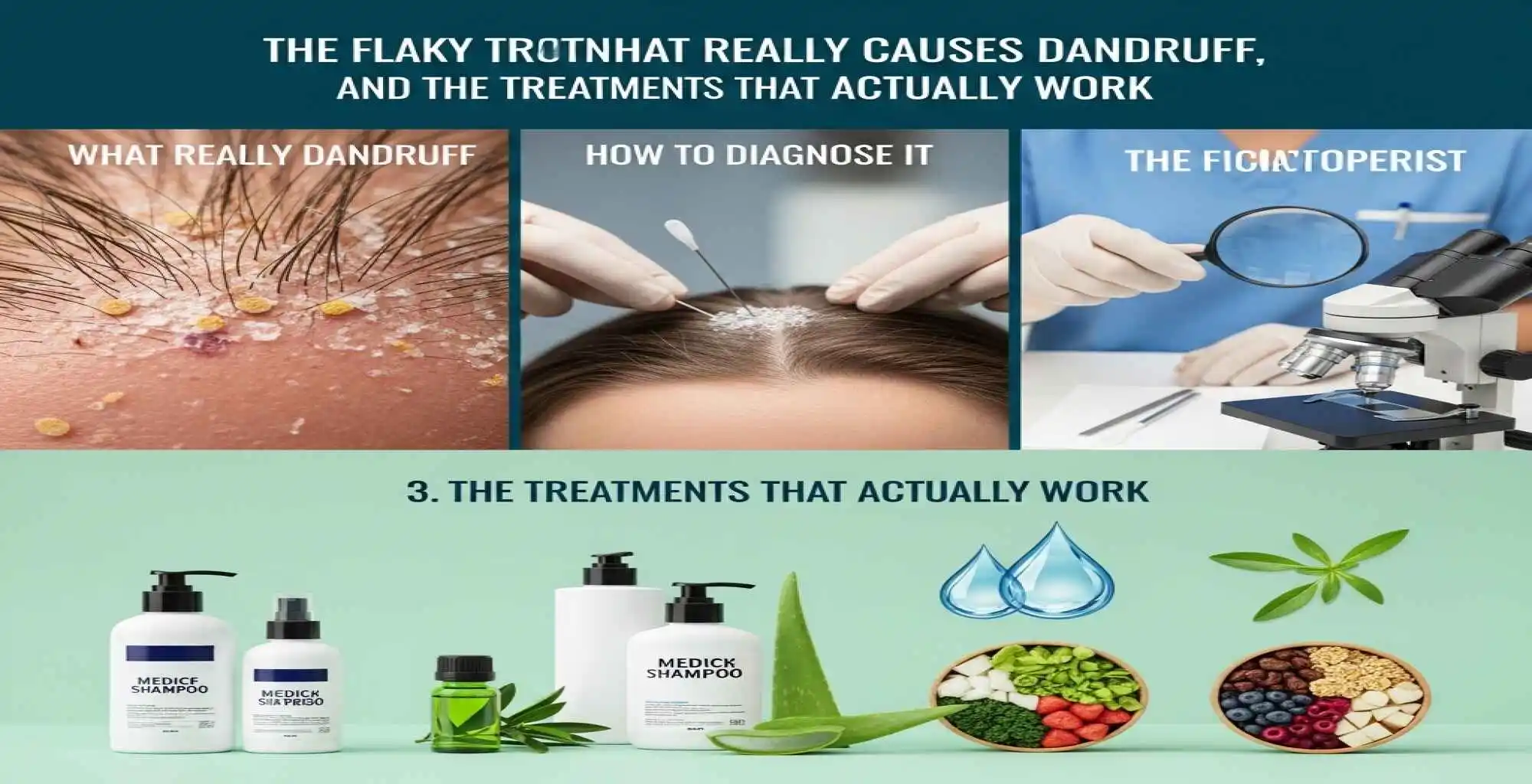
The Flaky Truth: What Really Causes Dandruff, How to Diagnose It, and the Treatments That Actually Work
Dandruff affects nearly half the world’s adult population — yet it remains one of the most misunderstood scalp conditions. This definitive guide separates the myths from the medicine and gives you everything you need to understand, manage, and beat it for good.
Introduction
Open your wardrobe, and you will likely find at least one dark shirt or jacket that you hesitate to wear. Not because it is out of style, not because it does not fit — but because of the white flakes that seem to materialize on it almost supernaturally. Dandruff. The word alone carries a certain social dread, and yet it is one of the most democratic conditions on earth: it does not care about your age, your diet, your income, or your hygiene habits. It affects approximately 50% of the global adult population, making it one of the most common scalp disorders ever documented.
Despite being so widespread, dandruff is misunderstood to a degree that borders on remarkable. Many people still believe it is caused by poor hygiene or infrequent washing. Others think it is purely a cosmetic issue, something to manage with the right shampoo and think nothing more of. In reality, dandruff is a complex scalp condition with multiple possible root causes, including a naturally occurring fungus, hormonal influences, neurological factors, immune system responses, and even stress. Understanding it properly — truly understanding why your scalp flakes, itches, and causes you embarrassment — is the first step to managing it effectively.
This comprehensive guide walks you through the science of dandruff: what it actually is, the full spectrum of causes, how to recognize and differentiate its symptoms from related conditions, how it is properly diagnosed, and the wide range of treatments available — from over-the-counter shampoos to prescription medications to evidence-backed natural remedies. By the end, you will have a thorough, practical understanding of this condition and a clear path forward.

What Exactly Is Dandruff?
Before diving into causes, it helps to understand what dandruff actually is on a biological level.
The human skin constantly renews itself. Old skin cells mature, migrate to the surface, die, and shed — this is a normal, healthy process that occurs approximately every 28 days. On the scalp, this process is no different. The problem arises when this cell turnover accelerates dramatically, causing dead skin cells to shed far faster than normal, in clumps that are visible to the naked eye as white or yellowish flakes.
Dandruff (medically termed pityriasis capitis) is, at its core, an accelerated and disordered form of the scalp’s natural shedding process. The flakes you see are clusters of dead skin cells, often bound together by sebum (the scalp’s natural oil). The accompanying itchiness, redness, and irritation arise from the inflammatory response of the scalp skin to various triggering factors.
It is important to distinguish dandruff from two closely related conditions:
Dry scalp produces small, dry, white flakes and is caused by a lack of moisture, similar to dry skin elsewhere on the body. The scalp feels tight, and there is little associated oiliness.
Seborrheic dermatitis is the more severe form of the same continuum that dandruff sits on. It produces larger, oilier, yellowish flakes, with more pronounced redness and inflammation, and can extend beyond the scalp to the eyebrows, sides of the nose, ears, and chest. Dandruff is essentially mild seborrheic dermatitis confined to the scalp.
What Causes Dandruff?
Dandruff is not a single-cause condition. It arises from a convergence of factors — microbial, biological, environmental, and lifestyle-related. Understanding each gives a clearer picture of why some people suffer chronically while others never experience a flake.
Malassezia — The Central Culprit
The most significant and well-documented cause of dandruff is a genus of yeast called Malassezia (formerly known as Pittosporum). This fungus lives naturally on the scalp and skin of virtually every human being — it is a permanent resident of the human skin microbiome. In most people, it causes no problems at all.
However, in individuals with dandruff, Malassezia proliferates beyond normal levels. It feeds on sebum (scalp oils) and breaks down triglycerides into oleic acid as a by-product of its metabolism. It is this oleic acid that is the primary inflammatory agent. In susceptible individuals, oleic acid penetrates the scalp skin barrier and triggers an immune response — inflammation, accelerated skin cell turnover, and the flaking, itching, and irritation that define dandruff.
Crucially, the presence of Malassezia alone is not enough to cause dandruff. Susceptibility is the key factor, which is why not everyone with Malassezia on their scalp develops dandruff, and why the condition often runs in families.
Sebum Production
The scalp is one of the most sebaceous areas of the human body — it contains a very high density of sebaceous (oil-secreting) glands. Sebum is the food source of Malassezia, and therefore, excess sebum production directly feeds dandruff. This is why dandruff is more prevalent in:
- Adolescents and young adults (when androgen-driven sebum production peaks)
- People with naturally oily skin
- Adults with hormonal imbalances affecting sebum output
This is also why dandruff tends to be worse around puberty and often improves in later adulthood as sebum production naturally declines.
Individual Immune and Skin Barrier Response
Two people can have identical Malassezia populations on their scalp and identical sebum production levels, but only one will develop dandruff. The differentiating factor is the sensitivity and immune responsiveness of the scalp skin.
People whose scalp immune cells mount an exaggerated inflammatory response to oleic acid are more susceptible. Likewise, a compromised skin barrier — one that allows irritants to penetrate more easily — makes dandruff more likely. This explains the genetic component of dandruff: immune response patterns and skin barrier integrity are largely inherited.
Stress and the Nervous System
Psychological and physiological stress has a well-established link to dandruff flare-ups. Stress elevates cortisol levels, which suppresses immune function and alters the skin’s inflammatory responses. It also affects sebum production indirectly. Many dandruff sufferers report that their symptoms worsen significantly during periods of high work pressure, emotional stress, or illness. This is not imagined — it is a documented physiological relationship.
Hormonal Factors
Androgens (male hormones, present in both men and women) stimulate sebaceous gland activity. This explains why dandruff is more common in males (who typically have higher androgen levels) and why it often begins or worsens during puberty, pregnancy, or other hormonally active periods. Post-menopausal women often experience improvement in dandruff for the same reason — declining androgen levels reduce sebum output.
Neurological Conditions
People with Parkinson’s disease have dandruff at markedly higher rates than the general population. Similarly, individuals who have had strokes or suffer from epilepsy show elevated dandruff prevalence. The exact mechanism is not fully understood, but it is thought to involve neurogenic inflammation — inflammatory signals originating from nerve dysfunction — and increased sebum production linked to autonomic nervous system disruption.
Immunosuppression and HIV
Individuals with weakened immune systems — including people living with HIV/AIDS — are significantly more prone to severe seborrheic dermatitis and dandruff. In people with HIV, seborrheic dermatitis can affect up to 85% of individuals as the condition progresses, and it is often more treatment-resistant.
Dry and Cold Weather
Environmental conditions modulate dandruff severity. Cold, dry winter air reduces the scalp’s moisture balance, compromises the skin barrier, and can worsen symptoms. Central heating further dries the air indoors. Conversely, UV light from the sun has a mild anti-inflammatory effect and can suppress Malassezia activity, which is why many dandruff sufferers notice improvement in summer.
Certain Hair and Scalp Products
Paradoxically, some hair care products can trigger or worsen dandruff. Ingredients in certain shampoos, conditioners, hair gels, and sprays can irritate the scalp, disrupt the skin microbiome, or cause contact dermatitis that mimics or compounds dandruff. This type of reaction — called contact dermatitis — can produce flaking that looks identical to dandruff but requires completely different management.
Infrequent or Excessive Shampooing
Both extremes are problematic. Washing hair too infrequently allows sebum and dead skin to accumulate, providing Malassezia with ideal growth conditions. However, washing too aggressively or with harsh shampoos strips the scalp of its protective sebaceous layer, triggering a rebound increase in sebum production and compromising the skin barrier. Regular, gentle cleansing with the right product strikes the right balance.
Diet
The relationship between diet and dandruff is less well-established clinically, but is supported by emerging evidence. Diets high in sugar, refined carbohydrates, and saturated fats appear to worsen dandruff by promoting Malassezia growth and increasing inflammatory markers. Nutritional deficiencies — particularly of zinc, B vitamins (especially B6 and B12), and essential fatty acids — may impair the skin’s ability to regulate cell turnover and inflammation.
Symptoms of Dandruff
Dandruff presents with a consistent cluster of symptoms, though their intensity varies from mild to severe.
Flaking: The defining symptom — white or yellowish flakes of dead skin visible on the scalp, hair, and on dark clothing. In mild dandruff (dry scalp type), flakes are small and dry. In more severe or oily dandruff, flakes are larger, stickier, and may have a yellowish tinge.
Itching: The scalp itches due to inflammatory mediators released in response to Malassezia activity. Itching is often the most socially disruptive symptom and can range from mild background irritation to relentless, sleep-disrupting intensity.
Scalp Redness: Underlying inflammation manifests as patches of pinkish-red skin on the scalp, particularly around areas of heaviest flaking. In seborrheic dermatitis, redness is more pronounced and may extend to the hairline and face.
Oily Scalp: In fungal-driven dandruff and seborrheic dermatitis, the scalp is often visibly greasy rather than dry. The excess oil is the fuel source driving Malassezia overgrowth.
Dry, Tight Scalp Sensation: In dry-type dandruff (where excess sebum is not the issue), the scalp feels dry, tight, and sometimes mildly uncomfortable, similar to dry skin on other parts of the body.
Facial and Ear Involvement (in Seborrheic Dermatitis): In more severe cases, flaking and redness spread to the eyebrows, the sides of the nose, the ear canals, and the chest — a distribution pattern that confirms a diagnosis of seborrheic dermatitis rather than simple dandruff.
Worsening in Autumn and Winter: Many sufferers notice a clear seasonal pattern — symptoms ease in summer and flare in the colder, drier months.
Diagnosis
For most people with mild-to-moderate dandruff, a self-diagnosis based on symptoms is reasonable and sufficient to begin first-line treatment. However, when symptoms are severe, treatment-resistant, or unclear, a formal diagnosis is important.
Self-Assessment
The characteristic appearance of flaking combined with scalp itchiness in the absence of other skin conditions is usually sufficient to identify dandruff. Note whether flakes are dry or oily, the presence of redness, and whether symptoms are confined to the scalp or also affect the face and body.
Dermatologist Examination
A dermatologist can diagnose dandruff and seborrheic dermatitis by visual examination of the scalp — often using a dermatoscope (a handheld magnifying device with polarized light) to assess the scalp skin, hair follicles, and pattern of flaking in detail. This also helps rule out other conditions.
Differential Diagnosis — What Dandruff Is Not
Several conditions can closely mimic dandruff and must be distinguished because their treatments differ significantly:
Psoriasis of the scalp produces thick, silvery, well-defined plaques rather than the loose flaking of dandruff. Usually affects the scalp edges and may occur alongside psoriatic plaques on the knees, elbows, or lower back.
Tinea Capitis (Scalp Ringworm): A fungal infection (different from Malassezia) that affects children more than adults, producing scaly patches with associated hair loss and sometimes lymph node swelling.
Contact Dermatitis: Inflammatory reaction to a product ingredient, producing itching, redness, and flaking that appears suddenly after exposure to a new hair or skin product.
Atopic Dermatitis (Eczema): Can affect the scalp, particularly in children, producing dry, itchy, flaking skin. Usually associated with eczema elsewhere on the body.
Scalp Lichen Planus: A less common inflammatory condition producing violaceous (purple-tinged) scaly patches, often accompanied by hair loss.
If there is any uncertainty, a skin biopsy — a small sample taken under local anesthetic — can definitively distinguish between these conditions.
Treatment of Dandruff
The good news is that dandruff is eminently treatable. The majority of cases respond well to the appropriate use of medicated shampoos. More resistant or severe cases have a full arsenal of prescription options available.
First-Line: Over-the-Counter Medicated Shampoos
The backbone of dandruff treatment, these shampoos contain active antifungal or keratolytic (skin-shedding) agents that target the root causes.
Zinc Pyrithione (ZPT): Found in widely available brands such as Head & Shoulders. Zinc pyrithione has both antifungal and antibacterial properties, directly suppressing Malassezia growth. It is effective for mild-to-moderate dandruff and is gentle enough for frequent use.
Selenium Sulfide: A more potent antifungal agent that also reduces the rate of scalp cell turnover. Available in 1% OTC formulations and 2.5% prescription strength. May temporarily cause hair discoloration in lighter hair.
Ketoconazole: An azole antifungal that is one of the most effective anti-Malassezia agents available. The 1% formulation (Nizoral) is available OTC in many countries; the 2% formulation requires a prescription. Often used as a rescue treatment when other shampoos fail.
Coal Tar: One of the oldest dandruff treatments, coal tar slows skin cell turnover and has anti-inflammatory and antifungal properties. Effective for both dandruff and scalp psoriasis. Has a strong odor and may temporarily stain lighter hair. Avoid prolonged unprotected sun exposure after use due to mild photosensitizing effects.
Salicylic Acid: A keratolytic agent that breaks down the “glue” that binds dead skin cells together, loosening flakes for easier removal. Often paired with other active ingredients. Less effective against the fungal root cause but excellent for improving the appearance and symptoms of flaking.
Ciclopirox (Piroctone Olamine): An alternative antifungal with broad-spectrum activity. Used in several European and Asian anti-dandruff products and is increasingly recognized as highly effective with fewer side effects.
How to Use Anti-Dandruff Shampoos Effectively: Apply to wet hair, massage into the scalp thoroughly, and leave on for at least three to five minutes before rinsing. This contact time is critical — rinsing immediately significantly reduces efficacy. Most dermatologists recommend using medicated shampoo two to three times per week during active flare-ups, then reducing to once weekly as a maintenance measure.
Prescription Treatments
When OTC options fail after six to eight weeks of consistent use, a dermatologist may prescribe:
Topical Corticosteroids: Anti-inflammatory solutions, foams, or shampoos (such as clobetasol propionate or betamethasone valerate) that rapidly reduce scalp inflammation, redness, and itching. Not intended for long-term use due to potential side effects, including skin thinning.
Prescription-Strength Ketoconazole (2%): Significantly more potent than the OTC formulation and often effective where 1% has failed.
Calcineurin Inhibitors (Tacrolimus, Pimecrolimus): Non-steroidal anti-inflammatory treatments that modulate the immune response in the skin. Particularly useful for long-term management where steroid side effects are a concern.
Oral Antifungals: Reserved for severe, widespread, or treatment-resistant seborrheic dermatitis. Oral itraconazole or fluconazole can be prescribed in short courses, with significant efficacy.
Natural and Lifestyle-Based Approaches
While clinical treatments are the gold standard, several evidence-supported lifestyle measures and natural remedies can meaningfully complement medical treatment.
Tea Tree Oil: Studies have shown that shampoos containing 5% tea tree oil significantly reduce dandruff severity. Its antifungal and anti-inflammatory properties make it one of the best-validated natural options. Always dilute before scalp application — undiluted tea tree oil can irritate the skin.
Aloe Vera: Contains enzymes, antifungal compounds, and anti-inflammatory agents. Applied as a scalp treatment before washing, it may reduce itching and flaking.
Apple Cider Vinegar: Its acidity may create a less favorable environment for Malassezia growth. Evidence is largely anecdotal, but many users report benefit. Dilute in water (1:1 ratio) before applying to the scalp.
Omega-3 Fatty Acids: Dietary supplementation with omega-3s (found in oily fish, flaxseeds, and walnuts) supports the skin’s barrier function and reduces systemic inflammation, potentially reducing dandruff severity over time.
Stress Management: Given the well-established link between stress and dandruff flare-ups, practices such as regular aerobic exercise, mindfulness, adequate sleep, and stress reduction meaningfully support scalp health alongside topical treatments.
Dietary Adjustments: Reducing refined sugars and processed foods while increasing antioxidant-rich vegetables, zinc-rich foods (pumpkin seeds, legumes, meat), and probiotic foods (yoghurt, kefir) may support a healthier scalp microbiome.
Sunlight Exposure: Moderate, sensible sun exposure — 15 to 20 minutes on the scalp several times a week — can have a mild therapeutic effect, as UV light suppresses Malassezia activity and has anti-inflammatory effects on the skin.
Living With Dandruff — Long-Term Management
It is essential to understand that dandruff is a chronic, relapsing condition for most people. This means that treatment is not a one-time fix — it requires ongoing management. Once symptoms are controlled with medicated shampoos, continuing to use them on a maintenance basis (typically once or twice weekly) is usually necessary to prevent recurrence.
Rotating between shampoos with different active ingredients (e.g., zinc pyrithione for regular use and ketoconazole for flare-ups) can prevent Malassezia from developing tolerance to any single agent.
Choosing hair products carefully — avoiding heavy pomades, fragranced styling products, and harsh surfactants — also reduces scalp irritation and the risk of contact dermatitis contributing to symptoms.
Regular review with a dermatologist is worthwhile for anyone with persistent, severe, or worsening symptoms, or for those in whom dandruff appears to be associated with broader health conditions.
FAQs
- What is dandruff exactly?
Dandruff (pityriasis capitis) is a chronic, non-contagious scalp condition characterized by accelerated shedding of dead skin cells, resulting in visible white or yellowish flakes, scalp itchiness, and sometimes redness.
- Is dandruff caused by poor hygiene?
No. This is one of the most persistent myths about dandruff. It is caused primarily by a naturally occurring scalp yeast (Malassezia), individual immune sensitivity, and sebum production — not by infrequent washing or uncleanliness.
- Is dandruff contagious?
No. Dandruff is not contagious and cannot be passed from person to person. It is an internal physiological condition, not an infection you can catch.
- What is the main cause of dandruff?
The principal driver is Malassezia yeast overgrowth on the scalp, combined with individual immune sensitivity. Excess sebum production, stress, genetics, and environmental factors are significant contributing causes.
- What is the difference between dandruff and a dry scalp?
Dry scalp produces small, dry, white flakes and a tight scalp sensation due to a lack of moisture. Dandruff is typically driven by oiliness, with larger flakes (sometimes yellowish), and is linked to Malassezia activity. The treatments differ.
- Can stress cause dandruff?
Yes. Psychological and physiological stress elevates cortisol, suppresses immune function, and alters the skin’s inflammatory response — all of which can trigger or worsen dandruff flare-ups.
- Is dandruff genetic?
There is a significant genetic component. Susceptibility to Malassezia-driven inflammation and individual skin barrier integrity are largely inherited traits, explaining why dandruff tends to run in families.
- Why is my dandruff worse in winter?
Cold, dry air reduces scalp moisture and compromises the skin barrier, worsening dandruff. Conversely, summer sunlight has mild anti-fungal and anti-inflammatory effects that suppress dandruff.
- Can dandruff cause hair loss?
Dandruff itself does not directly cause hair loss. However, severe, chronic scalp inflammation and vigorous scratching can temporarily weaken hair follicles and cause some hair shedding. Treating the dandruff usually resolves this.
- What is the best anti-dandruff shampoo?
The best shampoo depends on your specific case. Zinc pyrithione (Head & Shoulders) is an excellent starting point. Ketoconazole (Nizoral) is among the most effective for moderate-to-severe cases. Your dermatologist can guide the right choice for your scalp type.
- How long does it take for anti-dandruff shampoo to work?
Most people see meaningful improvement within two to four weeks of consistent, correct use. Leave the shampoo on the scalp for at least three to five minutes before rinsing.
- How often should I wash my hair if I have dandruff?
Most dermatologists recommend washing two to three times per week with a medicated shampoo during active flare-ups. Daily washing with harsh shampoos can strip the scalp and worsen symptoms.
- Can dandruff affect eyebrows or the face?
Yes. When it does, this is typically classified as seborrheic dermatitis rather than simple dandruff. It can affect the eyebrows, sides of the nose, ear canals, and chest.
- What is seborrheic dermatitis?
Seborrheic dermatitis is the more severe form of the dandruff spectrum. It produces larger, oilier, yellowish flakes with more pronounced redness and inflammation, and can affect areas beyond the scalp.
- Is there a cure for dandruff?
There is currently no permanent cure. Dandruff is a chronic, relapsing condition managed rather than cured. However, with appropriate treatment and maintenance, most people can achieve complete or near-complete control of their symptoms.
- Can dandruff be cured naturally?
Mild dandruff can often be well-managed with natural approaches such as tea tree oil shampoos, dietary adjustments, stress management, and moderate sun exposure. Moderate-to-severe cases typically require medicated shampoos.
- Does diet affect dandruff?
Emerging evidence suggests that diets high in sugar and refined carbohydrates can worsen dandruff by promoting Malassezia growth. Deficiencies in zinc and B vitamins may also contribute. A balanced, anti-inflammatory diet supports scalp health.
- Is dandruff more common in men or women?
Dandruff is more common and generally more severe in men, which is linked to higher androgen (male hormone) levels, driving greater sebum production — the fuel for Malassezia.
- Can babies get dandruff?
Babies can develop cradle cap (infantile seborrheic dermatitis), which presents as thick, crusty, yellowish scales on the scalp. It is harmless and usually resolves naturally within the first year, though gentle treatment can help.
- What is ketoconazole, and is it safe?
Ketoconazole is an antifungal active ingredient used in anti-dandruff shampoos (e.g., Nizoral). It is very effective against Malassezia and is considered safe for topical (on-skin) use. Oral ketoconazole carries more side effects and is only used under medical supervision.
- Why does my dandruff keep coming back after treatment?
Because dandruff is a chronic condition. Malassezia is a permanent resident of your scalp microbiome. Once you stop treatment, conditions favor its regrowth. Maintenance therapy — using medicated shampoo once or twice weekly, even when symptoms subside — prevents recurrence.
- Can certain hair products cause dandruff?
Yes. Heavy styling products, fragranced shampoos, and products containing harsh sulphates or certain preservatives can irritate the scalp, trigger contact dermatitis, or disrupt the scalp microbiome, worsening dandruff.
- Is coal tar shampoo safe?
Coal tar shampoos are safe when used as directed. Avoid prolonged unprotected sun exposure of the scalp after use, as coal tar has mild photo-sensitizing properties. It is one of the oldest and most effective dandruff treatments available.
- How is dandruff different from scalp psoriasis?
Scalp psoriasis produces thick, well-defined silvery plaques (rather than loose flakes), tends to affect the scalp edges and nape, and is often associated with psoriatic plaques elsewhere on the body. A dermatologist can differentiate the two, as treatments differ significantly.
- Can dandruff be associated with other health conditions?
Yes. Dandruff/seborrheic dermatitis is more prevalent and severe in people with Parkinson’s disease, HIV/AIDS, epilepsy, depression, and other neurological or immunological conditions.
- Does sunlight help dandruff?
Moderate sun exposure appears to have mild anti-dandruff benefits, as UV light suppresses Malassezia activity and has anti-inflammatory effects on the skin. This should always be balanced against the risks of unprotected sun exposure.
- What role does the gut microbiome play in dandruff?
The gut-skin axis is an active area of research. Emerging evidence suggests that gut microbiome imbalances may influence scalp skin health and inflammation. Probiotic-rich foods (yoghurt, kefir, fermented vegetables) may support overall skin health, though more specific dandruff research is ongoing.
- Can I color or chemically treat my hair if I have dandruff?
Proceed with caution. Hair dyes and chemical treatments can irritate an already-sensitive scalp. Perform a patch test before full application and ensure dandruff is well-controlled before undergoing chemical processes.
- When should I see a doctor about dandruff?
See a dermatologist if your dandruff is severe, significantly affects your quality of life, does not respond after six to eight weeks of consistent OTC treatment, is accompanied by significant hair loss, or extends beyond the scalp to the face and body.
- Are there any new treatments or research developments for dandruff?
Yes. Research is advancing on the role of the scalp microbiome in dandruff, with interest in microbiome-targeted therapies — including prebiotic and probiotic scalp products. Novel antifungal delivery systems and personalized dermatology approaches based on individual microbiome profiling are emerging areas of development.
Remember: dandruff is manageable, not a reflection of personal hygiene or character. With the right knowledge and the right treatment, clear scalp confidence is well within reach.
Medical Disclaimer: The information provided on this website is for general educational and informational purposes only and is not intended as a substitute for professional medical advice, diagnosis, or treatment. Always seek the advice of your physician or other qualified health provider with any questions you may have regarding a medical condition. Never disregard professional medical advice or delay in seeking it because of something you have read on this website.
