
Table of Contents
The Complete Truth About Anal Itching — Causes, Cures & When to See a Doctor
Introduction: The Itch Nobody Wants to Talk About
Few health complaints are as quietly miserable as an itchy anus. The persistent urge to scratch — at the dinner table, during a business meeting, or at two in the morning — can erode confidence and quality of life faster than many more ‘serious-sounding’ conditions. Yet because of embarrassment, most people suffer in silence for months or even years before seeking help.
Anal itching, known medically as pruritus ani, affects up to 5% of the general population at any given time. It is far more common in men (who are four times more likely to experience it), but people of all ages, genders, and backgrounds can be affected. Children are particularly susceptible to one specific cause — pinworm infection — while adults over 40 frequently encounter skin-related and dietary triggers.
The good news is that the vast majority of cases are completely treatable once the underlying cause is identified. This comprehensive guide covers every major cause of anal itching, practical treatments backed by medical guidance, and — crucially — when the symptom demands professional attention.
Understanding the Perianal Skin
The skin surrounding the anus (the perianal or anal verge skin) is extraordinarily sensitive. It is thin, moist, folded, and contains a dense network of nerve endings — features that make it exquisitely well-suited to detect sensation but equally prone to irritation.

Unlike most of the body’s skin, the perianal area is almost constantly exposed to moisture, warmth, and friction. Bowel movements, physical activity, and simple anatomy all conspire to keep this region more vulnerable than, say, the skin on the back of your hand. Add to that the natural tendency for this area to be under-ventilated (especially with tight modern clothing), and you have a perfect environment for itching triggers to thrive.
When the skin’s protective barrier is disrupted — whether by chemical irritants, microbial overgrowth, or physical trauma — nerve fibers beneath the surface fire signals that the brain interprets as itch. Scratching provides one or two seconds of relief but further damages the barrier, releasing more inflammatory mediators and perpetuating the cycle.
The 8 Most Common Causes of Anal Itching
1. Poor or Excessive Hygiene
Hygiene is a double-edged sword. Too little cleaning leaves acidic fecal residue on the skin that erodes the protective barrier and triggers inflammation. Too much — excessive wiping with dry paper, vigorous scrubbing, or repeated soap use — strips away the natural oils and disrupts the microbiome that keeps harmful organisms in check.
The sweet spot is gentle cleansing with lukewarm plain water after each bowel movement, followed by careful but thorough drying. Unscented, alcohol-free moist wipes can help, but they should be used sparingly and not as a substitute for water.
2. Dietary Triggers
What you eat today may determine whether you scratch tonight. A significant subset of pruritus ani cases is diet-driven. The most commonly implicated foods include:
- Coffee and other caffeinated beverages (even decaf)
- Spicy foods containing capsaicin
- Citrus fruits and tomatoes
- Chocolate and cola drinks
- Beer and other alcoholic beverages
- Dairy products in lactose-sensitive individuals
These foods can irritate the anal lining directly, alter stool consistency, or change the perianal pH in ways that promote itching. An elimination diary — removing one category at a time for two weeks — is a practical way to identify your personal triggers.
3. Hemorrhoids
Internal hemorrhoids are swollen veins inside the rectum that can protrude through the anus (prolapsed hemorrhoids) and leak mucus. This mucus dampens the perianal skin and creates the moist, irritated environment ideal for itching. Hemorrhoids are not always painful, so itching may be the only symptom prompting someone to seek care. Treatment of the underlying hemorrhoid — through dietary fiber, topical preparations, or minor procedures — typically resolves the itch.
4. Pinworm (Threadworm) Infection
Enterobius vermicularis, the pinworm or threadworm, is one of the most common parasitic infections worldwide, particularly in children. Female worms migrate to the perianal area at night to deposit thousands of sticky eggs, causing intense nocturnal itching. Eggs are microscopic and spread readily through hand-to-mouth contact, contaminated surfaces, and shared bedding.
Diagnosis is confirmed by the ‘tape test’: applying clear adhesive tape to the perianal skin first thing in the morning, then examining it under a microscope for eggs. Treatment is a single dose of mebendazole or albendazole, repeated two weeks later, and all household members should be treated simultaneously.
5. Skin Conditions: Eczema, Psoriasis & Contact Dermatitis
Chronic inflammatory skin conditions frequently extend to the perianal area. Atopic eczema causes intensely itchy, inflamed skin that can crack and weep. Inverse psoriasis appears in skin folds, producing smooth, bright-red plaques that do not have the typical silvery scale but itch intensely. Contact dermatitis results from specific exposures — fragranced soaps, moist wipes containing methylchloroisothiazolinone (MCI), latex-containing products, or certain topical medications, including hemorrhoid creams containing sensitizing ingredients.
Patch testing by a dermatologist is the gold standard to identify contact allergens.
6. Fungal (Candida) and Bacterial Infections
Candida albicans, the yeast responsible for vaginal thrush, can infect the perianal skin, particularly in individuals who are overweight, diabetic, immunocompromised, or who have recently taken antibiotics. The presentation is characteristic: fiery redness with ragged, irregular edges and satellite lesions. Topical antifungal creams (clotrimazole, miconazole) clear most cases within two weeks.
Bacterial infections such as perianal streptococcal dermatitis (common in children, presenting with vivid redness and pain) and staphylococcal folliculitis can also cause anal itching and require antibiotic treatment.
7. Sexually Transmitted Infections
Several STIs can cause perianal itching, and the diagnosis may be missed if clinicians and patients do not consider them. Anal warts (condylomata acuminata) from HPV infection may itch, bleed, or be felt as small bumps. Herpes simplex causes painful blisters that become crusted ulcers. Gonorrhea and syphilis can both present with perianal symptoms. Any sexually active person with persistent unexplained anal itching should discuss STI screening with their doctor.
8. Systemic and Other Medical Conditions
Less commonly, anal itching is a symptom of a systemic disease rather than a local problem. Conditions associated with pruritus ani include:
- Type 2 diabetes (due to elevated glucose feeding yeast and altering skin pH)
- Chronic liver disease and cholestasis
- Iron-deficiency anemia
- Thyroid disorders
- Anal fissures and rectal prolapse
- Colorectal or anal cancer (rare, and always with additional symptoms)
How to Treat Anal Itching: A Step-by-Step Guide
Step 1 — Break the Scratch Cycle
The first and most important intervention is to stop scratching. Keep fingernails short and clean. If nighttime scratching is involuntary, wear clean cotton gloves to bed. Cold compresses applied to the area can temporarily interrupt itch signals without damaging the skin.
Step 2 — Reform Your Hygiene Routine
Switch to water-only cleansing of the perianal area. A bidet or squeezable wash bottle is ideal. If you must use toilet paper, choose unbleached, unscented varieties and blot rather than wipe. After washing, gently pat the area dry or use a hair dryer on the coolest setting. A thin layer of petroleum jelly or zinc oxide cream forms a protective barrier against fecal irritants.
Step 3 — Modify Your Diet
Begin an elimination protocol focusing on the most common trigger foods listed above. Simultaneously, increase soluble fiber intake (oats, psyllium husk, apples, lentils) to produce softer, better-formed stools that are easier to clean after and leave less residual irritation.
Step 4 — Choose the Right Clothing
Replace tight synthetic underwear with loose-fitting 100% cotton alternatives. Change underwear daily and wash it with fragrance-free detergent. Avoid wearing tight jeans or leggings for extended periods if you are experiencing active itching.
Step 5 — Topical Treatments
For short-term itch relief, an over-the-counter 1% hydrocortisone cream applied sparingly once or twice daily for no more than seven days is appropriate. Do not use stronger steroids without medical supervision, as they can thin the perianal skin and worsen chronic conditions. Calcineurin inhibitors (tacrolimus, pimecrolimus) — available on prescription — are a steroid-free alternative for longer-term management of eczema-related itching.
Step 6 — Treat the Underlying Cause
All topical measures provide only symptomatic relief unless the root cause is addressed. Pinworms need anthelmintic medication. Fungal infections need antifungals. Dietary offenders need to be identified and eliminated. Hemorrhoids need fiber, fluids, and possibly procedural treatment. Psoriasis needs dermatological management. Work with your healthcare provider to confirm the diagnosis before committing to long-term treatment.
When to See a doctor: Red-Flag Symptoms
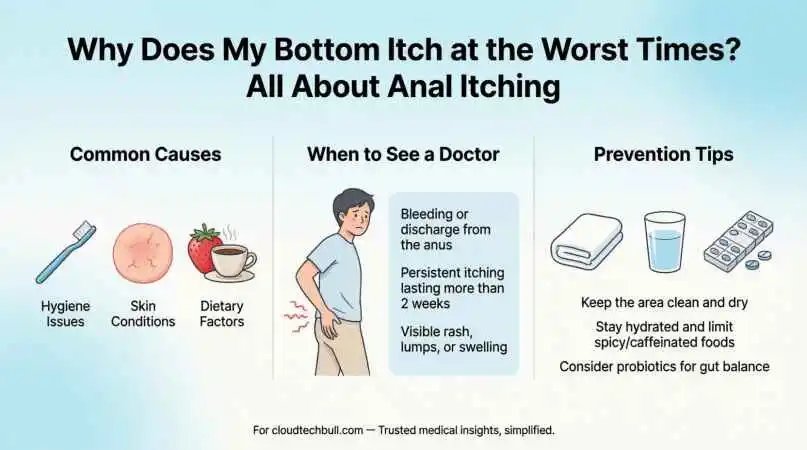
While most cases of anal itching are benign and self-limiting, certain symptoms demand prompt medical evaluation:
- Itching that persists beyond two weeks despite self-care measures
- Any rectal bleeding, even minor spotting
- Visible lumps, warts, or ulcers in the perianal area
- Discharge with an unusual color or odor
- Unexplained weight loss, changes in bowel habit, or pain during bowel movements
- Fever alongside local perianal symptoms
- Itching in a child combined with difficulty sleeping or behavioral changes (suggestive of pinworms)
A GP will typically perform a visual inspection and may refer you to a colorectal surgeon, gastroenterologist, or dermatologist, depending on the suspected cause. Do not be embarrassed — these clinicians evaluate perianal conditions every day and will approach the consultation with complete professionalism.
Prevention: Long-Term Strategies
Pruritus ani has a frustrating habit of recurring. These evidence-informed habits reduce the likelihood of relapse:
- Maintain a fiber intake of 25–38 g per day from diverse plant foods
- Stay well hydrated — at least 1.5–2 liters of plain water daily
- Cleanse the perianal area gently with water after every bowel movement
- Apply a thin protective barrier (zinc oxide or petroleum jelly) if you are prone to moisture-related irritation
- Avoid prolonged sitting on hard or cold surfaces
- Rotate and wash workout clothing promptly after exercise
- If you have diabetes, optimize blood glucose control
- Treat any household members simultaneously if pinworms are diagnosed
A Note on Mental Health and Anal Itching
Living with a chronic itch in an intimate area carries a psychological burden that is easy to underestimate. Anxiety about the condition — worrying about scratching in public, anticipating the nightly itching episode, or fearing a serious underlying illness — can itself heighten itch perception through central sensitization. If you find that the psychological impact is significant, do not hesitate to mention it to your doctor. Cognitive-behavioral approaches and habit-reversal training have both been used successfully in chronic pruritus management.
FAQs
| # | Question | Answer |
| 1 | What is pruritus ani? | Pruritus ani is the medical term for persistent itching around the anus. It is a symptom, not a disease itself, and can have many underlying causes. |
| 2 | Is anal itching a sign of something serious? | Usually no. Most cases stem from minor issues like moisture or mild skin irritation. However, persistent itching should be evaluated by a doctor to rule out infections or other conditions. |
| 3 | Why does my anus itch more at night? | Pinworm infection is a leading culprit — female worms lay eggs around the anus at night, triggering intense itching. Warmth and moisture under bedcovers also aggravate itching. |
| 4 | Can diet cause anal itching? | Yes. Spicy foods, coffee, citrus, tomatoes, beer, and dairy can irritate the anal lining and cause or worsen itching in sensitive individuals. |
| 5 | Are hemorrhoids responsible for anal itching? | Hemorrhoids can contribute by leaking mucus that irritates the skin around the anus. However, they are not always the primary cause. |
| 6 | Can stress cause itching in the anal area? | Indirectly, yes. Stress can worsen skin conditions like eczema or psoriasis that affect the perianal region, and it may lower the threshold for itch perception. |
| 7 | Is anal itching contagious? | Itching itself is not contagious, but certain causes — such as pinworms, fungal infections, or sexually transmitted infections — can be passed to others. |
| 8 | What is the best cream for anal itching? | Over-the-counter hydrocortisone 1% cream provides short-term relief. Zinc oxide barrier cream soothes and protects. Always consult a doctor before prolonged steroid use. |
| 9 | Can a yeast infection cause anal itching? | Yes. Candida (yeast) overgrowth can spread from the genitals to the perianal area, causing itching, redness, and a cottage-cheese-like discharge. |
| 10 | How do pinworms cause anal itching? | Female pinworms migrate to the anus at night to deposit eggs. Their movement and the sticky egg masses trigger intense localized itching. |
| 11 | Can over-wiping cause anal itching? | Absolutely. Excessive wiping with dry toilet paper causes micro-abrasions and removes protective oils from the skin, leading to irritation and itching. |
| 12 | Is it safe to scratch an itchy anus? | No. Scratching breaks the skin, introduces bacteria, and creates a vicious itch-scratch cycle that worsens and prolongs the condition. |
| 13 | What role does moisture play in anal itching? | Excessive moisture from sweat, fecal residue, or incontinence softens the perianal skin and makes it vulnerable to irritation, fungal growth, and itching. |
| 14 | Can anal fissures cause itching? | Yes. Small tears in the anal lining can cause itching along with pain and minor bleeding, especially after bowel movements. |
| 15 | Do certain soaps cause anal itching? | Fragranced soaps, bubble baths, and harsh detergents commonly irritate the sensitive perianal skin and should be avoided or replaced with gentle, unscented alternatives. |
| 16 | Can wearing tight underwear worsen anal itching? | Yes. Tight or synthetic underwear traps heat and moisture, creating an environment that aggravates itching. Loose-fitting, breathable cotton underwear is recommended. |
| 17 | Are there home remedies for anal itching? | Gentle cleaning with plain water, applying petroleum jelly or zinc oxide, wearing loose cotton underwear, and avoiding trigger foods can provide significant relief. |
| 18 | Can psoriasis affect the anal area? | Yes. Psoriasis can cause well-defined red, scaly plaques around the anus that itch and may bleed. A dermatologist’s diagnosis is essential for proper treatment. |
| 19 | What sexually transmitted infections cause anal itching? | Genital herpes, HPV (anal warts), gonorrhea, and syphilis can all cause perianal itching and require prompt medical treatment. |
| 20 | How is anal itching diagnosed? | A doctor will review your history, inspect the perianal skin, and may perform a tape test for pinworms, skin swabs, or a biopsy to identify the cause. |
| 21 | Can diarrhea cause anal itching? | Yes. Frequent loose stools leave behind acidic residue that irritates the perianal skin and can trigger or worsen itching. |
| 22 | Is anal itching more common in men or women? | Pruritus ani is roughly four times more common in men, though it can affect anyone regardless of sex or age. |
| 23 | When should I see a doctor for anal itching? | Seek medical advice if itching lasts more than two weeks, is accompanied by bleeding, discharge, or pain, or does not respond to basic hygiene measures. |
| 24 | Can antibiotics cause anal itching? | Yes. Antibiotics disrupt the gut and skin microbiome, allowing Candida yeast to overgrow and cause itching around the anus. |
| 25 | What is contact dermatitis of the anus? | Contact dermatitis occurs when irritants — such as scented wipes, laundry detergent, or topical medications — directly inflame the perianal skin, causing redness and itching. |
| 26 | How long does anal itching typically last? | With proper hygiene and avoidance of triggers, most cases resolve within a few days to weeks. Chronic pruritus ani may require medical treatment. |
| 27 | Can fiber supplements help reduce anal itching? | Yes. Adequate dietary fiber produces well-formed stools that are easier to clean after, reducing fecal residue that irritates perianal skin. |
| 28 | Is anal itching linked to bowel cancer? | Rarely. Rectal or anal cancer can occasionally cause itching, but it is almost always accompanied by other symptoms. Persistent unexplained symptoms warrant medical evaluation. |
| 29 | Can probiotics help with anal itching caused by yeast? | Probiotics can help restore healthy microbial balance after antibiotic use and may reduce yeast overgrowth, potentially easing associated anal itching. |
| 30 | What lifestyle changes prevent anal itching? | Key changes include gentle hygiene with water only, breathable cotton underwear, a high-fiber diet, staying hydrated, avoiding trigger foods, and not scratching. |
