
Table of Contents
The Medications That Can Silently Damage Your Hearing While Treating Something Else Entirely
Ototoxicity, hearing and balance damage caused by drugs or chemicals, is one of the more underrecognized side effects in modern medicine, often striking during treatment for an unrelated, sometimes life-threatening condition. Here is how it happens, and what can actually be done about it.
A Side Effect That Hides Inside Life-Saving Treatment
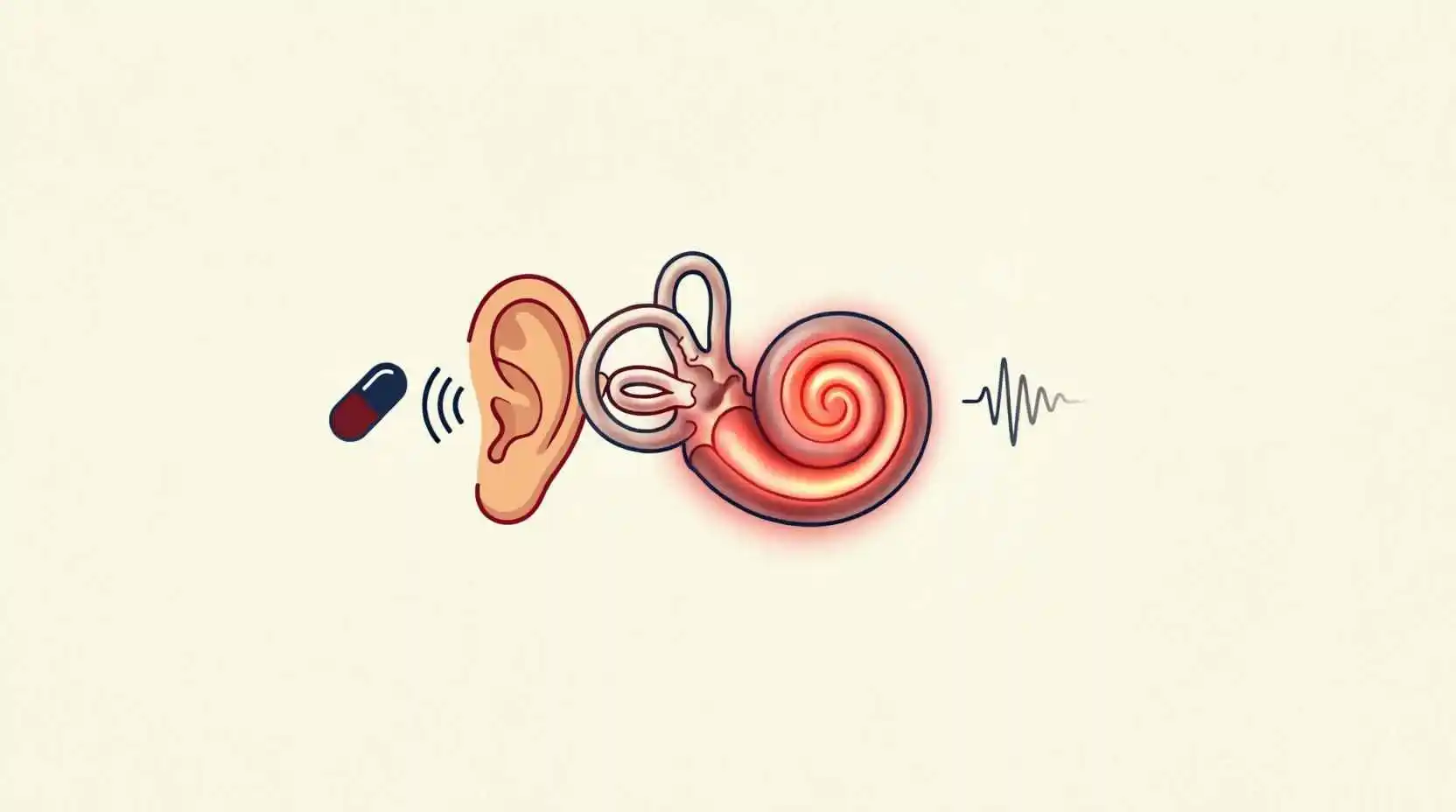
Ototoxicity describes damage to the inner ear, specifically the structures responsible for hearing and balance, caused by exposure to certain medications or chemicals. What makes this category of harm particularly difficult is that many of the drugs most strongly associated with ototoxicity are also among the most important, sometimes genuinely life-saving medications in modern medicine, including certain chemotherapy agents and powerful antibiotics used to treat serious, dangerous infections.
This creates a genuine clinical tension that patients and prescribers navigate regularly: the same medication treating a life-threatening cancer or infection can, in the process, permanently damage hearing or balance function, a trade-off that makes understanding ototoxicity, its warning signs, and how it can sometimes be monitored and mitigated, genuinely important for anyone facing treatment with a known ototoxic medication. Walking through exactly how this damage happens, which medications carry the highest documented risk, and what can realistically be done about it explains both the scope of the problem and the genuine, if incomplete, progress being made toward managing it.
How the Inner Ear Actually Gets Damaged
The inner ear contains delicate sensory hair cells within the cochlea, the snail-shaped structure responsible for converting sound vibrations into the electrical signals the brain interprets as hearing, alongside similar sensory cells in the vestibular system responsible for balance. These hair cells are notably vulnerable to certain toxic exposures and, critically, do not regenerate once destroyed in humans, meaning damage to them is generally permanent rather than something the body can naturally repair over time the way many other tissues can.

Ototoxic substances can damage these hair cells through several distinct mechanisms depending on the specific drug involved, including generating excessive oxidative stress that overwhelms the cell’s natural defenses, disrupting cellular energy production within the hair cells, or interfering with the specific ion channels these cells depend on to function properly, mechanisms that researchers have characterized in increasing molecular detail even as translating that understanding into fully effective preventive treatments remains an ongoing challenge.
Aminoglycoside Antibiotics: The Classic Ototoxic Drug Class
Aminoglycoside antibiotics, including gentamicin, tobramycin, and amikacin, represent one of the most well-established and extensively studied categories of ototoxic medication. These powerful antibiotics remain essential for treating certain serious, sometimes life-threatening bacterial infections, particularly when other antibiotic options are ineffective or unavailable, which is precisely why they remain in active clinical use despite their well-documented ototoxicity risk.
Aminoglycoside-induced ototoxicity can affect hearing, balance, or both, and can develop during treatment or, in some cases, appear weeks after treatment has already concluded, a delayed-onset pattern that makes ongoing monitoring during and after treatment particularly important. Genetic factors play a documented role in individual susceptibility, with certain mitochondrial gene variants known to dramatically increase ototoxicity risk from even a single, otherwise standard dose, a finding that has prompted some healthcare systems to explore genetic screening before aminoglycoside use in specific high-risk clinical scenarios.
For a small number of people carrying a specific genetic variant, a single standard dose of a common antibiotic can be enough to cause permanent hearing loss.
Platinum-Based Chemotherapy and Hearing Loss
Platinum-based chemotherapy drugs, particularly cisplatin, are among the most effective treatments available for numerous cancer types, but they also carry a well-documented, significant ototoxicity risk, affecting a substantial proportion of patients who receive them, with risk increasing alongside higher cumulative doses. Cisplatin-induced hearing loss typically begins in the higher frequency ranges, initially outside the range most critical for understanding everyday speech, which is part of why early hearing changes can go unnoticed by the patient even as damage is actively progressing.
This specific pattern has made baseline and ongoing audiometric monitoring, hearing testing conducted before, during, and after cisplatin treatment, a genuinely important part of care for patients receiving this medication, since detecting early high-frequency changes can sometimes inform dose adjustment decisions, balanced carefully against the genuinely life-saving importance of maintaining effective cancer treatment, a difficult clinical trade-off oncology teams navigate directly with patients throughout treatment.
Loop Diuretics and Other Medications Worth Knowing About
Loop diuretics, including furosemide, particularly at high intravenous doses, carry a documented, though generally reversible, ototoxicity risk, more commonly seen in the context of kidney failure, high-dose intravenous administration, or when combined with other ototoxic medications, a combination effect that meaningfully increases risk beyond what either medication would carry independently. Certain high-dose aspirin regimens and other salicylate-containing medications can cause temporary tinnitus and mild hearing changes that generally resolve once the medication is stopped or the dose is reduced.
Some antimalarial medications, certain other antibiotic classes, and a range of industrial and environmental chemicals, including certain solvents and heavy metals encountered in specific occupational settings, round out the broader category of recognized ototoxic exposures, illustrating that ototoxicity risk extends meaningfully beyond the two most extensively studied categories, chemotherapy and aminoglycoside antibiotics, discussed in greatest depth throughout this piece.
Why Combination Exposure Increases Risk Significantly
A genuinely important clinical pattern involves synergistic ototoxicity, in which combining two ototoxic medications, or combining an ototoxic medication with loud noise exposure, produces meaningfully greater damage than either exposure would cause independently. This has particular significance in intensive care settings, where critically ill patients frequently receive multiple potentially ototoxic medications simultaneously as part of managing a serious underlying illness, a combination that meaningfully elevates cumulative ototoxicity risk beyond what a single medication’s individual risk profile would suggest.
Recognizing this combination risk has led some hospital systems to develop specific protocols flagging patients receiving multiple ototoxic medications simultaneously for closer monitoring, alongside genuine, growing clinical interest in minimizing unnecessary concurrent ototoxic exposures whenever a clinically reasonable alternative exists, without compromising the effectiveness of treatment for the primary, often serious, underlying condition being treated.
The Warning Signs Worth Recognizing Early
Early ototoxicity symptoms can be genuinely subtle and easy to attribute to something else entirely, particularly in a patient already managing a serious illness with numerous other symptoms competing for attention. Tinnitus, a ringing, buzzing, or hissing sound perceived without any external source, is often among the earliest warning signs, sometimes preceding measurable hearing loss by days or weeks and serving as a genuinely useful early clinical clue when patients and care teams are specifically watching for it.
Difficulty hearing high-pitched sounds, trouble understanding speech in noisy environments despite seemingly normal hearing in quiet settings, a sensation of fullness in the ears, and balance-related symptoms including dizziness, unsteadiness, or a specific sensation that the environment is spinning, all warrant prompt reporting to a care team during treatment with any known ototoxic medication, since early recognition sometimes allows for treatment adjustment before damage progresses further.
How Ototoxicity Is Actually Monitored
For patients receiving medications with well-established ototoxicity risk, formal audiometric monitoring, structured hearing testing conducted at specific intervals before, during, and after treatment, represents the primary tool for detecting damage as early as possible, often before a patient consciously notices any hearing change in everyday listening situations. This typically includes baseline testing before treatment begins, allowing any subsequent changes to be measured against the individual patient’s own starting point rather than a generic population average.
High-frequency audiometry, testing hearing at frequency ranges above those tested in a standard hearing exam, has particular value for early detection given cisplatin’s characteristic pattern of initially affecting higher frequencies specifically, allowing detection of early changes considerably before they would become noticeable in the frequency range most important for everyday speech understanding, giving clinical teams a genuinely meaningful early warning window in at least some cases.
What Can Actually Be Done to Reduce Risk
Prevention and risk mitigation strategies vary depending on the specific medication and clinical situation, but several general principles apply broadly. Using the lowest effective dose for the shortest necessary duration, when clinically appropriate, directly reduces cumulative ototoxic exposure, alongside careful attention to kidney function, since several ototoxic medications are cleared through the kidneys and impaired kidney function can allow drug levels to accumulate to a higher, more damaging degree than intended.
Researchers have also investigated specific protective compounds, called otoprotective agents, aimed at reducing ototoxicity risk during treatment with known ototoxic medications, including sodium thiosulfate, which has received regulatory approval in some countries specifically for reducing cisplatin-related ototoxicity risk in certain pediatric cancer patients, representing genuine, meaningful progress in an area where effective prevention options have historically been quite limited, even as broader, universally applicable protective strategies remain an active area of ongoing research.
Living With Ototoxicity-Related Hearing Loss
For patients who do experience ototoxicity-related hearing loss, management options mirror those available for other forms of sensorineural hearing loss, including hearing aids, which can be genuinely effective for many patients depending on the specific pattern and severity of hearing loss experienced, and, for more severe cases, cochlear implants, which bypass damaged hair cells entirely by directly stimulating the auditory nerve, an option that has helped many patients with severe ototoxicity-related hearing loss regain meaningful functional hearing.
Tinnitus management, for patients experiencing persistent ringing or buzzing following ototoxic exposure, often involves a combination of approaches including sound therapy, cognitive behavioral techniques specifically adapted for tinnitus management, and, for some patients, hearing aids that can help reduce the perceived prominence of tinnitus by supplementing reduced external sound input, illustrating that meaningful support exists even when the underlying hearing damage itself cannot be reversed.
Why Patients Should Actively Discuss This Risk With Their Care Team
Given how consequential and often irreversible ototoxicity-related damage can be, patients beginning treatment with any medication carrying known ototoxicity risk, particularly chemotherapy or extended aminoglycoside antibiotic courses, benefit genuinely from proactively discussing this specific risk with their care team, asking directly whether baseline and ongoing hearing monitoring is planned, and understanding what warning signs to report immediately rather than waiting for a scheduled follow-up appointment.
This is not a reason to decline or delay necessary, often life-saving treatment out of hearing-related concern; it is a reason to engage as an informed, actively participating partner in monitoring for a genuinely significant, well-documented side effect, since early detection and appropriate dose or protocol adjustment, when clinically feasible, represents the most effective currently available strategy for minimizing long-term impact while still receiving the necessary underlying treatment.
Ototoxicity in Children: A Distinct Set of Concerns
Pediatric patients receiving ototoxic medications, most commonly cisplatin for childhood cancers, face particular concern given how critical hearing is for speech and language development during early childhood, meaning even moderate hearing loss can have a considerably larger downstream impact on a young child’s development compared to an adult who has already acquired language and speech skills before experiencing hearing damage. This heightened stake is a significant part of why sodium thiosulfate’s regulatory approval specifically targeted pediatric cisplatin patients, reflecting where the potential protective benefit carries particularly high real-world significance.
Pediatric audiological monitoring during ototoxic treatment also requires developmentally appropriate testing approaches, since standard adult audiometric testing protocols often are not directly applicable to very young children, requiring specialized pediatric audiology expertise to obtain reliable, accurate hearing measurements throughout treatment, another genuine practical complexity layered on top of the already significant clinical challenge ototoxicity presents in this specific patient population.
Where Ototoxicity Research Is Headed Next
Beyond sodium thiosulfate’s approval for a specific pediatric use case, researchers continue actively investigating additional otoprotective compounds and strategies aimed at broadening protective options across more patient populations and more categories of ototoxic medication, including research into antioxidant compounds designed to counteract the oxidative stress mechanism believed to drive much of the cellular damage in ototoxicity, and genetic screening approaches aimed at identifying patients at meaningfully elevated risk before treatment begins, allowing more individualized dosing or monitoring decisions.
Researchers are also exploring whether some of the molecular pathways involved in age-related and noise-induced hearing loss overlap meaningfully with ototoxic damage pathways, a research direction that, if it continues to bear out, could eventually connect otoprotection research to the considerably larger, more broadly relevant challenge of hearing preservation across multiple different causes of hearing loss, not just drug-induced damage specifically.
The Overall Clinical Picture Worth Remembering
Ototoxicity sits at a genuinely difficult intersection in modern medicine: a real, well-documented, sometimes permanent side effect caused by some of the same medications responsible for treating serious, life-threatening conditions, meaning the goal is rarely avoiding these medications altogether but rather using them as thoughtfully and carefully as possible, with genuine attention to monitoring, dose management, and emerging protective strategies. Recognizing early warning signs, particularly tinnitus and subtle hearing or balance changes, and reporting them promptly during treatment with any known ototoxic medication, remains one of the most practical, currently available tools for minimizing the lasting impact of a side effect that, once fully established, generally cannot be reversed.
Case Study: Recognizing and Managing Medication-Induced Hearing Loss
Patient Background
- Patient: Marcus Vance, 54-year-old high school music teacher
- Primary Diagnosis: Severe, life-threatening Staphylococcus aureus bloodstream infection
- Treatment Plan: High-dose, 4-week intravenous regimen of Vancomycin administered in an inpatient hospital setting
Clinical Presentation & Symptoms During week three of antibiotic therapy, the primary infection cleared, but Marcus reported new sensory symptoms:
- Tinnitus: High-pitched, persistent ringing in both ears beginning on Day 18
- Auditory Deficits: Difficulty understanding speech, particularly high-frequency consonant sounds
- Vestibular Dysfunction: Dizziness and loss of balance when walking down hospital corridors
Diagnosis & Evaluation
- Ototoxicity Screening: Bedside audiometry revealed bilateral sensorineural hearing loss concentrated above 4 kHz.
- Vestibular Assessment: Bedside testing confirmed mild bilateral vestibular weakness secondary to hair cell toxicity.
- Causal Factor: High systemic levels of Vancomycin combined with baseline renal clearance fluctuations, leading to inner ear hair cell damage.
Intervention & Management
- Medication Adjustment: Infection disease consult transitioned Marcus to a non-ototoxic alternative antibiotic (Daptomycin) to complete the course.
- Titer & Level Monitoring: Daily serum level tracking to prevent further inner ear exposure.
- Rehabilitation: Referred to an audiologist for high-frequency hearing aid fitting and physical therapy for vestibular recalibration.
Outcome & Key Takeaways
- Resolution: Infectious markers normalized completely. Hearing deficits stabilized, though high-frequency damage remained permanent. Balance recovered within six weeks via physical therapy.
- Key Lesson: Early recognition of ototoxic symptoms—such as tinnitus or subtle dizziness—allows medical teams to modify drug regimens before irreversible, complete hearing loss occurs.
Frequently Asked Questions
| Question | Answer |
| What is ototoxicity? | It is damage to the inner ear’s hearing or balance structures caused by certain medications or chemicals. |
| Why is ototoxicity often permanent? | The sensory hair cells damaged by ototoxic substances do not regenerate in humans. |
| What medications are most commonly associated with ototoxicity? | Aminoglycoside antibiotics and platinum-based chemotherapy drugs are among the most well-documented causes. |
| What is cisplatin-induced hearing loss? | It is hearing damage caused by the chemotherapy drug cisplatin, often starting in high frequencies. |
| Why does cisplatin affect high-frequency hearing first? | The hair cells responsible for high-frequency sound tend to be more vulnerable to this specific damage pattern. |
| What are aminoglycoside antibiotics? | They are a class of powerful antibiotics, including gentamicin and tobramycin, used for serious infections. |
| Can genetics affect ototoxicity risk? | Yes, certain mitochondrial gene variants can dramatically increase susceptibility to specific antibiotics. |
| What is tinnitus? | It is the perception of ringing, buzzing, or hissing sound without an external source. |
| Is tinnitus an early warning sign of ototoxicity? | Yes, it often appears before measurable hearing loss during treatment with ototoxic medications. |
| Can loop diuretics cause hearing damage? | Yes, particularly at high intravenous doses, though the effect is often reversible. |
| What is synergistic ototoxicity? | It refers to increased damage risk when combining multiple ototoxic exposures simultaneously. |
| How is ototoxicity monitored during treatment? | Through baseline and ongoing audiometric hearing testing before, during, and after treatment. |
| What is high-frequency audiometry? | It is a hearing test measuring frequencies above standard testing ranges, useful for early detection. |
| Can ototoxicity affect balance as well as hearing? | Yes, damage can affect the vestibular system responsible for balance in addition to hearing. |
| Are there treatments to prevent ototoxicity? | Some otoprotective agents, like sodium thiosulfate, have shown effectiveness in specific clinical contexts. |
| What is sodium thiosulfate used for in this context? | It is approved in some countries to reduce cisplatin-related ototoxicity risk in certain pediatric patients. |
| Can kidney function affect ototoxicity risk? | Yes, impaired kidney function can cause ototoxic drug levels to accumulate to higher, more damaging levels. |
| Should patients avoid necessary chemotherapy due to ototoxicity risk? | No, the goal is careful monitoring and management, not avoiding necessary treatment. |
| Can hearing aids help with ototoxicity-related hearing loss? | Yes, they can be effective depending on the pattern and severity of hearing loss. |
| What is a cochlear implant? | It is a device that bypasses damaged hair cells to directly stimulate the auditory nerve. |
| Is aspirin-related hearing change permanent? | It is typically reversible once the medication is stopped or the dose is reduced. |
| Can environmental chemicals cause ototoxicity? | Yes, certain solvents and heavy metals in occupational settings are recognized ototoxic exposures. |
| Why is ototoxicity a concern in intensive care settings? | Patients often receive multiple potentially ototoxic medications simultaneously, increasing risk. |
| What symptoms should prompt reporting during ototoxic treatment? | Tinnitus, hearing changes, ear fullness, dizziness, or balance problems should be reported promptly. |
| Can ototoxicity symptoms appear after treatment ends? | Yes, some medications can cause delayed-onset symptoms weeks after treatment concludes. |
| Is ototoxicity common? | It varies by medication, but some drugs like cisplatin carry a substantial risk among treated patients. |
| Can tinnitus be managed if it becomes persistent? | Yes, sound therapy, behavioral techniques, and hearing aids can help manage persistent tinnitus. |
| Why is baseline hearing testing important before treatment? | It allows later changes to be measured against the patient’s own starting hearing level. |
| Should patients ask their doctor about ototoxicity monitoring? | Yes, proactively discussing monitoring plans is recommended before starting a known ototoxic medication. |
| What is the most important overall takeaway about ototoxicity? | Early symptom recognition and proactive monitoring are the most effective currently available tools for minimizing lasting impact. |
⚕️Medical Disclaimer:
The information provided on this website is for general educational and informational purposes only and is not intended as a substitute for professional medical advice, diagnosis, or treatment. Always seek the advice of your physician or other qualified health provider with any questions you may have regarding a medical condition. Never disregard professional medical advice or delay in seeking it because of something you have read on this website.
