
Table of Contents
Think With Your Gut, Feel With Your Heart: The Shocking Science of Your Body’s Hidden Brains
For centuries, human civilization has operated under a remarkably stubborn biological paradigm. We have been taught to view the brain encased in our skulls as the undisputed CEO of the body—a solitary, all-powerful command center that dictates our thoughts, governs our emotions, and pulls the strings of our physical machinery. This Cartesian view, birthed from the philosophies of René Descartes in the 17th century, created a strict hierarchy: the mind was the master, and the body was merely a fleshy, mechanical servant designed to carry out its orders.
But what if everything you thought you knew about intelligence, consciousness, and decision-making is fundamentally incomplete?
You have likely heard the ancient, folk-wisdom idioms your entire life. “Trust your gut.” “Follow your heart.” “Listen to your intuition.” For a long time, modern science dismissed these phrases as purely metaphorical—a poetic way of describing subconscious emotional drives originating entirely from the gray matter above your neck. Today, however, cutting-edge frontiers of neuroscience, cardiology, and gastroenterology are overturning centuries of dogma. They are revealing a reality so profound that it forces us to completely redefine what it means to be a thinking, feeling human being.
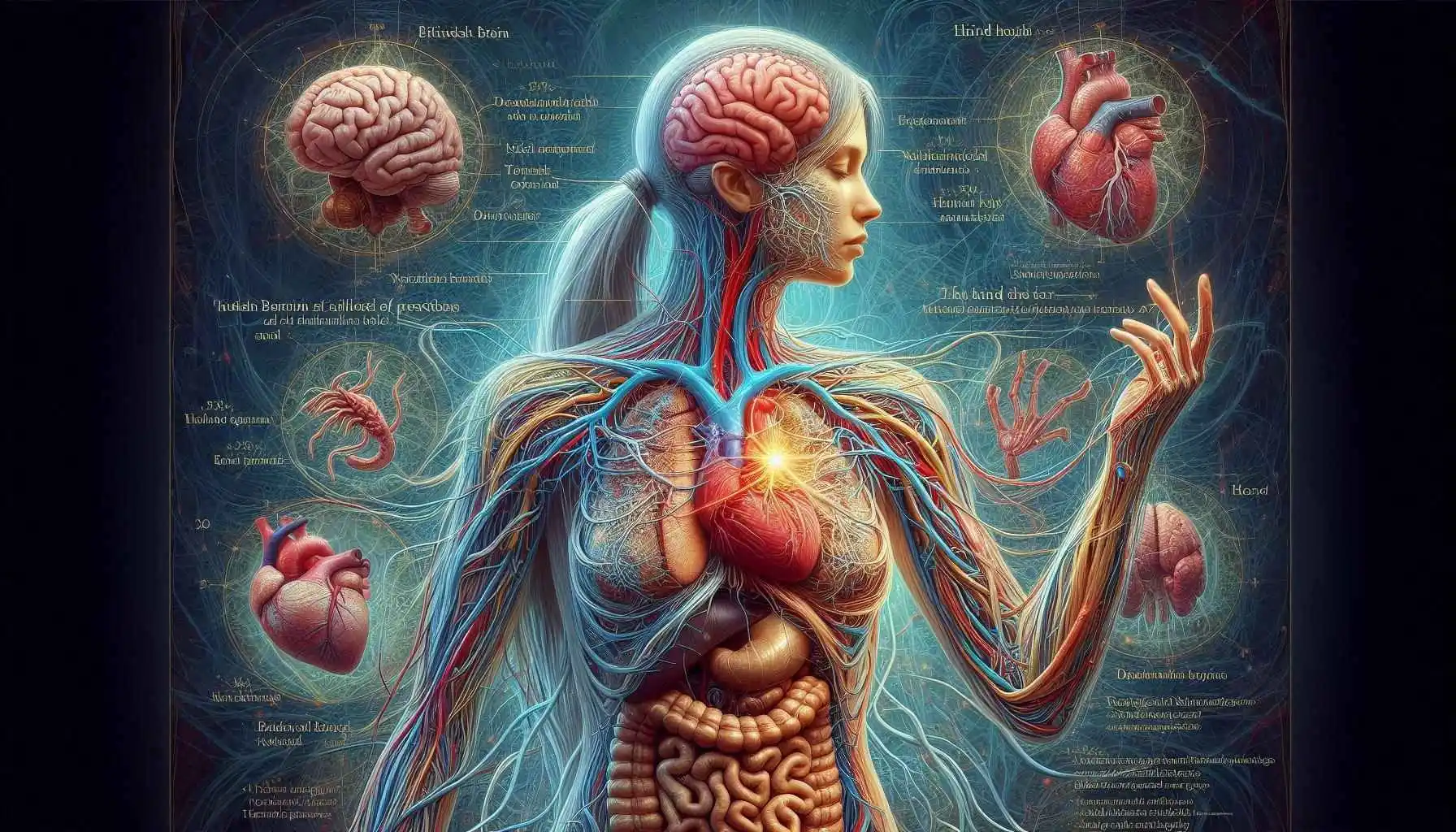
It turns out, your skull-brain is not acting alone. You possess a Second Brain and a Third Brain—sophisticated, highly complex neural networks residing in your digestive tract and your chest. These are not passive relay stations; they are intelligent, adaptive, and communicative systems capable of learning, remembering, and making independent decisions. Understanding the Enteric Nervous System (the gut brain) and the Heart’s intrinsic nervous system (the heart brain) is not just a fascinating biological trivia exercise. It is the key to unlocking the mysteries of chronic illness, emotional trauma, mental health, and human potential.

The Head Brain: Setting the Baseline
To appreciate the magnitude of the Second and Third Brains, we must first briefly acknowledge the First. The Central Nervous System (CNS), consisting of the brain and spinal cord, is an absolute marvel of evolutionary engineering. Weighing in at about three pounds, it contains roughly 86 billion neurons, woven together by hundreds of trillions of synaptic connections. It is the organ of conscious perception, abstract reasoning, language, and forward planning.
However, the head brain has a critical vulnerability: it is highly insulated. It sits in a dark, silent, protective shell of bone and cerebrospinal fluid. It relies entirely on chemical and electrical signals relayed from the body to know what is happening in the environment. It cannot feel a virus invading your lungs, nor can it directly sense the emotional state of a person standing next to you. It is a biological supercomputer that is, paradoxically, blind and deaf to the outside world without its peripheral sensory organs.
This is where the rest of the body steps in. And as we are now discovering, the “rest of the body” is doing far more than just taking orders.
The Second Brain: Unveiling the Enteric Nervous System (ENS)
Tucked away beneath the mucosal lining of your esophagus, stomach, small intestine, and colon lies a biological marvel that modern medicine is only just beginning to comprehend: the Enteric Nervous System, or ENS. When people casually refer to “thinking with their gut,” they have no idea how literally accurate they are.
The ENS is a vast, highly complex web of neurons. While it is significantly smaller than the brain in your head, it is still staggering in its scale. The human gut contains upwards of 500 million neurons—roughly five times the number found in the entire spinal cord, and about the same number of neurons found in a cat’s brain. But the raw number of nerve cells is only the beginning of the story.
To build a brain, you need more than just neurons; you need the architecture to process information. The ENS has it. It contains its own types of sensory neurons, motor neurons, and interneurons. It manufactures over thirty different types of neurotransmitters—the chemical messengers that dictate mood, pain, and pleasure. In fact, the ENS is the primary production site for an astonishing 95% of your body’s serotonin, the famous “happy chemical” that regulates mood, sleep, and appetite. It also produces about 50% of your body’s dopamine, the neurotransmitter associated with motivation and reward.
How is this possible? The answer lies in our evolutionary biology. During the earliest stages of embryonic development, a clump of tissue called the neural crest forms. This tissue divides. One section migrates upward to become the Central Nervous System. The other section migrates downward to become the Enteric Nervous System. Literally and biologically, your gut and your brain started out as the exact same piece of embryonic tissue. They are siblings.
How the Gut Brain “Thinks”
If a brain is defined by its ability to process sensory input, integrate that information, and generate a motor response, then the ENS absolutely qualifies as a brain.
When you eat a meal, the ENS doesn’t just wait for the head brain to tell it what to do. It independently coordinates the complex symphony of digestion. It senses the chemical composition of the food, regulates the rhythmic muscular contractions (peristalsis) required to move it through the tract, controls the secretion of digestive enzymes and acids, and manages the local blood flow to support absorption.
Remarkably, the ENS can operate entirely autonomously. If the vagus nerve—the massive superhighway of nerve fibers connecting the head brain to the gut—were completely severed, the gut brain would continue to digest your food, absorb nutrients, and manage the local environment without missing a beat.
But the ENS does much more than digestion. It is a sensory organ of immense power. The gut is lined with over 100 million specialized sensory cells (enterochromaffin cells) that constantly monitor the internal environment. These cells act as microscopic sentinels, scanning for pathogens, toxins, and nutritional deficiencies. When they detect a threat—like a harmful bacteria or a food allergen—they immediately fire warning signals to the ENS, which can trigger localized inflammation, diarrhea, or vomiting to expel the threat, all before the head brain even realizes you ate something bad.
The Microbiome: The Gut Brain’s Subconscious
To fully understand the Second Brain, we must introduce the microbiome. Your gut is home to roughly 100 trillion microorganisms—a collective genome known as the microbiota. For a long time, we viewed these bacteria as mere parasitic hitchhikers. We now know they are an integral part of the gut-brain system.
These bacteria are in constant chemical communication with your ENS. They produce metabolites, short-chain fatty acids, and even neurotransmitters that directly influence the firing patterns of your enteric neurons. If your microbiome is healthy and diverse, it produces calming, anti-inflammatory chemicals that promote a sense of well-being. If your microbiome is dysbiotic (imbalanced due to poor diet, stress, or antibiotics), it produces neurotoxins that can travel up the vagus nerve to the head brain, triggering anxiety, brain fog, and depressive symptoms.
When you feel that sudden “knot” in your stomach before a public speaking engagement, or those “butterflies” when you see someone you love, that is not your head brain projecting an emotion downward. That is your Second Brain—the ENS, primed by your microbiome—reacting to the environment in real-time. It is a localized, visceral form of intelligence.
The Third Brain: The Heart’s Neural Network
If the idea of a brain in your gut challenges conventional medical wisdom, the concept of a brain in your heart shatters it entirely. Since the dawn of modern cardiology, the heart has been strictly defined as a mechanical pump—a tireless, four-chambered muscle whose sole purpose is to circulate roughly 2,000 gallons of blood every single day.
This mechanical view is profoundly outdated.
In the early 1990s, pioneering neurocardiologist Dr. J. Andrew Armour introduced the world to the “Heart Brain.” Through meticulous anatomical research, Dr. Armour discovered that the heart possesses its own complex, intrinsic nervous system—a network of roughly 40,000 neurons. These neurons are not just passive conduits carrying signals from the brain in the head; they form a genuine processing network, complete with interneurons that allow the heart to process information locally.
This intricate web of neurons is concentrated in a structure called the intrinsic cardiac ganglionated plexus. Like the gut brain, the heart brain can process information independently of the cranial brain. It can receive sensory input from the body, interpret that input, and send signals back to the head brain.
The Heart’s Electromagnetic Intelligence
What makes the Third Brain truly extraordinary is not just its neural network, but its energetic output. Every cell in your body produces a tiny amount of electrical energy, but the heart is the most powerful electrical generator in the human body. It generates an electrical field that is about 60 times greater in amplitude than the electrical field of the brain.
Furthermore, because the heart is a highly muscular organ pumping blood (which is conductive) through the entire vascular system, this electrical activity manifests as an electromagnetic field that radiates outward from the body. Research conducted by the HeartMath Institute has demonstrated that the heart’s electromagnetic field can be measured up to three to four feet away from the body using sensitive magnetometers.
But the most revolutionary discovery involves Heart Rate Variability (HRV). We often think of a healthy heartbeat as a steady metronome—exactly 60 beats per minute, perfectly spaced. In reality, a healthy heart is highly variable. The time interval between one heartbeat and the next is constantly shifting in a complex, chaotic, yet highly ordered pattern. This is HRV.
High HRV is one of the strongest biomarkers of physical health, cognitive flexibility, and emotional resilience. Low HRV is linked to stress, anxiety, heart disease, and premature mortality.
The Afferent Highway: How the Heart Speaks to the Brain
While the head brain sends signals to the heart (telling it to speed up or slow down), the overwhelming majority of neural traffic on the vagus nerve actually flows in the opposite direction. Roughly 80% to 90% of the fibers in the vagus nerve are afferent—meaning they carry information from the heart to the brain.
The head brain does not dictate the heart’s rhythm; rather, the heart constantly updates the brain on the state of the body and the emotional environment. This constant barrage of cardiac input significantly influences the higher brain centers, including the amygdala (the brain’s fear center), the thalamus (the sensory relay station), and the cerebral cortex (the seat of conscious thought).
When you experience a state of deep appreciation, love, or compassion, your heart rhythms become highly ordered and coherent. When this coherent electromagnetic signal travels up the vagus nerve to the brain, it actually inhibits the amygdala’s fear response and synchronizes the frontal cortex, enhancing cognitive function, clarity, and problem-solving abilities.
Conversely, when you are angry, frustrated, or anxious, your heart rhythms become chaotic and incoherent. This jagged signal travels to the brain, effectively “short-circuiting” the logical centers of the cortex and throwing the entire nervous system into a state of defensive reactivity.
The implication of this biological reality is staggering: your emotional state does not begin in your head. It begins in your heart. The Third Brain is the primary sensory organ for emotional experience, and it actively modulates the cognitive capabilities of the head brain.
The Symphony of Three Minds: The Somatic Marker Hypothesis
If we accept the existence of three distinct neural networks—the head, the gut, and the heart—how do they function together? And why do we even need three?
The answer may lie in a concept introduced by neuroscientist Antonio Damasio called the “Somatic Marker Hypothesis.” Historically, humanity has worshipped pure rationality. We believed that the best decisions were made by cold, calculating logic, completely devoid of emotion. Damasio’s research completely destroyed this myth.
By studying patients who had damage to the emotional centers of their brains (specifically the ventromedial prefrontal cortex) but retained normal intelligence and logic, Damasio found something astonishing. These patients could perfectly articulate the pros and cons of a decision, but they were entirely incapable of making a decision. They would endlessly deliberate over what restaurant to eat at or what clothes to wear, paralyzed by rational analysis.
Damasio proved that logic alone is insufficient for decision-making. To make a choice, the brain relies on “somatic markers”—bodily feelings of pleasure or pain, comfort or discomfort, that are associated with past experiences.
Where do these somatic markers come from? They originate in your Second and Third Brains.
When you walk into a room and instantly feel a sense of unease—even though everything looks perfectly normal on a conscious level—your gut brain is likely picking up on subtle environmental cues, or perhaps sensing the micro-expressions and pheromonal signals of the people in the room, sending a warning signal of “danger” via the vagus nerve.
When you are presented with a complex moral dilemma and you say, “My heart tells me this is wrong,” you are not being irrational. Your Third Brain has processed the emotional weight of the scenario, generated a coherent electromagnetic signature, and sent a clear directive to the cortex, bypassing the slow, clunky pathways of conscious logic.
The three brains operate as a triumvirate of intelligence:
- The Head Brain (Intellect): Analyzes, calculates, processes abstract concepts, and plans for the future. It is slow, deliberate, and highly energy-intensive.
- The Gut Brain (Identity & Safety): Monitors the internal biochemical environment, manages the immune system, processes the immediate physical reality, and generates the deep, visceral sense of “self” and existential safety.
- The Heart Brain (Emotion & Relationality): Processes the emotional frequency of the environment, regulates the rhythm of the entire body, generates coherence, and drives our capacity for empathy, connection, and intuition.
When these three systems are aligned—when the logic of the head, the intuition of the gut, and the emotional clarity of the heart are in agreement—human beings operate at peak capacity. We call this state “flow.”
The Disconnect: Why Modern Society Makes Us Sick
Unfortunately, the way we live in the modern world is practically designed to sever the connections between these three brains. We are a culture of the “disembodied head.”
We sit at desks for twelve hours a day, completely ignoring the kinesthetic needs of our bodies. We eat highly processed, nutrient-deficient foods that systematically destroy the microbiome of our Second Brain, leading to an epidemic of gut-brain disorders like irritable bowel syndrome (IBS), anxiety, and depression.
Furthermore, we are chronically trapped in our sympathetic nervous system—the “fight or flight” response. Because the head brain is highly susceptible to imagined threats (worrying about a mortgage, stressing over an email), it can trigger a stress response just by thinking about a problem. This perceived stress sends alarm signals down to the gut and the heart.
In the gut, chronic stress halts digestion, starves the beneficial microbiome, and increases intestinal permeability (“leaky gut”), allowing inflammatory toxins into the bloodstream.
In the heart, chronic stress forces the Third Brain into a state of incoherent, chaotic rhythms. The heart stops sending calming, coherent signals to the head brain, and instead sends signals of panic. The cortex becomes foggy, the amygdala becomes hyper-vigilant, and we lose access to our capacity for empathy, creativity, and rational decision-making.
We have become a society of people trying to solve complex, deeply felt life problems using only 10% of our actual neural capacity. We are trying to steer a ship using only a tiny rudder (the head brain), while ignoring the massive engines (the gut) and the navigational radar (the heart) that actually keep the ship afloat.
How to Reintegrate Your Three Brains
Healing the modern epidemic of disembodiment requires a conscious, intentional effort to reconnect the head, the gut, and the heart. You cannot simply “think” your way out of a disconnected state; you must use the body to heal the mind.
- Healing the Second Brain (The Gut) The fastest way to recalibrate your gut brain is through dietary intervention. You must stop feeding your microbiome inflammatory foods (refined sugars, processed seed oils, artificial additives) and start feeding it what it evolved to eat: diverse plant fibers, fermented foods rich in probiotics, and high-quality proteins.
Beyond diet, you must learn to “listen” to your gut. When you feel that knot of anxiety in your stomach, do not immediately suppress it with an antacid or a distraction. Pause and ask your gut brain: What are you trying to warn me about? By acknowledging the ENS, you strengthen the vagal pathway between the gut and the head, restoring communication.
- Awakening the Third Brain (The Heart) Reintegrating the heart brain requires shifting your attention away from the chaotic stream of thoughts in your head and bringing it down into your chest. This is best achieved through practices like Heart-Focused Breathing.
By deliberately slowing your breathing to about five to six seconds inhale, and five to six seconds exhale, you begin to mechanically slow your heart rate. As you focus your attention on the physical sensation of your heart beating, you activate the afferent vagal fibers traveling up to the brain.
To supercharge this process, you can add an emotion. As you breathe slowly into your heart, actively generate a feeling of gratitude, care, or compassion. As the HeartMath Institute has proven, this specific combination—slow breathing plus a positive emotion—pushes the heart into a state of “cardiac coherence.” In this state, the heart’s electromagnetic field becomes highly ordered, flooding the brain with signals that synchronize the left and right hemispheres of the cortex. You will literally feel your thinking become sharper, calmer, and more intuitive.
- The Triune Synchronization Ultimately, the goal is to live from a state of integrated awareness. When faced with a difficult decision, do not just sit in your head and make a list of pros and cons.
First, check in with your Third Brain. Ask, How does my heart feel about this? Does thinking about this choice bring a sense of expansion and peace, or contraction and dread?
Second, check in with your Second Brain. Ask, What does my gut say? Does this path feel safe and aligned with my deepest identity, or does it make me feel nauseous and uneasy?
Finally, bring the data from the heart and the gut up to the head brain. Let the logical, analytical mind take the intuitive wisdom of the lower brains and construct a practical plan of action.
Conclusion
The paradigm of the solitary, dictatorial head-brain is dying. In its place, a beautiful, complex, and deeply empowering model of human intelligence is emerging. You are not a brain piloting a meat-suit. You are a symphony of three distinct intelligences, woven together by a magnificent web of nerves, hormones, and electromagnetic fields.
Your Second Brain, the Enteric Nervous System, is your anchor to the physical world, processing the chemistry of your environment and safeguarding your biological identity. Your Third Brain, the Heart’s intrinsic nervous system, is your emotional compass, regulating the rhythms of your biology and broadcasting the frequency of your deepest feelings into the world. And your First Brain, the magnificent cortex, is the translator, the artist, and the architect, capable of taking the visceral wisdom of the body and turning it into poetry, technology, and profound love.
When you learn to trust your gut, feel with your heart, and think with your head, you unlock a level of resilience, clarity, and peace that the isolated intellect could never possibly achieve. The science is no longer a secret. The question now is: are you ready to listen to the rest of your body?
FAQ’s
Understanding the Basics
- What exactly are the “hidden brains” in the human body?
Beyond the brain in your skull, you possess two highly complex neural networks: the Enteric Nervous System (ENS) located in your gut (the Second Brain) and the intrinsic nervous system located in your heart (the Third Brain). Both can process information independently.
- Is the phrase “thinking with your gut” scientifically accurate?
Yes. Because the gut and brain develop from the exact same piece of embryonic tissue (the neural crest), the gut literally contains its own neurons and neurotransmitters that allow it to “think” and react to its environment.
- Does the heart actually have brain cells?
Yes. The heart contains about 40,000 neurons known as the intrinsic cardiac ganglionated plexus. This allows the heart to process information locally rather than just passively receiving commands from the head brain.
- How does the heart communicate with the brain?
The heart communicates with the head brain primarily through the vagus nerve. Remarkably, about 80% to 90% of the vagus nerve fibers are afferent, meaning they carry information up from the heart to the brain, not the other way around.
- What is the Somatic Marker Hypothesis?
Proposed by neuroscientist Antonio Damasio, this hypothesis proves that pure logic is insufficient for decision-making. We rely on “somatic markers”—gut feelings and heart-felt emotions generated by the Second and Third Brains—to make choices.
- Why does modern society make us “disembodied”?
Modern life promotes a “head-only” existence through chronic sitting, highly processed diets that starve the gut brain, and constant mental stress. This severs the neural connections between the head, gut, and heart.
The Second Brain (Gut & ENS)
- How many neurons are in the gut?
The Enteric Nervous System contains roughly 500 million neurons—about five times more than the spinal cord and roughly the equivalent of a cat’s brain.
- Can my gut really produce mood-altering chemicals?
Absolutely. Your gut produces about 95% of your body’s serotonin (the “happy chemical”) and roughly 50% of your dopamine (the “reward chemical”).
- How does the microbiome affect my brain?
The 100 trillion bacteria in your gut are in constant chemical communication with your Enteric Nervous System. Healthy bacteria produce calming metabolites; unhealthy bacteria produce neurotoxins that travel up the vagus nerve to the head brain, causing anxiety and brain fog.
- What are natural remedies to heal the gut-brain connection?
The most effective natural remedies are dietary: eliminating refined sugars and processed seed oils that feed bad bacteria, and replacing them with diverse plant fibers, fermented foods (kefir, sauerkraut, kimchi), and bone broths to heal the gut lining.
- What lifestyle changes support the Second Brain?
Beyond diet, lifestyle adoptions include mindful eating (chewing thoroughly to stimulate stomach acid), reducing chronic stress to prevent “leaky gut,” and avoiding the overuse of antibiotics and NSAID pain relievers, which damage the gut microbiome.
- How do I know if my gut-brain axis is out of balance?
Common symptoms include chronic bloating, IBS, persistent anxiety that doesn’t respond to talk therapy, “brain fog,” sugar cravings, and waking up feeling unrefreshed despite sleeping.
- What are “gut feelings” biologically?
When you feel a “knot” in your stomach or “butterflies,” it is your Enteric Nervous System—primed by your microbiome—reacting to environmental stimuli in real-time, long before your conscious brain has time to process the situation.
- Can the gut operate without the head brain?
Yes. If the vagus nerve connecting the brain to the gut is completely severed, the ENS will continue to coordinate digestion, manage enzyme secretion, and move food through the tract entirely on its own.
The Third Brain (Heart)
- What is Heart Rate Variability (HRV) and why does it matter?
HRV is the variation in time between consecutive heartbeats. High HRV (a chaotic yet highly ordered rhythm) is a top biomarker of physical health, cognitive flexibility, and emotional resilience. Low HRV is linked to stress and disease.
- How strong is the heart’s electromagnetic field?
The heart generates an electrical field about 60 times greater in amplitude than the brain, and its electromagnetic field can be measured up to three to four feet outside the human body.
- Can my heart’s rhythm actually change my ability to think?
Yes. When the heart is in a state of chaotic rhythms (caused by frustration or anger), it sends signals to the head brain that “short-circuit” the logical cortex. When the heart is coherent, it synchronizes the cortex, enhancing clarity.
- What is “Cardiac Coherence”?
Cardiac coherence is a state achieved when your heart rhythms become highly ordered and synchronized, usually achieved through a combination of slow, deep breathing and the intentional generation of a positive emotion.
- What natural practices increase Heart Brain coherence?
The most effective practice is Heart-Focused Breathing: breathing at a rhythm of about 5-6 seconds inhale and 5-6 seconds exhale while focusing your attention on the physical space around your heart.
- How does gratitude affect the Third Brain?
When you actively generate feelings of gratitude while breathing slowly, it shifts the heart into coherence. This coherent electromagnetic signal travels to the brain, inhibiting the amygdala (fear center) and boosting the prefrontal cortex (logic center).
