
Table of Contents
Sugar Crash or Sugar Storm? The Truth About Hyperglycemia and Hypoglycemia Your Body Is Trying to Tell You
Your blood sugar is one of the quietest negotiators in your body — constantly balancing energy supply against demand, working behind the scenes so you never have to think about it. Until, one day, you do. A sudden wave of dizziness before lunch. An unexplained thirst that no glass of water seems to satisfy. A blurry afternoon that feels less like fatigue and more like fog. These are not random glitches. They are signals from a system that has tipped out of balance, and understanding that system could be one of the most important things you ever learn about your own health.
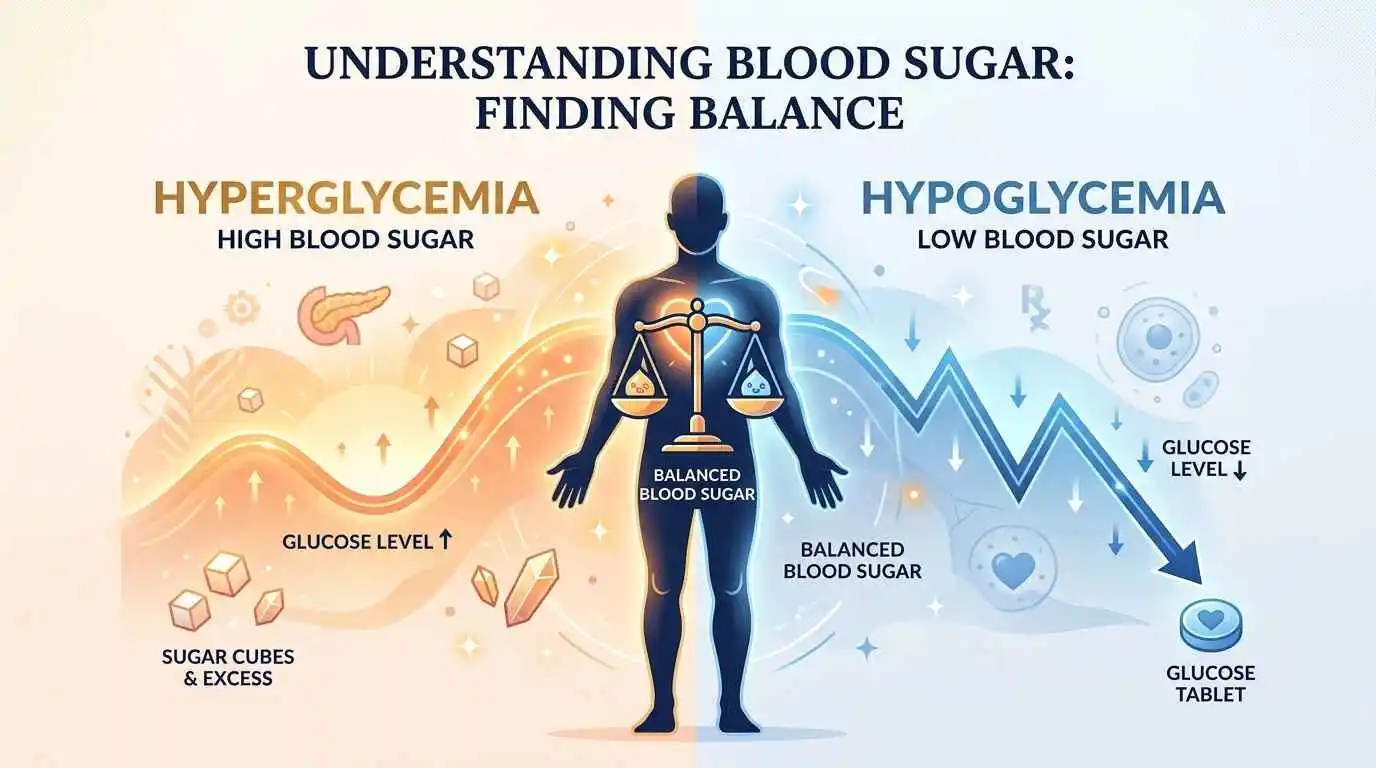
Hyperglycemia and hypoglycemia sit on opposite ends of the same spectrum, but they are often misunderstood as interchangeable “blood sugar problems.” They are not. One is a slow-building storm; the other is a sudden, sharp crash. Both can be dangerous, both are manageable, and both deserve to be understood not as abstract medical terms but as real, physical experiences that millions of people navigate every single day, whether they have diabetes, prediabetes, or simply a body under stress.
This guide breaks down what is actually happening inside your body during both conditions, why they happen, how to recognize the early warning signs before they escalate, and what practical, evidence-informed steps you can take to keep your glucose levels in a stable, healthy range. Whether you are managing a diagnosed condition, supporting a loved one, or simply curious about the invisible chemistry that powers every cell in your body, this is the conversation worth having.
The Basics: What Blood Sugar Actually Does
Glucose is the primary fuel your cells use to produce energy, and it comes almost entirely from the carbohydrates you eat. After a meal, glucose enters your bloodstream and your pancreas releases insulin, a hormone that acts like a key, unlocking your cells so glucose can move from your blood into your tissues, where it is either used immediately or stored for later. When this system works smoothly, your blood sugar rises gently after eating and settles back into a narrow, stable range within a couple of hours.

Problems begin when that balance breaks down. If your body does not produce enough insulin, produces insulin that does not work effectively, or releases too much insulin relative to the glucose available, the result is either too much sugar lingering in the blood (hyperglycemia) or too little reaching it (hypoglycemia). Both states put stress on your organs, your brain, and your long-term health, which is why understanding the mechanics behind them matters far beyond a diabetes diagnosis.
Hyperglycemia: When Sugar Builds Up
Hyperglycemia occurs when glucose accumulates in the bloodstream faster than your body can clear it. It is most commonly associated with diabetes, but it can also occur temporarily in people without diabetes during periods of severe illness, extreme stress, or after consuming large amounts of refined carbohydrates. In people with type 1 diabetes, the pancreas produces little to no insulin at all. In type 2 diabetes, the body still produces insulin, but cells become resistant to its effects, a condition known as insulin resistance, leaving excess glucose stranded in the bloodstream.
The danger of hyperglycemia lies partly in its subtlety. Mild elevations often produce no obvious symptoms, which is why blood sugar can climb for years before a person ever receives a diagnosis. As glucose levels climb higher, the body begins pulling water from tissues to try to dilute the excess sugar, leading to the hallmark symptoms: persistent thirst, frequent urination, fatigue, blurred vision, and unexplained weight loss. Left unmanaged over months and years, chronically high blood sugar damages blood vessels and nerves throughout the body, contributing to heart disease, kidney damage, vision loss, and poor wound healing.
Hypoglycemia: When Sugar Drops Too Far
Hypoglycemia is the opposite extreme — a drop in blood glucose below the level your brain and body need to function normally. Because the brain relies almost exclusively on glucose for fuel, even a moderate dip can produce immediate, noticeable symptoms: shakiness, sweating, irritability, confusion, a racing heartbeat, and an intense, almost urgent hunger. In more severe cases, hypoglycemia can cause slurred speech, loss of coordination, seizures, or loss of consciousness.
Hypoglycemia is most often discussed in the context of diabetes treatment, where it can occur when someone takes more insulin or diabetes medication than their body needs for the food and activity involved, skips a meal after dosing, or exercises more intensely than planned. However, it can also occur in people without diabetes, a condition known as non-diabetic hypoglycemia, which may stem from certain medications, alcohol consumption on an empty stomach, hormonal imbalances, or rarely, tumors that affect insulin production. Unlike hyperglycemia, which builds gradually, hypoglycemia tends to hit fast, which is part of what makes it so disorienting and, in severe cases, dangerous.
Reading the Warning Signs: A Tale of Two Extremes
One of the most practical skills anyone managing blood sugar can develop is the ability to distinguish between the two conditions quickly, because the appropriate response is almost opposite in each case. Confusing the two, especially in a moment of confusion or panic, can make a dangerous situation worse.
Common signs of hyperglycemia (high blood sugar):
- Excessive thirst that does not resolve with drinking water
- Frequent urination, especially overnight
- Fatigue that feels heavier than ordinary tiredness
- Blurred vision that comes and goes
- Headaches and difficulty concentrating
- Slow-healing cuts, bruises, or skin infections
- Unexplained weight loss despite normal or increased appetite
- A fruity-smelling breath in severe cases, which can signal diabetic ketoacidosis, a medical emergency
Common signs of hypoglycemia (low blood sugar):
- Sudden shakiness or trembling
- Cold sweats, even in a comfortable room
- Rapid or irregular heartbeat
- Sudden, intense hunger
- Irritability, anxiety, or mood swings that feel out of character
- Dizziness or lightheadedness
- Difficulty concentrating or sudden confusion
- Tingling or numbness around the lips or fingertips
- In severe cases, slurred speech, fainting, or seizures
A useful mental shortcut many clinicians teach patients is this: hyperglycemia tends to creep in slowly, over hours or days, while hypoglycemia tends to strike suddenly, over minutes. If symptoms appear abruptly and intensely, especially after taking medication, skipping a meal, or exercising, hypoglycemia is the more likely culprit and should be treated as the priority.
What Tips the Scale: Causes and Risk Factors
Both hyperglycemia and hypoglycemia rarely occur in isolation. They are usually the result of several factors converging at once, which is why managing blood sugar effectively requires looking at the whole picture rather than a single cause.
Factors That Raise Blood Sugar
- Eating large portions of refined carbohydrates or sugary foods without enough fiber, protein, or fat to slow absorption
- Missing doses of insulin or oral diabetes medication
- Physical inactivity, which reduces how efficiently muscles use glucose
- Illness, infection, or injury, which trigger stress hormones that raise blood sugar
- Emotional stress, which has a similar hormonal effect even without physical illness
- Certain medications, including some steroids and antipsychotics
- Dehydration, which concentrates glucose in a smaller volume of blood
- Poor sleep, which is increasingly recognized as a major and underestimated driver of insulin resistance
Factors That Lower Blood Sugar
- Taking too much insulin or certain diabetes medications relative to food intake
- Delaying or skipping meals after taking glucose-lowering medication
- Intense or prolonged physical activity without adjusting food or medication
- Drinking alcohol, particularly on an empty stomach, which interferes with the liver’s ability to release stored glucose
- Certain medical conditions affecting the liver, kidneys, or hormone-producing glands
- Reactive hypoglycemia, where blood sugar drops a few hours after a high-carbohydrate meal due to an exaggerated insulin response
Recognizing your own personal pattern of triggers is often more valuable than any general rule, because the same activity, like a vigorous workout, might raise blood sugar in one person through stress hormones and lower it in another through glucose uptake by working muscles.
Bringing Balance Back: Practical Management Strategies
Managing blood sugar is not about achieving perfection; it is about building a set of habits and responses that keep glucose within a stable, predictable range most of the time, while having a clear plan for the moments it drifts outside that range.
For Hyperglycemia
- Stay consistent with prescribed medication or insulin, and never adjust dosing without medical guidance
- Favor whole, fiber-rich carbohydrates over refined sugars, which slow glucose absorption and reduce sharp spikes
- Build regular movement into your day, since even short walks after meals measurably improve glucose uptake
- Stay well hydrated, which supports kidney function and helps the body manage excess glucose
- Monitor blood sugar regularly if advised by a healthcare provider, so patterns can be caught early rather than after symptoms appear
- Prioritize sleep and stress management, since both directly influence hormone levels that affect glucose control
For Hypoglycemia
- Follow the widely used 15-15 rule: consume about 15 grams of fast-acting carbohydrate, such as glucose tablets or juice, then recheck blood sugar after 15 minutes, repeating if still low
- Avoid treating a low with high-fat foods like chocolate, since fat slows sugar absorption when speed matters most
- Eat consistent, balanced meals and avoid skipping them, especially around medication timing or exercise
- Carry a fast-acting sugar source at all times if you are prone to lows, particularly during travel or exercise
- Talk to a healthcare provider about adjusting medication if lows are happening frequently, since recurring hypoglycemia often signals a dosing issue rather than a personal failure
- Wear a medical alert bracelet if you experience severe or unpredictable episodes, so others can respond appropriately in an emergency
When to Seek Emergency Care
Certain situations require immediate medical attention rather than home management. For hyperglycemia, this includes very high readings accompanied by vomiting, fruity-smelling breath, confusion, or difficulty breathing, which may indicate diabetic ketoacidosis or hyperosmolar hyperglycemic state, both medical emergencies. For hypoglycemia, this includes any episode where the person becomes unconscious, has a seizure, or is unable to safely swallow food or liquid; in these cases, glucagon administration or emergency services are necessary, since oral sugar cannot be safely given.
How These Conditions Are Diagnosed
Diagnosing blood sugar imbalances typically begins with a simple fingerstick or laboratory blood test, but the full picture usually requires more than a single number. A fasting blood glucose test measures sugar levels after at least eight hours without food, offering a baseline view of how the body manages glucose at rest. An oral glucose tolerance test goes a step further, measuring how the body responds to a concentrated dose of sugar over a two-hour window, which can reveal insulin resistance or reactive hypoglycemia that a fasting test alone might miss.
For people already diagnosed with diabetes, the A1C test has become a cornerstone of long-term monitoring because it reflects average blood sugar control over roughly the previous three months rather than a single moment in time. This matters because day-to-day readings can fluctuate dramatically based on stress, illness, or sleep, while A1C smooths out that noise to reveal the broader trend. Increasingly, continuous glucose monitors are also used diagnostically, providing a detailed, minute-by-minute map of glucose behavior that can catch silent overnight lows or subtle post-meal spikes that occasional fingerstick testing would never detect.
When hypoglycemia occurs in someone without diabetes, diagnosis can be more involved, sometimes requiring a supervised fasting test or careful symptom tracking to rule out rarer underlying causes such as hormone-secreting tumors or liver dysfunction. Because the symptoms of low blood sugar can overlap with anxiety, panic attacks, or other conditions, an accurate diagnosis often depends on capturing a low reading at the exact moment symptoms occur, which is part of why structured testing protocols exist.
The Long Game: Why Chronic Imbalance Matters
A single high or low reading is rarely dangerous on its own, but the cumulative effect of repeated imbalance over months and years is where the real risk lies. Chronically elevated blood sugar slowly damages the delicate lining of blood vessels throughout the body, a process that unfolds quietly long before any symptoms emerge. Over time, this damage contributes to cardiovascular disease, the leading cause of death among people with poorly controlled diabetes, as well as kidney disease, which can progress to the point of requiring dialysis if left unaddressed.
The eyes and nerves are particularly vulnerable to prolonged high blood sugar. Diabetic retinopathy, a condition where damaged blood vessels in the retina leak or grow abnormally, remains one of the leading causes of preventable blindness in working-age adults worldwide. Similarly, nerve damage, known as diabetic neuropathy, often begins as tingling or numbness in the feet and hands and can progress to a near-complete loss of sensation, which dramatically increases the risk of unnoticed injuries and infections.
Frequent hypoglycemia carries its own long-term consequences, though they unfold differently. Repeated severe lows have been associated with changes in how the brain recognizes future low blood sugar, a phenomenon called hypoglycemia unawareness, where the warning symptoms that once provided an early signal become fainter or disappear entirely. This creates a dangerous cycle in which each low blood sugar episode makes the next one harder to detect, underscoring why preventing frequent lows is just as important as preventing chronic highs.
The Bigger Picture: Living With Glucose Awareness
For many people, the goal is not simply avoiding a diagnosis but developing a genuine, ongoing awareness of how their body responds to food, movement, sleep, and stress. Continuous glucose monitors, once available only to people with diabetes, are increasingly used by a broader population to understand their personal glucose patterns, revealing that two people can eat the identical meal and experience very different blood sugar responses based on genetics, gut bacteria, sleep quality, and stress levels the night before.
This individualized understanding is reshaping how both hyperglycemia and hypoglycemia are approached, moving away from one-size-fits-all advice and toward personalized strategies built around real data. Still, the fundamentals remain consistent across the research: balanced meals, regular movement, adequate sleep, hydration, and stress management form the foundation that keeps blood sugar steady for almost everyone, regardless of their individual variation.
Ultimately, both hyperglycemia and hypoglycemia are reminders that the body is always communicating, often well before symptoms become serious. Learning to listen, whether through professional monitoring, lifestyle awareness, or simply paying closer attention to how you feel after meals, is one of the most empowering steps anyone can take toward long-term metabolic health.
Beyond the physical mechanics, there is a psychological dimension to living with unpredictable blood sugar that deserves equal attention. The constant vigilance required to anticipate highs and lows can be mentally exhausting, sometimes described by patients as a quiet, ongoing background task that never fully switches off. Recognizing this emotional weight, and seeking support from healthcare providers, diabetes educators, or peer communities when it becomes overwhelming, is a legitimate and important part of long-term management, not a sign of failing to cope.
Family members and caregivers also play a meaningful role, particularly in recognizing the signs of a severe low blood sugar episode in someone who may be too disoriented to treat themselves. Learning basic glucagon administration, knowing where fast-acting sugar is kept, and understanding when to call emergency services can make the difference between a frightening but manageable episode and a genuine crisis. Open conversations about these plans, made calmly before an emergency happens, are one of the most underrated tools in blood sugar safety.
Common Myths Worth Retiring
Misinformation around blood sugar is widespread, and some of it can actively work against good management. One persistent myth is that only sugar itself causes high blood sugar, when in reality any carbohydrate, including bread, rice, and pasta, breaks down into glucose and can raise levels depending on portion size and what it is paired with. Another common misconception is that people with hypoglycemia simply need to eat more sugar overall, when the actual goal is steadier, better-timed intake rather than a higher total amount.
It is also widely assumed that thin or fit people cannot develop blood sugar problems, yet insulin resistance and type 2 diabetes can occur in people of any body size, influenced heavily by genetics, visceral fat distribution, and lifestyle factors that are not always visible from the outside. Finally, many people believe that a single normal blood sugar reading rules out a problem entirely, when conditions like reactive hypoglycemia or early insulin resistance can hide between testing windows, which is exactly why patterns over time matter more than any isolated number.
The Takeaway
Hyperglycemia and hypoglycemia are not abstract medical labels reserved for textbooks; they are lived, physical experiences that shape how millions of people feel, think, and move through their days. Understanding the difference between a slow-building high and a sudden, sharp low is not just academic knowledge, it is a practical skill that can shape how quickly and appropriately someone responds in a moment that genuinely matters. Whether the goal is managing a diagnosed condition, supporting a family member, or simply becoming more attuned to your own body’s signals, the path forward starts with the same foundation: consistent meals, regular movement, adequate sleep, thoughtful stress management, and a willingness to pay attention when something feels off.
No single article can replace personalized medical guidance, and anyone experiencing recurring symptoms of high or low blood sugar should work closely with a qualified healthcare provider to build a plan suited to their specific body and circumstances. But armed with a clearer understanding of what is happening beneath the surface, the next dizzy spell, the next unexplained thirst, or the next sudden wave of shakiness becomes less frightening and far more actionable, a signal to respond to rather than a mystery to fear.
Frequently Asked Questions
| # | Question | Answer |
| 1 | What is the main difference between hyperglycemia and hypoglycemia? | Hyperglycemia means blood sugar is too high, while hypoglycemia means blood sugar has dropped too low; they sit at opposite ends of the same glucose spectrum. |
| 2 | What blood sugar level is considered hyperglycemia? | Generally, a fasting blood glucose above 130 mg/dL or a post-meal reading above 180 mg/dL is considered hyperglycemic, though thresholds vary by individual and provider guidance. |
| 3 | What blood sugar level is considered hypoglycemia? | A blood glucose reading below 70 mg/dL is typically classified as hypoglycemia, with readings below 54 mg/dL considered clinically significant and urgent. |
| 4 | Can a person without diabetes experience hyperglycemia? | Yes, temporary hyperglycemia can occur in people without diabetes during severe illness, major stress, or after very large carbohydrate-heavy meals. |
| 5 | Can a person without diabetes experience hypoglycemia? | Yes, this is called non-diabetic hypoglycemia and can result from certain medications, alcohol on an empty stomach, hormonal conditions, or reactive insulin responses after eating. |
| 6 | What is reactive hypoglycemia? | Reactive hypoglycemia is a drop in blood sugar that occurs a few hours after eating, caused by the body releasing more insulin than the meal’s glucose actually required. |
| 7 | What is the fastest way to treat low blood sugar? | The 15-15 rule is widely recommended: consume 15 grams of fast-acting carbohydrate, wait 15 minutes, then recheck blood sugar and repeat if still low. |
| 8 | Why shouldn’t I use chocolate to treat a hypoglycemic episode? | Chocolate contains fat, which slows the absorption of sugar into the bloodstream, delaying relief exactly when fast action is needed. |
| 9 | What are the earliest warning signs of high blood sugar? | Increased thirst, frequent urination, fatigue, and blurred vision are often the earliest noticeable signs, though mild elevations may produce no symptoms at all. |
| 10 | What are the earliest warning signs of low blood sugar? | Shakiness, sudden sweating, a racing heartbeat, and intense hunger are typically the first signals that blood sugar is dropping. |
| 11 | Is diabetic ketoacidosis the same as hyperglycemia? | No, diabetic ketoacidosis is a severe complication that can result from prolonged, untreated hyperglycemia combined with insufficient insulin, leading to dangerous acid buildup in the blood. |
| 12 | Can stress alone raise blood sugar? | Yes, stress triggers hormones like cortisol and adrenaline that signal the liver to release stored glucose, which can elevate blood sugar even without eating. |
| 13 | Does exercise always lower blood sugar? | Not always; moderate aerobic activity typically lowers blood sugar, but very intense or short bursts of exercise can temporarily raise it due to stress hormone release. |
| 14 | How does alcohol affect blood sugar? | Alcohol can initially raise blood sugar but later cause it to drop, especially several hours afterward, because it interferes with the liver’s ability to release stored glucose. |
| 15 | What is insulin resistance? | Insulin resistance occurs when cells respond poorly to insulin’s signal, forcing the pancreas to produce more insulin to achieve the same glucose-lowering effect. |
| 16 | Can poor sleep affect blood sugar levels? | Yes, inadequate or poor-quality sleep is strongly linked to increased insulin resistance and higher blood sugar levels, even in people without diabetes. |
| 17 | What is the dawn phenomenon? | The dawn phenomenon is a natural early-morning rise in blood sugar caused by hormone release that prepares the body to wake, which can be more pronounced in people with diabetes. |
| 18 | How often should blood sugar be checked? | Frequency depends on individual treatment plans; some people check several times daily, others use continuous monitors, and many should follow personalized guidance from a healthcare provider. |
| 19 | What foods help stabilize blood sugar? | Foods high in fiber, lean protein, and healthy fats, paired with whole-grain or low-glycemic carbohydrates, tend to produce more gradual, stable blood sugar responses. |
| 20 | Can dehydration affect blood sugar readings? | Yes, dehydration concentrates glucose in a smaller blood volume, which can make blood sugar readings appear higher than they would with normal hydration. |
| 21 | Is hypoglycemia dangerous if left untreated? | Yes, severe untreated hypoglycemia can lead to seizures, loss of consciousness, and in rare extreme cases, can be life-threatening. |
| 22 | What is glucagon and when is it used? | Glucagon is a hormone medication used to rapidly raise blood sugar during severe hypoglycemia when a person is unable to safely eat or drink, often unconscious or seizing. |
| 23 | Can children experience hypoglycemia or hyperglycemia? | Yes, both conditions can occur in children, particularly those with type 1 diabetes, and require careful monitoring and age-appropriate management plans. |
| 24 | Does eating too much sugar cause diabetes directly? | Sugar intake alone does not directly cause diabetes, but consistently high intake combined with excess weight, inactivity, and genetic predisposition increases overall risk. |
| 25 | What is an A1C test and how does it relate to these conditions? | An A1C test measures average blood sugar over roughly three months, helping clinicians assess long-term glucose control beyond single-day readings. |
| 26 | Can pregnancy cause blood sugar imbalances? | Yes, gestational diabetes can cause hyperglycemia during pregnancy due to hormonal changes affecting insulin sensitivity, and requires monitoring throughout pregnancy. |
| 27 | Are continuous glucose monitors useful for people without diabetes? | Increasingly, yes; many people use them to understand personal glucose responses to food, exercise, and stress, even without a diabetes diagnosis. |
| 28 | What role does the liver play in blood sugar regulation? | The liver stores glucose as glycogen and releases it when blood sugar drops, acting as a critical buffer between meals and during fasting periods. |
| 29 | Can certain medications cause blood sugar swings? | Yes, steroids, some antipsychotics, and certain other drugs can raise blood sugar, while some diabetes medications can cause it to drop if not carefully dosed. |
| 30 | When should someone see a doctor about blood sugar symptoms? | Anyone experiencing recurring symptoms of high or low blood sugar, especially without a known diagnosis, should consult a healthcare provider for proper testing and evaluation. |
⚕️Medical Disclaimer:
The information provided on this website is for general educational and informational purposes only and is not intended as a substitute for professional medical advice, diagnosis, or treatment. Always seek the advice of your physician or other qualified health provider with any questions you may have regarding a medical condition. Never disregard professional medical advice or delay in seeking it because of something you have read on this website.
