
Table of Contents
Stop Storing Leftovers Wrong: How Should Refrigerate left over Food ? Food Safety Myths Busted
Introduction: The Leftovers Dilemma Nobody Talks About
You have just finished cooking a wonderful meal. There is enough left to feed the family again tomorrow, and the instinct is to let it cool on the counter before refrigerating — after all, that is what your grandmother always did. But here is the uncomfortable truth: that well-meaning habit could be silently growing a colony of dangerous bacteria right in the center of your kitchen.
Leftover food safety is one of the most misunderstood areas of home health. Millions of households every year experience food poisoning incidents that are entirely preventable — not because the food was spoiled when cooked, but because of what happened to it afterward. The Centers for Disease Control and Prevention (CDC) estimates that 48 million Americans experience foodborne illness annually, and a significant portion of those cases trace back to improper leftover handling.
This article is your definitive guide to refrigerating leftovers the right way — and to busting the food safety myths that have been passed down through generations as kitchen gospel. Whether you meal-prep every Sunday or simply have a habit of saving the rest of last night’s pasta, what you learn here could genuinely protect your health.
The Science Behind Food Spoilage
To understand why refrigeration guidelines exist, you need to understand what actually happens when food sits out. Bacteria are everywhere — on surfaces, in the air, and naturally present in food. At room temperature, bacteria such as Salmonella, Listeria, Staphylococcus aureus, and E. coli can double their population every 20 minutes. A single bacterium can become over a million in just seven hours.

This bacterial growth produces two types of threats. First, the bacteria themselves cause infection when consumed. Second, many bacteria produce toxins as metabolic byproducts, and these toxins remain dangerous even after cooking kills the bacteria — because the toxins are heat-stable and cannot be destroyed by reheating.
The Danger Zone: 40°F to 140°F (4°C to 60°C)
Food safety authorities universally identify 40°F to 140°F as the temperature range where bacteria thrive. Refrigerators keep food below 40°F, slowing bacterial metabolism to a near-halt. Proper cooking raises food above 140°F, which kills most pathogens. The problem is the time in between — when food is cooling, sitting, or being stored improperly.
Every minute your leftover food spends in the danger zone is a minute of potential bacterial growth. The standard rule: food should not remain in the danger zone for more than two hours cumulatively. In environments above 90°F (32°C) — such as outdoor picnics or hot kitchens — that window shrinks to just one hour.
Myth-Busting: The Most Dangerous Leftover Food Beliefs
Myth 1: You Must Let Food Cool Completely Before Refrigerating
This is perhaps the most widespread and dangerous food safety myth. The origin is understandable — older refrigerators had poor insulation and heat from food could raise the interior temperature, compromising nearby items. Modern refrigerators are engineered to handle heat load efficiently.
The real danger is waiting. As food cools on the counter, it spends extended time in the danger zone. Food safety guidance is clear: refrigerate within two hours of cooking, regardless of temperature. Divide large portions into shallow containers so heat dissipates quickly inside the fridge rather than on the counter.
Myth 2: If Food Smells and Looks Fine, It Is Safe
This is a genuinely dangerous myth because it places complete trust in your senses — but the most harmful bacteria are odorless, colorless, and tasteless. Pathogens like Salmonella and Listeria produce no detectable changes in the food they contaminate. The smell-and-look test is not a food safety tool. It is a freshness indicator at best and a false security blanket at worst. Always follow time-based storage guidelines.
Myth 3: The Fridge Kills Bacteria
Refrigerators do not kill bacteria — they slow bacterial growth dramatically. Certain bacteria, including Listeria monocytogenes, can actually grow at refrigerator temperatures, just more slowly. This is why time limits for refrigerated leftovers exist even in a properly functioning fridge. Cold storage is a delay mechanism, not a sterilization process.
Myth 4: Reheating Food Fully Resets the Safety Clock
Reheating food to 165°F kills live bacteria, but it does not neutralize heat-stable toxins already present in the food. If food was improperly stored and bacteria had time to produce toxins before reheating, those toxins remain active and can cause illness. Reheating is not a reset button — proper initial storage is the only true safeguard.
Myth 5: Covering Food with Foil in the Fridge Is Sufficient
Aluminum foil is not airtight. It allows air exchange, which means moisture loss, cross-contamination from odors, and a pathway for airborne bacteria. Always store leftovers in airtight containers or zip-lock bags with air fully expelled for true food safety protection.
The Correct Way to Refrigerate Leftovers: A Step-by-Step Guide
Step 1: Portion and Containerize Immediately
As soon as a meal is finished, portion out the leftovers into meal-sized servings. Use wide, shallow containers — no deeper than two to three inches — to maximize surface area and allow heat to escape rapidly. Deep pots retain heat in the center for hours, which creates an extended danger zone exposure.
Step 2: Use the Right Containers
Glass containers with airtight lids are the gold standard. They are non-reactive, do not absorb odors, are safe for both freezing and microwaving, and give you a visual indicator of contents. BPA-free hard plastic containers with snap lids and stainless steel containers are also reliable options.
Avoid reusing thin single-use plastic bags or storing food directly in cans. Canned food, once opened, can react with the metal and should be transferred to glass or plastic containers before refrigerating.
Step 3: Label Every Container
This simple step prevents one of the most common food safety mistakes: forgetting when something was stored. Use masking tape and a marker, or dedicated freezer labels. Write the name of the dish and the storage date. At a glance, you should always be able to tell whether a container is within its safe window.
Step 4: Organize Your Refrigerator Correctly
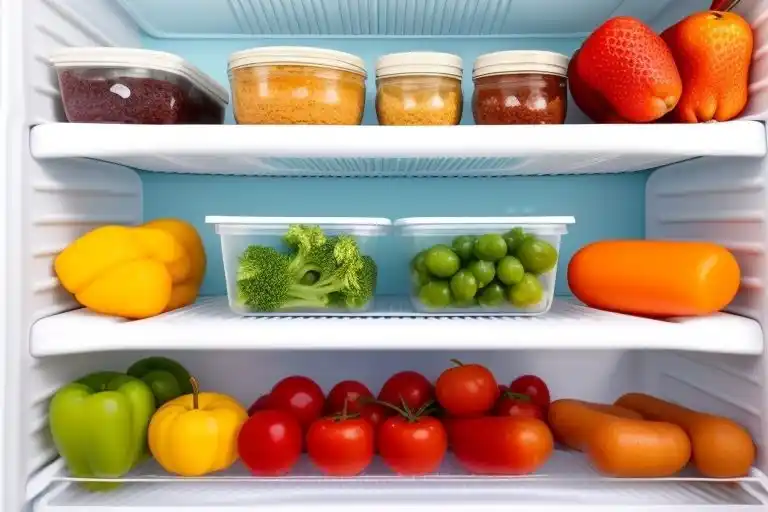
Food placement inside the refrigerator matters. Store raw meats, poultry, and seafood on the lowest shelf in sealed containers to prevent drips contaminating food below. Cooked leftovers belong on upper shelves. Dairy, eggs, and ready-to-eat items should be in designated drawers or mid-level shelves. Never store leftovers in the refrigerator door, where temperatures fluctuate the most.
Step 5: Monitor Your Refrigerator Temperature
Set your refrigerator to 37–38°F (2.8–3.3°C) — safely below the 40°F threshold but above freezing. Purchase a small refrigerator thermometer (they cost under five dollars) because appliance displays are often inaccurate by several degrees. Check weekly, especially in warmer months when refrigerators work harder.
Special Foods That Need Extra Attention
Cooked Rice
Rice deserves its own category. Uncooked rice can contain Bacillus cereus spores that survive the cooking process. When cooked rice is left at room temperature, these spores germinate and produce heat-resistant toxins. Cool cooked rice within one hour of cooking, store in the refrigerator, and consume within 24 hours. Do not reheat rice more than once.
Cooked Poultry and Seafood
These proteins deteriorate faster than red meat. Cooked chicken, turkey, and fish should be refrigerated within one hour of cooking and consumed within three days — not the full four-day window applicable to red meat. Seafood, in particular, has a shorter window and should be eaten within two days of cooking.
Egg-Based and Dairy-Based Dishes
Foods containing eggs, cream, or cheese are highly susceptible to bacterial growth. Quiches, custards, cream sauces, and mayonnaise-based salads should be refrigerated immediately and consumed within two to three days maximum.
Soups and Stews
Large volumes of liquid-based dishes trap heat at their core. Divide soups and stews into smaller containers before refrigerating. An effective technique is placing the hot containers in an ice bath in the sink to rapidly drop the temperature before moving them to the fridge.
Safe Reheating Practices
Proper reheating is the final safety checkpoint before a leftover meal. The goal is to bring the internal temperature to 165°F (74°C) throughout the entire portion — not just on the surface.
- Microwave: Stir or rotate food halfway through reheating. Cover loosely with a microwave-safe lid to retain steam and promote even heating. Always rest for one minute after reheating to allow temperature equalization.
- Stovetop: Reheat soups, stews, and sauces on medium heat while stirring regularly until the dish reaches a rolling boil. For solid foods, use a covered pan with a small amount of liquid to prevent drying and ensure even heating.
- Oven: Preheat to 325–350°F. Cover the dish with foil to retain moisture and heat until the internal temperature reaches 165°F, verified with a food thermometer.
- Never reheat food more than once. Each reheating cycle increases the risk of thermal damage to nutrients and provides another opportunity for bacteria to enter the food chain.
Never leave reheated food out again. Once reheated, food should be consumed immediately. Returning reheated food to the refrigerator and reheating a second time significantly increases food safety risk.
When to Freeze Instead of Refrigerate
If you know you will not consume leftovers within three to four days, the freezer is your best ally. Freezing at 0°F (-18°C) halts bacterial activity entirely, not just slowing it. Most cooked foods freeze safely for two to three months without significant quality loss.
Foods that freeze particularly well include cooked grains, soups, stews, casseroles, roasted meats, and blanched vegetables. Foods that do not freeze well include leafy salads, cream-based sauces (they separate), cooked whole eggs, and fried foods that lose crispness.
Label all frozen leftovers with the food name, date frozen, and planned use-by date. Use a first-in, first-out system — place newer items at the back and bring older ones forward to ensure rotation and prevent freezer burn from extended storage.
Building a Food-Safe Kitchen Routine
Safety in the kitchen is not a single act — it is a consistent routine. The following habits, practiced daily, create a food-safe home environment that dramatically reduces foodborne illness risk.
- Designate a two-hour window: Set a phone reminder after every meal to check and refrigerate leftovers if you are likely to forget.
- Keep a weekly audit day: Once a week, clear the refrigerator of anything beyond the safe storage window. Sunday evenings work well as a fresh-start ritual.
- Invest in quality containers: A set of matching, stackable glass containers pays dividends in organization, safety, and food quality over years of use.
- Educate the household: Make sure everyone in the family understands the basic time rules. Food safety is a shared responsibility, not just the cook’s concern.
- Never taste-test questionable leftovers: If you are unsure how long something has been in the fridge, discard it. The cost of food is always less than the cost of illness.
Conclusion: Safe Leftovers, Healthy Families
The refrigerator is one of the most powerful food safety tools in your home — but only if you use it correctly. The myths surrounding leftover storage are persistent because they come from a place of reasonable logic: let food cool, trust your nose, assume reheating resets the risk. But food safety science is more nuanced, and the consequences of getting it wrong range from an unpleasant stomach upset to a genuinely serious medical emergency.
The good news is that protecting your family is simple: refrigerate within two hours, use airtight containers, label consistently, store at the right temperature, reheat thoroughly, and respect the three-to-four-day rule. These habits require minimal effort and deliver maximum protection.
Leftovers are a gift — they save time, reduce food waste, and make weekday eating easier. Honor that gift by storing them safely. Your refrigerator is ready to do the work; you just need to give it the right conditions to succeed.
FAQs
The following 30 questions cover the most commonly searched queries about refrigerating leftovers and food safety myths, designed to provide both immediate answers and lasting kitchen wisdom.
| # | Question | Answer |
| 1 | How long can I keep leftovers in the refrigerator? | Most cooked leftovers are safe for 3–4 days when stored in an airtight container at or below 40°F (4°C). Always label containers with the date to avoid guessing. |
| 2 | Is it safe to refrigerate food while it’s still hot? | Yes. Modern food safety guidance recommends cooling food quickly and placing it in the fridge within two hours. Waiting for food to ‘fully cool’ on the counter is dangerous as it prolongs time in the bacterial danger zone (40–140°F). |
| 3 | What is the ‘danger zone’ in food safety? | The danger zone is 40°F to 140°F (4°C–60°C), the temperature range where bacteria multiply fastest — doubling in as little as 20 minutes. Keeping food out of this range minimizes risk. |
| 4 | Can I refreeze food that has been thawed? | Food thawed in the refrigerator can be refrozen without cooking, but quality may decrease. Food thawed using other methods (microwave, cold water) should be cooked before refreezing. |
| 5 | Does reheating leftovers kill all bacteria? | Reheating to 165°F (74°C) kills most harmful bacteria, but it does not eliminate heat-stable toxins produced by bacteria like Staphylococcus aureus. This is why proper storage from the start is critical. |
| 6 | Is it true that rice is especially dangerous as a leftover? | Yes. Cooked rice can harbor Bacillus cereus spores that survive cooking. If rice is left at room temperature, the spores germinate and produce heat-stable toxins. Cool rice quickly, refrigerate within one hour, and consume within 24 hours. |
| 7 | Can I store leftovers in the pot or pan I cooked them in? | It is not ideal. Pots and pans take longer to cool, and some metals can react with acidic foods. Transfer leftovers to shallow, airtight containers for safe and efficient chilling. |
| 8 | How should I store leftover soup or stew? | Allow it to stop steaming, then pour into shallow containers and refrigerate promptly. Do not stack containers immediately — allow airflow around each one initially to speed cooling. |
| 9 | Does placing hot food in the fridge raise the overall temperature dangerously? | A small amount of hot food in a properly functioning refrigerator causes minimal temperature rise. Divide large quantities into smaller portions to dissipate heat faster and protect surrounding food. |
| 10 | Are leftovers in plastic wrap safe? | Plastic wrap provides a temporary cover but is not airtight. Use hard-sided containers with tight-fitting lids or zip-lock bags with air removed for better safety and freshness. |
| 11 | Can I eat leftover chicken after 5 days in the fridge? | No. Cooked poultry is safe for only 3–4 days in the refrigerator. Beyond that, bacterial growth increases significantly even if the chicken smells fine. When in doubt, throw it out. |
| 12 | Does vinegar or lemon juice in food make leftovers last longer? | Acidic ingredients can slightly slow bacterial growth, but not enough to significantly extend safe storage time. Standard guidelines still apply — 3–4 days refrigerated. |
| 13 | Is it a myth that you should never put warm food in the fridge? | Yes, it is a myth. The old advice came from outdated refrigerators that struggled with heat load. Modern fridges handle small-to-moderate amounts of warm food safely. Delayed refrigeration is far riskier. |
| 14 | What containers are safest for leftover storage? | Glass containers with airtight lids are ideal — they do not absorb odors, do not leach chemicals, and are microwave-safe. BPA-free plastic containers and stainless steel are also good options. |
| 15 | Can leftovers be stored at room temperature overnight? | No. Any food left at room temperature for more than two hours (one hour above 90°F/32°C) enters the danger zone and should be discarded, regardless of how it looks or smells. |
| 16 | How do I know if leftovers have gone bad? | Signs include off smells, visible mold, slimy texture, or unusual color. However, dangerous bacteria often produce no detectable change in appearance or odor — so always follow time guidelines regardless. |
| 17 | Is it safe to eat leftovers cold without reheating? | Yes, if they were properly stored and are within the safe timeframe. Many foods like cooked grains, meats, and vegetables are safe to eat cold straight from the refrigerator. |
| 18 | Does the type of food affect how long leftovers last? | Yes. High-protein foods like meat, fish, and eggs spoil faster than starchy or vegetable dishes. Foods with dairy or mayonnaise also deteriorate more quickly. Always store these with extra care. |
| 19 | Can I freeze any leftover to extend its life? | Most cooked foods freeze well for 2–3 months. Exceptions include foods with high water content (cucumbers, lettuce), cream-based sauces, and hard-boiled eggs, which change texture when frozen. |
| 20 | Why does refrigerating food slow bacterial growth? | Cold temperatures slow the metabolic activity of bacteria, reducing their reproduction rate dramatically. Refrigerators at 40°F (4°C) do not kill bacteria but keep them in a largely dormant state. |
| 21 | How should I reheat leftovers safely? | Reheat all leftovers to an internal temperature of 165°F (74°C). Stir soups and stews midway through reheating and use a food thermometer for solid foods to ensure even heating. |
| 22 | Can I marinate and store meat leftovers in the marinade? | Cooked meat should not be stored in the marinade used for raw meat, as it may be contaminated. Use fresh sauce for storage or discard the original marinade after cooking. |
| 23 | Is vacuum sealing better than regular containers for leftovers? | Yes. Vacuum sealing removes oxygen, which slows oxidation and inhibits aerobic bacteria, extending refrigerator shelf life by one or two extra days compared to regular airtight containers. |
| 24 | How can I cool large batches of food quickly? | Divide into shallow containers no deeper than 2 inches, use an ice bath under the container, or stir in ice chips for liquid dishes. The goal is to reach below 40°F within two hours. |
| 25 | Is it safe to eat leftovers that have been in the fridge for a week? | No. Most cooked leftovers are only safe for 3–4 days. A week-old leftover should be discarded even if it appears and smells normal, as dangerous pathogens can be present without any signs. |
| 26 | Can I store leftovers alongside raw meat in the refrigerator? | No. Raw meat should always be stored on the lowest shelf in sealed containers to prevent drips contaminating other foods. Cooked leftovers belong on upper shelves, separated from raw proteins. |
| 27 | Do airtight containers prevent all bacterial growth? | Airtight containers limit oxygen exposure and cross-contamination but do not stop bacterial growth entirely. Refrigeration combined with airtight storage gives the best protection. |
| 28 | Is it necessary to label leftover containers? | Highly recommended. Labeling with both the food name and date helps you track storage time accurately, preventing accidental consumption of unsafe food and reducing household food waste. |
| 29 | Can I combine different leftovers in one container? | Yes, if they were cooked around the same time. The combined dish should be consumed within the shorter of the two individual safe storage windows. Avoid combining very different food types that may spoil at different rates. |
| 30 | Does the refrigerator temperature affect leftover safety? | Absolutely. The fridge should be set at or below 40°F (4°C). Temperatures above this significantly accelerate bacterial growth. Use a fridge thermometer to verify, as many appliance displays are inaccurate. |
Disclaimer: The content on this blog is for informational purposes only. The author’s opinions are personal and not endorsed. Efforts are made to provide accurate information, but completeness, accuracy, or reliability are not guaranteed. The author is not liable for any loss or damage resulting from the use of this blog. It is recommended to use the information on this blog at your own discretion.
