
Table of Contents
The Checkout Button That Split Your Purchase Into Four, and Maybe Your Finances Too
Buy Now, Pay Later exploded from a checkout curiosity into a trillion-dollar habit. Here is what the actual data says about whether it helps shoppers or quietly buries them.
A Payment Option That Took Over Checkout Pages
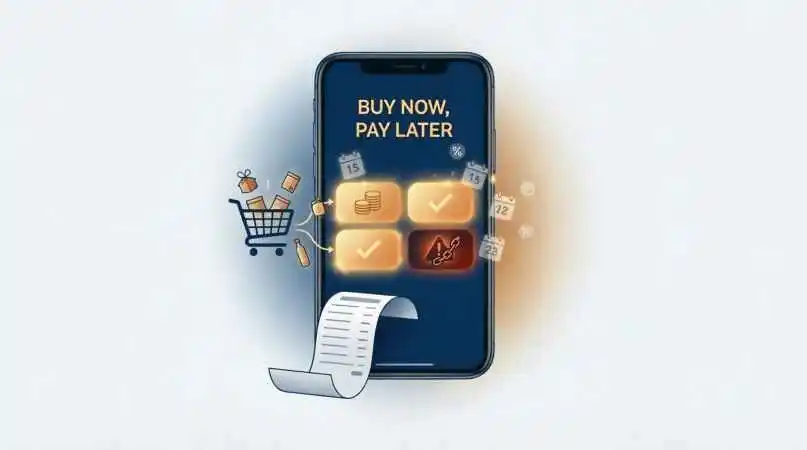
In less than a decade, Buy Now, Pay Later services went from an unfamiliar checkout option to a default fixture on a huge share of online, and increasingly in-store, purchases. Split a purchase into four interest-free installments, pay the first quarter today, and the rest arrives automatically over the following weeks. Providers like Klarna, Afterpay, Affirm, and PayPal’s own installment product have made this option available at checkout for everything from clothing to furniture to, more recently, groceries and fast food.
The growth has been genuinely staggering by financial industry standards, with global BNPL transaction volume estimated in the hundreds of billions of dollars annually and continuing to climb. That growth has also brought sustained scrutiny from regulators, consumer advocates, and researchers specifically examining whether the product functions primarily as a helpful budgeting tool or as a mechanism that makes it easier for financially stretched consumers to take on more debt than they realize.
How Buy Now, Pay Later Actually Works
The most common BNPL structure, often called “pay in four,” splits a purchase into four equal installments: an initial payment due at checkout, followed by three additional payments typically spaced two weeks apart, usually completing within six weeks of the original purchase. When used and repaid on schedule, this structure is genuinely interest-free for the consumer, with providers instead earning revenue primarily through fees charged to participating merchants, similar in concept to how a merchant pays a processing fee for credit card transactions.

Approval for BNPL purchases typically relies on a soft credit check or, for smaller purchase amounts, sometimes no formal credit check at all, a meaningfully lower barrier to approval than a traditional credit card application, which is a significant part of both the product’s appeal and the concern researchers have raised about it extending credit-like access to consumers who might not qualify for, or might have been more carefully screened for, a traditional credit product.
The Genuine Case for Convenience
For consumers who pay on schedule, BNPL genuinely delivers on its core promise: a way to manage cash flow around a larger purchase without paying any interest, a meaningfully different value proposition than a credit card, which charges interest on any carried balance unless paid in full each month. For a planned, budgeted purchase where a consumer has reliable income arriving on a predictable schedule, splitting a cost into four payments can be a genuinely useful cash-flow management tool rather than a form of problematic debt.
Research on consumer BNPL usage has found that a substantial share of users report using the product specifically as a budgeting tool, deliberately choosing to spread a known, planned expense across a few weeks rather than paying the full amount upfront, a use case that aligns closely with how the product is marketed and that, for disciplined users with stable income, appears to function largely as intended without producing meaningful financial harm.
Why the Loan-Stacking Problem Is the Real Concern
The most significant, well-documented risk associated with BNPL is not any single installment plan in isolation, but the practice of using multiple BNPL loans across different providers simultaneously, sometimes called loan stacking, since individual providers historically had limited visibility into a consumer’s other active BNPL commitments with competing services. A shopper juggling several simultaneous four-payment plans across different retailers and providers can accumulate a genuinely significant number of recurring biweekly payments without any single company, or in many cases the consumer themselves, having a clear, consolidated picture of total obligations coming due.
Survey research has found a meaningful share of BNPL users report having multiple concurrent active plans, and a notable percentage report having missed at least one payment, with missed payments frequently triggering late fees that, while typically smaller in absolute dollar terms than credit card penalties, can represent a proportionally large cost relative to a smaller original purchase, and in some cases can still affect a consumer’s broader financial standing depending on the specific provider’s policies.
No single BNPL loan looks dangerous in isolation. The risk shows up in the fifth one a shopper forgot they still owed.
Who Actually Uses BNPL, and Who Is Most at Risk
Survey and financial research data consistently show BNPL usage skews toward younger consumers, particularly those in their twenties and thirties, and toward users who report having lower credit scores or more limited access to traditional credit products, a pattern that has drawn specific attention from consumer protection researchers, since these same demographic groups are more likely to already be managing tighter overall financial margins where an unexpected accumulation of BNPL payments could meaningfully strain a monthly budget.
Research has also found that a meaningful share of BNPL users report using the product specifically because they could not otherwise afford a purchase outright, a use case that sits in a genuinely different risk category than the budgeting-tool use case described earlier, since financing an otherwise unaffordable purchase through interest-free installments still ultimately commits a consumer to future payments they may struggle to meet if their financial circumstances do not improve exactly as anticipated over the following weeks.
How Regulators Have Responded
BNPL’s rapid growth significantly outpaced the regulatory frameworks originally designed for more traditional credit products, prompting a wave of regulatory attention across multiple countries. The United States Consumer Financial Protection Bureau has conducted formal inquiries into BNPL industry practices and has moved to apply certain credit card-style consumer protections to BNPL products, while the United Kingdom has moved to bring BNPL under formal financial regulatory oversight for the first time, following earlier concerns that the product had operated largely outside traditional consumer credit regulation.
The European Union has similarly moved to include BNPL within updated consumer credit directive protections, reflecting a broader, largely consistent international regulatory trend: treating BNPL less as an exempt, novel payment innovation and more as a credit product deserving oversight comparable to other consumer lending, even though its interest-free structure differs meaningfully from traditional credit products in how it actually generates revenue.
The Shift Toward Credit Bureau Reporting
For much of BNPL’s early growth period, most providers did not report consumer payment activity to major credit bureaus, meaning BNPL usage and repayment history typically had no direct effect on a consumer’s credit score, a dynamic that cut both ways: responsible use built no credit history benefit, but missed payments also did not directly damage a credit score the way a missed credit card payment would.
This has begun changing meaningfully in recent years, with several major providers, including Affirm, entering formal reporting arrangements with major credit bureaus, a shift that means BNPL activity is increasingly likely to appear on and affect consumer credit reports going forward. This change carries genuine implications in both directions: it could help responsible BNPL users build credit history, while also meaning missed payments now carry a more serious, longer-lasting consequence than in the product’s earlier, largely unreported era.
How BNPL Compares to Credit Cards
The core structural difference between BNPL and a traditional credit card lies in how each product handles unpaid balances. A credit card allows an indefinitely carried balance, accumulating compounding interest, often at a high annual percentage rate, for as long as the balance remains unpaid, a structure that can produce significant, escalating debt if payments are limited to the minimum required amount over an extended period. BNPL’s fixed, short installment structure, typically resolved within six weeks, caps the total repayment period considerably more tightly, limiting how large a single plan’s obligation can grow compared to a revolving credit card balance.
This structural difference is a meaningful part of BNPL’s genuine advantage for disciplined users, since it is considerably harder to accumulate the kind of long-term, compounding high-interest debt associated with credit card misuse through a single BNPL plan. The trade-off, and the source of most documented BNPL-specific risk, is precisely the loan-stacking dynamic discussed earlier, accumulating numerous simultaneous short-term obligations across multiple providers rather than one large, clearly visible balance with a single lender.
Why Retailers Push BNPL So Aggressively
Retailers have strong financial incentives to prominently offer and promote BNPL at checkout, since research and industry data consistently show that offering the option measurably increases both conversion rates, the percentage of shoppers who complete a purchase rather than abandoning their cart, and average order value, the total amount spent per transaction, compared to checkout flows without a BNPL option available.
This retailer incentive is worth understanding as a structural factor shaping how prominently and persuasively BNPL is marketed at the point of purchase, since a retailer’s interest in maximizing conversion and order size is not automatically aligned with an individual shopper’s longer-term financial interest, a dynamic not unique to BNPL specifically, but one that consumer advocates argue deserves particular attention given how seamlessly BNPL options are now integrated directly into the checkout flow itself, often requiring only a single additional tap to commit to a plan.
Using BNPL Responsibly: What the Evidence Suggests Actually Works
For consumers who choose to use BNPL, several practices are associated with meaningfully lower risk of the product becoming financially harmful. Limiting active BNPL usage to a single provider, or at minimum maintaining a clear, consolidated personal record of all active plans across multiple providers, directly addresses the loan-stacking risk that represents the most well-documented source of BNPL-related financial strain.
Treating a BNPL purchase decision with the same deliberation as any other financing decision, specifically confirming that the required biweekly payments genuinely fit within a realistic, already-planned budget rather than assuming future income will simply accommodate the additional recurring obligation, meaningfully reduces the risk of missed payments and the late fees and, increasingly, credit consequences that can follow.
The Rise of Longer-Term BNPL Loans
Alongside the classic four-payment model, several major providers have expanded into longer-term installment loans, sometimes extending six, twelve, or even twenty-four months, occasionally carrying actual interest charges rather than the interest-free structure associated with the original short-term product. This expansion blurs an important distinction that shaped much of the earlier, more favorable analysis of BNPL, since a longer-term, interest-bearing installment loan functions considerably more like traditional consumer credit than the interest-free, short-window product that built BNPL’s original reputation for convenience.
Consumer finance researchers have specifically flagged this product expansion as worth watching closely, since a longer repayment window paired with actual interest charges reintroduces much of the compounding-debt risk profile the short-term, interest-free version had largely avoided, meaning consumers evaluating a BNPL offer today need to pay closer attention than ever to which specific structure, interest-free short-term or interest-bearing long-term, a given offer actually represents before assuming it carries the same low-risk profile as the original “pay in four” product.
What Happens During Economic Downturns
BNPL usage patterns and default rates have drawn particular research interest during periods of broader economic strain, since a product whose core appeal rests on deferring a portion of a purchase’s cost tends to see increased adoption precisely when consumers face tighter budgets, a dynamic that can create a genuinely concerning feedback loop if rising BNPL usage during an economic downturn coincides with the same consumers facing reduced income or job security that makes meeting those deferred payments considerably harder than anticipated at the time of purchase.
Some researchers have specifically compared this dynamic to patterns observed in other short-term consumer lending products during past economic downturns, cautioning that BNPL’s relatively recent, largely unprecedented rapid growth means its behavior during a genuinely severe, sustained economic downturn remains less thoroughly tested than more established consumer credit products with a longer historical track record spanning multiple full economic cycles.
So, Convenience Tool or Debt Trap? The Honest Answer
The evidence supports a genuinely conditional verdict rather than a simple answer in either direction, closely mirroring the pattern found in research on several other modern financial products marketed around convenience. For financially stable consumers making planned, budgeted purchases and using a single provider with clear payment tracking, BNPL functions largely as intended: a genuinely interest-free cash-flow tool with real advantages over high-interest revolving credit for that specific, disciplined use case.
For consumers already managing tight financial margins, using BNPL to finance otherwise unaffordable purchases, or stacking multiple concurrent plans across providers without a clear consolidated view of total obligations, the product carries genuine, well-documented risk of missed payments, mounting fees, and, increasingly, credit score consequences. The honest, evidence-aligned takeaway is that BNPL is neither inherently predatory nor inherently harmless; it is a credit-like financial product whose outcome depends heavily on how, and by whom, it is actually used, which is exactly why the growing regulatory push to treat it with the same seriousness as other consumer credit products reflects the data reasonably well.
Frequently Asked Questions
| Question | Answer |
| What is Buy Now, Pay Later? | It is a payment method that splits a purchase into several installments, typically four, over a set period. |
| Is Buy Now, Pay Later interest-free? | Standard “pay in four” plans are typically interest-free if all payments are made on schedule. |
| How does BNPL make money if it is interest-free? | Providers primarily earn revenue through fees charged to participating merchants. |
| Does BNPL require a credit check? | Most providers use a soft credit check, and some smaller purchases require no formal check at all. |
| What is loan stacking in BNPL? | It refers to using multiple BNPL loans across different providers simultaneously without full visibility of total obligations. |
| Why is loan stacking considered risky? | It can lead to an unmanaged accumulation of recurring payments across multiple providers. |
| Does BNPL affect credit scores? | Increasingly yes, as more providers begin reporting payment activity to credit bureaus. |
| Which BNPL providers report to credit bureaus? | Providers like Affirm have entered reporting arrangements with major credit bureaus in recent years. |
| Who typically uses BNPL the most? | Usage skews toward younger consumers and those with more limited access to traditional credit. |
| Is BNPL regulated like credit cards? | Regulation is increasing, with the US, UK, and EU all moving to apply stronger oversight to BNPL products. |
| What happens if I miss a BNPL payment? | Missed payments can trigger late fees and, increasingly, negative credit reporting consequences. |
| Is BNPL better than a credit card? | It can be for disciplined, planned purchases, though credit cards may offer more consumer protections in some cases. |
| Why do retailers offer BNPL at checkout? | It increases conversion rates and average order value, giving retailers a strong incentive to promote it. |
| Can BNPL help build credit history? | It increasingly can, now that more providers report payment activity to credit bureaus. |
| What is the most common BNPL structure? | The “pay in four” model, splitting a purchase into four payments over about six weeks, is most common. |
| Are BNPL late fees as high as credit card penalties? | They are typically smaller in dollar terms but can be proportionally significant relative to smaller purchases. |
| Can I use multiple BNPL providers at once? | Yes, which is technically possible but increases the risk of losing track of total obligations. |
| Is BNPL considered a form of debt? | Yes, it functions as a short-term credit product despite its interest-free structure when paid on time. |
| Why has BNPL grown so quickly? | Its seamless checkout integration and interest-free structure have driven rapid consumer adoption. |
| Does BNPL work for in-store purchases? | Increasingly yes, with several providers expanding beyond online-only checkout options. |
| What products can typically be purchased with BNPL? | It is available across a wide range of categories, from clothing to furniture to groceries. |
| Is BNPL safe for financially stable consumers? | For planned, budgeted purchases with reliable income, it generally carries low risk. |
| What is the biggest risk for financially stretched consumers? | Using BNPL to afford otherwise unaffordable purchases or stacking multiple plans without tracking them. |
| How can I use BNPL responsibly? | Limit usage to one provider when possible and confirm payments fit within an already-planned budget. |
| Does the CFPB regulate BNPL? | Yes, the US Consumer Financial Protection Bureau has increased scrutiny and oversight of BNPL practices. |
| Is BNPL regulated in the UK? | Yes, the UK has moved to bring BNPL under formal financial regulatory oversight. |
| Can BNPL debt accumulate like credit card debt? | Individual plans are capped short-term, but stacking multiple plans can create a similar cumulative burden. |
| Why do younger consumers use BNPL more often? | Lower barriers to approval and limited access to traditional credit make it more accessible to this group. |
| What should I check before using BNPL for a purchase? | Confirm the payment schedule fits your budget and track any other active BNPL plans you may have. |
| Is Buy Now, Pay Later inherently good or bad? | Neither; outcomes depend heavily on how responsibly and by whom the product is used. |
Financial Disclaimer: This article is for informational and educational purposes only. It is not financial advice. The author is not a licensed financial advisor. All investments carry risk, including the possible loss of principal. Before making any investment decisions, you should conduct your own research and consult with a qualified financial professional to determine what is appropriate for your individual situation and risk tolerance.
