
Table of Contents
The Wrong Fragrance for the Room Is Costing You More Than You Think
Choosing a great fragrance has less to do with picking a famous bottle and more to do with matching the scent to the room. Here is how to build a fragrance wardrobe by occasion instead of by a single “best” list.
The Mistake Most People Make With Fragrance
Most fragrance advice starts and ends with a ranked list: the “best” scent for men, the “best” scent for women, as if a single bottle could correctly serve a job interview, a first date, a crowded gym, and a formal dinner equally well. It cannot. A fragrance that feels commanding and appropriate in a dim restaurant can feel overpowering in a small, fluorescent-lit office, and a fragrance that reads as fresh and clean on a morning commute can disappear entirely in the sensory chaos of a nightclub.
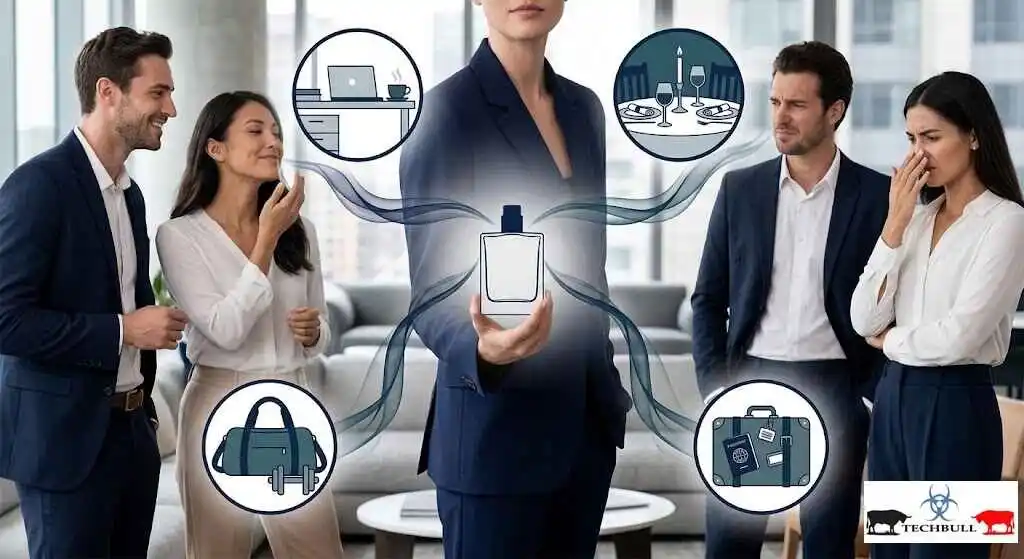
The more useful way to think about fragrance is not “which bottle is objectively best” but “which scent profile actually suits the room I am about to walk into,” a framework that treats fragrance selection the way a stylist treats an outfit choice, matched to context, rather than a single, universal answer expected to perform identically everywhere. The sections below walk through exactly how that context-driven approach plays out across the settings where fragrance actually gets worn.
The Office: Why Restraint Wins
Professional environments call for the most conservative fragrance application of any context discussed here, not because fragrance is inappropriate at work, but because shared, enclosed spaces amplify scent in ways that can genuinely bother colleagues with fragrance sensitivities or simply create an uncomfortable, overwhelming impression. Light, clean scent families, fresh citrus, soft aquatic notes, or subtle woody profiles, applied sparingly, generally perform best in this setting.

A practical guideline many fragrance professionals recommend for office wear is the “one-foot rule”: a properly applied office fragrance should be noticeable to someone standing within roughly a foot of you, not detectable across a conference room. This typically means one or two sprays rather than a full application, and reaching for an eau de toilette or a lighter eau de parfum concentration rather than a heavier parfum, which is generally better reserved for evening or special-occasion wear.
Date Night: Where a Little More Intensity Is Earned
Evening and date-oriented settings are where richer, more distinctive scent families genuinely get to shine, warm ambers, deeper woods, and gourmand notes like vanilla or spice all read as more intentional and memorable in the closer physical proximity and quieter, more intimate settings typical of a dinner or evening out. This is the context where a fragrance’s middle and base notes, the parts that take longest to develop, matter most, since a date typically lasts hours, plenty of time for a fragrance’s full character to unfold.
This is also the one context where slightly heavier application is generally appropriate, though “slightly heavier” still means a handful of sprays at pulse points rather than a fragrance so strong it announces your arrival before you enter the room, a balance worth testing in advance rather than discovering for the first time on the actual date.
A fragrance that works beautifully across a dinner table can be genuinely unwearable in a crowded elevator, and the room, not the bottle, is what should decide.
The Gym and Active Settings: Less Is Almost Always More
Fragrance and physical exertion interact in ways worth understanding before applying a favorite evening scent before a workout. Heat and sweat significantly amplify a fragrance’s projection and can alter how certain notes, particularly sweeter or muskier ones, actually smell once combined with perspiration, sometimes producing a considerably less pleasant result than the same fragrance produces on cool, dry skin.
Many people opt to skip fragrance entirely for intense exercise, relying instead on a lightly scented antiperspirant or deodorant, or choose an extremely light, fresh, citrus-forward option applied minimally if any scent is worn at all, an approach that avoids the specific problem of a heavy fragrance mixing unpleasantly with sweat over the course of a demanding workout.
Travel: Practical Constraints Shape the Choice
Air travel introduces its own specific fragrance considerations, since enclosed cabin air circulates scent more noticeably than most everyday environments, making a lighter application particularly considerate toward seated neighbors during a long flight. Solid fragrance formats or rollerball versions of a favorite scent also offer a practical, spill-proof, travel-size-compliant alternative to a full glass bottle, a genuinely useful format many major fragrance houses now offer specifically for travel.
For destinations with significantly different climates than home, packing a lighter, fresher option alongside a usual signature scent is worth considering, since a rich, heavy fragrance built for a cold climate can perform quite differently, often more intensely, in a hot, humid destination, another example of how context, this time environmental rather than social, meaningfully changes what actually works.
Understanding What You Are Actually Buying
Before building an occasion-based fragrance wardrobe, it helps to understand the practical vocabulary on a bottle’s label. Concentration terms, parfum, eau de parfum, eau de toilette, and cologne in its strict sense, describe the percentage of aromatic compounds in the formula, directly affecting both strength and how long a fragrance lasts, generally in that descending order from strongest and longest-lasting to lightest and most fleeting.
Scent family descriptors, floral, woody, fresh, oriental or amber, and gourmand, describe a fragrance’s dominant character rather than its strength, and most fragrances blend elements across more than one family rather than sitting purely within a single category, which is part of why fragrance descriptions in store listings often read as a combination of terms rather than one single, tidy label.
How a Fragrance Changes From First Spray to Last Trace
Every well-constructed fragrance is built in layers commonly called top, middle, and base notes, each becoming prominent at a different point after application. Top notes, typically citrus, light florals, or herbs, are the first scent noticed and fade within roughly the first fifteen to thirty minutes. Middle notes, often florals, spices, or fruit, form the fragrance’s core character and typically remain prominent for the following several hours.
Base notes, generally woods, musks, amber, or vanilla, provide the lasting foundation and are frequently what remains detectable many hours after application, meaning the fragrance smelled immediately upon spraying is genuinely not the same fragrance that will be present by the end of an evening, a fact worth remembering when judging a scent too quickly based on a first impression alone.
Building a Small, Occasion-Based Fragrance Wardrobe
Rather than searching for one universally perfect bottle, a genuinely practical approach is assembling a small rotation of three to four fragrances spanning different intensities and occasions: something light and clean for the office, something warmer and more distinctive for evenings, a minimal or fragrance-free option for the gym, and a travel-friendly format for trips, an approach that treats fragrance the way a well-organized wardrobe treats clothing, appropriate pieces for different contexts rather than one outfit expected to work everywhere.
This kind of collection does not require significant upfront investment, since fragrance sample programs, offered directly by many retailers and fragrance houses, along with smaller travel-sized bottles, allow genuine, extended real-world testing across different occasions and weather conditions before committing to a full-sized bottle, a considerably more reliable approach than judging a fragrance from a brief in-store test alone.
Designer Versus Niche: A Practical, Not Moral, Choice
Designer fragrances, produced by major fashion houses and widely available through mainstream retailers, generally emphasize broad appeal, dependable performance, and accessible pricing, making them a practical, lower-risk foundation for an occasion-based wardrobe, particularly for everyday and office contexts. Niche fragrances, produced by smaller, specialized houses, often use higher concentrations of natural ingredients and more unusual note combinations at a meaningfully higher price point, well suited to a signature evening scent meant to stand out.
Neither category is inherently better; the distinction mainly reflects a trade-off between broad reliability and accessibility on one side, and distinctiveness and exclusivity on the other, which is exactly why many fragrance wardrobes end up blending both categories rather than committing entirely to one.
Why Skin Chemistry Changes Everything
Individual skin chemistry, shaped by pH, natural oil levels, and even diet, genuinely changes how a fragrance develops on a given person, which is why the same bottle can smell noticeably different from one wearer to another despite being chemically identical. This is why testing directly on skin, rather than relying purely on a paper testing strip or someone else’s description, remains the only reliable way to know how a fragrance will actually perform for you specifically, in whichever context you are shopping for.
Drier skin tends to cause a fragrance to fade somewhat faster than oilier skin, which retains and slowly releases aromatic compounds more effectively, a detail worth factoring into application frequency regardless of which specific occasion a fragrance is intended for.
Formal Events and Special Occasions
Weddings, galas, and other formal events call for a slightly different calculus than an ordinary date night, since these settings typically involve extended time in a single indoor space alongside a large number of other guests, meaning a fragrance needs to perform reliably over many hours without becoming overwhelming in a room that may already carry the scent of flowers, food, and dozens of other perfumes and colognes worn by other attendees. A well-constructed, moderately projecting fragrance in the amber, woody, or floral family, applied with slightly more restraint than a one-on-one dinner might call for, tends to navigate this specific environment most successfully.
For events involving dancing or significant physical movement, similar considerations to gym wear apply, since body heat and movement increase projection, meaning a fragrance that felt perfectly calibrated standing still during initial application can read as considerably stronger by the time a few hours and some dancing have passed, worth factoring into how heavily a formal-event fragrance is initially applied.
Working From Home and Casual Everyday Wear
The rise of remote and hybrid work has introduced a genuinely new fragrance context worth addressing: casual, everyday wear with no external audience beyond video calls and household members, a setting where the practical constraints driving office fragrance etiquette largely disappear. Many people report this as an opportunity to enjoy fragrance purely for personal enjoyment rather than social presentation, since a home office involves none of the shared-space concerns that shape appropriate office application.
That said, video calls introduce their own minor consideration, since fragrance is inherently undetectable to remote colleagues, meaning the practical justification for wearing fragrance during a fully remote workday shifts entirely toward personal mood and routine rather than any impression-management purpose, a genuinely valid reason on its own for many fragrance enthusiasts who describe their daily application as a small, grounding ritual independent of who else might notice it.
Common Mistakes Worth Avoiding
Beyond mismatching a fragrance to its setting, a few consistent mistakes come up repeatedly in how people apply fragrance generally: over-application, driven by the mistaken assumption that fragrance fades faster to the wearer’s own nose than it does to people nearby, a real phenomenon called olfactory adaptation that can lead someone to apply considerably more fragrance than they realize; rubbing wrists together after spraying, which breaks down delicate top-note compounds and alters the fragrance’s intended opening; and storing fragrance in a bathroom, where heat and humidity from showers gradually degrade the formula faster than a cool, dry, dark storage location would.
None of these mistakes are difficult to correct once recognized, and addressing them tends to improve how any fragrance, regardless of price or prestige, actually performs across every occasion discussed throughout this piece. Ultimately, the fragrances worth remembering are rarely the most expensive bottles in a collection; they are the ones applied thoughtfully, in the right amount, for the right room, at the right moment, a combination that costs nothing extra beyond a bit of attention to context.
Frequently Asked Questions
| Question | Answer |
| Should I wear the same fragrance every day? | You can, though many people prefer rotating scents based on the occasion or setting. |
| How much fragrance should I wear to the office? | A light application, often just one or two sprays, is generally recommended for shared workspaces. |
| What is the one-foot rule in fragrance application? | It suggests office fragrance should only be noticeable to someone standing within about a foot of you. |
| Is it okay to wear fragrance to the gym? | Light or no fragrance is generally recommended, since heat and sweat can alter how scents smell. |
| Why does fragrance smell different after sweating? | Heat and moisture can amplify projection and change how certain notes present on skin. |
| What is the best fragrance format for travel? | Solid or rollerball formats are practical, spill-proof options well suited for travel. |
| Should I pack a different fragrance for a hot climate? | Yes, lighter, fresher options often perform better than heavier fragrances in humid heat. |
| What is the difference between EDP and EDT? | EDP has a higher fragrance concentration and generally lasts longer than EDT. |
| What are top, middle, and base notes? | They describe how a fragrance evolves over time from initial application to its lasting foundation. |
| Why does a fragrance smell different at the end of the day? | Base notes emerge later and differ significantly from the fragrance’s initial top notes. |
| How many fragrances should I own? | A small rotation of three to four, suited to different occasions, is a practical starting point. |
| What is the difference between niche and designer fragrances? | Niche fragrances are typically smaller-batch and more distinctive, while designer fragrances emphasize broad appeal. |
| Why does the same fragrance smell different on different people? | Individual skin chemistry, including pH and oil levels, affects how a fragrance develops. |
| Should I test fragrance on paper or skin? | Skin testing is more reliable since it reflects how the fragrance will actually perform on you. |
| Why shouldn’t I rub my wrists together after applying fragrance? | It can break down delicate top notes and alter the fragrance’s intended opening scent. |
| Where should fragrance be stored? | A cool, dry, dark location is best, since heat and humidity degrade fragrance over time. |
| Is it bad to store fragrance in the bathroom? | Yes, bathroom heat and humidity from showers can gradually degrade the formula. |
| What is olfactory adaptation? | It is the nose becoming desensitized to a scent worn for a while, sometimes causing over-application. |
| What fragrance concentration lasts the longest? | Parfum, or extrait de parfum, has the highest concentration and generally lasts the longest. |
| Is cologne technically different from EDT? | Yes, in the strict sense, cologne refers to an even lighter concentration than EDT. |
| What scent families work best for evening wear? | Warm ambers, deeper woods, and gourmand notes tend to perform well in evening settings. |
| What scent families work best for daytime or office wear? | Fresh citrus, light florals, and subtle woody profiles are generally better suited to daytime settings. |
| Can fragrance layering create a unique scent? | Yes, combining complementary scented products or fragrances can build a distinctive personal signature. |
| How can I test fragrances without buying full bottles? | Sample programs and travel-sized bottles allow extended real-world testing before committing. |
| Why do fragrance experts recommend testing only two or three scents at once? | Testing more can lead to olfactory fatigue, making it harder to distinguish between scents. |
| Does skin type affect how long fragrance lasts? | Yes, drier skin tends to cause fragrance to fade faster than oilier skin. |
| What is a good fragrance strategy for someone new to building a collection? | Start with a light everyday option and a warmer evening option, then expand gradually. |
| Are gender-neutral fragrances suitable for any occasion discussed here? | Yes, scent profile and context matter more than gendered marketing for occasion-based selection. |
| Is a stronger fragrance always better for evening events? | Not necessarily; noticeable and appropriate intensity matters more than maximum strength. |
| What is the biggest overall takeaway for choosing fragrance by occasion? | Match the scent’s intensity and character to the specific setting rather than relying on one fragrance for everything. |
Disclaimer: The content on this blog is for informational purposes only. The author’s opinions are personal and not endorsed. Efforts are made to provide accurate information, but completeness, accuracy, or reliability are not guaranteed. The author is not liable for any loss or damage resulting from the use of this blog. It is recommended to use the information on this blog at your own discretion.
