
Table of Contents
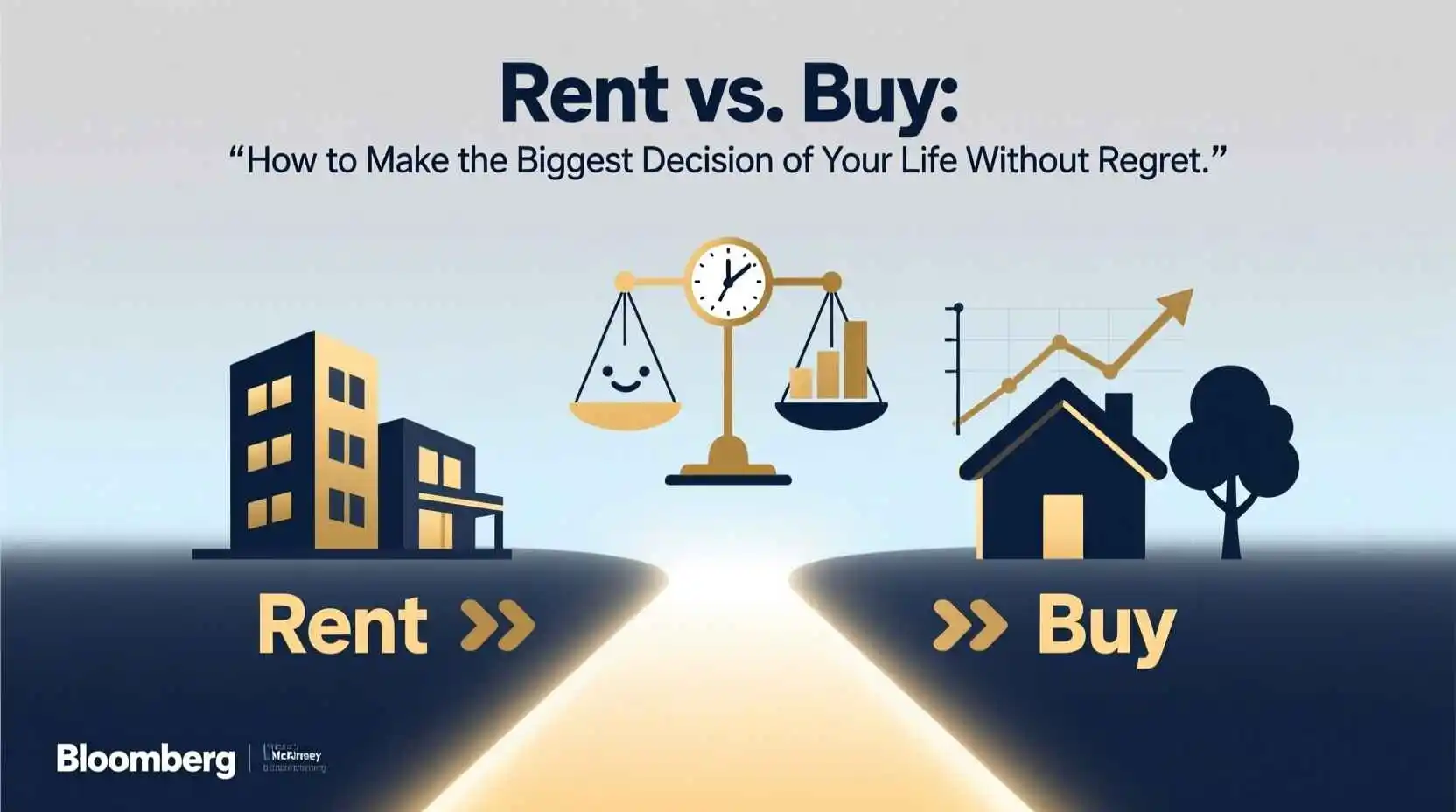
Rent vs. Buy: How to Make the Biggest Decision of Your Life Without Regret
Introduction: More Than Just a Roof Over Your Head
The question of whether to rent or buy a home is one of the most significant financial decisions a person or family will ever make. It’s a debate that fills countless articles, fuels heated dinner conversations, and dominates online search engines. For many, owning a home is the cornerstone of the “American Dream,” a symbol of stability, success, and building a legacy. For others, renting represents freedom, flexibility, and a smarter way to manage their finances in a rapidly changing world.
This is not a simple decision with a one-size-fits-all answer. The “right” choice is deeply personal, hinging on your financial situation, lifestyle goals, career path, and, crucially, your specific geographic location. A decision that makes perfect sense for a family in a stable, affordable Midwestern town could be financially disastrous for a young professional in a volatile, high-cost coastal city.
This guide is designed to be your definitive resource. We will move beyond the surface-level talking points and dive into a meticulous, 360-degree analysis. We will dissect every financial component, from the obvious costs, such as monthly payments, to the hidden, often-overlooked expenses, including opportunity cost and maintenance. We will explore the psychological and lifestyle factors that influence this choice. Most importantly, we will provide you with a framework to localize this analysis to your own city, neighborhood, and personal circumstances, empowering you to make a truly informed decision. Forget generic advice; this is your personalized roadmap to navigating the complex terrain of housing.
1: The Psychology and Lifestyle of Home
Before examining a spreadsheet, it’s essential to understand the non-financial forces at play. Our decisions about where we live are driven by deep-seated emotions, cultural expectations, and personal values.

The Allure of Ownership: The Emotional Pull of “Home”
For generations, homeownership has been sold as the ultimate goal. Why does it hold such a powerful sway over our imagination?
- A Sense of Belonging and Stability: Owning a property often feels like putting down roots. You are no longer a temporary resident; you are part of a community. This stability can be particularly appealing for those raising families, as it offers a consistent environment for children to grow up in.
- The Canvas for Your Life: A home you own is a blank canvas. You can paint the walls any color you desire, remodel the kitchen to your exact taste, or plant a garden that will mature over the years. This level of personalization is a form of self-expression that renting rarely allows.
- A Tangible Achievement: For many, a home is the most significant asset they will ever own. It’s a physical representation of years of hard work, discipline, and financial planning. It’s a milestone that marks a transition into a new phase of life.
- Building a Legacy: A home can be an inheritance, a gift to future generations. It represents something lasting that you can leave behind, a piece of a family’s history.
The Freedom of Renting: Redefining the Modern Dream
In recent years, a powerful counter-narrative has emerged. Renting is no longer seen as just a stepping stone but as a deliberate, long-term lifestyle choice for many.
- Unparalleled Flexibility and Mobility: This is the single greatest advantage of renting. Does your career require you to move across the country? Give your notice. You want to try living in a different neighborhood? When your lease is up, you can go. This agility is invaluable in a dynamic job market and for those who crave new experiences.
- Financial Predictability and Lower Risk: When you rent, your biggest housing expense is your monthly rent. You aren’t on the hook for a new roof, a broken furnace, or a sudden spike in property taxes. This predictability makes financial planning simpler and shields you from catastrophic, unexpected expenses.
- Freedom from Maintenance: The toilet overflows at 2 AM? The air conditioner dies in the middle of a heatwave? You make one phone call, and it’s someone else’s problem (and someone else’s bill). This freedom from the drudgery and cost of home maintenance frees up your time and mental energy.
- Access to Amenities: Many modern rental properties, especially apartment complexes, offer a suite of amenities that would be prohibitively expensive for a single homeowner to install, such as swimming pools, fitness centers, community lounges, and secure package reception.
Understanding which of these psychological and lifestyle factors resonate most strongly with you is the first step. Your personal values will act as a lens through which you view the financial analysis to come.
2: The Financial Deep Dive – The True Cost of Buying a Home
Buying a home is often framed as an investment. To evaluate it as such, we must understand every single dollar going in and out. The sticker price of a house is just the beginning.
The Upfront Costs: The Mountain You Must Climb First
Before you even get the keys, you need to bring a substantial amount of cash to the table. This is the first major barrier to entry for potential buyers.
- The Down Payment: This is the portion of the home’s purchase price you pay upfront. While a 20% down payment is the traditional standard to avoid Private Mortgage Insurance (PMI), many loans are available with lower down payments.
- Conventional Loans: Can be as low as 3-5%.
- FHA Loans: As low as 3.5%.
- VA Loans: Often require 0% down for eligible veterans.
- USDA Loans: 0% down for eligible rural properties. It’s crucial to understand that while a lower down payment gets you in the door faster, it means a larger monthly mortgage payment and, in most cases, the added cost of PMI.
- Closing Costs: These are the fees paid to the lenders and third parties to finalize the sale. They are a surprise to many first-time buyers and typically range from 2% to 5% of the loan amount. They include:
- Lender Fees: Origination fees, application fees, discount points (prepaid interest to lower your rate).
- Appraisal Fee: To confirm the property’s value for the lender.
- Title Insurance: Protects you and the lender from any ownership claims on the property.
- Home Inspection Fee: A crucial cost to assess the property’s condition.
- Attorney Fees (in some states).
- Recording Fees and Transfer Taxes: Charged by the government to record the sale.
- Prepaid Costs: Your first year of homeowner’s insurance and initial property tax payments are often required to be held in an escrow account at closing.
- Initial Moving and Setup Costs: Don’t forget the practical expenses of moving. This can include professional movers, truck rentals, packing supplies, and the initial costs of furnishing and setting up your new home, which can be far larger than your previous rental.
The Ongoing Monthly Costs: More Than Just a Mortgage Payment
Your monthly housing expense as a homeowner is a multifaceted figure, often summarized by the acronym PITI, but it includes even more than that.
- Principal and Interest (P&I): This is the core of your mortgage payment. The principal is the amount you borrowed, and the interest is the cost of borrowing that money. In the early years of a loan, most of your payment goes toward interest.
- Property Taxes (T): This is a high and variable cost. Local governments levy an annual tax, which is usually collected as part of your monthly mortgage payment and held in an escrow account. These taxes can and do increase, often significantly, which will raise your total monthly payment over time.
- Homeowner’s Insurance (I): This is required by all lenders. It protects your property against damage from events like fire, storms, and theft. The cost varies based on the home’s value, location, and coverage level. Like property taxes, this is typically escrowed.
- Private Mortgage Insurance (PMI): If your down payment is less than 20%, you will have to pay PMI. This is not insurance for you; it’s insurance for the lender, protecting them if you default on the loan. It can add hundreds of dollars to your monthly payment and is removed once you reach 20% equity in the home.
- Homeowners Association (HOA) Fees: If you buy a condo, townhouse, or house in a planned community, you will likely pay monthly or annual HOA fees. These cover the maintenance of common areas like parks, pools, and landscaping, and sometimes include services like trash removal or even cable. These fees can range from a modest $50 a month to over $1,000 in luxury high-rise buildings. They can also increase over time and are subject to special assessments for major repairs.
The Hidden and Long-Term Costs: The Financial Realities of Ownership
These are the costs that are easy to forget when you’re caught up in the excitement of buying a house, but they are critical to a sound financial analysis.
- Maintenance and Repairs: The most famous hidden cost. A common rule of thumb is to budget 1% to 4% of the home’s value for annual maintenance. For a $400,000 home, that’s $4,000 to $16,000 per year. This includes everything from minor fixes like a leaky faucet to major replacements like a new roof ($10,000-$20,000), HVAC system ($5,000-$10,000), or water heater ($1,000-$3,000). These are not “if” expenses, but “when.”
- Opportunity Cost: This is perhaps the most overlooked financial concept in the rent vs. buy debate. Opportunity cost is the return you could have earned on your money if you had chosen a different investment. When you buy a house, you tie up a massive amount of capital in your down payment and closing costs. That money could have been invested in the stock market, a retirement account, or a business. If the stock market historically returns an average of 7-10% per year, your opportunity cost is the potential gains you forfeit by having that money locked into your home’s equity.
- Transaction Costs When Selling: Buying a home is not free, and neither is selling one. When you decide to sell, you will face high costs, typically around 6% to 10% of the home’s sale price. The biggest chunk is real estate agent commissions (usually 5% to 6%, split between the buyer’s and seller’s agents). You’ll also pay for other closing costs, repairs to get the home ready for sale, and potential staging costs. This means your home needs to appreciate significantly just to break even when you factor in these costs.
The Financial Benefits of Buying: The Investment Argument
Now for the other side of the coin. Why do people take on all these costs? Because of the potential financial upside.
- Building Equity: Equity is the portion of your home that you truly own. It’s the difference between the market value of your home and what you owe on your mortgage. Each month, a small portion of your mortgage payment goes toward the principal, gradually increasing your equity. This is a form of forced savings. You can later access this equity through a home equity loan or a cash-out refinance, or you can realize it when you sell.
- Appreciation: This is the potential for your home’s value to increase over time. While not guaranteed, real estate has historically appreciated in the long run in many markets. This appreciation can lead to a significant financial gain when you sell, representing a substantial return on your initial investment.
- Tax Deductions: Homeownership comes with several potential tax benefits (though it’s crucial to consult a tax advisor). You may be able to deduct the interest you pay on your mortgage and your property taxes from your federal income taxes. This can lower your taxable income and reduce your overall tax bill, though the benefit depends heavily on your tax bracket and whether you itemize your deductions.
3: The Financial Deep Dive – The True Cost of Renting a Home
Renting is often seen as the “simpler” option, and financially, it can be. But it’s not without its own set of costs and financial considerations.
The Upfront Costs: A Lower Barrier to Entry
This is where renting shines in comparison to buying. The initial cash outlay is significantly lower, making it more accessible for many people.
- Security Deposit: This is typically equivalent to one month’s rent, though it can be higher. The landlord holds this money as collateral against any damages beyond normal wear and tear. It is usually refundable at the end of your lease, provided the property is left in good condition.
- First and Last Month’s Rent: Many landlords require the first month’s rent upfront, and some also ask for the last month’s rent as well. This means you could need to pay the equivalent of three months’ rent before you even move in (first, last, and security deposit).
- Application and Admin Fees: These are non-refundable fees to cover the cost of processing your rental application, running a credit check, and preparing the lease. They are usually relatively small, ranging from $50 to $200 per applicant.
The Ongoing Monthly Costs: Predictability and Simplicity
The financial life of a renter is straightforward. Your primary housing cost is your monthly rent check.
- Monthly Rent: This is your single largest housing expense. It is a fixed amount for the duration of your lease term (typically one year), which makes budgeting incredibly predictable.
- Renter’s Insurance: While not always required, renter’s insurance is highly recommended and very affordable. It protects your personal belongings (furniture, electronics, clothes) from theft, fire, or other disasters. It also provides liability coverage if someone is injured in your rental. A typical policy costs only $15 to $30 per month.
- Utilities: As a renter, you are usually responsible for your own utilities, such as electricity, gas, water, internet, and cable. In some cases, particularly in older buildings or in multi-unit complexes, some utilities like water or trash may be included in the rent. This is an important detail to clarify before signing a lease.
The Hidden and Long-Term Costs: The Renter’s Opportunity Cost
While renting avoids the maintenance and transaction costs of ownership, it has its own set of financial trade-offs.
- The Opportunity Cost of a Down Payment: This is the renter’s highest hidden cost. Let’s say you have $40,000 saved for a down payment. If you choose to continue renting, that money sits in a savings account (earning minimal interest) or is invested elsewhere. For a fair comparison, you must consider what return that money could generate if invested. If you could earn a 7% return in the stock market, that’s $2,800 per year in potential income you’re forgoing by not investing it. This is the renter’s opportunity cost.
- Rent Inflation: Your rent is only fixed until your lease is up. When it’s time to renew, your landlord can increase the rent. In many high-demand markets, rent can increase by 5%, 10%, or even more each year. This erodes your predictability over the long term and can make renting significantly more expensive than a fixed-rate mortgage over time.
- No Equity Building: Every rent check you write is an expense. It pays for your housing for that month, but it doesn’t build any long-term value for you. You are not building an asset that you can sell or borrow against in the future. This is often referred to as “throwing money away,” a phrase that is overly simplistic but captures the essence of this financial reality.
4: The Deciding Factor – Localizing Your Analysis
This is the most critical part of your personal analysis. The national debate is irrelevant; what matters is the math in your specific city, your neighborhood, and even your street. The rent vs. buy calculation can yield completely different answers just a few miles apart.
How to Gather Your Local Data
To make an informed decision, you need to become a local market researcher. Your goal is to find the numbers to plug into the frameworks we’ve discussed.
- For Buying:
- Average Home Price: Look at sites like Zillow, Redfin, or your local Multiple Listing Service (MLS) for the median sale price of the type of home you’re interested in (e.g., 3-bedroom single-family home) in your target neighborhood.
- Property Tax Rate: This is a public record. Search for “[Your County] property tax rate.” It’s usually expressed as a percentage of the home’s assessed value.
- Homeowner’s Insurance Cost: Get quotes from a few national and local insurance companies for a property in your target area.
- HOA Fees: Check property listings for HOA information.
- Historical Appreciation Rates: Look for local real estate market reports from your local realtors’ association or data from sources like the Federal Housing Finance Agency (FHFA). Be cautious, as past performance is not indicative of future results.
- For Renting:
- Average Rent Price: Use sites like Zumper, Apartments.com, or Craigslist to find the average rent for a comparable property in the same area.
- Rent Control Laws: Investigate if your city or state has rent control or stabilization laws, which would limit how much your rent can increase each year.
- Vacancy Rates: A low vacancy rate in your area means high demand, which gives landlords more power to raise rents. A high vacancy rate gives renters more leverage.
The Price-to-Rent Ratio: A Quick Localized Metric
One of the best tools for a quick, localized comparison is the Price-to-Rent (P/R) Ratio.
- How to Calculate It: Price-to-Rent Ratio = Median Home Price / Median Annual Rent
- How to Interpret It:
- P/R Ratio of 1 to 15: In these markets, it is generally much cheaper to buy than to rent. The costs of ownership are relatively low compared to the cost of renting, and you are likely to build equity quickly.
- P/R Ratio of 16 to 20: This is a grey area. The decision is less clear-cut and depends more heavily on your personal financial situation, how long you plan to stay, and your risk tolerance.
- P/R Ratio of 21+: In these markets, it is generally much more expensive to buy than to rent. The high home prices and/or low rents mean it could take decades for the financial benefits of ownership to outweigh the high upfront and ongoing costs.
Case Study: Two Cities, Two Different Answers
Let’s illustrate this with two fictional but realistic examples.
Case Study 1: “Steadyburg,” Midwest
- Median Home Price: $250,000
- Median Monthly Rent: $1,400
- Calculation: $250,000 / ($1,400 x 12) = 250,000 / 16,800 = 14.9
- Analysis: With a P/R ratio just under 15, Steadyburg is a strong buyer’s market. Assuming a stable job and a plan to stay for at least five years, buying here is likely the more financially sound long-term decision. The costs of ownership are manageable, and equity can be built at a reasonable pace.
Case Study 2: “Coastal Heights,” California
- Median Home Price: $1,200,000
- Median Monthly Rent: $4,000
- Calculation: $1,200,000 / ($4,000 x 12) = 1,200,000 / 48,000 = 25
- Analysis: With a P/R ratio of 25, Coastal Heights is a strong renter’s market. The astronomical cost of buying means that a huge portion of your monthly payment would go toward interest, and the opportunity cost of a massive down payment is immense. It would take many years, perhaps decades, for buying to become more advantageous than renting, assuming the market even appreciates at that pace. For most people in this market, renting and investing the difference is the superior financial strategy.
This exercise shows why you cannot rely on generic advice. You must run the numbers for your specific location.
5: The Decision-Making Framework – Putting It All Together
Now that you have the financial data and an understanding of the lifestyle factors, it’s time to create a personal decision framework. Ask yourself these critical questions.
How Long Do You Plan to Stay? (The 5-to-7-Year Rule)
This is the single most important question. Buying a home comes with high transaction costs. It takes time for the benefits of appreciation and equity building to outweigh these costs.
- Less than 3 Years: It is almost certainly better to rent. The transaction costs of buying and selling in such a short period will almost certainly result in a financial loss.
- 3 to 5 Years: This is a risky timeframe. It’s the grey area. You would need significant market appreciation just to break even. Renting is likely the safer and more financially prudent choice unless you are in a very low P/R ratio market.
- 5 to 7+ Years: This is the timeframe where buying starts to make financial sense in many markets. You have enough time to ride out small market fluctuations and for your equity to grow. The longer you stay, the stronger the financial argument for buying becomes.
What is Your Financial Health?
Be brutally honest about your finances.
- Down Payment: Do you have a solid down payment saved? Remember, less than 20% means PMI, which adds to your monthly cost.
- Emergency Fund: After paying your down payment and closing costs, do you still have a robust emergency fund (3-6 months of living expenses)? A house is a “money-eating monster,” and you need cash reserves for unexpected repairs.
- Debt-to-Income (DTI) Ratio: Lenders will look at this closely. It’s your total monthly debt payments (including the new mortgage) divided by your gross monthly income. A DTI below 43% is generally required for a qualified mortgage. A lower DTI gives you more breathing room.
- Credit Score: A higher credit score will qualify you for a better interest rate, saving you tens of thousands of dollars over the life of your loan.
What is Your Lifestyle and Career Trajectory?
Look beyond the numbers to your life plan.
- Job Stability: Is your career stable? Do you foresee a potential promotion that might require relocation?
- Family Plans: Are you planning to get married, have children, or have an aging parent move in? The two-bedroom condo you buy today might not be suitable in five years.
- Desire for DIY: Are you the type of person who enjoys home improvement projects, or do you dread the thought of spending weekends fixing things? Be honest about your tolerance for maintenance.
