
Table of Contents
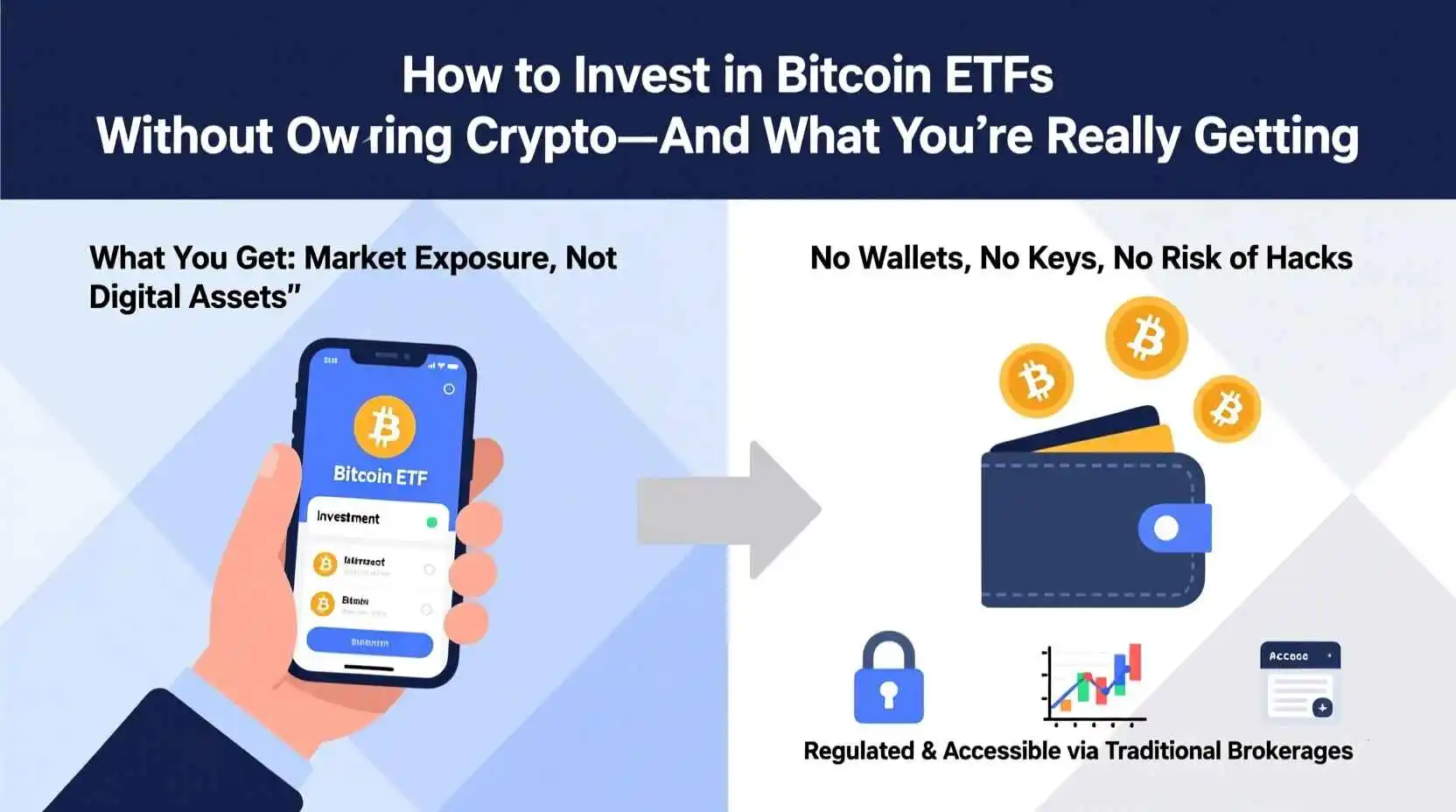
How to Invest in Bitcoin ETFs Without Owning Crypto—And What You’re Really Getting
Introduction
The world of cryptocurrency investing has been revolutionized by the introduction of Bitcoin ETFs (Exchange-Traded Funds), offering traditional investors a familiar pathway to gain exposure to Bitcoin’s potential returns without the complexities of direct crypto ownership. This comprehensive guide will walk you through everything you need to know about Bitcoin ETFs, from their operation to the strategic considerations for incorporating them into your investment portfolio.
What Are Bitcoin ETFs?
Bitcoin ETFs are investment funds that track the price of Bitcoin and trade on traditional stock exchanges, just like stocks. These funds hold Bitcoin (or derivatives that track Bitcoin’s price) and allow investors to buy shares in the fund rather than purchasing Bitcoin directly. The first Bitcoin ETF was approved in North America in 2021, marking a significant milestone in cryptocurrency’s journey toward mainstream acceptance.
The Evolution of Bitcoin ETFs
The path to Bitcoin ETF approval has been long and complex. The Securities and Exchange Commission (SEC) rejected multiple Bitcoin ETF applications over the years due to concerns about market manipulation, liquidity, and investor protection. However, regulatory attitudes have gradually shifted as the cryptocurrency market matured and traditional financial institutions increased their involvement.
How Bitcoin ETFs Work
Bitcoin ETFs function similarly to other ETFs, but with a unique twist. They either hold actual Bitcoin (physically-backed) or use futures contracts and other derivatives to track Bitcoin’s price (synthetically-backed). When you buy shares in a Bitcoin ETF, you’re essentially buying a piece of the fund that holds Bitcoin, allowing you to gain exposure to its price movements without dealing with crypto wallets, private keys, or cryptocurrency exchanges.

Types of Bitcoin ETFs
Physically-Backed Bitcoin ETFs
These funds hold actual Bitcoin as their underlying asset. Each share represents a claim on a specific amount of Bitcoin held in cold storage. Examples include funds that directly purchase and store Bitcoin, providing investors with direct exposure to the cryptocurrency’s price.
Futures-Based Bitcoin ETFs
These funds invest in Bitcoin futures contracts rather than holding actual Bitcoin. The futures contracts are agreements to buy or sell Bitcoin at a predetermined price on a future date. This approach introduces additional complexity through contango and backwardation effects that can impact returns.
Hybrid Approaches
Some funds may combine both physical Bitcoin and futures contracts to balance regulatory requirements with investment objectives.
Key Players in the Bitcoin ETF Space
Several financial institutions have launched Bitcoin ETFs, each with its own structure, fees, and investment strategy. Understanding the differences between these providers is crucial for making informed investment decisions.
The Investment Process: Step by Step
Opening a Brokerage Account
To invest in Bitcoin ETFs, you’ll need a brokerage account with a firm that offers access to these funds. Most major online brokers now provide this access, but it’s essential to verify before opening an account.
Researching Available Options
Not all Bitcoin ETFs are created equal. Factors to consider include expense ratios, trading volume, tracking accuracy, and the fund’s underlying methodology.
Placing Your Order
Once you’ve selected a fund, placing an order is similar to buying any other stock or ETF. You can choose market orders, limit orders, or dollar-cost averaging strategies.
Monitoring Your Investment
After purchasing, regular monitoring is important, though Bitcoin ETFs generally require less hands-on management than direct crypto investments.
Advantages of Bitcoin ETFs
Accessibility
Bitcoin ETFs make cryptocurrency investing accessible to investors who may be hesitant about direct crypto ownership due to technical barriers or security concerns.
Regulatory Oversight
These funds operate under the regulatory framework of traditional securities, providing a level of investor protection and transparency that direct crypto investments lack.
Tax Efficiency
In many jurisdictions, ETF structures offer tax advantages compared to direct crypto trading, particularly regarding capital gains treatment.
Diversification Benefits
Bitcoin ETFs can serve as a diversification tool within a broader investment portfolio, potentially reducing overall portfolio volatility.
Risks and Considerations
Volatility
Bitcoin remains one of the most volatile assets, and ETFs tracking its price inherit this characteristic. Investors should be prepared for significant price swings.
Regulatory Risk
The regulatory landscape for cryptocurrencies continues to evolve, and changes in regulations could impact Bitcoin ETF performance and availability.
Counterparty Risk
For futures-based ETFs, there’s inherent risk associated with the counterparties to the futures contracts.
Tracking Error
No ETF perfectly tracks its underlying asset, and Bitcoin ETFs may experience tracking errors due to fees, trading costs, or imperfect hedging strategies.
Comparing Bitcoin ETFs to Direct Crypto Ownership
Security Differences
Direct crypto ownership requires managing private keys and wallet security, while ETFs handle these technical aspects for investors.
Tax Implications
The tax treatment of ETF gains versus direct crypto transactions can differ significantly, with potential advantages for ETF investors in certain scenarios.
Liquidity Considerations
While both offer liquidity, the mechanisms and timing differ, with ETFs providing traditional market-hour liquidity.
Minimum Investment Requirements
Direct crypto purchases can be made in very small amounts, while ETFs typically have share-based minimums that may be higher for some investors.
Portfolio Integration Strategies
Allocation Decisions
Determining the appropriate percentage of your portfolio to allocate to Bitcoin ETFs depends on your investment goals, risk tolerance, and time horizon.
Correlation Analysis
Understanding how Bitcoin ETFs correlate with other assets in your portfolio is crucial for effective diversification.
Rebalancing Approaches
Regular portfolio rebalancing may be necessary to maintain your desired allocation to Bitcoin ETFs as their value fluctuates.
Tax Implications of Bitcoin ETFs
Capital Gains Treatment
Like other ETFs, Bitcoin ETFs are generally subject to capital gains tax when shares are sold for a profit, with the holding period determining whether gains are short-term or long-term.
Dividend Treatment
Some Bitcoin ETFs may generate income that’s distributed to shareholders, which has its own tax implications.
Wash Sale Rules
ETF investors should understand how wash sale rules apply to their investments, as they differ from direct crypto trading rules in some jurisdictions.
Global Regulatory Landscape
United States
The SEC’s approach to Bitcoin ETFs has evolved, with multiple approvals following years of consideration and market maturation.
Canada
Canada became an early adopter of Bitcoin ETFs, providing valuable lessons for other jurisdictions.
Europe
European regulators have taken a more cautious approach, with some countries embracing ETFs while others maintain restrictions.
Asia-Pacific
The regulatory environment varies significantly across Asian markets, with some embracing innovation while others remain restrictive.
The Technology Behind Bitcoin ETFs
Custody Solutions
Secure storage of Bitcoin is a critical component of physically-backed ETFs, requiring sophisticated cold storage and security protocols.
Trading Mechanisms
ETF market makers and authorized participants facilitate the creation and redemption of shares, ensuring liquidity and proper pricing.
Settlement Systems
The infrastructure supporting Bitcoin ETF trading must handle the unique characteristics of both traditional securities and cryptocurrency.
Market Impact of Bitcoin ETFs
Price Discovery
Bitcoin ETFs contribute to price discovery by bringing traditional investor capital into the cryptocurrency market.
Market Maturation
The introduction of ETFs represents a significant step in Bitcoin’s journey toward mainstream acceptance and institutional adoption.
Competitive Dynamics
ETF providers compete on fees, performance, and features, benefiting investors through improved products and lower costs over time.
Future Developments
Ethereum ETFs
The success of Bitcoin ETFs has paved the way for similar products tracking other cryptocurrencies like Ethereum.
Spot vs. Futures
Ongoing debates continue about the merits of spot Bitcoin ETFs versus futures-based approaches.
International Expansion
As regulatory frameworks evolve, we can expect increased availability of Bitcoin ETFs in more global markets.
Investor Profiles Suited for Bitcoin ETFs
Conservative Investors
Those seeking exposure to Bitcoin’s potential returns with reduced technical complexity may find ETFs appealing.
Institutional Investors
Pension funds, endowments, and other institutional players can gain Bitcoin exposure through regulated ETF structures.
Long-Term Investors
Bitcoin ETFs align well with buy-and-hold strategies, eliminating the need for active crypto management.
Common Misconceptions
“ETFs Eliminate All Risk”
Bitcoin ETFs reduce certain risks but don’t eliminate the fundamental volatility of the underlying asset.
“ETFs Are Safer Than Crypto”
While ETFs offer different risk profiles, they’re not inherently “safer” in all aspects compared to direct crypto ownership.
“ETFs Provide Direct Ownership”
Investors in Bitcoin ETFs don’t own Bitcoin directly; they own shares in a fund that holds Bitcoin.
Performance Analysis
Historical Returns
Bitcoin’s price history shows significant upside potential but also substantial drawdowns that investors should understand.
Comparison to Other Assets
Bitcoin’s correlation with traditional assets like stocks and bonds has evolved, affecting its portfolio role.
Volatility Metrics
Understanding Bitcoin’s volatility relative to other assets helps set appropriate expectations for ETF performance.
Cost Considerations
Expense Ratios
Bitcoin ETFs charge management fees that impact overall returns, with competition driving fee reductions over time.
Trading Costs
Bid-ask spreads and commission fees can impact the cost of buying and selling ETF shares.
Tax Efficiency
The tax treatment of ETF gains versus direct crypto transactions can create significant cost differences.
Risk Management Strategies
Position Sizing
Determining appropriate position sizes for Bitcoin ETFs based on individual risk tolerance.
Stop-Loss Orders
Using stop-loss orders to manage downside risk in volatile markets.
Hedging Approaches
Advanced strategies for hedging Bitcoin ETF positions within a broader portfolio.
The Psychology of Bitcoin Investing
FOMO and FUD
Understanding the emotional drivers that can lead to poor investment decisions in volatile markets.
Long-Term Perspective
Maintaining a disciplined approach to Bitcoin ETF investing despite short-term price fluctuations.
Media Influence
Recognizing how media coverage can impact investor sentiment and decision-making.
Technical Analysis for Bitcoin ETFs
Chart Patterns
Common technical analysis approaches applied to Bitcoin price movements and ETF performance.
Indicators
Popular technical indicators used by traders to analyze Bitcoin and related ETFs.
Timeframes
Different time horizons for analyzing Bitcoin ETF price action and making investment decisions.
Fundamental Analysis Considerations
Network Effects
Evaluating Bitcoin’s network strength and adoption as fundamental drivers of value.
Regulatory Developments
Assessing how regulatory changes might impact Bitcoin’s long-term prospects.
Institutional Adoption
Tracking the rate at which traditional financial institutions are embracing Bitcoin.
Market Timing vs. Dollar-Cost Averaging
Market Timing Challenges
The difficulties and risks associated with trying to time Bitcoin market entries and exits.
DCA Benefits
How dollar-cost averaging can reduce volatility impact and potentially improve long-term returns.
Hybrid Approaches
Combining timing strategies with systematic investing for potentially better outcomes.
Storage and Security
Brokerage Security
Understanding the security measures your brokerage employs to protect ETF holdings.
Account Protection
Steps to secure your brokerage account against unauthorized access.
Insurance Coverage
Knowing what protections are in place for your ETF investments in case of security breaches.
International Investing Considerations
Currency Risk
How exchange rate fluctuations can impact returns for investors outside the fund’s primary market.
Withholding Taxes
Understanding tax implications for cross-border ETF investments.
Regulatory Compliance
Ensuring compliance with investment regulations in your home jurisdiction.
Environmental, Social, and Governance (ESG) Factors
Energy Consumption
The ongoing debate about Bitcoin’s energy usage and its impact on ESG considerations.
Decentralization Benefits
How Bitcoin’s decentralized nature aligns with certain ESG principles.
Regulatory Compliance
ESG factors related to regulatory adherence and responsible investing practices.
Tax-Loss Harvesting Opportunities
Identifying Losses
Recognizing when Bitcoin ETF investments have declined in value sufficiently for tax-loss harvesting.
Wash Sale Rules
Understanding how wash sale rules apply to ETF investments in your jurisdiction.
Reinvestment Strategies
Planning for reinvestment of harvested losses to maintain portfolio exposure.
Retirement Account Options
401(k) and IRA Availability
Which types of retirement accounts may allow Bitcoin ETF investments?
Tax Advantages
How retirement account tax treatment can enhance Bitcoin ETF investment returns.
Distribution Considerations
Planning for required minimum distributions and other retirement account rules.
Alternative Investment Vehicles
Bitcoin Mutual Funds
Comparing ETFs to mutual funds tracking Bitcoin or related assets.
Trust Products
Other structured products that provide Bitcoin exposure.
Direct Brokerage Access
Some brokerages offer direct Bitcoin trading alongside ETF options.
