
Table of Contents
On-Chain Metrics
Using blockchain data to gauge market sentiment and potential price movements.
Social Media Trends
Analyzing social media discussions as sentiment indicators for Bitcoin.
Search Volume Data
Tracking public interest in Bitcoin through search engine data.
Technical Infrastructure
Trading Platforms
Evaluating different brokerage platforms for Bitcoin ETF trading capabilities.

Research Tools
Resources available for analyzing Bitcoin ETF performance and market trends.
Educational Materials
Learning resources provided by brokerages and ETF providers.
Community and Support
Investor Forums
Online communities where Bitcoin ETF investors share insights and experiences.
Customer Support
Brokerage and ETF provider support resources for addressing investment questions.
Educational Webinars
Learning opportunities provided by financial institutions about Bitcoin ETFs.
Performance Benchmarks
Bitcoin Price Index
Understanding the primary benchmark that Bitcoin ETFs track.
Volatility Indexes
Measuring and comparing Bitcoin’s volatility to other assets.
Correlation Metrics
Analyzing how Bitcoin ETFs move relative to traditional investment assets.
Risk-Adjusted Returns
Sharpe Ratio
Evaluating Bitcoin ETF performance relative to risk taken.
Sortino Ratio
Focusing on downside risk when assessing risk-adjusted returns.
Maximum Drawdown
Understanding the potential for significant losses in Bitcoin ETF investments.
Long-Term vs. Short-Term Strategies
Investment Horizon
How your time frame influences appropriate Bitcoin ETF strategies.
Tax Considerations
The impact of holding period on tax treatment of ETF gains.
Rebalancing Frequency
Determining optimal rebalancing schedules based on investment strategy.
Market Cycle Analysis
Bull Market Strategies
Approaches for maximizing returns during favorable market conditions.
Bear Market Strategies
Techniques for preserving capital during market downturns.
Transition Periods
Navigating periods of market uncertainty and changing trends.
Diversification Benefits Revisited
Portfolio Construction
How Bitcoin ETFs can enhance portfolio diversification.
Correlation Analysis
Understanding how Bitcoin ETFs interact with other portfolio components.
Risk Reduction
The potential for Bitcoin ETFs to reduce overall portfolio volatility.
Regulatory Compliance for Advisors
Suitability Requirements
Ensuring Bitcoin ETF recommendations align with client investment objectives.
Disclosure Obligations
Proper communication of risks and characteristics to clients.
Continuing Education
Staying current with regulatory developments and product changes.
Technological Innovation
Blockchain Integration
How blockchain technology continues to evolve and impact Bitcoin ETFs.
Smart Contracts
Potential applications of smart contracts in future ETF structures.
Decentralized Finance (DeFi)
Exploring how DeFi innovations might influence traditional ETF products.
Global Market Access
International ETFs
Accessing Bitcoin exposure through funds listed in different markets.
Currency Hedging
Managing currency risk when investing in foreign-listed Bitcoin ETFs.
Regulatory Arbitrage
Consider different regulatory environments when choosing ETFs.
Performance Attribution
Market Returns
Understanding the portion of ETF returns driven by Bitcoin’s price movements.
Fees and Expenses
Assessing how costs impact net returns over time.
Tracking Error
Analyzing deviations between ETF performance and Bitcoin’s actual price.
Risk Management Tools
Volatility Controls
Using volatility-based position sizing and risk management.
Correlation Analysis
Monitoring how Bitcoin ETFs perform relative to other assets.
Stress Testing
Evaluating portfolio resilience under various market scenarios.
Educational Resources
Brokerage Materials
Learning resources provided by investment platforms.
ETF Provider Content
Educational materials from Bitcoin ETF issuers.
Independent Research
Third-party analysis and educational content about Bitcoin ETFs.
Community Insights
Investor Experiences
Learning from the experiences of other Bitcoin ETF investors.
Success Stories
Case studies of investors who have benefited from Bitcoin ETF exposure.
Cautionary Tales
Understanding common pitfalls and mistakes to avoid.
Future Outlook
Market Maturity
How Bitcoin ETFs may evolve as the cryptocurrency market matures.
Competitive Landscape
Anticipating changes in the Bitcoin ETF provider landscape.
Regulatory Evolution
Projecting how regulations might change and impact Bitcoin ETFs.
Conclusion
Bitcoin ETFs represent a significant development in the evolution of cryptocurrency investing, bridging the gap between traditional finance and the digital asset revolution. By understanding what these funds offer, their risks, and how they fit into your overall investment strategy, you can make informed decisions about incorporating Bitcoin ETFs into your portfolio.
The decision to invest in Bitcoin ETFs should be based on careful consideration of your financial goals, risk tolerance, and investment horizon. While these funds offer simplified access to Bitcoin’s potential returns, they also carry the inherent volatility and uncertainties of the cryptocurrency market.
As the regulatory landscape continues to evolve and the cryptocurrency market matures, Bitcoin ETFs are likely to become an increasingly important part of the investment landscape. Staying informed and maintaining a disciplined approach will be key to successfully navigating this emerging asset class.
FAQs
- What exactly is a Bitcoin ETF?
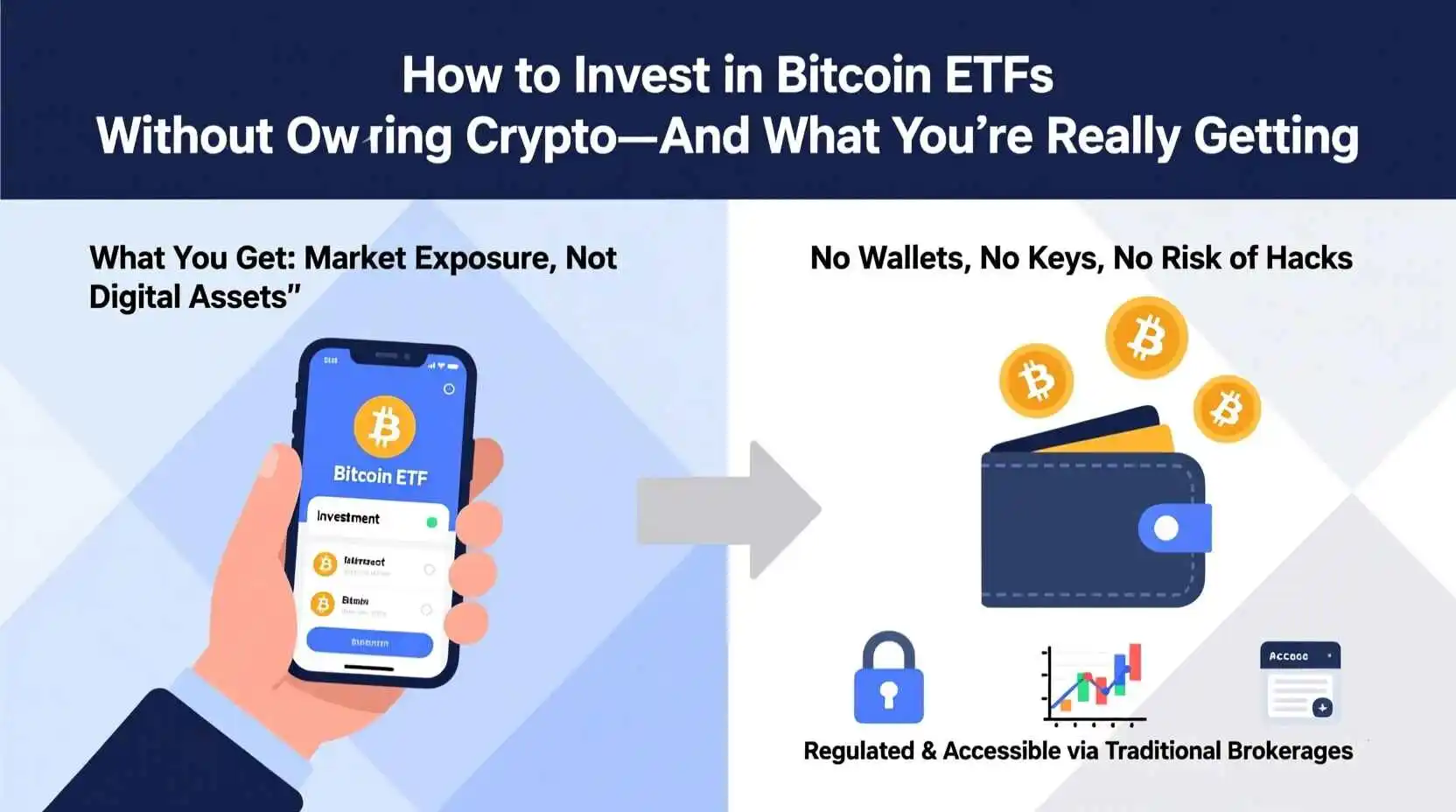
A Bitcoin ETF is an exchange-traded fund that tracks the price of Bitcoin, allowing investors to gain exposure to Bitcoin’s price movements without directly owning or storing the cryptocurrency.
- How do Bitcoin ETFs differ from buying Bitcoin directly?
ETFs eliminate the need for crypto wallets, private key management, and cryptocurrency exchange accounts. They trade on traditional stock exchanges like regular stocks.
- Are Bitcoin ETFs safe?
While Bitcoin ETFs operate under regulatory oversight, they still carry market risk due to Bitcoin’s volatility. The safety comes from regulatory protection and professional management, not from eliminating market risk.
- What’s the minimum investment for Bitcoin ETFs?
Most Bitcoin ETFs can be purchased for the price of one share, which varies but is typically in the range of $30-$60 as of 2023-2024.
- Do Bitcoin ETFs pay dividends?
Most Bitcoin ETFs don’t pay regular dividends, as Bitcoin doesn’t generate income. Some may distribute occasional capital gains.
- How are Bitcoin ETFs taxed?
Gains from selling Bitcoin ETF shares are typically taxed as capital gains, with the holding period determining whether they’re short-term or long-term.
- Can I buy Bitcoin ETFs in my IRA or 401(k)?
Many retirement accounts now allow Bitcoin ETF investments, but you should verify with your specific provider.
- What’s the difference between spot and futures Bitcoin ETFs?
Spot ETFs hold actual Bitcoin, while futures ETFs use Bitcoin futures contracts. This creates different risk and return profiles.
- Are Bitcoin ETFs available outside the US?
Yes, several countries, including Canada and some European nations, have approved Bitcoin ETFs.
- Do Bitcoin ETFs charge management fees?
Yes, like other ETFs, they have expense ratios that impact returns.
- Can I short Bitcoin ETFs?
Yes, like stocks, you can short sell Bitcoin ETF shares if your brokerage allows it.
- What time do Bitcoin ETFs trade?
They trade during regular stock market hours, typically 9:30 AM to 4:00 PM Eastern Time.
- How do Bitcoin ETFs handle Bitcoin’s volatility?
The ETF structure doesn’t reduce volatility but provides a regulated framework for managing the underlying asset.
- Do I need to understand blockchain technology to invest in Bitcoin ETFs?
No, Bitcoin ETFs abstract the technical complexity of blockchain and cryptocurrency.
- Can Bitcoin ETFs make me rich?
Like any investment, they carry both upside potential and downside risk. Returns are not guaranteed.
- What happens if the ETF provider gets hacked?
Physically-backed ETFs use sophisticated security measures, but investors own shares in the fund, not direct claims on Bitcoin.
- How do Bitcoin ETFs impact the actual Bitcoin price?
Large inflows to ETFs can create buying pressure, potentially influencing Bitcoin’s market price.
- Are there Bitcoin ETFs that hold other cryptocurrencies?
Most focus on Bitcoin, but some multi-crypto ETFs exist, and Ethereum ETFs are becoming available.
- Can I lose all my money investing in Bitcoin ETFs?
Yes, like any investment, you can lose your entire investment if Bitcoin’s price drops significantly.
- How do I choose between different Bitcoin ETFs?
Consider expense ratios, trading volume, tracking methodology, and the fund’s underlying approach.
- Do Bitcoin ETFs have custody risk?
Physically-backed ETFs carry some custody risk, though they use professional storage solutions.
- Can I use limit orders with Bitcoin ETFs?
Yes, you can use market, limit, and other order types when trading Bitcoin ETFs.
- Are Bitcoin ETFs suitable for conservative investors?
They may be appropriate for risk-tolerant conservative investors but carry significant volatility.
- How do Bitcoin ETFs handle forks and airdrops?
The fund manager typically manages these events on behalf of shareholders.
- What’s the typical bid-ask spread for Bitcoin ETFs?
Spreads vary but are generally narrow for popular, liquid ETFs.
- Can I buy fractional shares of Bitcoin ETFs?
Some brokerages allow fractional share investing, but this varies by provider.
- Do Bitcoin ETFs have redemption fees?
Most don’t have redemption fees, but it’s important to check the specific fund’s prospectus.
- How do Bitcoin ETFs perform in bear markets?
They tend to decline with Bitcoin’s price, often more than diversified stock portfolios.
- Are there tax advantages to Bitcoin ETFs over direct crypto?
In many cases, yes, particularly regarding capital gains treatment and wash sale rules.
- What’s the future outlook for Bitcoin ETFs?
Likely to grow in popularity as regulatory frameworks mature and more investors seek crypto exposure.
Financial Disclaimer: The content provided here is for informational and educational purposes only. It is not intended to be a substitute for professional financial, legal, or tax advice. All opinions expressed herein are solely those of the author and do not represent the views of any other entity.
