
Table of Contents
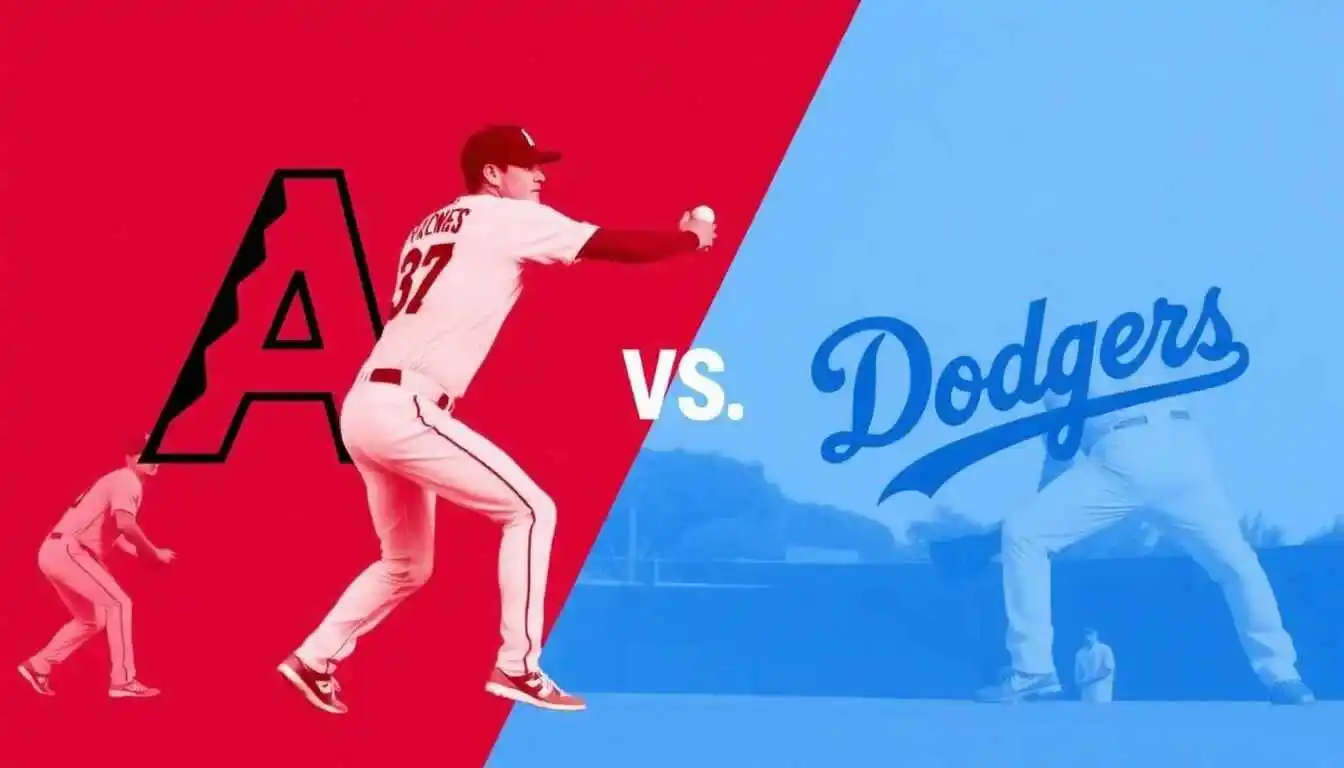
Desert Showdown: The Unfolding Saga of the Diamondbacks vs. Dodgers Rivalry
Introduction: Sun, Sand, and Strikes
In the pantheon of Major League Baseball, rivalries are the lifeblood that pumps energy into the long, 162-game season. While the Yankees and Red Sox have their ancient grudges, and the Giants and Dodgers have a history that spans two coasts, there is a newer, fiercer battle brewing in the West. It is a clash of cultures, payrolls, and philosophies. It is the Arizona Diamondbacks versus the Los Angeles Dodgers.
On the surface, this might seem like a lopsided affair. The Dodgers, with their deep pockets, Hollywood glamour, and century-old legacy, often appear as the Goliath to Arizona’s David. The Diamondbacks, a franchise born in the late 90s, have historically operated with a different modus operandi—reliant on drafting, development, and a scrappy underdog mentality. Yet, as any true fan of the National League West knows, records and payrolls are thrown out the window when these two teams meet.
From the humid heat of downtown Phoenix to the cool breeze of Chavez Ravine, this rivalry has produced some of the most memorable moments in recent baseball history. It is a story of speed versus power, youth versus experience, and the relentless pursuit of divisional supremacy. Whether it’s a regular-season series in April or a high-stakes October showdown, the Diamondbacks vs. Dodgers narrative is one of the most compelling in modern baseball. This deep dive explores the history, the key players, the tactical battles, and the future of a rivalry that is only just beginning to hit its stride.
The Genesis – An Uneasy Introduction
The Arizona Diamondbacks entered the league in 1998 as an expansion team, immediately thrust into the National League West. They weren’t just the new kids on the block; they were the neighbors moving in next door to the established powerhouse that is the Dodgers.

In the early years, the dynamic was one of mentorship versus usurper. The Dodgers were the franchise of Koufax and Drysdale, Garvey and Valenzuela. Arizona was trying to find its identity. However, that identity formed quickly. By 1999, the Diamondbacks were already competitive, and by 2001, they had captured a World Series title. This rapid ascent served notice to the division: Arizona was not content to be a doormat.
The early 2000s saw the rise of intense competition. With Randy Johnson and Curt Schilling anchoring the Arizona rotation, the Dodgers often found themselves outgunned in pitching duels. The rivalry during this era was defined by respect but fierce competition. The Dodgers, dealing with their own ownership turmoil and roster instability during the Frank McCourt era, often struggled to contain the Snakes, who were built to win immediately.
However, as the decade wore on, the pendulum swung. The Diamondbacks fell into a rebuild, while the Dodgers were purchased by the Guggenheim Baseball Management group in 2012, ushering in the era of the “Super Team.” This shift in financial power fundamentally altered the landscape of the rivalry.
The Culture Clash – Payroll vs. Process
One of the most fascinating aspects of the Diamondbacks vs. Dodgers dynamic is the contrast in organizational philosophy.
The Dodgers Model: The Dodgers operate under a philosophy of abundance. With one of the highest payrolls in baseball history, they have the luxury of making mistakes. If a high-priced free agent doesn’t work out, they can absorb the cost. They have built a superteam that relies on acquiring the best talent money can buy, supplementing a strong farm system with blockbuster trades and top-tier free agents. It is a model of dominance, designed to win 95+ games every single year.
The Diamondbacks Model: The Diamondbacks, conversely, rely on “process over payroll.” Operating with a mid-tier budget, Arizona has had to be smarter, more agile, and more creative. Their success hinges on player development—identifying talent in the draft and international markets and coaching them up. Look at players like Corbin Carroll or Ketel Marte. Neither was a generational free agent signing; they were diamonds in the rough, polished by the Arizona system.
When these two teams meet, it is often a clash of these two realities. Can the homegrown, high-energy style of the Diamondbacks disrupt the polished, star-studded machine of the Dodgers? This narrative adds a layer of intellectual intrigue to every pitch.
The Pool and the Protocol – Defining Moments
Every great rivalry needs its flashpoints, its moments of contention that fuel the fire for years. For the Diamondbacks and Dodgers, the “Pool Incident” remains a touchstone.
The 2013 Division Title Celebration: In September 2013, the Dodgers clinched the NL West title at Chase Field. In a moment that irked Arizona players and fans, several Dodgers players, including Adrian Gonzalez and Yasiel Puig, jumped into the swimming pool located in right-center field to celebrate.
To the Dodgers, it was a harmless celebration in a unique ballpark feature. To the Diamondbacks, it was a breach of etiquette—a disrespectful act on their home turf. Arizona players called it “classless.” The incident galvanized the rivalry. It added a layer of animosity that hadn’t existed before. Every subsequent meeting was played with a little more edge.
The 2017 Postseason Sweep: Fast forward to 2017. The Diamondbacks, led by a breakout season from J.D. Martinez and the ace pitching of Zack Greinke, faced the 104-win Dodgers in the NLDS. Arizona was the underdog, but a dangerous one. The Dodgers, however, proved why they were the heavyweight champions of the regular season. They swept the series 3-0.
While a sweep might suggest a lack of competition, the games were hard-fought. It was a lesson in the Dodgers’ depth. They could weather a bad start from Clayton Kershaw because their bullpen and offense were that deep. For Arizona, it was a bitter pill—a reminder of how far they still had to go to topple the kings of the division.
The 2023 Postseason – The Upset Heard ‘Round the Baseball World
If the 2017 sweep was the Dodgers asserting dominance, the 2023 NLDS was the Diamondbacks serving notice. This series is perhaps the most significant chapter in the rivalry’s history, redefining the perception of both franchises.
The Setup: The 2023 Dodgers were a juggernaut again, winning 100 games. The Diamondbacks, after a hot start to the season, had limped into the playoffs via the Wild Card, having to fight just to get in. They were heavy underdogs, written off by analysts who predicted a quick exit.
The Execution: What transpired shocked the baseball world. The Diamondbacks didn’t just win; they swept the Dodgers in three games. It wasn’t a fluke. It was a masterclass in “small ball” and pitching management.
- Game 1: The Diamondbacks exploded for three runs in the first inning off Clayton Kershaw, chasing the future Hall of Famer before he could record an out. The offense was relentless.
- Game 2: A tight pitching duel where the Arizona bullpen, often a weak spot during the season, stepped up to shut down the Dodgers’ high-powered lineup.
- Game 3: Back in Arizona, the bats stayed hot, and the defense was airtight.
The Narrative Flip: This series changed everything. It proved that Arizona’s model—built on speed (Corbin Carroll and Alek Thomas) and contact hitting—could beat the Dodgers’ power-heavy approach. It exposed the Dodgers’ vulnerability to aggressive base running and put a spotlight on the declining velocity and durability of their aging aces. For the Diamondbacks, it was a validation of their rebuild under Mike Hazen and Torey Lovullo. It turned the rivalry from a “big brother/little brother” dynamic into a genuine gunfight.
Player Matchups – Stars Aligning
Rivalries are defined by the players who play in them. This matchup features some of the game’s brightest stars.
Mookie Betts vs. Corbin Carroll: This is a battle of right fielders, but more importantly, a battle of dynamic leadoff hitters.
- Mookie Betts: The Dodgers’ MVP candidate is the engine that makes the train run. His combination of power, patience, and Gold Glove defense sets the tone. When he gets on base, the Dodgers are almost unbeatable.
- Corbin Carroll: The Diamondbacks’ young superstar is the National League’s answer to a new generation of five-tool players. His speed disrupts the Dodgers’ defense, forcing errors and rushed throws. When Carroll gets on base, the entire infield has to shift, opening holes for the hitters behind him.
Freddie Freeman vs. Christian Walker:
- Freeman: The professional hitter. He rarely strikes out and consistently puts the ball in play. He is the anchor of the Dodgers’ lineup, the guy who prevents prolonged slumps.
- Christian Walker: The unsung hero for Arizona. A defensive wizard at first base (winner of multiple Gold Gloves), he also provides crucial power in the middle of the order. His ability to pick throws in the dirt saves runs against a Dodgers team that puts the ball in play constantly.
Clayton Kershaw vs. The Past: Every time Kershaw faces the Diamondbacks, it is an event. The Arizona lineup has historically hit lefties well, and Chase Field has not always been kind to the Dodgers’ curveball. The Diamondbacks view facing Kershaw not just as a game, but as a measuring stick for their own maturity.
Ketel Marte: Perhaps the one player the Dodgers fear most in the Arizona lineup. Marte has consistently been a Dodgers killer, possessing the ability to hit for average and power to all fields. His calm demeanor amidst the chaos of a rivalry game makes him the heart and soul of the Diamondbacks’ attack.
The Managers – Strategy in the Dugout
The tactical battle between the managers adds a cerebral layer to the game.
Dave Roberts (Dodgers): Roberts is a players’ manager, known for keeping a steady hand on a clubhouse filled with superstars. His style is aggressive but reliant on analytics. He isn’t afraid to pull a starter early or play the matchup game with his bullpen. Against Arizona, his challenge is often managing the running game—the Diamondbacks love to steal bases, which puts immense pressure on his catchers and pitchers to hold runners.
Torey Lovullo (Diamondbacks): Lovullo has molded the Diamondbacks in his image: gritty, aggressive, and resilient. He manages “in the moment” perhaps more than any other manager. He isn’t afraid to intentionally walk a star to get to a weaker hitter, or to call for a hit-and-run in a crucial spot. In the 2023 playoffs, his willingness to trust his young bullpen against the heart of the Dodgers’ order was the deciding factor.
The chess match between these two is fascinating. Roberts tries to force the opponent to beat his best players, while Lovullo tries to manipulate the game state to bypass the Dodgers’ strengths.
The Fan Experience – Chase Field vs. Dodger Stadium
The rivalry extends to the fan bases and the stadiums they inhabit.
Dodger Stadium: “The Ravine” is a cathedral of baseball. It is the third-oldest stadium in MLB, steeped in history. The fan base is massive, diverse, and passionate. However, the sheer size of the stadium and the laid-back LA vibe can sometimes make it feel more like a social event than a pressure cooker—unless the Dodgers are losing.
Chase Field: Located in downtown Phoenix, Chase Field (formerly Bank One Ballpark) is a modern marvel with its retractable roof. In the summer, when temperatures hit 110 degrees, the roof closes, and the air conditioning turns the stadium into a cool fortress. The atmosphere during a Dodgers game in Phoenix is unique. Because of the proximity of the two cities, thousands of Dodgers fans migrate to Arizona for the series, creating a “home away from home.” This often leads to a mixed crowd, with “Let’s Go Dodgers” chants competing with the “D-Backs” cheering. It makes the environment volatile and loud, giving the games a playoff atmosphere even in May.
Arizona fans have developed a chip on their shoulder regarding the “invasion” of Dodgers fans. This has fueled a more vocal and defensive home crowd, eager to drown out the visitors.
Looking Ahead – The Future of the Feud
The rivalry is poised to dominate the NL West for the foreseeable future.
The Dodgers’ Trajectory: The Dodgers are not going anywhere. With the acquisition of Shohei Ohtani (in the DH role) and Yoshinobu Yamamoto, they have doubled down on their star-power strategy. They are in “win now” mode every single year. Their goal is to win the World Series annually, and the Diamondbacks are the primary hurdle in their division.
The Diamondbacks’ Trajectory: Arizona is ascending. The 2023 World Series run (where they ultimately lost to the Texas Rangers) proved their core is legitimate. With Corbin Carroll under contract, Ketel Marte in his prime, and a farm system that continues to produce pitching talent, they are built for sustained success. They have moved from “rebuilding” to “contending.”
The Battle Lines: The next few years will likely see these two teams battling for the division crown. The Dodgers will try to overpower with talent, while the Diamondbacks will try to outplay with speed and fundamentals. The additions of the pitch clock and larger bases actually favor the Diamondbacks’ style of play (stealing bases is up league-wide), giving them a slight strategic edge in the modern rule set.
Conclusion: A Rivalry Comes of Age
There was a time when the Diamondbacks were just another team the Dodgers had to beat on their way to October. Those days are gone. The events of 2023, the contrasting styles, and the emergence of superstars on both sides have elevated this matchup into must-see TV.
It has the geography, the animosity, the contrasting styles, and the high stakes required for a premier rivalry. When the Dodgers come to town, the air is different. When the Diamondbacks go to LA, they are no longer overlooked. This is baseball at its finest: a battle for the soul of the West, played out under the desert sun and the California stars. Whether you bleed Dodger Blue or Sedona Red, one thing is certain: the best chapter of this rivalry is yet to be written.
FAQ s
- When did the Arizona Diamondbacks become a part of the National League West?
The Arizona Diamondbacks joined the National League West as an expansion team in 1998.
- What is the primary difference in organizational philosophy between the two teams?
The Dodgers typically utilize a high-payroll “Super Team” model, acquiring top talent through free agency, while the Diamondbacks rely on a “Process over Payroll” model focused on drafting and player development.
- What was the “Pool Incident” of 2013?
In 2013, after clinching the NL West title at Chase Field, several Dodgers players jumped into the swimming pool in right-center field to celebrate, a move that was viewed as disrespectful by the Diamondbacks organization and fans.
- Who are the current managers for the Dodgers and Diamondbacks?
Dave Roberts manages the Los Angeles Dodgers, and Torey Lovullo manages the Arizona Diamondbacks.
- How did the 2023 NLDS change the narrative of the rivalry?
The 2023 NLDS changed the narrative from a “big brother/little brother” dynamic to a genuine rivalry, as the underdog Diamondbacks swept the 100-win Dodgers in three games.
