
Table of Contents
From Total Beginner to True Fan: The Ultimate Guide to Understanding, Watching, and Loving Esports in 2026
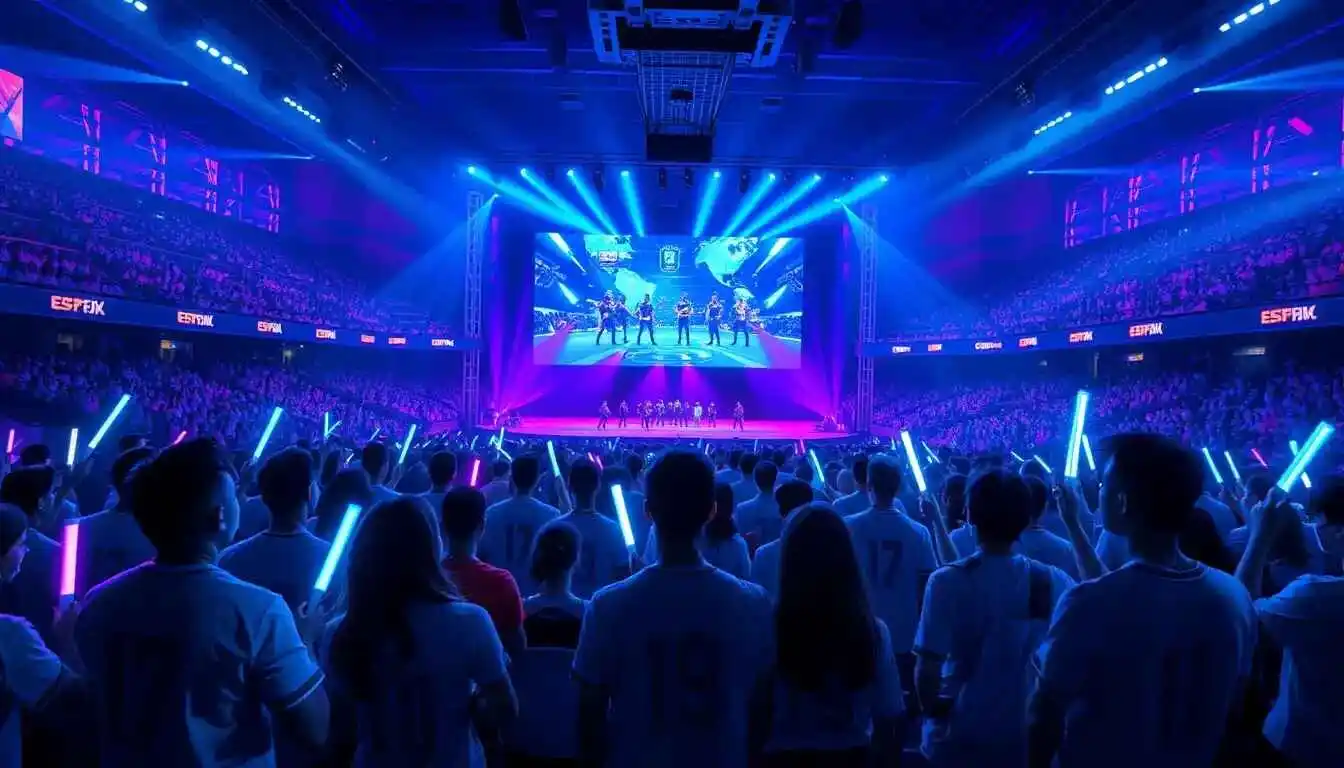
There is a moment that every new esports fan describes in almost the same way. You sit down to watch what a friend swore was the most exciting match of the year. You see colorful characters moving across a screen at impossible speed, hear a commentator screaming words that sound like a foreign language, and watch thousands of people in an arena lose their minds over something you cannot quite follow. You feel simultaneously fascinated and completely lost. That feeling is not a sign that esports is not for you. It is simply the experience of standing at the door of one of the most layered, passionate, and rapidly growing entertainment ecosystems in the world — without yet having the key.
This guide is the key. Whether you come from a background of traditional sports, casual gaming, or no gaming experience whatsoever, every concept you need to go from confused observer to engaged fan is explained here. By the time you finish reading, you will understand what is happening on screen, know where to watch it, recognize the roles each player fills, and speak the language of the community fluently enough to join the conversation.
What Esports Actually Is, and Why It Matters
Esports — short for electronic sports — refers to organized, competitive video gaming at a professional level. Players and teams compete in structured leagues and tournaments across a wide range of game titles, earning prize money, salaries, and sponsorships in the same way traditional athletes do. The prize pool for Dota 2’s annual championship, The International, has exceeded forty million dollars in recent years. The League of Legends World Championship fills stadiums that host NFL playoff games. Esports is not a hobby dressed up as a sport. It is a fully professionalized, globally broadcast industry with tens of millions of dedicated fans.
What makes esports particularly compelling is the sheer variety of competitive games. Each title has its own rules, its own strategic depth, and its own culture. Broadly speaking, competitive esports titles fall into several genres. Multiplayer Online Battle Arenas, known as MOBAs, include League of Legends and Dota 2. First-person shooters, called FPS games, include Counter-Strike 2 (CS2) and Valorant. Real-time strategy games include StarCraft II. Battle royale games include Fortnite and PUBG. Fighting games include Street Fighter 6 and Tekken 8. Sports simulation games include EA FC and NBA 2K. Each genre demands different skills from players and different knowledge from viewers, which is exactly why a guide like this one is worth your time.

Understanding the Most Popular Esports Titles
Starting with League of Legends, the game that dominates global esports viewership: two teams of five players each compete on a map called the Rift. Each player controls a unique character called a Champion, chosen from a roster of over 160 options. The objective is to destroy the opposing team’s Nexus — a structure located at the heart of their base. To reach the Nexus, teams must push through defensive towers called Turrets arranged along three pathways called lanes. In between those lanes lies the Jungle, filled with neutral monsters that players can defeat for buffs and resources. A match typically lasts between 25 and 45 minutes, and every decision — which Champion to pick, which objective to contest, when to fight, and when to retreat — carries strategic weight that rivals anything you will find in professional basketball or football.
Counter-Strike 2 is the game for fans who love team tactics and high-stakes individual moments. Two teams of five — Terrorists and Counter-Terrorists — face off across a series of rounds, each lasting under two minutes. Terrorists attempt to plant a bomb at one of two designated sites and protect it until it detonates. Counter-Terrorists attempt to eliminate the Terrorist team, defuse any planted bomb, or simply prevent the plant from happening. The first team to win 13 rounds takes the half. After a side switch, the first team to 13 wins overall claims the map. Matches are typically played as best-of-three or best-of-five map series in major tournaments, giving each match incredible strategic dimension across different map environments.
Valorant combines the tactical round structure of CS2 with the character-based abilities of a hero shooter. Players choose from a roster of Agents, each possessing unique skills that can be used to gather information, block enemy sightlines, or force opponents into unfavorable positions. The core objective remains familiar — one team attacks a site with a bomb-like device called the Spike, while the other defends. What distinguishes Valorant from CS2 is how Agent abilities layer on top of mechanical gunfighting skill, rewarding teams that coordinate their ability usage with precision timing.
Dota 2 shares a broad structural similarity with League of Legends, but is considerably more complex in almost every dimension. Heroes are more mechanically intricate, the item system is deeper, and the game punishes mistakes more severely through a mechanic called denying — players can destroy their own creeps to prevent enemies from gaining gold from the kill. The map is larger, vision control is more demanding, and comeback mechanics are far less forgiving. Because of this, Dota 2 has the steepest viewing learning curve of any mainstream esports, but once you understand it, it rewards you with some of the most dramatic and unpredictable competitive moments the genre has ever produced.
How to Watch Esports: Platforms, Formats, and Finding Your Team
For traditional sports fans stepping into esports for the first time, the watching experience will feel both familiar and refreshingly different. Most major esports broadcasts are available for free through streaming platforms, which is a significant departure from the pay-per-view and cable subscription models that dominate traditional sports broadcasting. Twitch is the dominant platform for live esports streaming, hosting official broadcasts from Riot Games, Valve, ESL, and many other organizers. YouTube Gaming has become a growing broadcast home for several leagues, including the League of Legends Championship Series. Some tournaments are also broadcast on traditional television networks — ESPN, TBS, and Disney XD have all aired esports content, though streaming remains the primary home of competitive gaming.
When watching on Twitch or YouTube, you are never watching alone. The live chat running alongside every broadcast is a constant stream of reactions, analysis, and community expression from fellow fans around the world. Learning to read and engage with that chat is part of the esports viewing experience in a way that has no real equivalent in traditional sports broadcasting. It is simultaneously chaotic and deeply communal, and once you find your rhythm within it, it becomes one of the most entertaining elements of the whole experience.
Esports tournaments are organized in formats that closely resemble traditional sports structures. Most titles feature a regular season of league play, followed by playoff brackets and culminating in a world championship event. League of Legends runs regional leagues — the LCK in Korea, the LPL in China, the LEC in Europe, and the LCS in North America — each with its own regular season before teams qualify for the annual World Championship. CS2 operates through a combination of ESL Pro League seasons, Major Championships funded by Valve, and independent tournament organizers. Valorant runs a structured global league system called VCT (Valorant Champions Tour) with regional leagues and an annual world championship.
Finding a team to support is one of the most important steps in becoming a genuine esports fan, because team loyalty is what transforms watching into caring. Many traditional sports fans naturally gravitate toward esports organizations that have affiliations with clubs they already follow — Manchester City, Paris Saint-Germain, and the Golden State Warriors all have esports divisions. Others choose based on geography, picking a team from their home region. Still others fall in love with a specific player’s personality or playstyle and follow whatever team that player joins. There is no wrong method. Pick a team, buy a jersey if you feel the urge, and let the emotional investment do the rest.
Role-Specific Breakdowns: Understanding What Every Player Actually Does
One of the biggest adjustments for fans coming from traditional sports is learning that in esports, player roles are extraordinarily specialized. In basketball, every player dribbles, passes, and shoots — the differences between positions are ones of emphasis and positioning. In League of Legends, the differences between roles are categorical. A support player rarely tries to accumulate gold or kills for themselves. Their entire existence on the map is devoted to protecting, enabling, and vision-controlling for teammates. Understanding roles is what takes you from watching five people move around a map to watching a coordinated machine with five highly specialized parts.
In League of Legends, the five roles are Top, Jungle, Mid, Bot (also called ADC, which stands for Attack Damage Carry), and Support. The Top laner is typically a durable, independent fighter who controls the top portion of the map and is expected to absorb pressure alone while the rest of the team focuses resources elsewhere. The Jungler roams the entire map, defeating neutral monsters to earn gold and experience, while looking for opportunities to ambush enemy players in their lanes — a tactic called ganking. The Mid laner is typically the most mechanically gifted player on the team, playing a high-influence Champion from the central lane and rotating across the map to tip the scales in nearby fights. The ADC is a fragile, ranged damage dealer who farms minions patiently in the bottom lane to build expensive items that eventually make them the primary damage threat in team fights. The Support protects the ADC in the early game, wards the map with vision-granting items, and uses crowd-control abilities to set up kills and peel off threats during fights. A team where all five roles operate in sync is a beautiful and deeply satisfying thing to watch.
In CS2, role specialization works differently because every player uses the same weapons and operates under the same mechanics. Roles here are more about function within the tactical structure than about distinct character abilities. The Entry Fragger is the player who pushes first into a site, taking on the greatest personal risk to open space for their teammates. The Lurker plays on the opposite side of the map from the main attack, waiting to ambush rotating Counter-Terrorists or apply psychological pressure that slows their rotations. The AWPer is the specialist who uses the AWP — a powerful, high-risk sniper rifle that can eliminate any enemy in a single shot but requires precise aim and patience — to control long-distance sightlines. The Support player deploys grenades, flashes, and smoke bombs to create controlled conditions that favor the team’s entry players. And the IGL — the In-Game Leader — is the most strategically important person on the team.
The IGL deserves special attention because its role is invisible to casual viewers yet fundamental to everything that happens. The IGL calls the strategy in real time — deciding which bomb site to attack, when to execute a rush, when to pull back and reset, and how to adapt when the opposing team’s Counter-Terrorist rotation patterns differ from what was expected. A great IGL processes information from every teammate simultaneously, reads the economy screen to understand what weapons both teams can afford next round, anticipates opponent tendencies, and makes decisive calls under the most intense competitive pressure imaginable. Watching CS2 through the lens of IGL decision-making transforms every round from a shooting exercise into a chess match.
In Valorant, roles are formalized through Agent classifications. Controllers use smoke-based abilities to block enemy sightlines and divide the battlefield. Initiators use flashes, concussive blasts, and information-gathering tools to help their team push onto a site. Duelists are aggressive fraggers with self-sufficient mobility and combat abilities designed for taking first blood. Sentinels are defensive specialists who lock down flanks, revive downed teammates, and watch the team’s back during attacks. A balanced Valorant team composition features Agents from multiple categories working together, and understanding these classifications makes draft phases — where teams select their Agents before a map begins — genuinely exciting to follow.
The Esports Slang and Jargon Glossary Every New Fan Needs
No introduction to esports is complete without an honest guide to the language of the community. Esports commentary and fan discussion operate in a dialect that mixes gaming terminology, internet culture, and competitive sports analysis into something entirely its own. Here are the terms you will encounter most often and what they actually mean.
GG means “good game,” typed in chat at the conclusion of a match as a gesture of sportsmanship. It is the esports equivalent of a post-match handshake. GG EZ, however, means “good game, easy” and is considered unsportsmanlike taunting. GGWP means “good game, well played” and is the most respectful variant. Pog, PogChamp, or simply Poggers refers to an expression of extreme hype or disbelief — it originated from a Twitch emote and is now universal shorthand for “that was incredible.” LUL is the chat’s primary expression of laughter, used in reaction to anything funny, ironic, or humiliating. Copium is a blend of “cope” and “opium” used to describe the irrational optimism fans maintain for a losing team or player — watching someone in full copium means watching someone desperately believe their team can still turn it around against all evidence.
In gameplay terms, a stomp or stomp game describes a match where one team completely dominates the other with no real contest. A throw refers to a team losing a match they were decisively winning — usually through a catastrophic mistake in a high-stakes moment, and nothing in esports produces more community anguish than a well-documented throw. A clutch is the opposite — a single player winning a round, fight, or game from an apparently hopeless position, and it is the single most celebrated individual moment type in all of competitive gaming. Tilted describes a player or team whose mental composure has deteriorated due to mistakes, losses, or pressure, leading to increasingly poor decisions — the esports equivalent of a batter in a slump pressing too hard at the plate. Feeding means repeatedly dying to the enemy team and giving them gold or experience advantages in the process, either through recklessness or poor judgment.
Meta, short for “metagame,” refers to the current optimal strategies, Champion picks, or Agent compositions in a given patch. The meta shifts whenever game developers release balance updates, and watching how professional teams adapt to a new meta is one of the most intellectually engaging ongoing narratives in esports. A one-trick is a player who specializes almost exclusively in a single Champion or character, mastering that one option to an elite level. A carry is the player expected to generate the most impact in a given game — the person the team is built around, enabling. Peeling means protecting your carry from enemy threats during a fight, pulling attackers away, or stunning them before they can deal damage. A wombo combo refers to a combination of team abilities that chain together to eliminate multiple enemies nearly simultaneously, typically producing the loudest arena reactions of any match.
Understanding these terms will not happen overnight, but exposure accelerates everything. The more matches you watch, the more naturally the language embeds itself, until one day you realize you have been using it without thinking, which is the moment you have genuinely arrived as an esports fan.
Making the Most of Your Esports Viewing Experience
The best piece of advice for any new esports fan is to pick one game and go deep rather than sampling everything at once. The breadth of esports is exciting, but trying to follow League of Legends, CS2, Valorant, and Dota 2 simultaneously before you understand any of them deeply is the surest path to staying perpetually confused. Choose the title that most appeals to you based on what you have read here — tactical shooters, team-strategy MOBAs, or something else — and commit to watching one full tournament from group stage to grand final. Watch with a commentator you enjoy. Most esports broadcasts pair a play-by-play caster with a color analyst, and finding a duo whose chemistry you enjoy makes the viewing experience dramatically better, just as a great TV broadcast crew can elevate any traditional sports match.
Follow community spaces between matches. Reddit communities like r/leagueoflegends, r/GlobalOffensive, and r/VALORANT publish match discussions, analytical breakdowns, and player highlights that deepen your understanding between live events. Twitter and X remain active hubs for player personalities, team announcements, and real-time community reactions. Following players and analysts directly gives you access to perspectives that broadcast coverage cannot always include. And do not underestimate the value of watching professional players stream their practice sessions on Twitch — seeing how they think through individual decisions in an informal setting teaches you things about the game that no commentator can convey in a live broadcast.
Supporting a team financially is optional but meaningful. Most organizations sell jerseys, hoodies, and accessories through their online stores, and wearing team merchandise to watch parties or LAN events is one of the most genuine expressions of fandom available. Some teams offer fan membership programs with exclusive content, early merchandise access, and direct community interaction. Attending a live event — even a regional qualifier rather than a world championship — is an experience worth pursuing at least once. The energy of thousands of fans reacting to a clutch play in real time is something that no broadcast, however well-produced, can fully replicate.
Esports is not a trend that is winding down. It is an industry still in its adolescence, growing in revenue, viewership, legitimacy, and cultural significance with every passing year. The fans who discover it now, who invest the time to understand its games, its players, its language, and its culture, are joining something at a genuinely exciting moment in its history. The learning curve is real, but it is shorter than you think, and the community waiting on the other side of it is one of the most passionate, knowledgeable, and globally diverse sports audiences in the world. You have already taken the most important step by deciding to understand it. Now all that remains is to watch.
FAQs
- What is esports?
Esports refers to organized, professional-level competitive video gaming where players and teams compete in structured tournaments and leagues, earning prize money, salaries, and sponsorships in the same way athletes in traditional sports do.
- Do I need to play video games to enjoy watching esports?
Not at all. Many esports viewers have little or no gaming experience themselves. Understanding the rules and objectives of the game being played is sufficient to enjoy the competitive action, just as a non-golfer can still appreciate the Masters Tournament.
- Where can I watch esports?
Most esports events are broadcast live and free on Twitch and YouTube Gaming. Some tournaments are also aired on traditional television networks like ESPN and TBS. Checking the official website of the game or tournament is the most reliable way to find where a specific event is streaming.
- Are esports events broadcast with commentary?
Yes. Professional esports broadcasts feature dedicated play-by-play casters and color analysts who explain the action, provide strategic context, and react to pivotal moments, very similarly to how traditional sports broadcasts operate.
- What is the difference between a league and a tournament in esports?
A league involves teams competing in a structured regular season format, often over several weeks or months. A tournament is typically a standalone event with a bracket format where teams are eliminated until one champion remains. Most esports ecosystems use both leagues during the regular season and a culminating tournament at the end.
- What does GG mean in esports?
GG means “good game” and is typed in chat or said verbally at the end of a match as a gesture of mutual respect between competitors. It is the esports equivalent of a post-game handshake.
- What is the meta in esports?
The meta, short for metagame, refers to the currently dominant strategies, character picks, or team compositions that top players and teams favor in a given patch or period. The meta shifts whenever developers update the game’s balance.
- What does “tilted” mean in competitive gaming?
A tilted player or team is one whose mental composure has broken down due to errors, losing streaks, or mounting pressure, causing increasingly poor decision-making. It is the gaming equivalent of a sports team pressing too hard after falling behind.
- What is an IGL in CS2?
An IGL, or In-Game Leader, is the player responsible for calling real-time strategy during a match — deciding which sites to push, when to execute aggressive plays, how to manage the economy, and how to adapt to opponent tendencies. The IGL is the team’s tactical brain.
- What does “clutch” mean in esports?
A clutch refers to a single player winning a round, fight, or match from a position of severe disadvantage — typically outnumbered and under extreme pressure. Clutch moments generate the most intense community reactions in all of esports.
- What is a Nexus in League of Legends?
The Nexus is the central structure located in each team’s base in League of Legends. Destroying the opposing team’s Nexus is the primary objective of every match. Protecting your own Nexus while dismantling the enemy’s is the fundamental strategic tension of the entire game.
- What does “ganking” mean in League of Legends?
Ganking is when the Jungle player roams from their neutral monster camps to ambush an enemy player in one of the three lanes, attempting to catch them in a vulnerable position and secure a kill or force a retreat.
- What is an AWPer in CS2?
An AWPer is a specialist who uses the AWP — a bolt-action sniper rifle capable of killing enemies in one shot — to control long-range sightlines and create space for the team. AWPers are among the highest-impact individual roles in any CS2 match.
- What is the difference between a Duelist and a Controller in Valorant?
A Duelist is an aggressive, combat-focused Agent designed to win individual fights and take the first kills on a site push. A Controller uses smoke abilities to block enemy sightlines and control the battlefield environment, shaping engagements rather than winning them through raw gunfighting.
- What is a throw-in in esports?
A throw refers to a team losing a match they were comfortably winning, typically due to a catastrophic mistake, poor decision-making, or a breakdown in coordination during a critical moment. Throws are among the most discussed and lamented events in any esports community.
- What is pog or poggers?
Pog originated from a Twitch emote and has become universal esports slang for expressing intense excitement, hype, or disbelief at something impressive. If a commentator says something is “pog,” they mean it was remarkable or jaw-dropping.
- What is copium in esports culture?
Copium is a blend of “cope” and “opium” used humorously to describe the irrational optimism a fan maintains for their team even in dire circumstances. Fans “in copium” are clinging to hope despite overwhelming evidence against their team’s chances.
- What does “feeding” mean in MOBA games?
Feeding refers to a player repeatedly dying to the enemy team and giving them gold and experience in the process, either through recklessness or poor positioning. A feeding player makes the enemy team progressively more powerful throughout the match.
- What is a wombo combo?
A wombo combo is a sequence of team abilities used in rapid succession that chain together to eliminate multiple enemies simultaneously, often in spectacular fashion. Wombo combos frequently produce the loudest audience reactions in live esports events.
- What is the Support role in League of Legends?
The Support is a player who prioritizes protecting and enabling their teammates over personal gold and kill accumulation. They place vision-granting wards across the map, use crowd-control abilities to set up kills, and shield or heal their carries during fights.
- What is peeling in esports?
Peeling means actively protecting a vulnerable teammate — usually the team’s primary damage dealer — by interrupting, stunning, or redirecting enemy players who are trying to eliminate them during a fight.
- What is a one-trick in competitive gaming?
A one-trick player is a player who specializes almost exclusively in one character or Champion, developing exceptional mastery of that single option rather than diversifying across multiple picks. One-tricks are celebrated for their expertise but sometimes criticized for their predictability.
- What does LUL mean in esports chat?
LUL is a Twitch emote used to express laughter, typically in reaction to something funny, ironic, embarrassing, or absurd. It is one of the most commonly used expressions in any live esports broadcast chat.
- How are esports teams supported financially?
Esports organizations generate revenue through sponsorships from brands, merchandise sales, broadcast rights deals, franchise league participation fees, prize pool winnings, content creator partnerships, and increasingly, investment from traditional sports franchises.
- How long does a typical esports match last?
Match lengths vary significantly by game. A League of Legends game typically lasts 30 to 45 minutes. A CS2 map lasts 20 to 40 minutes, with a tournament series of three to five maps potentially running three to five hours. Dota 2 matches can last anywhere from 25 minutes to over an hour.
- What is a best-of-three or best-of-five series?
In a best-of-three series, the first team to win two individual matches or maps advances. In a best-of-five, the threshold is three. These formats are standard in esports playoffs because they reduce the impact of a single bad performance and reward consistent excellence across multiple maps or games.
- Can I attend esports events in person?
Yes. Major esports tournaments are held in arenas and stadiums around the world, from Los Angeles and Seoul to Berlin and Shanghai. Tickets are typically sold through official tournament websites and are often far more affordable than equivalent traditional sports event tickets.
- How do I find a team to support in esports?
You can choose based on regional affiliation, a connection to a traditional sports organization that owns an esports team, a favorite player whose team you decide to follow, or simply a team whose brand, history, or playstyle resonates with you. There is no wrong way to find your team.
- What is the biggest esports tournament in the world?
By prize pool, Dota 2’s The International has historically been the largest, with total prizes exceeding forty million dollars in peak years. By viewership, League of Legends’ World Championship regularly draws tens of millions of concurrent viewers globally.
- Is esports growing in mainstream recognition?
Yes, dramatically. Esports has been included in the Asian Games as an official medal event, major universities offer esports scholarships, traditional sports broadcasters regularly air competitive gaming content, and global brands from Nike to Red Bull to Mercedes-Benz have committed long-term sponsorship partnerships with esports organizations.
Disclaimer: The content on this blog is for informational purposes only. The author’s opinions are personal and not endorsed. Efforts are made to provide accurate information, but completeness, accuracy, or reliability are not guaranteed. The author is not liable for any loss or damage resulting from the use of this blog. It is recommended to use the information on this blog at your own discretion.
