
Table of Contents
Turmeric – The Golden Healer: Unlocking the Profound Health Benefits of Nature’s Most Powerful Spice
For over 4,000 years, turmeric has been much more than a mere culinary staple. Originating from the Indian subcontinent and Southeast Asia, this vibrant, golden-orange root has served as a cornerstone of ancient medicinal systems, a sacred religious symbol, and a potent culinary dye. Today, modern science is colliding with ancient wisdom, confirming what Ayurvedic practitioners and traditional Chinese medicine doctors have known for millennia: turmeric is not just a spice; it is a medicine.
Welcome to the definitive guide on Turmeric – The Golden Healer. In this comprehensive exploration, we will unlock the secrets of its active compounds, delve deep into the cellular mechanisms that make it a medical marvel, and provide you with practical, actionable ways to integrate this golden powerhouse into your daily life for optimal health and longevity.
The Science of the Spice: Curcumin vs. Turmeric
To understand the healing power of turmeric, we must first look at its chemical composition. Turmeric belongs to the ginger family, Zingiberaceae. While the root contains hundreds of bioactive compounds, the most significant group is the curcuminoids.
Within the curcuminoids, Curcumin is the star player. It is the primary bioactive substance, responsible for both the vivid yellow color and the vast majority of the therapeutic effects. However, there is a critical distinction that many health enthusiasts miss: Turmeric is not Curcumin.

Turmeric typically contains only about 2% to 5% curcumin by weight. If you eat a tablespoon of ground turmeric, you are only consuming a fraction of a gram of the actual healing compound. Furthermore, curcumin is notoriously difficult for the body to absorb—a concept known as low bioavailability. When ingested alone, curcumin is rapidly metabolized by the liver and excreted, meaning very little reaches your bloodstream to do its healing work.
The Bioavailability Trinity: How to Hack Absorption
To unlock the full potential of the Golden Healer, you must overcome the bioavailability problem. Thankfully, both ancient tradition and modern pharmacology have solved this through three primary synergistic hacks:
- Piperine (Black Pepper): This is the most potent bioenhancer. Piperine inhibits certain liver enzymes that would otherwise rapidly break down curcumin. Adding just a pinch of black pepper can increase the absorption of curcumin by an astronomical 2,000%.
- Fats/Lipids: Curcumin is lipophilic, meaning it dissolves in fat, not water. Consuming turmeric with a healthy fat source (like coconut oil, ghee, olive oil, or avocado) allows the curcumin to bypass the water-heavy stomach environment and be absorbed directly into the lymphatic system and bloodstream.
- Heat: Mildly heating turmeric during cooking helps to activate the compound and make it more bioaccessible, though excessive heat should be avoided to preserve its integrity.
The 15 Deep-Dive Health Benefits of The Golden Healer
The reason turmeric has become the most studied spice in medical literature is its profound effect on chronic, systemic inflammation—which modern medicine now recognizes as the root cause of almost every major degenerative disease. Here is how unlocking turmeric’s potential can transform your health.
- Master Anti-Inflammatory Agent Inflammation is a necessary immune response for healing acute injuries, but when it becomes chronic, it silently destroys tissue. Curcumin is one of the strongest anti-inflammatory compounds in the natural world. It operates on a molecular level by inhibiting the enzyme COX-2 (the same enzyme targeted by non-steroidal anti-inflammatory drugs like Ibuprofen) and blocking the NF-kB pathway, a protein complex that turns on genes related to inflammation. Unlike NSAIDs, which can cause severe gastrointestinal damage over time, curcumin reduces inflammation safely and effectively.
- A Powerhouse Antioxidant Oxidative stress is the rusting of your body—caused by free radicals damaging cells, proteins, and DNA. Curcumin neutralizes free radicals directly due to its unique chemical structure. Furthermore, it stimulates and boosts the body’s own antioxidant enzymes (like superoxide dismutase and glutathione), providing a dual-layer of defense against premature aging and cellular mutation.
- Revolutionizing Arthritis Treatment Osteoarthritis involves the degeneration of joint cartilage, while Rheumatoid Arthritis is an autoimmune inflammatory condition. Multiple clinical trials have shown that curcumin supplements are remarkably effective in reducing joint pain, swelling, and morning stiffness. In some studies, curcumin matched the effectiveness of arthritis medications, but without the adverse side effects like kidney or liver damage.
- Neuroprotection and Boosting Brain Function Brain-Derived Neurotrophic Factor (BDNF) is a type of growth hormone that functions in the brain. Low levels of BDNF are linked to depression and brain degenerative diseases like Alzheimer’s. Curcumin has been shown to cross the blood-brain barrier and increase brain levels of BDNF, effectively promoting the growth of new neurons and preventing the death of existing ones. It also helps clear amyloid plaques, the tangled proteins that are a hallmark of Alzheimer’s disease.
- Safeguarding Heart Health Heart disease is the leading cause of death globally, driven by endothelial dysfunction (the inability of the blood vessel lining to regulate blood pressure) and oxidation of cholesterol. Curcumin improves endothelial function as effectively as exercise, reduces inflammatory markers in the heart, and prevents the oxidation of LDL cholesterol, which is the crucial step before plaque buildup begins.
- Potential Anti-Cancer Properties While not a cure, curcumin is being intensely studied as a cancer-fighting agent. It has been shown to affect cancer growth, development, and spread at the molecular level. It promotes apoptosis (programmed cell death) in mutated cells, inhibits angiogenesis (the growth of new blood vessels that feed tumors), and reduces the metastasis (spread) of cancer cells. It is particularly promising in colorectal and pancreatic cancers.
- Combating Depression Naturally Depression is linked to reduced neurogenesis in the hippocampus and chronic inflammation. Because curcumin boosts BDNF and lowers systemic inflammation, it acts as a natural antidepressant. In a controlled trial, curcumin was shown to be as effective as the antidepressant drug Prozac in managing symptoms of major depressive disorder, without the toxic side effects.
- Managing Metabolic Syndrome and Type 2 Diabetes Metabolic syndrome is a cluster of conditions (high blood pressure, high blood sugar, excess body fat) that increase the risk of heart disease and stroke. Curcumin improves insulin sensitivity, reduces blood sugar levels, and decreases the inflammatory markers associated with obesity and diabetes. It essentially helps the body’s cells remember how to use insulin properly.
- Healing the Gut and Digestive Tract Despite its potent nature, curcumin is highly beneficial for the gut. It helps balance the gut microbiome, encouraging the growth of beneficial bacteria while inhibiting harmful strains. For those suffering from Inflammatory Bowel Disease (IBD) like Crohn’s or Ulcerative Colitis, curcumin has been shown to maintain remission and repair the intestinal lining.
- Liver Detoxification and Support The liver is the body’s primary filtration system. Curcumin stimulates the production of bile, which is essential for digestion and the excretion of toxins. It also protects the liver against damage from heavy metals, alcohol, and toxic chemicals, and is being used in trials to treat Non-Alcoholic Fatty Liver Disease (NAFLD).
- Radiant Skin and Wound Healing Applied topically or ingested, turmeric is a skin miracle. It inhibits MMP-2, an enzyme that breaks down collagen, thereby slowing down wrinkle formation. Its antiseptic and antibacterial properties make it exceptional for healing wounds, reducing acne scarring, and calming inflammatory skin conditions like psoriasis and eczema.
- Delaying the Aging Process If aging is the accumulation of cellular damage over time, then turmeric is an anti-aging elixir. By simultaneously reducing inflammation, neutralizing free radicals, protecting the mitochondria (the cell’s energy generators), and preserving telomere length, curcumin addresses the fundamental hallmarks of aging.
- Protecting Eye Health Uveitis is an inflammation of the middle layer of the eye, which can lead to blindness. Curcumin’s powerful anti-inflammatory properties have been shown to be effective in treating uveitis, often performing as well as traditional corticosteroids, but without the risk of cataracts or glaucoma.
- Pain Relief for Menstrual Cramps For women suffering from severe dysmenorrhea (menstrual cramps), curcumin acts as an antispasmodic and anti-inflammatory agent. Studies have shown that taking curcumin a few days before and during the menstrual cycle significantly reduces the severity and duration of pain.
- Supporting Kidney Health The kidneys are highly susceptible to oxidative stress and drug-induced toxicity. Curcumin has been shown to protect the kidneys against damage from heavy metals, ischemia, and nephrotoxic drugs, while also reducing inflammation in renal tissues.
The Practical Guide: How to Consume The Golden Healer
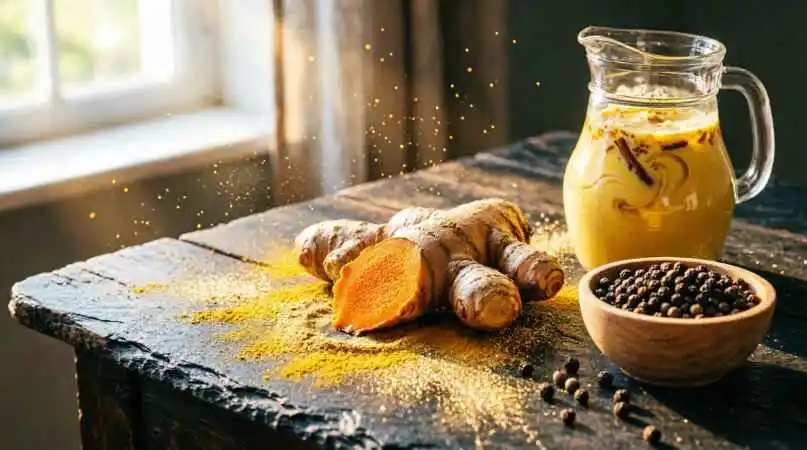
- The Golden Milk Elixir (Haldi Doodh) This ancient Ayurvedic drink is the ultimate way to consume turmeric.
- Recipe: Heat 1 cup of milk (almond or coconut work great) with 1 tsp turmeric, a pinch of black pepper, 1/2 tsp cinnamon, 1/4 tsp ginger, and 1 tsp coconut oil or ghee. Sweeten with raw honey or maple syrup after heating.
- The Golden Paste For those who want a concentrated daily dose without taking pills.
- Recipe: Boil 1/2 cup water with 1/4 cup turmeric powder. Simmer for 10 minutes. Remove from heat and add 1.5 tsp freshly ground black pepper and 1/4 cup cold-pressed olive oil or coconut oil. Store in the fridge in an airtight jar. Take 1 tsp daily.
- Cooking with Turmeric Add a tablespoon of turmeric along with a dash of black pepper to your scrambled eggs, rice dishes, soups, stews, and salad dressings. Always cook it with a healthy oil to activate the fat-soluble compounds.
- Curcumin Supplements For therapeutic doses targeting severe inflammation or chronic disease, food is not enough. Look for high-quality supplements containing standardized curcuminoids (95%) combined with piperine (BioPerine), or advanced liposomal/phytosome formulations (like Meriva) which attach curcumin to phospholipids for superior absorption.
Safety, Dosage, and Potential Side Effects
While turmeric is incredibly safe for the vast majority of people when consumed in food, therapeutic doses of curcumin supplements require caution.
- Who should avoid high doses? Pregnant women (can stimulate the uterus), people with gallbladder disease (turmeric stimulates bile), and those with bleeding disorders or upcoming surgeries (curcumin has mild blood-thinning properties).
- Medication Interactions: Curcumin can interact with blood thinners (Warfarin, Aspirin), diabetes medications (by further lowering blood sugar), and antacids. Always consult a healthcare provider before starting a curcumin supplement regimen if you are on prescription medication.
- Typical Dosage: For general health, 500-1,000 mg of standardized curcumin per day is the common recommendation. For acute pain, up to 2,000 mg daily can be used in divided doses.
FAQs
- What exactly is turmeric?
It is a flowering plant of the ginger family, whose rhizomes (roots) are used in cooking and medicine.
- Is turmeric the same as curry powder?
No. Curry powder is a blend of multiple spices; turmeric is just one single spice that gives curry its yellow color.
- What is curcumin?
The primary active pharmacological agent and pigment found inside the turmeric root.
- How much turmeric powder should I take daily?
For general wellness, 1 to 2 teaspoons (about 2-4 grams) of the powder per day is safe and effective.
- Does black pepper really make turmeric work better?
Yes. Piperine in black pepper increases curcumin absorption by 2,000%.
- Can I take turmeric on an empty stomach?
It is not recommended. Taking it with fats is crucial for absorption and prevents mild stomach upset.
- Is turmeric safe for dogs and cats?
Yes, in small doses (1/4 tsp per 10 lbs of body weight) it can help pets with arthritis and inflammation, but consult a vet first.
- What is the difference between turmeric and curcumin supplements?
Turmeric supplements contain the whole root; curcumin supplements extract just the active compound, providing a much stronger therapeutic dose.
- Can turmeric cure cancer?
No, it is not a cure. However, extensive research shows it is highly beneficial as an adjunct therapy to prevent and slow cancer growth.
- How long does it take for turmeric to work?
For acute pain, you may feel effects in 4-8 weeks of daily use. For chronic conditions, allow 8-12 weeks.
- Can I use kitchen turmeric for face masks?
Yes, but be aware it will temporarily stain your skin yellow. Mix with yogurt and honey for a glowing mask.
- Does turmeric thin the blood?
Yes, it has mild anti-platelet effects. Stop taking high doses two weeks before any scheduled surgery.
- What is Golden Milk?
A traditional Ayurvedic beverage made by warming milk with turmeric, spices, and fat.
- Is turmeric essential oil safe to ingest?
Generally, no. Essential oils are highly concentrated and can burn the digestive tract. Stick to the powder or extracts.
- Can I take turmeric with Ibuprofen?
Because both thin the blood and reduce inflammation, taking them together long-term may increase the risk of bleeding. Consult a doctor.
- Can I drink turmeric tea every day?
Absolutely. Turmeric tea (often called Golden Tea) is a soothing, anti-inflammatory daily habit.
- What does turmeric taste like?
It has an earthy, slightly bitter, mustard-like, and peppery flavor.
- Is turmeric safe during pregnancy?
Food amounts are safe, but high-dose supplements should be avoided as they can stimulate uterine contractions.
- Does turmeric help with weight loss?
Indirectly, yes. It reduces inflammation in fat cells, improves insulin sensitivity, and boosts metabolism.
- Will turmeric stain my teeth?
Yes, if consumed in large quantities daily. Rinse your mouth with water after drinking Golden Milk.
- What is the best time of day to take turmeric?
With meals, usually breakfast or dinner, to ensure it is combined with dietary fats.
- Can I put turmeric on a burn?
Yes. A paste of turmeric and aloe vera can soothe minor burns due to its antiseptic and cooling properties.
- Does heat destroy curcumin?
Prolonged, high heat can degrade curcumin slightly. Simmering or mild sautéing is best; avoid deep frying with it.
- Are there different types of turmeric?
Yes. Curcuma longa is the common yellow type. Curcuma aromatica (wild turmeric) and white turmeric (Curcuma zedoaria) also exist but have different properties.
- What is white turmeric?
Also known as zedoary, it looks like ginger and lacks the yellow color and strong curcumin content of regular turmeric.
- Can turmeric help with PCOS?
Yes. By improving insulin resistance and reducing systemic inflammation, turmeric is highly beneficial for women with Polycystic Ovary Syndrome.
- Does turmeric lower blood sugar?
Yes, it enhances insulin sensitivity. Diabetics on medication must monitor their blood sugar closely to avoid hypoglycemia.
- Is turmeric good for high cholesterol?
Yes. It prevents the oxidation of LDL cholesterol, which is the primary driver of plaque buildup in arteries.
- Can I take turmeric with coffee?
You can add it to coffee (making “Golden Coffee”), but the caffeine may slightly reduce the absorption of its calming compounds.
- How do I store turmeric powder?
In an airtight container, in a cool, dark, and dry place. Light and heat will degrade its color and potency over time.
Turmeric is not a fad; it is a time-tested, scientifically validated ally in the pursuit of vibrant health. From silencing the fires of chronic inflammation to protecting the delicate architecture of your brain, the golden healer offers a holistic approach to wellness that few other natural substances can match. By understanding the crucial relationship between curcumin, piperine, and fats, you unlock the door to its maximum potential. Make turmeric a daily ritual—whether through a soothing cup of golden milk, a vibrant curry, or a high-quality supplement—and watch as this ancient spice weaves its modern magic into your life.
⚕️Medical Disclaimer:
The information provided on this website is for general educational and informational purposes only and is not intended as a substitute for professional medical advice, diagnosis, or treatment. Always seek the advice of your physician or other qualified health provider with any questions you may have regarding a medical condition. Never disregard professional medical advice or delay in seeking it because of something you have read on this website.
