
Table of Contents
Breathing Freely Again: The Comprehensive Guide to Understanding, Treating, and Living with Nasal Polyps
Introduction
Imagine trying to breathe through a straw while suffering from a heavy cold. For millions of people worldwide, this is not just a fleeting sensation during flu season; it is their daily reality. Nasal polyps are a common yet often misunderstood medical condition that can turn the simple act of breathing into a laborious struggle. These soft, painless, noncancerous growths line the nasal passages or sinuses, hanging down like teardrops or grapes. While they are benign, their impact on quality of life can be profound, robbing individuals of their sense of smell, disrupting sleep, and leading to chronic fatigue.
Nasal polyps are not an isolated issue; they are often the manifestation of chronic inflammation. Understanding them requires a deep dive into the intricate workings of the sinuses, the immune system, and environmental triggers. The good news is that while nasal polyps can be stubborn, they are manageable. From advanced medical treatments to holistic lifestyle changes, there is a spectrum of solutions available to help patients reclaim their breath.
This comprehensive guide unpacks everything you need to know about nasal polyps—from the biological mechanisms behind their formation to the latest medical interventions and natural remedies that can help you breathe easy again.
Understanding Nasal Polyps

What Are Nasal Polyps? Nasal polyps are soft, painless, and benign (non-cancerous) growths that develop on the lining of the nasal passages or sinuses. They are a byproduct of chronic inflammation. When the mucous membrane—the tissue that lines the nose and sinuses—remains inflamed for an extended period (usually 12 weeks or more), it can swell. Eventually, this swollen tissue can be pulled down by gravity, forming teardrop-shaped growths.
Polyps can vary greatly in size. Small polyps may go unnoticed, causing little to no disruption. However, larger polyps or clusters of smaller ones can block the nasal passages entirely, obstructing airflow and leading to severe congestion.
Who is at Risk? While anyone can develop nasal polyps, they are significantly more common in adults than in children, typically appearing after age 40. Men are more likely to develop them than women. Interestingly, children with nasal polyps often have an underlying condition like cystic fibrosis, which warrants immediate medical attention.
The Anatomy of a Blockage. To understand polyps, one must understand the sinuses. The sinuses are a connected system of hollow cavities in the skull. When functioning correctly, they produce mucus that traps dust and pathogens, draining into the nose. When inflammation causes the lining to swell, the drainage pathways become blocked. This creates a breeding ground for infection and provides the fertile ground for polyps to grow.
Causes and Risk Factors
The precise cause of nasal polyps is still a subject of ongoing research. However, the consensus in the medical community is that they result from a complex interplay of genetics, immune system responses, and environmental triggers.
- Chronic Inflammation The primary driver is chronic inflammation. Conditions that cause persistent inflammation of the nasal passages are the leading culprits. This includes:
- Chronic Sinusitis: Long-term sinus infections that last for months.
- Asthma: There is a strong link between asthma and nasal polyps; estimates suggest that up to 30% of patients with chronic sinusitis and nasal polyps also have asthma.
- Allergic Rhinitis: Seasonal or year-round allergies cause the nasal lining to swell. Over time, this constant state of alert can lead to polyp formation.
- Aspirin Sensitivity A specific triad of symptoms, known as Samter’s Triad (or aspirin-exacerbated respiratory disease), is a major risk factor. This condition involves a combination of asthma, nasal polyps, and sensitivity to aspirin or other non-steroidal anti-inflammatory drugs (NSAIDs). For these individuals, taking aspirin can trigger a violent asthma attack and rapid growth of nasal polyps.
- Immune System Disorders In rare cases, immune disorders can be the root cause. Conditions like Churg-Strauss syndrome (a rare disease that inflames blood vessels) or common variable immunodeficiency (CVID) can predispose individuals to polyp growth.
- Genetic Factors Heredity plays a role. If a close family member has nasal polyps, your risk of developing them increases. Researchers have identified certain genetic markers associated with inflammation regulation that might make some people more susceptible.
- Fungal Infections Chronic fungal infections in the sinuses, particularly allergic fungal sinusitis, can trigger an aggressive immune response that leads to polyp formation.
Recognizing the Symptoms
One of the challenges with nasal polyps is that they can mimic other common ailments, such as the common cold or a sinus infection. The key difference is duration; colds go away, but polyps persist.
Common Symptoms Include:
- Persistent Nasal Congestion: The hallmark symptom. It feels like a constant stuffy nose that doesn’t improve with standard decongestants.
- Runny Nose: Constant drainage of clear or colored mucus.
- Post-Nasal Drip: The sensation of mucus running down the back of the throat, which can cause irritation and coughing.
- Loss of Smell (Anosmia) and Taste: Because smell contributes significantly to taste, polyps blocking the olfactory nerve can make food taste bland.
- Facial Pain or Headaches: While polyps themselves are painless, the pressure buildup in the blocked sinuses can cause a dull ache in the face, teeth, or forehead.
- Snoring and Sleep Apnea: Large polyps can obstruct airflow during sleep, leading to loud snoring or obstructive sleep apnea, a serious condition where breathing stops and starts during the night.
- Itching Around the Eyes: Often associated with the allergic component of the condition.
If you experience these symptoms for more than 12 weeks, it is likely chronic sinusitis with or without nasal polyps.
Diagnosis – The Path to Identification
Because nasal polyps are internal, a doctor cannot diagnose them simply by looking at the nose from the outside. A thorough examination is required.
- Medical History and Physical Exam The doctor will begin by asking about the duration of symptoms, any history of asthma or allergies, and medication use. They may press on the face to check for tenderness in the sinus areas.
- Nasal Endoscopy This is the gold standard for diagnosis. The doctor inserts a narrow, flexible tube equipped with a light and a camera (an endoscope) into the nasal cavity. This allows them to see deep into the nasal passages and visually identify the presence, size, and location of polyps.
- Imaging Studies A CT scan (Computed Tomography) is often ordered. This imaging creates a detailed picture of the sinuses. It helps the doctor see the extent of the inflammation, the size of the polyps, and whether the sinuses are completely blocked. This is crucial for planning surgery if it becomes necessary.
- Allergy Tests Since allergies are a common trigger, skin prick tests or blood tests are often conducted to identify specific allergens (such as pollen, dust mites, or pet dander) that might be fueling the inflammation.
- Cystic Fibrosis Test If a child is diagnosed with nasal polyps, doctors almost always test for cystic fibrosis. A non-invasive sweat test is used to rule out this genetic disorder.
Medical Treatments
The goal of medical treatment is to reduce the size of the polyps or eliminate them to clear the nasal passages. Treatment is usually stepped, starting with medication and moving to surgery if necessary.
- Nasal Corticosteroids The first line of defense is usually a corticosteroid nasal spray (such as fluticasone, mometasone, or budesonide). These sprays reduce inflammation directly at the source. For small polyps, this can sometimes be enough to shrink them down to a manageable size. They are generally safe for long-term use, though they may take several weeks to show full effectiveness.
- Oral Corticosteroids If nasal sprays are not effective, doctors may prescribe oral steroids (like prednisone). These are potent anti-inflammatories that can shrink polyps rapidly. However, they come with a higher risk of side effects, such as weight gain, mood changes, high blood sugar, and bone thinning, so they are usually prescribed for short periods only.
- Injectable Biologics This is a revolutionary advancement in treatment. The FDA has approved biologic drugs (such as dupilumab or omalizumab) for chronic sinusitis with nasal polyps. These medications target specific molecules in the immune system (like Interleukin-4 or Interleukin-5) that cause inflammation. They are highly effective for shrinking polyps and are a great option for patients who have had multiple surgeries or cannot take steroids.
- Surgery When medication fails, surgery may be necessary.
- Polypectomy: For smaller polyps, a doctor can remove them using a suction device or a microdebrider in an outpatient setting.
- Endoscopic Sinus Surgery: For larger polyps or extensive sinusitis, this is the preferred method. A surgeon uses an endoscope and tiny instruments to remove the polyps and widen the natural drainage pathways of the sinuses. It is minimally invasive, usually performed under general anesthesia, and has a high success rate.
However, it is important to note that surgery is not a cure. If the underlying inflammation is not managed, polyps can and often do return.
Natural Remedies and Home Care
While medical intervention is often necessary, natural remedies can serve as powerful adjuncts to reduce inflammation and prevent recurrence.
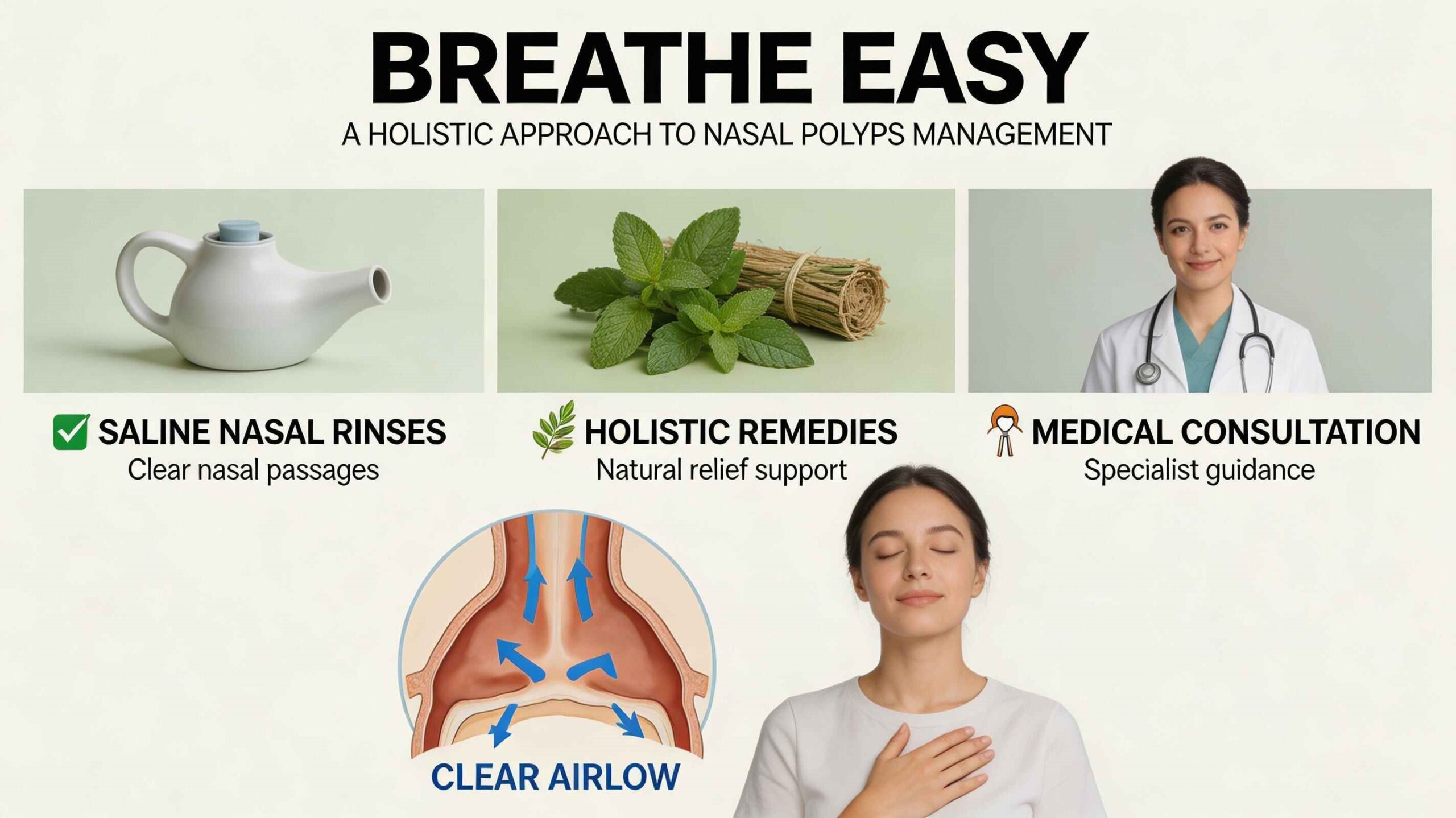
- Saline Irrigation (Nasal Rinse) This is perhaps the most effective home remedy. Using a Neti pot or squeeze bottle with a saline solution (salt water) helps flush out mucus and allergens from the nasal passages. It keeps the lining moist and can reduce the severity of symptoms. It is safe to do this daily.
- Steam Inhalation Breathing in steam helps moisturize the nasal passages and thin the mucus. Adding a few drops of essential oils like eucalyptus or peppermint can enhance the effect, as these oils have natural decongestant properties.
- Turmeric (Curcumin) Turmeric is a potent anti-inflammatory and antioxidant. Its active compound, curcumin, can help manage systemic inflammation. Drinking “Golden Milk” (turmeric latte) or taking curcumin supplements may help reduce the underlying inflammation that fuels polyp growth.
- Bromelain Bromelain is an enzyme found in pineapples. Studies suggest it can reduce swelling in the nasal passages and improve breathing. It is often sold as a supplement and is popular among patients recovering from sinus surgery.
- Tea Tree Oil Tea tree oil has antimicrobial and anti-inflammatory properties. While it should never be ingested, adding a few drops to a steam bowl or using it in a diffuser can help clear congested airways.
- Vitamin D and Magnesium Vitamin D deficiency has been linked to increased risk of chronic sinusitis. Ensuring adequate levels may help regulate the immune system. Magnesium can help relax the muscles around the airways and reduce histamine release.
