
Table of Contents
The Hidden Hazard: Unveiling the Health Risks of Toxic Fabrics in Your Daily Wardrobe
Introduction: The Unseen Dangers in Your Closet
We live in an era of unprecedented convenience. Fashion is faster, cheaper, and more accessible than ever before. We walk into a store, see a trendy shirt for the price of a latte, and think nothing of adding it to our collection. We meticulously read the labels on our food, scrutinizing sugar content and ingredient lists, yet we rarely glance at the tags stitched into the back of our clothes. We assume that if it is sold in a store, it must be safe. But what if the very fabrics resting against your skin—your body’s largest and most absorbent organ—are silently compromising your health?
The concept of toxic fabrics is not a conspiracy theory; it is a chemical reality. From the pesticides used to grow natural fibers to the complex synthetic polymers and finishing agents applied in manufacturing, our clothing is often a cocktail of hazardous substances. While the immediate danger of wearing a polyester shirt might not be visible, the long-term accumulation of toxins, hormonal disruption, and the prevalence of textile dermatitis are becoming impossible to ignore.
In this deep dive, we will explore the shadowy side of the textile industry, uncovering the specific synthetic clothing health risks, identifying the most hazardous materials, and guiding you toward a safer, non-toxic wardrobe.
Your Skin is Not a Barrier—It’s a Sponge
To understand why fabric safety is critical, we must first understand the physiology of the human body. For decades, the prevailing wisdom was that the skin was a fortress—a solid barrier protecting our insides from the outside world. However, modern dermatology and toxicology have revealed that the skin is far more porous than we realized. It is a semipermeable membrane.

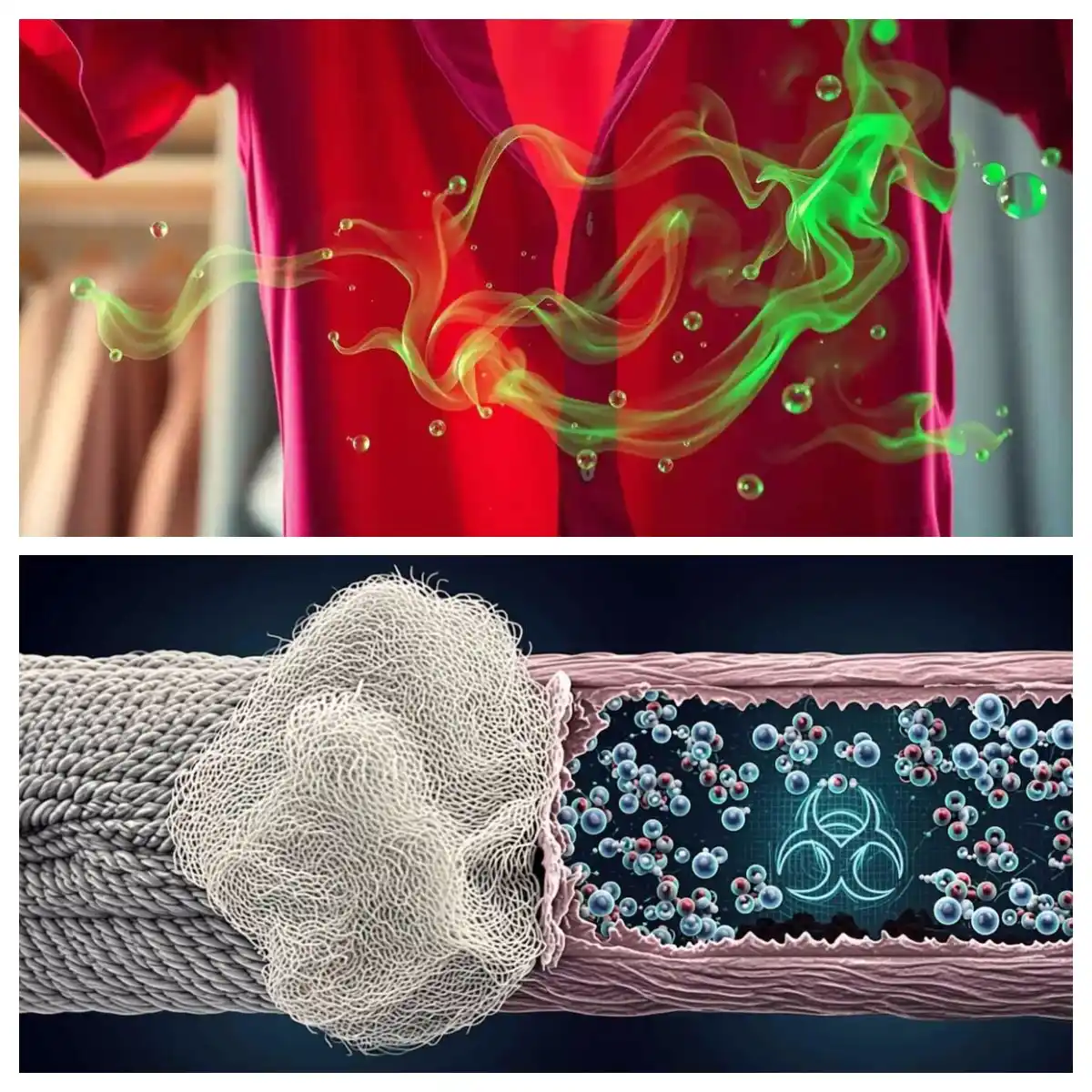
When we wear tight clothing, sweat, and generate body heat, we create the perfect environment for chemical absorption. This process, known as dermal uptake, allows microscopic chemical compounds to bypass the liver and kidneys (our primary detox organs) and enter the bloodstream and lymphatic system directly.
Consider the average day. You wear your work clothes for 8 to 10 hours. You wear your gym clothes, tight and soaked in sweat, for an hour or more. You sleep in pajamas for 8 hours. That is nearly 24 hours a day where your skin is in intimate contact with textile fibers. If those fibers contain formaldehyde in clothes, phthalates, or heavy metals, your body is acting as a slow-release filtration system for the fashion industry’s waste.
The Heat and Moisture Factor
The risk of absorption skyrockets when heat and moisture are introduced. This is why athletic wear is a significant category of concern. As you exercise, your pores dilate, and blood flow to the skin’s surface increases. Simultaneously, friction between the fabric and skin creates micro-abrasions. If your yoga pants are treated with anti-moisture chemicals or dyes containing heavy metals, these chemicals can enter your system much more efficiently than they would through dry, cool skin.
The Synthetic Scourge – Polyester, Nylon, and Acrylic
The backbone of fast fashion is petroleum. Fast fashion hazards are intrinsically linked to the rise of synthetic fibers—primarily polyester, nylon, and acrylic. These are essentially plastics spun into threads. While they offer durability and low cost, they carry a heavy health burden.
Polyester: The Static Trap
Polyester is the most common fiber in the world. It is a polymer derived from crude oil. While it is versatile, it is hydrophobic, meaning it repels water. This might sound good for staying dry, but for the human body, it is problematic. Our skin needs to breathe. When we sweat in polyester, the moisture is trapped between the skin and the fabric, creating a humid environment that breeds bacteria and fungi.
Healthwise, polyester often contains antimony, a chemical used in the production process. Antimony is a known carcinogen, and while the levels in finished clothing are generally considered low, long-term exposure is still a subject of concern. Furthermore, polyester is often treated with perfluorinated compounds (PFCs) to make it stain-resistant—a topic we will revisit in detail regarding PFAS in fabrics.
Nylon: Allergies and Toxicity
Nylon, another petroleum-based synthetic, is ubiquitous in hosiery, swimwear, and activewear. Nylon production involves strong acids and chemicals, including hexamethylenediamine and adipic acid. Residues of these chemicals can remain in the fabric. Nylon is also notorious for its lack of breathability, leading to “polymer poisoning” or skin rashes in sensitive individuals. For many people, the “new clothes smell” is actually the off-gassing of volatile organic compounds (VOCs) trapped in the nylon fibers during manufacturing. In enclosed spaces or during heavy sweating, inhaling these VOCs or absorbing them through the skin can contribute to headaches and respiratory irritation.
Acrylic: The Slow Burn
Acrylic fabric is designed to mimic wool but is essentially liquid acrylic acid. It is widely used in sweaters and cold-weather gear. Acrylic production is highly energy-intensive and involves volatile organic compounds. One of the lesser-discussed risks of acrylic is its flammability. To combat this, manufacturers often add flame retardants, many of which are bio-accumulative (build up in the body) and linked to thyroid disruption and neurological issues.
The Chemical Cocktails – Finishing Treatments
The raw fiber is only the beginning. The true danger often lies in the finishing treatments applied to the fabric to give it desirable properties like “wrinkle-free,” “stain-resistant,” or “anti-static.”
The Formaldehyde Problem
You likely associate formaldehyde in clothes with high school biology labs or funeral homes. However, formaldehyde is a staple in the textile industry. It is used in “permanent press” or “wrinkle-resistant” treatments to cross-link the cellulose fibers in cotton and rayon, preventing them from wrinkling.
The Health Impact: Formaldehyde is a known human carcinogen. For the average wearer, the immediate risk is contact dermatitis—a red, itchy, blistering rash. However, the long-term risk is far more severe. Chronic exposure to low levels of formaldehyde has been linked to nasopharyngeal cancer and leukemia. Because formaldehyde is highly water-soluble, it is released onto your skin when you sweat.
The tragedy is that this chemical is almost entirely unnecessary. Properly spun cotton doesn’t need formaldehyde to look good; we use it solely for the convenience of not having to iron our shirts.
PFAS: The “Forever Chemicals”
In recent years, the term PFAS (Per- and polyfluoroalkyl substances) has dominated environmental health headlines. These are a group of over 12,000 chemicals used to make products resistant to water, oil, grease, and heat. In textiles, they are found in waterproof jackets, stain-resistant carpets, and activewear.
PFAS are called “forever chemicals” because they do not break down in the environment or the human body. They bioaccumulate. Health Impacts: Studies have linked PFAS exposure to a litany of severe health issues:
- Hormonal Disruption: They mimic hormones, interfering with thyroid function and reproductive health.
- Immune System Suppression: Reduced ability to fight infections and lowered response to vaccines.
- Cancer: Increased risk of kidney and testicular cancers.
- Obesity and Lipid Metabolism: PFAS can disrupt the body’s metabolism, contributing to weight gain.
When you wear “waterproof” hiking gear or stain-resistant pants, you are wrapping yourself in a layer of PFAS. Every time you wash them, you are also shedding these chemicals into the water supply, contributing to a cycle of environmental contamination that eventually circles back to our drinking water.
The Dye Dilemma – Azo Dyes and Heavy Metals
The vibrant colors of the fashion world come at a cost. Conventional textile dyeing is one of the most polluting industrial processes in the world, but the impact isn’t just environmental; it’s personal.
Azo Dyes
Approximately 60-70% of the dyes used globally are Azo dyes. Under specific conditions—particularly when they come into contact with sweat, saliva, or urine—certain Azo dyes can break down into aromatic amines. These amines are potent carcinogens. While the EU has banned Azo dyes that can release these carcinogenic amines, regulations in other parts of the world, including the US, are less stringent. Cheap, imported garments are the most common culprits. Wearing dark, unwashed denim or vibrantly colored t-shirts against sweaty skin poses a risk of absorbing these carcinogenic compounds directly.
Heavy Metals
Heavy metals like lead, cadmium, mercury, and chromium are frequently used in dyes to achieve specific shades and in accessories like zippers and buttons.
- Lead: Often found in the pigments of brightly colored fabrics, especially in children’s costumes or cheap accessories. Lead exposure is neurotoxic and particularly dangerous for children, affecting brain development.
- Chromium: Used in leather tanning and some dyes. Chromium VI is highly toxic and a known skin irritant and carcinogen.
- Cadmium: Used in yellow and orange dyes. It is a known carcinogen and causes kidney damage.
Textile Dermatitis and Chemical Sensitivities
For many people, the reaction to these fabrics is immediate and visible. Textile dermatitis is a form of contact dermatitis caused by an allergic reaction to the chemicals in clothing or the rough texture of synthetic fibers.
Symptoms
Symptoms typically appear in areas where clothing fits tightly or where sweat accumulates: the waistband area, armpits, thighs, and neck. They include:
- Red, bumpy rashes.
- Itching and burning sensations.
- Dry, scaly skin.
- Blistering in severe cases.
The Latex Factor
Beyond the main fabric, elastic components in waistbands, bras, and socks often contain latex or rubber accelerators. These chemicals are necessary to vulcanize the rubber, but are common allergens. If you have unexplained rashes around your waist or under your bra line, the elastic is a prime suspect.
Multiple Chemical Sensitivity (MCS)
A growing subset of the population suffers from Multiple Chemical Sensitivity, a condition where low-level exposure to everyday chemicals causes a wide range of symptoms. For these individuals, walking into a clothing store filled with off-gassing synthetic fabrics can trigger migraines, fatigue, brain fog, and respiratory distress. While MCS is controversial in some medical circles, the suffering of these patients is real and highlights the physiological burden our chemical-laden wardrobes place on the body.
Microplastics – The Invisible Invasion
Perhaps the most insidious health risk of synthetic fabrics is one you cannot see: microplastics in clothing. Every time you wear, wash, or move in a synthetic garment (polyester, nylon, acrylic), it sheds microscopic fibers.
Inhalation and Ingestion
These fibers are not just an ocean pollution problem; they are an air quality problem. A study by the University of Plymouth found that people could be ingesting up to 5 grams of plastic per week—the equivalent of a credit card. Much of this comes from drinking water and food contaminated with microplastics, but inhalation is a major route of exposure. When you wear fleece or polyester activewear, you are constantly breathing in microplastic fibers that shed into the air around you.
Health Implications of Microplastics
Research into the health impacts of microplastics is ongoing, but early findings are concerning. These tiny particles have been found in human blood, placentas, and lung tissue.
- Inflammation: Microplastics can cause inflammation in tissues.
- Cell Damage: They may cause damage to cell membranes.
- Carrier for Toxins: Microplastics act as sponges for other toxins, including PCBs and dioxins, carrying them directly into the body’s tissues.
The “Natural” Trap – When Cotton and Rayon Aren’t Safe
We often equate “natural” with “safe.” Unfortunately, the production of natural fibers is rife with chemical intervention.
Conventional Cotton
Cotton is often marketed as the “fabric of our lives,” but conventional cotton is one of the dirtiest crops in the world. It occupies only 2.5% of the world’s agricultural land but consumes 16% of the world’s insecticides. The cottonseed is pressed for oil (found in processed foods), while the fiber is turned into clothing. Residues of pesticides like glyphosate can remain on the fabric. While the levels are low, they add to the cumulative toxic load of the body. Furthermore, the bleaching process used to whiten cotton creates dioxins—highly toxic environmental pollutants that accumulate in the food chain and human tissue.
Rayon and Viscose
Rayon is made from wood pulp, a renewable resource. However, turning wood into a soft fabric requires a harsh chemical process involving sodium hydroxide and carbon disulfide. Carbon disulfide is a potent neurotoxin. While most of it is supposed to be washed out, factory workers often suffer severely, and residues can remain in the final product for sensitive skin. A specific type of rayon, Viscose, has been linked to deforestation, which is an environmental health issue, but chemically, it is often treated similarly to conventional cotton with dyes and finishes.
Vulnerable Populations – Who is at Risk?
Not everyone reacts to hazardous fabrics equally. Certain groups are exponentially more vulnerable to chemical sensitivities and toxic absorption.
Children and Infants
Children are not just “small adults.” Their skin is thinner and more permeable. They breathe more air relative to their body weight than adults. Their detoxification systems (liver and kidneys) are still developing. Because they chew on their clothes and spend time on carpets (which are often synthetic and treated with stain guards), their exposure to PFAS in fabrics and heavy metals is disproportionately high. Choosing safe clothing materials for children is arguably the most critical purchasing decision a parent can make.
Pregnant Women
During pregnancy, the body undergoes massive hormonal shifts. Endocrine-disrupting chemicals found in fabrics (like phthalates and PFAS) can cross the placental barrier. Studies suggest that prenatal exposure to these chemicals can affect birth weight, cognitive development, and the future fertility of the child.
Industrial Workers
We cannot discuss fabric safety without mentioning the workers who make our clothes. Textile workers are exposed to raw chemicals at high concentrations daily. “Byssinosis” (brown lung disease) is a condition caused by inhaling cotton dust, but chemical poisoning from dyes and solvents is rampant in manufacturing hubs. The ethical consumption of clothing must consider the health of the maker as well as the wearer.
Identifying Hazardous Fabrics
How can you tell if a garment is safe? It isn’t always easy, but there are red flags.
The “Sniff” Test
If a garment has a strong chemical smell, return it. That smell is the off-gassing of VOCs, formaldehyde, or dye fixatives. Even if you wash it, the chemical load is likely high.
“Easy Care” Labels
Labels that promise “wrinkle-free,” “non-iron,” “stain-resistant,” or “water-repellent” are essentially advertisements for chemical treatments. The performance of the fabric comes at the cost of your health.
Color Intensity
Dark, saturated colors like black and navy blue are often achieved using heavy metal dyes. While organic dyes exist, in conventional fast fashion, darker colors pose a higher risk of dye transfer and absorption.
The Solution – Safe Clothing Materials and Sustainable Textile Standards
Navigating away from hazardous fabrics requires a shift in mindset. It requires prioritizing health over convenience and quality over quantity.
The Gold Standards
- Organic Cotton (GOTS Certified): The Global Organic Textile Standard (GOTS) is the world’s leading processing standard for textiles made from organic fibers. It restricts the use of toxic bleaches, dyes, and formaldehyde.
- Linen: Made from the flax plant, linen is naturally moth-resistant, requires little water to grow, and is fully biodegradable. It is one of the strongest natural fibers and is naturally cooling.
- Hemp: Hemp grows without pesticides, enriches the soil, and is naturally anti-microbial and UV resistant. It softens with every wash.
- Wool (Responsibly Sourced): Natural wool is fire-resistant (without chemical retardants), moisture-wicking, and anti-bacterial. Look for organic or responsible wool standards.
- Tencel/Lyocell: A branded form of rayon made from sustainably sourced wood pulp. The production process uses a “closed-loop” system that recycles the water and solvents, making it much safer for workers and wearers than traditional viscose.
Certifications to Trust
When shopping, look for these labels:
- OEKO-TEX Standard 100: This is a testing and certification system for textile products. It guarantees that every component of the article (thread, button, fabric) has been tested for harmful substances.
- Bluesign: This system ensures that products are produced with the lowest possible impact on people and the environment.
- GOTS: Guarantees organic status and ethical labor practices.
Detoxing Your Wardrobe
Transitioning to a non-toxic wardrobe doesn’t happen overnight. It is a process.
Step 1: Audit
Go through your closet. Identify items that are tight-fitting synthetics, anti-wrinkle, or heavily dyed. These are the ones to discard or donate first. Prioritize replacing items that touch your most sensitive areas (underwear, bras, sleepwear).
Step 2: Wash Before You Wear
Never wear new clothes without washing them. A single wash can significantly reduce the surface load of chemicals, formaldehyde, and excess dyes. Use a non-toxic, fragrance-free detergent.
Step 3: Embrace “Vintage”
Older clothes (pre-2000s) are often safer than new fast fashion. While they may have been treated with chemicals decades ago, those chemicals have largely washed out over the years of wear. Thrifting is also an eco-friendly way to avoid the carbon footprint of new production.
Step 4: Invest in Quality
We have been trained to view clothing as disposable. Shift your budget to buy fewer, better-quality items made from natural fibers. A $100 organic cotton shirt that lasts 5 years is a better investment for your health and wallet than ten $10 polyester shirts that degrade in a season.
