
Table of Contents
The Silent Saboteur: How Cardiac Arrest Strikes Without High Cholesterol
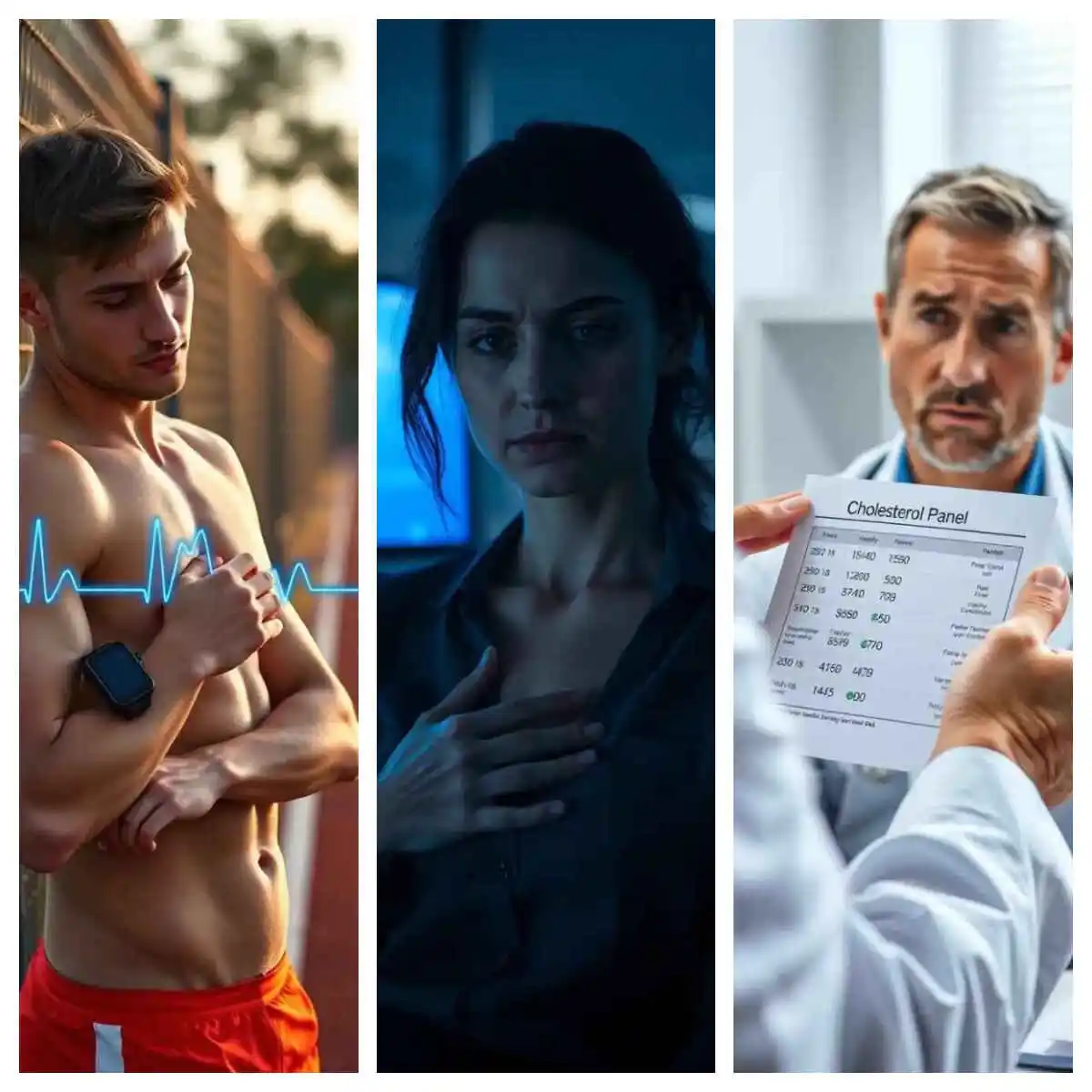
For decades, a simple number on a blood test has dictated how we view our heart health. We have been conditioned to believe that cholesterol is the ultimate gatekeeper of cardiovascular destiny—that if your LDL is low and your HDL is high, you are essentially immune to the devastating grip of heart disease. You eat your oatmeal, you avoid the butter, you take your statins if prescribed, and you breathe a sigh of relief when your annual bloodwork comes back looking pristine. But beneath this comforting illusion of safety lies a terrifying medical reality: cardiac arrest frequently happens in people with perfectly normal, even optimal, cholesterol levels.
When a seemingly healthy individual—perhaps a marathon runner, a fitness enthusiast, or a young professional with spotless bloodwork—collapses without warning, the shockwaves ripple through families and communities. The immediate question is always the same: “But their cholesterol was fine, how could this happen?”
To understand this phenomenon, we must dismantle the cholesterol-centric view of cardiology and look at the heart for what it truly is: a complex, electromechanical organ. Heart attacks and cardiac arrests are not the same things, though they are often conflated. A heart attack (myocardial infarction) is a “plumbing” problem, usually caused by cholesterol-filled plaque rupturing and blocking an artery. Cardiac arrest, on the other hand, is an “electrical” problem. It is a sudden, catastrophic failure of the heart’s electrical system, causing the organ to quiver uselessly instead of pumping blood. While a severe heart attack can trigger cardiac arrest, the arrest itself can happen entirely independently of blocked arteries, plaque, or cholesterol.
If cholesterol isn’t the culprit, what is? The answer lies in a web of hidden syndromes, electrical misfires, structural anomalies, and environmental triggers that can turn a healthy heart into a lethal weapon without a single warning sign.

The Electrical Grid Failure: When the Wiring Misfires
Imagine your heart as a house. The muscles are the walls, the blood vessels are the plumbing, and the electrical system is the wiring. You can have pristine copper pipes (clear arteries) and strong drywall (healthy muscle), but if a short circuit occurs in the breaker box, the house goes dark instantly.
The heart’s electrical system is governed by the sinoatrial (SA) node, the heart’s natural pacemaker, which generates electrical impulses that travel down through the atrioventricular (AV) node and into the ventricles, causing them to contract in a synchronized, rhythmic pumping motion. When this electrical cascade is disrupted, the result is an arrhythmia—an irregular heartbeat.
Most arrhythmias are benign. You might feel a fluttering in your chest after a double espresso or a sleepless night. However, some arrhythmias are lethal. The most common cause of sudden cardiac arrest is Ventricular Fibrillation (V-Fib). In V-Fib, the electrical signals that coordinate the lower chambers of the heart become chaotic. Instead of pumping, the ventricles just quiver. Blood flow to the brain and body stops instantly. Without an electrical shock (defibrillation) within minutes, brain death occurs.
Crucially, V-Fib has absolutely nothing to do with cholesterol. It happens because of microscopic electrical instability in the heart muscle cells. This instability can be inherited, acquired through scarring, or triggered by external stressors.
The Genetic Ghosts: Inherited Channelopathies
For a terrifying number of young, healthy individuals who suffer cardiac arrest, the root cause is written into their DNA. These are known as “channelopathies”—genetic mutations that affect the microscopic ion channels (sodium, potassium, calcium) in the heart muscle cells. These channels are the gates that let electricity in and out of the cell. If the gates are malformed due to a genetic defect, the heart’s electrical system is a ticking time bomb, entirely invisible on a standard cholesterol panel or even a basic resting electrocardiogram (ECG).
Long QT Syndrome (LQTS): This is a disorder of the heart’s electrical recharging system. After every heartbeat, the heart’s cells need to reset electrically (the QT interval on an ECG). In people with LQTS, this reset takes too long. If a sudden surge of adrenaline hits the heart while it is still trying to reset—such as from a sudden loud noise, jumping into cold water, or intense emotional stress—it can trigger a chaotic, lethal arrhythmia called Torsades de Pointes, leading to instant cardiac arrest.
Brugada Syndrome: This is a rare but deadly genetic disorder characterized by abnormal electrocardiogram findings. It primarily affects men and is a leading cause of sudden unexplained nocturnal death syndrome (SUNDS). The heart’s electrical system functions normally most of the time, but during rest or sleep, it can suddenly spike into V-Fib. Many people with Brugada syndrome have normal cholesterol, no structural heart defects, and live entirely normal lives until their heart suddenly stops.
Catecholaminergic Polymorphic Ventricular Tachycardia (CPVT): This is a genetic condition where the heart’s electrical system becomes highly sensitive to adrenaline. A child or young adult with CPVT might be completely fine while sitting at a desk. But put them in a competitive sports game or an amusement park ride, and the flood of adrenaline overwhelms their ion channels, triggering ventricular tachycardia and subsequent cardiac arrest. Again, cholesterol is an entirely irrelevant metric in these cases.
The Plumbing Problem Without the Plaque: Coronary Spasms
If we move away from the electrical system and look at the plumbing, we are still not safe from the “normal cholesterol” trap. While cholesterol causes a slow, progressive narrowing of the arteries (atherosclerosis), there is another phenomenon that can close an artery instantly: Coronary Artery Spasm, also known as Prinzmetal’s Angina or Variant Angina.
Unlike a heart attack caused by plaque, a coronary spasm is a sudden, temporary tightening of the smooth muscle within the wall of one of the coronary arteries. When the artery spasms, it narrows drastically, temporarily choking off the blood supply to a portion of the heart muscle. If the spasm lasts long enough (often just a few minutes, but long enough to starve the tissue of oxygen), it can trigger ventricular fibrillation and sudden cardiac arrest.
What causes a healthy artery to suddenly clamp shut? The culprit is usually endothelial dysfunction. The endothelium is the delicate inner lining of the blood vessels. It produces nitric oxide, a chemical that tells the artery muscles to relax. If the endothelium is damaged or dysfunctional, it stops producing enough nitric oxide, and the blood vessels become hyper-reactive, prone to sudden, violent spasms.
Endothelial dysfunction can be caused by smoking, stress, exposure to cold, certain medications (like certain migraine treatments or chemotherapy drugs), and inflammation. A person can have clear arteries with zero cholesterol buildup, but if their endothelium is dysfunctional, a spasm can kill them in an instant. Because cholesterol isn’t involved, a standard lipid panel offers zero protection against this silent killer.
Structural Flaws in the Foundation: Hidden Anomalies
Even if the wiring is fine and the pipes are clear, the physical structure of the heart itself can be a death trap. Structural heart diseases are often congenital (present from birth) or develop due to infections, and they frequently exist in people with impeccable cholesterol levels.
Hypertrophic Cardiomyopathy (HCM): This is perhaps the most well-known cause of sudden cardiac death in young athletes. HCM is a genetic condition where the heart muscle wall, specifically the left ventricle, becomes abnormally thick and stiff. This thickening makes it harder for the heart to pump blood out to the body. More dangerously, the thickened muscle can disrupt the electrical pathways of the heart, creating a physical barrier that causes electrical signals to short-circuit into lethal arrhythmias during intense physical exertion. An athlete with HCM will likely pass every cholesterol test and every basic physical exam, but the underlying structural defect remains hidden until a fatal event occurs on the football field or the basketball court.
Myocarditis: This is an inflammation of the heart muscle, usually caused by a viral infection (such as Coxsackievirus, influenza, or even SARS-CoV-2). When a virus attacks the heart muscle, it causes acute inflammation and swelling. As the body’s immune system fights the virus, it can inadvertently damage the heart cells, leaving behind microscopic scars (fibrosis). These scars act as islands of dead tissue that do not conduct electricity properly. When an electrical impulse hits a patch of scar tissue, it has to go around it, which can cause the impulse to split, circle back, and set off a lethal loop of electrical chaos. A perfectly healthy, cholesterol-normal individual can get a seemingly mild flu, develop silent myocarditis, and suffer sudden cardiac arrest weeks later without ever knowing their heart was compromised.
Valvular Abnormalities: While less common as a direct cause of sudden primary cardiac arrest compared to arrhythmias, severe undiagnosed valve issues—like critical aortic stenosis (a narrowing of the aortic valve)—put immense strain on the heart muscle over time, leading to thickening and electrical instability.
The Inflammation Illusion: Vulnerable Plaque
It is a little-known fact among the general public that roughly 50% of men and 20% of women who suffer a heart attack have normal LDL cholesterol levels. How is this possible? The answer lies in arterial plaque and the role of systemic inflammation.
We used to think of cholesterol buildup like sludge clogging a pipe—slowly narrowing the pipe until it stops up. We now know this is false. Arteries are living tissue, and plaque doesn’t just sit there; it lives and breathes within the artery wall.
A person can have a very low cholesterol level but still harbor small, “vulnerable” plaques hidden inside the walls of their coronary arteries. The danger of these plaques is not their size, but their stability. If a person has high systemic inflammation—driven by things like chronic stress, poor sleep, autoimmune conditions, hidden infections, or a diet high in processed sugars (even if low in fat)—this inflammation can weaken the thin, fibrous cap that holds the plaque inside the artery wall.
If that cap ruptures, the body reacts as if there is a cut inside the artery. Platelets rush to the site to form a clot. Even if the underlying plaque was tiny, the resulting blood clot can completely block the artery in seconds, causing a massive heart attack and subsequent cardiac arrest. A standard cholesterol panel measures the amount of fat in the blood, but it measures absolutely nothing about the inflammation or the stability of existing plaques. People die with normal cholesterol because doctors and patients alike look at the lipid panel, see a good number, and ignore the inflammatory markers (like hs-CRP) that actually predict plaque rupture.
Environmental and Lifestyle Detonators
Even if you have a perfectly healthy heart, zero genetic predispositions, clear arteries, and no inflammation, certain external factors can act as a detonator, forcing a normal heart into cardiac arrest. These triggers bypass cholesterol entirely.
Electrolyte Imbalances: The heart’s electrical system is entirely dependent on microscopic minerals floating in the bloodstream—specifically potassium, magnesium, calcium, and sodium. These minerals are the actual physical carriers of the electrical charge from one heart cell to the next. If your electrolytes fall out of balance, the heart’s electrical grid crashes. Severe dehydration, excessive sweating during a marathon without proper replenishment, severe diarrhea or vomiting, or the misuse of diuretics or laxatives can cause potassium or magnesium levels to plummet. The result? A sudden, unheralded cardiac arrest. This happens frequently in extreme endurance athletes who believe that because they are fit, they are immune to heart issues.
The Adrenaline Tsunami (Stress Cardiomyopathy): Also known as “Broken Heart Syndrome” or Takotsubo Cardiomyopathy, this is a temporary, sudden weakening of the heart’s left ventricle. It is triggered by a massive surge of stress hormones, such as adrenaline and noradrenaline, usually following an intensely emotional or physically traumatic event—like the sudden loss of a loved one, a horrific car accident, or even a surprise party. This massive flood of hormones essentially “stuns” the heart muscle, causing the bottom of the heart to balloon out and stop pumping effectively. This can lead to acute heart failure, dangerous arrhythmias, and sudden cardiac arrest. Cholesterol has absolutely no bearing on Takotsubo syndrome; it is purely a hormonal and neurological event.
Substance Abuse and Toxins: Certain recreational drugs and even some medications are profoundly toxic to the heart’s electrical system. Cocaine is a notorious cause of sudden cardiac arrest. It acts as a powerful vasoconstrictor (causing coronary spasms) and a massive stimulant (causing lethal electrical arrhythmias), often simultaneously. Other stimulants like methamphetamines, or even excessive doses of certain over-the-counter cold medications containing pseudoephedrine, can trigger fatal arrhythmias in susceptible individuals.
Sleep Apnea and Oxygen Deprivation: Obstructive Sleep Apnea (OSA) is a condition where a person stops breathing repeatedly during sleep. This creates severe drops in blood oxygen levels and massive spikes in chest pressure. These nightly battles starve the heart of oxygen and cause chronic strain on the right side of the heart. Over time, the heart muscle stretches and becomes irritable, vastly increasing the risk of nocturnal arrhythmias and sudden cardiac death in sleep. A person with severe sleep apnea can have the cholesterol levels of a teenager but the cardiac risk profile of an elderly smoker.
Recognizing the Silent Warning Signs
Because cardiac arrest without high cholesterol lacks the “warning” of a poor blood test, we must be hyper-vigilant about physical symptoms. While cardiac arrest itself is instantaneous and usually symptomless until the person collapses, the underlying conditions often whisper warnings beforehand, if only we know how to listen.
- *Syncope (Fainting): Unexplained fainting, or near-fainting (feeling dizzy, tunnel vision, extreme lightheadedness), especially during physical exertion or when startled or stressed, is a massive red flag for conditions like HCM, Long QT, or Brugada syndrome. It should never be dismissed as “just being dehydrated” if it happens repeatedly.
- *Palpitations with Symptoms: Everyone gets palpitations sometimes. But if a racing, fluttering, or pounding heart is accompanied by chest pain, shortness of breath, dizziness, or a feeling of impending doom, it requires immediate medical evaluation.
- *Unexplained Seizures: Many episodes of sudden cardiac arrest are misdiagnosed as seizures because when the brain is suddenly deprived of blood, the body can jerk and convulse. If a person has a “seizure” but has no history of epilepsy, a cardiac evaluation (looking for arrhythmias) is absolutely critical.
- Extreme, Unusual Fatigue: While non-specific, a sudden onset of profound exhaustion, particularly if it prevents you from completing tasks you normally do with ease, can be a sign of underlying myocarditis, heart failure, or a silent inflammatory process.
Moving Beyond the Cholesterol Illusion: How to Actually Protect Yourself
If normal cholesterol isn’t a shield, what is? The modern approach to cardiac prevention requires looking at the entire patient, not just a number on a lab printout.
- Demand Advanced Testing: If you have a family history of sudden cardiac death, unexplained fainting, or if you are an intense endurance athlete, ask your doctor for more than a lipid panel. Request an advanced lipid test (which looks at particle size and number), a high-sensitivity C-Reactive Protein (hs-CRP) test to measure inflammation, and an advanced coronary calcium score (a CT scan that actually looks for calcified plaque in the arteries, bypassing blood tests entirely).
- Genetic Screening: If anyone in your immediate family died suddenly under the age of 50, you should be evaluated for inherited channelopathies like Long QT or Brugada syndrome. This usually involves a simple ECG, but may require genetic testing.
- Wearable Technology: Smartwatches that feature FDA-cleared ECG apps and heart rate variability monitors are revolutionizing the detection of silent arrhythmias like A-Fib, which can be precursors to more dangerous electrical events. While they don’t catch everything, they provide a continuous stream of data that a 10-second ECG in a doctor’s office might miss.
- Address the Invisible Stressors: Manage your stress, treat sleep apnea aggressively with a CPAP machine, stay meticulously hydrated and mindful of electrolyte balance if you exercise heavily, and avoid stimulant abuse. The heart is an emotional and environmental sponge; it reacts to everything you put into your body and everything you experience in your mind.
- Learn CPR: Because sudden cardiac arrest can strike anyone, anywhere, regardless of their cholesterol, the ultimate safety net is community preparedness. If a loved one’s heart suddenly stops, your ability to perform high-quality, continuous chest compressions immediately is the only thing standing between them and brain death before a defibrillator arrives.
The myth that low cholesterol equals a safe heart is not just outdated; it is dangerous. It breeds a false sense of security that blinds us to the true, complex nature of cardiovascular disease. The heart can be brought to its knees by a microscopic genetic flaw, a sudden spasm in a clear artery, a microscopic scar from a forgotten flu, or a massive surge of adrenaline.
We must stop treating the heart like a simple plumbing fixture governed by dietary fat. It is a high-voltage, intricately wired, structurally complex engine. To truly protect ourselves from the silent saboteur of sudden cardiac arrest, we must open our eyes to the entire landscape of cardiac health—looking past the cholesterol numbers and into the very wiring, structure, and environment of the organ that keeps us alive.
FAQs
The Cholesterol Myth & Basic Mechanics
- Can a person suffer a cardiac arrest if their cholesterol levels are completely normal?
Yes. Cardiac arrest is often an “electrical” problem rather than a “plumbing” problem, meaning it can occur due to genetic, structural, or environmental factors completely independent of cholesterol levels.
- What is the main difference between a heart attack and a cardiac arrest?
A heart attack is a “plumbing” problem caused by blocked arteries, stopping blood flow. Cardiac arrest is an “electrical” problem in which the heart’s electrical system fails, causing it to quiver rather than pump.
- Why is relying solely on a standard cholesterol blood test dangerous for heart health?
A lipid panel only measures the amount of fat in the blood. It does not measure electrical stability, genetic mutations, structural defects, arterial inflammation, or plaque stability—all of which can cause sudden cardiac arrest.
- What percentage of people who suffer a heart attack actually have normal LDL cholesterol levels?
According to the article, roughly 50% of men and 20% of women who suffer a heart attack have normal LDL cholesterol levels.
The Electrical System & Arrhythmias
- Why is cardiac arrest described as an “electrical grid failure”?
The heart relies on a specific pathway of electrical impulses (from the SA node to the AV node) to pump. If this “wiring” misfires or shorts out, the heart stops pumping, similar to a house losing power from a breaker box issue.
- What is Ventricular Fibrillation (V-Fib)?
V-Fib is a chaotic, lethal electrical malfunction in the heart’s lower chambers. Instead of pumping, the ventricles just quiver, instantly stopping blood flow to the brain and body.
- Does high cholesterol have any impact on the heart’s electrical system?
No. Cholesterol affects the blood vessels (the plumbing), but it has absolutely nothing to do with the microscopic electrical instability in heart muscle cells that cause arrhythmias and V-Fib.
Genetic Conditions (Channelopathies)
- What are inherited cardiac channelopathies?
They are genetic mutations that affect the microscopic ion channels (sodium, potassium, calcium) in the heart cells. These mutated channels act as faulty gates for electricity, creating a ticking time bomb in the heart’s wiring.
- What is Long QT Syndrome (LQTS) and what triggers it?
LQTS is a disorder where the heart’s electrical cells take too long to reset after a heartbeat. It can be triggered by sudden adrenaline surges, such as loud noises, jumping into cold water, or intense emotional stress.
- Why is Brugada Syndrome particularly dangerous during sleep?
Brugada Syndrome causes abnormal electrical activity that is often dormant during the day but can suddenly spike into lethal V-Fib during periods of rest or sleep, leading to sudden unexplained nocturnal death.
- How does Catecholaminergic Polymorphic Ventricular Tachycardia (CPVT) differ from other genetic heart conditions?
CPVT is unique because the heart’s electrical system is perfectly normal at rest, but a flood of adrenaline during physical exertion or excitement overwhelms the ion channels and triggers lethal arrhythmias.
- Can a standard resting ECG detect all genetic channelopathies?
No. The text notes that many people with these genetic conditions live normal lives, and their issues can remain entirely invisible on a basic resting electrocardiogram.
Coronary Spasms & Endothelial Health
- What is a coronary artery spasm (Prinzmetal’s Angina)?
It is a sudden, violent tightening of the smooth muscle within the wall of a coronary artery that temporarily chokes off the blood supply, which can trigger cardiac arrest without any cholesterol plaque being present.
- How can a completely clear, healthy artery suddenly close off?
If the endothelium (the delicate inner lining of the blood vessel) is dysfunctional, it stops producing nitric oxide. Without this chemical telling the artery muscles to relax, the artery becomes hyper-reactive and prone to sudden spasms.
- What causes endothelial dysfunction if not cholesterol?
It can be caused by smoking, chronic stress, exposure to cold, certain medications (like migraine treatments or chemo drugs), and systemic inflammation.
Structural Heart Defects
- What is Hypertrophic Cardiomyopathy (HCM)?
HCM is a genetic condition where the heart muscle wall (specifically the left ventricle) becomes abnormally thick and stiff, making it hard for the heart to pump blood.
- Why is HCM frequently linked to sudden death in young athletes?
The thickened muscle can physically disrupt the heart’s electrical pathways. During intense physical exertion, this structural barrier can cause electrical signals to short-circuit into lethal arrhythmias.
- How can a common viral infection like the flu lead to cardiac arrest?
A virus can cause myocarditis (inflammation of the heart muscle). As the immune system fights the virus, it can leave behind microscopic scars (fibrosis) that do not conduct electricity properly, causing electrical chaos.
- Can scar tissue on the heart actually cause an electrical short circuit?
Yes. When an electrical impulse hits a patch of dead scar tissue, it has to go around it. This can cause the impulse to split, circle back, and set off a lethal loop of electrical chaos.
The Inflammation Illusion
- What is a “vulnerable plaque”?
A vulnerable plaque is a small, hidden deposit inside the artery wall that is unstable. Its danger lies not in its size, but in its likelihood of rupturing.
- How does systemic inflammation cause a heart attack in someone with low cholesterol?
Inflammation weakens the thin, fibrous cap holding a vulnerable plaque in place. If the cap ruptures, the body forms a blood clot over it, instantly blocking the artery—even if the person’s cholesterol levels are perfectly low.
- What blood test can help predict the risk of plaque rupture that a cholesterol test misses? The article suggests testing for high-sensitivity C-Reactive Protein (hs-CRP), which measures systemic inflammation in the body.
Environmental Triggers & Toxins
- How can an extreme endurance athlete suffer a cardiac arrest despite being incredibly fit?
If an athlete becomes severely dehydrated or sweats excessively without replenishing minerals, their potassium or magnesium levels can plummet. These minerals carry the heart’s electrical charge, and an imbalance causes the electrical grid to crash.
- What is “Broken Heart Syndrome” (Takotsubo Cardiomyopathy)?
It is a temporary, sudden weakening of the heart’s left ventricle triggered by a massive surge of stress hormones (like adrenaline) following severe emotional or physical trauma.
- Why is cocaine particularly lethal to the heart, even if the user has clear arteries?
Cocaine acts as a double threat: it causes violent coronary spasms (plumbing problem) while simultaneously acting as a massive stimulant that triggers lethal electrical arrhythmias (electrical problem).
- How does Obstructive Sleep Apnea (OSA) increase the risk of cardiac arrest?
OSA causes severe drops in blood oxygen and spikes in chest pressure during sleep. This starves the heart of oxygen, stretches the muscle, makes it electrically irritable, and vastly increases the risk of nocturnal arrhythmias.
Warning Signs & Prevention
- Why should unexplained fainting (syncope) never be ignored?
Fainting during physical exertion or when startled can be a massive red flag for structural issues like HCM or electrical issues like Long QT Syndrome, signaling that the heart is briefly failing to pump blood.
- Why are some episodes of sudden cardiac arrest misdiagnosed as epileptic seizures? When the brain is suddenly deprived of blood during a cardiac arrest, the body can jerk and convulse violently, mimicking a seizure. Anyone with a “seizure” but no epilepsy history needs a cardiac evaluation.
- What is a coronary calcium score, and why is it useful?
It is a CT scan that looks directly for calcified plaque in the arteries. It bypasses blood tests entirely and can reveal hidden “plumbing” issues that a pristine cholesterol panel would miss.
- How can wearable technology help prevent sudden cardiac arrest?
Smartwatches with FDA-cleared ECG apps provide continuous monitoring of heart rhythm, which can detect silent arrhythmias (like A-Fib) that a 10-second ECG in a doctor’s office might miss.
Medical Disclaimer:
The information provided on this website is for general educational and informational purposes only and is not intended as a substitute for professional medical advice, diagnosis, or treatment. Always seek the advice of your physician or other qualified health provider with any questions you may have regarding a medical condition. Never disregard professional medical advice or delay in seeking it because of something you have read on this website.
