
Table of Contents
La Dolce Vita Blueprint: The Ultimate Guide to Planning Your Dream Italian Escape
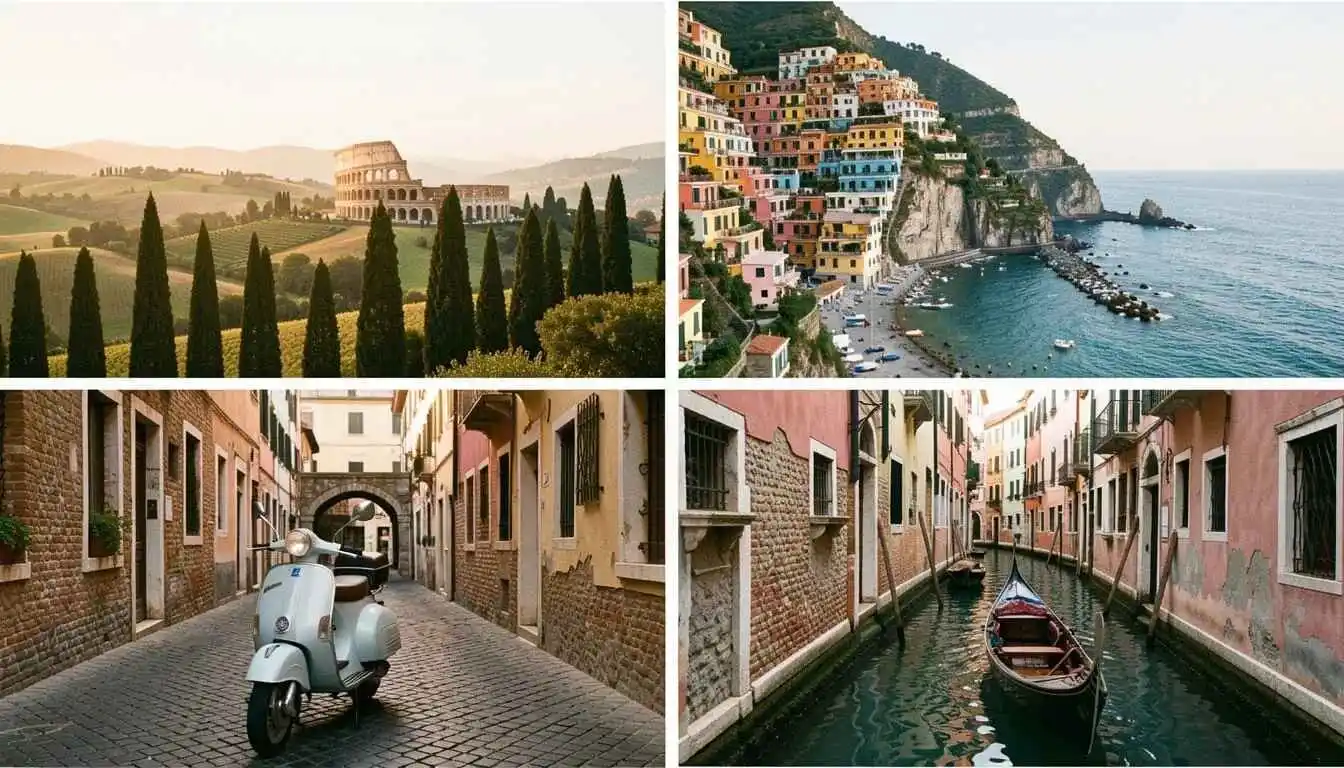
Close your eyes for a moment. Picture yourself standing on a terracotta-tiled balcony as the golden hour washes over a sea of red-clay rooftops. Below you, the rhythmic hum of Vespas weaves through narrow cobblestone alleys. The air smells faintly of roasted espresso, blooming jasmine, and the savory promise of slow-simmered ragù. You are holding a paper cup of crisp, cold prosecco, and for the first time in years, you are not looking at your watch.
This is the quintessential Italian dream—the concept of La Dolce Vita, the sweet life. It is a vision that sells millions of travel magazines and fuels countless daydreams. But there is a vast, unspoken chasm between dreaming of Italy and actually executing a trip to Italy.
Italy is a magnificent, chaotic, deeply historical, and occasionally frustrating country. It rewards meticulous planning and punishes poor logistics. If you attempt to “wing it”—treating Italy like a casual weekend getaway—you risk spending your vacation exhausted, overpaying for mediocre meals, and spending half your time staring at train schedules in a state of utter confusion.
To truly experience the magic of Italy, you need a blueprint. Planning a trip to Italy is an art form that balances ambition with relaxation, historical bucket-lists with hidden local gems, and culinary indulgence with practical logistics. Here is your comprehensive, step-by-step masterclass on how to plan the perfect Italian escape.

Phase 1: The Blueprint – Deciding When and Where
The biggest mistake first-time travelers make is trying to “do Italy” in a week. Italy is not a single destination; it is a collection of distinct micro-countries, each with its own dialect, cuisine, architecture, and pace. You cannot see Rome, Florence, Venice, the Amalfi Coast, and Cinque Terre in ten days without suffering from severe museum fatigue and cultural burnout.
Choosing Your Season: Your timing will dictate your experience.
- Spring (April to early June): Arguably the best time to visit. The weather is mild, the wildflowers are blooming in Tuscany, and the crowds haven’t yet reached their peak summer masses.
- Summer (July & August): This is fare stagione (high season). The weather is hot—often oppressively so in cities like Rome and Florence. Prices skyrocket, and popular sites are wall-to-wall with tourists. Crucial warning: August is when Italians take their own vacations. Many local family-run restaurants and shops in major cities actually close down as the owners head to the beaches. If you must go in summer, aim for the coast or the mountains.
- Autumn (September to October): The hidden gem of Italian travel. The summer heat dissipates, the vineyards explode in golden and crimson hues during the grape harvest (vendemmia), and the truffle season begins in Umbria and Piedmont. The ocean is still warm enough to swim in southern Italy.
- Winter (November to March): Perfect for avoiding crowds and experiencing authentic local life. The cities are beautifully quiet, though the Alps will be packed with skiers. Note that some seasonal coastal towns (like Positano) essentially shut down entirely between November and Easter.
Structuring Your Route For a 10 to 14-day trip, pick a maximum of three home bases. Attempting to change hotels every single night will drain your soul.
- The Classic Triad: Rome (3-4 days), Florence/Tuscany (3-4 days), Venice (2-3 days). This is perfect for first-timers wanting the big three.
- The Romantic South: Rome (3 days), Amalfi Coast (4 days), Sicily or Puglia (4 days). Best for foodies, sun-seekers, and those wanting a slower, more dramatic landscape.
- The Northern Loop: Milan/Lake Como (3 days), the Italian Riviera/Cinque Terre (3 days), Florence (3 days). Ideal for fashion, scenery, and Renaissance art.
Phase 2: Mastering the Logistics – Moving Around Italy
Once you have your route, you must decide how you will move between these points. The choices you make here will make or break your budget and your stress levels.
The Train System: Trenitalia vs. Italo Italy boasts one of the most extensive and generally efficient rail networks in Europe. You should absolutely rely on trains to travel between major cities. Flying domestically is usually a waste of time once you factor in airport transfers. There are two primary operators for high-speed trains (Frecciarossa):
- Trenitalia: The state-owned railway. Their high-speed trains connect all major cities.
- Italo: A private competitor. Their trains are often slightly newer, have fancier leather seats, and sometimes offer cheaper advance fares.
The Golden Rule of Italian Trains: Do not show up expecting to buy a ticket for the next high-speed train. High-speed trains are like airplanes: they require a seat reservation, and specific trains sell out. You must book your tickets in advance using the Trenitalia or Italo apps.
The Base vs. Supersaver Trap: When buying tickets, you will see “Base” (full price, fully flexible) and “Super Economy” or “Low Cost” (cheap, but non-refundable and non-changeable). Buy the cheap tickets if your schedule is set in stone. But beware: if you miss a Super Economy train by even one minute, your ticket is void, and you will have to buy a brand-new full-price ticket.
Regional vs. Fast: When taking day trips (e.g., Florence to Siena, or Rome to Orvieto), you will take slow regional trains (Regionale). These do not require reservations; you just buy a cheap ticket at the station or via the app and validate it in the little green machines before boarding. If you get caught without a validated ticket on a regional train, the fine is steep.
To Rent or Not to Rent a Car? This is the most critical logistical decision you will make.
- Do NOT rent a car if you are staying in Rome, Florence, Milan, or Venice. The historic centers of these cities are Restricted Traffic Zones (ZTL – Zona Traffico Limitato). These are camera-rigged zones that locals have permits for, but tourists do not. If you drive into a ZTL, a camera will snap your license plate, and three months later, a 100-euro fine will appear on your credit card. Furthermore, driving in Italian cities is pure psychological warfare.
- DO rent a car if you are exploring Tuscany, Umbria, Puglia, or the Dolomites. Having a car unlocks the magic of Italy—the tiny hilltop towns, the agriturismos (farm stays), the winding country roads lined with cypress trees. Just remember to rent a small, nimble car; the roads in rural towns were built for horse carts, not SUVs.
Phase 3: Laying Your Head – Where to Stay
Where you unpack your suitcase dictates the vibe of your trip.
Hotels: Offer predictability, daily cleaning, and concierge services. However, they can be expensive and often lack the character of local accommodations. Airbnbs: Excellent for families or those wanting a kitchen to prepare light breakfasts or store wine and cheese from your daily market runs. Agriturismos: If you are spending time in the countryside (Tuscany, Umbria), this is the ultimate choice. These are working farms or estates that offer rooms or apartments. You wake up to fresh air, homemade pastries, and sweeping views of vineyards. It is the authentic Italian countryside experience that hotels simply cannot replicate.
Neighborhood Matters: In Rome, do not stay near the Termini train station. It is noisy, gritty, and lacks the romantic charm you came for. Stay in neighborhoods like Trastevere (charming, ivy-clad, great food), Centro Storico (Pantheon area), or Monti (hip, local vibe). In Florence, avoid the area immediately surrounding the Santa Maria Novella train station; stay in the Oltrarno district (across the river) for a quieter, more artisanal feel.
Phase 4: The Art of the Itinerary – The Power of Dolce Far Niente
American tourists notoriously over-plan their itineraries. They wake up at 6:00 AM, sprint through the Colosseum, rush to the Vatican, power-walk through three churches, and then wonder why they are collapsing in a puddle of tears by 2:00 PM.
You must embrace the Italian concept of Dolce Far Niente—the sweetness of doing nothing. Plan for one or two “anchor” activities per day (e.g., the Uffizi Gallery in the morning), and leave the rest of the day completely open. Allow yourself time to sit on a piazza, drink an espresso, watch the world go by, and get lost in the winding medieval streets.
When planning museum visits, pre-book everything. You cannot walk up to the Uffizi, the Accademia (to see David), the Colosseum, or the Vatican Museums and expect to get in. You will be met with three-hour lines or be turned away entirely. Buy skip-the-line tickets months in advance. Even better, look into “After-Hours” tours of the Vatican or Colosseum—seeing the ancient ruins at sunset without the crowds is a transcendent experience.
Phase 5: Fueling the Soul – The Italian Food Guide
You are going to Italy to eat. Therefore, understanding how Italians eat is just as important as knowing how to navigate the trains.
The Meal Structure
- Colazione (Breakfast): Do not expect eggs, bacon, and pancakes. Italian breakfast is sweet. You go to a café (bar), stand at the counter, drink a cappuccino, and eat a cornetto (a croissant, often plain or filled with cream or jam). Crucial Etiquette: Cappuccino is a morning drink. Italians drink it strictly before 11:00 AM. Ordering a cappuccino after a heavy lunch or dinner is considered an insult to your digestion.
- Pranzo (Lunch): Traditionally, the largest meal of the day, eaten between 1:00 PM and 3:00 PM.
- Aperitivo: The greatest culinary hack in Italy. Between 6:00 PM and 8:00 PM, bars offer an aperitivo (usually a spritz like an Aperol Spritz or a Negroni) accompanied by a buffet of snacks (pizza bites, cheeses, olives, pasta salads). For 8 to 12 euros, you can effectively eat dinner before going to a restaurant.
- Cena (Dinner): Eaten late, rarely before 7:30 PM, often around 8:30 PM or 9:00 PM.
Avoiding the Tourist Traps Restaurants right on the main piazzas with pictures of the food outside and waiters aggressively waving menus in your face are almost always overpriced and mediocre.
- Look for the Coperto: You will almost always see a “coperto” (cover charge) of 2 to 4 euros per person on your bill. This is not a tip; it is the cost of the bread, the tablecloth, and the silverware. It is perfectly legal and standard. Do not complain about it.
- How to spot a good spot: Walk down a side street. Look for a menu written only in Italian. If there isn’t an English translation, it means it is a place where locals eat, not tourists. Look for a handwritten daily special menu (il menù del giorno).
- Ordering Coffee: If you want a coffee with a little milk after 11 AM, order a macchiato (espresso “stained” with a drop of milk). If you just want black coffee, ask for an espresso (never order an “Americano” unless you want a watered-down espresso). Always pay at the cassa (cash register) first, take your receipt, then give it to the bartender to get your coffee.
Phase 6: Cultural Immersion & Etiquette
To transition from a tourist to a respectful traveler, you must understand a few basic tenets of Italian culture.
- The Greeting: Never walk into a shop, a restaurant, or a pharmacy and just start asking a question. You will be ignored. You must make eye contact, smile, and say “Buongiorno” (Good day) or “Buonasera” (Good evening) before proceeding. This shows basic respect.
- Dress Codes: Italy is a fashionable country, and Italians dress well. You will not be allowed into the Vatican Museums, the Colosseum, or most churches if you are wearing a tank top, a mini-skirt, or shorts that fall above the knee. Shoulders must be covered. Carry a lightweight scarf in your day bag specifically for this purpose.
- The Art of the Crossing: Jaywalking is technically illegal, but Italians do it anyway. However, they do it with flair. You do not just blindly step into traffic. You stand at the edge of the curb, make eye contact with the approaching driver, hold up your hand slightly as if to say “stop,” and confidently walk across. The drivers expect this.
- Money: Cash is still king in Italy. While hotels and high-end restaurants take cards, small trattorias, coffee bars, and gelaterias often prefer cash. Carry a few 50-euro bills on you at all times.
Phase 7: Packing and Final Preparations
What to Pack: Leave the high heels at home. Even if you have a fancy dinner planned, the cobblestones will turn your feet into bloody stumps. Bring highly comfortable, supportive walking shoes (stylish sneakers or leather walking sandals). Pack light layers. Even in summer, the interiors of massive cathedrals are cold. Bring a light shawl or jacket. Women should bring a modest scarf for church entry.
The Essential Apps:
- Google Maps: Crucial for navigating the chaos. Download the offline maps for the cities you are visiting in case your data fails.
- Trenitalia / Italo Apps: For booking and validating your train tickets.
- Google Translate: Download the Italian language pack for offline use.
- TheFork: Italy’s version of OpenTable. Great for finding highly rated local restaurants and securing reservations, sometimes with discounts.
-
The Classic Triad: Rome, Florence & Venice
Best For: First-timers, history buffs, art lovers, and those wanting the quintessential “postcard” Italy. Duration: 10–11 Days Vibe: Epic, awe-inspiring, busy, and culturally dense.
This is the holy trinity of Italian travel. It is heavy on logistics, but the payoff is seeing the most famous art and architecture on earth. You will rely heavily on high-speed trains (Trenitalia or Italo) to connect these major hubs.
Rome (3-4 Days): The Eternal City
Rome is chaotic, loud, and magnificent. You are walking on top of 3,000 years of history.
- Day 1: Ancient Rome. Book a skip-the-line ticket for the Colosseum, Roman Forum, and Palatine Hill. This takes a full morning. In the afternoon, wander to the Pantheon (free entry, but booking is now required) and throw a coin in the Trevi Fountain.
- Day 2: The Vatican. Book a guided “Skip the Line” tour for the Vatican Museums, Sistine Chapel, and St. Peter’s Basilica for the early morning. Do not attempt this without a pre-booked ticket. It takes 4-5 hours. Afterward, cross the river to the charming, ivy-draped neighborhood of Trastevere for dinner.
- Day 3: Dolce Far Niente. Take it slow. Walk through the Villa Borghese gardens, visit the Borghese Gallery (pre-book!), and wander down Via del Corso for shopping. Spend the evening in the Jewish Ghetto for incredible deep-fried artichokes.
- Food Focus: Avoid the tourist traps near the Pantheon. Head to Testaccio (the city’s historic food market area) for authentic cacio e pepe or carbonara.
Florence & Tuscany (3-4 Days): The Renaissance Heart
Take the high-speed train from Rome to Florence (1.5 hours). Florence is compact, walkable, and visually stunning.
- Day 4: The Masters. Pre-book the Accademia Gallery for the morning to see Michelangelo’s David. Afterward, climb the dome of the Florence Cathedral (Brunelleschi’s Dome)—you must book this climb weeks in advance.
- Day 5: The Uffizi. Spend the morning at the Uffizi Gallery (pre-booked). Afterward, cross the Ponte Vecchio to the Oltrarno neighborhood (the artisan district) to watch leather workers and goldsmiths. Have an aperitivo at a local bar overlooking the river.
- Day 6: Tuscan Escape. Do not spend all your time in the city. Take a 1.5-hour regional train to Siena for the day to see the stunning Piazza del Campo, or book a guided Chianti wine tour through the rolling, cypress-lined hills.
- Food Focus: Grab a panino con il lampredotto (a traditional tripe sandwich) from the iconic All’Antico Vinaio (expect a line, but it moves fast), and eat a massive Bistecca alla Fiorentina (Florentine T-bone) for dinner.
Venice (2-3 Days): The Floating Dream
Take the high-speed train from Florence to Venice (2 hours). Crucial tip: Do not bring rolling suitcases with small wheels to Venice. The cobblestones and bridges will destroy them, and you will be dragging them over 400 bridges. Bring a backpack or a suitcase with large, inline skate wheels.
- Day 7: Arrival & Grand Canal. Take the Alilaguna water bus from the airport (or the train station) down the Grand Canal. Check into your hotel, then head to St. Mark’s Square. See the Basilica and the Doge’s Palace.
- Day 8: Getting Lost. Venice’s magic is in the side streets. Walk to the Rialto Market in the morning. Spend the afternoon intentionally getting lost in the Cannaregio and Dorsoduro neighborhoods. End the day with a gondola ride at sunset (expensive, around 80-100 euros, but worth it once).
- Day 9: The Islands. Take a Vaporetto (water bus) out to Murano (famous for glassblowing) and Burano (famous for its brightly colored fishermen’s houses and lace).
- Food Focus: Venice has notoriously overpriced, mediocre food near San Marco. Walk 10 minutes away to local cicchetti (Venetian tapas) bars. Order Cicchetti with baccalà mantecato (creamed cod) and an ombra (a small glass of house wine).
-
The Romantic South: Rome, Amalfi & Sicily/Puglia
Best For: Romantics, foodies, sun-seekers, and travelers wanting a slower, more dramatic, and passionate pace. Duration: 11–14 Days Vibe: Intense flavors, dramatic coastlines, ancient ruins, and deep relaxation.
The South is wilder, hotter, and more authentic than the North. Logistics here require more patience (trains are slower, buses are required for coastal towns, and internal flights are often needed).
Rome (3 Days): The Launchpad
Spend three days in Rome doing a condensed version of the Classic Triad (Colosseum, Vatican, Trastevere). Treat Rome purely as your arrival city to adjust to the time zone before heading south.
The Amalfi Coast (4 Days): The Vertical Paradise
Take a fast train from Rome to Naples (1 hour), then a ferry or private driver to the coast. Warning: Do not bring a car to the Amalfi Coast. The roads are the width of a sidewalk, carved into sheer cliffs, and parking is virtually nonexistent.
- Day 4: Positano. Arrive by ferry to Positano. Spend the day navigating the steep, vertical stairs, browsing boutique linen shops, and relaxing on the pebble beach at the base of the cliffs.
- Day 5: Amalfi & Ravello. Take the local bus up the winding roads to the town of Amalfi to see the stunning Sant’Andrea Cathedral. Then, take another bus impossibly high up into the mountains to Ravello. Ravello has no beach, but it has the most breathtaking panoramic views on earth, plus the magical Villa Rufolo gardens.
- Day 6: Capri. Take a ferry to the island of Capri. Take a small rowboat into the famous Blue Grotto (if the tide is right). Wander the glamorous streets of Capri town and take the funicular up to Anacapri for views of the Faraglioni rocks.
- Food Focus: Lemons are the size of grapefruits here. Drink Limoncello, eat Scialatielli ai Frutti di Mare (fresh pasta with local seafood), and try Delizia al Limone (lemon sponge cake).
The Deep South: Sicily OR Puglia (4 Days)
You must choose one. Both require a short internal flight from Naples.
- If you choose Sicily (Fly to Catania or Palermo): Sicily is raw, volcanic, and layered with Greek, Arab, and Norman history. Base yourself in Taormina (a beautiful hilltop town with views of Mount Etna). Take a jeep tour up the active volcano. Visit the Valley of the Temples in Agrigento (stunning ancient Greek ruins). Eat street food in Palermo (arancini, panelle).
- If you choose Puglia (Fly to Bari): Puglia is the “heel” of Italy’s boot. It is flat, covered in olive groves, and features incredible architecture. Base yourself in the town of Lecce (the “Florence of the South” due to its extravagant Baroque architecture). Drive to Alberobello to see the Trulli (whitewashed, cone-shaped houses). Visit Matera (just across the border in Basilicata) to see the ancient Sassi cave dwellings where people lived until the 1950s.
- Food Focus (Puglia): This is the birthplace of burrata cheese. Eat it fresh with local olive oil. Try Orecchiette (ear-shaped pasta) served with a simple tomato and basil sauce, ending your meals with Pasticciotto (a warm, flaky pastry filled with custard).
-
The Northern Loop: Milan, Cinque Terre & Florence
Best For: Fashion enthusiasts, lovers of dramatic scenery, hikers, and those wanting a mix of modern glamour and rustic charm. Duration: 9–10 Days Vibe: Chic, picturesque, energetic, and outdoorsy.
The north is wealthier, cleaner, and more organized than the south. It offers a stunning contrast between high-fashion modernity and rugged natural beauty.
Milan & Lake Como (3 Days): La Bella Figura
Fly into Milan. Milan is not a classic “tourist” city in the Roman sense; it is Italy’s financial and fashion capital.
- Day 1: Fashion & Duomos. Start at the breathtaking Milan Cathedral (Duomo di Milano). You can walk on the rooftop among the flying buttresses (book in advance). Right next door is the Galleria Vittorio Emanuele II, a stunning 19th-century shopping arcade. Spin on the bull’s mosaic on the floor for good luck. Do an afternoon window-shopping tour of the Quadrilatero della Moda (the Fashion Quadrangle).
- Day 2: Da Vinci & Aperitivo. Visit Santa Maria delle Grazie to see Leonardo da Vinci’s The Last Supper (you must book tickets exactly when they are released, usually 60 days in advance, or they sell out instantly). In the evening, experience Milan’s legendary Aperitivo culture in the Navigli district (canal area).
- Day 3: Lake Como Escape. Take a 1-hour regional train from Milan to Varenna on Lake Como. Varenna is a romantic, vertical village. Take a ferry across the lake to Bellagio, the “Pearl of the Lake.” Wander the cobbled alleys and take in the opulent villa gardens.
- Food Focus: Milan is famous for the Risotto alla Milanese (saffron risotto, often served with an ossobuco veal shank) and the Panettone (if visiting in winter).
The Italian Riviera / Cinque Terre (3 Days): The Rugged Coast
Take a train from Milan to La Spezia (roughly 3 hours), then a regional train to the Cinque Terre.
- Day 4: The Hike. The Cinque Terre (Five Lands) are five pastel-colored villages carved into sheer cliffs over the Ligurian Sea. Buy a Cinque Terre Card (covers the trains and the hiking trails). Hike the famous Sentiero Azzurro (Blue Trail) between the towns. The most famous and scenic stretch is between Vernazza and Monterosso.
- Day 5: Sea & Pesto. Give your legs a rest. Take the regional train between the towns to explore them at your own pace. Riomaggiore and Manarola are perfect for photography. Corniglia is perched high on a cliff with no harbor.
- Day 6: Portofino. Take a ferry or bus up the coast to Portofino, a hyper-exclusive fishing village turned billionaire’s playground. Admire the mega-yachts, walk up to the lighthouse, and enjoy an expensive espresso while pretending you own a villa there.
- Food Focus: Liguria is the birthplace of Pesto Genovese. Eat it tossed with Trofie (a twisted pasta), accompanied by locally caught anchovies and focaccia bread (which originated in Genoa).
Florence (3 Days): The Grand Finale
Take the train from La Spezia to Florence (about 2.5 hours).
- Day 7-9: Re-enter the Renaissance. Because you have already experienced the chaotic energy of Rome, Florence will feel incredibly manageable and relaxing. Do the Uffizi, the Accademia, and the Duomo (as detailed in the Classic Triad). Because you are coming from the north, treat Florence as your shopping and dining finale. Buy your leather goods here (it’s cheaper than Milan or Venice), eat thick Bistecca, and reflect on your journey over a glass of Chianti in a rooftop piazza bar.
The Golden Rule Across All Three Routes
No matter which route you choose, apply the “Rule of Two.” Limit yourself to a maximum of two major “monuments” or museums per day. Anything more than that, and your brain will stop processing what you are looking at. Leave plenty of time to sit on a piazza, drink an espresso, watch the locals walk their dogs, and simply exist in the magnificent space that is Italy.
Conclusion
Planning a trip to Italy requires patience, research, and a willingness to surrender to a slower pace of life. It requires understanding that the train might be ten minutes late, that the waiter is not ignoring you but rather giving you the respect of time, and that the best meal of your life might be found in a nameless trattoria down an alleyway you found by mistake.
If you build a smart itinerary, master the train system, and embrace the local rhythms of food and culture, you will be rewarded with an experience that transcends typical tourism. You won’t just see the art; you will feel the pulse of a country that has spent millennia perfecting the art of living beautifully. So pour that glass of wine, step out onto that balcony, and let La Dolce Vita wash over you. You have earned it.
Disclaimer: The content on this blog is for informational purposes only. The author’s opinions are personal and not endorsed.
Efforts are made to provide accurate information, but completeness, accuracy, or reliability are not guaranteed. The author is not liable for any loss or damage resulting from the use of this blog. It is recommended to use the information on this blog at your own discretion.
