
Table of Contents
Your Body Is Not Broken — Understanding Asymmetrical Body Shapes and How to Embrace Them
A complete guide to why bodies grow unevenly, how professionals assess it, what treatments exist, and how to dress in a way that makes you feel confident every day.
Introduction: No Body Is Perfectly Symmetrical
Stop for a moment and look at your hands side by side. Chances are, they are not an exact mirror image of each other. One palm may be slightly wider, one pinky finger subtly longer. Now consider your face, your shoulders, your hips. The truth is, not one human being on this planet has a perfectly symmetrical body — and that is entirely normal. What science consistently confirms is that the human body naturally develops with minor variations from one side to the other, and in most cases, these differences are invisible, harmless, and simply part of what makes each person unique.
However, for many people, asymmetry goes beyond subtle variation. Some individuals experience visible and measurable differences in the height of their shoulders, the alignment of their hips, the length of their legs, or even the shape and structure of their face. When asymmetry becomes significant, it can affect posture, movement, comfort, and self-confidence. Understanding why it happens, how it is identified, and what can be done about it — medically and stylistically — is the purpose of this guide.
Whether you are reading this because you have recently noticed something different about your body, because a doctor has flagged an alignment concern, or because you simply want to dress better for your shape, this post covers everything you need to know. From the cellular causes of body asymmetry to the best fashion tricks for balancing your silhouette, you will leave with a far richer understanding of your body and how to live comfortably and confidently within it.

What Is Body Asymmetry?
Body asymmetry refers to any noticeable difference in size, shape, position, or structure between the two sides of the body. The human body is bilaterally symmetric in design — meaning the left and right sides are intended to be mirror images — but in practice, perfect symmetry is a biological myth. The real question is not whether asymmetry exists, but rather how pronounced it is and whether it causes any functional impairment.
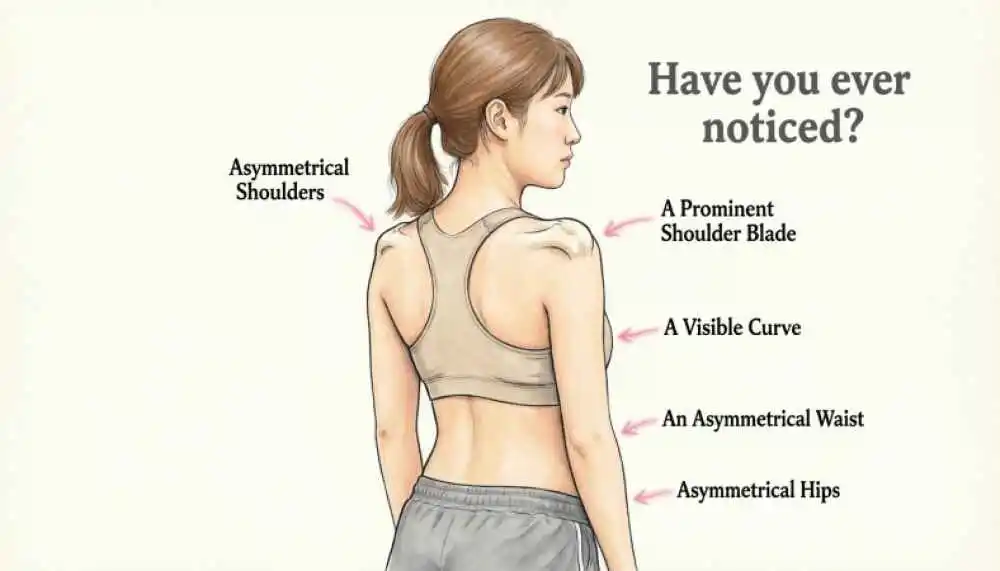
Asymmetry can appear in virtually any part of the body. It may show up in the skeleton, with one shoulder sitting higher than the other or one hip bone more prominent. It may appear in the muscles, where one side is significantly more developed than the other. It may be visible in the face, with one eye appearing larger or one side of the jaw sitting differently. It may manifest in the limbs, with a difference in arm or leg length. Or it may express itself in the torso, particularly in cases of scoliosis, where the spine curves laterally rather than running straight down the center of the back.
Mild asymmetry — differences of a centimeter or two, slight variation in facial features, or minor differences in muscle tone — is universal and considered a normal part of human biology. Significant asymmetry — involving structural changes to bones, joints, or the spine — may require professional attention, and in some cases, intervention.
Causes of Asymmetrical Body Shapes
The causes of body asymmetry are wide-ranging. They fall into several broad categories: genetic, developmental, lifestyle-related, injury-related, and neurological. Understanding the root cause of your asymmetry is the first step toward addressing it.
Genetics and natural variation. The most common cause of mild asymmetry is simply genetics. Every person’s DNA blueprint includes natural variation, and the human body is not a machine engineered to perfect precision. Slight differences in bone density, facial structure, and limb length are inherited traits that most people carry without ever knowing it.
Habitual posture and dominant side use. One of the most prevalent lifestyle-driven causes of asymmetry is the unconscious habit of using one side of the body more than the other. Right-handed people, for example, often develop slightly more muscle mass on their right side. People who habitually carry a bag on one shoulder, sit with their legs crossed in the same direction, or lean on one hip while standing tend to develop uneven muscle tone and altered joint alignment over time. This is so common in modern life — where we sit at desks, look at screens, and repeat the same movements daily — that it has become almost an epidemic of posture-related asymmetry.
Scoliosis. Scoliosis is a medical condition characterized by an abnormal lateral curvature of the spine. It is one of the most well-known structural causes of visible body asymmetry. In people with scoliosis, the spine curves to one side — sometimes in an S-shape or a C-shape — and this curvature can cause one shoulder to sit noticeably higher than the other, one hip to jut out further, and the entire torso to appear shifted. Scoliosis can be idiopathic (meaning no known cause, and most commonly developing in adolescents), congenital (present from birth due to vertebral malformation), or neuromuscular (associated with conditions like cerebral palsy or muscular dystrophy).
Leg length discrepancy. A difference in the measured length of the two legs — known as leg length discrepancy or LLD — can have a significant downstream effect on the entire body. Even a discrepancy of a centimeter or less can cause the pelvis to tilt, which in turn can cause the spine to curve laterally, resulting in asymmetry in the hips, shoulders, and back. LLD can be structural (a true difference in bone length) or functional (caused by muscle tightness or joint dysfunction that creates the appearance of unequal leg length).
Injury and compensation patterns. When a person sustains an injury — whether to a joint, muscle, or bone — the body adapts by compensating. A sprained ankle might cause someone to shift weight to the opposite leg for months, gradually altering hip alignment. A shoulder injury might cause the opposite side to take over more work, building greater muscle mass asymmetrically. These compensation patterns, if not addressed through rehabilitation, can become chronic structural changes that persist long after the original injury has healed.
Developmental and growth factors. During childhood and adolescence, asymmetry can develop as the body grows. Bones do not always grow at the same rate on both sides. Conditions like Legg-Calvé-Perthes disease (which affects the hip) or hemihypertrophy (where one side of the body grows faster than the other) are examples of developmental conditions that lead to asymmetry. Even mundane factors like consistently sleeping on one side or carrying a heavy school bag can influence developing bodies.
Neurological conditions. Conditions that affect nerve and muscle control — such as cerebral palsy, stroke, or Bell’s palsy — can cause one side of the body to function differently from the other. This leads to differences in muscle tone, facial movement, and limb use that create visible asymmetry.
Important note: significant or sudden changes in body symmetry should always be evaluated by a healthcare professional, as they can occasionally indicate an underlying condition that needs medical attention.
How Asymmetry Is Diagnosed
Diagnosing body asymmetry involves a combination of visual assessment, physical examination, and imaging studies. The process will vary depending on which part of the body is affected and how severe the asymmetry appears to be.
Visual and postural assessment. A trained physiotherapist, osteopath, chiropractor, or sports medicine physician will begin by observing the patient standing, walking, and performing basic movements. They will look at shoulder height, hip level, the position of the head and neck, the alignment of the knees and feet, and the overall balance of the body from front, back, and side. Postural grids and plumb lines are sometimes used as reference tools.
Spinal examination. When scoliosis or spinal curvature is suspected, a forward bend test (Adams forward bend test) is performed. The patient bends forward with arms hanging down, and the examiner looks along the spine for any visible rib hump or deviation. A scoliometer may be used to measure the angle of trunk rotation. If clinical examination suggests scoliosis, X-rays are taken to measure the Cobb angle — the degree of spinal curvature — which determines the severity and appropriate treatment pathway.
Leg length measurement. Leg length can be measured clinically using a tape measure from the anterior superior iliac spine to the medial malleolus (true leg length) or through functional tests. Imaging — particularly standing X-rays of the full lower limb — provides the most accurate measurement and can distinguish structural from functional discrepancies.
Imaging studies. X-rays, MRI scans, and CT scans may all be used depending on the suspected cause. X-rays are particularly useful for assessing skeletal alignment and spinal curvature. MRI provides soft tissue detail, useful when nerve or disc involvement is suspected. CT scans offer precise measurements of bony structures.
Functional movement screening. A detailed functional movement screen can reveal where the body is compensating, which muscles are weak or overactive, and how movement patterns contribute to postural asymmetry. This is especially valuable in sports medicine and rehabilitation settings.
Treatment Options for Asymmetrical Bodies
Treatment depends entirely on the type, cause, and severity of asymmetry. Many people require no treatment at all, while others benefit significantly from a structured intervention plan.
Physiotherapy and targeted exercise. For posture-related asymmetry, physiotherapy is typically the first and most effective line of treatment. A physiotherapist designs a program me to stretch overactive, shortened muscles and strengthen weak, lengthened muscles. For example, if one hip is higher due to a tight quadratus lumborum on one side, targeted stretching and strengthening exercises can gradually restore balance. Consistency is essential — most programmes require commitment over weeks to months to produce lasting change.
Orthotics and shoe inserts. In cases of leg length discrepancy, orthotics — specially designed shoe inserts or heel lifts — can help level the pelvis and reduce the downstream effects of unequal leg length on the spine, hips, and knees. Custom orthotics are crafted based on detailed measurements and gait analysis.
Bracing for scoliosis. In adolescents with moderate scoliosis (typically a Cobb angle between 25 and 45 degrees) who are still growing, bracing is often recommended to prevent further curvature. The brace does not correct existing curvature but aims to halt progression. The most commonly used brace is the thoracolumbosacral orthosis (TLSO), also known as the Boston brace. Wearing a brace for the prescribed hours per day has been shown to significantly reduce the likelihood of scoliosis reaching the threshold for surgery.
Surgery. Surgical intervention is reserved for severe cases. In scoliosis, spinal fusion surgery is considered when the Cobb angle exceeds 45 to 50 degrees, or when the curve is rapidly progressing and unresponsive to conservative treatment. For leg length discrepancy, surgical options include epiphysiodesis (slowing growth on the longer side in growing children) or limb lengthening procedures. These are significant procedures with substantial recovery times and are only recommended when the functional impact of asymmetry justifies the surgical risk.
Chiropractic and osteopathic care. Manual therapy approaches such as chiropractic adjustments and osteopathic manipulation can be helpful adjuncts to physiotherapy, particularly for joint mobility and relieving pain associated with postural imbalances. They are most effective when combined with active rehabilitation exercises.
Pilates and yoga. Both Pilates and yoga have robust evidence bases for improving postural awareness, spinal mobility, core strength, and overall body balance. Many people with mild to moderate asymmetry find that regular practice makes a meaningful difference in how their body feels and functions. The emphasis on mindful movement and bilateral work makes these disciplines particularly well-suited to addressing postural asymmetry.
Tip: Always seek a professional assessment before beginning any self-directed exercise programme for asymmetry. What helps one pattern of imbalance may worsen another.
Styling Tips for Asymmetrical Bodies
Fashion is one of the most accessible and immediately effective tools for managing the visual appearance of body asymmetry. The right clothing choices can create optical balance, draw the eye strategically, and help you feel confident and put-together regardless of your body’s unique geometry.
Work with structured shoulders. If one shoulder sits higher than the other, avoid extremely structured or rigid shoulder construction in jackets and blazers, as this can emphasise the difference. Instead, opt for soft-shouldered tailoring or slightly padded blazers that visually equalize the shoulder line. Raglan sleeves, which do not have a defined shoulder seam, are also a forgiving choice.
Use vertical lines strategically. Vertical lines elongate and draw the eye up and down rather than across, which can reduce the visual impact of horizontal asymmetries such as uneven hips or shoulders. Pinstripes, vertical paneling, long open cardigans, and column-cut dresses are all excellent tools for creating a visually balanced line through the body.
Avoid overly busy horizontal patterns. Bold horizontal stripes can emphasize uneven shoulder or hip heights by creating obvious horizontal reference points that the eye uses to compare the two sides of the body. If you love stripes, opt for a thin, tonal stripe rather than a wide, high-contrast one.
Embrace wrap styles and adjustable waistlines. Wrap dresses, wrap tops, and garments with adjustable ties at the waist allow you to position the waistline asymmetrically as needed, accommodating differences in hip height or torso shape far better than rigidly structured garments with fixed seam lines.
Choose the right necklines. For facial asymmetry or uneven shoulder height, V-necks and open necklines draw the eye inward and downward, minimizing attention to the width of the shoulders. Boat necks and wide square necklines, which are perfectly horizontal, can highlight any difference in shoulder height and are best avoided if this is a concern.
Layer thoughtfully. Layering with longer pieces on one side — such as an asymmetric hem jacket, a draped scarf, or an off-center open shirt — can naturally accommodate and even celebrate the body’s asymmetry rather than fighting against it. Asymmetric fashion design is, after all, a powerful and elegant aesthetic in its own right.
Consider custom or altered clothing. Off-the-rack clothing is designed for a hypothetical perfectly symmetrical body. For significant asymmetry, working with a tailor or seamstress to alter garments — raising one shoulder seam, adjusting one hip seam, shortening one sleeve — can make an enormous difference to how clothing fits and feels. This is particularly worth investing in for workwear or occasion clothing.
Footwear and posture. If you use orthotics for leg length discrepancy, wear them consistently with all footwear. Heeled shoes can also alter the visual presentation of hip asymmetry, sometimes making it more or less apparent depending on which leg is longer. Experimenting with different heel heights can be illuminating.
Embracing Your Asymmetry
Perhaps the most important thing to understand about asymmetrical body shapes is that they are extraordinarily common. Studies suggest that a measurable degree of facial or physical asymmetry is present in virtually every human being. Many of the world’s most celebrated models, athletes, and performers have asymmetrical features that contribute to, rather than detract from, their distinctive appearance.
The goal of understanding body asymmetry should never be to achieve an impossible standard of symmetrical perfection. Rather, it is to understand your body well enough to support it medically where needed, move it effectively, and dress it in a way that makes you feel proud and comfortable. Your body’s asymmetry is not a flaw to be corrected — it is part of the particular, irreplaceable story of how you grew, moved through the world, and became who you are.
FAQs
- Is it normal to have an asymmetrical body?
Yes. Perfect bilateral symmetry does not exist in human beings. Some degree of asymmetry in the face, limbs, muscles, and skeleton is universal and considered completely normal.
- What causes one shoulder to be higher than the other?
Common causes include scoliosis, habitual posture (such as always carrying a bag on one side), muscle imbalances, and leg length discrepancy that tilts the pelvis and spine.
- Can asymmetry be corrected without surgery?
In many cases, yes. Physiotherapy, targeted exercise, orthotics, and lifestyle adjustments can significantly improve postural asymmetry without surgical intervention.
- At what age does body asymmetry typically become noticeable?
Postural asymmetry can develop at any age, though adolescence is a common period for scoliosis onset. Lifestyle-related asymmetry often becomes noticeable in adulthood.
- Does scoliosis always cause asymmetry?
Scoliosis typically causes visible asymmetry in the shoulders, ribs, or hips, particularly in moderate to severe cases. Mild scoliosis may not be visually obvious.
- Can asymmetry cause pain?
Yes. Significant asymmetry can lead to uneven load distribution on joints, muscles, and the spine, which may cause back pain, hip pain, knee pain, or headaches over time.
- How is leg length discrepancy measured?
It can be measured clinically with a tape measure or, more accurately, through a standing full-length X-ray called a scanogram or Ortho roentgenogram.
- What is functional vs structural leg length discrepancy?
Structural LLD involves an actual difference in bone length. Functional LLD results from muscle tightness, pelvic tilt, or joint dysfunction, creating the appearance of unequal lengths.
- Can yoga fix body asymmetry?
Yoga can significantly improve flexibility, postural awareness, and bilateral muscle balance, making it a valuable tool for managing mild postural asymmetry. It is not a cure for structural causes.
- Is facial asymmetry a sign of a health problem?
Minor facial asymmetry is completely normal. Sudden, new, or severe facial asymmetry — especially if accompanied by drooping or numbness — should be evaluated by a doctor promptly.
- Can children outgrow body asymmetry?
Some developmental asymmetries resolve as children grow. However, structural conditions like scoliosis often progress during growth spurts and require monitoring or treatment.
- Does sleeping on one side cause asymmetry?
Consistently sleeping in the same position can contribute to muscle imbalances and mild postural changes over time. Varying sleep positions and using supportive pillows is recommended.
- What type of doctor should I see for body asymmetry?
Start with your general practitioner, who can refer you to an orthopedic specialist, physiotherapist, or rheumatologist, depending on the suspected cause and severity.
- Are there exercises specifically for uneven hips?
Yes. Hip drops, lateral leg raises, glute bridges, and targeted stretches for the hip flexors and quadratus lumborum are commonly prescribed for hip-level asymmetry.
- How does carrying a heavy bag affect body symmetry?
Habitually carrying weight on one side causes the muscles on that side to compensate, leading to elevated shoulder height, lateral spinal deviation, and muscle imbalances over time.
- Can Pilates help with scoliosis?
Pilates-based rehabilitation, particularly the Schroth method, has strong evidence for improving posture and reducing pain in scoliosis patients, though it does not correct existing curvature.
- What is the Cobb angle in scoliosis?
The Cobb angle measures the degree of spinal curvature on an X-ray. A Cobb angle below 10 degrees is considered normal variation; above 10 degrees is classified as scoliosis.
- Can asymmetry affect athletic performance?
Yes. Significant asymmetry can alter biomechanics, reduce efficiency of movement, increase injury risk, and affect performance in sports that demand bilateral power or precision.
- How long does physiotherapy take to correct postural asymmetry?
Results vary widely. Many people notice improvement within 6 to 12 weeks of consistent physiotherapy, but significant postural remodeling may take 6 to 12 months or longer.
- Are orthotics permanent?
Not necessarily. Some people use orthotics short-term during rehabilitation, while others may need them long-term, particularly in cases of true structural leg length discrepancy.
- What clothing styles are best for uneven hips?
Wrap skirts, bias-cut garments, adjustable-waist trousers, and A-line skirts all accommodate uneven hips well and can help create a visually balanced silhouette.
- Should I avoid certain exercises if I have asymmetry?
Some exercises can reinforce imbalances if performed incorrectly. It is best to work with a physiotherapist or certified trainer to design a programme appropriate for your specific pattern of asymmetry.
- Can asymmetry affect digestion or organ function?
Severe spinal curvature (scoliosis with high Cobb angles) can, in rare cases, compress the chest cavity and affect lung function or, to a lesser degree, digestive organs.
- Is asymmetry more common in one sex than the other?
Scoliosis is significantly more common in females, particularly idiopathic adolescent scoliosis. General postural asymmetry from lifestyle factors affects all sexes fairly equally.
- Can pregnancy cause or worsen body asymmetry?
Pregnancy alters the center of gravity, loosens ligaments through hormonal changes, and can exacerbate pre-existing postural imbalances. Post-partum physiotherapy is often beneficial.
- What is hemihypertrophy?
Hemihypertrophy (or hemi hyperplasia) is a rare condition in which one side of the body or one body part grows larger than the other, leading to visible asymmetry.
- Can I wear heels if I have uneven legs?
You can, but it is worth consulting a physiotherapist or orthopedic specialist, as different heel heights affect pelvic alignment differently. Custom orthotics can be fitted into heeled shoes.
- How do I tell if my shoulder asymmetry is serious?
If the difference in shoulder height is noticeable to others, is associated with back pain or stiffness, or has worsened over time, seek a professional assessment rather than self-managing.
- Does weight loss or gain affect body asymmetry?
Fat and muscle distribution can be asymmetric, and significant weight changes may make existing asymmetries more or less visually apparent, though they do not change skeletal structure.
- Is it possible to fully correct body asymmetry?
Complete correction depends on the cause and severity. Many postural asymmetries improve dramatically with treatment. Structural asymmetries can be managed and minimized, but may not be fully reversible.
Medical Disclaimer:
The information provided on this website is for general educational and informational purposes only and is not intended as a substitute for professional medical advice, diagnosis, or treatment. Always seek the advice of your physician or other qualified health provider with any questions you may have regarding a medical condition. Never disregard professional medical advice or delay in seeking it because of something you have read on this website.
