
Table of Contents
Forget Açaí — The World’s Most Underrated Superfruit Has Been in Your Spice Rack All Along
Introduction
Every few years, the wellness industry crowns a new superfruit. Açaí swept through smoothie bars in the 2010s. Goji berries turned up in every granola mix. Moringa powders filled the supplement aisle. Each one came packaged with breathless health claims and a premium price tag. And each one, for all its genuine benefits, was essentially a rediscovery — nature had been offering these gifts long before marketing departments discovered them.
But there is one fruit that has never needed a marketing campaign. It has been sitting patiently in kitchens across India, Mexico, Thailand, West Africa, and the Caribbean for thousands of years. It has flavored the world’s most beloved street foods and starred in the pharmacopeias of ancient healers. It has survived empires, crossed oceans with traders, been embraced by four distinct culinary continents simultaneously — and still, somehow, remains overlooked by the global wellness conversation.
That fruit is tamarind.
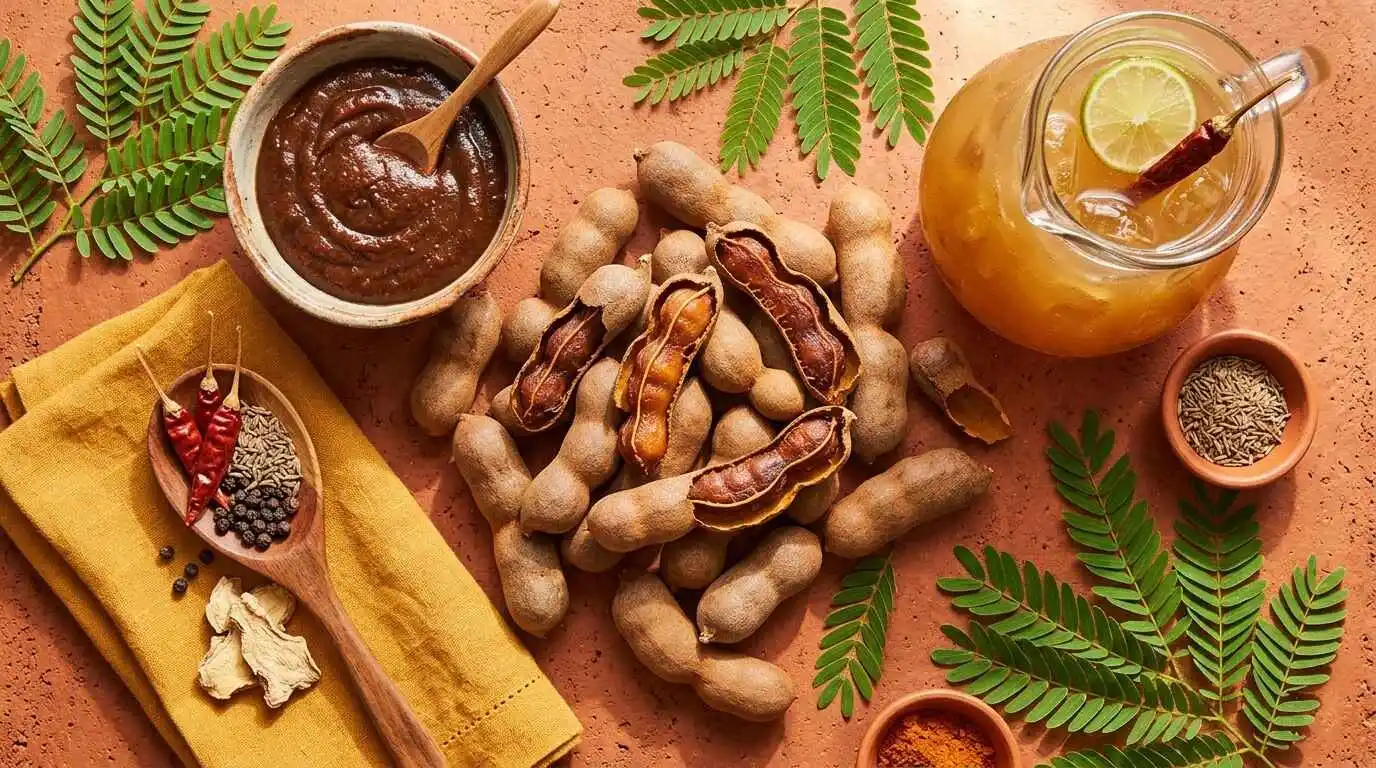
Inside those unremarkable brown curved pods is a sticky, tart, intensely complex pulp that is simultaneously one of the world’s greatest flavor ingredients and one of its most medicinally rich plant foods. Tamarind is dense with antioxidants, minerals, organic acids, and bioactive compounds that scientists are actively studying for their effects on everything from metabolic health to cognitive function. It is, by almost any nutritional and culinary measure, a true superfruit — just one that never hired a publicist.

This guide is the deep, definitive exploration of tamarind that the fruit has always deserved. We will journey through its remarkable history, unpack its dense nutritional science, examine the ten most compelling health benefits supported by research, explore how different cultures have woven it into their food traditions, and show you exactly how to make tamarind a delicious, effortless fixture of your daily life. By the end, you will wonder how you ever underestimated it.
Tamarind Through Time: A Fruit That Built Civilizations
To understand tamarind’s significance, you have to start not in a laboratory but in history. The tamarind tree — Tamarindus indica — is believed to have originated in the hot dry savannahs of tropical Africa, where it still grows wild today across Sudan, Ethiopia, Senegal, and Nigeria. But the tree’s relationship with humanity stretches so far back into the Indian subcontinent’s past that early European botanists mistook India for its place of origin entirely, hence the species name indica.
In Sanskrit texts dating back over 3,000 years, tamarind appears both as a culinary ingredient and as a medicinal plant. Ancient Indian physicians prescribed tamarind for digestive ailments, fevers, and inflammatory conditions with the same confidence that modern doctors prescribe pharmaceuticals. The tree was sacred in some traditions — believed to be inhabited by spirits — and planted near temples and along pilgrimage roads, where its generous shade and ever-present pods fed travelers for centuries.
Arab merchants carried tamarind north and west during the medieval spice trade, introducing it to Persia, Egypt, and the Levant. The Arabic name tamar-hindi — meaning “Indian date” — gave us the word we use today. In medieval European medicine, tamarind syrup appeared in pharmacies as a treatment for fever and constipation, recommended by physicians who understood little of its chemistry but a great deal about its effects.
When Spanish and Portuguese colonizers arrived in the Americas in the 15th and 16th centuries, they brought tamarind seeds with them — and the fruit found the New World’s tropical climates so hospitable that it naturalized with remarkable speed. Mexico, Jamaica, Trinidad, Colombia, and Brazil each developed their own distinct tamarind food cultures. Mexico’s passion for tamarind in particular — expressed through candies, hot sauces, fresh beverages, and chili-dusted street snacks — rivals even India’s in its depth and creativity.
Today the tamarind tree grows across a band of tropical and subtropical countries spanning three continents. A single mature specimen can live for 300 years and produce hundreds of kilograms of pods annually, making it one of the most productive and enduring fruit trees on earth. That longevity feels appropriate for a plant with such a long history of sustaining human life.
Breaking Down the Nutritional Science
What modern nutritional analysis reveals about tamarind is nothing short of extraordinary — particularly for a food most people think of simply as a souring agent.
An Exceptional Mineral Density
Tamarind stands out immediately for its mineral content. A 100-gram serving of tamarind pulp provides approximately 28% of the daily recommended intake of magnesium — a mineral that participates in over 300 enzymatic reactions in the body, including energy production, protein synthesis, muscle contraction, blood pressure regulation, and insulin signaling. Magnesium deficiency is estimated to affect a significant portion of people in developed countries, making tamarind’s contribution genuinely meaningful.
Tamarind is also a strong source of potassium, which counterbalances sodium’s effects on blood pressure and supports healthy heart rhythm. Its iron content is notable — particularly relevant for women and for people following plant-based diets where iron can be harder to obtain. It also provides phosphorus for bone health, copper for connective tissue and immune function, zinc for wound healing and immune defense, and selenium, the trace mineral that supports thyroid function and acts as a cofactor for the body’s most important antioxidant enzymes.
A B-Vitamin Powerhouse
Tamarind’s B vitamin profile is remarkable for a fruit. It is particularly rich in thiamine (vitamin B1) — a single 100-gram serving can provide well over a third of the daily recommended intake, making tamarind one of the richest plant sources of this essential vitamin. Thiamine is critical for nerve impulse transmission, carbohydrate metabolism, and cardiac function. Tamarind also provides meaningful amounts of riboflavin (B2), niacin (B3), and folate (B9), the vitamin essential for cell division and critical during pregnancy.
Tartaric Acid: The Antioxidant Souring Agent
The compound responsible for tamarind’s signature tartness is tartaric acid — an organic acid also found in grapes and wine. Beyond its culinary role, tartaric acid has been shown to function as an antioxidant, scavenging free radicals that damage cells and DNA. It also slows the rate of gastric emptying, which contributes to tamarind’s blood sugar moderating effects and its ability to sustain feelings of fullness after eating.
A Rich Polyphenol Arsenal
Tamarind contains an impressive spectrum of polyphenolic compounds: luteolin, apigenin, naringenin, procyanidins, catechins, epicatechins, and quercetin. These compounds are collectively responsible for much of tamarind’s anti-inflammatory, cardioprotective, antimicrobial, and neuroprotective activity that is being actively studied in research settings worldwide. The polyphenol profile of tamarind compares favorably with many fruits that enjoy far greater superfood status.
Dietary Fiber: The Quiet Workhorse
Tamarind is a solid source of dietary fiber — both soluble and insoluble. The soluble fiber acts as a prebiotic, feeding beneficial gut microbiota, slowing glucose absorption into the bloodstream, binding cholesterol in the digestive tract, and contributing to the sustained satiety that makes tamarind a useful ally in weight management strategies.
Ten Science-Backed Health Benefits of Tamarind
- Digestive Harmony and Gut Microbiome Support
Tamarind’s reputation as a digestive remedy, built across thousands of years of traditional use on multiple continents, is one of the best-validated by modern science. Its combination of tartaric acid, malic acid, dietary fiber, and potassium salts stimulates intestinal motility, promotes bile production, and exerts a gentle laxative effect that has been confirmed in clinical settings. Beyond relieving constipation, the prebiotic fiber in tamarind selectively feeds beneficial Lactobacillus and Bifidobacterium species in the colon, contributing to a more diverse and resilient gut microbiome. In traditional Ayurvedic medicine, tamarind is classified as a deepana and pachana herb — one that kindles digestive fire and promotes efficient digestion.
- Cardiovascular Protection at Multiple Levels
The heart-protective properties of tamarind operate through several simultaneous mechanisms. Its polyphenols, particularly procyanidins and luteolin, inhibit the oxidation of LDL cholesterol — the critical process that transforms ordinary cholesterol into the arterial-plaque-forming variant that drives heart disease. Animal studies have demonstrated reductions in total cholesterol, LDL cholesterol, and triglycerides with regular tamarind consumption. Its flavonoids inhibit platelet aggregation, reducing the risk of dangerous clots forming in the bloodstream. Its potassium and magnesium work synergistically to regulate blood pressure. Few single foods offer cardiovascular support across so many pathways simultaneously.
- Metabolic and Blood Sugar Regulation
The potential of tamarind in metabolic health management is one of the most exciting areas of current research. Tamarind seed extract has been shown in multiple studies to powerfully inhibit alpha-amylase — the digestive enzyme responsible for breaking down complex carbohydrates into simple sugars. By slowing this process, tamarind effectively reduces the glycemic load of a meal, preventing the rapid blood sugar spikes that damage blood vessels, tax the pancreas, and drive insulin resistance over time. This is the same enzymatic mechanism targeted by the class of pharmaceutical drugs called alpha-glucosidase inhibitors. Combined with tamarind’s fiber (which slows gastric emptying) and its magnesium content (which enhances insulin sensitivity at the cellular level), the case for tamarind as a meaningful dietary tool in metabolic health management is compelling.
- Systemic Anti-Inflammatory Action
Chronic low-grade inflammation is now recognized as a central driver of virtually every major chronic disease — from cardiovascular disease and type 2 diabetes to cancer, Alzheimer’s disease, and autoimmune conditions. Tamarind’s polyphenol complex, particularly luteolin and procyanidins, has been shown in cell and animal studies to downregulate NF-κB — the master regulator of the inflammatory response in the body. Studies have also demonstrated reductions in pro-inflammatory cytokines including IL-6, TNF-alpha, and COX-2 enzymes with tamarind extract treatment. These findings align closely with tamarind’s ancient and widespread use in traditional medicine systems for inflammatory conditions including arthritis, swollen joints, and inflammatory bowel conditions.
- Liver Defense and Detoxification Support
The liver — the body’s primary detoxification organ — is uniquely vulnerable to oxidative stress and inflammatory damage. Research in animal models has demonstrated that tamarind extract exerts significant hepatoprotective effects: reducing markers of liver cell damage, lowering hepatic oxidative stress, and mitigating liver inflammation induced by toxic substances including alcohol and acetaminophen (paracetamol). Some preliminary research has also explored tamarind’s potential benefits in non-alcoholic fatty liver disease (NAFLD), the world’s most common liver condition, with promising initial findings. The antioxidant compounds in tamarind appear to shield hepatocytes from free radical damage while its anti-inflammatory properties reduce the chronic inflammation that drives liver fibrosis over time.
- Antimicrobial and Immune Defense
Tamarind has been used across traditional medicine systems as an antiseptic and antimicrobial agent for millennia — applied to wounds, used to treat dysentery, and consumed to fight fevers. Modern laboratory research has validated much of this traditional knowledge. Tamarind extracts demonstrate significant inhibitory activity against a range of pathogenic bacteria including Staphylococcus aureus (including MRSA strains in some studies), Escherichia coli, Salmonella typhimurium, Klebsiella pneumoniae, and Bacillus cereus. The antimicrobial activity appears to derive from tamarind’s polyphenols disrupting bacterial cell membranes and inhibiting biofilm formation. Antifungal activity against Candida species has also been reported. This research opens interesting possibilities for tamarind in natural food preservation and functional food formulations.
- Neuroprotective Potential
Emerging research is beginning to explore tamarind’s potential role in brain and nervous system health. Luteolin — one of tamarind’s most abundant polyphenols — has been extensively studied for neuroprotective effects: reducing neuroinflammation, protecting neurons from oxidative damage, inhibiting the aggregation of amyloid-beta proteins associated with Alzheimer’s disease, and promoting neuronal survival in stress conditions. Animal studies have also suggested that tamarind seed coat extract may reduce anxiety-like behavior. Tamarind’s thiamine content is directly relevant to neurological health, as thiamine is essential for the synthesis of neurotransmitters and the maintenance of myelin sheaths around nerve fibers. While clinical human trials specifically on tamarind and neurological health remain limited, the mechanistic evidence is intriguing.
- Skin Brightening, Repair, and Anti-Aging
Tamarind’s relationship with skin health is multidimensional. Its natural alpha-hydroxy acids (AHAs) — particularly tartaric acid — gently dissolve the bonds holding dead skin cells to the surface, promoting cell turnover, improving texture, and gradually reducing the appearance of hyperpigmentation, sun damage, and acne scars. This mechanism mirrors the action of AHA-based cosmetic exfoliants, except that tamarind delivers it in a natural, food-grade matrix alongside antioxidants and vitamin C. The vitamin C in tamarind supports collagen synthesis — the structural protein that keeps skin firm and elastic — while its polyphenols protect existing collagen from oxidative degradation. Tamarind seed extract, rich in a natural polysaccharide called xyloglucan, has attracted serious attention from the cosmetics industry for its ability to retain moisture on the skin surface, functioning similarly to hyaluronic acid as a natural humectant.
- Bone Density and Musculoskeletal Health
Tamarind’s contribution to bone health is rarely highlighted but genuinely significant. It provides a combination of minerals — calcium, phosphorus, magnesium, and zinc — all of which are essential for maintaining bone density and preventing osteoporosis, particularly in aging populations. Magnesium is particularly important in this context: it is required for the conversion of vitamin D into its active form in the body, meaning that without adequate magnesium, vitamin D supplementation may be significantly less effective at supporting calcium absorption and bone mineralization. Research has also suggested that tamarind’s fluoride content may contribute to dental enamel strength, offering a natural complement to dental health.
- Eye Health and Vision Protection
One of the most fascinating areas of tamarind research involves the eyes. The seeds of the tamarind fruit contain a unique polysaccharide — tamarind seed xyloglucan — that has been formulated into eye drops shown in clinical trials to be effective in treating dry eye syndrome (keratoconjunctivitis sicca). The polysaccharide mimics the mucin layer of the natural tear film, providing sustained lubrication and relief. Beyond this specific application, tamarind’s luteolin and other polyphenols are being studied for their potential to reduce the oxidative stress in the lens and retina that contributes to cataracts and age-related macular degeneration — conditions that represent leading causes of vision loss globally.
Tamarind in the World’s Kitchens: A Global Flavor Tour
Few ingredients have been adopted simultaneously and independently by so many distinct food cultures, suggesting that tamarind’s flavor profile occupies a uniquely irreplaceable position in the global pantry.
In South India, tamarind is as essential as rice itself. It anchors sambar — the lentil and vegetable soup eaten at virtually every South Indian meal. It is the souring agent in rasam, a peppery thin broth drunk at the end of meals for digestion. Tamarind rice (puliyogare or imli chawal) — tangy, spiced, and deeply satisfying — is a temple offering in Karnataka and Tamil Nadu. Chutneys made with tamarind, jaggery, and spices accompany idlis, dosas, samosas, and chaat dishes across the subcontinent.
In Thailand, tamarind is the backbone of pad Thai’s flavor profile, providing the sweet-sour complexity that makes the dish sing. It appears in som tam (green papaya salad), in many nam prik dipping sauces, and in the clear sweet-sour soups that punctuate Thai meals.
In Mexico, the love affair with tamarind is exuberant and unabashed. Agua de tamarindo — cold, slightly sweet, slightly tart tamarind water — is one of the country’s most beloved drinks. Tamarind candies, from soft paste varieties to chili-coated hard candies, are a national obsession. Tamarind appears in hot sauces, marinades, cocktail rims, and a remarkable range of street food snacks.
In West Africa — particularly in Senegal, Nigeria, and Mali — tamarind is used both fresh as a fruit and as a souring agent in stews and marinades. Dried tamarind is also fermented in some traditions to create a condiment called dadawa or used in traditional fermented beverages.
In the Middle East, tamarind gives a distinctive sour depth to Persian fish curries, Yemeni hot sauces, and Lebanese tamarind sherbet drinks. Its use as a souring agent in the region predates the widespread availability of lemons and limes.
Everyday Ways to Harness Tamarind’s Power
You do not need to transform your diet to benefit from tamarind. A teaspoon of tamarind paste dissolved in warm water with a touch of honey and a pinch of salt makes a deeply satisfying morning digestive drink. Stir tamarind paste into your stir-fry sauce, your lentil soup, or your salad dressing for a flavor upgrade. Marinate proteins in a mixture of tamarind, garlic, ginger, and spices before grilling. Use tamarind concentrate to deepen the complexity of store-bought barbecue sauce in seconds. Blend tamarind pulp with mango, coconut water, and a pinch of chili for a refreshing superfruit smoothie that is genuinely unlike anything else.
Tamarind is available in most Asian, Indian, and Latin American grocery stores — and increasingly in mainstream supermarkets and online — in the form of fresh pods, compressed blocks, ready-to-use paste, and convenient concentrate. Start with the paste for ease, then experiment with the block form as your confidence grows.
Frequently Asked Questions
- Why is tamarind called a super fruit?
Tamarind earns the super fruit designation through its exceptional concentration of antioxidants, vitamins, minerals, and bioactive compounds — combined with a growing body of research validating its wide-ranging health benefits across multiple body systems.
- What gives tamarind its distinctive sour taste?
The primary sourcing compound in tamarind is tartaric acid, an organic acid also found in grapes and wine. Malic acid and citric acid contribute additional layers of acidity to create tamarind’s signature complex sour-sweet flavor.
- Is it safe to eat tamarind every day?
For most healthy adults, eating tamarind daily in culinary quantities is perfectly safe and may be beneficial. Consuming very large amounts as a supplement or concentrate is less well-studied and should be approached with caution.
- How does tamarind help the digestive system?
Tamarind stimulates bile production, promotes intestinal motility, acts as a gentle natural laxative, feeds beneficial gut bacteria through its prebiotic fiber, and soothes digestive discomfort through its organic acid content.
- Can tamarind lower blood pressure?
Tamarind’s high potassium and magnesium content may help relax blood vessel walls and regulate blood pressure. Its polyphenols have also demonstrated vascular protective effects in studies. It is not a replacement for hypertension medication but may be a beneficial dietary complement.
- Is tamarind good for the kidneys?
In normal dietary amounts, tamarind is safe for healthy kidneys. However, because tamarind contains oxalic acid compounds, individuals with a history of oxalate kidney stones should consume it in moderation and consult their doctor.
- Does tamarind interact with medications?
Tamarind may increase the bioavailability of certain medications, particularly aspirin and ibuprofen. If you take prescription medications, especially blood thinners or antidiabetics, consult your healthcare provider before consuming tamarind in large amounts.
- What is the glycemic index of tamarind?
Tamarind has a moderate glycemic index. Despite its natural sugar content, its fiber and tartaric acid slow glucose absorption, meaning its actual glycemic impact in meals is lower than the sugar content alone would suggest.
- Can tamarind be eaten during intermittent fasting?
Tamarind contains calories and natural sugars, so consuming it would technically break a fast. However, tamarind water (very diluted) with negligible caloric content may be acceptable to some — this depends on your specific fasting protocol.
- How does tamarind compare nutritionally to lemon or lime?
Tamarind contains significantly more minerals — particularly iron, magnesium, and potassium — and more B vitamins than lemons or limes. Lemons and limes are higher in vitamin C. Tamarind offers a broader overall mineral profile.
- Is tamarind acidic or alkaline?
Tamarind is acidic in its raw form due to its tartaric acid content. However, some proponents of alkaline diets argue that tamarind has an alkalizing effect after digestion — though the scientific evidence for dietary pH theories is limited.
- Can tamarind be used as a natural preservative?
Yes. The antimicrobial and antioxidant properties of tamarind’s polyphenols have been explored for use as natural food preservatives, inhibiting microbial growth and oxidative rancidity in food products.
- Does cooking reduce tamarind’s nutritional value?
Heat can reduce some heat-sensitive vitamins like vitamin C. However, many of tamarind’s most important bioactive compounds — including its polyphenols and minerals — are relatively heat-stable and remain active through normal cooking temperatures.
- What is the best time of day to consume tamarind?
Many traditional systems recommend tamarind-based drinks in the morning for digestive priming. It can also be beneficially consumed with meals to moderate glucose absorption. There is no single “best” time — consistency matters more than timing.
- Is tamarind seed extract different from tamarind pulp?
Yes. Tamarind seed extract is derived from the seeds rather than the pulp and contains a distinct profile of bioactive compounds — particularly xyloglucan and specific polyphenols — that have been studied for eye health and other applications distinct from the pulp’s benefits.
- Can I use tamarind to replace vinegar or lemon juice in recipes?
Yes, in most cases. Tamarind paste dissolved in a little water makes an excellent souring agent in recipes where you want additional depth and complexity beyond what vinegar or lemon alone provides.
- Is tamarind paste the same as tamarind concentrate?
They are similar but not identical. Tamarind paste is typically smoother and may be slightly less concentrated than tamarind concentrate. Both can be used interchangeably in most recipes, though you may need to adjust quantities for intensity.
- What cultures consume the most tamarind worldwide?
India is the world’s largest producer and one of its largest consumers. Mexico is among the top consumers, particularly in candy, beverage, and sauce forms. Thailand, Indonesia, the Philippines, Nigeria, and several Caribbean nations also have deep tamarind consumption cultures.
- Can tamarind help with nausea?
Tamarind has been used in traditional medicine systems to settle nausea, particularly pregnancy-related morning sickness, likely due to its tartaric acid and digestive-stimulating properties. Mild amounts may be soothing for some people.
- Is tamarind good for immunity?
Yes. Tamarind’s vitamin C, zinc, selenium, and polyphenol content all support immune function. Its antimicrobial compounds provide an additional layer of protection against pathogenic microorganisms.
- Does tamarind help with joint pain?
Traditional use of tamarind for joint pain and inflammation has some scientific basis: its luteolin and procyanidin polyphenols inhibit inflammatory pathways that contribute to joint inflammation. More clinical human trials are needed to confirm the magnitude of benefit.
- Can tamarind be used in baking?
Absolutely. Tamarind adds an unexpected sour-fruity complexity to baked goods. It works beautifully in cookies, brownies, glazes, cheesecakes, and fruit-based desserts. Start with small amounts and adjust to taste.
- What is tamarind candy, and is it healthy?
Tamarind candy — popular in Mexico and Asia — combines tamarind pulp with sugar, salt, and often chili. While it contains the fruit’s natural compounds, the added sugar means it should be enjoyed as an occasional treat rather than a health food.
- Can tamarind cause allergies?
Tamarind allergies are rare but do exist. Symptoms can include itching, hives, or digestive upset. If you experience an adverse reaction after consuming tamarind, discontinue use and consult a healthcare provider.
- Does tamarind have any benefits for male health specifically?
Some animal studies have explored tamarind’s potential role in supporting testosterone levels and reproductive health through its zinc content and antioxidant protection of reproductive cells, though human clinical evidence remains limited.
- How does tamarind support thyroid health?
Tamarind’s selenium content is directly relevant to thyroid function, as selenium is an essential cofactor for the enzymes that convert thyroid hormone from its inactive to active form and that protect the thyroid gland from oxidative damage.
- Is tamarind fruit or seed used in skincare products?
Both. The pulp’s AHAs (primarily tartaric acid) are used in exfoliating and brightening skincare formulations. Tamarind seed extract — rich in xyloglucan — is used as a natural moisturizing and film-forming agent in serums, eye drops, and moisturizers.
- How many calories are in a tablespoon of tamarind paste?
A tablespoon of tamarind paste typically contains approximately 30 to 45 calories, mostly from natural sugars and carbohydrates. At the amounts typically used in cooking, tamarind adds minimal caloric impact.
- What is the difference between young green tamarind and ripe brown tamarind
tamarind?
Young green tamarind pods are harvested before maturity and are extremely sour, with firm flesh and a fresh, tart flavor — commonly used in savory dishes and salads in Thailand and India. Ripe brown tamarind is sweeter, stickier, and more complex, and is the form used for most culinary and nutritional applications.
- Where is tamarind grown commercially today?
India produces the largest commercial tamarind crop globally. Other major producing countries include Thailand, Mexico, Bangladesh, Myanmar, the Philippines, Nigeria, and several countries throughout Central and South America and the Caribbean.
⚕️Medical Disclaimer:
The information provided on this website is for general educational and informational purposes only and is not intended as a substitute for professional medical advice, diagnosis, or treatment. Always seek the advice of your physician or other qualified health provider with any questions you may have regarding a medical condition. Never disregard professional medical advice or delay in seeking it because of something you have read on this website.
