
Table of Contents
The Rhythm of Life: Unlocking the Power and Science of Cardiotonic Agents
Introduction: The Failing Engine and the Chemical Spark
The human heart is an engineering marvel, an organic pump that contracts roughly 100,000 times a day to distribute oxygen and vital nutrients to every tissue in the body. Yet, when the cardiac muscle tires, when structural damage or chronic disease saps its contractile strength, the entire systemic network falters. This state of operational exhaustion is clinically recognized as heart failure. For centuries, medical science has sought ways to restore vigor to the failing myocardium, to hand the weakening heart a chemical lever that can amplify its force without destabilizing its delicate electrical rhythm.
Enter cardiotonic agents, a vital class of pharmacological compounds specifically engineered or naturally derived to increase the efficiency, force, and performance of cardiac contractions. Often referred to as positive inotropes, these agents serve as a critical bridge in acute and chronic cardiovascular medicine. They do not merely force the heart to beat faster; rather, they optimize cellular mechanics to ensure that each contraction is more effective, maximizing cardiac output and sustaining vital organ perfusion when the body needs it most.
Defining the Mechanics: How Cardiotonic Agents Work
To understand cardiotonic agents, one must first grasp the concept of inotropy. In cardiovascular physiology, an inotropic agent alters the force or energy of muscular contractions. A negative inotrope weakens myocardial contraction, whereas a positive inotrope strengthens it. Cardiotonic agents are, by definition, positive inotropes.
The fundamental objective of any cardiotonic agent is to increase the availability of intracellular calcium ions ($Ca^{2+}$) within the cardiac myocytes (heart muscle cells) during systole (the contraction phase). Calcium is the ultimate trigger for myocardial contraction. When an action potential depolarizes the cell membrane, calcium enters through L-type calcium channels, triggering a massive release of calcium stored within the sarcoplasmic reticulum. This calcium binds to troponin C, shifting the tropomyosin complex and allowing actin and myosin filaments to bind, slide past one another, and generate mechanical force.

By manipulating various cellular pathways, cardiotonic agents boost this intracellular calcium concentration or increase the sensitivity of contractile proteins to existing calcium, thereby amplifying the stroke volume and elevating overall cardiac output.
Classification of Cardiotonic Agents
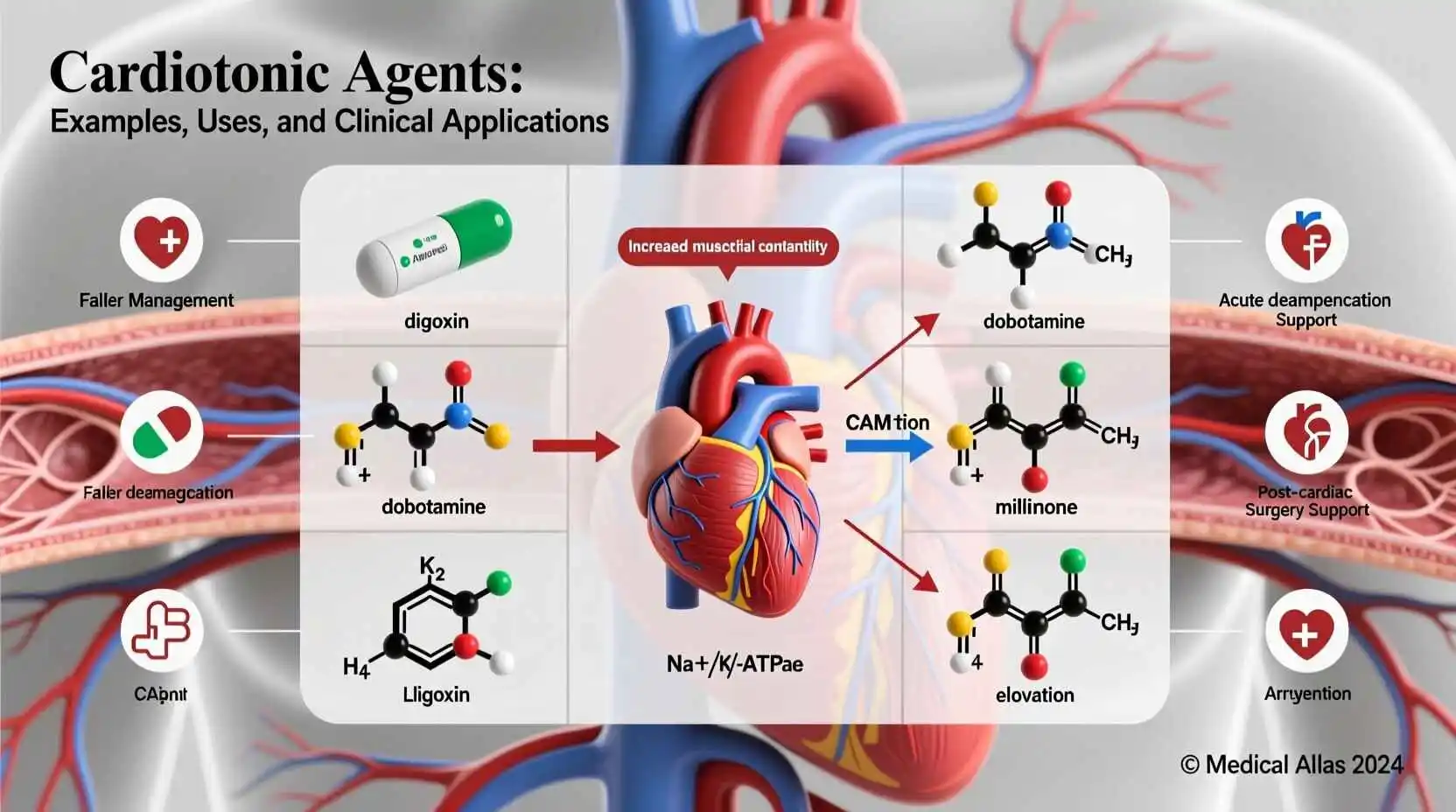
Cardiotonic agents are not a monolithic group; they span several distinct pharmacological classes, each utilizing a unique molecular mechanism to achieve positive inotropy.
- Cardiac Glycosides
The most historically prominent and enduring class of cardiotonic agents is the cardiac glycosides. Found naturally in plants like Digitalis purpurea (foxglove), these compounds have been used for generations. The primary clinical representative of this class today is Digoxin.
- Mechanism of Action: Digoxin works by reversibly inhibiting the Sodium-Potassium ATPase ($Na^+/K^+$ ATPase) pump located on the sarcolemma of cardiac myocytes. By shutting down this active transport mechanism, digoxin causes a gradual accumulation of intracellular sodium ($Na^+$). This rise in internal sodium slows down the activity of another critical transporter, the Sodium-Calcium Exchanger ($Na^+/Ca^{2+}$ exchanger), which normally pumps calcium out of the cell in exchange for sodium flowing in. Because the exchanger is suppressed, calcium remains trapped inside the myocyte and is sequestered into the sarcoplasmic reticulum. Consequently, during the next contraction cycle, a substantially larger pool of calcium is released, leading to a more robust myofibrillar contraction.
- Electrophysiological Effects: Beyond mechanical force, cardiac glycosides exhibit profound neurohormonal effects. They increase vagal (parasympathetic) tone, which slows conduction through the atrioventricular (AV) node and decreases the heart rate (negative chronotropic effect). This dual action—strengthening the pump while slowing down a racing heart—makes digoxin particularly valuable in managing patients who concurrently suffer from heart failure and atrial fibrillation.
- Phosphodiesterase Inhibitors (PDEIs)
When patients suffer from acute decompensated heart failure, faster-acting, intravenous alternatives are required. Phosphodiesterase-3 (PDE-3) inhibitors, such as Milrinone, fulfill this role.
- Mechanism of Action: Under normal circumstances, cyclic adenosine monophosphate (cAMP) acts as a powerful intracellular secondary messenger that promotes calcium entry into the myocyte. However, an enzyme called phosphodiesterase-3 actively breaks down cAMP to terminate its signal. Milrinone selectively inhibits this enzyme, preventing the degradation of cAMP.
- The Inodilator Effect: The accumulation of cAMP has a dual effect on the cardiovascular system. Within the heart muscle, high cAMP levels activate protein kinase A, leading to increased calcium influx and a stronger contraction. Concurrently, within the vascular smooth muscle of arteries and veins, elevated cAMP induces muscle relaxation. The result is a unique clinical profile known as an inodilator: milrinone increases cardiac contractility while simultaneously reducing preload (venous return pressure) and afterload (systemic vascular resistance). This dual action significantly lowers the workload of the failing heart.
- Beta-Adrenergic Receptor Agonists
In emergency scenarios, shock states, or severe acute heart failure, the body’s natural fight-or-flight signaling pathway is leveraged using synthetic catecholamines. The primary agents here are Dobutamine and Dopamine.
- Mechanism of Action: Dobutamine directly stimulates Beta-1 ($\beta_1$) adrenergic receptors on the surface of the myocardium. This activation couples with G-proteins to stimulate adenylyl cyclase, the enzyme responsible for synthesizing cAMP directly from ATP. The rapid spike in cAMP triggers a powerful, immediate influx of calcium, inducing a potent positive inotropic response.
- Clinical Nuance: Unlike endogenous adrenaline, dobutamine is engineered to favor $\beta_1$ receptors over $\beta_2$ (which causes vasodilation) and $\alpha_1$ (which causes vasoconstriction) receptors at standard therapeutic doses. This ensures that the primary response is a clean boost in cardiac pumping power, making it a cornerstone therapy in cardiogenic shock.
- Calcium Sensitizers
The newest frontier in cardiotonic pharmacology bypasses the strategy of forcing more calcium into the cell, which can sometimes trigger dangerous arrhythmias. Instead, calcium sensitizers like Levosimendan alter how the cell responds to existing calcium.
- Mechanism of Action: Levosimendan binds to cardiac troponin C in a calcium-dependent manner. It stabilizes the conformational changes that occur when calcium binds, prolonging the interaction between actin and myosin cross-bridges without increasing the absolute intracellular calcium concentration. Additionally, levosimendan opens ATP-sensitive potassium channels in vascular smooth muscle, providing systemic vasodilation. This avoids the structural or metabolic strain associated with calcium overload.
Clinical Applications: When Are Cardiotonic Agents Used?
Cardiotonic agents are strictly indicated for conditions where cardiac output is insufficient to meet the metabolic demands of peripheral tissues.
- Chronic Heart Failure (CHF): Oral digoxin is utilized as an adjunctive treatment for patients with heart failure with reduced ejection fraction (HFrEF) who remain symptomatic despite optimal therapy with first-line drugs like ACE inhibitors, beta-blockers, and aldosterone antagonists.
- Acute Decompensated Heart Failure (ADHF): Intravenous positive inotropes (Milrinone, Dobutamine) are deployed in hospital intensive care units to stabilize patients experiencing a sudden, severe drop in cardiac output, helping to restore renal perfusion and alleviate systemic congestion.
- Cardiogenic Shock: Following a massive myocardial infarction (heart attack) or during severe cardiomyopathy, the heart may drop into a state of structural shock. Beta-agonists are used immediately to maintain baseline arterial pressure and keep the patient alive.
- Arrhythmia Management: Due to its ability to slow AV nodal conduction, digoxin is uniquely utilized to control ventricular rate in patients experiencing atrial fibrillation or atrial flutter with a rapid ventricular response.
The Narrow Therapeutic Window and Toxicity Risks
While cardiotonic agents are life-saving, they are notorious for their exceptionally narrow therapeutic indexes. This means that the dose required to achieve a beneficial therapeutic effect is very close to the dose that causes severe, potentially lethal toxicity.
Digoxin Toxicity
Digoxin toxicity is a major clinical concern, particularly in elderly patients or those with impaired renal function, as the kidneys are primarily responsible for clearing the drug from the body.
- The Role of Potassium: The binding of digoxin to the $Na^+/K^+$ ATPase pump is highly competitive with potassium ions. If a patient develops hypokalemia (low blood potassium levels, often due to concurrent diuretic use), there are fewer potassium ions to compete with digoxin. As a result, digoxin binds excessively to the pumps, precipitating profound toxicity even at standard serum drug levels.
- Symptoms of Toxicity: Toxicity manifests systematically. Early signs include gastrointestinal distress such as severe nausea, vomiting, and anorexia. Neurological symptoms include confusion, fatigue, and a characteristic visual disturbance known as xanthopsia (where the patient’s vision is tinted yellow or green, and objects appear surrounded by halos).
- Cardiac Manifestations: The most hazardous consequence of toxicity is the development of cardiac arrhythmias. Because the cell becomes overloaded with calcium and depleted of potassium, its resting membrane potential becomes unstable. This leads to delayed afterdepolarizations, causing ectopic beats, ventricular tachycardia, AV blocks, or fatal ventricular fibrillation.
- Antidote: Severe, life-threatening digoxin toxicity is treated immediately with Digoxin Immune Fab (Digibind), which consists of antigen-binding fragments that actively bind to and neutralize circulating digoxin molecules.
Comparative Analysis of Leading Cardiotonic Agents
| Feature | Digoxin | Dobutamine | Milrinone | Levosimendan |
| Route of Admin | Oral / Intravenous | Intravenous Infusion | Intravenous Infusion | Intravenous Infusion |
| Primary Target | $Na^+/K^+$ ATPase Pump | $\beta_1$-Adrenergic Receptor | Phosphodiesterase-3 | Troponin C / $K_{ATP}$ channels |
| Primary Effect | Inotropic (+), Chronotropic (-) | Inotropic (+), Chronotropic (+) | Inotropic (+), Vasodilator (+) | Inotropic (+), Vasodilator (+) |
| Clinical Setting | Chronic CHF / Atrial Fibrillation | Cardiogenic Shock / Acute HF | Acute Decompensated HF | Refractory Acute HF |
| Main Risk | Arrhythmias, Systemic Toxicity | Tachycardia, Myocardial Ischemia | Hypotension, Arrhythmias | Hypotension, Headache |
The Future of Cardiotonic Therapy
The development of cardiotonic agents continues to move away from compounds that increase intracellular calcium levels, as calcium overload is directly linked to cellular apoptosis, accelerated remodeling of the heart walls, and lethal ventricular arrhythmias. Current research focuses heavily on myosin activators (such as Omecamtiv Mecarbil). These agents directly target the cardiac myosin motor protein, accelerating the rate of force-generating cross-bridge formation without disrupting intracellular calcium signaling pathways or increasing myocardial oxygen demand. By optimizing energy utilization at the molecular filament level, the next generation of cardiotonic therapies aims to offer a significantly safer therapeutic profile for patients globally.
FAQs
- What exactly is a cardiotonic agent?
A cardiotonic agent is a drug or chemical compound that increases the efficiency, tone, and force of myocardial (heart muscle) contractions, ultimately raising cardiac output to sustain systemic blood flow.
- How do cardiotonic agents differ from standard inotropes?
The terms are often used interchangeably, but “cardiotonic” specifically refers to agents that improve the overall functional tone and pumping effectiveness of a weakening heart, whereas “inotrope” simply denotes any drug that alters contractile force (which can be positive or negative).
- What is the most common cardiotonic agent used today?
Digoxin is the most widely prescribed oral cardiotonic agent for long-term chronic management, while Dobutamine and Milrinone are the most common intravenous agents used in acute hospital settings.
- From what plant is digoxin derived?
Digoxin is derived from the leaves of the Digitalis purpurea plant, commonly known as foxglove.
- What cellular pump does digoxin block?
Digoxin blocks the Sodium-Potassium Adenosine Triphosphatase ($Na^+/K^+$ ATPase) pump on the cell membrane of cardiac myocytes.
- Why does blocking the sodium-potassium pump increase heart contraction force?
Blocking this pump increases internal sodium levels, which slows down the sodium-calcium exchanger. This leaves more calcium trapped inside the cell, which is then used to strengthen myofibrillar contractions during systole.
- Why is calcium so important for heart contraction?
Calcium ions bind directly to troponin C, causing a structural shift that allows actin and myosin filaments to cross-bridge and slide past each other, creating mechanical tension and muscle contraction.
- What does “narrow therapeutic index” mean?
It means that the margin of safety between a dose that effectively treats a condition and a dose that causes severe, toxic side effects is incredibly small.
- What are the earliest signs of digoxin toxicity?
The earliest signs are typically gastrointestinal disturbances, specifically profound nausea, vomiting, loss of appetite (anorexia), and abdominal discomfort.
- What unique visual symptom occurs during cardiotonic toxicity?
Patients often experience xanthopsia, a visual distortion where objects appear blurred, tinted yellow or green, or surrounded by distinct halos.
- How does low potassium affect digoxin safety?
Low blood potassium (hypokalemia) reduces competition for binding sites on the $Na^+/K^+$ ATPase pump, allowing digoxin to bind in excessive amounts and radically increasing the risk of toxicity.
- What is the antidote for a digoxin overdose?
The primary antidote is Digoxin Immune Fab (commonly known by the brand name Digibind), which uses targeted antibodies to neutralize the drug in the bloodstream.
- Can cardiotonic agents cure heart failure?
No. Cardiotonic agents do not cure heart failure; they manage symptoms, optimize cardiac output, and improve systemic perfusion, but they do not reverse underlying structural heart damage.
- What is a phosphodiesterase inhibitor?
It is a type of cardiotonic drug, like milrinone, that prevents the breakdown of cyclic AMP (cAMP), boosting calcium levels in heart muscle while relaxing blood vessels.
- What is an “inodilator”?
An inodilator is a medication that simultaneously provides positive inotropic action (increases heart contraction force) and vascular dilation (relaxes arteries and veins to reduce the heart’s workload).
- How does Dobutamine work?
Dobutamine acts as a direct beta-1 adrenergic receptor agonist, mimicking the sympathetic nervous system to increase intracellular cAMP production and boost cardiac output immediately.
- When is intravenous cardiotonic therapy preferred over oral therapy?
Intravenous therapy is preferred during acute decompensated heart failure, cardiogenic shock, or post-cardiac surgery when immediate, highly controllable, and potent hemodynamic support is required.
- Why is digoxin useful in managing atrial fibrillation?
Digoxin stimulates the vagus nerve, which slows electrical conduction through the atrioventricular (AV) node. This helps control and lower an abnormally fast ventricular heart rate during atrial fibrillation.
- What are calcium sensitizers?
Calcium sensitizers, such as levosimendan, are modern cardiotonic agents that increase the contractility of the heart by enhancing the response of troponin C to existing calcium, avoiding the risks of cellular calcium overload.
- Do cardiotonic agents increase the heart’s oxygen consumption?
Traditional agents like dobutamine and milrinone significantly increase myocardial oxygen demand because they force the heart to work harder, which can worsen myocardial ischemia in patients with coronary artery disease.
- What is the main route of elimination for digoxin?
Digoxin is primarily eliminated unchanged by the kidneys via glomerular filtration and active tubular secretion, making renal monitoring crucial for patients on this drug.
- What precautions should be taken when giving cardiotonic drugs to elderly patients?
Elderly patients frequently have age-related declines in kidney function and are more prone to electrolyte imbalances. They require lower baseline doses and frequent blood tests to prevent toxicity.
- Can diuretics interact with cardiotonic agents?
Yes. Loop diuretics (like furosemide) cause the body to excrete potassium. If potassium drops too low, it dangerously amplifies the risk of cardiac glycoside toxicity.
- What are the structural signs of advanced cardiotonic poisoning on an EKG?
EKG changes can include a sagging ST segment (often called the “Digitalis effect”), prolonged PR intervals, shortened QT intervals, and complex ventricular arrhythmias like bigeminy.
- Are cardiotonic agents safe during pregnancy?
Digoxin can cross the placental barrier but has been used historically under close specialist supervision to treat maternal heart failure or fetal tachyarrhythmias. However, it should only be prescribed if the clear medical benefits outweigh the potential fetal risks.
- What happens if calcium levels in the blood are too high while taking digoxin?
Hypercalcemia (high blood calcium) acts synergistically with digoxin, severely compounding the risk of structural calcium overload within cardiac cells and triggering malignant arrhythmias.
- What are next-generation myosin activators?
Myosin activators are novel compounds like omecamtiv mecarbil that target sarcomere kinetics directly, extending the duration of muscle contraction without altering calcium pathways or increasing oxygen consumption.
- Can a patient take cardiotonic agents if they have ventricular tachycardia?
No. Ventricular tachycardia is typically a strict contraindication for cardiotonic agents like digoxin, as the drug can worsen ventricular excitability and trigger ventricular fibrillation.
- How frequently should serum digoxin levels be checked?
Levels are typically checked within 7 to 10 days after starting the medication or changing the dose, and regularly thereafter if the patient experiences changes in kidney function, diet, or concurrent medications.
- Should a patient check their pulse before taking their cardiotonic medication?
Yes. Because agents like digoxin slow the heart rate via vagal stimulation, patients are routinely instructed to check their resting pulse and withhold the medication if their heart rate drops below 60 beats per minute, contacting their healthcare provider immediately.
Natural Cardiotonic Agents: Botanical Wisdom Meets Modern Medicine
While modern intensive care units rely heavily on synthetic positive inotropes, nature has spent millions of years engineering its own complex cardiotonic compounds. Long before the extraction of pure chemical isolates, various global traditions utilized botanical preparations to treat “dropsy”—the historical term for the systemic fluid accumulation caused by a failing heart.
Integrating natural cardiotonic agents into modern therapeutic frameworks requires a balanced understanding of their profound biochemical potency and their clinical limitations. Many of these natural agents operate through the exact same cellular pathways as commercial pharmaceuticals, meaning they possess the identical therapeutic benefits and severe toxicity risks.
- Digitalis Purpurea and Lanata (Foxglove)
The historical archetype of all cardiotonic plants is the foxglove. Digitalis purpurea and Digitalis lanata produce a cluster of highly potent secondary metabolites known as cardiac glycosides.
- Active Compounds: The primary active agents derived from these plants are Digoxin and Digitoxin.
- Mechanism: Like their laboratory-purified counterparts, these natural botanical extracts inhibit the $Na^+/K^+$ ATPase pump on the cardiac sarcolemma. By preventing the extrusion of intracellular sodium, they indirectly shut down the sodium-calcium exchanger, causing a massive surge in available intracellular calcium during muscle contraction.
- Clinical Reality: Foxglove preparations are never used in raw, unstandardized botanical forms in modern medicine. Because the concentration of glycosides varies dramatically based on soil quality, weather, and plant maturity, consumption of the raw plant almost invariably leads to severe digitalis toxicity.
- Crataegus Species (Hawthorn Berry)
Unlike the volatile and dangerous foxglove plant, Crataegus species (commonly known as Hawthorn) offer a completely different mechanical profile that has made it a foundational element in traditional European herbal medicine for cardiovascular support.
- Active Compounds: Hawthorn is rich in oligomeric proanthocyanidins (OPCs), vitexin, hyperoside, and a dense matrix of antioxidant flavonoids.
- Mechanism of Action: Hawthorn does not aggressively block cellular ion pumps. Instead, its active constituents exhibit mild, multi-targeted positive inotropic activity by inhibiting cyclic AMP phosphodiesterase enzymes, mirroring the fundamental action of low-dose milrinone. Furthermore, it enhances myocardial metabolism, improving the efficiency with which the heart uses glucose and oxygen to generate ATP.
- Vascular Benefits: Beyond the myocardium, Hawthorn acts as a potent natural vasodilator. It stimulates endothelial nitric oxide synthase (eNOS), causing blood vessels to dilate. This reduces systemic vascular resistance (afterload), making it significantly easier for a structurally weakened heart to pump blood into the aorta. Clinical trials have demonstrated that standardized extracts of Hawthorn can improve exercise tolerance and reduce fatigue in patients diagnosed with mild-to-moderate (NYHA Class I and II) heart failure.
- Terminalia Arjuna (Arjuna Bark)
In the traditional Ayurvedic medical system of India, the bark of the Terminalia arjuna tree has been utilized for over three millennia as a primary systemic cardiotonic.
- Active Compounds: The bark contains unique triterpenoid saponins (such as arjunolic acid and arjungenin), specialized flavonoids, and rich stores of coenzyme Q10.
- Mechanism of Action: Arjuna bark functions as a direct positive inotrope, increasing intracellular calcium availability slightly without inducing the dramatic electrical instability associated with standard glycosides. The high concentration of coenzyme Q10 directly feeds the mitochondrial respiratory chain within cardiac myocytes, preserving cellular energy production and preventing tissue death during periods of ischemic stress.
- Cardioprotection: Arjuna offers profound antioxidant properties, actively scavenging free radicals that trigger myocardial remodeling and tissue fibrosis following chronic hypertension or direct cardiac injury.
- Convallaria Majalis (Lily of the Valley)
A beautiful but highly lethal woodland plant, Convallaria majalis produces a distinct family of natural cardiotonic compounds.
- Active Compounds: The plant contains more than 30 different cardiac glycosides, the most prominent being convallatoxin.
- Mechanism: Convallatoxin acts with immense structural potency on the $Na^+/K^+$ ATPase pump. Biochemically, convallatoxin is significantly more potent than the digitoxin found in foxglove, meaning even miniscule exposures can completely arrest cardiac electrical activity.
- Clinical Status: Due to its erratic absorption rates and extreme toxicity profile, Lily of the Valley extracts are entirely excluded from standard conventional medicine, serving primarily as a classic case study in botanical toxicology.
- Strophanthus Gratus and Kombe
Native to tropical regions of Africa, plants belonging to the Strophanthus genus have historically been used by indigenous populations to create highly lethal, fast-acting poison arrows for hunting.
- Active Compounds: The seeds contains Ouabain (also known as G-strophanthin), an exceptionally water-soluble, rapid-acting cardiac glycosides.
- Mechanism: Ouabain binds with high affinity to the extracellular loop of the $Na^+/K^+$ ATPase pump. Because it dissolves rapidly and acts within minutes when introduced intravenously, it became a foundational tool in early cardiovascular physiological research to map out the exact mechanics of cardiac inotropy.
- Clinical Status: While historically used in emergency European medicine as an ultra-fast intravenous cardiotonic, it has been entirely phased out in favor of modern synthetic beta-agonists and phosphodiesterase inhibitors, which offer much more predictable and controllable clearance rates.
- Nerium Oleander (Oleander)
Oleander is a ubiquitous ornamental evergreen shrub planted in gardens worldwide, yet it remains one of the most toxic cardiotonic plants in existence.
- Active Compounds: The entire plant—from the roots to the nectar—is saturated with oleandrin and neriin, two highly potent cardiac glycosides.
- Mechanism: Oleandrin exerts a powerful inhibitory effect on the sodium-potassium pump, inducing rapid intracellular calcium overload.
- Toxicity: Accidental ingestion of a single leaf can cause catastrophic cardiac standstill. Oleander poisoning mirrors advanced clinical digoxin toxicity, manifesting as severe bradycardia, profound AV block, and fatal ventricular arrhythmias that require emergency administration of Digoxin Immune Fab (Digibind) due to cross-reactivity between the plant toxins and the synthetic antibodies.
The Crucial Clinical Distinction: Natural vs. Standardized
The resurgence of interest in natural cardiotonic agents introduces a major clinical challenge regarding standardization and safety. Patients frequently assume that “natural” translates to “safe.” However, in the realm of cardiotonics, natural compounds are often highly volatile chemical packages.
While a standardized extract of Hawthorn Berry operates safely as a mild supportive inodilator for early-stage heart management, plants containing actual cardiac glycosides (like Foxglove, Oleander, and Lily of the Valley) possess zero margin for error. The line between a therapeutic dose that stabilizes a heart and a toxic dose that causes lethal ventricular fibrillation is measured in micrograms. Consequently, modern cardiology strictly mandates that any therapeutic manipulation of the cardiac glycoside pathway must be executed exclusively using precision-manufactured, laboratory-verified pharmaceuticals like Digoxin, where serum levels can be tracked continuously down to the nanogram per milliliter.
| Agent | Source | Primary Inotropic Mechanism | Relative Toxicity Risk | Primary Elimination |
| Digoxin | Digitalis lanata / Pharmaceutical | $Na^+/K^+$ ATPase Inhibition | Extremely High | Renal Excretion |
| Milrinone | Synthetic / Pharmaceutical | Phosphodiesterase-3 Inhibition | Moderate (Hypotension risk) | Renal Excretion |
| Hawthorn Extract | Crataegus Berries & Leaves | Mild PDE Inhibition & eNOS Activation | Very Low | Hepatic / Metabolic |
| Arjuna Bark | Terminalia arjuna Bark | Myocyte Metabolic Support & Mild Inotrope | Very Low | Hepatic / Metabolic |
| Ouabain | Strophanthus gratus Seeds | Ultra-rapid $Na^+/K^+$ ATPase Inhibition | Extremely High | Hepatic & Biliary |
| Oleandrin | Nerium oleander Leaves | Potent $Na^+/K^+$ ATPase Inhibition | Lethal Toxicant | Complex / Biliary |
⚕️Medical Disclaimer:
The information provided on this website is for general educational and informational purposes only and is not intended as a substitute for professional medical advice, diagnosis, or treatment. Always seek the advice of your physician or other qualified health provider with any questions you may have regarding a medical condition. Never disregard professional medical advice or delay in seeking it because of something you have read on this website.
