
Table of Contents
Where the Sun Vanishes and the Sky Explodes: The Ultimate Traveler’s Guide to Murmansk
Introduction
There is a city above the Arctic Circle where, for six weeks every winter, the sun never rises. Where the temperature plunges to minus thirty degrees Celsius, the harbor never freezes despite its northern latitude, and the night sky erupts in curtains of emerald, violet, and gold that no photograph can truly capture. Where a nuclear-powered icebreaker sits docked in the river like a monument to Soviet ambition, and reindeer herders have called this tundra home for thousands of years.
That city is Murmansk — and it may be the most underrated travel destination on Earth.
Located on the Kola Peninsula in northwest Russia, Murmansk sits at 68° North — 150 kilometers above the Arctic Circle, making it the largest city in the world at such a latitude. Founded in 1916 as a strategic naval port, it has survived world wars, the brutal Arctic climate, and the collapse of the Soviet Union to emerge as a city of remarkable resilience and raw, untamed beauty.
Murmansk is not for the faint-hearted. It demands preparation, flexibility, and a willingness to embrace extremes. But for those who make the journey, it delivers experiences that are simply unavailable anywhere else on the planet: the Aurora Borealis at its most magnificent, the surreal phenomenon of the Polar Night, dog-sledding across frozen tundra, and an encounter with landscapes so vast and silent they recalibrate your sense of scale entirely.

This guide covers everything you need to know to travel to Murmansk — when to go, how to get there, what to do, where to stay, and how to navigate the unique practical realities of visiting one of the world’s most remote Arctic cities.
Why Murmansk? The Case for Russia’s Arctic Capital
Most travelers seeking the Northern Lights head to Tromsø in Norway, Rovaniemi in Finland, or Reykjavik in Iceland. These are wonderful destinations — but they are also heavily touristed, expensive, and sometimes over-commercialized. Murmansk offers something altogether different: the raw, unfiltered Arctic experience, often at a fraction of the cost.
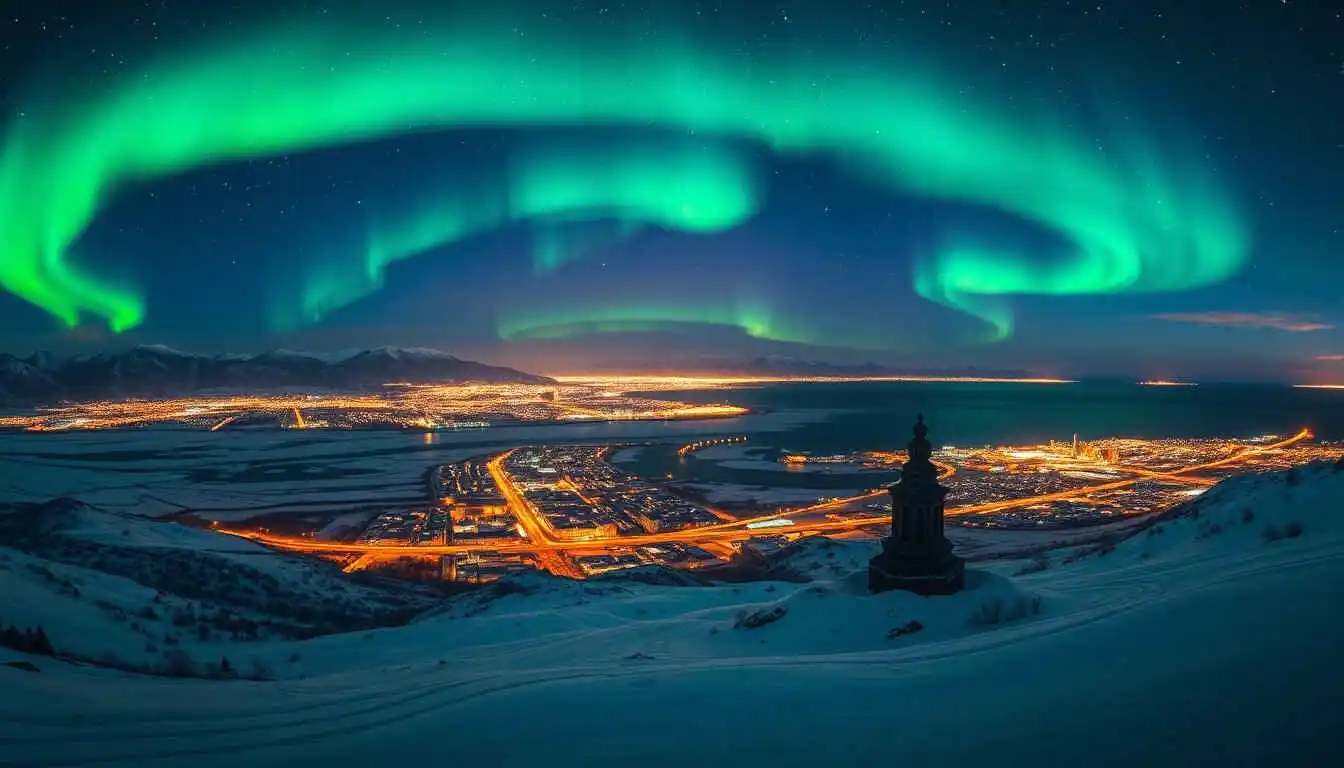
Murmansk sits in a magnetic sweet spot for Aurora viewing. The Kola Peninsula’s position directly beneath the auroral oval — the ring-shaped zone around the geomagnetic pole where Northern Lights activity is most intense — means that on a clear night between September and March, the display here can be breathtaking.
Beyond the Aurora, Murmansk is a city of genuine character. Soviet-era architecture rises dramatically from the hills surrounding Kola Bay. The world’s only nuclear icebreaker museum ship, Lenin, is moored here. The enormous monument to the Defenders of the Soviet Arctic — known locally as “Alyosha” — watches over the city from a hilltop. The fish market sells the freshest cod and king crab you will ever taste. And everywhere, you feel the weight and texture of a history that is completely different from Western European travel experiences.
For the genuinely adventurous traveler, Murmansk is a revelation.
When to Visit Murmansk: Seasons and What to Expect
Understanding Murmansk’s extraordinary seasonal extremes is the first step in planning your trip.
Polar Night (Late November – Mid-January)
This is arguably Murmansk’s most famous phenomenon. For approximately 40 days centered around the winter solstice, the sun remains permanently below the horizon. Darkness is total during this period — yet it is not absolute blackness. The sky shifts between deep navy, dusky violet, and a diffuse twilight glow around midday. The effect is otherworldly and surprisingly beautiful.
This is also the best time to see the Northern Lights, particularly on clear nights away from the city’s light pollution. December and January are peak Aurora season. Temperatures regularly fall between -15°C and -30°C, so preparation is essential.
Winter (February – March)
The sun returns, but only briefly — rising low on the horizon for a few precious hours, casting long golden light across the snow-covered landscape. Temperatures remain extremely cold but the days grow longer. This is excellent for outdoor activities: dog-sledding, snowmobiling, ice fishing, and reindeer safaris. Aurora activity remains strong.
Spring (April – May)
A fascinating transitional period. Snow begins to melt, the tundra awakens, and temperatures become more manageable (reaching 0°C to +5°C). The city shakes off its winter mood. Fewer tourists, lower prices, and a quieter, more authentic experience.
Midnight Sun (Late May – Late July)
For roughly two months, the sun never sets. Daylight is continuous — golden, soft, and surreal. The Arctic landscape transforms from white to a vivid patchwork of mosses, wildflowers, and birch trees. The Barents Sea coast becomes accessible. This is the best period for hiking, kayaking, and wildlife spotting (including migratory birds). It is equally disorienting and magical.
Autumn (August – November)
The transition back toward darkness. Early autumn offers beautiful foliage, excellent fishing, and the return of the Northern Lights (from September onwards). October and November see increasingly dramatic Aurora conditions as the nights lengthen.
Best time for most travelers: December–February for Northern Lights and Polar Night; June–July for Midnight Sun; March for a balance of returning light, cold-weather activities, and Aurora viewing.
Getting to Murmansk
By Air
Murmansk International Airport (MMK) receives regular flights from Moscow (Sheremetyevo and Domodedovo) and St. Petersburg. Flight time from Moscow is approximately 2.5 hours. Aeroflot and Nordavia operate frequent services. Some seasonal charter flights operate from Scandinavian cities, though availability changes year to year.
Important note: Entry requirements, visa regulations, and flight availability are subject to geopolitical conditions. As of 2026, travelers should carefully verify current visa and transit rules with official Russian embassy or consulate sources before booking.
By Train
The overnight train from Moscow (Leningrad sky Station) to Murmansk is one of the great rail journeys in Russia — a roughly 36–40-hour journey through the taiga forests of Karelia and into the tundra of the Kola Peninsula. It is comfortable, affordable, and deeply atmospheric. Book through the Russian Railways (RZD) website. First-class sleeper cabins are recommended for the overnight leg.
By Road
Driving to Murmansk from St. Petersburg is possible (approximately 1,400 km via the M18 highway through Karelia). The road is generally well-maintained in summer but requires winter driving experience and a properly equipped vehicle in the colder months. The route passes through spectacular taiga and lake landscapes.
Visa and Entry Requirements
Russia requires a visa for most foreign nationals. The e-visa system introduced for Murmansk and the wider region has made access somewhat easier for citizens of certain countries — but regulations change frequently. Work with a reputable travel agent or consult your country’s embassy in Russia for the most current requirements. Allow sufficient processing time and carry all documentation when travelling.
What to Do in Murmansk: Top Experiences
- Chase the Northern Lights
The primary reason many travelers come to Murmansk. Head out of the city into the tundra — toward Lake Semyonovskoye, the Lovozero district, or the village of Teriberka — for darkness away from urban light pollution. Local tour operators offer dedicated Aurora-hunting excursions with experienced guides who monitor space weather forecasts in real time.
- Board the Nuclear Icebreaker Lenin
The world’s first nuclear-powered surface vessel, now a permanently moored museum ship on the Kola Bay waterfront. Guided tours take you deep into the ship’s engine rooms, navigation bridge, and crew quarters — a fascinating window into Soviet technological ambition and Cold War history.
- Experience the Polar Night
Simply being present during Polar Night is an experience in itself. Walk the city’s streets under the perpetual twilight. Watch the sky shift colors. Visit the city’s cafes and bars, alive with warm light and the particular conviviality of people who have made peace with the dark. It is unlike anything you will encounter elsewhere.
- Visit Teriberka
The small fishing village of Teriberka, roughly 130 km east of Murmansk on the Barents Sea coast, became famous after featuring in the 2014 film Leviathan. Its dramatic coastline, abandoned Soviet-era infrastructure, and untouched Arctic landscapes make it one of the most photographically compelling destinations in Russia. In winter, it offers outstanding Northern Lights views; in summer, dramatic sea cliffs and whale-watching opportunities.
- Dog Sledding and Snowmobiling
Multiple operators around Murmansk offer dog-sledding excursions ranging from one-hour tasters to multi-day expeditions through the tundra. The experience of mushing your own team of Siberian Huskies across a snow-covered Arctic landscape is deeply exhilarating. Snowmobile tours are equally popular and cover greater distances.
- Reindeer Farm Visit
The indigenous Sami people have herded reindeer across the Kola Peninsula for millennia. Several farms near Murmansk welcome visitors, offering the chance to meet the animals up close, learn about Sami culture and traditional life, and in some cases, take a reindeer-drawn sled ride.
- Ice Fishing on Frozen Lakes
A quintessentially Arctic activity. Local guides drill holes through the ice of frozen tundra lakes and teach you the patient art of fishing beneath the ice, often targeting perch, pike, and Arctic char. Simple, meditative, and utterly memorable.
- The Alyosha Monument
The enormous 35.5-metre concrete statue of a Soviet soldier stands on the highest hill in Murmansk, visible from most of the city. Built in 1974 to honor the defenders of the Soviet Arctic during World War II, it commands panoramic views of Kola Bay, the city, and the surrounding tundra — particularly dramatic at twilight during Polar Night.
- Murmansk Regional Museum
An excellent introduction to the city’s history, the indigenous Sami people, the natural history of the Kola Peninsula, and the extraordinary role Murmansk played during the Second World War as the terminus of Allied supply convoys. Well-curated and worth several hours.
- The Barents Sea Coast and Whale Watching (Summer)
In summer, boat trips along the Barents Sea coast offer encounters with humpback and minke whales, orcas, seals, walruses, and vast seabird colonies. The dramatic sea cliffs and fjord-like inlets of the Kola coast are breathtaking in the midnight sun.
Where to Stay in Murmansk
Murmansk’s accommodation scene has improved considerably in recent years, with options ranging from Soviet-era hotels to modern business hotels and boutique guesthouses.
Arctic Hotel Murmansk: A solid mid-range option with comfortable rooms, a central location, and helpful staff experienced in catering to international visitors.
Meridian Hotel: One of the smarter business-class hotels in the city, offering good amenities and reliable service.
Park Inn by Radisson Murmansk: The most recognizably international brand in the city, offering consistent standards, a restaurant, and fitness facilities.
Guesthouses and Apartments: For longer stays or a more local experience, renting an apartment through local agents offers better value and greater authenticity. Several charming small guesthouses have opened in recent years.
Food and Drink: What to Eat in Murmansk
Murmansk’s food scene is dominated — deliciously — by the fruits of the Arctic Ocean. The city sits at the crossroads of some of the world’s richest fishing grounds, and it shows.
King Crab (Kamchatka Crab): The undisputed star of the Murmansk table. Introduced to the Barents Sea from the Pacific in the Soviet era, king crabs thrived and became a defining feature of the local food culture. You will find them in restaurants, markets, and dedicated crab-tasting experiences. They are extraordinarily good.
Fresh Cod and Pollock: Served grilled, baked, or in traditional Russian ukha (fish soup), the cod here is as fresh as it gets.
Reindeer Meat: A northern Russian and Sami staple, available in stews, as steaks, and in pelmeni (Russian dumplings). Rich, lean, and full of flavor.
Cloudberries: The golden Arctic berry grows wild on the tundra and appears in jams, desserts, and liqueurs. Unmissable.
Russian Comfort Food: Beyond the Arctic specialties, Murmansk’s cafes and restaurants serve excellent borscht, pelmeni, blini, and hearty soups — exactly what you want after hours in sub-zero temperatures.
Bars and Cafes: Murmansk has a lively cafe culture, particularly during Polar Night when warm, well-lit interiors become community hubs. Local craft beer has grown in popularity, and traditional Russian honey mead (medovukha) is worth trying.
Practical Tips for Visiting Murmansk
Clothing: This cannot be overstated. Dressing in three layers is non-negotiable in winter — thermal base layer, insulating mid-layer, and a windproof and waterproof outer shell. Merino wool socks, insulated waterproof boots rated to at least -40°C, a balaclava, and liner gloves under insulated mittens are essential. Frostbite risk is real.
Currency: The Russian Ruble (RUB). International bank cards may have limited acceptance depending on sanctions and bank policies — carry sufficient cash in Rubles, exchanged upon arrival.
Language: Russian is the dominant language. English is spoken by some hotel staff and tour operators, but less commonly in everyday settings. Learning a few basic Russian phrases and carrying a translation app is strongly advised.
Photography: In extreme cold, batteries drain extremely rapidly. Carry spare batteries in an inside pocket close to your body. Protect your camera from rapid temperature changes (from cold outdoor to warm indoor environments) to avoid condensation damage.
Connectivity: Mobile SIM cards are available from Russian operators (MTS, Beeline, MegaFon). A local SIM is the easiest way to maintain data connectivity. VPN usage is recommended for accessing international apps and services.
Health: Travel insurance with comprehensive medical evacuation coverage is essential. The nearest major medical facility is in Murmansk itself, but for serious emergencies, evacuation to Moscow or Helsinki may be necessary.
Murmansk and the Shadow of Geopolitics
It would be irresponsible not to acknowledge the context. Russia’s geopolitical situation since 2022 has significantly complicated travel for citizens of many Western nations. Sanctions, flight restrictions, and diplomatic tensions have affected visa availability, banking access, and travel insurance coverage.
Before planning any trip to Murmansk, travelers should consult their government’s current travel advisories, verify insurance coverage, and consider the political landscape carefully. The information in this guide reflects general travel conditions and is intended to be used alongside the most current official guidance available.
For those for whom travel to Russia is currently possible and advisable, Murmansk rewards the effort immeasurably.
Conclusion
Murmansk is not a destination you drift into. It demands intention. It asks something of you — a willingness to embrace cold, darkness, disorientation, and otherness. It offers no beach clubs, no theme parks, no curated Instagram-friendly experience zones.
What it offers instead is something rarer and more lasting: the sensation of standing at the edge of the world, watching the sky blaze with colors that have no names, in a city that has survived everything history has thrown at it and is still here, still burning its lights against the Arctic dark.
Travel to Murmansk is not a holiday. It is an encounter — with extreme nature, with resilient humanity, and with a version of yourself you may not have met before.
That encounter is worth every kilometer.
Frequently Asked Questions
- Where is Murmansk located?
Murmansk is located on the Kola Peninsula in northwest Russia, approximately 150 kilometers north of the Arctic Circle, making it the world’s largest city above the Arctic Circle.
- Is Murmansk safe for tourists?
Murmansk is generally considered safe for tourists in terms of petty crime. The more significant considerations are the extreme climate, the current geopolitical situation, and ensuring you have adequate travel insurance and preparation.
- What is the best time to see the Northern Lights in Murmansk?
The best period for Northern Lights viewing is from late September to mid-March, with December, January, and February offering the longest dark periods and most frequent Aurora activity.
- What is the Polar Night?
The Polar Night in Murmansk lasts approximately 40 days (typically from late November to mid-January), during which the sun remains entirely below the horizon and the city experiences continuous darkness.
- What is the Midnight Sun?
The Midnight Sun occurs from late May to late July, when the sun remains above the horizon continuously — even at midnight — bathing the Arctic landscape in 24-hour daylight.
- How cold does Murmansk get in winter?
Winter temperatures typically range from -10°C to -30°C, with occasional extremes approaching -40°C. Wind chill makes temperatures feel significantly colder.
- Do I need a visa to visit Murmansk?
Most foreign nationals require a Russian visa. The e-visa system simplified access for citizens of eligible countries, but requirements change frequently. Always verify current regulations with official sources.
- How do I get to Murmansk from Moscow?
You can fly from Moscow to Murmansk in approximately 2.5 hours, or take the overnight train from Moscow’s Leningrad sky Station — a scenic 36–40-hour journey through Karelia and the tundra.
- What language is spoken in Murmansk?
Russian. English is spoken in some hotels and tourist-oriented businesses, but is not widely used in everyday settings. Learning basic Russian phrases is highly recommended.
- What currency is used in Murmansk?
The Russian Ruble (RUB). Due to international sanctions, foreign bank cards may have very limited functionality — carry sufficient local currency.
- Is Murmansk worth visiting in summer?
Absolutely. The Midnight Sun, Arctic wildlife, whale-watching, hiking, and kayaking make summer (June–July) a spectacular and underrated time to visit.
- What is Teriberka and why should I visit?
Teriberka is a small fishing village on the Barents Sea coast, about 130 km from Murmansk. It offers stunning Arctic coastal scenery, outstanding Northern Lights viewing, and one of the most photogenic landscapes in Russia.
- Can I take a tour on the nuclear icebreaker Lenin?
Yes. The Lenin is permanently moored on the Kola Bay waterfront and open for guided tours, taking visitors through its engine rooms, bridge, and crew quarters.
- What outdoor activities are available in Murmansk?
Dog-sledding, snowmobiling, ice fishing, reindeer farm visits, Arctic hiking, Northern Lights safaris, whale-watching (summer), kayaking, and cross-country skiing are among the most popular activities.
- How do I dress for Murmansk in winter?
A three-layer system is essential: moisture-wicking thermal base layer, insulating mid-layer, and a waterproof/windproof outer shell. Insulated boots rated to at least -40°C, balaclava, liner gloves under insulated mittens, and warm hat are non-negotiable.
- What should I eat in Murmansk?
King crab is the unmissable local specialty. Also try fresh cod, reindeer meat dishes, Arctic cloudberries, ukha (fish soup), and traditional Russian comfort food like pelmeni and borscht.
- Is English widely spoken in Murmansk?
Not widely. Hotel and tour operator staff often have some English, but in everyday situations — shops, cafes, transport — Russian is essential. A translation app is invaluable.
- What is the Alyosha Monument?
Alyosha is a 35.5-metre Soviet soldier statue on Murmansk’s highest hill, built in 1974 to honor Arctic defenders in World War II. It offers panoramic views over the city and Kola Bay.
- Can I see the Northern Lights from the city of Murmansk?
Faintly, yes, but light pollution significantly reduces the experience. For the best Aurora viewing, travel 20–50 km outside the city into the dark tundra on excursions offered by local operators.
- How long should I spend in Murmansk?
A minimum of 4–5 days is recommended to experience both the city and the surrounding wilderness. A week or more allows for day trips to Teriberka, multiple Aurora-hunting attempts, and a fuller range of activities.
- What is the Sami culture and how does it relate to Murmansk?
The Sami are the indigenous people of the Kola Peninsula, with a culture centered on reindeer herding and a distinctive language, art, and spiritual tradition. Several Sami villages and reindeer farms near Murmansk welcome visitors.
- Are there guided tours available in Murmansk?
Yes. Local agencies offer a wide range of guided experiences including Northern Lights safaris, Teriberka day trips, dog-sledding, snowmobiling, icebreaker tours, and winter survival experiences.
- How do cameras handle Murmansk’s winter temperatures?
Batteries discharge very rapidly in extreme cold. Keep spare batteries warm inside your jacket, carry them into heated spaces, and allow your camera to acclimatize gradually when moving between cold and warm environments to prevent condensation.
- What wildlife can I see near Murmansk?
In winter: reindeer, Arctic foxes, and various Arctic birds. In summer: humpback and minke whales, orcas, walruses, grey seals, puffins, and a spectacular diversity of migratory seabirds along the Barents Sea coast.
- Is there good internet and mobile connectivity in Murmansk?
Yes, mobile data coverage in and around the city is generally good. Purchase a local SIM card from Russian operators. A VPN is recommended for accessing international services.
- What are the current travel advisories for Murmansk?
Due to Russia’s geopolitical situation, many Western governments have issued elevated travel advisories for all of Russia. Check your government’s official travel advisory page before planning any trip and ensure your travel insurance covers Russia.
- What is king crab and why is it famous in Murmansk?
King crab (Kamchatka crab) was introduced to the Barents Sea in the Soviet era and flourished. Murmansk is now the king crab capital of Russia, offering extraordinarily fresh, large, and flavorful crab — often considered the finest in the world.
- Can I do a day trip from Murmansk to Norway or Finland?
The Kola Peninsula borders Norway and Finland, but border crossings are subject to current regulations and political conditions. Verify border status and visa requirements carefully before attempting any cross-border travel.
- What is the best month to visit Murmansk for a first-timer?
February or March are often recommended for first-time visitors: the sun has returned (brief but beautiful), temperatures, while cold, are more manageable than deepest winter, Aurora activity remains strong, and winter activities are in full swing.
- What makes Murmansk different from other Northern Lights destinations?
Murmansk offers exceptional Aurora conditions alongside a completely distinctive cultural experience — Soviet history, Arctic maritime heritage, indigenous Sami culture, and extraordinary seafood — at lower cost and with far fewer crowds than Tromsø, Rovaniemi, or Iceland.
Disclaimer: The content on this blog is for informational purposes only. The author’s opinions are personal and not endorsed. Efforts are made to provide accurate information, but completeness, accuracy, or reliability are not guaranteed. The author is not liable for any loss or damage resulting from the use of this blog. It is recommended to use the information on this blog at your own discretion.
