
Table of Contents
They’re Living in Your Bed Right Now — Millions of Them — And Your Body Is Paying the Price
You can’t see them. You can’t feel them. But right now, as you read this, microscopic creatures are burrowing through your mattress, feeding on your dead skin, and filling your lungs with particles that could be silently destroying your health. Meet the house dust mite — the uninvited tenant that never leaves.
Introduction: The Invisible Invasion
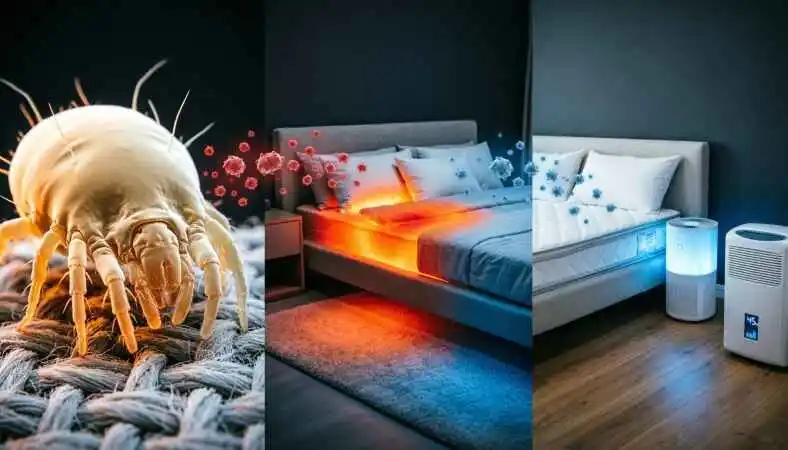
Picture this: you strip your bed, fluff your pillows, and climb into freshly laundered sheets. It feels clean. It smells clean. But under a microscope, your mattress looks like a bustling city — home to anywhere between 100,000 and 10 million dust mites per bed, according to estimates from allergists worldwide.
House dust mites are not a sign of poor hygiene. They are not a result of neglect. They are a biological inevitability of modern human life — present in virtually every home on earth, thriving wherever human beings sleep, sit, and shed skin. They are extraordinarily well adapted to domestic environments, requiring nothing more than warmth, moderate humidity, and the dead skin cells that every person sheds by the millions each day.
Yet despite their near-universal presence, most people know almost nothing about them. They do not know what dust mites are, how they affect health, or — critically — what can actually be done to reduce their impact.

This guide changes that. By the end, you will understand the biology of the house dust mite, the full spectrum of health consequences their presence triggers, and a comprehensive, evidence-based strategy for eradicating them from your home as thoroughly as possible.
What Are House Dust Mites?
House dust mites belong to the class Arachnida — making them distant relatives of spiders and ticks, not insects. The two species most commonly found in homes are:
- Dermatophagoides pteronyssinus — the European house dust mite
- Dermatophagoides farinae — the American house dust mite
Both are present across all continents and are almost interchangeable in terms of their biology and health effects.
Physical Characteristics
Dust mites are extraordinarily small — approximately 0.2 to 0.3 millimeters in length. They are completely invisible to the naked eye under normal conditions. Under magnification, they appear as pale, translucent, eight-legged creatures with no eyes and no antennae. Their bodies are covered in fine hairs that help them grip fabric fibers.
Despite their tiny size, they are remarkably robust. They can survive temperatures ranging from 15°C to 35°C, tolerate short-term desiccation, and resist many common cleaning agents.
Life Cycle
The dust mite life cycle passes through five stages: egg, larva, protonymph, tritonymph, and adult. At optimal conditions — approximately 25°C and 75–80% relative humidity — the entire cycle from egg to reproducing adult takes about 3 to 4 weeks. Adult females live for 60–70 days and can lay 60–100 eggs in a lifetime.
This rapid reproduction rate means that a single pair of mites, left undisturbed, can produce a colony of several hundred within a single month.
What Do They Eat?
Dust mites are detritivores — they feed primarily on organic detritus. Their main food source is human and animal skin cells (dander). A single human being sheds approximately 1.5 grams of dead skin every day — more than enough to feed approximately one million mites. They also consume pet dander, fungal spores, pollen, and bacteria found in household dust.
Dust mites do not bite humans. They do not drink blood. They do not burrow into living skin. Their harm is entirely indirect — through the allergens contained in their faecal pellets and body fragments.
Where Do They Live?
Dust mites concentrate wherever human skin cells accumulate:
- Mattresses and bed bases — the primary habitat; warmth from body heat plus shed skin make beds ideal
- Pillows — a single pillow can contain 10% of its weight in dust mites and their debris after two years of use
- Upholstered furniture — sofas, armchairs, and cushions
- Carpets and rugs — especially deep-pile carpets
- Curtains and fabric blinds
- Soft toys and stuffed animals
- Clothing stored in wardrobes
Dust mites are not found in significant numbers in kitchens, bathrooms, or other areas where human skin shedding is minimal.
How Dust Mites Affect Your Health
The health impact of house dust mites is driven almost entirely by two allergens:
- Der p 1 and Der p 2 (from D. pteronyssinus)
- Der f 1 and Der f 2 (from D. farinae)
These proteins — found in the mite’s faecal pellets and body fragments — are potent triggers of IgE-mediated allergic responses in sensitized individuals. Because mite faecal pellets are approximately 10–24 micrometers in diameter, they are small enough to become airborne and be inhaled deeply into the respiratory tract.
Allergic Rhinitis (Hay Fever Without the Hay)
Dust mite allergy is the most common cause of perennial allergic rhinitis — year-round nasal allergy symptoms, including:
- Persistent runny or blocked nose
- Frequent sneezing, especially in the morning
- Itchy nose and roof of the mouth
- Postnasal drip and chronic throat clearing
- Reduced sense of smell
Unlike seasonal hay fever triggered by pollen, dust mite rhinitis has no season. Symptoms are often worse in the morning — after hours of sleeping in close contact with millions of mites — and may temporarily improve when away from home.
Asthma
House dust mites are the single most significant indoor trigger of asthma worldwide. Studies consistently identify dust mite sensitization in 50–85% of asthmatic patients. Ongoing exposure to mite allergens promotes:
- Chronic airway inflammation
- Bronchial hyperresponsiveness (airways that over-react to triggers)
- Increased frequency and severity of asthma attacks
- Nocturnal asthma — wheezing and breathlessness during sleep
- Accelerated decline in lung function over time in sensitized individuals
In children, early and sustained dust mite exposure is strongly associated with the development of asthma, not merely its exacerbation. This makes early mite reduction a genuine preventive strategy, not just a symptom management tool.
Eczema (Atopic Dermatitis)
The relationship between dust mites and eczema is complex but real. Der p 1 — the primary mite allergen — is a cysteine protease enzyme that can directly digest the skin’s barrier proteins, increasing permeability and triggering inflammatory cascades. Sensitized individuals with eczema exposed to high levels of mite allergen show measurable worsening of skin inflammation, itch, and barrier dysfunction.
For children with atopic dermatitis, reducing mite exposure is a recognized component of comprehensive management.
Conjunctivitis
Mite allergens that land on the eyes trigger allergic conjunctivitis — red, watery, itchy eyes that are often worse upon waking. Many people attribute their morning eye irritation to screen use or poor sleep, when the actual cause is overnight mite allergen exposure.
Sleep Disruption and Fatigue
Even in people who do not consciously identify as allergic, elevated mite allergen loads contribute to subclinical nasal inflammation that disrupts sleep architecture. Congestion from mild allergic rhinitis reduces sleep quality, contributing to daytime fatigue, cognitive fog, and mood disturbance — symptoms that are often never connected to the bedroom environment.
The Burden of Chronic Exposure
Chronic, low-level allergen exposure — which is the reality for most dust mite–sensitized individuals — does not produce dramatic, obvious allergic reactions. Instead, it creates a state of persistent low-grade inflammation that subtly degrades quality of life, increases medical costs, reduces productivity, and — in asthmatic individuals — raises the risk of serious, potentially fatal attacks.
The World Health Organization has estimated that dust mite allergy affects approximately 1–2% of the global population severely and sensitizes up to 10–15% of the general population, making it one of the most prevalent chronic health burdens in the developed world.
Who Is Most at Risk?
While dust mites affect everyone to varying degrees, certain groups are most vulnerable:
- Children under 5: Immune systems are still developing, and early sensitization dramatically increases lifetime allergy and asthma risk
- People with a family history of atopy (allergy, asthma, eczema): Genetic predisposition dramatically increases the likelihood
- People living in warm, humid climates: Mites thrive in tropical and subtropical conditions
- Urban dwellers: Modern, well-insulated homes trap humidity and warmth — perfect mite conditions
- People with existing respiratory conditions: Mite exposure accelerates disease progression
- The elderly: Immune dysregulation and time accumulation in heavily colonized homes increase vulnerability
The Science of Eradication: What Actually Works
Here is where most advice falls short. Popular “remedies” like special sprays, essential oils, and ultraviolet wands generate substantial commercial interest but limited scientific evidence. Effective mite control requires a systematic, multi-modal approach targeting the mite’s biological needs: warmth, humidity, and food supply.
- Mattress and Pillow Encasements — The Single Most Effective Intervention
Allergen-impermeable encasements (also called mite-proof covers) encase the entire mattress, pillow, and duvet in tightly woven fabric with pore sizes small enough to block the passage of mite allergens (typically ≤6 micrometers). Studies consistently show that encasements reduce measurable allergen levels on sleep surfaces by 80–95% within weeks of installation.
These are not standard mattress protectors. They must be specifically designed for allergen containment, made from microfiber or tightly woven polyester, and must encase the entire item with a sealed zip. Replace pillows every 1–2 years regardless.
- Hot Washing — Temperature Is Everything
Washing bedding at 60°C (140°F) or above kills dust mites on contact. Below 60°C — including the popular 40°C “warm wash” — mites survive. Cold water with detergent removes allergens but does not kill live mites, meaning re-colonization begins immediately from the few survivors.
Wash all bedding (sheets, pillowcases, duvet covers) weekly at 60°C minimum. If your duvet or pillows cannot withstand hot washing, either replace them with washable alternatives or use allergen encasements as a compensatory strategy.
- Humidity Control — Attack the Mite’s Survival Requirement
Dust mites cannot survive in relative humidity below 50%. They have no active water-drinking mechanism and rely entirely on absorbing atmospheric moisture through their body surface. Maintaining indoor humidity between 35–50% creates conditions that are inhospitable for mite survival and reproduction.
Practical steps:
- Use a dehumidifier in bedrooms and living areas, particularly in humid climates or during summer
- Improve home ventilation — open windows during dry weather
- Avoid drying laundry indoors, which dramatically raises indoor humidity
- Ensure bathrooms and kitchens are well-ventilated to prevent moisture migration into living areas
- Use a hygrometer (inexpensive digital devices costing under £15 / ₹1,500) to monitor indoor humidity
- Hard Flooring Over Carpets
Carpets — especially deep-pile carpets — are among the most prolific mite reservoirs in the home. They are difficult to clean to sufficient depth, they retain warmth and moisture, and they provide ideal physical shelter. Replacing carpets with hard flooring (timber, tile, vinyl, laminate) in bedrooms dramatically reduces mite populations.
If removing carpets is not possible, vacuum twice weekly with a HEPA-filtered vacuum cleaner (standard vacuums redistribute allergens into the air) and consider professional hot-steam cleaning every 6 months.
- Reduce Textile Furnishings
Upholstered furniture, heavy curtains, fabric blinds, cushions, and soft toys are all secondary mite habitats. Practical replacements include:
- Leather or vinyl upholstery (easy to wipe down)
- Roller blinds or wood shutters instead of fabric curtains
- Machine-washable cushion covers (washed regularly at 60°C)
- Minimizing soft toys, or freezing them for 72 hours to kill mites before washing
- Freezing — For Items That Cannot Be Washed Hot
Items that cannot safely withstand 60°C washing can be placed in a sealed plastic bag and frozen at -17°C to -20°C for at least 48–72 hours. Freezing kills mites but does not remove allergen proteins — so always follow freezing with washing in cold water to remove the dead mite fragments and faecal matter.
- HEPA Air Purifiers — Supportive, Not Primary
High-efficiency particulate air (HEPA) purifiers with filters rated to capture particles ≥0.3 micrometers can reduce airborne mite allergen levels in rooms. They are most effective as a complement to source reduction (encasements, hot washing, humidity control) rather than a standalone solution. Mite allergens are only briefly airborne after disturbance — they settle quickly. Air purifiers have a limited impact on settled allergen loads.
- Acaricides — Chemical Mite Killers
Several acaricidal sprays (benzyl benzoate, tannic acid, and permethrin-based products) are commercially available and can reduce live mite populations on surfaces. Evidence for their long-term efficacy is mixed, and they do not remove allergen proteins from surfaces — only the live mites. They are best used as a supplementary measure during a comprehensive eradication campaign rather than as a first-line treatment.
- Temperature — Heat Treatment
Professional heat treatment of mattresses and rooms using high-temperature steam or heated air (above 60°C) can kill mites throughout soft furnishings. This is a service offered by specialist cleaning companies and is particularly valuable for mattresses too large for regular hot washing. Steam cleaning with temperatures above 55°C is also effective on upholstered furniture and carpets.
- Medical Management for Sensitized Individuals
Eradication reduces the allergen load but rarely eliminates it. Medical management remains essential for sensitized individuals:
- Antihistamines: Control nasal and eye symptoms but do not address the underlying sensitization
- Intranasal corticosteroids: The most effective medication for allergic rhinitis; reduces nasal inflammation consistently
- Allergen immunotherapy (AIT): The only disease-modifying treatment for dust mite allergy. Sublingual (under-the-tongue) or subcutaneous (injection) immunotherapy gradually desensitizes the immune system to mite allergens over 3–5 years, reducing symptom severity and potentially preventing asthma development. Sublingual mite immunotherapy tablets are now licensed in many countries and represent a major advance in long-term management.
Room-by-Room Eradication Checklist
Bedroom (Highest Priority)
- ☐ Allergen-impermeable encasements on all mattresses, pillows, and duvets
- ☐ Weekly hot washing (60°C+) of all bedding
- ☐ Hard flooring or HEPA vacuuming twice weekly
- ☐ Dehumidifier maintaining humidity below 50%
- ☐ Minimal soft furnishings; wipe-clean blinds
- ☐ No pets sleeping in the bedroom
Living Room
- ☐ Leather or vinyl sofa with washable cushion covers
- ☐ HEPA vacuum upholstered furniture weekly
- ☐ Replace heavy curtains with washable or wipe-clean alternatives
- ☐ Remove or minimize deep-pile rugs
Children’s Rooms
- ☐ Encasements on all sleep surfaces
- ☐ Limit soft toys; freeze and wash regularly
- ☐ Hard flooring if possible
- ☐ Wipe-clean storage solutions
Sample Weekly and Monthly Maintenance Schedule
| Frequency | Task |
| Daily | Air out bedding for 20 minutes. |
| Weekly | Hot wash all bedding at 60°C+ |
| Weekly | HEPA vacuum mattress, floors, upholstery |
| Monthly | Wipe down hard surfaces in bedrooms. |
| Every 3 months | Wash pillows (if washable) at 60°C |
| Every 6 months | Professional steam clean carpets/upholstery |
| Annually | Replace pillows; inspect encasements for damage. |
Frequently Asked Questions
- What exactly are house dust mites?
House dust mites are microscopic arachnids — relatives of spiders — that live in household dust and textiles. Measuring 0.2–0.3 mm, they are invisible to the naked eye and feed primarily on human dead skin cells.
- Are dust mites dangerous?
Dust mites themselves do not bite or infect humans. The danger comes from allergenic proteins in their faecal pellets and body fragments, which can trigger serious allergic and respiratory conditions when inhaled.
- How many dust mites are in a typical bed?
Estimates range widely, but a single mattress can harbor between 100,000 and 10 million dust mites, depending on age, material, humidity, and cleaning frequency.
- Can you see dust mites with the naked eye?
No. At 0.2–0.3 mm, dust mites are below the threshold of human vision. They can only be seen with a magnifying glass of at least 10× or, clearly, under a microscope.
- What do dust mites eat?
Their primary food source is dead human skin cells (dander). A single person sheds approximately 1.5 grams of dead skin daily — more than enough to feed over a million mites. They also consume pet dander, pollen, and fungal spores in household dust.
- Do dust mites bite humans?
No. Dust mites do not bite, sting, or burrow into living skin. All harm they cause is through allergen exposure, not direct physical contact.
- What are the symptoms of dust mite allergy?
Common symptoms include persistent runny or blocked nose, frequent sneezing (particularly in the morning), itchy eyes and nose, postnasal drip, wheezing or shortness of breath, and worsening eczema. Symptoms are present year-round, unlike seasonal pollen allergy.
- How do I know if I am allergic to dust mites?
A skin prick test or specific IgE blood test (RAST) performed by an allergist can confirm dust mite sensitization. These tests measure your immune system’s reaction to purified mite allergen extracts.
- Can dust mites cause asthma?
Yes. Dust mites are the single most significant indoor trigger of asthma worldwide. Sensitization to mite allergens is found in 50–85% of asthmatic patients, and ongoing exposure worsens airway inflammation and attack frequency.
- Can dust mites cause eczema?
Dust mite allergens — particularly the enzyme Der p 1 — can directly damage the skin barrier and worsen atopic dermatitis in sensitized individuals. Reducing mite exposure is an evidence-based component of eczema management.
- Where are dust mites most concentrated in a home?
Mattresses and pillows harbor the highest concentrations, followed by upholstered furniture, carpets, curtains, and soft toys — anywhere human skin cells accumulate in warm, moderately humid conditions.
- What temperature kills dust mites?
Washing at 60°C (140°F) or above kills dust mites on contact. Freezing at -17°C to -20°C for 48–72 hours also kill them, though it does not remove allergen proteins. Below 60°C, mites survive most washing cycles.
- Do dust mites survive in cold climates?
Yes, although their populations are lower in colder, drier environments. Centrally heated modern homes in cold climates often maintain the warmth and humidity dust mites need, making them prevalent even in Nordic countries.
- What humidity level kills dust mites?
Dust mites cannot survive when the relative indoor humidity is consistently below 50%. They die within a few days at 35–45% humidity because they absorb moisture from the air and cannot drink water directly.
- Are allergen-proof mattress covers effective?
Yes — high-quality allergen-impermeable encasements are the single most evidence-based physical intervention for reducing mite allergen levels on sleep surfaces, with studies showing 80–95% reduction in detectable allergen.
- How often should I wash my bedding to control dust mites?
Weekly washing at 60°C or above is recommended for sheets and pillowcases. Duvet covers should be washed every 1–2 weeks. Pillows should be washed every 3 months if washable.
- Does vacuuming remove dust mites?
Standard vacuums can redistribute mite allergens into the air rather than removing them. HEPA-filtered vacuum cleaners are significantly more effective, capturing particles as small as 0.3 micrometers. Regular HEPA vacuuming reduces allergen accumulation but cannot eliminate mites from deeply embedded carpet or mattress fibers.
- Do air purifiers help with dust mite allergy?
HEPA air purifiers reduce airborne allergen levels, which helps during periods of disturbance (vacuuming, making the bed). However, mite allergens settle quickly, so purifiers are a supportive tool rather than a primary solution.
- Is carpet the worst flooring for dust mites?
Yes. Deep-pile carpets are among the most prolific mite reservoirs in a home and are virtually impossible to decontaminate fully. Replacing bedroom carpet with hard flooring is one of the most impactful structural changes for mite-allergic individuals.
- Can dust mites live in pillows?
Yes. Pillows are ideal mite habitats — warm, humid from perspiration, and rich in skin cells. Studies have found that an old pillow without an encasement can contain mite faecal matter accounting for up to 10% of its total weight.
- Do essential oils kill dust mites?
Some essential oils (eucalyptus, clove, tea tree) have demonstrated acaricidal properties in laboratory conditions. However, their real-world efficacy in domestic settings is poorly studied, and they should not be relied upon as a primary eradication method.
- Can I use bleach to kill dust mites?
Bleach is not an effective acaricide at typical domestic concentrations and is dangerous to use on fabrics and in sleeping areas. Hot water (60°C+) and appropriate encasements are safer and far more effective.
- What is allergen immunotherapy for dust mite allergy?
Allergen immunotherapy (AIT) — available as injections or sublingual tablets — gradually desensitizes the immune system to mite allergens over 3–5 years. It is the only treatment that modifies the underlying allergic disease rather than just controlling symptoms.
- Are children more susceptible to dust mite allergy?
Yes. Children’s immune systems are still developing, and early sensitization to mite allergens significantly increases the lifetime risk of allergic rhinitis, asthma, and eczema. Proactive mite reduction in nurseries and children’s bedrooms is strongly recommended.
- Do dust mites live in hair or on the body?
No. Dust mites live in household textiles and dust, not on or in living human bodies. They feed on shed skin cells that have already fallen away from the body.
- Can I get rid of dust mites completely?
Complete eradication is not realistic — mites are ubiquitous and will re-colonise any suitable environment. The goal is to reduce allergen load below the threshold that triggers symptoms. With comprehensive control measures, this is highly achievable.
- Does sunshine kill dust mites?
Direct sunlight exposure kills dust mites in fabrics within a few hours due to desiccation and UV radiation. Hanging bedding and cushions in bright, direct sunlight regularly is a useful supplementary measure, particularly in dry climates.
- Are some people immune to dust mite allergy?
Non-sensitized individuals produce no allergic immune response to mite allergens and experience no allergy symptoms. However, sensitization can develop at any age, and immune tolerance is not guaranteed throughout life — especially with increasing allergen exposure over time.
- Can dust mites cause fatigue or brain fog?
Indirectly, yes. Subclinical nasal congestion from mite allergen exposure disrupts sleep quality even without overt allergy symptoms, contributing to chronic fatigue, reduced concentration, and mood disruption that many people never associate with their home environment.
- Should I see a doctor about dust mite allergy?
Yes, if you have persistent nasal symptoms, worsening asthma, or eczema that does not respond to standard care. An allergist can confirm sensitization, provide evidence-based environmental advice, and offer immunotherapy if appropriate. Early intervention prevents long-term disease progression.
The dust mites in your home are not going away on their own. But armed with the right knowledge and a systematic approach, you can take back your bedroom — and your health.
⚕️Medical Disclaimer: The information provided on this website is for general educational and informational purposes only and is not intended as a substitute for professional medical advice, diagnosis, or treatment. Always seek the advice of your physician or other qualified health provider with any questions you may have regarding a medical condition. Never disregard professional medical advice or delay in seeking it because of something you have read on this website.
