
Table of Contents
See the Difference: How to Reverse Eyesight Naturally
Proven Exercises & Remedies to Reclaim Your Vision Without Glasses
Introduction: Your Eyes Are Not a Lost Cause
You wake up one morning, squint at the alarm clock across the room, and realize the blurriness has gotten worse. The optometrist says your prescription has gone up — again. You’re told to get stronger lenses, and that’s that.
But what if glasses weren’t the whole story?
Across holistic health communities and increasingly within mainstream research, a growing body of evidence suggests that the eyes — like muscles — can be trained, nourished, and rehabilitated. While no natural method promises to eliminate severe structural eye conditions overnight, millions of people worldwide report significant improvement in clarity, reduced dependency on corrective lenses, and measurable slowing of vision decline through targeted exercises, nutritional therapy, and lifestyle changes.
This guide dives deep into the science and practice of natural vision improvement: what works, why it works, and how you can start today.

Understanding Why Vision Deteriorates
Before reversing eyesight naturally, it helps to understand the mechanisms behind its decline. The human eye is a biomechanical marvel — but one subject to the same stressors as any other organ system.
Myopia (nearsightedness) develops when the eyeball elongates slightly, causing light to focus in front of the retina rather than on it. Hyperopia (farsightedness) occurs when the focal point falls behind the retina. Presbyopia — the gradual hardening of the lens — is the near-universal aging eye condition that makes reading glasses a rite of passage after 40.
But here’s what mainstream ophthalmology sometimes underemphasizes: the vast majority of refractive errors are influenced by environmental and lifestyle factors. Chronic near-work, poor nutrition, screen overuse, chronic stress, and inadequate sleep all play measurable roles in vision decline. That means they are also levers you can pull to improve it.
The Bates Method: The Foundation of Natural Vision Training
Dr. William Horatio Bates, a New York ophthalmologist in the early 1900s, proposed a radical idea: most vision problems stem from habitual tension and strain in the eyes and mind — and that by relaxing and re-educating the visual system, clarity could be restored.
While the Bates Method remains controversial in conventional ophthalmology, its core techniques have formed the backbone of natural vision improvement for over a century.
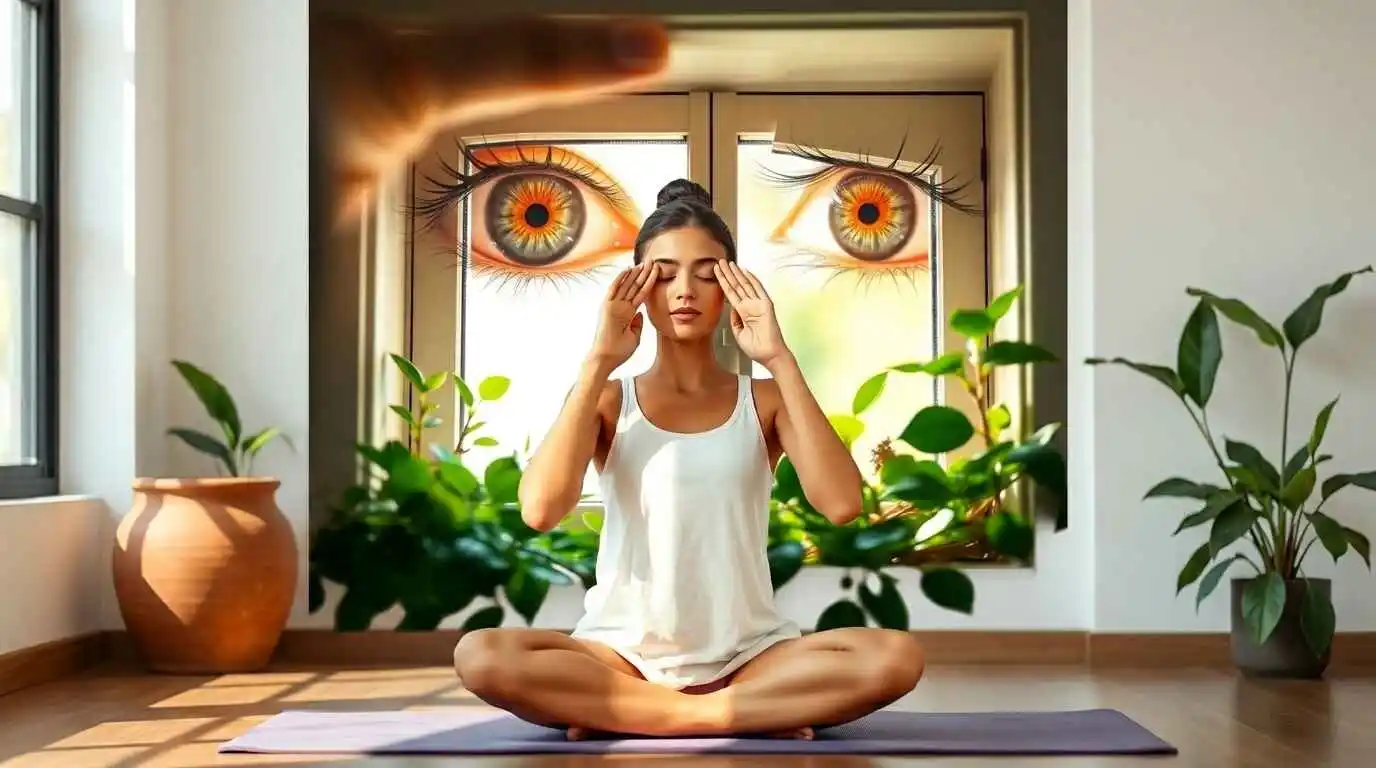
Palming
Rub your palms together to generate warmth, then cup them gently over your closed eyes without applying pressure. Breathe deeply and visualize total darkness for 5–10 minutes. This technique rests the optic nerve and releases chronic muscular tension around the orbits.
Sunning
With eyes closed, face the sun (or a bright lamp in winter) and slowly rotate your head side to side, allowing warmth and indirect light to penetrate your eyelids. Morning sunlight contains wavelengths shown to stimulate retinal dopamine — a key factor in preventing myopia progression.
Swinging and Shifting
Stand with feet shoulder-width apart and gently sway your entire body side to side, allowing your gaze to sweep the room without consciously focusing on any one object. This trains peripheral vision engagement and breaks the habit of straining to ‘fix’ a static point — a key cause of visual tension.
Eye Exercises That Build Strength and Flexibility
1. Near-Far Focusing
Hold a finger 10 inches from your face and focus on it for 5 seconds. Then shift focus to an object 20 feet away for 5 seconds. Alternate 10–15 times. This workout for the ciliary muscle — the ring of muscle that changes lens curvature — is one of the most evidence-supported exercises for slowing presbyopia.
2. Figure-of-8 Tracing
Imagine a large figure-8 (or infinity symbol) about 10 feet in front of you. Slowly trace it with your eyes, both clockwise and counterclockwise, for 2 minutes. This exercises all six extraocular muscles, improves oculomotor coordination, and enhances eye tracking — a skill critical for reading and spatial awareness.
3. The Pencil Push-Up
Hold a pencil vertically at arm’s length and slowly bring it toward your nose, keeping it in single focus as long as possible. When it doubles, push it back out. Repeat 10 times. This is the gold standard exercise for convergence insufficiency — a common and often undiagnosed cause of headaches and reading difficulties.
4. Directional Eye Rolls
Look as far up as possible for 3 seconds, then far right, far down, and far left — completing a slow, deliberate circuit. Do 5 circuits in each direction. This stretches the extraocular tendons and ligaments, reducing stiffness caused by fixed-gaze screen work.
5. Intentional Blinking Protocol
Every 20 minutes, perform 10 rapid full blinks followed by 3 firm slow squeezes. This redistributes tear film across the cornea, stimulates meibomian glands to release lipids that prevent tear evaporation, and prevents the chronic partial-blink pattern that develops from screen use.
Nutritional Remedies: Feed Your Eyes to See Better
The retina is one of the most metabolically active tissues in the human body, demanding a constant and diverse supply of micronutrients. A vision-supportive diet is not optional — it is foundational.
Lutein and Zeaxanthin
These twin carotenoids are the only antioxidants that concentrate specifically in the macula — the central zone of the retina responsible for sharp, detailed vision. Foods richest in them include kale, spinach, egg yolks, corn, and bell peppers. Supplementation at 10mg lutein and 2mg zeaxanthin daily has been shown in the AREDS2 clinical trial to reduce advanced macular degeneration risk by 25%.
Omega-3 Fatty Acids
DHA (docosahexaenoic acid) constitutes over 50% of the fatty acid content of retinal photoreceptor outer segments. Without adequate DHA, photoreceptors become structurally compromised. Fatty fish (salmon, mackerel, sardines), flaxseeds, and algae-based omega-3 supplements are your best sources.
Vitamin A and Beta-Carotene
Rhodopsin — the light-sensitive pigment in rod cells that allows low-light vision — is synthesized from vitamin A. Deficiency is the leading cause of preventable blindness globally. Sweet potatoes, carrots, liver, and fortified dairy supply ample amounts.
Bilberry and Ginkgo Biloba
Bilberry extracts (standardized to 36% anthocyanins) have been shown in multiple European studies to improve night vision and microcirculation in retinal capillaries. Ginkgo biloba enhances blood flow to the optic nerve and has demonstrated neuroprotective effects in early-stage glaucoma research.
Lifestyle Habits That Protect and Restore Vision
The Digital Detox Protocol
The average adult now logs over 11 hours of screen time daily. Each hour of fixed near-gaze suppresses blink rates from a natural 15–20 blinks per minute to as few as 3–5, collapsing the tear film and starving the cornea of oxygen-carrying tears. Beyond the 20-20-20 rule, implement hard cut-offs: no screens 60 minutes before sleep, full-spectrum night mode after sunset, and dedicated screen-free periods mid-day.
Sleep: The Body’s Visual Reset
Sleep is not passive for the eyes. During NREM deep sleep, the retina undergoes active metabolic waste clearance (analogous to the glymphatic system in the brain), photoreceptor renewal accelerates, and the corneal epithelium regenerates. Chronic sleep deprivation elevates intraocular pressure and has been associated with elevated glaucoma risk in large cohort studies.
Posture and Cervical Health
Forward head posture — epidemic among smartphone users — compresses the vertebral arteries that supply the posterior visual cortex and retina. A 15-degree forward head tilt increases the effective weight load on the cervical spine from 12lbs to 27lbs. Correcting posture, practicing cervical mobility drills, and using ergonomic workstations meaningfully reduces vision-related headaches and improves retinal perfusion.
Stress Management and Vision
Chronic psychological stress triggers sustained elevated cortisol, which constricts retinal blood vessels, increases intraocular pressure, and accelerates oxidative damage to the lens and retina. Regular meditation, breathwork, and time in nature — all proven cortisol reducers — double as vision protection strategies.
Hydrotherapy and Acupressure for the Eyes
Ancient Ayurvedic and Traditional Chinese Medicine traditions long recognized the eyes as the window to systemic health — and developed targeted external therapies to support them.
Warm Compress Therapy
Apply a clean cloth soaked in warm (not hot) water to closed eyes for 10 minutes each evening. Heat liquefies secretions in the meibomian glands — the tiny oil-producing glands along the eyelid margin — dramatically improving tear film lipid content and reducing evaporative dry eye, which affects up to 65% of screen workers.
Eye Acupressure Points
Gentle circular pressure on six key acupressure points around the orbital bone — Jingming (BL1) at the inner corner of the eye, Zanzhu (BL2) at the inner eyebrow, and Taiyang (EX-HN5) at the temples — is used in Chinese medicine to stimulate local circulation, reduce muscle tension, and ease eye fatigue. Multiple small clinical studies report improvements in dry eye symptoms and near visual acuity with regular application.
Children’s Vision: When Natural Intervention Matters Most
Childhood myopia is now a global public health emergency. By 2050, half the world’s population is projected to be myopic. The most powerful and evidence-backed intervention is startlingly simple: outdoor time.
Research from Singapore, Taiwan, and Australia consistently shows that two or more hours of daily outdoor light exposure significantly slows myopic axial elongation in children. Bright ambient outdoor light (10,000–100,000 lux vs. 300–500 lux indoors) triggers retinal dopamine release, which biologically signals the eye to stop growing longer.
Complementary measures include reduced reading distance (no closer than 30cm), good posture during near-work, and 10-minute breaks for every 30 minutes of sustained near focus.
Putting It All Together: Your Natural Vision Restoration Plan
Consistency is the variable that separates improvement from stagnation. Here is a practical daily framework:
Morning (10 minutes): Palming (3 min) → Sunning through closed eyelids (2 min) → Near-far focusing (3 min) → Figure-of-8 tracing (2 min)
Throughout the Day: 20-20-20 rule every screen hour. Intentional blink protocol every 20 minutes. Outdoor walk at lunch (minimum 20 minutes of natural light exposure).
Evening (10 minutes): Warm compress (10 min) → Eye acupressure sequence (3 min) → Pencil push-ups (2 min) → Directional eye rolls (2 min) → Palming to close (3 min)
Nutrition Daily: One green leafy serving + omega-3 source + antioxidant-rich berries + adequate hydration (minimum 2.5L water). Consider a quality lutein/zeaxanthin supplement.
Sleep: Target 7–9 hours. No screens one hour before bed. Blue light blocking glasses after sunset if avoidable.
Results timeline: Expect 2–4 weeks for improved comfort and reduced strain. 3–6 months for measurable changes in functional visual acuity. Always track progress with professional eye checks every 6 months.
Conclusion: Vision Is a Practice, Not a Prescription
Your eyesight is a dynamic, living system — not a fixed hardware spec. The eyes respond to how you use them, what you feed them, how much rest you give them, and how much chronic tension you hold around them.
Natural remedies and exercises won’t eliminate every refractive error or cure advanced retinal disease. But they can genuinely, measurably improve visual comfort, reduce dependency on corrective lenses, and slow the progressive deterioration that so many accept as inevitable.
See more clearly — starting with the decision to take your eye health into your own hands.
FAQs
| # | Question | Answer |
| 1 | Can eyesight actually be reversed naturally? | While complete reversal depends on the condition’s severity, many people experience measurable improvement in visual acuity and comfort through consistent natural practices, exercises, and dietary changes. |
| 2 | What is the Bates Method for eye improvement? | Developed by Dr. William Bates in the early 1900s, it involves relaxation techniques like palming and sunning to relieve eye muscle tension and improve natural vision. |
| 3 | How does palming help eyes? | Palming involves covering closed eyes with warm palms to block all light, allowing optic nerves to rest and reducing strain-induced tension in the ciliary muscles. |
| 4 | What foods are best for eye health? | Leafy greens (lutein & zeaxanthin), carrots (beta-carotene), fatty fish (omega-3s), eggs, berries (antioxidants), and nuts (vitamin E) are top choices for supporting retinal and lens health. |
| 5 | Does the 20-20-20 rule really work? | Yes — looking at something 20 feet away for 20 seconds every 20 minutes significantly reduces digital eye strain and helps reset the focusing muscles of the eye. |
| 6 | Can eye exercises fix astigmatism? | Exercises won’t correct the corneal shape causing astigmatism, but they can reduce associated symptoms like headaches, blurry vision, and eye fatigue in mild cases. |
| 7 | Is myopia (nearsightedness) reversible? | Mild myopia may stabilize or show marginal improvement with consistent outdoor time, reduced near-work, and targeted exercises. Severe structural myopia is not fully reversible without medical intervention. |
| 8 | What vitamins are most critical for vision? | Vitamin A (for rhodopsin production), C (antioxidant protection), E (cell membrane integrity), and lutein/zeaxanthin (blue light filtering) are the four pillars of nutritional eye health. |
| 9 | How does sleep affect eyesight? | During deep sleep, the eyes replenish tear film, clear metabolic waste from retinal cells, and recover from daily oxidative stress — making 7–9 hours essential for long-term vision health. |
| 10 | What is near-far focusing exercise? | Alternating focus rapidly between an object 10 inches away and one 20 feet away for 2–3 minutes trains the ciliary muscle and lens flexibility, potentially slowing presbyopia progression. |
| 11 | Can sunlight improve vision naturally? | Controlled, brief exposure to natural light (especially in the morning) increases dopamine release in the retina, which is linked to slower myopia progression in children and adults. |
| 12 | Does screen time permanently damage eyes? | Current evidence suggests digital screens cause functional strain but not permanent structural damage. However, chronic strain can accelerate presbyopia onset and worsen dry eye conditions. |
| 13 | What is figure-of-8 eye exercise? | Tracing an imaginary large figure-8 horizontally with your eyes stretches all six extraocular muscles uniformly and improves oculomotor control and coordination. |
| 14 | How does hydration affect eye health? | Adequate water intake is essential for tear production. Chronic dehydration reduces tear film stability, worsening dry eye, blurred vision, and photosensitivity. |
| 15 | Can blinking exercises improve dry eyes? | Yes — conscious blinking drills (rapid full blinks followed by firm squeezes) redistribute the tear film evenly, stimulate meibomian gland secretion, and reduce evaporative dry eye. |
| 16 | What role does gut health play in vision? | The gut-eye axis is emerging research territory. Poor gut microbiome diversity is linked to higher rates of macular degeneration, glaucoma, and uveitis due to systemic inflammation pathways. |
| 17 | Is yoga beneficial for eyesight? | Inverted yoga poses improve blood circulation to the optic nerve and retina. Pranayama (breathing) techniques reduce intraocular pressure, supporting glaucoma management. |
| 18 | Can cold and warm compresses help eyes? | Warm compresses liquefy meibomian gland secretions improving tear quality. Cold compresses reduce inflammation and puffiness, particularly after prolonged screen use. |
| 19 | Are blue light glasses effective? | Blue light glasses reduce glare and improve contrast, easing digital eye strain symptoms. They do not, however, prevent structural damage or reverse refractive errors. |
| 20 | How long before natural remedies show results? | Most people notice reduced strain and improved comfort within 2–4 weeks of consistent practice. Measurable improvements in acuity typically emerge after 3–6 months of dedicated effort. |
| 21 | Can omega-3 fatty acids restore vision? | Omega-3s (especially DHA) are structural components of retinal photoreceptors. Supplementation is shown to reduce dry eye severity and may slow age-related macular degeneration progression. |
| 22 | What is the pencil push-up exercise? | Holding a pencil at arm’s length and slowly moving it toward the nose while maintaining single vision trains convergence — the eyes’ ability to work together — reducing double vision and eye strain. |
| 23 | Does reducing sugar intake help eyes? | High blood sugar damages retinal blood vessels (diabetic retinopathy) and accelerates lens clouding (cataracts). A low-glycemic diet significantly reduces these risks. |
| 24 | What herbs support eye health? | Bilberry (improves night vision), ginkgo biloba (enhances retinal circulation), eyebright (reduces inflammation), and saffron (protects photoreceptors) have documented ocular benefits. |
| 25 | Is computer vision syndrome treatable naturally? | Yes — through the 20-20-20 rule, anti-glare screens, proper monitor positioning (20–24 inches away, slightly below eye level), and warm compresses after sessions. |
| 26 | Can acupuncture help with vision problems? | Several studies suggest acupuncture around eye meridian points can improve blood flow to the retina and optic nerve, with benefits reported in dry eye, glaucoma, and amblyopia cases. |
| 27 | How does posture relate to eyesight? | Forward head posture compresses cervical vertebrae, restricting blood flow through the vertebral arteries to the visual cortex and retina — correcting posture can meaningfully reduce vision-related headaches. |
| 28 | What eye massage techniques exist? | Gentle circular pressure on the brow bone, temples, and under-eye areas stimulates lymphatic drainage and improves microcirculation around the eye socket, reducing tension and puffiness. |
| 29 | Can children’s eyesight be improved naturally? | Outdoor play is the most evidence-backed intervention for slowing childhood myopia progression. Two hours of daily outdoor light exposure measurably reduces elongation of the eyeball. |
| 30 | When should I see an ophthalmologist instead? | Natural methods complement but never replace professional care. Sudden vision loss, floaters, flashes of light, or significant changes in prescription require immediate medical evaluation. |
Disclaimer
This blog post claims to share proven natural exercises and remedies to help readers reverse their eyesight and reclaim their vision without glasses. While the guide explores alternative habits for eye health, the provided text is a medical disclaimer emphasizing that the information is strictly for educational and informational purposes. It explicitly states that the content should not replace professional medical advice, diagnosis, or treatment from an ophthalmologist or optometrist. Furthermore, it reminds readers that individual results vary, reading the article does not establish a doctor-patient relationship, and anyone experiencing sudden or severe vision changes should seek immediate medical attention.
