
Table of Contents
Beyond the Prep: What Can Actually Go Wrong During and After a Colonoscopy
One of the safest procedures in modern medicine still carries real risks — here’s what every patient should understand before, during, and after the scope
The Procedure Everyone Dreads, Statistically One of the Safest
Ask most people what they know about a colonoscopy and the conversation almost always goes straight to the prep: the gallon of liquid, the closeness to a bathroom, the day spent feeling not quite like yourself. What gets discussed far less often is the procedure itself, and specifically, what can actually go wrong. That gap in the conversation is not because complications are hidden or covered up. It is because, statistically, they are uncommon enough that most patients never experience one, and most doctors, understandably, focus pre-procedure counseling on preparing patients for what they will feel rather than on the rarer scenarios where something goes sideways.
That does not mean those scenarios do not matter. A colonoscopy involves passing a flexible, lighted scope through the entire length of the colon, often removing tissue, taking biopsies, or excising polyps along the way, all while a patient is sedated. It is, by any honest description, a real medical procedure with real risks, not a routine errand. Understanding those risks in plain terms, without either minimizing them or blowing them out of proportion, is exactly the kind of information patients deserve before they sign a consent form, and exactly the kind of information that tends to get compressed into a single rushed sentence during a pre-procedure appointment.
This article lays out what can happen during a colonoscopy, what can happen in the hours and days that follow, which symptoms represent normal recovery versus a genuine red flag, who faces elevated risk, and what the honest overall risk-benefit picture looks like for the millions of people who undergo this procedure every year, most of them for entirely routine cancer screening.

What Actually Happens During the Procedure
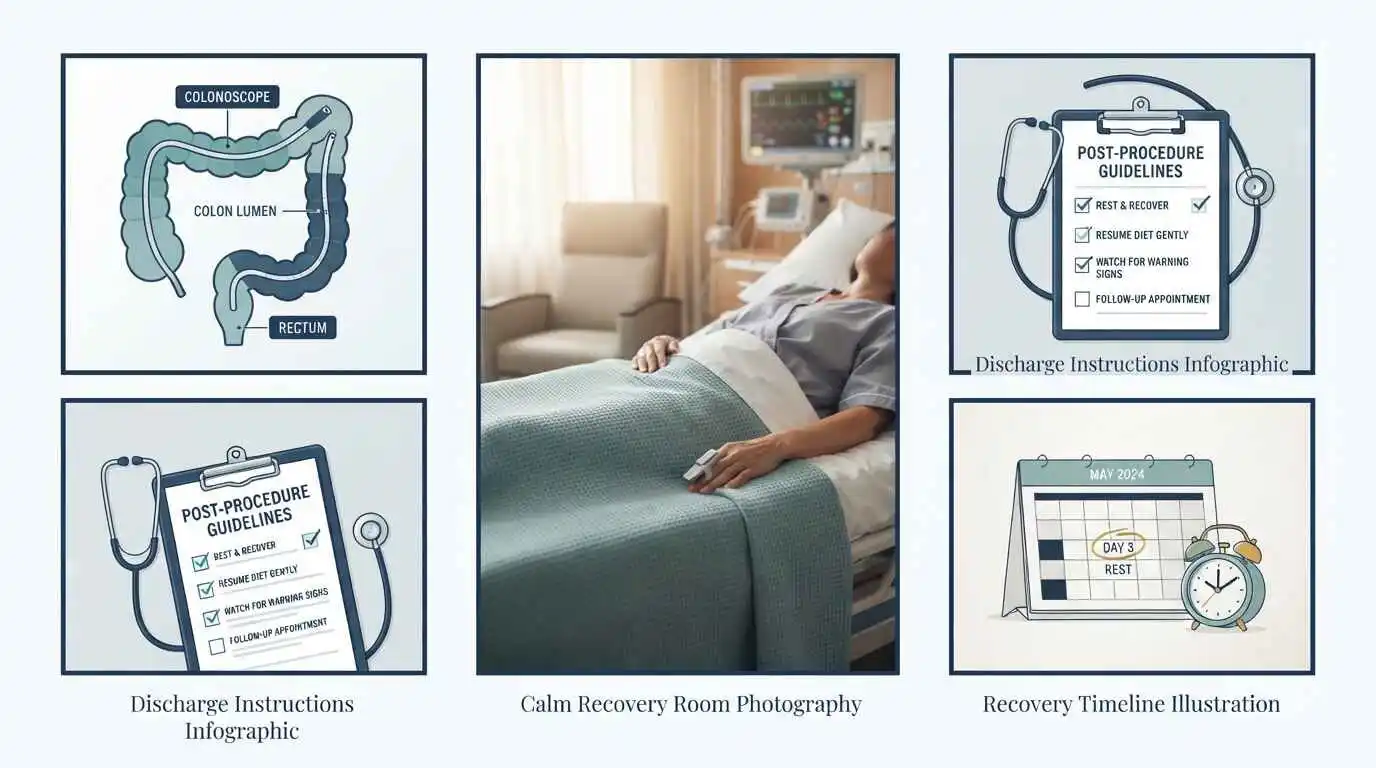
A colonoscopy involves a gastroenterologist or trained specialist guiding a thin, flexible tube equipped with a camera and light through the rectum and the entire length of the large intestine, examining the lining for polyps, inflammation, abnormal tissue, or other signs of disease. Patients are typically sedated, ranging from moderate conscious sedation to deeper sedation depending on the practice and patient preference, which means most people remember little to nothing of the procedure itself.
If the physician spots a polyp, a small growth on the colon’s inner lining that can sometimes develop into cancer over time, they will typically remove it during the same procedure using specialized instruments passed through the scope, a process called polypectomy. This is, in many respects, the entire point of a screening colonoscopy: catching and removing precancerous tissue before it has the chance to progress. It is also, notably, the step most closely associated with the procedure’s more serious potential complications, since introducing an instrument into the colon wall to remove tissue inherently carries more risk than simply observing the lining with a camera.
The procedure typically takes between twenty and sixty minutes depending on findings, and most patients go home the same day once sedation wears off enough to meet discharge criteria. Understanding this basic mechanical process helps explain why complications, when they do occur, tend to cluster around specific moments: the insertion and navigation of the scope itself, the removal of tissue, and the recovery period as sedation and any procedural effects resolve. Knowing this timeline also helps explain why some complications reveal themselves immediately in the procedure room while others only become apparent hours or days later, once a patient is home and the immediate medical supervision of the procedure itself has ended.
Perforation: The Complication Everyone Should Understand
Bowel perforation, an accidental tear or hole created in the colon wall, is the complication most associated with genuine medical seriousness, even though it remains rare relative to the overall volume of colonoscopies performed. Perforation can happen from mechanical pressure as the scope navigates the colon’s curves, or from the instruments used during polyp removal, particularly when tissue is cauterized or cut in ways that inadvertently go slightly too deep into the bowel wall.
The reason perforation receives outsized attention relative to its statistical frequency is straightforward: an untreated perforation allows bowel contents to leak into the abdominal cavity, which can lead to peritonitis, a serious and potentially life-threatening infection of the abdominal lining, if not identified and treated promptly. Warning signs include severe or worsening abdominal pain, a rigid or distended abdomen, fever, and in more advanced cases, symptoms of shock such as rapid heart rate or dropping blood pressure. Any of these symptoms after a colonoscopy warrant treating the situation as a potential emergency rather than waiting to see if things improve on their own.
Treatment for a confirmed perforation depends on its size, location, and how quickly it is identified, ranging from close observation and antibiotics for very small, contained perforations to surgical repair for larger or more significant ones. The encouraging reality is that most perforations, when they do occur, are identified either during the procedure itself or within the following hours, allowing prompt treatment that generally leads to good outcomes, particularly compared to a perforation that goes unrecognized for an extended period. This is precisely why the timing of symptom onset matters so much in how physicians evaluate a possible perforation: pain that develops gradually over several hours and steadily worsens is treated with far more urgency than a brief, fleeting discomfort that resolves on its own.
“An untreated perforation lets bowel contents leak into the abdominal cavity — which is exactly why severe or worsening pain after a colonoscopy should never be something a patient waits out.”
Bleeding: Common, Usually Manageable, Sometimes Delayed
Bleeding is a more frequently encountered complication than perforation, particularly following polyp removal, since cutting or cauterizing tissue naturally carries some risk of disrupting a blood vessel. In many cases, bleeding during the procedure is identified and addressed immediately by the physician performing the colonoscopy, using cauterization, clips, or other endoscopic techniques to control it before the procedure even concludes.
What surprises many patients is that bleeding does not always show up immediately. Delayed bleeding, sometimes occurring several days after the procedure, can happen as the site where a polyp was removed continues healing, particularly with larger polyps or certain removal techniques. This is one of the more important distinctions patients should understand before leaving the facility: the fact that a colonoscopy went smoothly on the day itself does not guarantee the healing process afterward will be entirely without incident.
Distinguishing normal from concerning bleeding matters practically. A small amount of spotting or mild blood-tinged stool in the day or two following polyp removal can fall within a normal range, especially if it is brief and not accompanied by other symptoms. Larger amounts of bright red blood, blood clots, ongoing heavy bleeding, or bleeding accompanied by dizziness, weakness, or a racing heartbeat represents a different category entirely and should prompt immediate medical contact rather than a wait-and-see approach. Patients who had multiple or larger polyps removed are generally counseled to pay closer attention to this window of delayed bleeding risk than those who underwent a purely diagnostic exam without any tissue removal at all.
Sedation and Bowel Prep: The Overlooked Risk Categories
Discussions of colonoscopy risk tend to focus heavily on the scope itself, but two other elements of the overall process carry their own, often underappreciated, risk profiles: sedation and bowel preparation. Sedation affects breathing and blood pressure, which is precisely why patients are continuously monitored throughout the procedure with equipment tracking oxygen levels, heart rate, and blood pressure. For most healthy patients, sedation-related complications are rare, but they become a more significant consideration for patients with underlying cardiovascular disease, respiratory conditions, or other factors that affect how the body handles sedating medications.
Bowel preparation, the process of thoroughly clearing the colon before the procedure using prescribed laxative solutions, is not without its own risks either. The large volume of fluid and its effect on the digestive system can cause dehydration and electrolyte imbalances, particularly in patients who do not adequately hydrate during the prep process or who have underlying kidney disease, heart conditions, or other factors that make fluid and electrolyte shifts more consequential. In rare cases, severe electrolyte disturbances from bowel prep have been associated with more serious complications, which is part of why patients with significant pre-existing health conditions may receive modified prep instructions or additional monitoring.
Neither of these risk categories tends to generate the same dramatic attention as perforation or major bleeding, but they represent a meaningful share of the overall complication picture, and they are also, notably, among the risk categories most directly influenced by how well a patient follows pre-procedure instructions around hydration, medication adjustments, and disclosing their full medical history.
Post-Polypectomy Syndrome and Other Less Familiar Complications
Beyond perforation and bleeding sits a lesser-known but clinically important complication called post-polypectomy syndrome, sometimes described as a transmural burn syndrome. This occurs when the electrical current used to cauterize tissue during polyp removal causes a localized burn injury that extends partway through the bowel wall without creating an actual perforation. The result is abdominal pain, fever, and localized inflammation that can closely mimic the symptoms of a true perforation, which is why patients experiencing these symptoms after a colonoscopy still need prompt medical evaluation to distinguish between the two.
Infection represents another, generally rarer, complication category, though it remains a real consideration, particularly in patients with weakened immune systems, certain heart valve conditions, or when additional procedures are performed alongside the standard colonoscopy. Modern endoscopic equipment undergoes rigorous sterilization protocols specifically designed to minimize this risk, and infection following a routine colonoscopy remains uncommon as a result.
Less serious but still worth understanding are the expected, non-complication effects that many patients mistake for something more concerning: bloating, gas, and mild cramping caused by air or carbon dioxide introduced into the colon during the procedure to improve visibility. These symptoms are normal, typically resolve within several hours to a day, and are generally more of an uncomfortable inconvenience than a genuine medical concern, distinct from the more serious symptom patterns described elsewhere in this piece.
Who Faces Higher Risk, and Why
Complication risk is not evenly distributed across every patient undergoing a colonoscopy. Several well-documented factors increase the likelihood of an adverse event, starting with whether the procedure is purely diagnostic and observational versus one involving polyp removal or biopsy, since any intervention on the bowel wall inherently raises risk compared to simple visual inspection. Advanced age, certain chronic health conditions including heart and lung disease, prior abdominal surgery that may have created scar tissue affecting the colon’s normal anatomy, and use of blood-thinning medications all factor into an individual patient’s overall risk profile.
Blood thinners deserve particular attention because they sit at an intersection of two competing medical priorities: the medication is often prescribed to prevent dangerous clotting or stroke, yet it simultaneously increases bleeding risk during and after polyp removal. This is why physicians typically review a patient’s full medication list well before the procedure and provide specific guidance about whether and how to adjust blood-thinning medications in the days leading up to a colonoscopy, a decision that requires balancing the medication’s original purpose against the procedure’s bleeding risk.
The technical skill and experience of the physician performing the procedure also meaningfully influences complication rates, which is part of why colonoscopies are performed by specifically trained specialists following standardized safety protocols and quality benchmarks, rather than being treated as a simple, interchangeable technical task. Patients undergoing colonoscopy at accredited facilities with experienced providers generally benefit from this accumulated procedural expertise, even though it is a factor most patients never think to ask about directly.
“Blood thinners sit at the intersection of two competing priorities: preventing dangerous clots, and raising bleeding risk during the very procedure meant to keep a patient healthy.”
Recovery: What’s Normal, What Isn’t, and When to Call
The hours immediately following a colonoscopy are dominated by sedation recovery. Grogginess, mild disorientation, and fatigue are expected and generally resolve over several hours, which is why patients are required to arrange a ride home rather than drive themselves, since sedation continues to impair judgment and reaction time well after a patient feels alert enough to leave the recovery area. Most people feel essentially back to normal by the following day, though some residual tiredness through the rest of the procedure day is common and expected.
Mild bloating, gas, and cramping in the hours after the procedure reflect the air introduced during the exam working its way through the digestive system, and typically resolve within a day without any specific treatment beyond simply waiting it out and moving around as tolerated. Bowel habits may be slightly different than usual for a day or two following the procedure and bowel prep, generally settling back to a normal pattern within a short window.
The symptoms that separate ordinary recovery from a genuine concern are worth committing to memory before the procedure, not looking up frantically afterward. Severe or worsening abdominal pain, a rigid or notably distended abdomen, fever, significant or ongoing rectal bleeding, persistent vomiting, dizziness or fainting, or a rapid heartbeat all represent reasons to contact a healthcare provider promptly rather than waiting for a scheduled follow-up appointment. Most facilities provide written discharge instructions covering exactly this distinction, and patients are well served by actually reading them rather than setting them aside once sedation wears off. Keeping that paperwork accessible for several days after the procedure, rather than discarding it once home, gives patients a quick reference point precisely during the window when delayed complications like bleeding or post-polypectomy syndrome are most likely to surface.
Rare but Serious: Anesthesia Reactions and Other Uncommon Events
Beyond the complications already discussed, a smaller set of genuinely rare events rounds out the full risk picture, and while none of these occur frequently enough to dominate a typical pre-procedure conversation, patients benefit from knowing they exist. Allergic or adverse reactions to sedation medications, while uncommon, can occur, ranging from mild skin reactions to more significant cardiovascular or respiratory effects, which is part of why patients are asked about medication allergies and prior sedation experiences before every procedure.
Splenic injury, though exceedingly rare, has been documented in colonoscopy literature, typically resulting from traction on ligaments connecting the colon to the spleen during scope navigation through tightly angled sections of the bowel. Symptoms can include left-sided abdominal pain, shoulder pain, or signs of internal bleeding, and while this complication is rare enough that many gastroenterologists will never encounter a case in an entire career, it illustrates why any unusual or severe pain following a colonoscopy deserves prompt evaluation rather than assumption that it must simply be normal post-procedure discomfort.
Cardiopulmonary events, including changes in heart rhythm or oxygen levels, represent another rare but recognized risk category, generally more relevant to patients with significant pre-existing heart or lung disease than to otherwise healthy individuals undergoing routine screening. Continuous monitoring throughout the procedure exists specifically to catch these events early, when they do occur, allowing rapid intervention well before they become dangerous.
Weighing the Real Risk Against the Real Benefit
None of this information is meant to discourage anyone from undergoing a colonoscopy when it is medically recommended. Colorectal cancer remains one of the more preventable cancers precisely because colonoscopy allows physicians to identify and remove precancerous polyps before they ever become cancer, a genuinely rare capability in cancer prevention more broadly. The complications described throughout this piece, while real and worth understanding in detail, occur in a small minority of procedures, and the overwhelming majority of colonoscopies proceed without any of them. Weighed against the alternative, a colorectal cancer diagnosis caught later and at a more advanced, harder-to-treat stage, the calculus overwhelmingly favors proceeding with recommended screening rather than avoiding it out of concern for these comparatively rare complications.
Understanding these risks in plain, specific terms is not about generating fear; it is about equipping patients to recognize the difference between an expected, unremarkable recovery symptom and a genuine red flag requiring prompt attention. That distinction is precisely what allows the rare complications that do occur to be caught early, treated effectively, and resolved with good outcomes, which is ultimately the entire point of understanding them in the first place. A colonoscopy remains, by any reasonable measure, one of the more favorable risk-benefit trade-offs in modern preventive medicine, and knowing exactly what to watch for afterward is simply part of getting that trade-off right.
| FAQs |
| Q1. Is a colonoscopy generally considered a safe procedure?
Yes, colonoscopy is widely regarded as one of the safer common medical procedures, with serious complications occurring in only a small percentage of cases, though risks still exist and are worth understanding. |
| Q2. What is the most serious complication associated with colonoscopy?
Bowel perforation, an accidental tear or hole in the colon wall, is considered the most serious complication, though it remains a rare occurrence relative to the total number of colonoscopies performed. |
| Q3. How common is perforation during a colonoscopy?
Perforation occurs in a small fraction of colonoscopies, with studies generally reporting rates well under one percent, though the exact figure can vary based on the type of procedure performed and patient-specific factors. |
| Q4. What are the warning signs of a bowel perforation after colonoscopy?
Warning signs can include severe or worsening abdominal pain, fever, a rigid or distended abdomen, and in some cases signs of shock, all of which warrant immediate emergency medical attention. |
| Q5. Is bleeding a common risk after colonoscopy?
Bleeding is one of the more common complications, particularly after polyp removal, and can range from minor and self-limited to more significant bleeding requiring medical intervention. |
| Q6. When does post-colonoscopy bleeding typically occur?
Bleeding can occur immediately during the procedure or be delayed, sometimes appearing several days after the colonoscopy, particularly following removal of larger polyps. |
| Q7. What does normal versus concerning rectal bleeding look like after a colonoscopy?
A small amount of spotting or mild blood-tinged stool can be normal after polyp removal, while large amounts of bright red blood, blood clots, or ongoing heavy bleeding should prompt contacting a doctor immediately. |
| Q8. Can a colonoscopy cause an infection?
Infection is a rare complication of colonoscopy, though it can occur, particularly in patients with certain underlying health conditions or when additional procedures are performed alongside the colonoscopy. |
| Q9. What role does sedation play in colonoscopy risk?
Sedation carries its own risks, including effects on breathing and blood pressure, which is why patients are closely monitored during the procedure and why certain underlying health conditions are carefully considered beforehand. |
| Q10. Are there risks associated with the bowel prep itself?
Yes, bowel preparation can cause dehydration, electrolyte imbalances, and in rare cases more serious complications, particularly in patients with kidney disease, heart conditions, or other significant health issues. |
| Q11. Is bloating or gas normal after a colonoscopy?
Yes, bloating, gas, and mild cramping are common and expected after a colonoscopy due to air or gas introduced during the procedure, and these symptoms typically resolve within a day. |
| Q12. How long does bloating typically last after a colonoscopy?
Bloating and gas discomfort usually improve within several hours to a day after the procedure as the body naturally passes the air introduced during the exam. |
| Q13. What is post-polypectomy syndrome?
Post-polypectomy syndrome refers to abdominal pain, fever, and localized inflammation that can occur after polyp removal without an actual perforation, caused by a burn injury to the bowel wall during cauterization. |
| Q14. Can a colonoscopy cause abdominal pain that lasts for days?
Mild, brief abdominal discomfort is common, but pain that persists for several days or worsens over time is not typical and should be evaluated by a healthcare provider. |
| Q15. Is nausea or vomiting common after a colonoscopy?
Mild nausea can occur due to sedation or the bowel preparation process, but persistent or severe vomiting is not typical and should be reported to a doctor. |
| Q16. What increases a person’s risk of complications during colonoscopy?
Risk factors can include advanced age, certain chronic health conditions, prior abdominal surgery, use of blood-thinning medications, and having polyps removed during the procedure rather than a purely diagnostic exam. |
| Q17. Do blood thinners increase the risk of complications?
Yes, blood-thinning medications can increase bleeding risk, which is why doctors often provide specific instructions about adjusting these medications before a colonoscopy involving potential polyp removal. |
| Q18. Can a colonoscopy trigger a heart or breathing problem?
In rare cases, sedation combined with underlying cardiovascular or respiratory conditions can contribute to complications, which is part of why patients are monitored closely throughout the procedure. |
| Q19. How soon after a colonoscopy can complications appear?
Some complications, like perforation or significant bleeding, can appear within hours, while others, particularly delayed bleeding after polyp removal, may not appear for several days. |
| Q20. What should someone do if they experience severe pain after going home?
Severe, worsening, or unusual abdominal pain after a colonoscopy should be treated as a potential emergency, and patients are generally advised to seek immediate medical care rather than waiting to see if it improves. |
| Q21. Is fever after a colonoscopy something to worry about?
A fever following a colonoscopy can be a sign of infection or another complication and should be reported to a healthcare provider, especially if accompanied by pain or other concerning symptoms. |
| Q22. Can a colonoscopy cause long-term digestive changes?
Most people return to their normal bowel habits within a day or two, though some may notice temporary changes in bowel movements before things settle back to normal. |
| Q23. Are complications more likely with a screening colonoscopy or a diagnostic one?
Procedures involving polyp removal or biopsy generally carry a somewhat higher complication risk than a purely observational screening exam without any intervention. |
| Q24. How are most colonoscopy complications treated?
Treatment depends on the specific complication, ranging from observation and rest for minor issues to endoscopic intervention, medication, or in more serious cases like perforation, surgery. |
| Q25. Does the skill of the person performing the colonoscopy affect complication risk?
Yes, procedural experience and technique can influence complication rates, which is part of why colonoscopies are performed by trained specialists following established safety protocols. |
| Q26. What discharge instructions are typically given after a colonoscopy?
Patients are typically advised on diet, activity restrictions, signs of complications to watch for, and when to resume normal medications, along with guidance on arranging transportation home due to sedation. |
| Q27. Why can’t patients drive themselves home after a colonoscopy?
Sedation used during the procedure impairs reaction time and judgment for several hours afterward, making it unsafe to drive, which is why patients are required to arrange a ride home. |
| Q28. Is it normal to feel tired for the rest of the day after a colonoscopy?
Yes, residual grogginess and fatigue from sedation are common for the remainder of the procedure day, and most people feel back to normal by the following day. |
| Q29. Can a colonoscopy miss something important, and is that considered a complication?
A missed polyp or lesion is generally categorized as a limitation of the procedure’s detection rate rather than a traditional complication, though it remains an important consideration in overall colonoscopy quality. |
| Q30. What is the overall takeaway about colonoscopy safety?
While complications can occur, they remain relatively uncommon, and the procedure’s benefits in detecting and preventing colorectal cancer generally outweigh the risks for most patients who are candidates for screening. |
⚕️Medical Disclaimer:
The information provided on this website is for general educational and informational purposes only
and is not intended as a substitute for professional medical advice, diagnosis, or treatment. Always
seek the advice of your physician or other qualified health provider with any questions you may have
regarding a medical condition. Never disregard professional medical advice or delay in seeking it
because of something you have read on this website.
