
Table of Contents
The Spleen: The Silent Guardian Organ You Never Knew Was Saving Your Life
Why this fist-sized, purple powerhouse deserves far more credit than it gets
Ask most people to name the organs that keep them alive, and you will hear a familiar list: the heart, the lungs, the brain, maybe the liver or kidneys if they are feeling thorough. Almost no one mentions the spleen. Tucked away in the upper-left corner of the abdomen, behind the ribs and just under the diaphragm, this fist-sized, deep-purple organ works around the clock without ever asking for recognition. It filters your blood, hunts down infections, recycles old cells into usable materials, and keeps an emergency reserve of blood and platelets ready for the moments your body needs them most.
The spleen’s obscurity is partly its own doing. Unlike the heart, it does not announce its rhythm. Unlike the lungs, you cannot feel it expand and contract with every breath. It simply does its job, quietly and efficiently, until something goes wrong. And when something does go wrong, whether through disease, injury, or the surgical removal that sometimes becomes necessary, the absence of the spleen reveals just how much heavy lifting it was doing all along.
This article is a deep dive into the organ most of us never think about, covering its anatomy, its major functions, what happens when it is damaged or removed, the conditions that affect it, and the everyday habits that keep it functioning well. By the end, the spleen will have earned a permanent spot on your mental list of vital organs, right where it belongs.

Where the Spleen Lives and What It Looks Like
The spleen sits in the upper-left quadrant of the abdominal cavity, cradled by the ninth, tenth, and eleventh ribs, just behind the stomach and above the left kidney. In a typical adult, it measures roughly the size of a clenched fist, about four inches long and weighing somewhere between 150 and 200 grams, though its size can fluctuate considerably depending on how much blood it is holding at any given moment.
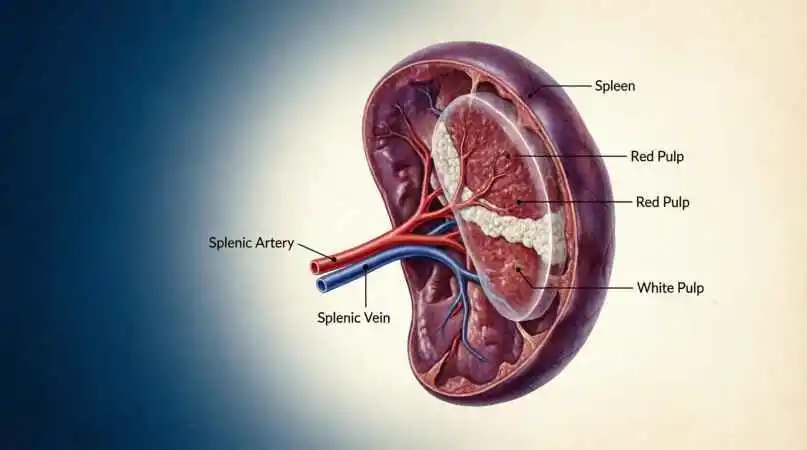
Structurally, the spleen is often described as a blood filter wrapped in immune tissue, and that description is not far off. The organ is enclosed by a thin, fibrous capsule that gives it shape and some degree of protection, though not nearly enough to prevent it from being one of the most commonly injured organs in blunt abdominal trauma. Beneath that capsule lies the functional tissue of the spleen, which is divided into two distinct regions with very different jobs: the red pulp and the white pulp.
The red pulp, which makes up the majority of the organ’s volume, is a dense network of blood-filled sinuses and specialized cells that act as a filtration and recycling center. The white pulp, scattered throughout the red pulp in small nodules, is lymphoid tissue that closely resembles the tissue found in lymph nodes. This dual structure is what allows the spleen to serve two very different masters at once: the circulatory system and the immune system.
A useful way to think about the spleen is as a combination of a water treatment plant and a security checkpoint, both built into the same building. Blood flows in through the splenic artery, gets inspected, filtered, and partly recycled, and flows back out through the splenic vein, all while immune cells stationed throughout the organ watch for signs of trouble.
Function One: The Body’s Blood Filtration Plant
The single most important job of the spleen is filtering blood, and it does this with a level of precision that is genuinely remarkable. Every red blood cell in your body passes through the spleen roughly every day, squeezing through narrow, sieve-like passages in the red pulp called splenic sinusoids. These passages are so tight that only healthy, flexible red blood cells can slip through easily.
Red blood cells have a natural lifespan of about 120 days. As they age, they become stiffer, more fragile, and less able to bend and squeeze through tiny capillaries. The spleen’s narrow filtration channels act as a quality-control checkpoint: cells that are too old, too damaged, or too misshapen get trapped and are engulfed by macrophages, a type of immune cell that specializes in cleanup duty. In this way, the spleen functions as the body’s recycling center for worn-out blood cells, clearing roughly five million red blood cells every second and replacing them with fresh cells produced by the bone marrow.
This filtration process does more than just remove old cells; it also strips out abnormal or foreign material. Bacteria, damaged cells, and cellular debris circulating in the bloodstream get caught in the same sinusoidal net and are destroyed by resident macrophages. This makes the spleen especially good at clearing certain kinds of bloodstream infections, particularly those caused by encapsulated bacteria, a fact that becomes critically important later when we discuss what happens after spleen removal.
The spleen is also uniquely equipped to remove red blood cells infected with parasites such as the ones that cause malaria, which is part of why spleen function and malaria resistance have been so closely studied by researchers in tropical medicine. A well-functioning spleen essentially performs continuous, real-time quality control on the entire volume of blood in your body, something no other organ is built to do in quite the same way.
Function Two: A Command Center for the Immune System
While the red pulp handles filtration, the white pulp turns the spleen into one of the largest immune organs in the body. Structurally and functionally, this tissue behaves like an enormous lymph node, except instead of monitoring lymphatic fluid, it monitors blood directly.
Inside the white pulp, clusters of lymphocytes, including B cells and T cells, are organized around small arteries in a way that maximizes their exposure to passing blood. When these immune cells encounter bacteria, viruses, or other pathogens circulating in the bloodstream, they mount a targeted immune response. B cells within the spleen can differentiate into plasma cells that produce antibodies, which is one reason the spleen plays such an important role in generating immunity to bloodborne infections.
The spleen is particularly skilled at responding to what are called encapsulated bacteria, organisms such as Streptococcus pneumoniae, Haemophilus influenzae type b, and Neisseria meningitidis, all of which have a protective outer coating that makes them harder for the immune system to identify and destroy. The spleen’s structure allows immune cells to catch and process these bacteria in a way that other lymphoid organs are not as well positioned to do, which is a major reason why people who lose their spleen face a lasting increased risk from these specific pathogens.
Beyond direct pathogen defense, the spleen also serves as a staging ground where immune cells can encounter antigens and begin mounting coordinated responses that then spread throughout the rest of the body. In this sense, it functions less like a single checkpoint and more like a regional headquarters, coordinating a defense that extends well beyond its own borders.
Every red blood cell in your body passes through the spleen roughly every day — five million cells filtered, every single second.
Function Three: Blood and Platelet Storage for Emergencies
Another lesser-known role of the spleen is acting as a reservoir, a kind of biological savings account for blood components. At any given time, the spleen holds a reserve supply of red blood cells and, more significantly, roughly a third of the body’s entire platelet supply.
Platelets are the cell fragments responsible for clotting, the first responders that rush to a wound and begin forming a plug to stop bleeding. By keeping a substantial reserve on hand within the spleen rather than letting all platelets circulate freely, the body maintains a buffer that can be released quickly during moments of acute need, such as sudden blood loss or injury.
This reservoir function also means the spleen can contract, squeezing extra red blood cells into general circulation during moments of physical stress, a mechanism that has been studied extensively in free-diving populations, where an efficient splenic contraction helps deliver more oxygen-carrying red blood cells into the bloodstream during prolonged breath-holds. While this is a more dramatic example, even everyday physical exertion can trigger a mild version of the same response, offering a small but real performance boost by mobilizing stored blood cells when the body needs them.
This storage capacity is part of why the size of the spleen can vary so much from one moment to the next. A spleen that is actively holding a large reserve of blood will feel and measure larger than one that has recently released its stores, which is a normal physiological fluctuation rather than a sign of disease.
Function Four: Iron Recycling and Nutrient Recovery
When the spleen breaks down old or damaged red blood cells, it does not simply discard the material. Hemoglobin, the iron-rich protein that gives red blood cells their oxygen-carrying capacity, is broken down into its component parts, and the iron is carefully recovered rather than wasted.
This recovered iron is bound to a transport protein called transferrin and shipped off to the bone marrow, where it becomes available again for the production of new red blood cells. This recycling loop is remarkably efficient. The body reuses the vast majority of its iron supply this way rather than relying solely on dietary intake, which is one reason iron deficiency develops slowly under normal circumstances but can become serious when this recycling system is disrupted.
Beyond iron, the breakdown of hemoglobin also produces bilirubin, a yellow-pigmented compound that is transported to the liver for further processing and eventual excretion. This is the same bilirubin responsible for the yellowish tint of bruises as they heal and, in higher concentrations, for the jaundice seen in certain liver and blood disorders. In this way, the spleen is quietly connected to processes throughout the body that most people never associate with it, from bone marrow activity to liver function to something as visible as the color of a fading bruise.
Function Five: An Early-Life Blood Cell Factory
Before birth, the spleen takes on an entirely different job. During the second trimester of fetal development, before the bone marrow has fully matured into the body’s primary blood-cell-producing site, the spleen serves as a temporary factory for red blood cells, white blood cells, and platelets, a process called extramedullary hematopoiesis.
By the time a baby is born, the bone marrow has typically taken over this responsibility, and the spleen’s blood-cell-manufacturing duties wind down under normal circumstances. However, this latent capability does not disappear entirely. In certain diseases that damage or overwhelm the bone marrow, such as certain types of severe anemia or bone marrow disorders, the spleen can reactivate this fetal function and resume producing blood cells as a backup system, a striking example of the organ’s underlying versatility even in adulthood.
Life Without a Spleen: What Removal Really Means
Sometimes the spleen must be surgically removed, a procedure called a splenectomy, most commonly due to traumatic rupture, severe enlargement, certain blood disorders, or as part of treatment for specific cancers. It is entirely possible to live a full, active life without a spleen, since other organs, particularly the liver and bone marrow, can absorb some of its filtering and blood-cell-clearing duties. But full compensation is not the same as full replacement, and the gaps left behind matter.
The most significant consequence of losing the spleen is a permanently increased vulnerability to infection from encapsulated bacteria, the same organisms the spleen was uniquely equipped to fight. This heightened risk is sometimes called overwhelming post-splenectomy infection, or OPSI, and while it is relatively rare, it can progress with alarming speed and severity, occasionally becoming life-threatening within hours of the first symptoms appearing.
For this reason, people who have had their spleen removed, or who were born with a spleen that does not function properly, a condition known as functional asplenia, are typically advised to receive specific vaccinations against pneumococcus, meningococcus, and Haemophilus influenzae type b, often with booster doses on a set schedule. Many are also advised to carry a card or wear a medical alert bracelet noting their asplenic status, keep a course of emergency antibiotics on hand, and seek prompt medical attention at the first sign of fever, since what might be a mild illness in someone with a spleen can escalate quickly in someone without one.
Beyond infection risk, life without a spleen also means losing that emergency reservoir of platelets and red blood cells, along with the ongoing quality-control filtering that clears old and damaged cells from circulation. Blood tests in people without a spleen often show telltale signs of this absence, including red blood cells with visible remnants that would normally have been filtered out. None of this makes life without a spleen unmanageable, but it does mean the organ’s quiet, background labor becomes very apparent the moment it stops.
Common Conditions That Affect the Spleen
Because the spleen sits at the crossroads of the circulatory and immune systems, a wide range of conditions can affect it, either directly or as a downstream consequence of disease elsewhere in the body. Understanding the most common of these helps explain why doctors pay close attention to this organ during physical exams and imaging.
Splenomegaly, or an enlarged spleen, is one of the most frequently encountered spleen-related findings. It is not a disease in itself but rather a signal that something else is going on, since the spleen tends to swell in response to infections, liver disease, certain cancers of the blood and lymphatic system, and conditions that cause abnormal breakdown of red blood cells. Mononucleosis, caused by the Epstein-Barr virus, is a particularly well-known cause of temporary splenic enlargement, and it is the reason doctors often advise people recovering from mono to avoid contact sports and heavy lifting for several weeks, since an enlarged spleen sits closer to the body surface and becomes more vulnerable to rupture from impact.
Splenic rupture is one of the more dramatic and dangerous things that can happen to this organ. Because the spleen is highly vascular and only loosely protected by the rib cage, blunt trauma from a car accident, a sports injury, or a fall can tear its capsule and cause rapid, sometimes massive, internal bleeding. A ruptured spleen is a medical emergency, and depending on severity, treatment can range from careful monitoring to emergency surgical removal.
Splenic infarction occurs when the blood supply to part or all of the spleen is blocked, often by a blood clot, causing that portion of tissue to die from lack of oxygen. This can happen as a complication of certain blood disorders, heart conditions that generate clots, or conditions that make blood more prone to clotting.
Hypersplenism describes a state in which an overactive spleen destroys blood cells faster than the body can replace them, leading to low counts of red blood cells, white blood cells, platelets, or some combination of the three. It is often associated with an enlarged spleen and can be caused by a wide range of underlying conditions, from chronic liver disease to certain autoimmune disorders.
Splenic cysts and, less commonly, splenic tumors can also develop, most of which are found incidentally during imaging performed for unrelated reasons. Most splenic cysts are benign and require no treatment beyond periodic monitoring, though larger cysts occasionally need to be drained or surgically addressed if they cause pain or risk rupture.
Sickle cell disease deserves special mention because of its unique relationship with the spleen. In people with sickle cell disease, misshapen red blood cells repeatedly clog the narrow splenic sinusoids, leading over time to repeated small infarctions that eventually leave the spleen scarred and nonfunctional, a process called autosplenectomy. This is why many people with sickle cell disease face the infection risks of asplenia even though their spleen was never surgically removed.
Signs That Something May Be Wrong With Your Spleen
Because the spleen sits deep in the abdomen and does not have the kind of pain-signaling setup found in organs like the stomach or intestines, spleen problems can be surprisingly quiet in their early stages. Even so, there are warning signs worth knowing.
Pain or a feeling of fullness in the upper left abdomen, sometimes radiating to the left shoulder, is one of the more classic signs of spleen trouble, particularly after an injury or a fall. This shoulder pain, known as Kehr’s sign, occurs because blood or irritation near the diaphragm can trigger pain signals that the brain interprets as coming from the shoulder rather than the abdomen.
Feeling full quickly after eating only a small amount of food can also point to an enlarged spleen pressing against the stomach. Frequent infections, unusual fatigue, easy bruising, or bleeding that takes longer than expected to stop can all suggest that the spleen’s filtering and platelet-storage functions are not working as they should. Anyone experiencing sudden, severe abdominal pain following an injury, especially accompanied by dizziness, rapid heartbeat, or fainting, should treat it as a potential emergency and seek immediate medical care, since it could indicate internal bleeding from a ruptured spleen.
Keeping Your Spleen Healthy
The spleen does not require a dedicated wellness routine the way, say, cardiovascular fitness or muscle strength does, but general good health habits go a long way toward supporting its function. Protecting the abdomen during contact sports and wearing seatbelts consistently reduces the risk of the blunt trauma that most commonly injures the spleen.
Staying current on recommended vaccinations, particularly for those with any degree of reduced spleen function, provides meaningful protection against the infections the spleen would otherwise help fight off. Managing underlying conditions such as liver disease, chronic infections, and autoimmune disorders also helps prevent the kind of splenic enlargement that puts the organ at greater risk of injury.
A balanced diet that supports healthy blood cell production, including adequate iron, vitamin B12, and folate, indirectly supports the spleen by keeping the blood cells passing through it healthy and functional. And perhaps most importantly, paying attention to unexplained abdominal discomfort, unusual fatigue, or a pattern of frequent infections, and mentioning these symptoms to a doctor rather than dismissing them, gives this quiet organ the attention it deserves before a minor issue becomes a major one.
Evidence-Based Ways to Support Spleen Health
· Stay Consistently Hydrated
Adequate water intake maintains healthy blood volume and viscosity, making it easier for the spleen to filter blood efficiently and support the broader lymphatic system
· Eat a Nutrient-Dense, Balanced Diet
A diet rich in antioxidants, vitamins, and minerals supports overall immune function. This also reduces the risk of metabolic conditions (like nonalcoholic fatty liver disease) that can indirectly cause blood backup and spleen enlargement.
· Maintain a Healthy Weight and Exercise Regularly
Regular physical activity promotes healthy blood circulation and lymphatic drainage. Maintaining a healthy weight reduces systemic inflammation and metabolic stress on the liver and spleen.
· Limit Alcohol and Ultra-Processed Foods
Excessive alcohol consumption is a leading cause of liver cirrhosis, which is a primary driver of an enlarged spleen (splenomegaly)
. Avoiding ultra-processed foods and added sugars further protects the vascular and hepatic systems that the spleen relies on.
Holistic & Complementary Perspectives
Note: Traditional Chinese Medicine (TCM) views the “Spleen” as the central hub of digestion and energy (Qi) production. While this is a functional concept distinct from the Western anatomical spleen, these practices promote excellent overall digestive and systemic health.
· Prioritize Warm, Cooked Foods
Holistic traditions suggest that cold, raw, or iced foods require extra metabolic energy to break down. Warm, easily digestible meals like soups, stews, oatmeal, and cooked root vegetables are considered highly supportive of digestive function.
· Practice Mindful, Scheduled Eating
The digestive system benefits from a predictable routine. Eating at regular intervals and avoiding constant grazing gives the gut and associated organs necessary downtime to process and absorb nutrients efficiently.
· Incorporate Gentle, Consistent Movement
Practices like yoga, Tai Chi, or daily brisk walking are believed to support healthy circulation and digestive energy without overtaxing the body’s reserves.
Spleen-Supportive Nutrition
Foods to Embrace:
· Fruits & Vegetables: Berries, citrus fruits, cherries, spinach, broccoli, and asparagus
· Complex Carbohydrates: Oats, quinoa, brown rice, sweet potatoes, and butternut squash
· Lean Proteins & Healthy Fats: Fish, chicken, legumes, olive oil, avocados, and nuts
Foods to Limit or Avoid:
· Sugar-sweetened beverages (soda, energy drinks)
· Ultra-processed snack foods (chips, crackers, pretzels)
· Processed meats (bacon, sausages, deli meats)
· Excessive alcohol and heavy, greasy fried foods
Natural lifestyle and dietary measures are excellent for preventive support and overall wellness. However, they cannot reverse an already enlarged, infected, or diseased spleen. Conditions like splenomegaly, blood disorders, or chronic infections require prompt evaluation by a healthcare professional. If you experience persistent left upper abdominal pain, early satiety (feeling full after eating only a small amount), or unexplained fatigue, consult a physician immediately
The Takeaway
The spleen may never get the spotlight that the heart or brain commands, but its résumé is genuinely impressive: blood filtration on a scale of millions of cells per second, a front-line role in fighting certain dangerous infections, an emergency reserve of blood and platelets, an efficient iron-recycling system, and even a backup blood-cell factory it can reactivate in a crisis. It is an organ built for redundancy and resilience, working continuously in the background so the rest of the body can function without ever having to think about it.
Understanding what the spleen does, and what its absence means, is not just interesting trivia. It is practical knowledge that can shape how seriously someone takes a seatbelt, a vaccination schedule, or an unexplained ache in the upper left abdomen. The next time someone rattles off the body’s most important organs, the spleen deserves a place on that list, right alongside the ones that get all the credit.
Frequently Asked Questions
| Question | Answer |
| 1. What does the spleen actually do? | The spleen filters blood by removing old or damaged red blood cells, fights certain infections as part of the immune system, stores a reserve of blood and platelets, and recycles iron from broken-down red blood cells. |
| 2. Where is the spleen located in the body? | It sits in the upper-left part of the abdomen, tucked behind the stomach, just under the diaphragm and protected in part by the ninth through eleventh ribs. |
| 3. How big is a normal spleen? | A typical adult spleen is about the size of a clenched fist, roughly four inches long, though its size can shift somewhat depending on how much blood it is holding. |
| 4. Can you live without a spleen? | Yes. People can live full, active lives after spleen removal, though the liver and bone marrow take over some of its duties and the person faces a lifelong increased risk of certain infections. |
| 5. What is splenomegaly? | Splenomegaly is the medical term for an enlarged spleen, usually a sign of an underlying issue such as infection, liver disease, or a blood or lymphatic disorder rather than a disease on its own. |
| 6. What causes an enlarged spleen? | Common causes include viral infections like mononucleosis, liver disease, certain cancers of the blood and lymphatic system, and conditions that cause red blood cells to break down abnormally fast. |
| 7. Is spleen pain a medical emergency? | Sudden, severe upper-left abdominal pain, especially after an injury and accompanied by dizziness or rapid heartbeat, can indicate a ruptured spleen and needs immediate emergency care. |
| 8. Why does spleen pain sometimes show up in the shoulder? | This is called Kehr’s sign; irritation near the diaphragm from splenic injury can trigger pain signals the brain interprets as coming from the left shoulder. |
| 9. What is a splenectomy? | A splenectomy is the surgical removal of the spleen, typically performed due to traumatic rupture, severe disease, certain cancers, or some blood disorders. |
| 10. What happens to the body after spleen removal? | The body loses some of its ability to filter certain bacteria from the blood and store emergency platelets and red blood cells, leading to a lasting higher risk of specific infections. |
| 11. Why are people without a spleen more prone to infections? | The spleen is especially effective at clearing encapsulated bacteria from the bloodstream; without it, those bacteria are harder for the immune system to catch and destroy quickly. |
| 12. What is overwhelming post-splenectomy infection (OPSI)? | OPSI is a rare but serious infection that can develop rapidly in people without a functioning spleen, sometimes becoming severe within hours, which is why prompt medical attention for fever is critical after splenectomy. |
| 13. Do people need extra vaccines after losing their spleen? | Yes, doctors typically recommend vaccination against pneumococcus, meningococcus, and Haemophilus influenzae type b, often with scheduled booster doses. |
| 14. Can the spleen grow back after being removed? | No, the spleen does not regenerate after full surgical removal, though small pieces of splenic tissue left behind after certain injuries can occasionally continue functioning at a reduced level. |
| 15. What is functional asplenia? | Functional asplenia describes a spleen that is still present but no longer working properly, as seen in sickle cell disease, which can carry similar infection risks as surgical removal. |
| 16. How does sickle cell disease affect the spleen? | Misshapen red blood cells repeatedly clog the spleen’s narrow filtering channels, gradually causing small areas of tissue damage that can eventually leave the spleen scarred and nonfunctional. |
| 17. What is splenic rupture? | Splenic rupture is a tear in the spleen’s outer capsule, usually from blunt trauma, that can cause rapid and potentially life-threatening internal bleeding. |
| 18. Can a healthy spleen rupture easily? | A healthy spleen is fairly well protected, but significant blunt trauma from car accidents, falls, or contact sports can still cause rupture, and an enlarged spleen is far more vulnerable. |
| 19. Why should people avoid contact sports after mononucleosis? | Mono commonly causes temporary spleen enlargement, and an enlarged spleen sits closer to the body’s surface, making it more susceptible to rupture from impact. |
| 20. What is hypersplenism? | Hypersplenism is a condition in which an overactive spleen destroys blood cells faster than the body can replace them, leading to low blood cell counts. |
| 21. What is splenic infarction? | A splenic infarction occurs when blood flow to part of the spleen is blocked, often by a clot, causing that portion of tissue to lose oxygen and die. |
| 22. Are splenic cysts dangerous? | Most splenic cysts are benign and found incidentally on imaging; they typically only need treatment if they grow large enough to cause pain or risk of rupture. |
| 23. How does the spleen help recycle iron? | When old red blood cells are broken down in the spleen, their iron is recovered and shipped to the bone marrow to be reused in making new red blood cells. |
| 24. Does the spleen make blood cells? | In adults, no, but during fetal development the spleen temporarily produces blood cells, and it can reactivate this function later in life if the bone marrow becomes severely impaired. |
| 25. How many platelets does the spleen store? | The spleen typically holds roughly a third of the body’s total platelet supply in reserve, ready to be released quickly if the body needs to stop bleeding. |
| 26. What is the difference between red pulp and white pulp? | Red pulp filters blood and recycles old cells, while white pulp is immune tissue packed with lymphocytes that detect and respond to pathogens in the bloodstream. |
| 27. Can diet improve spleen health? | There is no special spleen diet, but a balanced diet with adequate iron, vitamin B12, and folate supports healthy red blood cells, which indirectly supports overall spleen function. |
| 28. What tests check spleen health? | Doctors commonly use physical examination, abdominal ultrasound, CT scans, and blood tests that reveal abnormal blood cell counts or shapes to assess spleen health. |
| 29. Can stress or lifestyle directly damage the spleen? | Everyday stress does not directly damage the spleen, but chronic conditions such as liver disease, certain infections, and autoimmune disorders can affect it over time. |
| 30. Is the spleen part of the lymphatic system? | Yes, the spleen is considered the largest organ of the lymphatic system, though it uniquely filters blood directly rather than lymph fluid the way lymph nodes do. |
⚕️Medical Disclaimer:
The information provided on this website is for general educational and informational purposes only and is not intended as a substitute for professional medical advice, diagnosis, or treatment. Always seek the advice of your physician or other qualified health provider with any questions you may have regarding a medical condition. Never disregard professional medical advice or delay in seeking it because of something you have read on this website.
