
Table of Contents
The Hidden Powerhouse: How Your Diaphragm Silently Runs Your Body (And Why It Deserves Your Attention)
You have taken roughly 20,000 breaths today, and it is likely you have not thought about a single one of them. Behind every inhale and exhale sits a dome-shaped muscle you rarely consider, tucked beneath your lungs and above your stomach, working in near-total silence around 24,000 times a day. This is your diaphragm, and it may be the most underrated muscle in the entire human body.
Most people associate strength and fitness with visible muscles: biceps, abs, glutes, quads. The diaphragm never makes it onto a gym poster, yet it influences your posture, your core stability, your digestion, your stress response, and even your voice. Elite athletes train it deliberately. Singers build careers around it. Physical therapists use it to rehabilitate injuries that seem to have nothing to do with breathing. This blog post is a deep dive into the anatomy, function, common problems, and training strategies for this quietly essential muscle, so you can understand why “just breathe” is far more complicated, and far more powerful, than it sounds.
What Exactly Is the Diaphragm?
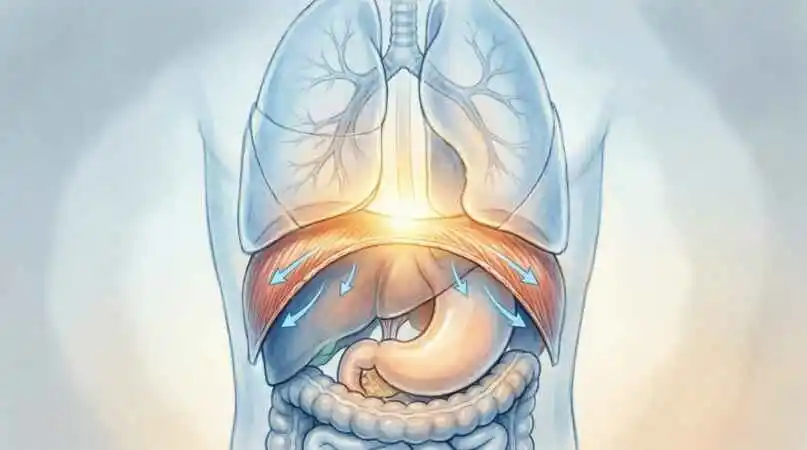
The diaphragm is a thin, dome-shaped sheet of skeletal muscle and tendon that separates your chest cavity (thorax) from your abdominal cavity. It sits just below your lungs and heart, and just above your stomach, liver, and spleen. Structurally, it is unlike almost any other muscle in the body because it is the primary muscle responsible for breathing, yet it also functions continuously without conscious effort, similar to your heart.
Anatomically, the diaphragm attaches around the base of the rib cage, the sternum, and the lumbar vertebrae of the lower spine. From these attachment points, muscle fibers converge toward a central tendon, a flat, fibrous structure at the top of the dome. This central tendon does not contract itself; instead, it acts as the anchor point that the surrounding muscle fibers pull against, flattening the dome shape when the muscle contracts.

The diaphragm is pierced by several important openings, allowing structures to pass between the chest and abdomen. The esophagus passes through an opening called the esophageal hiatus, allowing food to travel from your throat to your stomach. The aorta, the body’s largest artery, passes through the aortic hiatus, carrying oxygenated blood from the heart to the lower body. The inferior vena cava, a major vein, passes through the caval opening, returning deoxygenated blood to the heart. These openings are clinically significant because weaknesses around them, particularly the esophageal hiatus, can lead to conditions like hiatal hernias.
The Diaphragm’s Primary Job: Breathing
Breathing seems automatic and effortless, but it is a remarkable mechanical process orchestrated largely by the diaphragm. When you inhale, the diaphragm contracts and flattens, moving downward into the abdominal cavity. This downward movement increases the volume of the chest cavity, which decreases the air pressure inside your lungs relative to the air outside your body. Because air naturally moves from areas of high pressure to low pressure, air rushes into your lungs to equalize this difference.
When you exhale, the diaphragm relaxes and returns to its dome shape, moving upward. This decreases the volume of the chest cavity, increases the pressure inside the lungs, and pushes air back out. During quiet, relaxed breathing, exhalation is largely passive, relying on the natural elastic recoil of the lungs and diaphragm rather than active muscular effort. During more forceful breathing, such as during exercise or when blowing out candles, your abdominal muscles and other accessory muscles assist in pushing air out more quickly.
The diaphragm handles roughly 70 to 80 percent of the work involved in normal, relaxed breathing. The remaining percentage is shared among accessory muscles, including the intercostal muscles between your ribs, the scalene muscles in your neck, and the sternocleidomastoid muscle. When the diaphragm is weak, injured, or not functioning optimally, these accessory muscles are forced to compensate, which often leads to neck and shoulder tension, shallow breathing patterns, and increased fatigue.
Beyond Breathing: The Diaphragm’s Surprising Roles
While respiration is the diaphragm’s headline function, it moonlights in several other critical bodily processes.
Core stability and posture. The diaphragm works together with the pelvic floor, the transverse abdominis, and the deep spinal muscles to form what is often called the “core canister” or “inner unit.” When you lift something heavy, brace for impact, or simply stand upright for long periods, the diaphragm contracts and helps stabilize your spine by regulating pressure within your abdominal cavity, a mechanism known as intra-abdominal pressure. This is why many strength coaches now emphasize diaphragmatic breathing as a foundation for safe, effective lifting technique, rather than treating breath and core strength as separate concerns.
Digestion and organ massage. With every breath, the diaphragm’s rhythmic up-and-down movement gently massages the organs beneath it, including the stomach, liver, and intestines. This subtle mechanical action supports healthy digestion and can influence bowel motility. Some researchers believe that shallow, chest-dominant breathing patterns, common in people under chronic stress, may contribute to sluggish digestion over time because the diaphragm is not moving through its full range of motion.
Circulatory support. The diaphragm plays a supporting role in venous return, the process of returning blood back to the heart. As it contracts and moves downward, it changes the pressure gradients in the chest and abdomen, helping to draw blood upward through the inferior vena cava. This is sometimes referred to as the “respiratory pump” and works alongside the skeletal muscle pump in your legs to keep blood circulating efficiently, particularly important during physical activity.
Voice and speech production. Singers, actors, and public speakers are often trained extensively in diaphragmatic breathing because controlled airflow from the diaphragm supports steady, powerful vocal projection. Rather than relying on shallow chest breaths that quickly run out of air, diaphragmatic breathing allows for longer phrases, better breath control, and reduced strain on the vocal cords.
Stress regulation and the nervous system. The diaphragm has a fascinating connection to the vagus nerve and the parasympathetic nervous system, the branch of your nervous system responsible for “rest and digest” functions. Slow, deep diaphragmatic breathing has been shown to activate the parasympathetic response, lowering heart rate, reducing blood pressure, and calming the body’s stress response. This is the physiological basis behind why deep breathing exercises are so commonly recommended for anxiety, panic attacks, and general stress management.
Common Diaphragm Problems and Conditions
Because the diaphragm is involved in so many bodily functions, disruptions to its normal operation can cause a wide range of symptoms.
Hiccups. Hiccups occur when the diaphragm involuntarily contracts in spasms, causing a sudden intake of air that is abruptly stopped by the closure of the vocal cords, producing the characteristic “hic” sound. Most hiccup episodes are harmless and resolve within minutes, often triggered by eating too quickly, carbonated beverages, alcohol, or sudden temperature changes. Persistent hiccups lasting more than 48 hours, however, can signal an underlying issue and warrant medical evaluation.
Diaphragmatic spasms. Similar to muscle cramps elsewhere in the body, the diaphragm can spasm, sometimes causing sharp pain under the ribs, particularly during intense exercise. This is sometimes referred to as a “side stitch,” although the exact cause is still debated among researchers, with theories ranging from diaphragm irritation to ligament stress around the liver and spleen.
Hiatal hernia. This occurs when part of the stomach pushes upward through the esophageal hiatus, the opening in the diaphragm through which the esophagus passes. Hiatal hernias can cause acid reflux, heartburn, and chest discomfort, and range from small, asymptomatic cases to larger hernias requiring surgical repair.
Diaphragmatic paralysis. In rare cases, damage to the phrenic nerve, which controls diaphragm movement, can result in partial or complete paralysis of the diaphragm on one or both sides. Causes include nerve injury from surgery, trauma, tumors, or certain neurological diseases. Symptoms often include shortness of breath, particularly when lying flat, and reduced exercise tolerance.
Diaphragmatic flutter. Also known as respiratory myoclonus, this rare condition involves rapid, rhythmic, involuntary contractions of the diaphragm, sometimes visible as fluttering movements in the upper abdomen. It can cause a range of sensations from mild discomfort to significant breathing difficulty.
Diaphragm injury or rupture. Though uncommon, traumatic injuries such as severe blunt force to the abdomen or penetrating wounds can rupture the diaphragm, allowing abdominal organs to herniate into the chest cavity. This is a medical emergency requiring immediate surgical intervention.
Signs Your Diaphragm May Need Attention
Certain symptoms may indicate that your diaphragm is not functioning as well as it should, including persistent shortness of breath, especially when lying down; chronic shallow breathing that seems confined to the upper chest; unexplained fatigue during light activity; recurring hiccup episodes; sharp pain beneath the ribs during exercise; and a sensation of not being able to take a full, satisfying breath. If you experience these symptoms regularly, particularly if they are new or worsening, it is worth discussing them with a healthcare provider, as they can sometimes point to underlying respiratory, neurological, or structural issues.
How to Strengthen and Train Your Diaphragm
The good news is that, like most muscles, the diaphragm responds well to targeted training. Strengthening it can improve breathing efficiency, athletic performance, core stability, and stress resilience.
Diaphragmatic breathing (belly breathing). This is the foundational exercise for diaphragm awareness and strength. Lie on your back with your knees bent, placing one hand on your chest and one on your belly. Inhale slowly through your nose, focusing on expanding your belly outward while keeping your chest relatively still. Exhale slowly through pursed lips, feeling your belly fall. Practicing this for 5 to 10 minutes daily can retrain the body to rely more on the diaphragm and less on accessory neck and shoulder muscles.
Box breathing. Popular among athletes and military personnel for stress management, box breathing involves inhaling for a count of four, holding for a count of four, exhaling for a count of four, and holding again for a count of four. This structured pattern encourages full diaphragmatic engagement and promotes calm, focused breathing under pressure.
Resisted breathing training. Devices designed for inspiratory muscle training apply resistance to your inhale, forcing the diaphragm and other respiratory muscles to work harder. These tools are used by athletes, singers, and patients recovering from respiratory illness to build endurance and strength in the breathing muscles.
Pursed-lip breathing. Commonly recommended for people with chronic respiratory conditions such as COPD, this technique involves inhaling through the nose and exhaling slowly through pursed lips, which helps keep airways open longer and encourages more complete, diaphragm-driven exhalation.
Core-integrated breathing during exercise. Practices like Pilates and certain styles of yoga deliberately integrate diaphragmatic breathing with core engagement, teaching practitioners to coordinate breath with movement. This builds the connection between the diaphragm and the broader core stabilizing system, which can translate to better performance in strength training and reduced risk of injury.
Singing and wind instrument practice. Because vocal and wind instrument performance demand sustained, controlled airflow, regular practice naturally strengthens and conditions the diaphragm over time, offering an enjoyable, non-clinical way to build respiratory endurance.
The Diaphragm and Modern Lifestyle Habits
Many aspects of modern life work against healthy diaphragm function. Prolonged sitting, especially in slouched postures, compresses the abdominal cavity and restricts the diaphragm’s ability to move through its full range. Chronic stress tends to shift people toward shallow, rapid chest breathing rather than slower, deeper diaphragmatic breathing, a pattern that can become habitual over time even when the stressful trigger has passed. Tight clothing, restrictive waistbands, and even habitually “holding in” the stomach for aesthetic reasons can also limit diaphragmatic excursion.
Becoming aware of these patterns is often the first step toward improvement. Simple changes, such as taking periodic breathing breaks throughout the day, being mindful of posture while sitting, and practicing belly breathing during moments of stress, can meaningfully improve how efficiently your diaphragm operates over the long term.
When to See a Doctor
While occasional hiccups or a side stitch during a workout are rarely cause for concern, certain symptoms warrant professional evaluation. These include persistent breathlessness, especially when lying flat; hiccups lasting more than two days; chest or abdominal pain accompanied by breathing difficulty; a history of trauma to the chest or abdomen followed by breathing problems; and any sudden, unexplained change in breathing pattern or capacity. A healthcare provider may use imaging techniques such as X-rays, fluoroscopy, or ultrasound to assess diaphragm movement and rule out structural or neurological causes.
Final Thoughts
The diaphragm rarely gets the credit it deserves. It works tirelessly in the background, powering every breath while quietly supporting your posture, digestion, circulation, and even your emotional regulation. Understanding how this muscle functions, and learning to train it intentionally, offers a simple yet powerful way to improve overall health, athletic performance, and stress resilience. The next time you take a deep breath, pause for a moment and appreciate the quiet, tireless work happening just beneath your ribs.
Frequently Asked Questions
- What is the diaphragm?
The diaphragm is a dome-shaped muscle located below the lungs that separates the chest cavity from the abdominal cavity and serves as the primary muscle used for breathing.
- Where is the diaphragm located in the body?
It sits at the base of the rib cage, beneath the lungs and heart, and above the stomach, liver, and spleen.
- What is the main function of the diaphragm?
Its main function is to drive breathing by contracting to draw air into the lungs and relaxing to allow air to be exhaled.
- Is the diaphragm a voluntary or involuntary muscle?
It is unique in that it can operate both involuntarily, through automatic breathing, and voluntarily, when you consciously control your breath.
- What happens when the diaphragm contracts?
When it contracts, it flattens and moves downward, expanding the chest cavity and drawing air into the lungs.
- What happens when the diaphragm relaxes?
When it relaxes, it returns to its dome shape and moves upward, helping to push air out of the lungs.
- What percentage of breathing does the diaphragm handle?
During quiet, relaxed breathing, the diaphragm is responsible for approximately 70 to 80 percent of the work involved.
- What nerve controls the diaphragm?
The phrenic nerve controls diaphragm movement, originating from the cervical spine and traveling down to the muscle.
- Can you live without a diaphragm?
No, the diaphragm is essential for breathing, although accessory muscles can partially compensate if it becomes weakened or partially impaired.
- What causes hiccups?
Hiccups occur due to involuntary spasms of the diaphragm, often triggered by eating quickly, carbonated drinks, alcohol, or sudden temperature changes.
- Why do hiccups make a sound?
The sound occurs because the sudden intake of air caused by the diaphragm spasm is abruptly interrupted by the closing of the vocal cords.
- When should I worry about hiccups?
Hiccups lasting longer than 48 hours or accompanied by pain, difficulty breathing, or swallowing issues should be evaluated by a doctor.
- What is diaphragmatic breathing?
Also called belly breathing, it is a breathing technique that emphasizes full diaphragm engagement rather than shallow chest breathing.
- How do I practice diaphragmatic breathing?
Lie down, place one hand on your chest and one on your belly, and breathe slowly so that your belly rises while your chest stays relatively still.
- What are the benefits of diaphragmatic breathing?
Benefits include reduced stress, improved oxygen exchange, better core stability, and enhanced relaxation through activation of the parasympathetic nervous system.
- Can diaphragmatic breathing help with anxiety?
Yes, slow diaphragmatic breathing can activate the body’s relaxation response, helping to reduce heart rate and calm feelings of anxiety.
- What is a hiatal hernia?
A hiatal hernia occurs when part of the stomach pushes upward through the diaphragm’s esophageal opening into the chest cavity.
- What are symptoms of a hiatal hernia?
Common symptoms include acid reflux, heartburn, chest discomfort, and difficulty swallowing, although small hernias may cause no symptoms at all.
- What causes a diaphragm spasm or side stitch?
The exact cause is debated, but it may involve diaphragm irritation, reduced blood flow, or stress on surrounding ligaments during intense exercise.
- How can I prevent side stitches during exercise?
Practicing controlled breathing, avoiding large meals before exercise, and gradually increasing exercise intensity can help reduce the likelihood of side stitches.
- What is diaphragmatic paralysis?
This is a condition where damage to the phrenic nerve prevents the diaphragm from contracting properly, leading to breathing difficulties.
- What causes diaphragm paralysis?
Causes include nerve injury from surgery, trauma, tumors pressing on the phrenic nerve, or certain neurological or muscular diseases.
- Can a paralyzed diaphragm be treated?
Treatment depends on the cause and severity, ranging from physical therapy and breathing support to surgical interventions like diaphragm plication.
- What is diaphragmatic flutter?
It is a rare condition involving rapid, involuntary, rhythmic contractions of the diaphragm, sometimes visible as fluttering in the upper abdomen.
- Can the diaphragm be injured?
Yes, traumatic injuries from blunt force or penetrating wounds can rupture the diaphragm, which is considered a medical emergency requiring surgery.
- How does the diaphragm affect core strength?
The diaphragm works with the pelvic floor and deep abdominal muscles to regulate intra-abdominal pressure, providing a stable foundation for the spine during movement.
- Does posture affect diaphragm function?
Yes, slouched or compressed postures can restrict the diaphragm’s range of motion, leading to shallower, less efficient breathing patterns.
- Can singers and musicians benefit from diaphragm training?
Yes, strong diaphragmatic control allows for sustained airflow, better breath support, and improved vocal or wind instrument performance.
- What are inspiratory muscle training devices?
These are handheld tools that add resistance to inhalation, helping strengthen the diaphragm and other respiratory muscles over time.
- How long does it take to strengthen the diaphragm?
With consistent daily practice of diaphragmatic breathing exercises, many people notice improved breathing efficiency and reduced tension within a few weeks.
⚕️Medical Disclaimer:
The information provided on this website is for general educational and informational purposes only and is not intended as a substitute for professional medical advice, diagnosis, or treatment. Always seek the advice of your physician or other qualified health provider with any questions you may have regarding a medical condition. Never disregard professional medical advice or delay in seeking it because of something you have read on this website.
