
Table of Contents
The PB-19 Virus Truth: What Happens When Parvovirus B19 Strikes (And Why Most People Have No Idea They’re Infected)
Picture this: You’re a parent. Your 7-year-old comes home from school with bright red cheeks that look like they’ve been slapped, a low-grade fever, and what seems like a mild cold. You think it’s nothing—just another childhood bug. But what if I told you that same virus could pose serious risks to your pregnant sister, your immunocompromised neighbor, or even cause life-threatening anemia in people with certain blood disorders?
That’s the reality of Parvovirus B19—often mistakenly called “PB-19″—a virus that flies under the radar for most people but can have devastating consequences for vulnerable populations. Despite infecting millions annually, it remains one of the most misunderstood pathogens in circulation today.
In this deep dive, we’re going beyond the surface-level information you’ll find on health websites. I’ll walk you through exactly what this virus does, who’s truly at risk, how to spot it (when symptoms actually appear), and most importantly—what you can do to protect yourself and your loved ones. Whether you’re a parent, healthcare worker, expecting mother, or someone with a compromised immune system, this is information you need.
What Exactly Is Parvovirus B19? (And Why the “PB-19” Confusion Exists)
Let’s clear up the naming mess right away. You’ve probably searched for “PB-19 virus” and found scattered, inconsistent information. That’s because the correct name is Parvovirus B19—not PB-19. The confusion likely stems from abbreviations like B19V or PVB19 used in medical literature, which get shortened further in casual conversation.

Parvovirus B19 is a small, single-stranded DNA virus that belongs to the Parvoviridae family. It’s highly contagious, seasonal, and exclusively human—meaning it doesn’t jump from pets (despite the name “parvo,” which people associate with dogs). The virus was discovered in 1975 and named “B19” simply because it was found in sample number 19 of panel B during routine blood screening. Not exactly glamorous, but that’s science for you.
How Common Is Parvovirus B19 Infection?
Here’s where things get interesting: Parvovirus B19 is far more common than most people realize.
- By age 5: Approximately 30-40% of children have been infected
- By adulthood: 50-70% of adults show evidence of past infection
- Seasonal patterns: Outbreaks typically peak in late winter and spring, though post-pandemic shifts have disrupted this pattern in some regions
The reason you’ve probably never heard of it? Because for the vast majority of healthy children and adults, Parvovirus B19 infection is either completely asymptomatic or presents as a mild, self-limiting illness that resolves on its own within a week or two.
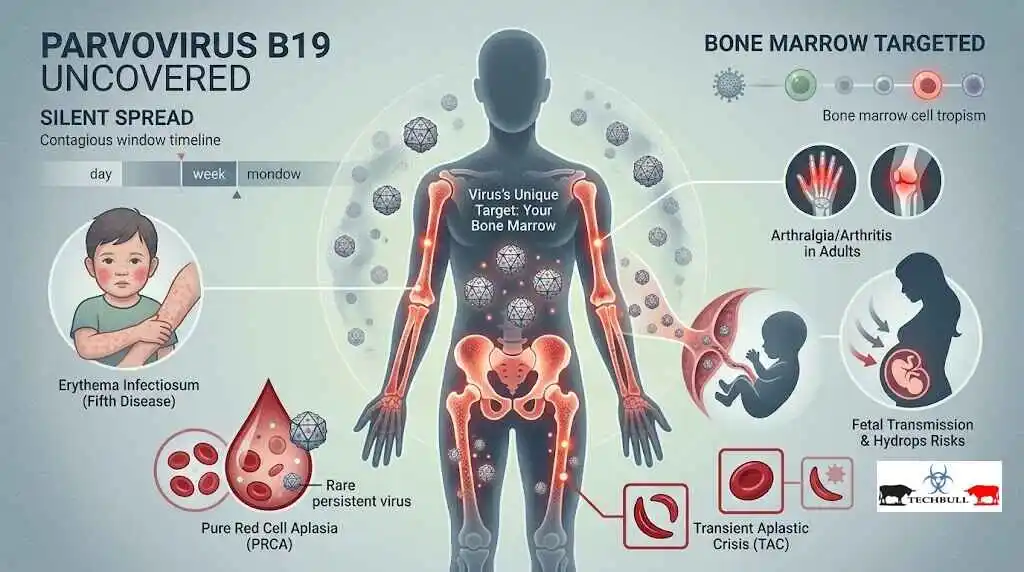
The Virus’s Unique Target: Your Bone Marrow
What makes Parvovirus B19 particularly fascinating—and dangerous for certain populations—is its specific tropism (preference) for erythroid progenitor cells. These are the immature red blood cell precursors in your bone marrow.
When the virus infects these cells, it essentially shuts down red blood cell production. In healthy individuals with normal hematologic reserve, this temporary pause is barely noticeable. Your body has enough mature red blood cells circulating to carry oxygen while the bone marrow recovers.
But in people with:
- Compromised immune systems
- Underlying blood disorders (sickle cell disease, thalassemia, hereditary spherocytosis)
- High red blood cell turnover conditions
This shutdown can trigger a transient aplastic crisis—a sudden, severe drop in red blood cell count that can be life-threatening without prompt medical intervention.
How Parvovirus B19 Spreads: The Contagious Window Nobody Talks About
Understanding transmission is critical because Parvovirus B19 has a peculiar characteristic that makes it especially tricky to contain: you’re most contagious before you even know you’re sick.
Primary Transmission Routes
The virus spreads through several pathways:
Respiratory droplets (most common): When an infected person coughs, sneezes, or even talks, they release tiny particles containing the virus. These droplets land on the mucous membranes (nose, mouth, eyes) of susceptible people nearby.
Direct contact with secretions: Touching surfaces contaminated with respiratory or oral secretions, then touching your face, can transmit the virus. This is why handwashing is so crucial.
Blood exposure: Though less common, the virus can spread through blood products, organ transplants, or needlestick injuries. Healthcare workers face elevated (though still relatively low) occupational risk.
Vertical transmission: Pregnant women can pass the virus to their fetuses through the placenta, with serious consequences we’ll discuss in detail later.
The Contagious Timeline
Here’s the critical piece most people miss:
| Stage | Contagious? | Symptoms |
| Incubation (4-14 days post-exposure) | No | None |
| Viremic phase (before rash) | YES – Highly contagious | Mild fever, headache, body aches, runny nose (or nothing at all) |
| Rash appearance (7-10 days post-infection) | NO – No longer contagious | Characteristic “slapped cheek” rash, lacy body rash |
| Joint pain phase (adults, 1-3 weeks) | No | Arthralgia, arthritis |
By the time the classic rash appears—the hallmark sign that makes parents think “Fifth Disease”—the person is no longer infectious. This means exclusion from school or work after rash onset is unnecessary and actually counterproductive, since the contagious window has already passed.
This timing creates a perfect storm for outbreaks in:
- Schools and daycare centers
- Healthcare facilities
- Households with multiple children
An infected child attends school feeling slightly off (or completely fine), spreads the virus to classmates for several days, then develops the rash at home—by which point, half the class has already been exposed.
Recognizing Parvovirus B19: Symptoms Across Different Populations
One size does not fit all when it comes to Parvovirus B19 symptoms. What looks like a harmless childhood rash in one person could signal a medical emergency in another. Let’s break down the clinical presentations by population.
Healthy Children: The Classic “Fifth Disease” Presentation
In immunocompetent children, Parvovirus B19 typically causes erythema infectiosum, historically called “Fifth Disease” (because it was the fifth childhood rash illness to be described, after measles, scarlet fever, rubella, and roseola).
Typical progression:
- Prodromal phase (2-3 days): Low-grade fever, headache, mild cold-like symptoms (runny nose, sore throat), fatigue. Many children skip this phase entirely.
- Facial rash (days 7-10): The signature “slapped cheek” appearance—bright red, raised rash on both cheeks with circumoral pallor (pale area around the mouth). This is pathognomonic (highly characteristic) of Parvovirus B19.
- Body rash (1-4 days after facial rash): A lacy, reticular (net-like) pink rash spreads to the trunk, arms, and legs. It may be itchy and can wax and wane for 1-3 weeks, sometimes reappearing with heat, sunlight, or emotional stress.
- Resolution: The rash fades without scarring or peeling. Most children feel well throughout and return to normal activities quickly.
Key point: Up to 50% of children infected with Parvovirus B19 never develop the rash at all—they’re asymptomatic or have such mild symptoms that the infection goes unnoticed.
Healthy Adults: Joint Pain Takes Center Stage
Adults who contract Parvovirus B19 often present differently than children. While some adults develop the classic rash (especially if they’re in close contact with infected children), joint symptoms dominate the clinical picture.
Adult presentation:
- Arthralgia and arthritis: Symmetric joint pain and swelling affecting hands, wrists, knees, and feet. This can mimic rheumatoid arthritis.
- Duration: Joint symptoms typically last 1-3 weeks but can persist for months in some cases, particularly in women.
- Rash: Less common in adults than children; when present, it’s often subtle or absent.
- Systemic symptoms: Fatigue, low-grade fever, malaise may accompany joint pain.
Women are significantly more likely than men to develop symptomatic joint involvement—up to 60% of infected adult women versus 30% of men. The mechanism isn’t fully understood but may relate to immune response differences.
For most healthy adults, these symptoms are uncomfortable but self-limiting. Over-the-counter pain relievers (acetaminophen, NSAIDs) and rest typically suffice.
Immunocompromised Individuals: When Infection Becomes Dangerous
This is where Parvovirus B19 transitions from “mild childhood illness” to “potentially life-threatening infection.” People with impaired immune systems cannot clear the virus effectively, leading to persistent infection and severe hematologic complications.
High-risk populations include:
- Solid organ transplant recipients (kidney, liver, heart, lung)
- Hematopoietic stem cell transplant patients
- Individuals receiving chemotherapy
- People with HIV/AIDS (especially with low CD4 counts)
- Patients on immunosuppressive medications (e.g., for autoimmune diseases)
- Those with primary immunodeficiency disorders
Clinical consequences in immunocompromised hosts:
Pure Red Cell Aplasia (PRCA): The virus persistently infects erythroid progenitor cells, causing chronic, severe anemia. Unlike the transient aplastic crisis in people with hemolytic disorders, PRCA in immunocompromised patients doesn’t resolve spontaneously because their immune system can’t eliminate the virus.
- Hemoglobin levels can drop dangerously low (sometimes below 4 g/dL)
- Patients require repeated blood transfusions
- Without treatment, this can be fatal
Chronic anemia and cytopenias: Persistent infection can cause prolonged low blood counts affecting multiple cell lines.
Systemic complications: Rare but documented cases involve liver dysfunction, kidney injury, cardiac involvement, and neurological manifestations.
Diagnosis challenge: Immunocompromised patients may not mount typical antibody responses, making serologic testing unreliable. PCR for viral DNA is the diagnostic gold standard in this population.
Treatment: Intravenous immunoglobulin (IVIG) is the mainstay of therapy, providing passive antibodies that help clear the virus. Some patients require repeated IVIG courses or maintenance therapy.
People with Underlying Blood Disorders: The Transient Aplastic Crisis
Individuals with conditions that increase red blood cell turnover or reduce red cell lifespan face a specific, acute danger from Parvovirus B19: transient aplastic crisis (TAC).
Who’s at risk:
- Sickle cell disease
- Thalassemia (especially beta-thalassemia major)
- Hereditary spherocytosis
- Other hereditary hemolytic anemias
- Chronic hemolytic anemias
What happens:
These patients already have shortened red blood cell lifespans (days to weeks instead of the normal 120 days). Their bone marrow works overtime to compensate, producing red cells at maximum capacity.
When Parvovirus B19 infects the bone marrow and halts red cell production, the circulating red blood cells continue to die off at their accelerated rate—but no new cells replace them. Within 7-10 days, hemoglobin can plummet to critically low levels.
Clinical presentation:
- Sudden, severe fatigue and weakness
- Pallor (extreme paleness)
- Shortness of breath, even at rest
- Rapid heart rate (tachycardia)
- Dizziness or fainting
- In severe cases: heart failure, shock, death
This is a medical emergency. Patients with known hemolytic disorders who develop fever or cold-like symptoms should seek immediate medical attention and mention possible Parvovirus B19 exposure.
Management:
- Hospitalization for close monitoring
- Blood transfusions to maintain adequate hemoglobin
- Supportive care until bone marrow recovers (typically 7-10 days)
- Isolation precautions to prevent spread to other vulnerable patients
Once the infection clears, bone marrow function typically returns to baseline, and patients recover fully—though the acute phase can be life-threatening without prompt intervention.
Parvovirus B19 in Pregnancy: The Silent Threat to Unborn Babies
If there’s one population where Parvovirus B19 demands serious attention, it’s pregnant women. While most maternal infections cause no harm to the fetus, a small percentage can lead to devastating outcomes—including fetal death.
How Often Does Transmission Occur?
When a pregnant woman contracts Parvovirus B19 (and hasn’t had prior immunity), the virus can cross the placenta and infect the fetus. Here are the key statistics:
- Vertical transmission rate: 17-33% of maternal infections result in fetal infection
- Overall fetal loss rate: Approximately 8-10% when infection occurs during pregnancy
- Risk varies by gestational age: First and early second trimester infections carry the highest risk
Why the Fetus Is Vulnerable
The same mechanism that makes Parvovirus B19 dangerous in adults with blood disorders applies to fetuses: the virus targets erythroid progenitor cells.
In a developing fetus, red blood cell production is critical for oxygen delivery to growing tissues. When the virus shuts down fetal erythropoiesis (red blood cell production), severe anemia develops rapidly.
This anemia triggers a cascade of complications:
- Fetal anemia: The fetus doesn’t have enough red blood cells to carry oxygen.
- High-output cardiac failure: The fetal heart pumps harder and faster to compensate for low oxygen-carrying capacity.
- Hydrops fetalis: Severe fluid accumulation in at least two fetal compartments (skin edema, pleural effusion, pericardial effusion, ascites). This is the most serious manifestation.
- Intrauterine fetal death: Without intervention, severe hydrops often progresses to fetal demise.
Timing Matters: Gestational Age and Risk
Not all trimesters carry equal risk. The data is clear:
| Gestational Age at Maternal Infection | Risk of Fetal Hydrops | Risk of Fetal Loss |
| First trimester (under 13 weeks) | Less than 5-10% | Approximately 10% (highest risk period) |
| Early second trimester (13-20 weeks) | Approximately 5% or less | 8-17% |
| Late second trimester (over 20 weeks) | Less than 1% | 2-6% |
| Third trimester | Extremely rare (0.02%) | Very low |
Why the difference? Early in pregnancy, the fetal immune system is immature, and erythropoiesis is occurring at a rapid pace to support growth. The combination makes the fetus more susceptible to severe anemia and its consequences.
After 20 weeks, the fetal immune system is more developed, and the risk of severe complications drops significantly—though it never reaches zero.
Important Clarification: Parvovirus B19 Is NOT Teratogenic
Unlike rubella or cytomegalovirus (CMV), Parvovirus B19 does not cause birth defects or congenital malformations. The virus doesn’t interfere with organ formation or cause structural abnormalities.
The risk is purely hematologic: anemia leading to hydrops and potential fetal loss. If the fetus survives the acute infection without developing severe hydrops, long-term outcomes are generally excellent.
What Pregnant Women Should Do
If you’re pregnant and exposed to Parvovirus B19:
- Determine your immune status: If you’ve had Fifth Disease before (or had a positive Parvovirus B19 IgG antibody test in the past), you’re immune and at essentially zero risk.
- If you’re not immune and have exposure: Contact your obstetrician immediately. They’ll likely order:
- Parvovirus B19 IgM and IgG antibodies: To determine if you have acute infection or past immunity
- PCR for viral DNA: If serology is inconclusive, especially in immunocompromised pregnant women
- If you test positive for acute infection:
- Serial ultrasounds: Typically every 1-2 weeks for 8-12 weeks to monitor for signs of fetal anemia and hydrops
- Doppler studies: Middle cerebral artery peak systolic velocity (MCA-PSV) can detect fetal anemia noninvasively
- Referral to maternal-fetal medicine: High-risk obstetric specialists manage these cases
- If fetal hydrops develops:
- Intrauterine transfusion (IUT): Blood transfusion directly into the fetal circulation via cordocentesis. This is life-saving, with survival rates of 75-90% when performed promptly.
- Timing is critical: Outcomes are best when IUT is done before severe hydrops develops
Prevention during pregnancy:
- Practice meticulous hand hygiene, especially if you work with children or in healthcare
- Avoid close contact with people who have active viral illnesses
- If you work in healthcare, follow standard precautions (though Parvovirus B19 transmission in healthcare settings is rare with proper infection control)
Reassuring news: Most pregnant women who contract Parvovirus B19—even those who transmit it to their fetuses—have healthy babies. The majority of fetal infections resolve spontaneously without complications. Vigilant monitoring, not panic, is the appropriate response.
Diagnosis and Testing: How Doctors Confirm Parvovirus B19 Infection
You might be wondering: If symptoms are so variable and often mild, how do clinicians actually diagnose Parvovirus B19? The answer depends on the clinical scenario and the patient’s risk profile.
When Testing Is (and Isn’t) Necessary
For healthy children with classic Fifth Disease:
Testing is not required. The “slapped cheek” rash is so characteristic that experienced clinicians can diagnose it clinically. Since the infection is self-limiting and the child is no longer contagious by the time the rash appears, testing doesn’t change management.
For adults with joint symptoms:
Testing may be considered if:
- Symptoms are severe or prolonged
- Rheumatoid arthritis or other autoimmune conditions are suspected but need to be ruled out
- The patient is pregnant or immunocompromised
For high-risk populations (mandatory testing):
- Pregnant women with exposure or compatible symptoms
- Immunocompromised patients with unexplained anemia
- Patients with hemolytic disorders who develop acute worsening of anemia
- Cases of non-immune hydrops fetalis detected on ultrasound
Available Diagnostic Tests
- Serology (Antibody Testing)
- IgM antibodies: Appear within 7-10 days of infection and persist for 2-3 months. Positive IgM indicates recent or acute infection.
- IgG antibodies: Appear slightly later and persist for years (often lifelong). Positive IgG with negative IgM indicates past infection and immunity.
Interpretation:
- IgM positive, IgG negative: Very early acute infection
- IgM positive, IgG positive: Recent acute infection (most common pattern at time of testing)
- IgM negative, IgG positive: Past infection, immune
- IgM negative, IgG negative: Susceptible, no prior exposure
- PCR (Polymerase Chain Reaction) for Viral DNA
This test detects the actual virus in blood or tissue samples. It’s especially useful when:
- Serology is inconclusive (e.g., immunocompromised patients who can’t mount antibody responses)
- Very early infection before antibodies develop
- Confirming active infection in cases of suspected persistent Parvovirus B19 (PRCA, chronic anemia)
- Prenatal diagnosis via amniocentesis or cordocentesis if fetal infection is suspected
- Additional Testing in Specific Scenarios
- Complete blood count (CBC): To assess severity of anemia, especially in patients with hemolytic disorders or immunocompromised states
- Reticulocyte count: Low reticulocytes (immature red blood cells) in the setting of severe anemia suggests bone marrow suppression from Parvovirus B19
- Ultrasound and Doppler studies: For pregnant women to monitor fetal well-being and detect hydrops
Treatment and Management: What Works (and What Doesn’t)
Here’s the straightforward truth: There is no vaccine for Parvovirus B19, and there is no specific antiviral treatment for routine cases. Management is primarily supportive and tailored to the patient’s risk profile.
For Healthy Children and Adults
Supportive care only:
- Rest: Allow the body to fight off the infection naturally
- Hydration: Encourage fluid intake, especially if fever is present
- Fever and pain management: Acetaminophen (paracetamol) or NSAIDs (ibuprofen, naproxen) for fever, headache, and joint pain
- Itch relief: For children with itchy rash, oral antihistamines or topical calamine lotion may help
What NOT to do:
- Antibiotics: Parvovirus B19 is a virus, not bacteria. Antibiotics are useless and contribute to resistance.
- School/work exclusion after rash onset: By the time the rash appears, the person is no longer contagious. Keeping them home serves no public health purpose.
- Unnecessary testing: In classic presentations, testing doesn’t change management and adds cost.
Most healthy individuals recover completely within 1-3 weeks without complications.
For Pregnant Women
Management depends on fetal status:
- No fetal infection or mild infection: Serial ultrasounds every 1-2 weeks for 8-12 weeks to monitor for hydrops. Most cases resolve spontaneously.
- Severe fetal anemia or hydrops: Intrauterine transfusion (IUT) via cordocentesis. This procedure has 75-90% survival rates when performed by experienced operators at specialized centers.
- IVIG: Some case reports describe using intravenous immunoglobulin in pregnant women with acute Parvovirus B19 infection, but evidence is limited and this is not standard care.
Key point: Even when fetal infection occurs, most pregnancies result in healthy live births. The goal is vigilant monitoring to catch complications early, not intervention in every case.
For Immunocompromised Patients and Those with Blood Disorders
This is where active treatment becomes critical:
Intravenous Immunoglobulin (IVIG):
- Mechanism: Provides passive antibodies that help clear the virus in patients who can’t produce their own effective immune response
- Dosing: Typically 0.4 g/kg/day for 5 days or 1 g/kg/day for 2 days, though protocols vary
- Efficacy: Most patients show improvement in hemoglobin levels within 1-2 weeks. Some require repeated courses or maintenance IVIG for persistent infection.
- Side effects: Generally well-tolerated; may include headache, fever, chills, or (rarely) more serious reactions
Blood Transfusions:
- Essential for patients with severe anemia (hemoglobin below 7 g/dL, or higher thresholds in patients with cardiac or respiratory compromise)
- In transient aplastic crisis (hemolytic disorder patients), transfusions bridge the gap until bone marrow recovers (typically 7-10 days)
- In chronic PRCA (immunocompromised), transfusions may be needed repeatedly until IVIG clears the infection
Additional Supportive Measures:
- Erythropoiesis-stimulating agents (ESAs): May be used adjunctively in some cases, particularly kidney transplant recipients
- Iron, folate, vitamin B12 supplementation: Supports erythropoiesis during recovery
- Reduction of immunosuppression: If feasible, lowering immunosuppressive medications can help the immune system clear the virus (must balance against risk of organ rejection or autoimmune flare)
For patients with hemolytic disorders:
- Prevention is key: Educate patients and families about Parvovirus B19 risks
- Early recognition: Any fever or viral-like illness in sickle cell or thalassemia patients warrants immediate medical evaluation and CBC
- Prompt transfusion: Don’t wait for hemoglobin to crash—transfuse early in suspected TAC
Prevention Strategies: What You Can Actually Do
Since there’s no vaccine, prevention hinges on behavior and awareness. Here’s what works—and what doesn’t.
Effective Prevention Measures
- Hand Hygiene (The Gold Standard)
Frequent handwashing with soap and water is the single most effective way to prevent Parvovirus B19 transmission.
- Wash hands for at least 20 seconds, especially after:
- Being in public spaces
- Caring for sick individuals
- Before eating or preparing food
- After using the restroom
- Use alcohol-based hand sanitizer (60%+ alcohol) when soap and water aren’t available (though soap and water is superior for this virus)
- Respiratory Etiquette
- Cover coughs and sneezes with a tissue or your elbow (not your hands)
- Dispose of tissues immediately and wash hands
- Wear a mask if you’re sick and must be around others, especially vulnerable individuals
- Avoid Close Contact When Sick
- If you have fever, cold symptoms, or suspect Parvovirus B19, limit contact with:
- Pregnant women
- Immunocompromised individuals
- People with known blood disorders
- Healthcare Setting Precautions
- Standard precautions (gloves, gowns, masks as appropriate) are generally sufficient
- Droplet precautions may be considered for hospitalized patients with suspected Parvovirus B19, especially if they’re immunocompromised or have active viremia
- Healthcare workers with Parvovirus B19 should follow institutional policies; many can continue working if asymptomatic and practicing good hand hygiene, since they’re most contagious before symptoms appear
- For Pregnant Women
- Avoid close contact with children who have active viral illnesses (especially those with rashes)
- Practice meticulous hand hygiene, particularly if you work in childcare, healthcare, or education
- If exposed, contact your obstetrician promptly for testing and monitoring
What Doesn’t Work (Common Misconceptions)
Excluding children from school after rash appears: By the time Fifth Disease rash shows up, the child is no longer contagious. Exclusion is unnecessary and disrupts education without public health benefit.
Over-reliance on surface disinfection: While Parvovirus B19 can survive on surfaces, respiratory droplet transmission is the primary route. Handwashing and respiratory etiquette matter far more than obsessive surface cleaning.
Assuming pets can transmit it: Despite the “parvo” name, this is a human-specific virus. Your dog’s parvovirus vaccine doesn’t protect against Parvovirus B19, and your dog can’t give it to you (or vice versa).
FAQs
- What is Parvovirus B19?
Parvovirus B19 is a highly contagious, seasonal virus that primarily causes Fifth Disease (erythema infectiosum) in children. It targets red blood cell precursors in bone marrow and can cause serious complications in pregnant women, immunocompromised individuals, and people with certain blood disorders. - Is PB-19 the same as Parvovirus B19?
Yes. “PB-19” is a common misnomer. The correct name is Parvovirus B19 (sometimes abbreviated B19V or PVB19 in medical literature). - Can dogs transmit Parvovirus B19 to humans?
No. Despite the similar name, canine parvovirus and human Parvovirus B19 are different viruses that don’t cross species. Dogs cannot transmit Parvovirus B19 to humans, and humans cannot transmit it to dogs. - How long is someone contagious with Parvovirus B19?
People are contagious during the incubation and early viremic phase—typically from about 4-14 days after exposure until the rash appears. By the time the characteristic rash develops, they’re no longer infectious. - What are the symptoms of Parvovirus B19 in children?
Children typically develop a “slapped cheek” facial rash followed by a lacy body rash. They may have mild fever, runny nose, or headache before the rash, but many are asymptomatic. - What are the symptoms in adults?
Adults often experience joint pain and swelling (especially in hands, wrists, knees) rather than rash. Symptoms can last 1-3 weeks and may mimic rheumatoid arthritis. - Can you get Parvovirus B19 more than once?
Infection typically confers lifelong immunity. Reinfection is extremely rare in immunocompetent individuals. - Is there a vaccine for Parvovirus B19?
No. There is currently no vaccine available for Parvovirus B19. Prevention relies on hand hygiene and avoiding exposure when possible. - Is there a cure or specific treatment?
No specific antiviral treatment exists. Healthy individuals recover with supportive care (rest, fluids, pain relievers). High-risk patients may require IVIG, blood transfusions, or other interventions. - How is Parvovirus B19 diagnosed?
Diagnosis is often clinical (based on the characteristic rash in children). Blood tests for IgM/IgG antibodies or PCR for viral DNA confirm infection, especially in high-risk populations.
Pregnancy-Related Questions
- Can Parvovirus B19 harm my baby if I’m pregnant?
It can, though most pregnancies are unaffected. About 17-33% of maternal infections transmit to the fetus, and approximately 8-10% result in fetal loss, primarily when infection occurs in the first half of pregnancy. - What are the risks to the fetus?
The main risks are fetal anemia, hydrops fetalis (severe fluid accumulation), and intrauterine fetal death. Parvovirus B19 does NOT cause birth defects or congenital malformations. - When during pregnancy is the risk highest?
First and early second trimester (before 20 weeks) carry the highest risk. Risk drops significantly after 20 weeks and is extremely low in the third trimester. - What should I do if I’m pregnant and exposed to Parvovirus B19?
Contact your obstetrician immediately. They’ll test your immune status (IgG/IgM antibodies) and, if you’re susceptible or acutely infected, monitor the fetus with serial ultrasounds. - I had Fifth Disease as a child. Am I immune during pregnancy?
Yes. Past infection confers lifelong immunity. If you’re certain you had Fifth Disease, you’re protected. A blood test can confirm immunity if you’re unsure. - Can Parvovirus B19 cause miscarriage?
Yes. Fetal loss occurs in approximately 8-10% of pregnancies with maternal Parvovirus B19 infection, with highest risk in the first 20 weeks. - What is hydrops fetalis?
Hydrops fetalis is severe fluid accumulation in at least two fetal compartments (skin, chest, abdomen, around the heart). It results from severe fetal anemia caused by Parvovirus B19 and can be life-threatening without treatment. - How is fetal Parvovirus B19 infection treated?
Severe cases with hydrops are treated with intrauterine blood transfusion (IUT), which has 75-90% survival rates when performed promptly at specialized centers. - Should I avoid children if I’m pregnant?
You don’t need to isolate, but practice good hand hygiene and avoid close contact with children who are actively sick with fever or rash. - Can I breastfeed if I have Parvovirus B19?
Yes. Parvovirus B19 is not transmitted through breast milk. Continue breastfeeding while practicing good hand hygiene.
High-Risk Population Questions
- I have sickle cell disease. Should I worry about Parvovirus B19?
Yes. Parvovirus B19 can trigger transient aplastic crisis—a sudden, severe drop in red blood cells that can be life-threatening. Seek immediate medical care if you develop fever or viral symptoms. - I’m immunocompromised (transplant, chemotherapy, HIV). What’s my risk?
You’re at risk for persistent Parvovirus B19 infection, which can cause chronic severe anemia (pure red cell aplasia). This requires treatment with IVIG and possibly blood transfusions. - What is pure red cell aplasia (PRCA)?
PRCA is a condition where the bone marrow stops producing red blood cells. In immunocompromised patients, persistent Parvovirus B19 infection is a known cause. It requires IVIG therapy to clear the virus. - How is Parvovirus B19 treated in immunocompromised patients?
Intravenous immunoglobulin (IVIG) is the mainstay of treatment. Blood transfusions manage severe anemia. Some patients need repeated IVIG courses. - Can Parvovirus B19 cause organ damage?
Rarely. While the primary target is bone marrow, severe or persistent infections have been associated with liver, kidney, heart, and neurological complications, especially in immunocompromised hosts.
Transmission and Prevention Questions
- How does Parvovirus B19 spread?
Primarily through respiratory droplets (coughing, sneezing, talking) and direct contact with infected secretions. Blood exposure and vertical (mother-to-fetus) transmission also occur. - Can you catch it from surfaces?
Yes, but it’s less common. The virus can survive on surfaces, but respiratory droplets are the main transmission route. Handwashing is the best prevention. - Should sick children stay home from school?
Children are most contagious BEFORE the rash appears. By the time the rash develops, they’re no longer infectious and can return to school. - How can I protect myself from Parvovirus B19?
Practice frequent handwashing, avoid close contact with sick individuals, and follow respiratory etiquette (covering coughs/sneezes). Pregnant and immunocompromised individuals should be especially vigilant. - Is Parvovirus B19 the same as Fifth Disease?
Fifth Disease (erythema infectiosum) is the clinical illness caused by Parvovirus B19 infection in children. The terms are often used interchangeably, though Parvovirus B19 can cause other syndromes in different populations.
Knowledge Is Your Best Defense
Parvovirus B19 is one of those pathogens that perfectly illustrates why context matters in medicine. For most people—healthy children and adults—it’s a mild, self-limiting illness that barely registers on the radar. You might not even know you had it.
But for pregnant women, immunocompromised individuals, and people with certain blood disorders, the same virus can have serious, even life-threatening consequences.
The good news? With awareness, vigilance, and prompt medical attention when needed, most high-risk individuals do well. Pregnant women who receive appropriate monitoring typically deliver healthy babies. Immunocompromised patients respond well to IVIG therapy. People with hemolytic disorders recover fully from transient aplastic crisis with supportive care.
Your action plan:
- Practice good hand hygiene—it’s the single most effective prevention measure
- Know your risk status—are you pregnant, immunocompromised, or do you have a blood disorder?
- Seek prompt care if you’re high-risk and develop symptoms—don’t wait
- Don’t panic if exposed—most exposures don’t lead to infection, and most infections don’t lead to complications
Parvovirus B19 doesn’t deserve the fear and confusion that surrounds it. But it does deserve respect—and the kind of informed vigilance that comes from understanding what you’re dealing with.
Call to Action: If you found this guide helpful, share it with other parents, healthcare workers, or anyone in a high-risk group. Knowledge spreads faster than viruses—and it’s far more powerful. Have questions or personal experiences with Parvovirus B19? Drop a comment below. Let’s learn from each other.
⚕️Medical Disclaimer:
The information provided on this website is for general educational and informational purposes only and is not intended as a substitute for professional medical advice, diagnosis, or treatment. Always seek the advice of your physician or other qualified health provider with any questions you may have regarding a medical condition. Never disregard professional medical advice or delay in seeking it because of something you have read on this website.
