
Table of Contents
Shining a Light on New Brain Cells : Can Red and Near-Infrared Light Actually Regenerate Your Brain?
You’re standing in your kitchen, coffee in hand, and you walk into the living room to grab your phone. You get there and… nothing. The reason you came into the room has completely evaporated. You retrace your steps, you stand there feeling mildly ridiculous, and eventually you give up and go back to your coffee. Ten minutes later the reason pops back into your head unbidden.
We’ve all been there. And if you’re past 40, you’ve probably had that quiet, nagging thought: Is this normal aging, or is something slipping?
It’s a fair worry. For most of the 20th century, neuroscience operated on a grim certainty: you’re born with roughly all the brain cells you’ll ever have, and from early adulthood onward it’s a slow, irreversible decline. Drink, stress, a bad night’s sleep, a bump on the head — all of it just chips away at a fixed deposit you can never replenish.
That certainty turned out to be wrong. We now know the adult brain does grow new neurons, particularly in a region called the hippocampus — the part that handles memory and learning. The catch is that this process, called red light therapy neurogenesis research (more formally, neurogenesis), is fragile. It slows with age, stress, depression, and disease. So the real question stopped being “can we make new brain cells?” and became “can we reliably encourage the brain to make more of them?”

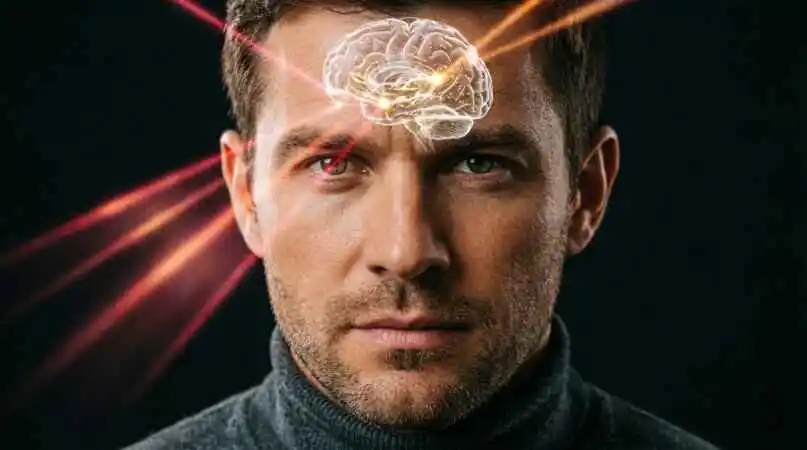
That’s where a surprising candidate enters the picture: light. Specifically, red and near-infrared light brain stimulation — a technique researchers call photobiomodulation. The idea that shining a light on your head could grow new brain cells sounds like something from a late-night infomercial. But there’s a growing body of peer-reviewed research suggesting it’s not pseudoscience. It’s early, it’s mostly animal data, and the human evidence is still building — but the mechanism is real, the studies are credible, and the implications are worth understanding.
Let’s dig into what the science actually says, how it works, how you’d actually do it, and — importantly — where the hype outpaces the evidence.
How Red and Infrared Light Talks to Your Brain
The Mitochondria Connection
To understand why light might regrow brain cells, you have to start inside the cell, at the mitochondria — the tiny power plants that produce the energy currency (ATP) every cell runs on.
Here’s the key insight: red light therapy for brain health works because of a specific molecule inside mitochondria called cytochrome c oxidase (CCO). CCO is the fourth and final protein complex in the mitochondrial respiratory chain, and it happens to absorb red (around 600–700 nm) and near-infrared (around 800–880 nm) light really well. When those photons hit CCO, a cascade kicks off:
- Electron transport accelerates
- Mitochondrial membrane potential rises
- ATP production increases
- Protective genes switch on, driving cell survival, proliferation, and tissue repair
So the light isn’t magic. It’s biochemistry. You’re essentially giving the cell’s energy infrastructure a kick, and that kick ripples outward into all the downstream processes that keep neurons alive and growing.
Think of it like jump-starting a car battery. The light is the jumper cables; the mitochondria are the battery. You’re not adding new electricity from outside — you’re helping the system produce more of its own.
Why This Matters for Neurogenesis
Here’s where it gets interesting for brain cell generation. Growing a new neuron is metabolically expensive. Neural stem cells — the precursors that can become new neurons — need a lot of energy to divide, migrate, and mature. When mitochondria are struggling (which happens with age, injury, or neurodegenerative disease), that process falters.
Photobiomodulation brain cells research shows that when you boost mitochondrial function with light, you also boost the signals that tell stem cells to get to work. Studies have found that PBM upregulates neurotrophic factors like brain-derived neurotrophic factor (BDNF) and nerve growth factor (NGF) — these are essentially “fertilizer” proteins that encourage neurons to survive, sprout connections, and integrate into existing circuits
So the chain is: light → mitochondria → energy + growth signals → stem cell activation → new neurons. Not bad for something you can’t even see.
The Evidence: What Studies Actually Show
This is where I need to be honest with you. Most of the strongest evidence for light-induced neurogenesis comes from animal studies. Mice and rats aren’t humans, and their skulls are thinner, their brains smaller. But the consistency of the findings across many labs and models is what makes this worth paying attention to.
Neurogenesis in the Hippocampus
The hippocampus is ground zero for adult neurogenesis, and it’s where most of the research has focused. Several recent studies are striking:
- A 2024 study in Stem Cell Research & Therapy found that near-infrared light effectively promoted neural stem cell proliferation and differentiation, and that activating hippocampal astrocytes with 40-Hz NIR light substantially improved anxiety-like behaviors in mice . Translation: the light didn’t just make more cells — it improved mood-related behavior.
- A 2022 Nature Scientific Reports study showed that photobiomodulation transformed abnormal neurogenesis (the kind that follows seizure-induced brain injury) back into normal neurogenesis, and that this protected neurons in the CA1 region of the hippocampus from dying.
- A 2021 study in Frontiers in Cellular Neuroscience found that 808 nm light promoted hippocampal neural stem cell differentiation into neurons and improved spatial learning and memory in rats — and the improvement persisted weeks after treatment .
Protection and Rescue in Disease Models
The Alzheimer’s research is particularly compelling, because that’s where neurogenesis falters most:
- A 2025 study showed that one month of infrared light hippocampus treatment reduced tau pathology and partially rescued adult hippocampal neurogenesis in aged mice with advanced Alzheimer’s-like neuropathology .
- A 2025 PLOS ONE study using whole RNA sequencing found that transcranial 808 nm light altered the expression of over 1,000 genes in the hippocampus and nearly 1,500 in the cortex — touching pathways tied to oxidative stress, inflammation, and Alzheimer’s risk genes — and actually reduced amyloid precursor protein concentration.
- An earlier study on brain-aging models found that near-infrared light therapy cognitive function outcomes improved at specific doses, with reduced neuroinflammation and preserved synaptic markers.
The Human Evidence (Still Early)
Human data exists but is thinner. The landmark work comes from labs using transcranial photobiomodulation on patients with traumatic brain injury, stroke, dementia, and depression. A 2025 pilot randomized control trial on mild cognitive impairment reported safety, preliminary cognitive benefits, metabolic improvements, and — importantly — neuroimaging that showed enhanced brain connectivity and even focal increases in cortical volume and thickness [9].
That’s not proof. It’s a pilot. But it’s a promising pilot, done with proper controls, and it lines up with the animal data.
The honest summary: The mechanism is well established. The animal evidence for neurogenesis is strong and consistent. The human evidence is early but directionally encouraging. Nobody should be claiming this is a proven cure for anything yet — but dismissing it as fringe is no longer scientifically defensible either.
Practical Guidance: If You Wanted to Try This
Let me be clear: I’m not giving you medical advice, and if you have a neurological condition you should talk to your doctor. But if you’re curious about how transcranial photobiomodulation is actually used — whether in clinical settings or by motivated biohackers — here’s what the research and practitioner community have converged on.
Choosing the Right Wavelength
Not all light is equal. The research that shows brain effects clusters around two windows:
| Wavelength | Common Name | Penetration | Primary Use |
| 660–670 nm | Red | Shallower, more surface | Scalp, superficial cortex |
| 810 nm | Near-infrared | Deeper | Hippocampus, deeper structures |
| 850 nm | Near-infrared | Deep | General brain protocols |
The 810 nm wavelength shows up in the most studies, and it’s the sweet spot for reaching the hippocampus through the skull. Red light (660 nm) has value but penetrates less deeply — think of it as treating the “front lawn” while 810 nm reaches the “living room.”
Getting the Dosage Right
This is where most people get it wrong. More is not better. Photobiomodulation has what’s called a biphasic dose response — too little does nothing, the right amount helps, and too much can actually inhibit the effect. It’s like watering a plant: a little is life, a flood is rot.
The parameters that matter:
- Irradiance (power density): Typically 10–50 mW/cm² at the scalp. Higher isn’t better.
- Fluence (total energy delivered): Studies use anywhere from 8 to 32 J/cm², with 8–16 J/cm² showing strong effects in brain-aging models [8].
- Treatment time: Usually 5–10 minutes per session.
- Frequency: Most protocols are 3–5 times per week, not daily.
A common beginner mistake is buying the most powerful helmet they can find and blasting their head for an hour. Don’t. The studies that show neurogenesis use modest, repeated doses — the biological equivalent of a consistent workout routine, not a single marathon.
Targeting the Right Areas
The question “can new brain cells be generated by applying red infra light on specific areas of head” is smart, because location matters. The hippocampus sits deep in the temporal lobe, roughly behind your temples and slightly inward. If you want to target it:
- Frontal forehead placement — reaches the prefrontal cortex (attention, executive function).
- Temporal placement (sides of the head, above the ears) — the most direct path to the hippocampus.
- Vertex (top of the head) — used in some stroke and TBI studies to reach broader regions.
A typical protocol rotates among these sites, spending a few minutes at each. The skull does scatter and absorb light, so you’re not getting a laser-focused beam into the hippocampus — you’re getting a diffuse dose of photons that reach the region in therapeutic quantities.
What Realistic Expectations Look Like
If you start a consistent protocol, here’s what the evidence suggests is plausible (not guaranteed):
- Weeks 1–4: Many users report better sleep and a subtle lift in mood. This may be the inflammation-reducing effect kicking in before any structural change.
- Months 1–3: Some studies show cognitive improvements in this window — sharper recall, less brain fog.
- Months 3+: This is where any neurogenesis-related change would realistically begin to show up functionally, since new neurons take time to mature and integrate.
Set your expectations accordingly. This is a months-long investment in brain health, not a weekend fix.
Stacking Light With Other Neurogenesis Boosters
Here’s something the device makers won’t tell you: light therapy doesn’t work in a vacuum. Neurogenesis is a system, not a switch, and it responds to multiple inputs. If you’re serious about encouraging your brain to grow new cells, the smartest approach is to stack complementary habits alongside the light. Think of it like training for a marathon — you wouldn’t just show up on race day; you’d combine running, sleep, and nutrition.
The well-established neurogenesis boosters, with or without light:
- Aerobic exercise — This is the single most evidence-backed way to increase BDNF and hippocampal neurogenesis in humans. Even modest cardio (30 minutes of brisk walking, 3–4 times a week) moves the needle. If you do nothing else on this list, do this.
- Quality sleep — New neurons are consolidated during deep sleep, and sleep deprivation directly suppresses neurogenesis. Seven to nine hours isn’t a luxury; it’s the factory floor where the work happens.
- Intermittent mild stress (the good kind) — Caloric restriction, cold exposure, and learning new complex skills all trigger mild, adaptive stress responses that upregulate neurotrophic factors. The key word is mild. Chronic, overwhelming stress does the opposite.
- A brain-friendly diet — Omega-3s, polyphenols (think berries, dark chocolate, olive oil), and low refined sugar all support the metabolic environment neurogenesis needs.
- Novel learning — New neurons need a reason to survive and integrate. Learning a language, an instrument, or complex motor skills gives them a job; without it, many new neurons simply die off.
So if you’re combining a near-infrared light therapy protocol with regular cardio and decent sleep, you’re not just adding one input — you’re creating a synergistic environment. The light boosts mitochondrial energy; the exercise floods the brain with BDNF; the sleep consolidates the new cells; and the learning wires them in. Each amplifies the others.
This is also why it’s so hard to study light therapy in isolation — most people who care enough to use a PBM device are probably also doing something else right for their brain. But that’s not a flaw in the science; it’s a reminder that biology is a system, and the best results come from systemic thinking, not single-lever solutions.
Who Might Benefit, and Who Should Wait
Conditions Where the Evidence Is Strongest
- Traumatic brain injury — some of the best human data exists here, with improved cognition and reduced symptoms .
- Alzheimer’s and cognitive decline — animal data is strong, human pilots are encouraging .
- Depression and anxiety — the neurogenesis link is well established in depression research, and PBM’s effect on mood-related behavior in animals is consistent .
- Stroke recovery — both animal and early clinical trial data exist.
Who Should Be Cautious
- Anyone with a history of seizures or epilepsy should consult a specialist — some wavelengths and pulsing frequencies can affect neural excitability.
- People on photosensitizing medications.
- Anyone with an active brain tumor (light can stimulate cellular metabolism, and you don’t want to energize the wrong cells).
- Pregnant women — simply because there’s not enough safety data, not because of known harm.
A 2025 study specifically examined the safety of 810 nm light in the developing brain and found no evidence of glial reactivity or pro-inflammatory cytokine expression in rats — which is reassuring, but it’s animal data, not a green light for every population .
Separating Science from Marketing
This is the section I wish more people read. The infrared light therapy memory market is exploding, and with it comes a wave of products making claims that outpace the evidence. Here’s how to keep your head:
- Red flag #1: “Clinically proven to grow new brain cells.” No human study has definitively proven that a consumer device grows new neurons in a living human brain. The neurogenesis evidence is animal-based. Human studies show functional and imaging improvements, which is different.
- Red flag #2: Specific disease cures. PBM is not a cure for Alzheimer’s, dementia, or TBI. It’s a potential adjunct therapy. Anyone promising a cure is selling you something.
- Red flag #3: “More power is better.” The biphasic dose response means the wrong power can reduce
- Green flag: cited research, honest limitations, published dosing parameters. Good companies link to studies, specify their wavelengths and power output, and don’t overclaim.
The photobiomodulation cognitive enhancement field is genuinely exciting. That’s exactly why it needs to be protected from hype that could discredit it. The science deserves a fair hearing, and fair hearing means honest caveats.
FAQs
- Can red light really generate new brain cells?
In animal studies, yes — near-infrared light has been shown to promote neural stem cell proliferation and differentiation into new neurons, particularly in the hippocampus . Human evidence shows cognitive and imaging improvements, but direct proof of new neuron generation in living humans is still emerging.
- What’s the difference between red light and near-infrared light for the brain?
Red light (660–670 nm) penetrates less deeply and targets more superficial areas. Near-infrared (810–850 nm) penetrates the skull better and reaches deeper structures like the hippocampus. For brain applications, near-infrared is generally preferred.
- How does light actually reach the brain through the skull?
The skull does scatter and absorb light, but near-infrared wavelengths penetrate more effectively than visible light. Studies estimate that a meaningful fraction of the light energy reaches brain tissue at therapeutic levels, especially when applied at appropriate irradiance and duration.
- What is photobiomodulation?
Photobiomodulation (PBM) is the use of specific wavelengths of light to stimulate cellular function. It works by light absorption in mitochondria (cytochrome c oxidase), boosting ATP production and activating protective signaling pathways [1].
- Is photobiomodulation the same as red light therapy?
Essentially, yes. “Red light therapy” is the consumer term; “photobiomodulation” is the scientific term. PBM encompasses both red and near-infrared wavelengths.
- Does this work for Alzheimer’s disease?
Animal studies show PBM reduces amyloid and tau pathology and partially rescues hippocampal neurogenesis in Alzheimer’s models . Human pilot trials in mild cognitive impairment show encouraging results, but it’s not a proven treatment yet.
- Can it help with traumatic brain injury?
Yes — TBI is one of the areas with the strongest human evidence. Studies show improved memory, increased neuroprogenitor cells, and more synaptogenesis .
- How long until I notice effects?
Many people report sleep and mood improvements within weeks. Cognitive changes typically appear over months. Any neurogenesis-related functional change would realistically take 3+ months, since new neurons need time to mature and integrate.
- Is it safe?
PBM is generally considered very safe with low side effects. A 2025 study found no evidence of glial reactivity or inflammation from 810 nm treatment in developing rat brains . Mild headache or fatigue is occasionally reported.
- Can I do this at home?
Yes, consumer devices exist. The key is choosing one with the right wavelength (810 nm is ideal), appropriate power output, and following conservative dosing guidelines.
- How often should I use it?
Most studies use 3–5 sessions per week, not daily. Consistency over weeks and months matters more than intensity in a single session.
- What wavelength is best for the brain?
810 nm has the most research support for brain applications and penetrates deeply enough to reach the hippocampus.
- Where on my head should I apply the light?
Common sites are the forehead (prefrontal cortex), temples/temporal region (closest to the hippocampus), and the vertex (top of head). Many protocols rotate among these.
- Does more power mean better results?
No. PBM has a biphasic dose response — too little does nothing, the right amount helps, and too much can inhibit effects. Stick to studied parameters.
- Can red light therapy improve memory?
Animal studies show improved learning and memory with hippocampal photobiomodulation [5]. Human pilot data in cognitive impairment is encouraging .
- Does it work for depression?
The neurogenesis-depression link is well established, and animal studies show PBM improves anxiety-like behavior. Some human studies of PBM for depression have shown promising early results.
- Are the neurogenesis findings in humans or just animals?
Most direct neurogenesis evidence is in animals. Human studies show functional improvements and brain imaging changes, which are consistent with but not direct proof of neurogenesis.
- What’s cytochrome c oxidase and why does it matter?
It’s the mitochondrial enzyme that absorbs red and near-infrared light, kicking off the energy-boosting and protective cascade that underlies PBM’s effects .
- Can this help with stroke recovery?
Yes — there’s both animal and clinical trial data supporting PBM for stroke recovery, including improved functional outcomes.
- Does it hurt?
No. Red and near-infrared light at therapeutic doses produces no sensation for most people. It’s non-invasive and painless.
- Can I use it alongside other treatments?
Generally yes, and PBM is often studied as an adjunct rather than a standalone therapy. Always coordinate with your doctor if you have a medical condition.
- What about Parkinson’s disease?
Some animal and early human studies have explored PBM for Parkinson’s with encouraging signals, but the evidence is less developed than for TBI or Alzheimer’s.
- How deep does the light penetrate?
Near-infrared light penetrates several centimeters into tissue, enough to reach brain structures through the skull, though with significant scattering and attenuation.
- Is this FDA-approved?
Some PBM devices are FDA-cleared for specific indications (like pain or wound healing), but brain-specific cognitive claims generally are not yet FDA-approved. Check device-specific clearances.
- What’s the difference between LED and laser devices?
Lasers deliver coherent, focused light; LEDs deliver incoherent, broader-field light. Both have shown effects in studies. LEDs are more common in consumer devices and are generally considered safe for home use.
- Can children use this?
There’s limited safety data for children. A 2025 rat study was reassuring about developmental brain safety [1], but human pediatric data is sparse. Consult a specialist.
- Will insurance cover it?
Generally no — PBM for cognitive applications is typically considered experimental and isn’t covered by most insurance plans.
- Can I overdo it?
Yes. Excessive dosing can reduce or reverse benefits due to the biphasic dose response. More is definitively not better with PBM.
- Does it work for brain fog?
Anecdotally, many users report reduced brain fog. There’s plausible mechanism (reduced neuroinflammation, improved mitochondrial function), but dedicated clinical studies on “brain fog” specifically are limited.
- Is this a replacement for medical treatment?
No. PBM is a potential adjunct or wellness approach, not a replacement for medical care. If you have a neurological condition, work with your doctor.
A Reasonable Case for Optimism, With Eyes Wide Open
Here’s the honest takeaway. Can new brain cells be generated by applying red and near-infrared light to specific areas of the head? The animal evidence says yes, plausibly, through a mechanism that’s biochemically sound and consistently reproduced across labs. The human evidence says this is promising but not yet proven, with real improvements in cognition, mood, and brain imaging markers that align with the animal findings.
What we have is a genuinely exciting scientific story still in its middle chapters. The mechanism — light boosting mitochondrial energy, which activates stem cells and growth factors — is not fringe. It’s published in Nature, PLOS ONE, Frontiers, and Stem Cell Research & Therapy. The question isn’t whether the biology is real. It’s whether it translates reliably from mice to humans, at what dose, for whom, and over what timeframe.
If you’re dealing with cognitive decline, a brain injury, or depression, this is a space worth watching — and worth discussing with a clinician who follows the research. If you’re a healthy person looking to optimize, approach it as a long-term, low-risk experiment with reasonable but not guaranteed upside.
The brain’s capacity to renew itself is no longer in doubt. The question of how best to encourage that renewal — with light, with exercise, with sleep, with the right compounds — is one of the most interesting frontiers in medicine. Red and near-infrared light may turn out to be one useful tool among several. They won’t be a silver bullet. But they might be something better: a reminder that the brain is more plastic, more repairable, and more responsive than we once believed.
Your call to action: If this resonated, try one thing this week. Look up the actual research (I’ve cited several studies throughout — start there). Talk to your doctor if you have a relevant condition. And if you decide to experiment, commit to consistency over months, not intensity in a session. Your future brain cells may thank you.
⚕️Medical Disclaimer:
The information provided on this website is for general educational and informational purposes only and is not intended as a substitute for professional medical advice, diagnosis, or treatment. Always seek the advice of your physician or other qualified health provider with any questions you may have regarding a medical condition. Never disregard professional medical advice or delay in seeking it because of something you have read on this website.
