
Table of Contents
The Silent Muscle Thief: What Sarcopenia Is Doing to Your Body Right Now
The age-related muscle loss condition that quietly erodes strength, balance, and independence — and how to catch it early
Somewhere around age 30, without any noticeable event to mark the moment, the human body begins losing muscle mass. The process is slow at first — roughly three to eight percent of muscle mass per decade — but it accelerates significantly after age 60, and for a meaningful share of older adults it eventually crosses a threshold where strength, balance, and basic physical independence start to erode. This condition has a name: sarcopenia, from the Greek for ‘poverty of flesh.’ Despite affecting an estimated ten to twenty-seven percent of older adults depending on the population studied, it remains one of the least recognized conditions in aging health, often mistaken for ordinary aging rather than treated as the diagnosable, measurable, and — critically — modifiable condition that it actually is.
What makes sarcopenia particularly worth understanding is that it is not an inevitable, fixed sentence handed down by age. Muscle tissue remains remarkably responsive to the right interventions well into a person’s 80s and 90s, which means the trajectory of this condition is far more within an individual’s control than most people assume. The problem is less that sarcopenia is untreatable and more that it goes unnoticed until it has already progressed, since the early signs — a bit more fatigue, a little more difficulty with stairs, a slower walking pace — are easy to write off as simply getting older.
This guide covers what sarcopenia actually is, what causes it, how it is recognized and diagnosed, why it matters far beyond cosmetic muscle loss, and the specific, evidence-backed steps that meaningfully slow or reverse it at any stage.

What Sarcopenia Actually Is
Sarcopenia is defined clinically as the progressive loss of skeletal muscle mass combined with a decline in muscle strength and physical performance. This three-part definition matters, because muscle mass alone does not tell the full story — two people can have similar amounts of muscle tissue, yet one may generate meaningfully more force and move more efficiently than the other. Modern diagnostic criteria, including those from the European Working Group on Sarcopenia in Older People, emphasize low muscle strength as the primary indicator, with reduced muscle mass and poor physical performance used to confirm the diagnosis and assess severity.
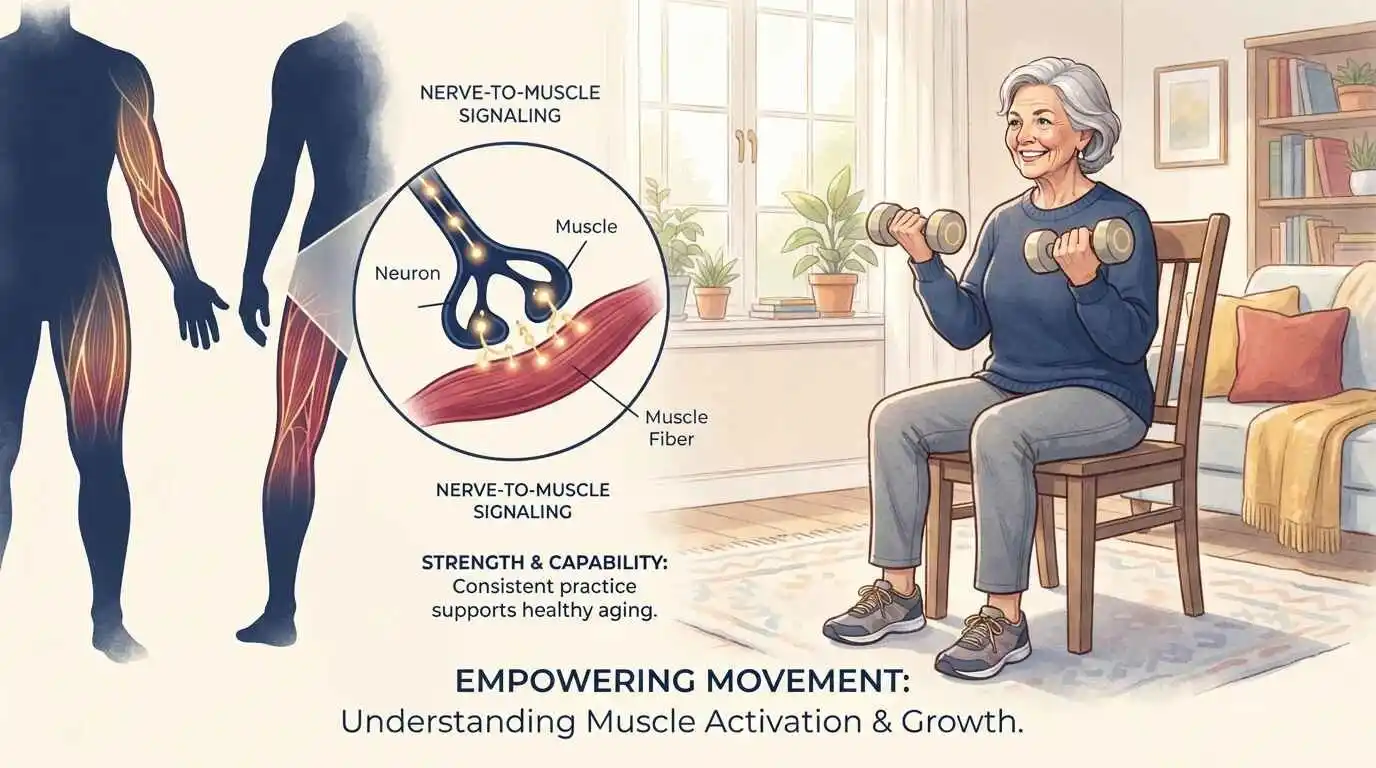
It is distinct from simple age-related weakness in that it reflects an actual reduction in the number and size of muscle fibers, along with changes in the nerves that activate those fibers. Motor neurons — the nerve cells that signal muscles to contract — are gradually lost with age, and the surviving neurons take over additional muscle fibers, a compensatory process that becomes progressively less efficient over time. The result is not just smaller muscles, but muscles that respond less precisely and less powerfully to the signals asking them to work.
Sarcopenia is often discussed alongside frailty, a related but distinct concept describing a broader state of reduced physiological reserve across multiple body systems. Muscle loss is one of the central drivers of frailty, but frailty also encompasses weight loss, exhaustion, and reduced activity levels more broadly, making sarcopenia one contributing piece of a larger picture rather than a synonym for the whole condition.
It is also worth distinguishing sarcopenia from the ordinary, expected decline in athletic performance that comes with age. A former competitive athlete in their 60s may run slower than they did at 25 without meeting any clinical definition of sarcopenia, as long as their strength and function remain well within normal range for their age group. Sarcopenia specifically describes a decline severe enough to fall below established thresholds for muscle strength and physical performance relative to age- and sex-matched norms, which is why a proper clinical assessment, rather than a subjective sense of feeling weaker, is the appropriate way to confirm a diagnosis.
Muscle tissue remains remarkably responsive to the right interventions well into a person’s 80s and 90s.
What Causes Sarcopenia
Seven factors that drive age-related muscle loss
1. Natural Age-Related Muscle Fiber Loss
Beginning in the 30s, the body gradually loses muscle fibers, particularly the fast-twitch fibers responsible for generating power and speed. This loss accelerates after age 60, partly due to declining motor neuron survival, and partly due to reduced muscle protein synthesis — the rate at which the body rebuilds and replaces muscle tissue after normal daily wear. Left unaddressed, this natural decline alone can account for a substantial portion of lifetime muscle loss, which is precisely why intervention earlier rather than later produces the most favorable long-term outcome.
2. Anabolic Resistance
Aging muscle becomes less responsive to the same amount of dietary protein that would efficiently stimulate muscle building in a younger adult, a phenomenon researchers call anabolic resistance. This means older adults often need higher protein intake per meal, and more evenly distributed protein across the day, to achieve the same muscle-building stimulus that a smaller amount would provide at a younger age.
3. Physical Inactivity
Muscle tissue follows a use-it-or-lose-it principle at every age, but the consequences of inactivity compound faster in older adults. Even short periods of bed rest or reduced activity — following an illness, surgery, or injury — can produce disproportionate muscle loss in older adults compared to younger ones, a phenomenon sometimes called disuse atrophy, which is part of why hospitalization itself is a recognized risk factor for accelerated sarcopenia. Studies have found that as little as ten days of bed rest can produce measurable declines in leg muscle strength in older adults, a timeline strikingly shorter than most people would assume.
4. Hormonal Changes
Declining levels of testosterone, estrogen, and growth hormone all play a role in reduced muscle protein synthesis with age. This is part of why postmenopausal women face a notably accelerated risk window, as the sharp decline in estrogen removes a hormone that had previously supported muscle maintenance.
5. Chronic Inflammation
Aging is associated with a subtle, persistent rise in inflammatory markers throughout the body, sometimes called ‘inflammaging.’ Chronic low-grade inflammation interferes with the signaling pathways that stimulate muscle repair and growth, contributing to gradual muscle loss even in the absence of any acute illness or injury.
6. Poor Nutrition and Inadequate Protein Intake
Many older adults consume less protein than their bodies actually need, sometimes due to reduced appetite, difficulty chewing, limited access to protein-rich foods, or simply following dietary habits established decades earlier when activity levels and muscle-building needs were different. Combined with anabolic resistance, inadequate protein intake compounds muscle loss significantly faster than it would in a younger, more protein-efficient body.
7. Chronic Disease
Conditions such as chronic kidney disease, chronic obstructive pulmonary disease, heart failure, diabetes, and cancer are all independently associated with accelerated muscle loss, both through direct metabolic effects and through the reduced activity levels that often accompany chronic illness. Managing these underlying conditions well is itself a meaningful part of sarcopenia prevention, and physicians increasingly consider muscle preservation an explicit treatment goal alongside managing the primary disease itself, rather than an afterthought to be addressed only once the main condition is under control.
Recognizing and Diagnosing Sarcopenia
Sarcopenia often develops gradually enough that the earliest signs are dismissed as ordinary tiredness or simply ‘slowing down.’ A noticeably weaker grip when opening jars or carrying groceries, increasing difficulty rising from a chair without using the arms, a slower walking pace than in previous years, and unintentional weight loss are all common early indicators worth paying attention to rather than normalizing.
Formal screening typically starts with a simple grip strength test using a handheld dynamometer, since grip strength correlates strongly with overall muscle strength and has become one of the most widely used clinical screening tools for sarcopenia. A chair-stand test — measuring how quickly someone can rise from a seated position five times without using their arms — assesses lower body strength and functional performance. Gait speed, measured over a short walking distance, adds a third data point reflecting overall physical function.
When these initial screens suggest a concern, more precise diagnosis often involves imaging techniques such as dual-energy X-ray absorptiometry (DXA) or bioelectrical impedance analysis to directly measure muscle mass, confirming the diagnosis and helping track progress once treatment begins. None of these tests require special equipment beyond what most primary care offices or physical therapy clinics already have on hand, which makes sarcopenia one of the more accessible conditions to screen for, if screening is actually offered.
Despite this accessibility, sarcopenia screening remains inconsistent in routine medical care, and many people only receive a formal evaluation after a fall, a hospitalization, or a specific complaint about mobility prompts a physician to investigate further. Advocating for a simple grip strength or chair-stand assessment during an annual physical, particularly after age 50, can surface early warning signs well before they progress to the point of affecting daily independence.
Why Resistance Training Specifically Matters
Not all exercise addresses sarcopenia equally well. Aerobic activities like walking and swimming offer real cardiovascular and metabolic benefits, but resistance training — exercises that work muscles against an external load, whether that is a dumbbell, a resistance band, a weight machine, or simply body weight — is the intervention most directly linked to rebuilding muscle mass and strength. This is because resistance training specifically stimulates muscle protein synthesis, the biological process responsible for repairing and building muscle tissue, in a way that aerobic exercise alone does not replicate to the same degree.
For older adults new to resistance training, the starting point does not need to involve a gym or heavy weights. Bodyweight exercises like sit-to-stand repetitions, wall push-ups, and seated leg extensions provide a meaningful stimulus, particularly for someone who has been largely sedentary. Progression matters more than intensity at the outset — gradually increasing repetitions, resistance, or difficulty over weeks and months produces steady, compounding strength gains, and research consistently shows that even adults in their 90s see measurable improvements in strength and mobility after a structured resistance program of just a few months.
Consistency outperforms intensity for this particular goal. Two to three sessions per week, each targeting the major muscle groups — legs, back, chest, shoulders, and core — tend to produce better long-term results than sporadic, high-intensity efforts that are difficult to sustain. Working with a physical therapist or a trainer experienced with older adults can help establish safe form and an appropriate starting point, particularly for anyone with joint pain, balance concerns, or a chronic condition that requires modified movements.
Sarcopenic Obesity: A Frequently Missed Combination
One of the more commonly overlooked presentations of sarcopenia occurs in individuals who are simultaneously overweight or obese, a combination known as sarcopenic obesity. Because total body weight remains stable or even increases as fat mass replaces lost muscle mass, this condition frequently goes unnoticed on a standard bathroom scale or even during a routine physical exam that does not specifically assess muscle strength or composition.
Sarcopenic obesity carries a distinct risk profile from either condition alone, since the combination compounds the metabolic problems associated with excess fat tissue with the functional and strength limitations associated with muscle loss. This population faces a notably higher risk of mobility limitations, cardiovascular disease, and diabetes than people with either sarcopenia or obesity individually. Recognizing this combination typically requires specific screening — grip strength testing or body composition analysis — rather than relying on weight or body mass index alone, which is part of why routine strength screening deserves more attention in general medical care, not just for people who appear visibly thin or frail.
Why Sarcopenia Matters Beyond Muscle Size
The consequences of sarcopenia extend well beyond appearance or general strength. Reduced muscle mass and strength are strongly associated with an increased risk of falls, and falls remain one of the leading causes of injury-related hospitalization and loss of independence among older adults. Weaker muscles also mean reduced metabolic capacity, since skeletal muscle is a major site of glucose disposal in the body, linking sarcopenia to a higher risk of insulin resistance and type 2 diabetes.
Sarcopenia is also linked to slower recovery from illness, surgery, and hospitalization, since adequate muscle reserve supports the body’s ability to withstand the physiological stress of recovery. Individuals with significant muscle loss face longer hospital stays, higher rates of post-surgical complications, and a greater likelihood of being discharged to a care facility rather than returning home independently. Beyond the physical toll, sarcopenia is associated with reduced quality of life, increased dependency on caregivers, and higher healthcare costs overall, making it a condition with consequences that ripple well beyond the muscle tissue itself.
There is also a meaningful mental health dimension worth acknowledging. The gradual loss of physical capability and independence associated with advanced sarcopenia is frequently linked to increased rates of anxiety and low mood, particularly when it limits participation in previously enjoyed activities or increases dependence on family members or caregivers for basic tasks. Addressing sarcopenia proactively, then, is not purely a physical health intervention — it is also a meaningful protective factor for emotional wellbeing and continued social engagement in later life.
Preventing and Treating Sarcopenia
- Resistance training two to three times per week is the single most effective intervention for building and preserving muscle mass, and it remains effective even when started for the first time in a person’s 70s, 80s, or beyond.
- Increase protein intake and distribute it evenly across meals — aiming for a meaningful protein source at breakfast, lunch, and dinner rather than concentrating it at one meal — to counter anabolic resistance.
- Stay active during illness or recovery periods whenever medically appropriate, since even light movement helps offset the disproportionate muscle loss that occurs during bed rest or extended inactivity in older adults.
- Address underlying chronic conditions like diabetes, kidney disease, or heart failure proactively with a physician, since well-managed chronic disease slows the pace of associated muscle loss.
- Consider a vitamin D blood test, since deficiency is common in older adults and is independently associated with reduced muscle strength and function.
Who Is Most at Risk
While sarcopenia can affect anyone as they age, certain groups face meaningfully elevated risk: postmenopausal women due to the sharp decline in estrogen, individuals recovering from recent hospitalization or extended bed rest, people with chronic diseases such as diabetes or kidney disease, those with low protein intake or limited access to nutrient-dense food, and anyone who has become significantly less physically active in recent years regardless of age. Recognizing these risk factors early creates an opportunity for prevention before muscle loss reaches a level that affects daily function.
Final Thoughts
Sarcopenia occupies an unusual place in aging health: it is common, it is measurable, it has real and serious downstream consequences, and yet it remains widely under-recognized and under-treated. Part of the reason is that its early signs look almost identical to ordinary tiredness, and part of the reason is that muscle loss simply is not screened for as routinely as blood pressure or cholesterol, despite being just as consequential for long-term health and independence.
The most encouraging part of the sarcopenia picture is how responsive muscle tissue remains to intervention, even late in life. Resistance training and adequate protein intake produce measurable strength gains in people well into their 80s and 90s, meaning this is not a condition where the die is cast early and nothing more can be done. A grip strength test, a chair-stand assessment, or simply a candid conversation with a physician about strength and physical function can be the first step toward catching sarcopenia early enough to meaningfully change its trajectory, rather than discovering it only after a fall or a hospitalization has already taken a toll.
Frequently Asked Questions
| # | Question | Answer |
| 1 | What is sarcopenia? | It is the age-related loss of muscle mass, strength, and physical performance, distinct from ordinary aging. |
| 2 | At what age does sarcopenia typically begin? | Muscle loss can begin as early as the 30s, but it accelerates notably after age 60. |
| 3 | What causes sarcopenia? | Natural muscle fiber loss, anabolic resistance, physical inactivity, hormonal changes, chronic inflammation, poor nutrition, and chronic disease all contribute. |
| 4 | Is sarcopenia the same as frailty? | No, sarcopenia is a major contributor to frailty, but frailty is a broader condition involving multiple body systems, not just muscle. |
| 5 | How common is sarcopenia? | Estimates suggest it affects roughly ten to twenty-seven percent of older adults, depending on the population and diagnostic criteria used. |
| 6 | What are early warning signs of sarcopenia? | Weaker grip strength, difficulty rising from a chair without using the arms, slower walking pace, and unintentional weight loss. |
| 7 | How is sarcopenia diagnosed? | Through grip strength testing, chair-stand tests, gait speed assessment, and sometimes imaging like DXA scans to measure muscle mass directly. |
| 8 | Can sarcopenia be reversed? | Yes, resistance training and adequate protein intake can meaningfully rebuild strength even in people in their 80s and 90s. |
| 9 | What is anabolic resistance? | A reduced ability of aging muscle to respond to protein intake for building and maintaining muscle mass, requiring higher protein amounts for the same effect. |
| 10 | Does sarcopenia increase fall risk? | Yes, reduced muscle mass and strength are strongly linked to an increased risk of falls in older adults. |
| 11 | How much protein do older adults need to prevent sarcopenia? | More than younger adults typically need, and it should be spread evenly across meals rather than concentrated at one. |
| 12 | Is resistance training effective for older adults? | Yes, it remains highly effective for building and preserving muscle mass, even when started later in life. |
| 13 | Can bed rest or hospitalization worsen sarcopenia? | Yes, even short periods of inactivity can cause disproportionate muscle loss in older adults compared to younger ones. |
| 14 | Are women at higher risk of sarcopenia after menopause? | Yes, the sharp decline in estrogen after menopause accelerates the risk of muscle loss. |
| 15 | Does chronic disease increase sarcopenia risk? | Yes, conditions like diabetes, chronic kidney disease, and heart failure are independently linked to accelerated muscle loss. |
| 16 | What is the role of vitamin D in sarcopenia? | Vitamin D deficiency is common in older adults and is independently associated with reduced muscle strength and function. |
| 17 | Can sarcopenia affect blood sugar regulation? | Yes, since skeletal muscle is a major site of glucose disposal, reduced muscle mass is linked to higher insulin resistance risk. |
| 18 | What is a grip strength test? | A simple clinical test using a handheld dynamometer that measures hand grip force, widely used to screen for sarcopenia. |
| 19 | What is a chair-stand test? | A test measuring how quickly someone can rise from a seated position multiple times without using their arms, assessing lower body strength. |
| 20 | Does sarcopenia affect recovery from surgery? | Yes, individuals with significant muscle loss often face longer hospital stays and higher rates of post-surgical complications. |
| 21 | Can sarcopenia be prevented? | Yes, regular resistance training, adequate protein intake, and management of chronic disease can significantly slow or prevent its progression. |
| 22 | Is inflammation linked to sarcopenia? | Yes, chronic low-grade inflammation associated with aging interferes with muscle repair and growth signaling pathways. |
| 23 | What role do motor neurons play in sarcopenia? | Motor neurons are gradually lost with age, and the remaining ones become less efficient at activating muscle fibers. |
| 24 | Can inactive younger adults develop sarcopenia risk factors early? | Yes, low activity levels at any age contribute to muscle loss trends that can compound significantly later in life. |
| 25 | What imaging methods confirm a sarcopenia diagnosis? | Dual-energy X-ray absorptiometry (DXA) and bioelectrical impedance analysis are commonly used to measure muscle mass directly. |
| 26 | Does sarcopenia only affect very elderly people? | No, while risk increases significantly after 60, the underlying muscle loss process can begin much earlier, around age 30. |
| 27 | Is sarcopenia linked to quality of life? | Yes, it is associated with reduced independence, increased caregiver dependency, and lower overall quality of life. |
| 28 | Can nutrition alone reverse sarcopenia without exercise? | Nutrition helps, but resistance exercise combined with adequate protein intake produces significantly better results than either alone. |
| 29 | Who is at the highest risk for sarcopenia? | Postmenopausal women, people recovering from hospitalization, those with chronic disease, and individuals with low protein intake or reduced activity levels. |
| 30 | When should someone get screened for sarcopenia? | If early warning signs like reduced grip strength, slower walking pace, or difficulty rising from a chair appear, a conversation with a physician is worthwhile. |
⚕️Medical Disclaimer:
The information provided on this website is for general educational and informational purposes only and is not intended as a substitute for professional medical advice, diagnosis, or treatment. Always seek the advice of your physician or other qualified health provider with any questions you may have regarding a medical condition. Never disregard professional medical advice or delay in seeking it because of something you have read on this website.
