
Table of Contents
From Blurry to Brilliant: The Honest Truth About Phaco Surgery Safety
The human eye is a marvel of biological engineering, a complex organ that captures light and translates it into the vivid, moving images we use to perceive the world. However, like any finely tuned instrument, the eye is susceptible to the ravages of time, genetics, and environmental factors. One of the most common and inevitable age-related conditions affecting the eye is the development of cataracts. For decades, the clouding of the eye’s natural lens meant a guaranteed decline in quality of life, eventually leading to severe vision impairment or blindness if left untreated. Today, thanks to groundbreaking advancements in ophthalmology, cataracts are highly treatable. At the forefront of this medical revolution is phacoemulsification, commonly referred to as phaco surgery.
This blog post will provide an exhaustive, deep-dive exploration of phaco surgery. We will unravel the intricate step-by-step procedures, examine the profound advantages it offers over historical methods, and candidly discuss the potential drawbacks and risks associated with the operation. Whether you are a patient preparing for surgery, a medical student seeking a comprehensive overview, or simply someone interested in ocular health, this guide will illuminate every facet of this life-changing procedure.
Understanding the Enemy: What Are Cataracts?
To fully appreciate the brilliance of phaco surgery, one must first understand the pathology it aims to cure. The eye contains a naturally clear, biconvex structure situated behind the iris (the colored part of the eye) and directly in front of the vitreous gel. This structure is the crystalline lens. Its primary function is to focus light rays onto the retina at the back of the eye, allowing for sharp, clear vision at various distances.
In a healthy eye, this lens is incredibly transparent, composed mostly of water and specialized proteins arranged in a precise, orderly fashion. As we age, however, these proteins begin to break down and clump together. This clumping causes areas of the lens to become opaque or cloudy. This cloudiness is what we call a cataract. As the cataract grows, it scatters and blocks the light passing through the lens, resulting in symptoms such as blurred vision, faded colors, increased sensitivity to glare (especially at night), halos around lights, and frequent changes in eyeglass prescriptions. While aging is the primary cause, cataracts can also be triggered by trauma, prolonged corticosteroid use, excessive UV exposure, diabetes, and genetic predispositions.

Historically, the only way to remove a cataract was through a procedure called Intracapsular Cataract Extraction (ICCE), which involved removing the entire lens in one piece through a massive incision requiring numerous stitches, followed by a painfully long recovery period. Later, Extracapsular Cataract Extraction (ECCE) emerged, which left the back half of the lens capsule intact but still required a large incision. Both procedures carried significant risks of infection, astigmatism, and delayed healing. The medical world desperately needed a paradigm shift. That shift arrived in the form of phacoemulsification.
What Exactly is Phaco Surgery?
Phacoemulsification is a portmanteau of “phaco” (from the Greek word phakos, meaning lens) and “emulsification” (the process of turning a substance into an emulsion, or a mixture of two liquids that are normally unmixable, though in this context, it refers to breaking solid tissue into tiny fragments suspended in fluid).
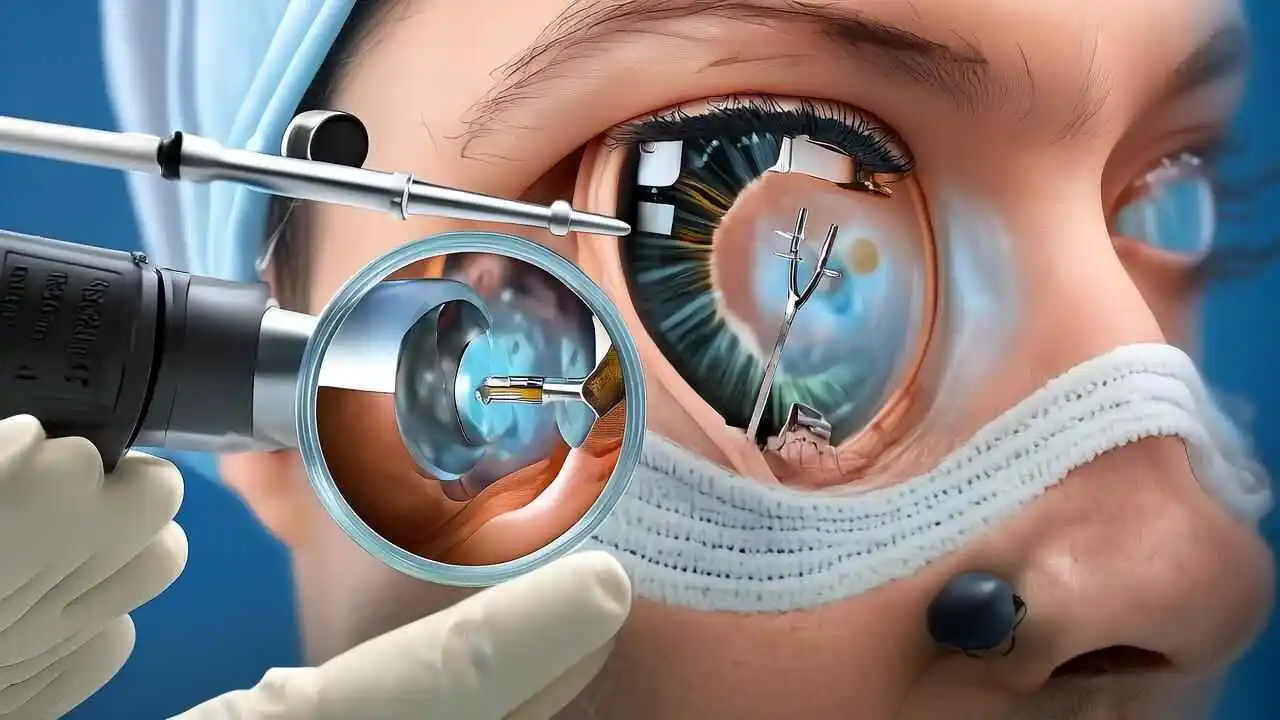
Pioneered and refined in the 1960s and 1970s by Dr. Charles Kelman, phaco surgery revolutionized ophthalmology by introducing the concept of “small-incision” cataract removal. Instead of extracting the cloudy lens whole, phaco surgery uses ultrasonic energy to break the hardened cataract into microscopic pieces, which are then suctioned out of the eye through a tiny tube.
Once the cloudy lens is entirely evacuated, an artificial Intraocular Lens (IOL) is inserted into the empty lens capsule to restore the eye’s focusing power. Because the incision is so small—often measuring between 2.2 millimeters and 3.0 millimeters—the eye heals rapidly, typically without the need for stitches. Today, phacoemulsification is the gold standard for cataract surgery worldwide, performed millions of times a year with exceptionally high success rates.
The Step-by-Step Phaco Surgery Procedure
While the actual physical time a patient spends in the operating room is remarkably short—often between 15 and 30 minutes—the precision, skill, and technological coordination required during that window are extraordinary. Here is a detailed, chronological breakdown of the phaco surgery procedure.
- Pre-Operative Preparation
Before the patient even enters the operating room, extensive measurements are taken using devices like optical biometers. These machines calculate the exact curvature of the cornea and the length of the eye (axial length) to determine the precise power of the intraocular lens (IOL) needed to achieve the desired post-operative vision.
On the day of surgery, the patient is brought into the surgical suite. To ensure comfort and minimize anxiety, mild intravenous sedation is usually administered. The patient is awake but deeply relaxed. Local anesthetic eye drops (topical anesthesia) or a small injection around the eye (peribulbar or retrobulbar block) are used to completely numb the eye, ensuring the patient feels absolutely no pain during the procedure.
- Pupil Dilation and Sterilization
The eye is thoroughly cleaned with a povidone-iodine solution to eradicate any surface bacteria, drastically reducing the risk of post-operative infection. Specialized drops are then applied to dilate the pupil widely, providing the surgeon with an unobstructed view of the lens. The patient’s face is draped with sterile coverings, leaving only the eye exposed. A specialized eyelid speculum is inserted to hold the eyelids open, preventing the patient from blinking during the microsurgery.
- Creating the Incisions
The surgeon makes the primary incision, known as the “main wound” or “clear corneal incision,” at the junction of the cornea (the clear front window of the eye) and the sclera (the white part of the eye). This incision is meticulously crafted using a diamond or metal blade, or increasingly, a femtosecond laser. The architecture of this incision is self-sealing; it is constructed in a specific staggered, multi-planar fashion so that when the surgery is over, the natural pressure inside the eye presses the tissue layers together, negating the need for stitches.
A secondary, smaller incision is usually made slightly to the side of the primary incision to allow the introduction of a second microscopic instrument.
- Capsulorhexis
This is arguably the most technically demanding step of the entire procedure. The lens sits inside a delicate, thin, cellophane-like bag called the lens capsule. To access the cataract, the surgeon must create an opening in the front portion (anterior capsule) of this bag. This is done using a specialized microscopic needle or forceps to tear a perfectly circular, continuous edge. This technique is called Continuous Curvilinear Capsulorhexis (CCC).
The importance of a perfectly round, smooth-edged capsulorhexis cannot be overstated. It provides structural integrity to the lens capsule, preventing inadvertent radial tears that could extend to the back of the eye during the subsequent steps. It also ensures the artificial lens will sit perfectly centered within the capsule once implanted.
- Hydrodissection and Hydrodelineation
With the front of the bag open, the surgeon injects a gentle stream of balanced salt solution (BSS) beneath the lens capsule. This fluid wave gently separates the sticky, cloudy lens material (the cataract) from the capsule wall. This step, known as hydrodissection, allows the lens to rotate freely within the bag, making it much easier to fragment and removing stress on the delicate zonular fibers that hold the capsule in place.
- Nuclear Disassembly (Divide and Conquer)
The central, densest part of the cataract is called the nucleus. Because the primary incision is only about 2.5mm wide, and the natural lens is typically 9mm to 10mm wide, the nucleus cannot be removed whole; it must be broken into smaller pieces.
The surgeon introduces the phaco probe through the main incision. The phaco probe is a dual-function instrument. It features a hollow titanium needle at its tip that vibrates at ultrasonic speeds (typically around 40,000 times per second). Simultaneously, the probe acts as a vacuum (aspiration).
Using a technique often referred to as “divide and conquer” or “phaco chop,” the surgeon uses a second instrument introduced through the side port to mechanically crack the nucleus into smaller segments. Once divided, these segments are engaged by the vacuum of the phaco probe. The ultrasonic vibration instantly emulsifies the nuclear material upon contact, turning it into a milky fluid that is continuously suctioned out of the eye through the center of the probe.
- Cortical Aspiration (Irrigation and Aspiration)
After the dense nucleus is removed, the softer, peripheral part of the lens, known as the cortex, remains. The phaco probe is swapped out for an Irrigation and Aspiration (I/A) handpiece. This instrument does not use ultrasound; it simply uses a gentle vacuum to suck out the remaining fluffy cortical material while simultaneously washing the inside of the eye with balanced salt solution to maintain its shape and volume. The goal is to leave the lens capsule perfectly clean and clear, like a pristine bag, ready to receive the new lens.
- Intraocular Lens (IOL) Implantation
With the eye clear of all cataract material, the surgeon proceeds to insert the artificial Intraocular Lens. Modern IOLs are incredibly sophisticated. They are typically made of flexible, foldable materials like acrylic or silicone.
The surgeon loads the folded IOL into a specialized injector device. The injector’s nozzle is passed through the tiny main incision, and the lens is slowly propelled into the empty lens capsule. Once inside, the lens gently unfolds, and its specialized “haptics” (flexible arms) secure it firmly against the inner wall of the capsule, holding it perfectly in place.
The power and type of this lens are determined before surgery. Options include:
- Monofocal IOLs: Set for one focal distance (usually distance), requiring reading glasses for near vision.
- Toric IOLs: Designed to correct pre-existing astigmatism.
- Multifocal and Extended Depth of Focus (EDOF) IOLs: Engineered with intricate optical zones to provide a range of vision, significantly reducing or eliminating the need for glasses.
- Wound Sealing and Completion
The surgeon ensures the lens is perfectly centered. The irrigation fluid is adjusted to normalize the pressure inside the eye. The main incision is examined to confirm it is self-sealing and watertight. In some cases, a small amount of balanced salt solution is injected under the conjunctiva (the clear membrane over the white of the eye) to further protect the wound. Antibiotic drops, or an antibiotic injection inside the eye, may be administered to prevent infection. The eyelid speculum is removed, and a protective shield is taped over the eye.
The Advantages of Phaco Surgery
The transition from large-incision cataract extraction to phacoemulsification represents one of the most significant leaps in surgical outcomes in modern medicine. The advantages of phaco surgery are numerous and profound.
- Minimally Invasive Nature
The most obvious advantage is the size of the incision. At 2.2mm to 3.0mm, the phaco incision is a fraction of the size of the 10mm to 12mm incisions required by older ECCE techniques. This minimally invasive approach means significantly less trauma to the delicate tissues of the eye, both externally and internally.
- Rapid Visual Recovery
Because the wound is so small and self-sealing, the eye does not have to endure a lengthy healing process involving massive tissue remodeling. Patients who undergo phaco surgery typically experience a dramatic improvement in their vision within the first 24 hours. While complete visual stabilization may take a few weeks as the eye adapts to the new lens, the immediate restoration of functional vision is a hallmark of the phaco procedure.
- Elimination of Suture-Induced Astigmatism
Large incisions require sutures (stitches) to close the wound. The act of stitching tissue pulls on the cornea, artificially altering its curvature. The cornea provides roughly two-thirds of the eye’s focusing power; therefore, altering its shape induces “surgically induced astigmatism,” resulting in distorted, blurry vision that often requires strong glasses to correct. Because phaco surgery utilizes sutureless, self-sealing incisions, the natural shape of the cornea is largely preserved, resulting in vastly superior post-operative optical quality.
- Reduced Post-Operative Inflammation
Every surgical incision triggers an immune response and inflammation. Because phaco surgery disrupts far less ocular tissue, the resultant inflammatory response is minimal. This means patients experience less pain, less redness, and a significantly lower risk of dangerous post-operative complications like cystoid macular edema (swelling of the central retina) or dangerous spikes in intraocular pressure.
- Enhanced Stability for the Intraocular Lens
The continuous curvilinear capsulorhexis (CCC) performed during phaco surgery creates a perfectly stable “in-the-bag” environment for the IOL. Because the artificial lens is securely cradled within the intact, natural lens capsule, it is highly unlikely to shift, tilt, or dislocate over time. This stability is crucial for the optimal function of premium lenses, such as toric or multifocal IOLs, which require sub-millimeter precision to function correctly.
- Lower Risk of Infection and Wound Rupture
A smaller wound means a smaller portal of entry for bacteria. The incidence of endophthalmitis (a devastating internal eye infection) is exceedingly low in phaco surgery. Furthermore, after the eye heals from phaco surgery, the tiny corneal incision is incredibly strong. Older, large-incision surgeries left the eye permanently vulnerable; even years later, a minor bump to the eye could cause the old wound to rupture and the internal contents to spill out. The phaco wound heals to near-original strength, allowing patients to resume normal, active lifestyles without fear.
- Compatibility with Femtosecond Laser Technology
Phaco surgery has evolved to incorporate robotic precision through femtosecond lasers. In laser-assisted cataract surgery, the femtosecond laser is used to perform the corneal incisions, the capsulorhexis, and the initial softening and fragmentation of the lens. This removes some of the manual variables of the surgery, making an already safe procedure even more precise and predictable, particularly in challenging cases.
Potential Drawbacks and Risks of Phaco Surgery
While phacoemulsification is widely regarded as one of the safest and most successful surgical procedures performed in human medicine, it is vital to approach it with realistic expectations. No surgery is entirely without risk. Understanding the potential drawbacks and complications allows patients to make informed decisions and recognize signs of trouble should they arise.
- The Steep Learning Curve and Surgical Skill Dependency
Unlike some surgeries that can be easily standardized, phaco surgery is highly surgeon-dependent. It requires exceptional hand-eye coordination, the ability to operate microscopic instruments in a three-dimensional space while looking through a two-dimensional microscope, and the capacity to make split-second decisions. The learning curve for a newly trained ophthalmologist to become proficient and safe at phaco surgery is long. Complication rates are demonstrably higher among surgeons early in their training.
- Posterior Capsule Rupture and Vitreous Loss
This is the most common significant intraoperative complication, occurring in roughly 1% to 2% of cases. The posterior capsule is the very thin back wall of the lens bag. During the emulsification or aspiration steps, this delicate membrane can accidentally tear. If the tear is small, the surgery can usually be completed safely by placing the IOL in a different position. However, if the tear is large, the gelatinous substance that fills the back of the eye (the vitreous) can prolapse forward into the anterior chamber. This complication, known as vitreous loss, significantly increases the risk of retinal detachment, macular edema, and infection. It often necessitates a referral to a retina specialist for a secondary surgery (vitrectomy) to clean up the vitreous, delaying the implantation of the IOL.
- Dropped Nucleus
In severe cases of posterior capsule rupture, fragments of the cataract (the nuclear pieces) can literally fall through the tear and drop into the back of the eye (the vitreous cavity). The phaco probe cannot reach back there safely. This is a serious complication that requires a secondary, more invasive surgery called a pars plana vitrectomy, performed by a retinal surgeon, to remove the dropped fragments and prevent severe inflammation and retinal damage.
- Corneal Edema (Swelling)
The ultrasonic energy used by the phaco probe generates heat and mechanical shockwaves. If the cataract is exceptionally hard and dense, it requires more ultrasound energy and more time inside the eye to break up. This increased energy can damage the delicate endothelial cells lining the inner surface of the cornea. These cells are responsible for keeping the cornea clear by pumping out water. If enough cells are damaged, the cornea swells (corneal edema), causing cloudy vision. In most cases, this swelling resolves over weeks with steroid eye drops. In rare, severe cases, the corneal damage is permanent, leading to corneal failure and the eventual need for a corneal transplant.
- Posterior Capsule Opacity (PCO) – “Secondary Cataract.”
While not technically a complication of the surgery itself, PCO is a very common post-operative occurrence. Months or years after phaco surgery, the remaining lens capsule (the bag) can become cloudy as residual lens epithelial cells proliferate and migrate across its back surface. This causes vision to become blurry again, mimicking the return of a cataract. Fortunately, treating PCO is entirely painless and non-invasive. An ophthalmologist uses a YAG laser to create a small opening in the cloudy posterior capsule, instantly restoring clear vision in a procedure known as YAG laser capsulotomy. Up to 20% to 30% of patients will require this simple laser procedure at some point after their cataract surgery.
- Endophthalmitis
Though exceedingly rare (occurring in roughly 1 out of every 1,000 to 2,000 cases), endophthalmitis is a devastating bacterial infection inside the eye. Despite rigorous sterilization protocols, bacteria can still enter the eye during surgery. Symptoms include rapidly worsening pain, severe redness, and profound vision loss, usually presenting within the first few days after surgery. Endophthalmitis is a medical emergency requiring immediate injection of powerful antibiotics directly into the eye, and sometimes even surgical intervention (vitrectomy). Even with aggressive treatment, permanent vision loss or blindness can occur.
- Toxic Anterior Segment Syndrome (TASS)
TASS is a rare, non-infectious inflammatory condition that occurs when the inside of the eye is exposed to a toxic substance. This could be contaminated balanced salt solution, improperly sterilized surgical instruments, residual detergents from instrument cleaning, or preservatives in the eye drops used during surgery. TASS typically presents within the first 12 to 48 hours after surgery with severe inflammation, pain, and corneal swelling. It is treated aggressively with high-dose topical steroids. While many patients recover, severe cases can lead to permanent corneal scarring or glaucoma.
- Refractive Surprises
Modern biometry (measuring the eye for the IOL power) is highly accurate, but it is not perfect. The mathematical formulas used to calculate the lens power rely on the assumption of “standard” eye anatomy. If a patient’s eye anatomy deviates slightly from the norm—such as having an unusually flat or steep cornea, or a specific history of prior refractive surgeries like LASIK—the calculated IOL power may be slightly off. This can result in a “refractive surprise,” where the patient is left with more nearsightedness, farsightedness, or astigmatism than anticipated. This may necessitate wearing glasses for certain tasks, or undergoing a minor laser vision correction procedure (like LASIK or PRK) a few months later to fine-tune the vision.
- Retinal Detachment
Any intraocular surgery slightly increases the long-term risk of a retinal detachment. The risk is higher in patients who are highly nearsighted (myopic), as their eyeballs are elongated and their retinas are naturally stretched thin. If the retina detaches from the back of the eye, it causes flashes of light, a sudden shower of floaters, and a dark curtain sweeping over the vision. This requires urgent surgical repair by a retinal specialist.
- Financial Considerations
While phaco surgery itself is generally covered by medical insurance (including Medicare in the United States) because cataracts are a medically necessary condition, the cost structure can be a drawback for some patients. If a patient opts for a premium intraocular lens (such as a Toric lens for astigmatism or a Multifocal lens to eliminate reading glasses), insurance will only cover the base cost of a standard monofocal lens. The patient is responsible for paying the significant out-of-pocket difference for the premium lens technology. Additionally, facility fees, surgeon fees, and anesthesia costs can vary widely depending on geographic location and whether the surgery is performed in a hospital versus an ambulatory surgical center (ASC).
Post-Operative Care: The Road to Recovery
The success of phaco surgery relies not only on the procedure itself but also on strict adherence to post-operative care. Immediately following the surgery, the patient will rest in a recovery area for a short while before being sent home. Someone else must drive the patient home, as vision will be blurry and the sedation impairs reflexes.
The patient will be prescribed a regimen of eye drops—usually a combination of a steroid to reduce inflammation, an antibiotic to prevent infection, and a non-steroidal anti-inflammatory drug (NSAID) to manage pain and further prevent macular edema. These drops must be administered strictly according to the prescribed schedule, tapering off over several weeks.
For the first few days, the eye may feel gritty, itchy, or slightly watery. A mild degree of discomfort is normal, but severe, throbbing pain is not and should be reported to the surgeon immediately. Patients are given a protective plastic eye shield to wear while sleeping for a week or two to prevent accidental rubbing or pressure on the eye.
There are strict activity restrictions during the early healing phase. Patients must avoid heavy lifting (anything over 20 pounds), vigorous exercise, and bending over so that the head is below the waist, as these activities can drastically increase intraocular pressure and stress the tiny, unhealed incision. Swimming, hot tubs, and exposing the eye to dirty or dusty environments must be avoided for several weeks to prevent infection. Makeup and face creams should not be applied near the eye until cleared by the doctor.
Follow-up appointments are typically scheduled for one day, one week, and one month post-surgery. During these visits, the surgeon checks the intraocular pressure, assesses the healing of the corneal incision, and monitors for any signs of inflammation or infection. Once the eye has fully stabilized—usually around four to six weeks—the patient will be given a final eyeglass prescription if needed for fine-tuning their distance or reading vision.
Conclusion
Phacoemulsification stands as a towering achievement in the field of ophthalmology and microsurgery. It has transformed cataract extraction from a harrowing, prolonged ordeal with uncertain visual outcomes into a highly refined, outpatient procedure that safely and rapidly restores sight to millions of people across the globe every year.
The procedure’s ingenious use of ultrasonic energy to remove a hardened lens through a minuscule incision, coupled with the seamless implantation of advanced intraocular lenses, offers patients unparalleled advantages: rapid recovery, minimal discomfort, excellent visual outcomes, and the potential for a life free from the burden of glasses.
However, as with any surgical intervention, it is not without its shadows. The dependency on surgical skill, the rare but real risks of posterior capsule rupture, intraocular infection, and refractive surprises remind us that phaco surgery is a profound medical act that demands the utmost respect and precision. By understanding both the magnificent benefits and the potential drawbacks, patients can approach their cataract diagnosis not with fear, but with empowered confidence, ready to embrace the prospect of seeing the world clearly once again.
Medical Disclaimer:
The information provided on this website is for general educational and informational purposes only and is not intended as a substitute for professional medical advice, diagnosis, or treatment. Always seek the advice of your physician or other qualified health provider with any questions you may have regarding a medical condition. Never disregard professional medical advice or delay in seeking it because of something you have read on this website.
