
Table of Contents
The Swollen Feet That Told a Bigger Story: A Case Study in Bilateral Pitting Edema, Breathlessness, and the Heart
It started, as these things often do, with a pair of shoes that no longer fit.
A 62-year-old woman we will call Mrs. Reyes had spent the better part of two weeks blaming her tight shoes on the summer heat. Her ankles looked puffier than usual by evening, and she assumed it was simply age, long days on her feet, or too much salt at dinner. But when she pressed her thumb into the skin above her ankle one night and watched a visible dent linger there for several seconds before slowly disappearing, she felt a flicker of concern. That small, strange indentation would turn out to be one of the most important clinical clues in medicine: pitting edema.
Within a week, the swelling had crept up both legs, reaching her shins and, in her words, making her calves “feel like water balloons.” She also noticed she was more breathless than usual, first when climbing stairs, then simply walking across a room. The most telling symptom, though, came at night. She could no longer lie flat in bed without a sudden, uncomfortable air hunger forcing her upright, gasping. She began propping herself up with three pillows just to fall asleep. What she did not know yet was that this combination of symptoms, bilateral pitting edema, exertional breathlessness, and the inability to breathe while lying flat, was about to point her doctors toward a very specific diagnosis.
This case is a useful lens for understanding how a seemingly simple symptom like swollen feet can be the first visible sign of a much deeper problem inside the body, and why doctors so often ask the same handful of pointed questions when patients report leg swelling.

The Presentation: What Mrs. Reyes’s Doctor Saw
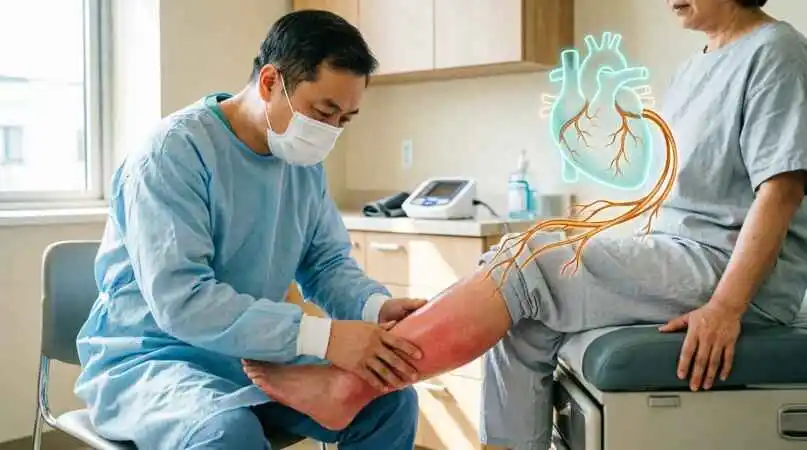
When Mrs. Reyes finally went to see her physician, the examination began, as it should, with a careful look at both legs. The swelling was symmetrical, affecting both feet and ankles roughly equally, extending partway up the shins. When the doctor pressed a finger firmly into the skin over her tibia and held it for several seconds, a visible pit remained in the skin after release, confirming pitting edema rather than the firmer, non-pitting swelling seen in some other conditions like lymphedema.
The doctor then asked a series of targeted questions that anyone with leg swelling should expect to be asked: Does the swelling affect one leg or both? Do you feel short of breath, especially when lying down? Have you noticed weight gain, especially rapid weight gain over a few days? Do you wake up at night gasping for air? Is there any abdominal swelling or unusual fatigue? Have you had any recent long flights, surgeries, or periods of immobility? Do you have a history of liver disease, kidney disease, or heart problems?
Mrs. Reyes’s answers were revealing. The swelling was bilateral, not confined to one leg. She had gained nearly four kilograms in ten days without changing her diet. She experienced orthopnea, the medical term for breathlessness that worsens when lying flat and improves when sitting upright. She also described waking suddenly at night gasping for breath, a symptom known as paroxysmal nocturnal dyspnea. Her neck veins, when examined while she sat at a 45-degree angle, appeared distended and pulsatile, a sign known as elevated jugular venous pressure. On listening to her lungs, the doctor detected fine crackling sounds at the base of both lungs, suggesting fluid accumulation in the lung tissue itself.
Taken together, this constellation of findings, bilateral pitting edema, orthopnea, paroxysmal nocturnal dyspnea, rapid weight gain, elevated jugular venous pressure, and lung crackles, painted a strong clinical picture pointing toward one diagnosis above all others: congestive heart failure.
Why the Differential Diagnosis Matters
Whenever a patient presents with swollen legs, doctors do not jump immediately to a single diagnosis. Bilateral leg swelling has several possible causes, and part of good clinical reasoning involves systematically considering and ruling out each one.
Deep vein thrombosis (DVT). This is a blood clot that typically forms in one leg, causing localized swelling, warmth, redness, and pain, often in the calf. Because DVT is almost always unilateral, affecting only one leg rather than both, it was quickly considered less likely in Mrs. Reyes’s case. Bilateral DVT is rare and usually only occurs in very specific circumstances, such as compression of major veins by a tumor or blood clotting disorders affecting both legs simultaneously.
Cirrhosis. Chronic liver disease can cause fluid retention through a different mechanism, primarily related to low levels of a blood protein called albumin, combined with increased pressure in the portal venous system. Cirrhosis-related edema is often accompanied by abdominal fluid accumulation known as ascites, yellowing of the skin and eyes called jaundice, and a history of risk factors such as chronic alcohol use, viral hepatitis, or fatty liver disease. Mrs. Reyes had no such history, no jaundice, and no signs of ascites, making cirrhosis a less likely explanation, though liver function tests were still checked as part of a thorough workup.
Congestive heart failure. This occurs when the heart’s pumping ability becomes impaired, causing blood to back up in the veins and fluid to leak into surrounding tissues, particularly in the lower legs due to gravity. Left-sided heart failure classically causes fluid to accumulate in the lungs, producing breathlessness, orthopnea, and paroxysmal nocturnal dyspnea, while right-sided heart failure causes fluid to pool in the legs, abdomen, and neck veins. Many patients, like Mrs. Reyes, have elements of both, since the two sides of the heart are intimately connected. The combination of bilateral pitting edema together with orthopnea and dyspnea is one of the most classic presentations of congestive heart failure taught in medical training.
Nephrolithiasis. Kidney stones typically cause sudden, severe flank pain radiating toward the groin, sometimes accompanied by blood in the urine, but they are not a recognized cause of bilateral leg swelling. This option exists more as a distractor in clinical reasoning exercises than as a genuine differential diagnosis for edema, since kidney stones affect urine flow rather than fluid balance in the way that would produce widespread swelling.
By systematically working through each possibility, weighing the symmetry of the swelling, the associated symptoms, and the physical examination findings, the clinical picture converged clearly on congestive heart failure as the most probable underlying cause.
Confirming the Diagnosis
Clinical suspicion alone is rarely enough to finalize a diagnosis as significant as heart failure. Mrs. Reyes underwent several follow-up investigations to confirm what the examination suggested.
A blood test measuring brain natriuretic peptide, commonly known as BNP, was significantly elevated. This hormone is released by the heart muscle when it is under strain from excess volume or pressure, and elevated levels strongly support a diagnosis of heart failure. A chest X-ray revealed an enlarged heart silhouette, known as cardiomegaly, along with signs of fluid in the lung fields consistent with pulmonary congestion. An echocardiogram, an ultrasound of the heart, was then performed to assess how well her heart was pumping. This revealed a reduced ejection fraction, meaning the percentage of blood pumped out of the heart’s main chamber with each beat was lower than normal, confirming that her heart muscle was not contracting as efficiently as it should.
Additional tests, including kidney function tests, liver function tests, thyroid function tests, and an electrocardiogram, were performed to rule out contributing factors and other conditions that can either mimic or worsen heart failure. In Mrs. Reyes’s case, longstanding, poorly controlled high blood pressure was identified as the most likely underlying driver, having gradually weakened her heart muscle over years without producing obvious symptoms until it reached a tipping point.
Understanding the Mechanism: Why the Heart Causes Leg Swelling
It can initially seem strange that a problem with the heart, located in the chest, would cause swelling in the feet and ankles, located as far from the heart as possible. The explanation lies in basic fluid dynamics and the effects of gravity.
When the heart’s pumping efficiency declines, blood does not circulate as effectively as it should. This causes pressure to build up in the venous system, the network of vessels that returns blood to the heart. Increased pressure within the veins pushes fluid out of the blood vessels and into the surrounding tissue spaces, a process called transudation. Because gravity naturally pulls fluid downward, and because the veins in the legs must work against gravity to return blood upward toward the heart, the lower extremities are especially vulnerable to this fluid accumulation, particularly in people who spend much of the day sitting or standing.
The heart’s reduced pumping capacity also triggers the kidneys to retain more sodium and water in an attempt to increase blood volume and, theoretically, improve circulation. Ironically, this compensatory mechanism, which might help in cases of actual blood loss, worsens fluid overload in heart failure, contributing further to the swelling seen in the legs, and sometimes in the abdomen as well.
The breathlessness and orthopnea Mrs. Reyes experienced stem from a related but distinct mechanism. When the left side of the heart struggles to pump blood forward efficiently, pressure backs up into the pulmonary veins and capillaries within the lungs. This increased pressure forces fluid out of the lung’s blood vessels and into the air sacs and surrounding tissue, impairing the lungs’ ability to exchange oxygen efficiently. Lying flat redistributes fluid from the legs back into central circulation and worsens this pulmonary congestion, which explains why symptoms are typically worse at night and improve when sitting upright, allowing gravity to pull some of that fluid back down into the legs and abdomen.
The Treatment Journey
Once the diagnosis was confirmed, Mrs. Reyes’s treatment plan focused on several goals simultaneously: relieving the immediate fluid overload, addressing the underlying cause, and protecting her heart from further damage over the long term.
Diuretic medications were started to help her kidneys eliminate excess sodium and water, providing relatively rapid relief of both the leg swelling and the breathlessness. Medications targeting the underlying heart failure mechanism, including ACE inhibitors or angiotensin receptor blockers, beta-blockers, and in some cases newer medication classes, were introduced gradually to reduce strain on the heart muscle and improve its long-term function. Her blood pressure was brought under tighter control, addressing the root driver of her condition. She was also counseled on dietary sodium restriction, daily weight monitoring to catch early signs of fluid retention, and a gradual, supervised increase in physical activity, since appropriately dosed exercise is now recognized as beneficial rather than harmful in stable heart failure.
Within several weeks, Mrs. Reyes noticed a dramatic improvement. Her ankles returned to their normal size, she could once again lie flat comfortably at night, and her exercise tolerance improved substantially. Heart failure, while a serious and chronic condition, can often be managed effectively for many years with the right combination of medication, lifestyle adjustment, and regular monitoring.
Lessons From This Case
This case offers several broader lessons that extend well beyond one individual’s experience. First, swelling in both legs should never be dismissed as simply cosmetic or purely related to aging, prolonged standing, or warm weather, particularly when it is new, progressive, or accompanied by other symptoms. Second, the combination of leg swelling with breathlessness, especially breathlessness that worsens when lying flat, is a red flag that deserves prompt medical attention rather than a wait-and-see approach. Third, the pattern and distribution of swelling, whether it affects one leg or both, carries real diagnostic weight and should always be communicated clearly to a healthcare provider. Finally, conditions like heart failure often develop silently over years, driven by manageable risk factors such as high blood pressure, which underscores the importance of regular check-ups even when someone feels entirely well.
Conclusion
What began as a minor annoyance with ill-fitting shoes ultimately revealed a significant, underlying cardiac condition. Mrs. Reyes’s case is a reminder that the body often communicates serious internal problems through remarkably simple external signs. Bilateral pitting edema, when paired with orthopnea and exertional breathlessness, is one of medicine’s clearest signals pointing toward congestive heart failure. Recognizing this pattern early, and seeking timely medical evaluation, can make the difference between a manageable chronic condition and a dangerous medical emergency. If you or someone you know is experiencing new or worsening swelling in both legs, particularly alongside breathlessness or difficulty lying flat, it is worth having it evaluated by a healthcare professional rather than assuming it will resolve on its own.
Frequently Asked Questions
- What is pitting edema?
Pitting edema is swelling caused by fluid accumulation in body tissue that leaves a visible indentation when firm pressure is applied and released.
- Why does pitting edema often affect both legs equally?
Bilateral, symmetrical swelling usually indicates a systemic cause affecting the whole body’s fluid balance, such as heart, liver, or kidney dysfunction, rather than a localized problem in one limb.
- What causes bilateral leg swelling?
Common causes include congestive heart failure, liver cirrhosis, kidney disease, certain medications, venous insufficiency, and prolonged immobility.
- What is orthopnea?
Orthopnea is breathlessness that worsens when lying flat and improves when sitting or standing upright, commonly seen in heart failure.
- What is paroxysmal nocturnal dyspnea?
This refers to sudden episodes of severe breathlessness that wake a person from sleep, typically occurring a few hours after lying down.
- How is congestive heart failure connected to leg swelling?
When the heart cannot pump blood efficiently, pressure builds in the veins, pushing fluid into surrounding tissues, particularly in the legs due to gravity.
- What is the difference between right-sided and left-sided heart failure?
Right-sided heart failure primarily causes fluid buildup in the legs, abdomen, and neck veins, while left-sided heart failure primarily causes fluid buildup in the lungs.
- Why is bilateral swelling less likely to be a blood clot?
Deep vein thrombosis typically affects only one leg, so swelling in both legs at once makes a blood clot a less probable, though not impossible, explanation.
- Can cirrhosis cause leg swelling?
Yes, liver cirrhosis can cause bilateral edema due to low blood protein levels and increased pressure in the veins draining the digestive system.
- How do doctors tell the difference between heart, liver, and kidney causes of edema?
Doctors rely on associated symptoms, physical exam findings, blood tests, and imaging studies to distinguish between these causes, since each has a distinct clinical pattern.
- What tests confirm a diagnosis of heart failure?
Common tests include a BNP blood test, chest X-ray, echocardiogram, and electrocardiogram, often combined with a thorough physical examination.
- What is BNP and why is it measured?
BNP, or brain natriuretic peptide, is a hormone released by the heart under strain, and elevated levels support a diagnosis of heart failure.
- What does an echocardiogram show in heart failure?
It shows how well the heart’s chambers are pumping, including a measurement called ejection fraction, which is often reduced in heart failure.
- What is ejection fraction?
Ejection fraction is the percentage of blood pumped out of the heart’s main chamber with each heartbeat, and a lower percentage indicates reduced pumping efficiency.
- Can high blood pressure lead to heart failure?
Yes, chronic, poorly controlled high blood pressure forces the heart to work harder over time, which can gradually weaken the heart muscle and lead to heart failure.
- What is jugular venous distension?
This refers to visibly bulging neck veins caused by increased pressure in the venous system, often seen in heart failure.
- Why do heart failure patients gain weight quickly?
Rapid weight gain in heart failure usually reflects fluid retention rather than fat gain, making daily weight monitoring an important early warning sign.
- Are diuretics effective for treating edema from heart failure?
Yes, diuretics help the kidneys eliminate excess sodium and water, often providing noticeable relief of swelling and breathlessness within days.
- Is heart failure curable?
Heart failure is generally a chronic condition that is managed rather than cured, though many people live well for years with appropriate treatment.
- What lifestyle changes help manage heart failure?
Reducing dietary sodium, monitoring daily weight, staying physically active as advised, and taking medications consistently all support better long-term outcomes.
- Can heart failure symptoms improve with treatment?
Yes, many patients experience significant improvement in swelling, breathlessness, and exercise tolerance once appropriate treatment is started.
- What is the role of ACE inhibitors in heart failure treatment?
ACE inhibitors help relax blood vessels and reduce the workload on the heart, improving symptoms and long-term outcomes in many patients.
- Why do doctors ask about recent flights or surgeries when assessing leg swelling?
Prolonged immobility increases the risk of blood clots, so this history helps assess the likelihood of deep vein thrombosis as a cause of swelling.
- Can kidney disease cause leg swelling?
Yes, kidney disease can impair the body’s ability to eliminate excess sodium and water, leading to fluid retention and swelling, often alongside protein loss in urine.
- Is nephrolithiasis a common cause of leg swelling?
No, kidney stones typically cause flank pain and urinary symptoms rather than leg swelling, making it an unlikely explanation for bilateral edema.
- When should someone seek urgent medical care for leg swelling?
Sudden, severe swelling, especially with chest pain, significant breathlessness, or swelling in only one leg with pain and warmth, warrants urgent evaluation.
- Can leg swelling be prevented?
Managing underlying conditions like high blood pressure, staying active, elevating the legs periodically, and reducing excess salt intake can help prevent or reduce swelling.
- Does sleeping propped up on pillows help with orthopnea?
Yes, many people with heart failure find that sleeping in a slightly elevated position reduces breathlessness by redistributing fluid away from the lungs.
- Can heart failure occur without any prior symptoms?
Yes, heart failure often develops gradually and silently, with noticeable symptoms sometimes appearing only after significant changes in heart function have occurred.
- Why is early evaluation of bilateral leg swelling important?
Early evaluation allows underlying conditions like heart failure to be identified and treated before they progress to more severe or dangerous complications.
⚕️Medical Disclaimer:
The information provided on this website is for general educational and informational purposes only and is not intended as a substitute for professional medical advice, diagnosis, or treatment. Always seek the advice of your physician or other qualified health provider with any questions you may have regarding a medical condition. Never disregard professional medical advice or delay in seeking it because of something you have read on this website.
