
Table of Contents
- Can I combine Namibia with South Africa or Botswana?
Absolutely, and most visitors do. Namibia-South Africa combinations (with the Cape Winelands or Kruger National Park) are popular. Namibia-Botswana combinations (adding the Okavango Delta or Chobe) are among Africa’s finest back-to-back wildlife experiences. The border crossing between Namibia and Botswana at Ngoma Bridge is straightforward.
- What is the Fish River Canyon Hike?
The Fish River Canyon Hiking Trail is a 90-kilometre, 5-day hike through the canyon, available only from May to September. It requires a medical certificate of fitness and official permits. The hike ends at the Ai-Ais Hot Springs resort, where soaking in the thermal pools provides well-earned relief. It is one of southern Africa’s most iconic adventure experiences.
- What photography opportunities does Namibia offer?
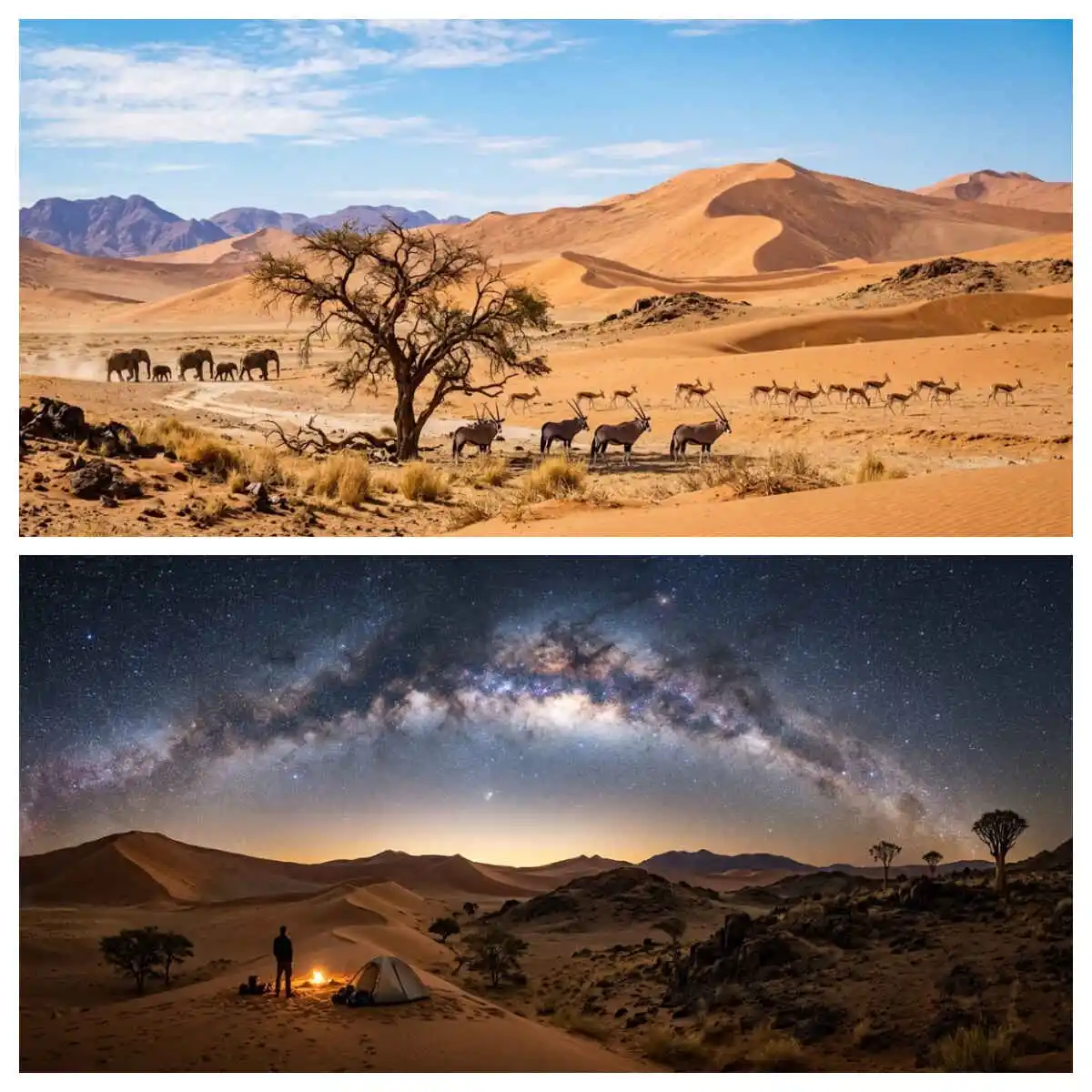
Namibia is arguably the most photogenic country in Africa. The geometric dunes of Sossusvlei, the skeletal trees of Dead Vlei, the extraordinary wildlife of Etosha, the fog-shrouded Skeleton Coast, the Milky Way over the Namib Rand, and the cultural richness of the Himba and Herero people all offer world-class photography opportunities in exceptional light conditions.
- Are there ethical concerns about visiting the Himba or San communities?
Some community tourism encounters are extractive or disrespectful — essentially human zoos. Choose operators who have genuine, long-term partnerships with communities, who ensure that visits are consensual and that financial benefits go directly to community members. Look for operators endorsed by organizations like the Namibia Tourism Board or Responsible Travel.

- What is the Caprivi Strip (Zambezi Region)?
The Caprivi Strip — now officially the Zambezi Region — is a narrow panhandle of northeastern Namibia that extends between Angola, Zambia, Botswana, and Zimbabwe. Unlike the rest of Namibia, it receives significant rainfall and is characterized by lush floodplains, perennial rivers, and exceptional birding. It connects Namibia to the Okavango ecosystem and offers boat-based safaris, fishing, and outstanding hippo and crocodile viewing.
- What is Namibia doing for conservation?
Namibia is a global conservation leader. Its community conservancy model — in which local communities take ownership of wildlife on their communal land — has resulted in dramatic increases in wildlife populations and direct economic benefits replacing traditional poaching incentives. Black rhino populations have grown significantly. Desert lion numbers have stabilized. Cheetah numbers are the highest in the world. The country enshrines environmental protection in its constitution — a commitment unmatched by almost any other nation on Earth.
Disclaimer: The content on this blog is for informational purposes only. The author’s opinions are personal and not endorsed. Efforts are made to provide accurate information, but completeness, accuracy, or reliability are not guaranteed. The author is not liable for any loss or damage resulting from the use of this blog. It is recommended to use the information on this blog at your own discretion.
