
Table of Contents
Inflammation weakens the thin, fibrous cap holding a vulnerable plaque in place. If the cap ruptures, the body forms a blood clot over it, instantly blocking the artery—even if the person’s cholesterol levels are perfectly low.
- What blood test can help predict the risk of plaque rupture that a cholesterol test misses? The article suggests testing for high-sensitivity C-Reactive Protein (hs-CRP), which measures systemic inflammation in the body.
Environmental Triggers & Toxins
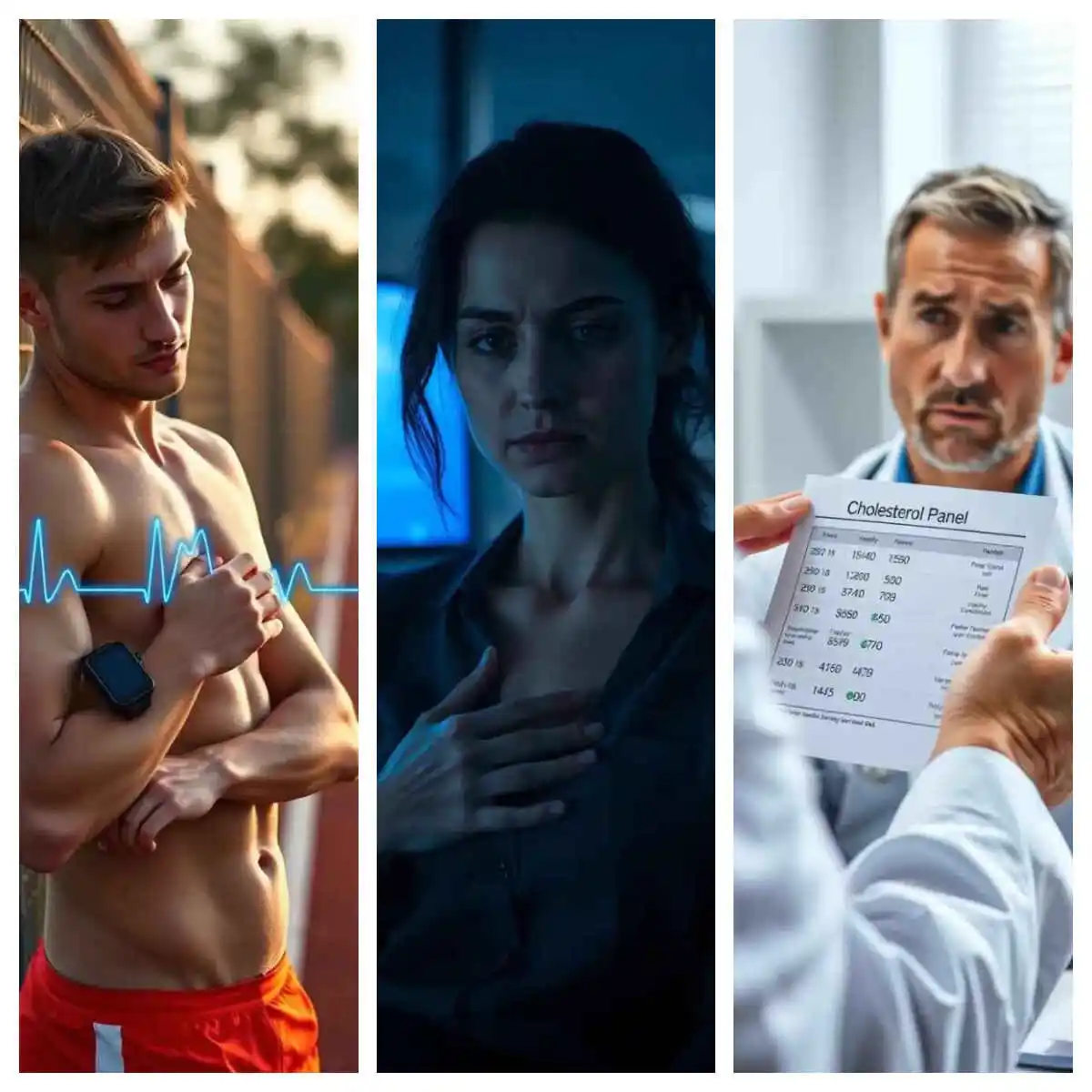
- How can an extreme endurance athlete suffer a cardiac arrest despite being incredibly fit?
If an athlete becomes severely dehydrated or sweats excessively without replenishing minerals, their potassium or magnesium levels can plummet. These minerals carry the heart’s electrical charge, and an imbalance causes the electrical grid to crash.
- What is “Broken Heart Syndrome” (Takotsubo Cardiomyopathy)?
It is a temporary, sudden weakening of the heart’s left ventricle triggered by a massive surge of stress hormones (like adrenaline) following severe emotional or physical trauma.

- Why is cocaine particularly lethal to the heart, even if the user has clear arteries?
Cocaine acts as a double threat: it causes violent coronary spasms (plumbing problem) while simultaneously acting as a massive stimulant that triggers lethal electrical arrhythmias (electrical problem).
- How does Obstructive Sleep Apnea (OSA) increase the risk of cardiac arrest?
OSA causes severe drops in blood oxygen and spikes in chest pressure during sleep. This starves the heart of oxygen, stretches the muscle, makes it electrically irritable, and vastly increases the risk of nocturnal arrhythmias.
Warning Signs & Prevention
- Why should unexplained fainting (syncope) never be ignored?
Fainting during physical exertion or when startled can be a massive red flag for structural issues like HCM or electrical issues like Long QT Syndrome, signaling that the heart is briefly failing to pump blood.
- Why are some episodes of sudden cardiac arrest misdiagnosed as epileptic seizures? When the brain is suddenly deprived of blood during a cardiac arrest, the body can jerk and convulse violently, mimicking a seizure. Anyone with a “seizure” but no epilepsy history needs a cardiac evaluation.
- What is a coronary calcium score, and why is it useful?
It is a CT scan that looks directly for calcified plaque in the arteries. It bypasses blood tests entirely and can reveal hidden “plumbing” issues that a pristine cholesterol panel would miss.
- How can wearable technology help prevent sudden cardiac arrest?
Smartwatches with FDA-cleared ECG apps provide continuous monitoring of heart rhythm, which can detect silent arrhythmias (like A-Fib) that a 10-second ECG in a doctor’s office might miss.
Medical Disclaimer:
The information provided on this website is for general educational and informational purposes only and is not intended as a substitute for professional medical advice, diagnosis, or treatment. Always seek the advice of your physician or other qualified health provider with any questions you may have regarding a medical condition. Never disregard professional medical advice or delay in seeking it because of something you have read on this website.
